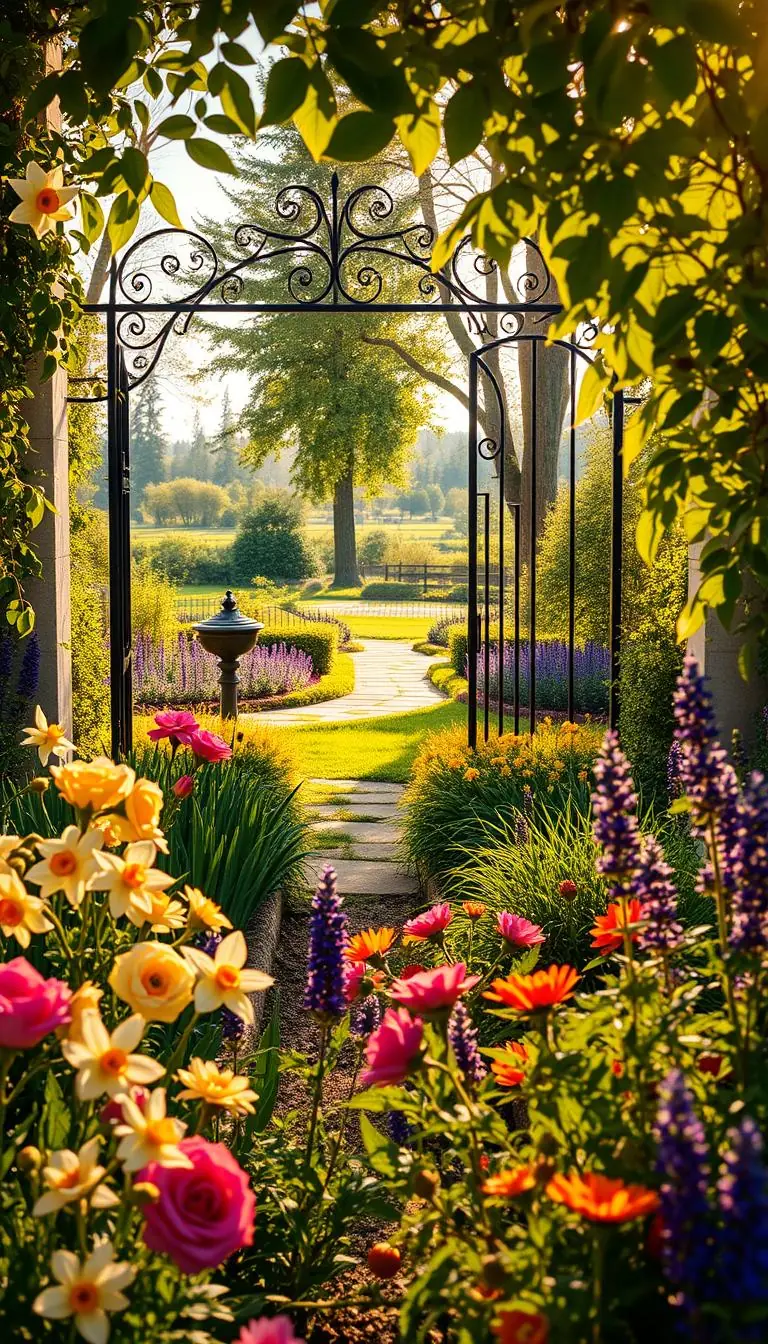
Imagine bending over a sunlit bed where honey-scented blooms drift on a warm breeze. You notice silvery leaves that make pastel flowers glow and a hummingbird visiting a purple spire nearby.
This guide helps you choose rose companion plants that thrive in full sun and well-drained soil. We’ll show simple, friendly steps so you can pick companions that add color, texture, and beauty without extra fuss.
You’ll get real examples—lavender to repel aphids, sweet alyssum for scent, and Russian sage for an airy haze—plus easy tips on spacing, timing, and a few garden tools: a hand trowel, pruners, mulch, and a drip hose.
Expect short, calming guidance that flags common mistakes like overcrowding or aggressive roots. In a little time, you’ll feel confident planning beds that welcome beneficial insects and keep your rose garden healthy.
Key Takeaways
- Choose companions that share sun and well-drained soil needs.
- Use fragrant, low-growing annuals for scent and color at the edges.
- Include shrubs and evergreens for structure and seasonal interest.
- Plant with proper spacing to keep airflow and reduce disease.
- Keep tools simple and water consistently with a drip hose.
Start Here: What Makes a Great Companion Plant for Roses
Think of your garden as a team. Pick members that share light, drainage, and space so everything can thrive together.
Match similar growing requirements: aim for at least six hours of full sun and naturally well-drained soil. When the roots like the same conditions, you avoid competition and stress.
Plan for color, texture, scent, and staggered bloom time. Layer taller accents behind, mid-height fillers beside, and low borders or living mulch up front to help keep soil cool and neat.

Quick checklist before you plant
- Map sunlight through the day so taller choices don’t steal light from your roses.
- Space for airflow — leave about 18–24 inches from the rose drip line to dense neighbors to reduce pests and insects pressure.
- Water with a drip line or soaker hose under mulch to keep leaves dry and help keep fungal issues low.
- In spring, test drainage: dig, fill with water, and time how fast it drains; amend if it sits for hours.
Start small and edit as you learn your yard’s rhythm. With these simple steps you’ll feel ready to plant roses and add a few well-behaved companions that help keep the bed healthy over time.
Rose Companion Plants: Top Annuals to Tuck In Around Your Roses
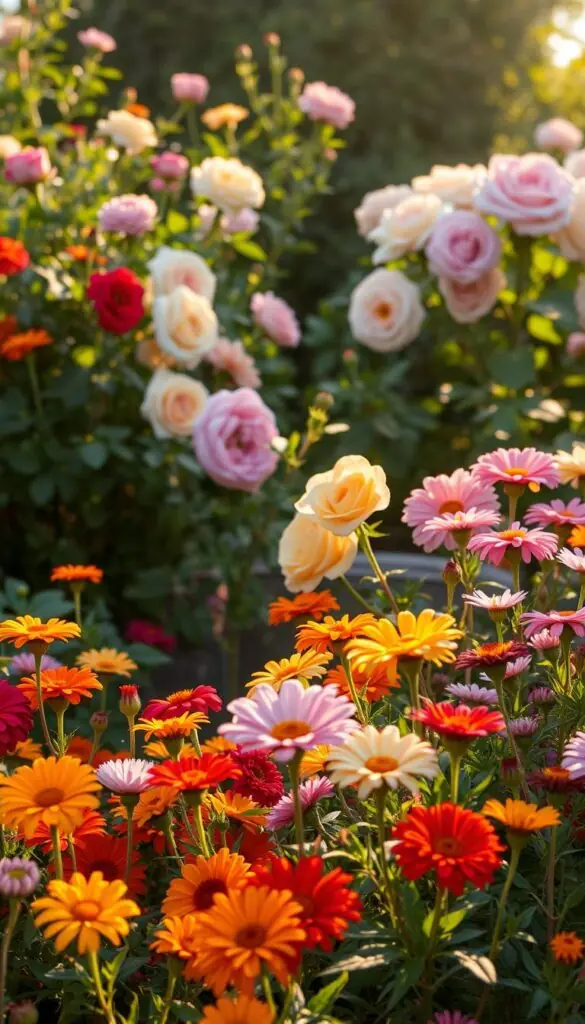
Tucking annuals into the margins brings steady color and helpful insects to busy summer borders.
Sweet alyssum makes a honey-scented edging that draws beneficial insects without crowding. Plant it at the front in full sun and leave 8–12 inches between groups.
Angelonia adds heat-proof spikes from late spring to frost. Use it in warm, sunny spots alongside roses for upright contrast when blooms pause.
Calibrachoa and petunias trail nicely as shallow-rooted fillers. Feed lightly every 2–3 weeks so the flowers keep coming.
Verbena offers steady purple flowers that hide bare lower branches. Marigolds will also attract ladybugs and parasitic wasps and help keep pests in check; deadhead for strong rebloom.
| Annual | Height | Best Spot | Quick Care |
|---|---|---|---|
| Sweet alyssum | <10" | Front edge, full sun | No deadheading; light compost |
| Angelonia | 12–30" | Behind short shrubs | Heat-tolerant; moderate water |
| Calibrachoa | 6–12" | Containers, fills gaps | Feed every 2–3 weeks |
| Verbena / Marigold | 6–24" | Lower canopy, mixed pockets | Regular moisture; deadhead marigolds |
- Plant in late spring when nights stay above 50°F.
- Space 8–12" to keep air moving around your rose bushes.
- Mulch lightly and feed monthly for vivid, nonstop blooms through the season.
Perennial Companions That Return Each Year with Reliable Beauty
Perennial choices give you seasonal rhythm and low-effort color that returns year after year. These selections pair well with full sun and well-drained soil and reward you with scent, texture, and steady blooms.
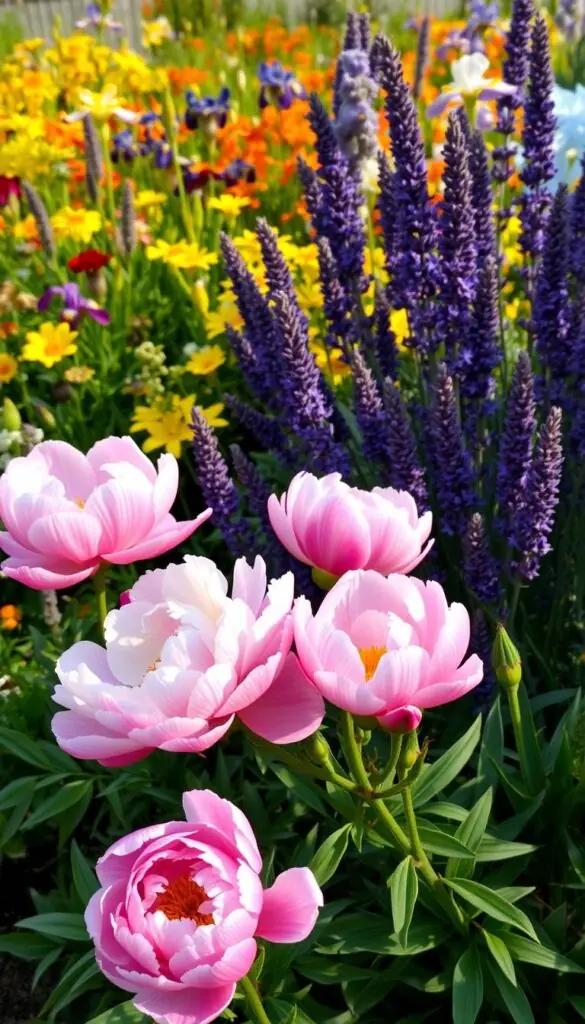
Lavender
Lavender repels aphids and perfumes paths. Plant it in sunny, well-drained spots and prune lightly after flowering to keep tidy and promote repeat blooms.
Nepeta (Catmint)
Nepeta’s aromatic foliage deters deer and draws beneficial insects. Space drifts of three to five and shear once after the first flush to encourage more flowers.
Salvia and Bee Balm
Salvia’s spires lure hummingbirds; cut back spent stems to coax a second round of color later in the season. For bee balm, choose mildew-resistant varieties like ‘Pardon My Cerise’ and thin stems if humidity climbs.
Yarrow, Coreopsis, and Russian Sage
Yarrow offers sunny umbels and hardy, feathery foliage. Coreopsis gives long summer color; deadhead or shear lightly for a fresh flush.
Russian sage creates an airy lavender-blue haze—give it 24–36 inches so it frames but doesn’t flop into nearby blooms. Improve soil with compost before planting and mulch thinly to keep moisture steady.
- Timing: tidy clumps in early spring and top-dress with compost.
- Spacing: group in sweeps to read as a mass, not scattered dots.
Small Shrubs That Frame and Support a Rose Garden
A few compact shrubs give structure and seasonal interest without stealing the show.
"Use low, steady shrubs to outline beds and let your blooms take center stage."
Boxwood makes a smart, evergreen edge. It tolerates sun in many varieties and keeps beds looking polished when roses are not in bloom. Trim boxwood lightly in late spring after new growth appears.
Spirea brings long bloom time and vibrant foliage that adds warm color beside your rose bushes. Prune spirea shortly after its main flush to invite a neat second round of flowers.
Choose dwarf viburnums like Lil’ Ditty® for spring flowers, fall berries, and compact form. They give seasonal interest without overshadowing your garden.
- Space shrubs at least their mature width from roses so roots and leaves don’t compete.
- Plant in early spring or fall; water deeply, then mulch lightly.
- Avoid large, aggressive-root varieties that invite pests and crowding.
As an addition, match foliage tones—cool green boxwood with coral roses, or golden spirea to warm white blooms—for a calm, cohesive bed.
Ground Covers to Replace Mulch and Keep Soil Cozy
Swap bare soil for a living carpet that cools roots and lifts the whole bed. Living ground cover can cut weeding time, hold moisture, and add soft color beside your roses.
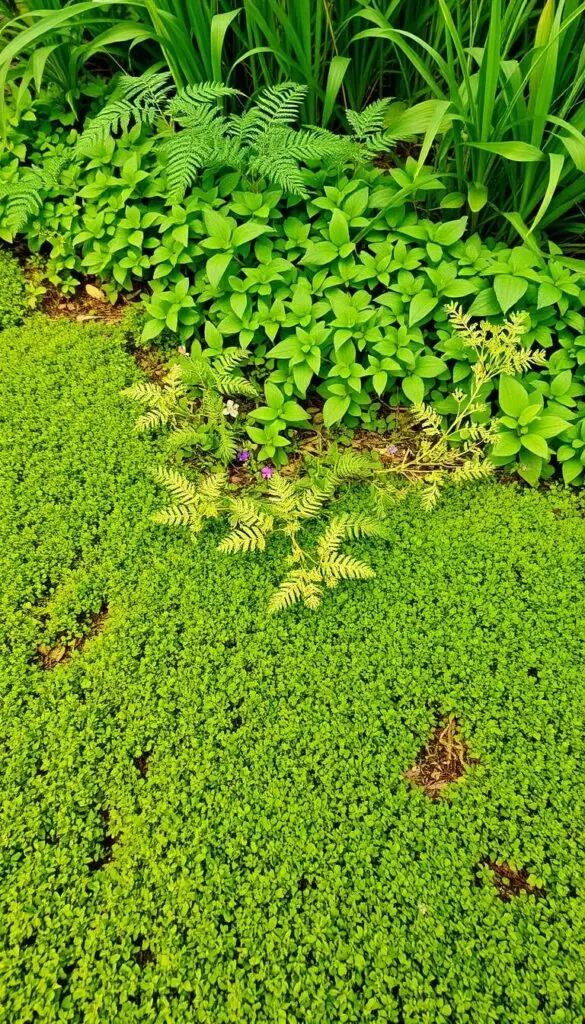
Creeping thyme makes fragrant purple-pink mats that thrive between pavers and at the front of beds. Start with plugs 6–10 inches apart and expect them to fill in by the second season.
Creeping thyme
Use it where feet tread lightly; it tolerates sun and good drainage. Shear lightly after peak flowers to keep a tidy edge.
Blue star creeper
This low carpet shows tiny blue flowers and hugs paths. Plant 6–8 inches from the rose crown so airflow and pruning stay easy.
Lamb’s ear & artemisia
Choose one for silvery foliage that makes blush blooms pop. These help keep the bed cool and contrast well with green stems.
Alyssum
Use as a living border to attract beneficials and soften edges. Water with a drip line beneath the cover while roots establish.
Quick tips:
- Swap some mulch for ground cover to reduce weeds and help keep soil cool.
- Set covers 8–12 inches from the rose crown and avoid aggressive spreaders.
- Groom by light shearing after bloom and lift fallen petals with a hand rake.
| Ground Cover | Spacing | Sun & Drainage | Best Use |
|---|---|---|---|
| Creeping thyme | 6–10" plugs | Full sun, well-drained | Front edge, between stones |
| Blue star creeper | 6–8" | Full to part sun | Soft carpets near paths |
| Lamb’s ear / Artemisia | 8–12" | Full sun, dry to moderate | Silver contrast around roses |
| Alyssum | 6–10" | Full sun, good drainage | Low edging; attracts beneficials |
Pest-Control Companions You Can Plant Right Now
Small, smart additions around your roses make a big difference against common garden pests.
Alliums (including chives and ornamentals) go alongside roses to mask scents and invite parasitic wasps that help with natural control. Plant them in drifts near the crown so their oniony aroma mixes with garden air.
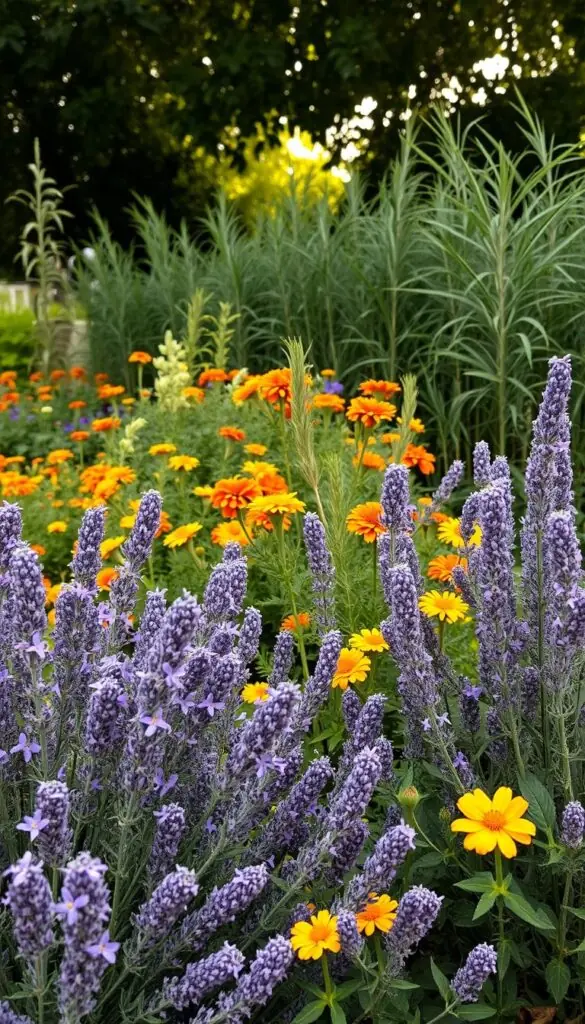
Marigolds distract and deter many insects. Tuck them at edges and deadhead often so they rebloom and keep working for you.
Scented or zonal geraniums near paths or pots can slow Japanese beetles after a nibble. When beetles become sluggish, drop them into a bucket of soapy water — a safe, low-chemical control tactic.
Parsley is a patient helper: sow this season and again next spring. In year two it flowers and also attract hoverflies that patrol for aphids around your rose bushes.
Larkspur works as a beetle decoy but is toxic if eaten. Plant it away from pets and kids and use it only where safety is clear.
Catmint gives a one-two punch: it deters aphids and also attract pollinators, keeping the bed lively and resilient.
| Companion | Where to Place | How It Helps | Caution / Care |
|---|---|---|---|
| Allium (chives) | Alongside roses, drifts | Masks scent; attracts parasitic wasps | Easy to grow; divide every 3–4 years |
| Marigold | Front edges | Deters pests; reblooms with deadheading | Deadhead regularly; full sun |
| Zonal geranium | Near paths or pots | Disrupts Japanese beetles; makes them easy to remove | Hand-pick beetles into soapy water |
| Parsley / Catmint / Larkspur | Mixed drifts a few feet from crowns | Attracts hoverflies; deters aphids; decoys beetles | Parsley flowers in year two; larkspur is toxic |
- Group these in small drifts so scents blend without overwhelming the bed.
- Water at the base and keep leaves dry to lower disease risk while these helpers do their work.
- Keep a morning walk-through: hand-pick beetles, snip troubled stems, and your beds stay calm.
Classic Climbers and Tall Accents That Pair Beautifully
Tall accents and climbing varieties lend vertical grace that keeps beds lively from spring into summer.
Clematis weaves through a trellis or an arbor to stretch color alongside climbing roses. Train clematis up the same support, tying stems gently so both can share sun and airflow without crowding.
Foxglove gives bold, bell-like spikes that rise behind mid-height bushes. Plant it a bit back to cast dappled shade at the base during early heat and to give your beds a soft, cottage feel.
Veronica adds sleek spires with long bloom time and tidy form. Its vertical lines make a clean contrast to rounded blooms and help draw pollinators through the border.
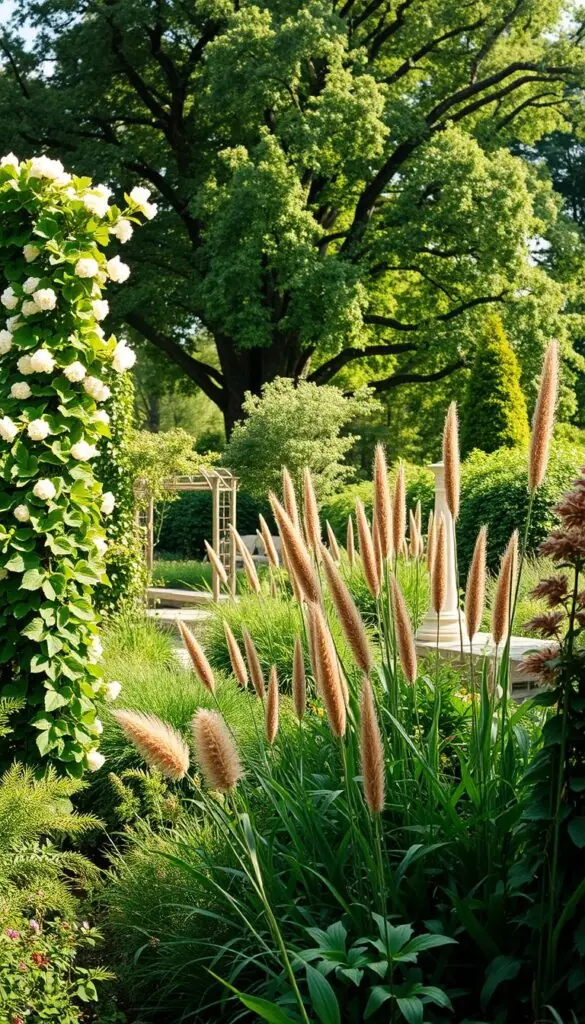
- Support: use sturdy trellises, arbors, or obelisks and tie in with soft twine.
- Placement: plant tops in sun; keep roots cool with light mulch or low ground covers.
- Spacing & pruning: stagger heights in threes, water deeply after planting, and deadhead to extend blooms and keep a tidy display.
- Varieties & color: choose compact clematis to match mid-size roses; try ivory clematis with soft pinks or violet veronica for cool echoes.
With simple supports and modest pruning cues, these tall accents bring gentle movement and layered color that make your garden feel full and calm across the season.
Designing Color and Scent: Simple Pairings You’ll Love
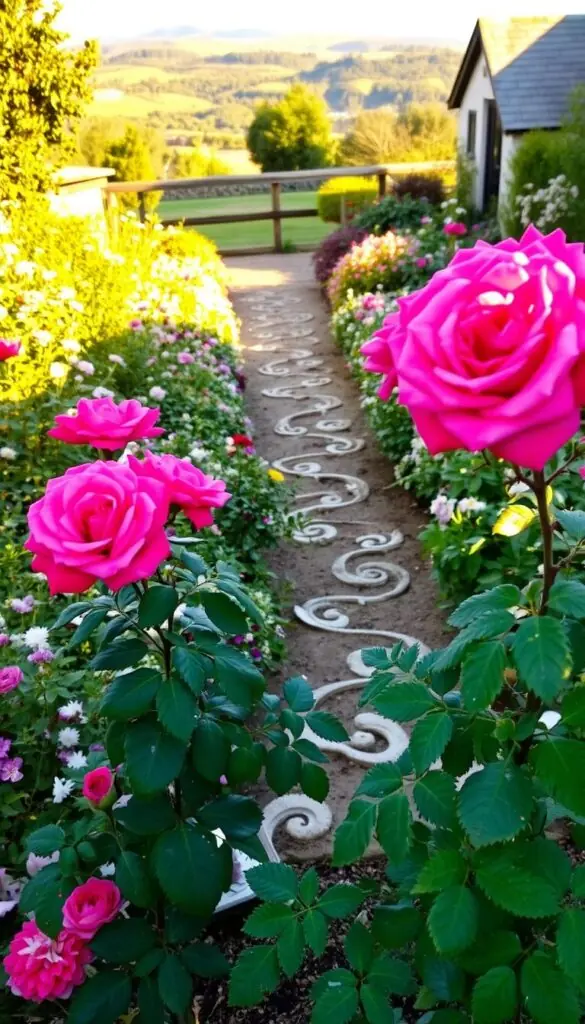
Match textures and tones to make your blooms stand out and the whole bed feel calm. Below are four easy, copy-and-plant recipes that pair scent, contrast, and form for a balanced border. Each mix needs full sun and free-draining soil, so they settle in together well.
Soft lavender and blush blooms with silver foliage
Plant lavender behind a loose line of blush roses and add lamb’s ear at the front. Space lavender 18–24" apart and lamb’s ear 8–12" to keep a soft edge. Prep soil with compost and a slow-release feed.
Sunny yellow flowers with purple salvia or verbena
Use salvia or verbena as a mid-bed contrast for yellow roses. Space spires 12–18" behind the rose crown so the purple flowers lift the whole bed.
Romantic pink blooms with airy yarrow and sweet alyssum
Group yarrow in threes mid-border and plant alyssum in a low honey-scented edge. Deadhead lightly and water with a drip hose before mulching thinly.
Vibrant coral or red blooms with blue catmint and Russian sage
Frame bold colors with catmint at 12–18" and Russian sage 24–36" back for a misty blue backdrop. Edit by shearing if one variety crowds the central blooms.
Quick setup: prep soil with compost, place taller spires behind, keep roses in the spotlight, and repeat colors across the border for cohesive beauty.
Seasonal Planting Calendar to Keep Blooms Rolling All Season
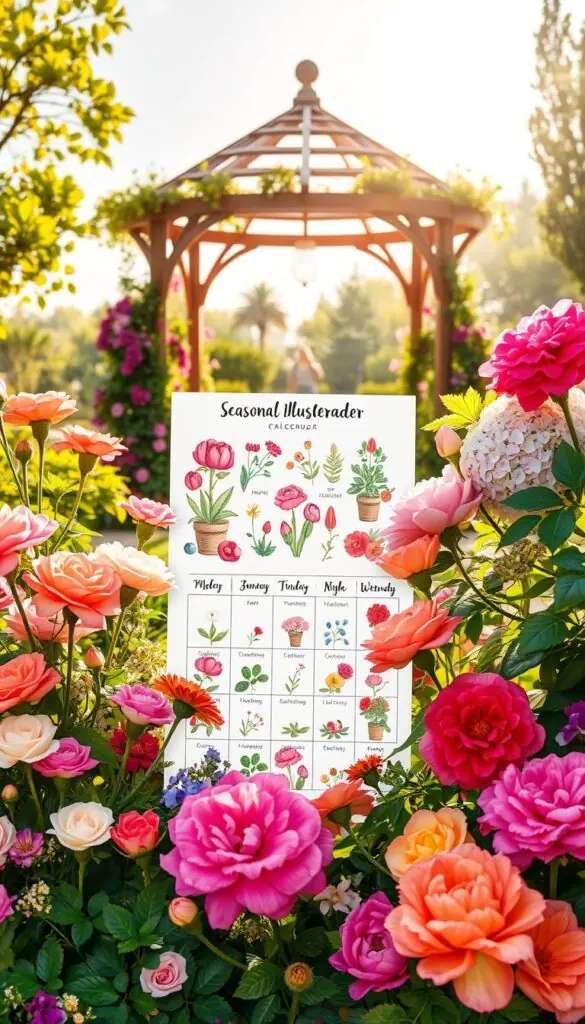
A simple seasonal plan keeps color moving and chores small. We’ll give short, weekend-friendly tasks so your beds stay lush without heavy work.
Early spring
Clean beds, test soil drainage, and set a drip hose to save time later. Plant cool-tolerant companion plants like catmint and yarrow now so they root before heat arrives.
Late spring to early summer
Add heat-lovers such as angelonia and verbena. Lay in ground cover to steady moisture and cut weeding time.
Midsummer care
Deadhead to keep flowers coming. Water deeply 1–2 times a week and feed lightly to help keep steady color.
Keep marigolds deadheaded so they continue to deter pests. Let parsley from last year flower to invite beneficial insects like hoverflies.
Fall reset
Divide crowded perennials such as nepeta and yarrow and replant divisions to refresh vigor. Set hardy shrubs—boxwood or spirea—while soil is warm, then mulch to protect roots.
Timing tip: plant roses or replacements in mild spring or fall weather. Keep a small caddy with pruners, a hand fork, gloves, and a watering wand so seasonal chores feel quick and satisfying.
Layout Tips: Spacing, Airflow, and Watering for Healthy Roses
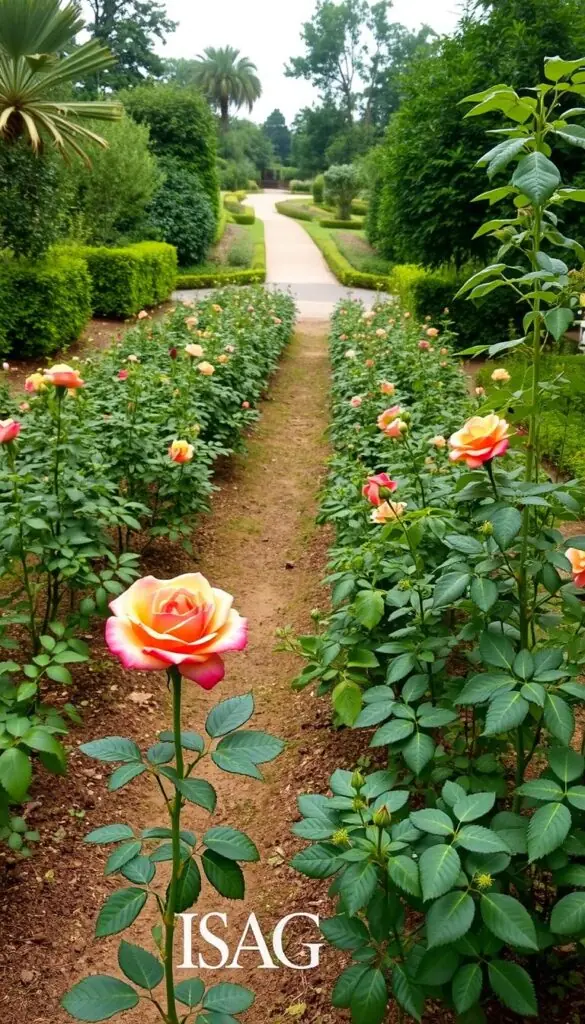
Give your roses room to breathe and you’ll cut fungal problems before they start. Keep stems clear so air can move and sun can dry leaves quickly after morning dew.
Placement and spacing
Distance: keep dense companions 18–24 inches from the rose’s drip line. This helps airflow and gives you space to prune without reaching through thorns.
Put taller accents behind the bed or at the center of island plantings so the roses get full sun and remain the focal point.
Irrigation that protects foliage
Run a drip or soaker hose at the base on a timer. Watering at the rootzone keeps leaves dry and cuts disease risk while saving you time.
Mulch and living ground cover
Use a thin mulch layer or a living ground cover to keep soil steady without smothering crowns. Creeping thyme works well along a border and tolerates light foot traffic.
"A monthly 10-minute check-in keeps beds tidy: test the drip, trim spent growth, and clear paths."
| Task | Spacing / Measure | Why it helps |
|---|---|---|
| Breathing room | 18–24 in. from drip line | Improves airflow; reduces black spot |
| Taller plants | Behind or center | Keeps roses in full sun; neat sightlines |
| Watering | Drip/soaker on timer | Wet roots, dry leaves; saves time |
| Mulch / ground cover | Thin mulch or creeping thyme border | Stabilizes soil; suppresses weeds |
Common Mistakes and Myths to Avoid
A few simple missteps often cause the most common troubles in a rose border. You’ll save time and worry by planning for airflow, sunlight, and steady soil conditions from the start.
Don’t overcrowd. Tight groupings trap moisture and slow drying after irrigation. That invites fungal issues and weakens blooms.
Avoid aggressive spreaders. Big-rooted or fast runners will compete for water and nutrients and press leaves against canes. Edit them out before they take over.
- Myth check: planting allium nearby won’t control black spot. Only a spray made from allium parts has any effect.
- Skip shade‑loving varieties in full sun; scorched foliage looks tired and weakens the bed.
- If aphids are heavy, keep nasturtiums a bit away so they don’t act as a magnet for pests.
- Stick with similar growing choices that like full sun and well-drained soil so everyone stays stress-free.
Water at the base in the morning so leaves and flowers dry quickly. Prune lightly with clean tools to keep air moving; small cuts matter.
Support beneficial insects by planting yarrow and sweet alyssum nearby, but don’t smother the rose crown. When in doubt, edit—lifting one plant often restores balance and makes the bed feel peaceful again.
"A short monthly check and one small edit will head off many problems before they start."
Quick Picks by Purpose: Pollinators, Borders, and Color Pops
Pick a handful of favorites and you’ll see more pollinators, cleaner edges, and brighter blooms all season.
Attract beneficial insects
Lavender, yarrow, and sweet alyssum draw bees and syrphid flies. Parsley flowers in year two and will attract hoverflies that eat aphids.
Mix two or three so blooms overlap and you have steady forage for beneficial insects. Place these in small drifts near paths to enjoy the activity up close.
Best borders and edges
Creeping thyme, lamb’s ear, and alyssum make tidy, low borders. They define beds and act as gentle ground cover while keeping the front neat.
Use creeping thyme at the very front where foot traffic is light. Choose lamb’s ear for soft, silvery contrast.
Color amplifiers for blooms
Salvia, verbena, coreopsis, and Russian sage are reliable varieties that lift color and make your roses and other blooms pop. Add a purple flowers accent like salvia beside warm-toned roses for balance.
Space taller spires 12–24 inches behind the crown so they don’t block airflow. Repeat one or two choices across the rose garden to create rhythm.
- Quick shopping tip: choose sizes that fit your bed so nothing crowds the crown or blocks sun.
- Use ground cover near the front to knit the bed together and cut weeding time.
- Watch for insects and pests; diversity usually stabilizes the bed naturally.
- Plant in the evening or on cloudy days to reduce transplant shock and save time.
| Purpose | Top Picks | Placement Tip | Why it works |
|---|---|---|---|
| Attract beneficial insects | Lavender, Yarrow, Sweet Alyssum, Parsley | Drifts near paths; stagger bloom time | Provides nectar and shelter for pollinators and predators |
| Borders & Edging | Creeping Thyme, Lamb’s Ear, Alyssum | Front edge, 6–12" from crown | Low habit; defines bed and acts as ground cover |
| Color Amplifiers | Salvia, Verbena, Coreopsis, Russian Sage | 12–36" behind or between shrubs | High-contrast color and vertical form to boost blooms |
U.S. Garden Snapshot: Choosing by Zone and Site
Let your local climate steer your selections. Pick a few hardy varieties that match heat, humidity, or dry spells and your bed will settle in faster. This keeps care simple and helps the whole garden thrive.
Warm, dry regions
Go for drought‑savvy choices like lavender and artemisia. Lantana also blooms reliably, but check local status—it can be invasive in parts of Florida. These selections favor full sun and free‑draining soil.
Temperate zones
Try catmint, salvia, yarrow, and compact spirea. These varieties handle mild swings and give steady texture and color through the seasons.
Hot, humid areas
Pick mildew‑resistant bee balm and compact forms so air moves freely around leaves. Good airflow helps cut disease in moist summers.
- Match sun and soil first; spacing keeps foliage dry after rain.
- Add creeping thyme in sunny pockets where winters are mild; test a small area first.
- Watch insects and pests weekly and use local extension advice to fine‑tune choices.
- Plant roses and these helpers in spring or fall for easiest establishment.
"Start small, repeat what thrives, and your beds will become simpler to care for each season."
Conclusion
When you plant with attention to light and drainage, the whole border settles into a gentle rhythm. Choosing a thoughtful companion plant roses helps your beds stay healthy and full of charm.
A few right-sized choices like lavender, catmint, and salvia add scent and steady flowers without extra fuss. Keep spacing open so air moves and rose blooms stay fresh.
Remember that allium won’t stop black spot unless used as a spray. Instead, favor diverse companions, avoid aggressive spreaders, and match habits so nothing fights for water or light.
Start in one small bed, repeat what works, and enjoy the slow rewards. With shared sun, well-tended soil, and gentle spacing, your rose garden will show more beauty each season—take your time and savor the moments.
FAQ
What are the best plants to pair with roses for year-round interest?
Choose a mix of seasonal bloomers, perennials, and low shrubs. For spring color and early pollinator visits, add sweet alyssum and early salvias. Plant lavender, catmint (nepeta), and yarrow for summer scent and steady insects. Frame beds with small shrubs like boxwood or spirea for winter structure and repeat interest.
How do I pick companion plants that share growing requirements?
Match sun and soil needs first. Pick species that thrive in full sun and well-drained soil if your site offers that. Choose shallow-rooted annuals or drought-tolerant perennials so they don’t compete heavily for water and nutrients. Group plants with similar watering schedules to keep maintenance simple.
Which annuals are good to tuck in around roses to fill gaps?
Look for shallow-rooted, fast-growing fillers like calibrachoa and petunias, heat-tolerant angelonia, fragrant sweet alyssum, and low verbena. These add color, scent, and attract beneficial insects without stressing the roots of larger shrubs.
What perennials return each year and pair well with roses?
Reliable perennials include lavender for scent and pest deterrence, nepeta to draw pollinators, salvia and bee balm for spires of color, coreopsis for long summer blooms, and Russian sage for airy texture and cool blue hues.
Can small shrubs be used to frame a rose bed?
Absolutely. Use compact boxwood for tidy edges, spirea for seasonal blooms and colorful foliage, and viburnum for multi-season interest. Place taller shrubs behind roses or at bed ends to avoid shading the blooms.
Are there ground covers that work instead of mulch?
Yes—creeping thyme makes a fragrant living mulch, blue star creeper offers delicate blue accents, lamb’s ear and artemisia provide silvery contrast, and alyssum forms a low border that attracts beneficials and keeps soil cool.
Which plants help control pests near roses?
Alliums (including chives), marigolds, and scented geraniums can mask or deter pests. Parsley attracts hoverflies once it flowers the following year. Catmint and certain tall larkspurs can draw pests away, though larkspur is toxic—handle with care.
What climbers and tall accents pair nicely with climbing roses?
Clematis is a classic partner that weaves through supports, foxglove adds vertical drama and cool base shade, and veronica offers sleek spires and lengthy bloom times to balance height in the bed.
How should I design color and scent pairings I’ll love?
Combine silver foliage with soft lavender and blush tones for a calming palette. Team sunny yellow blooms with purple salvia or verbena for high contrast. For romantic mixes, pair pink blooms with airy yarrow and sweet alyssum. Bold reds or corals look striking with blue catmint or Russian sage.
What’s a simple seasonal planting calendar to keep blooms rolling?
Early spring: prepare beds and plant cool-tolerant companions. Late spring to early summer: add heat-loving annuals and establish ground covers. Midsummer: deadhead spent blooms, water deeply, and feed lightly. Fall: divide perennials, add hardy shrubs, and mulch for winter protection.
How much spacing, airflow, and watering do healthy beds need?
Give each shrub breathing room—place taller plants behind or centrally in island beds. Use drip or soaker hoses to keep foliage dry and reduce disease. Mulch or use living ground covers to conserve moisture while keeping soil temperature steady.
What common mistakes should I avoid when pairing plants?
Avoid overcrowding and aggressive spreaders that compete with established shrubs. Don’t plant shade-loving species in full sun. Remember that some folklore—like alliums preventing fungal disease without treatment—is misleading; cultural care matters most.
Which picks are best by purpose: pollinators, borders, and color pops?
For pollinators choose lavender, yarrow, sweet alyssum, and parsley. For tidy borders use creeping thyme, lamb’s ear, or alyssum. For bright color contrast add salvia, verbena, coreopsis, or Russian sage near your blooms.
How do I choose plants for my U.S. growing zone?
In warm, dry regions favor lavender, artemisia, and drought-tolerant lantana (check invasiveness). Temperate areas do well with catmint, salvia, yarrow, and spirea. In hot, humid climates pick mildew-resistant bee balm varieties and compact cultivars that tolerate humidity.