
Imagine soft, cloud-like blooms at your kitchen window, a lemony hint in the air as spring arrives. Have you ever wished a single plant could give you years of joy with little fuss?
With a few friendly steps, you can plant peonies that settle in and return bigger each season. These long-lived plants often bloom for decades when placed in a sunny location with well-drained soil and a touch of compost.
Start in fall, about six weeks before the ground freezes, so roots establish before winter. Dig a wide, deep hole, set the eyes just an inch or two below the surface, and water deeply but not too often. Use a shovel, hand fork, pruners, and a watering wand—simple tools you likely have on hand.
Expect to wait patiently in spring if you plant then; fall planting gives the best start. Ants on buds are harmless visitors after nectar, and a light mulch only when needed will protect roots without smothering them.
Key Takeaways
- Plant in fall, six weeks before the ground freezes for best results.
- Choose full sun, fertile, well-drained soil and add compost when planting.
- Set eyes 1–2 inches below the surface; too deep reduces blooms.
- Water deeply every 7–10 days, letting the top two inches dry between waterings.
- Use basic tools—shovel, hand fork, pruners—and space plants 3–4 feet apart.
- Ants on buds are harmless; shake them off gently before cutting stems.
- Cut foliage to the ground after frost to prevent overwintering disease.
Choose Your Peony: Varieties, Colors, and Bloom Windows
Pick the right type and your garden will reward you with seasons of showy blooms and lush foliage.
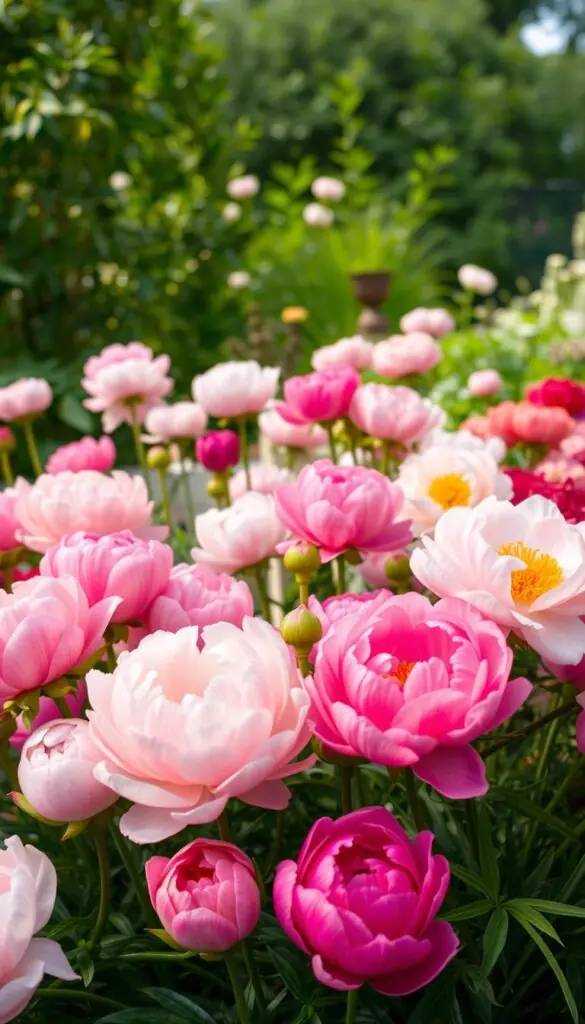
Herbaceous, tree, and Itoh: what fits your zone and style
Herbaceous types are cold-hardy, die back in fall, and return in spring with classic clumps of foliage. P. lactiflora gives those full, fragrant flowers that many gardeners love.
Tree forms are woody shrubs that bloom earlier and make a strong, upright presence in the garden. They prefer slightly alkaline soil and can reach about six feet.
Intersectional (Itoh) combines large blooms and sturdy stems. Itoh often flowers over weeks and suits warmer locations that lack deep winter chill.
Stretch the season with early, mid, and late selections
Mix early, mid, and late varieties so blossoms roll from late spring into summer. Julia Rose Itoh offers apricot-pink tones; 'Pink Hawaiian Coral' brings coral-apricot flair.
Color and scent cues
Fragrance varies widely. 'Festiva Maxima' and 'Duchesse de Nemours' are famously scented. Sniff when you can, and check roots and eyes on divisions to set up strong flowering for years.
- Match type to climate and space.
- Give plants room and good sunlight for healthy foliage and fewer problems.
The Best Spot: Sunlight, Soil, and Air for Lush Blooms
A bright, airy location is the single best thing you can give these long-lived plants.
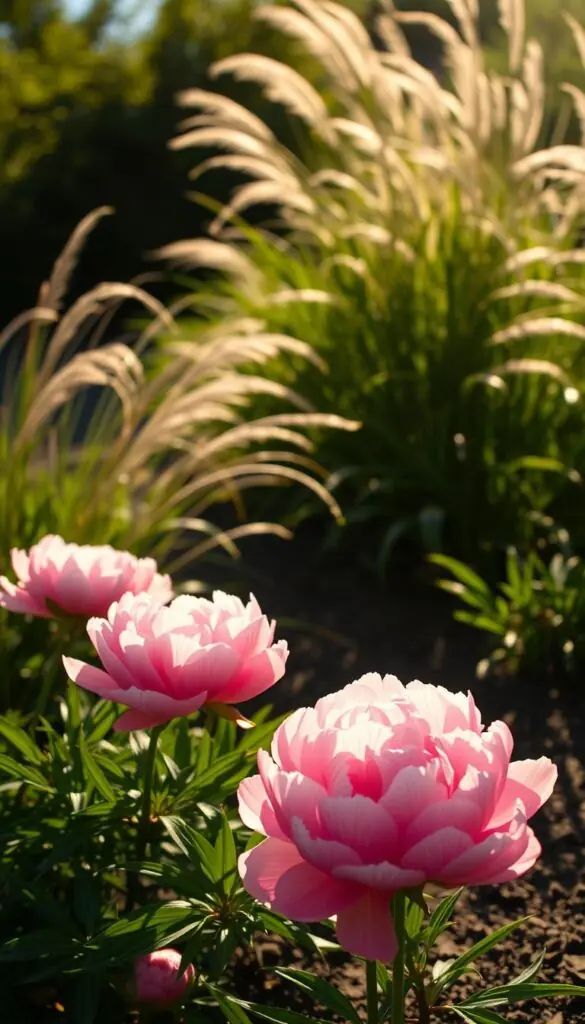
Sunlight: Choose a location that gets about 6–8 hours of direct sunlight. In warmer zones a touch of afternoon shade keeps petals from fading on hot summer days.
Soil: Your soil should crumble, not smear. Aim for fertile, well-drained, neutral to slightly acidic ground. If you’re planting a tree peony, a more alkaline spot suits it better.
Space and air: Give each plant 3–4 feet of room so air moves between stems. Avoid spots near thirsty shrubs or crowded roots; stagnant, humid air invites disease.
"Watch where the sun falls, feel the soil texture, and pace out spacing — simple checks that set you up for success."
| Factor | What to Check | Quick Fix |
|---|---|---|
| Sunlight | 6–8 hours daily | Move to a brighter location or add light shade in Zone 8 |
| Soil | Crumbly, fertile, drains well | Mix in compost or build a raised bed |
| Spacing | 3–4 feet between plants | Mark stakes to keep consistent spacing |
| Watering | Deep soak; top 1–2 inches dry between | Water weekly, less in cool weather |
Quick neighborly tip: Walk the yard at noon, feel the soil, and set stakes where you plan to dig. Small checks today mean strong roots and happier peonies for years.
When to Plant Peonies: Fall Leads, Spring Follows
A small window in fall sets the stage for decades of healthy, returning plants.
Plan to plant peonies in fall—late September through October in most U.S. zones. Aim to set divisions about six weeks before your ground freezes. This gives roots time to knit in before winter.
In Zones 7–8, slide your schedule a bit later as your cool-down comes later. Planting in spring is possible, but expect the plant to spend a season building roots and delay blooms for a year.
| Action | Timing | Note |
|---|---|---|
| Set divisions | ~6 weeks before freeze | Roots settle; stronger spring growth |
| Depth | 1–2 inches | 1 inch in warmer states to encourage buds |
| Sun | 6–8 hours | Afternoon shade in hot regions |
- Water in well at planting, then ease off.
- Move mature plants only in fall, keeping roots intact.
- Label each roots and variety so you track bloom timing for years.
How to Plant Peonies Step by Step
A careful start makes the difference: prepare soil, set the root on a small mound, and water deeply to help young plants settle.
Gather tools: a shovel for the hole, a hand fork to blend compost, a bucket for amendments, and a hose for a deep first drink.
Dig and amend
Dig a generous hole about 2 feet wide and deep. Roughen the sides so roots grow outward easily.
Test soil in your hand. Add compost until it feels loose and crumbly and smells earthy. Bone meal is optional for phosphorus-loving varieties.
Set the root correctly
Build a small mound in the hole and set the root ball on top with the eyes facing up. Position the eyes about 1–2 inches below the ground; in warm regions aim closer to 1 inch.
Spread roots outward so they aren’t cramped. Trim broken roots cleanly. Do not plant deeper than 2 inches — that reduces flowers.
Backfill, water, and mulch
Backfill and tamp lightly to remove air pockets without compacting. Water deeply to settle soil, then allow the top inch to dry before watering again.
Add only a very light mulch the first season to keep moisture even without burying the crown.
"Keep crowns shallow and soil crumbly; it's the simple checks that protect blooms for years."
- Common mistakes: planting too deep or leaving a soggy hole.
- Mark the spot with a discreet stake noting variety and spacing for future reference.
peony care: Watering, Feeding, and First-Year Confidence
A gentle routine of deep watering and light feeding helps young plants set roots for long-term success.
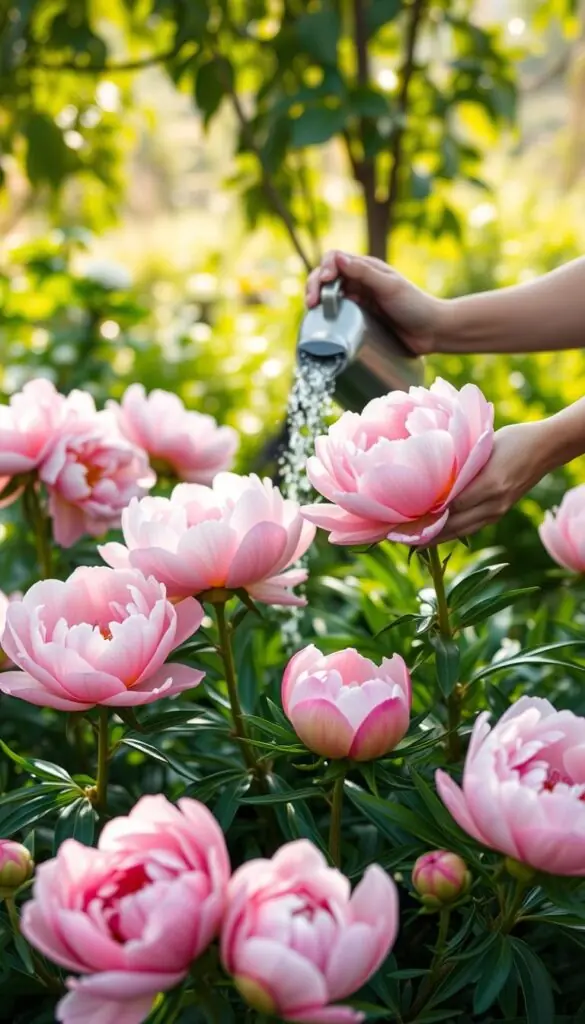
Water well, not often. Give a deep soak every 7–10 days, then let the top two inches of soil dry. This encourages roots to dive deep and makes plants drought-tolerant once established.
Use a touch test: press your finger into the soil. If it feels dusty-dry at the surface and foliage looks a bit limp, water at the soil line. Avoid wetting leaves to cut disease risk.
Fertilizer rhythm
Mix compost into the hole at planting and keep feeding light. In poor soils, a gentle top-dress after the flower season once every few years is enough.
"Skip heavy fertilizers — too much nitrogen makes lush foliage but fewer blooms."
| Task | Timing | Why it helps |
|---|---|---|
| Deep soak | Every 7–10 days | Builds strong roots and reduces frequent watering |
| Compost | At planting | Feeds soil and encourages root growth |
| Light feed | After bloom (poor soil only) | Supports future flowers without excess foliage |
First-year goals are simple: healthy foliage and strong roots. Expect few blooms while the plant invests in root growth. Through winter, resist fussing — thoughtful neglect is often the best companion for long-lived plants.
Support, Spacing, and Air: Keep Stems Upright and Foliage Happy
Set supports while shoots are small so strong stems grow through them naturally. Early placement saves you from sagging blooms and tangled foliage later.
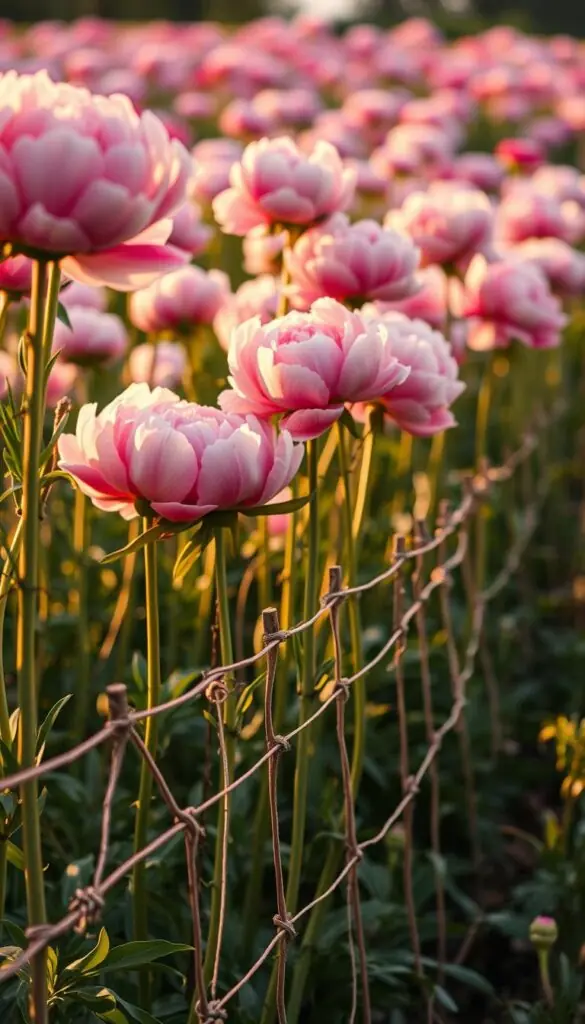
Simple supports: older varieties often benefit from peony rings or wire tomato cages. Install them in early spring so stems slip up through the ring as they lengthen.
Choose a ring wide enough for the plant’s mature spread and tall enough to cradle stems without pinching foliage. If your soil is rich and water is steady, blooms will be larger and supports more useful.
Space and air prevent problems
Give each plant 3–4 feet of space. This lets air move between clumps and dries leaves quickly after rain.
"Spacing is beauty insurance — less disease, more graceful plants."
- Place supports early so stems grow through them.
- Keep the clump center open for airflow.
- Avoid overhead watering to protect stems and leaves.
- Clean and reuse supports each season and nudge leaning stems after storms.
| Issue | Solution | When to act |
|---|---|---|
| Sagging stems | Use peony rings or tomato cages | Install in early spring |
| Tight clumps | Space plants 3–4 feet apart | At planting or when dividing |
| Wet foliage | Avoid overhead watering; improve airflow | All season; especially in wet months |
| Broken supports | Clean, repair, or replace yearly | Late winter before new growth |
Fall and Winter Care: Cut Back, Mulch Wisely, and Rest Easy
Quiet autumn work sets the stage for strong roots and brighter springs.
Timing: Wait for a hard frost. When foliage blackens and flops, use clean pruners to cut stems down to the ground. Bag the leaves and stems and place them in the garden bin. Do not compost any material that looks diseased.
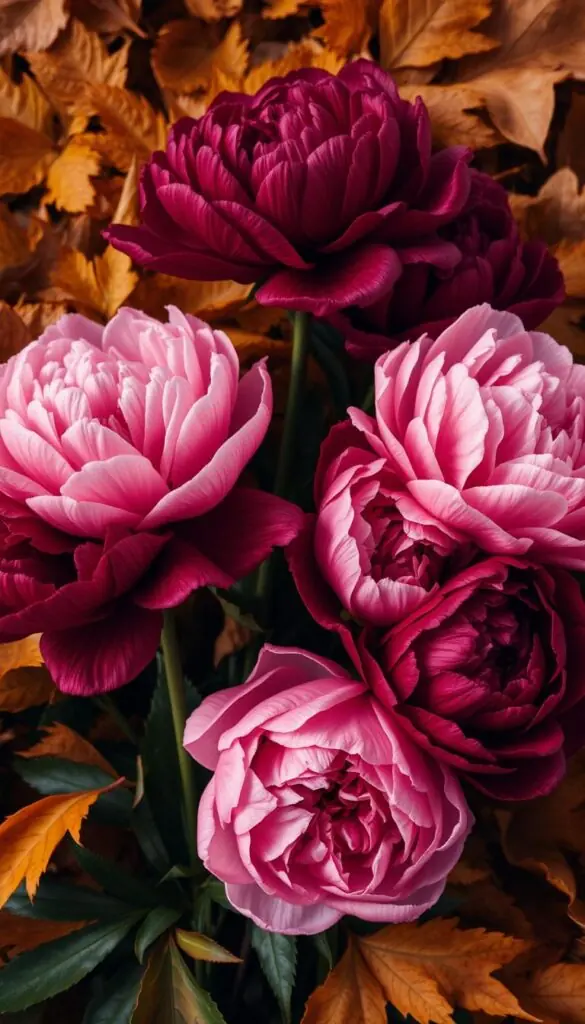
Mulch and winter protection
Add only a very light mulch the first winter in cold areas. Think a loose handful of pine needles or shredded bark around the crown — not a heavy blanket.
In spring, pull mulch away so new shoots rise easily. For tree peony, leave the woody framework; remove only spent leaves and dead tips.
"Less is more in fall: tidy, protect the crown, then let the soil rest."
- Mark clumps with low stakes so you avoid disturbing crowns.
- Skip heavy feeding now; a thin sprinkle of compost is enough.
- Keep the bed open so air moves and roots stay dry.
- If ants linger on warm days, they will leave on their own; they won’t harm wintering crowns.
| Task | When | Why |
|---|---|---|
| Cut stems to ground | After first hard frost | Stops overwintering disease |
| Bag debris | Immediately after cutting | Prevents reinfection |
| Light mulch | First winter only (if severe) | Protects roots without smothering |
| Remove mulch | Early spring | Allows shoots to emerge freely |
Troubleshooting: Buds, Blooms, Ants, and Common Diseases
If your plants skip a season of flowers, small fixes can bring blooms back next year.
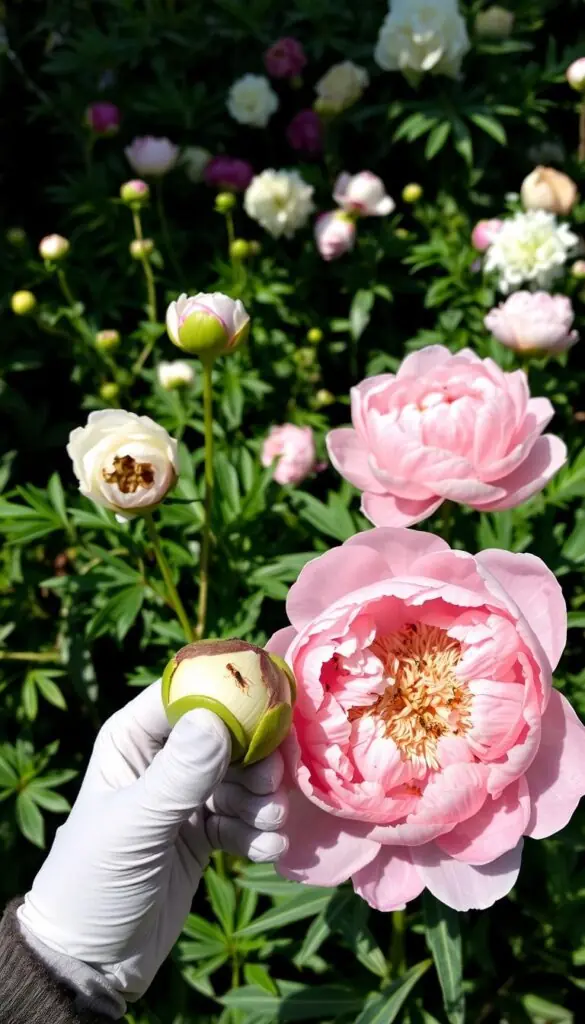
No buds or blooms?
Quick checks: confirm eyes sit about 1–2 inches below the ground. Too deep often means fewer buds.
Count sunlight hours—peonies need about 6–8 daily. Make sure roots drain and plants have 3–4 feet of space for moving air.
Ants on buds
Ants are harmless and drawn to nectar. Before cutting stems, tip them upside down and give a firm shake. No pesticide is needed in most cases.
Powdery mildew, botrytis, and other fungal issues
Improve sunlight and airflow, prune crowded foliage, and water at the base to keep leaves dry.
- Use organic fungicide or horticultural oil every 10–14 days in cool, wet spells.
- Add supports early so tall stems stay upright and buds get air.
- Clear spent leaves to bare ground each fall to reduce overwintering disease.
"Small, steady fixes—depth, light, and clean beds—solve most problems and bring your flower back next year."
| Problem | Fix | When |
|---|---|---|
| Missing buds | Check planting depth (1–2 inches) | At planting or when dividing |
| Fungal spots | Prune, improve air, apply organic fungicide | Cool, damp periods |
| Ants | Shake stems before harvesting | During bloom |
Cutting Peonies for the House: Marshmallow Stage and Vase Life
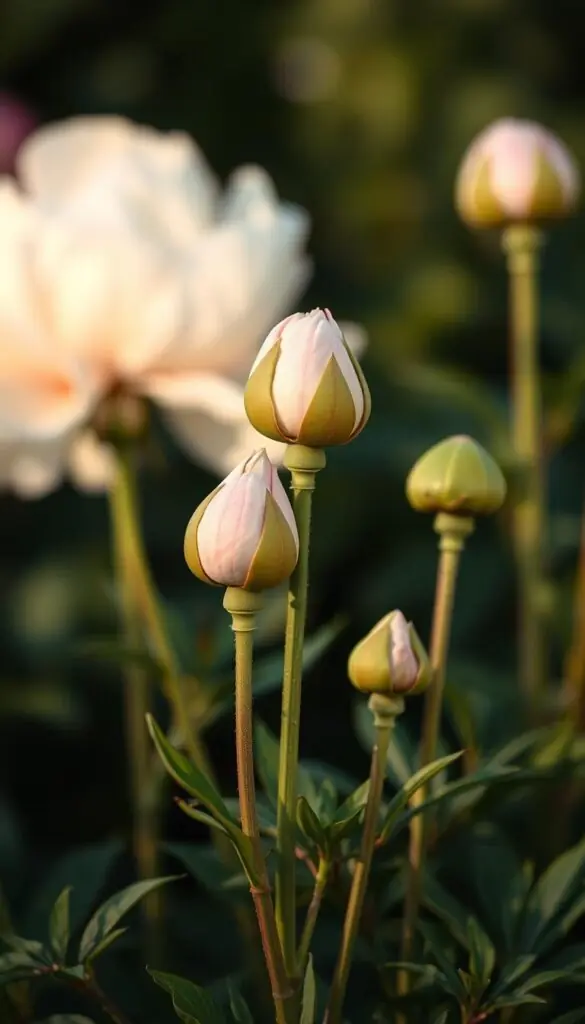
A soft, marshmallowlike bud is the secret to bringing long-lasting blooms indoors. Harvest in the cool morning when buds feel slightly spongy and show color but remain closed.
Harvest timing
Choose buds that yield to a gentle press—soft, not rock-hard. Those open slowly and give you a longer display.
Tip: Cut long stems but leave enough foliage so the plant keeps feeding its roots.
Aftercare
Use clean pruners and make a straight cut. Place stems immediately into cool, fresh water.
Keep arrangements in bright, indirect light and away from hot summer windows or fruit bowls.
Storage trick for timing blooms
For events, strip foliage, wrap stems dry in paper, and refrigerate at 35–40°F. Label with the date.
When ready, recut under running water and place in lukewarm water to rehydrate. Buds will open over the next day.
"The marshmallow stage gives you slow-opening flowers and more days of joy at your kitchen table."
- Harvest in the morning at the marshmallow stage for best vase life.
- Strip leaves that would sit in water; clean vases keep water clear.
- Recut 1/2 inch every other day and change water to refresh blooms.
- Shake stems outdoors to remove ants before bringing them inside.
Conclusion
Give plants space, good soil, and the right depth — then enjoy flowers that return season after season.
With a sunny spot and modest attention, peonies reward you for years. Plant peonies in fall when possible; spring planting simply needs a little more time to settle before a full show.
Keep routine simple: water deeply, feed lightly, and cut back after the first hard frost. Use only a light mulch the first winter in cold zones and avoid planting too deep.
Space clumps for airflow, choose varieties you love, and trust the slow work below ground. Over seasons, your garden will become a calm, blooming place to gather and breathe.
FAQ
When is the best time to plant peonies in fall or spring?
Planting in fall is ideal — aim to set roots about six weeks before the ground freezes so they establish before winter. You can plant in spring, but expect a likely one-year delay before full blooms as plants focus on root growth first.
How much sun do these plants need for lush blooms?
Give them 6–8 hours of sunlight daily. In hotter climates provide light afternoon shade to protect petals and foliage from heat stress and prolong bloom life.
How deep should I plant the roots and what does “eyes up” mean?
Place the root so the eyes (small growth buds) sit 1–2 inches below the soil surface. Too-deep planting often results in few or no flowers for several years.
What soil do they prefer and should I add compost or fertilizer?
They like well-drained, fertile soil that’s neutral to slightly acidic; tree varieties tolerate more alkaline ground. Mix compost into the planting hole and use a light feed only in poor soils after bloom — heavy feeding isn’t needed.
How far apart should I space plants to prevent disease?
Space plants about 3–4 feet apart to allow good airflow and room for foliage. Proper spacing reduces humidity buildup and the risk of fungal issues.
How often and how much should I water?
Water deeply about every 7–10 days, depending on rainfall. Let the top couple inches of soil dry between soaks — deep, infrequent watering builds strong roots and avoids root rot.
Do I need plant supports for heavy blooms?
Use peony rings, sturdy stems, or tomato cages for large-flowered varieties. Supports keep stems upright and flowers visible rather than flopping to the ground after rain.
Why are ants always on my buds — should I worry?
Ants are drawn to the sweet nectar on developing buds and are harmless. They don’t cause bud drop or harm the flowers; you can ignore them or gently brush them off if you prefer.
What should I do in fall and winter to protect plants?
After the first hard frost, cut foliage to ground level to limit overwintering diseases. Apply a very light mulch only the first winter if needed, and remove it in spring to avoid trapping moisture.
My plant isn’t blooming — what common issues should I check?
Check planting depth, sunlight exposure, and whether the plant received adequate winter chill. Crowding, poor drainage, or being planted too deep are frequent reasons for no buds.
How do I harvest stems for the house to get the longest vase life?
Cut stems at the “marshmallow” stage when buds are soft but not open. Make a clean cut, place stems in cool water, and keep arrangements out of direct sun and heat for longer vase life.
Are fungal diseases avoidable and what are organic options?
Good site selection, full sun, and airflow go a long way. Remove and destroy diseased foliage, avoid overhead watering, and apply organic fungicides like copper or sulfur if needed, following label instructions.