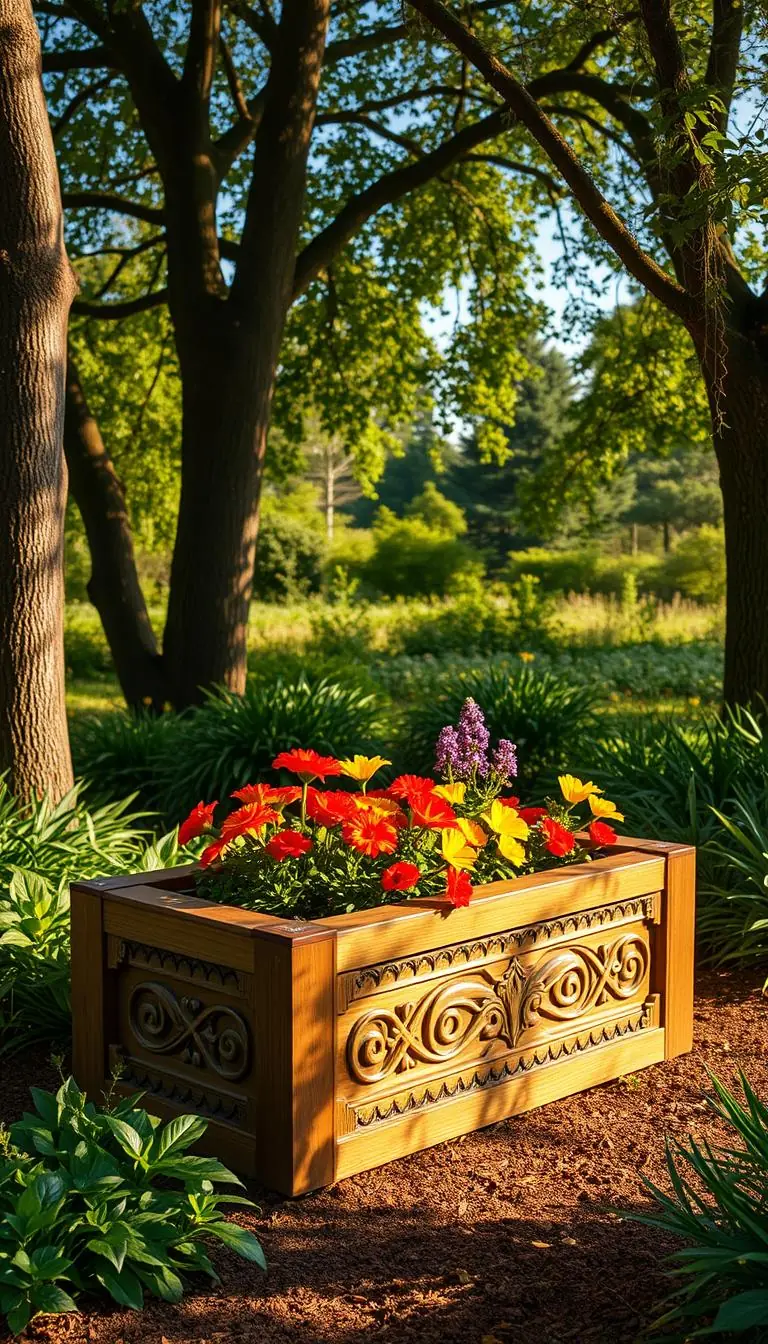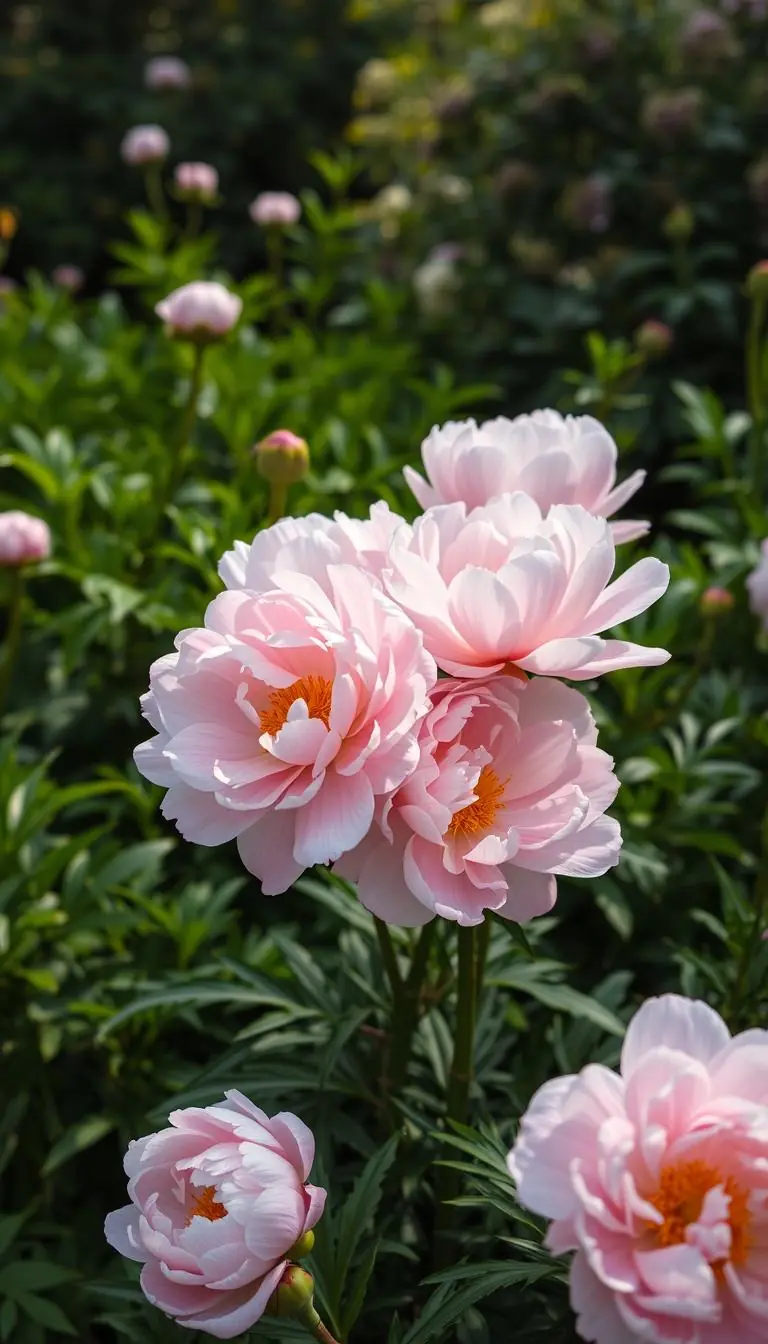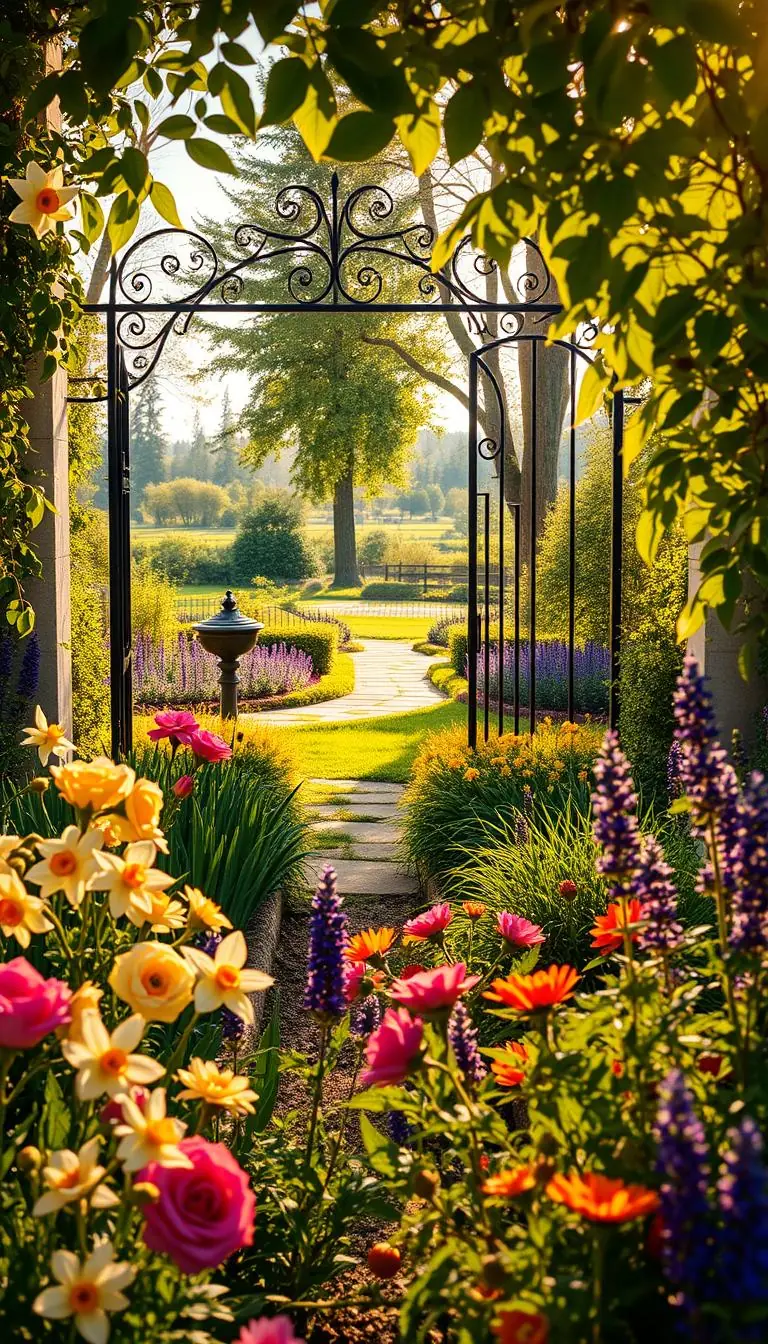
Warm sunlight, the scent of lavender, and the soft rustle of leaves by your front walk. Have you ever wished your yard felt more inviting without a big overhaul?
This guide helps you bring a lush, romantic look to a small outdoor space using simple steps you can do in a weekend or over a season.
We focus on easy choices: choose a few anchoring perennials, tuck in herbs and edibles, and add a low fence or bench for instant charm. Think peonies, old roses, clematis ‘Jackmanii’, and Nepeta ‘Walker’s Low’ near a sunny path.
Work from the ground up with rich organic soil, compost, and mulch to keep moisture steady. Use a spade for planting, a hand fork for weeding, sharp bypass pruners for deadheading, and a hose with a soft spray to avoid erosion.
In short, you’ll get practical tips and real plant examples so your front entry or small backyard feels overflowing with life—without fuss or perfection.
Key Takeaways
- Start with healthy soil and a few reliable perennials to anchor the plan.
- Mix herbs and edibles with flowers for scent and summer snacks.
- Use soft curves, a bench, or low fencing to set the welcoming tone.
- Keep tools simple: spade, hand fork, bypass pruners, and a gentle hose.
- Plant in stages and mulch to save time and water.
What Makes a Cottage Garden Feel So Irresistible
Close your eyes and picture soft petals, fragrant air, and paths that invite you to linger. That sensory mix—sight, scent, and touch—is the heart of an inviting border. You don't need perfect symmetry to make it sing.
Color, scent, and texture working together
Let color do the heavy lifting: pair deep-red roses with lavender-blue geranium ‘Rozanne’ for contrast, or keep things dreamy with pinks and creams. Add fragrant peonies, old roses, and lilacs where you pass so the air feels scented and alive.
Texture keeps the scene interesting. Mix scalloped leaves, feathery grasses, and velvet petals so your eye moves and your hand wants to touch. Include a few culinary herbs—lavender, lemon balm, or thyme—near paths to release scent when brushed.
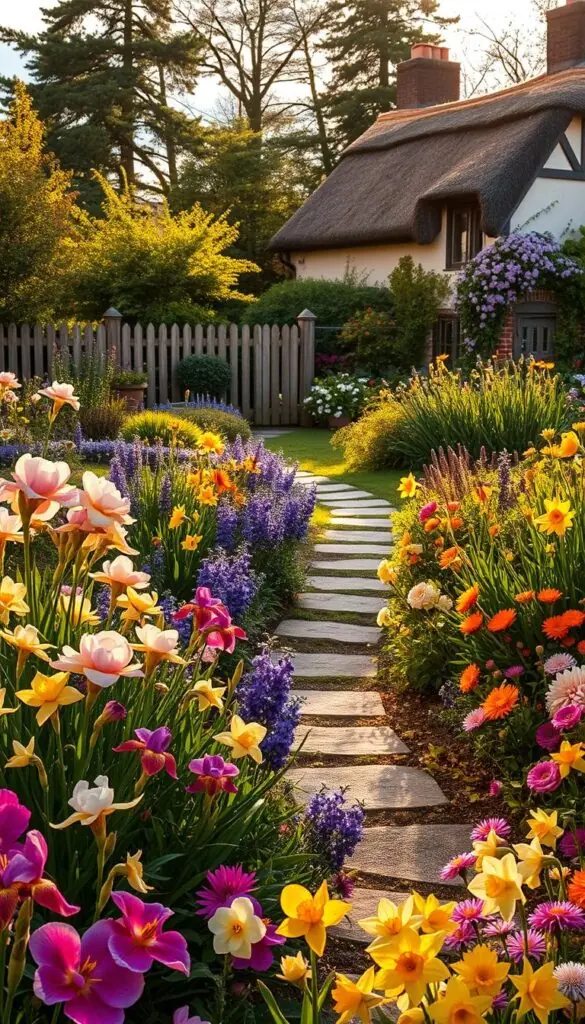
Informal crowding is welcome here: mix perennials, annuals, herbs, and edibles so they twine and bloom without rigid spacing. Repeat key plants for continuity so when one flower fades, another takes its place.
"Trust your instincts—if a view invites you in, you’re doing it right."
- Plan for repeating blooms from spring to fall.
- Keep pruners and a small bucket handy for quick deadheading.
- Mix plant types for both lasting structure and nonstop color.
Plan Your Small Yard for Big Impact
Spend a little time observing your yard before you move a shovel. Start by watching where morning sun warms the soil and where afternoon shade lingers. Note wind funnels and the spots you pass each day.
Read your site and measure what matters.
Read your site: sun, shade, wind, and USDA zones
Check your USDA zone so you pick plants that thrive with less fuss. Watch for hot walls, cool corners, and windy channels near the house.
Measure paths, beds, and clearances you’ll actually maintain
Measure beds you can reach easily; 3–4 feet is practical. Set main paths at 30–36 inches so two people can pass. Lay a hose to sketch soft curves—curves make a small space feel wider.
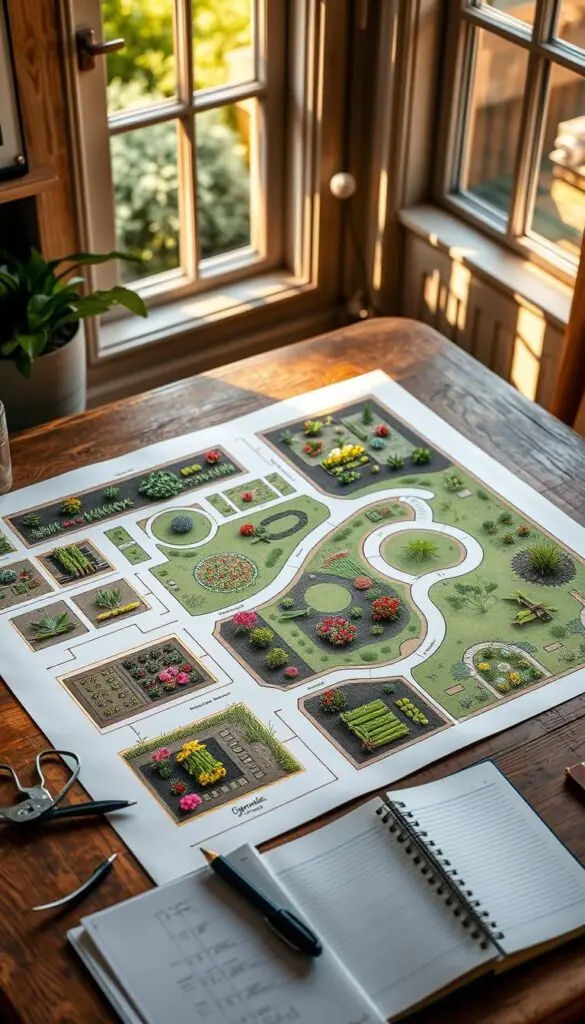
Gather simple tools and set habits
Keep it simple: a spade, hand fork, sharp bypass pruners, and a hose with a soft spray. Mulch and deep, infrequent watering save time and build strong roots.
- Pick path materials that suit your budget: bluestone or brick for permanence, gravel or wood chips for a softer look—edge them so they stay put.
- Plan a couple of daily “moments” — a bench by a trellis or a window-facing bed — and leave a small pocket for vegetables and herbs near the path.
Build Healthy, Organic Soil First
Start with the soil beneath your feet—it's the quiet engine of every thriving border. Good, rich organic soil underpins cottage abundance and gives your garden a strong, long-term start.
Steps to follow:
- Layer 2–3 inches of finished compost over beds, then gently mix the top few inches with a hand fork to protect soil life.
- Feed lightly with compost tea or fish emulsion in the growing season to nudge steady growth without burning roots.
- Choose undyed shredded bark, leaf mold, or fine wood chips and spread 2–3 inches, keeping mulch a couple of inches from stems.
Mulch saves water, keeps roots cool in summer and warmer in winter, and breaks down into humus over years. For heavy clay, add compost and consider a thin gravel layer beneath paths for better drainage.
For sandy sites, compost plus mulch boosts water-holding so your garden plants endure hot spells with fewer wilts. Top up mulch each spring and tuck kitchen scraps under the cover to feed soil life quietly.
Shape the Space: Curving Paths, Low Fences, and Welcoming Entrances
A soft, curving entry can make even a small yard feel wide and welcoming. Start by sketching a gentle S-curve from driveway to front steps. Even a small bend invites lingering and shows off flowers and shrubs as you pass.
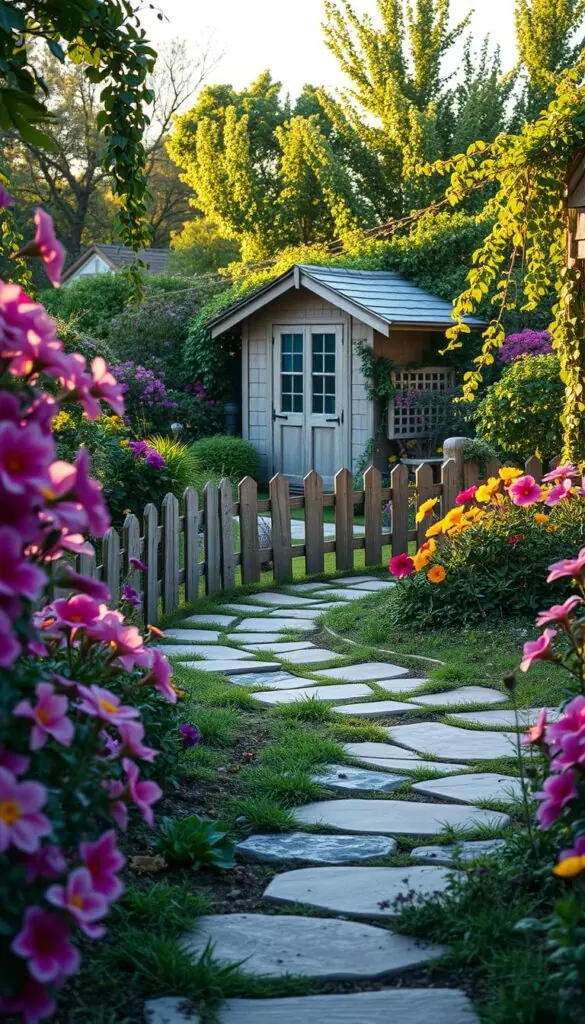
Soft curves with bluestone, brick, gravel, or wood chips
Choose materials that suit climate and budget. Bluestone and brick age beautifully. Gravel and wood chips feel softer underfoot and are easy to refresh.
Edge loose surfaces with steel, brick, or stone so the path keeps a crisp line. Widen near steps for a tiny landing where guests can pause.
Picket or lattice fences to frame beds and support vines
Low picket or lattice fencing defines the area without closing it off. They give clematis and climbing roses something to twine up.
Place a simple trellis or arbor near the sidewalk to create a welcome moment. Two pots of herbs or flowers at the base complete the invitation.
Create an inviting front walk that says “come on in”
Keep sightlines open to the house number and front door, then let taller plants arc behind for a layered look. Add stepping stones into beds for maintenance paths so you can deadhead and weed without compacting soil.
| Material | Feel | Cost | Maintenance | Best for |
|---|---|---|---|---|
| Bluestone / Brick | Formal yet warm | Moderate–High | Low—age looks good | Front walk, long-term curb appeal |
| Gravel / Wood Chips | Soft, informal | Low | Periodic topping and edging | Quick refresh, backyard paths |
| Stepping Stones | Playful, casual | Low–Moderate | Weed control and leveling | Garden beds, maintenance lanes |
| Compacted Base | Stable underfoot | Moderate | Longevity with minimal work | Muddy seasons, wet areas |
- Make the main path wide enough for two people and a wheelbarrow.
- Sketch curves with a hose before you dig—it's easy and forgiving.
- Think seasonally: plant bulbs and shrubs so the view from the street changes through the year.
Set Structure with Four-Season Anchor Plants
A few steady plants can hold a design together when everything else is changing. Start by choosing anchors that give year-round presence and frame softer blooms.
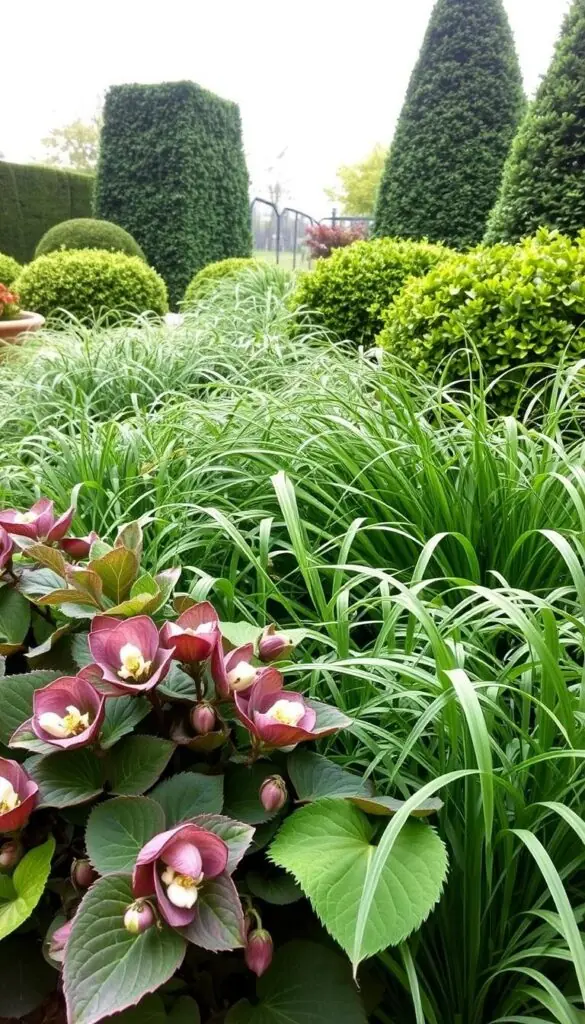
Boxwoods, hydrangeas, and roses for year-round form
Boxwoods add evergreen mass and keep their leaves through winter. Light shaping once or twice a year is enough to keep them neat.
Tuck 'Limelight' hydrangeas behind boxwoods for big summer flowers that dry to tawny heads in cold months. Add shrub or climbing roses for fragrance and long-season blooms.
Placing anchors near the house and corners for balance
Place anchors at house corners, gate posts, and path curves to visually pin beds in place. Repeat anchors on both sides of a walk for cohesion, then fill with perennials and annuals for a relaxed cottage garden look.
- Choose mature sizes that fit so pruning stays minimal over the years.
- Keep anchors slightly forward of the foundation for airflow and access.
- Water deeply the first season; once established, these garden plants steady the whole composition.
Layering Like a Pro in Cottage Gardens
A smart planting order helps every bloom and leaf show off from the path.
Start small and work back. Place the lowest, most fragrant plants nearest the walk so ankles meet scent and color. Then step up with mid-height perennials and finish with taller forms that frame the bed.
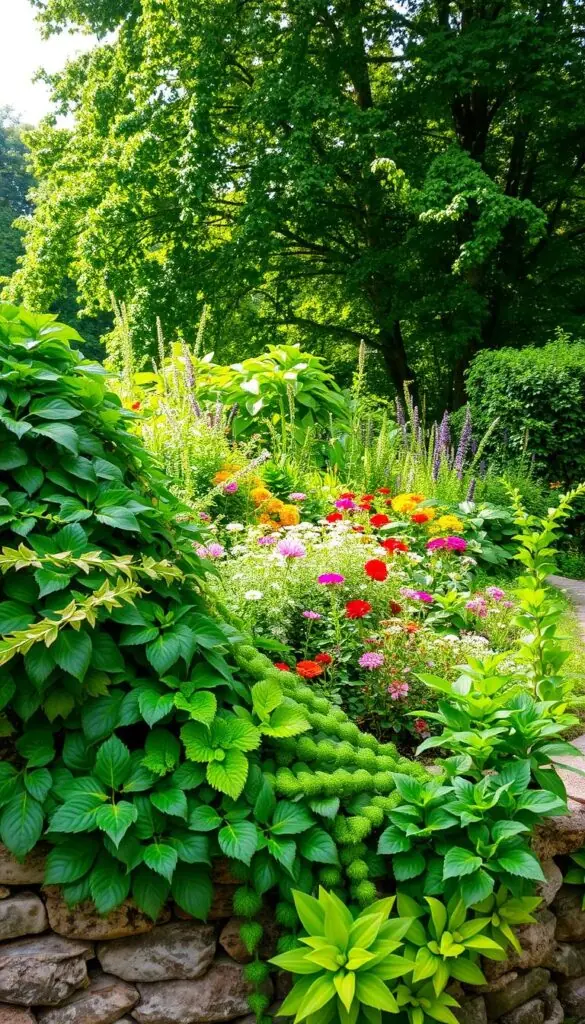
Smallest to tallest for visibility from the path
Line the path with low growers like thyme or dianthus so you see and smell them as you pass.
Next, add medium perennials—lavender, salvia, yarrow—for a steady middle ribbon of color. Put hollyhocks, hydrangeas, or sunflowers at the back or outer edge so they don't block sightlines.
Informal crowding without smothering plants
Aim for friendly density: leaves should brush but not smother. Repeat colors or shapes every few feet to guide the eye along beds.
- Leave pockets for annuals to fill gaps after a bloom cycle.
- If one plant overruns a neighbor, lift and divide in spring or fall.
- Tuck stepping stones into beds so you can snip herbs or cut flowers without compacting soil.
Cottage Garden Plants: Perennials, Annuals, Herbs, and Edibles
Start with long-blooming perennials, then sprinkle in annuals and useful herbs for constant interest.
Perennials to rely on: Geranium ‘Rozanne’ for heat-tolerant color, peonies for spring drama and scent, and lavender for drought tolerance and fragrance.
Annual sparks: Cosmos, nasturtium, and Blue Star Laurentia (Laurentia axillaris) keep color humming from June into late summer.
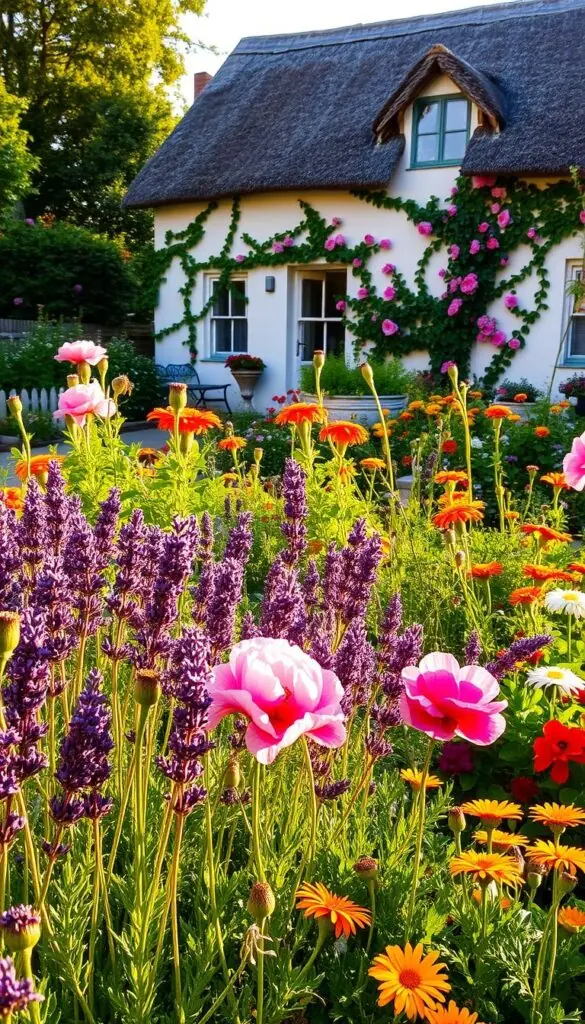
Herbs for scent and snipping: Plant thyme between stones, rosemary by steps, and lemon balm or holy basil near seating so each pass releases scent.
Charming edibles: Tuck cherry tomatoes on a small obelisk, add rainbow Swiss chard for glossy leaves, and place a cabbage or two at a bed edge for surprise color.
Pollinator magnets: Yarrow, hyssop, hollyhocks, and sunflowers all draw bees and butterflies and help other plants set seed and bloom.
"Choose plants that reward you with scent and visitors, not more work."
Small-space tips and timing
- Layer low, mid, then tall plants so flowers show from the path.
- Contain mint in pots and give lemon balm room; aggressive herbs can overrun small areas.
- In hot regions, mulch and water deeply when planting; in cool spots, wait on tender annuals until after frost.
| Group | Examples | Why to love |
|---|---|---|
| Perennials | Geranium ‘Rozanne’, Peony, Lavender | Long bloom, scent, low fuss |
| Annuals | Cosmos, Nasturtium, Laurentia | Fill gaps, nonstop summer color |
| Herbs & Edibles | Thyme, Rosemary, Cherry tomato, Swiss chard | Scent, snipping, tasty harvests |
| Pollinator Plants | Yarrow, Hyssop, Hollyhock, Sunflower | Attracts bees and butterflies |
Color and Scent Pairings that Sing
Pairing scent and hue can turn a small bed into a memorable moment at your gate. Use contrast and repetition so each patch reads clearly from the path. Place fragrant plants where you sit and pass so scent becomes part of daily life.
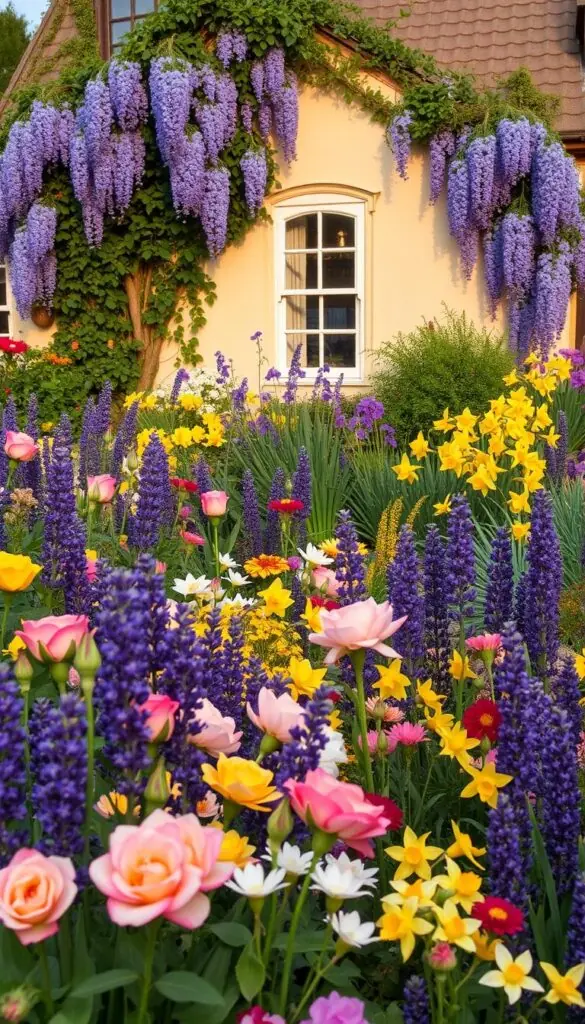
Bold contrast: Plant deep-red Easy Elegance ‘Super Hero’ roses beside lavender-blue geranium ‘Rozanne’ or catmint. These combinations hold up to heat and keep color vibrant through summer.
Soft, fragrant corners: Cluster peonies, old roses, and dianthus near a seat. Add a lilac behind them so a spring breeze carries scent across the path.
- Echo key hues every few feet to make a small bed feel intentional.
- Mix flower forms—large peony bowls, spiky salvia, airy yarrow—to keep blooms distinct from a distance.
- Plant fragrant types near doors, benches, and paths for daily enjoyment.
- Use silver foliage like lamb’s ear or artemisia to soften bright edges and highlight colors.
Keep bloom going by deadheading roses and dianthus weekly. Shade rose roots with low companions such as geraniums to keep soil cool and steady the flush of flowers.
| Pairing | Placement | Benefit |
|---|---|---|
| Easy Elegance ‘Super Hero’ + Rozanne | Sunny beds, path edges | Heat-tolerant color through summer |
| Peony + Old roses + Dianthus | Seating corners, front beds | Long fragrance and romantic pastels |
| Lilac backdrop + mixed perennials | Behind midsized anchors | Spring scent that carries on the breeze |
If you favor pastels, repeat two or three hues; for bolder looks, pick one dominant tone and add a complementary pop. Trust your eye—what makes you smile at the gate will shape the whole space with gentle, confident charm.
Grow Upward: Trellises, Arbors, and Climbers
Raising plants on simple supports draws the eye up and gives winter days geometry and grace. A trellis or arbor adds year-round structure and makes a small yard feel layered without taking space.
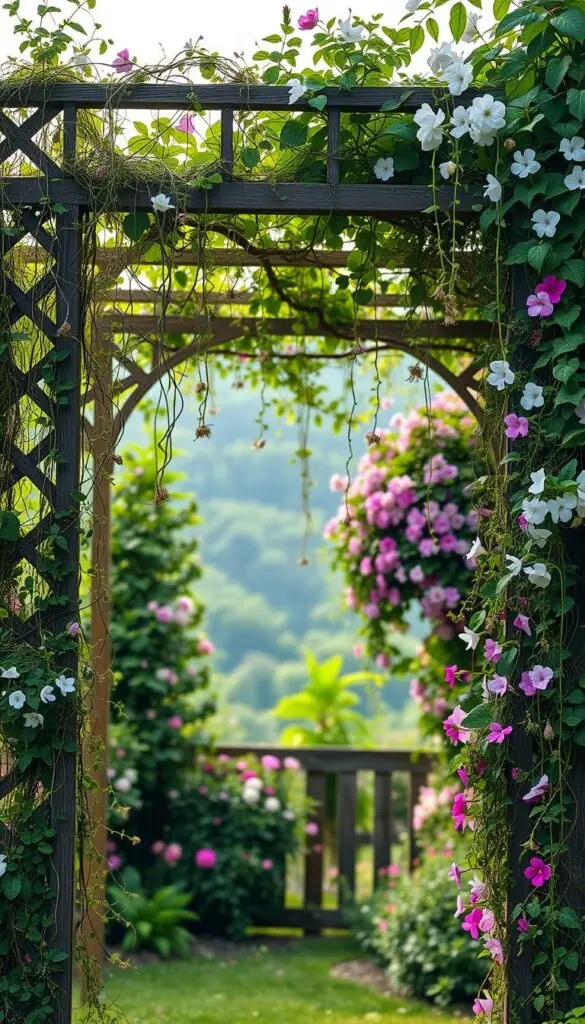
Where to place supports for height and winter interest
Set a trellis by porch steps, at a path bend, or near a house corner to create a steady focal point. A 4-foot tuteur with Clematis ‘Henryi’ looks lovely by a front porch; round 7-foot trellises lift the eye where you need it.
Vines and simple installation tips
- Plant clematis ‘Jackmanii’ or ‘Henryi’ for trusted blooms; keep roots cool with mulch and give tops sun.
- Use a potted obelisk or sturdy tuteur for compact plots—height without footprint spread.
- Arbors at a sidewalk entrance form a fragrant gateway when trained with climbing roses or clematis.
- Wisteria is dramatic but needs strong support and regular pruning to stay manageable.
- Tie growth with soft ties, anchor supports firmly, and prune after bloom to encourage new shoots.
- Pair verticals with low lavender or thyme at the base to soften edges and add scent.
"Even leafless, a well-placed trellis gives form and casts beautiful winter shadows."
This practical design idea brightens a cottage garden bed and keeps classic, traditional cottage charm while supporting the plants you love.
Add Character: Benches, Birdbaths, and Whimsy
A single bench can turn a plot of plants into a daily invitation to sit and savor.
Place a simple two-person bench early. Give it a view of blooms and a clear path. Seating guides plant choices and welcomes guests to your home.
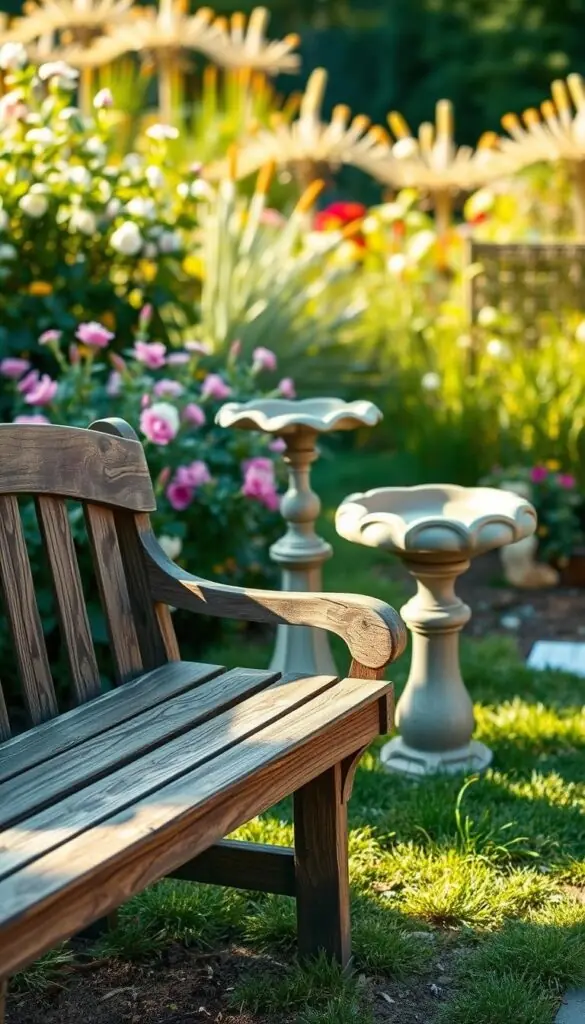
Choose durable décor like cast stone finials, a metal lantern, or an old wheelbarrow. These pieces endure weather and keep the look anchored through seasons.
Seating first: a two-person bench as your invitation
A bench adds year-round charm with little upkeep. Position it near boxwoods or evergreens for winter interest. Use seasonal pots for quick color.
Simple decor that endures: cast stone finials, lanterns, wheelbarrows
- Tuck a birdbath among flowers so birds visit safely and you hear moving water each morning.
- Repeat one or two materials—wood, stone, or metal—for cohesion as you layer pieces.
- Limit small ornaments so maintenance stays easy and your plants remain the stars.
| Item | Why it works | Maintenance |
|---|---|---|
| Two-person bench | Invites sitting; frames views of vegetables and flowers | Low—seal or paint every few years |
| Cast stone finials | Add formality without fuss; anchor paths | Very low—resists weather |
| Birdbath | Attracts wildlife and soft sound | Weekly cleaning in warm months |
| Old wheelbarrow | Whimsical planter that shows personality | Moveable; protect metal from rust |
"Let one focal piece carry the story; simple character keeps the space livable and joyful."
Seasonal Care and Timing for a Thriving Cottage Garden
A simple seasonal rhythm keeps your plot lively and manageable all year. Follow a few short, timed tasks and your beds will reward you with steady blooms and healthy growth.
Spring
Rake gently, add 2 inches of compost, and refresh undyed mulch to protect soil and roots.
Divide crowded perennials as shoots appear and tuck cool-season annuals like pansies into open pockets. Feed lightly with compost tea or fish emulsion after new growth shows. Set stakes early so supports disappear into foliage.
Summer
Water deeply and less often to train roots; aim for morning watering with a soft spray to protect soil structure.
Deadhead roses, dianthus, and cosmos weekly to extend blooms. Tie floppy stems with soft ties and give a light midseason feed if plants look tired.
Fall
Cut back spent stalks selectively, leaving some seed heads for birds. Top up mulch to 2–3 inches to insulate through winter.
Plant spring-blooming bulbs in gaps between perennials so next year brings early color without extra beds.
Winter
Enjoy structure: evergreen boxwoods and trellises hold the view, while dried hydrangea blooms add off-season interest.
Use fallen leaves as free mulch; shred or layer thinly so they break down and feed the soil.
"Tiny, regular care beats marathon chores every time."
Year-round: Keep pruners, a hand fork, and a small bucket for 10-minute tune-ups. Little, frequent work saves time and keeps your garden and gardening joyful throughout the year.
Conclusion
With one bench, a curving path, and a few trusted plants, your plot can feel like home.
Start simple: build living soil, set evergreen anchors like boxwood or hydrangea, then layer roses, herbs, and perennials for scent and color.
Keep beds reachable and paths clear so upkeep stays light. Mulch and gentle feeding cut chores and help plants thrive.
These tips make good design feel easy. Repeat favorite plants for a unified look and place seating where scent meets the path.
Enjoy morning coffee on the bench and slow evening strolls. Your house and yard will grow more inviting each season.
We’re cheering you on—start small, keep it joyful, and let your cottage garden style evolve with you.
FAQ
What makes a cottage garden feel so irresistible?
It's the mix of color, scent, and texture working together with a relaxed, abundant look rather than strict formality. Layers of perennials, annuals, herbs, and edibles create a lush, lived-in space that feels welcoming and full of life.
How can I achieve this look in a small yard?
Plan for big impact by reading your site — note sun, shade, wind, and USDA zone — then measure paths, beds, and clearances you can maintain. Use curving paths, low fences, and vertical supports to add height without crowding the footprint.
What tools do I really need to start?
Keep it simple: a spade, hand fork, bypass pruners, and a hose with a soft spray nozzle will cover most tasks. A kneeling pad and bucket or wheelbarrow also make planting and upkeep easier.
How do I build healthy, organic soil first?
Start with generous compost and regular mulch. Use gentle fertilizers like compost tea or fish emulsion when plants need a boost. Aim for loose, well-draining soil rich in organic matter so roots can thrive.
What mulch should I use and how thick should it be?
Organic mulches such as shredded bark, leaf mold, or well-rotted compost work well. Apply 2–3 inches around beds to conserve moisture and suppress weeds, keeping mulch slightly away from stems to prevent rot.
Which plants give year-round structure?
Choose four-season anchors like boxwood for low form, hydrangeas for summer bloom and dried interest, and roses for repeat color. Place them near the house or at corners to balance beds and provide winter shape.
How should I layer plants for best sightlines?
Plant from smallest to tallest so each layer remains visible from paths and seating. Crowd plants informally to create fullness, but avoid smothering by leaving enough room for growth and airflow.
What perennials and annuals work well together?
Pair long-lived perennials such as geranium ‘Rozanne’, peonies, and lavender with annual sparks like cosmos, nasturtium, or Laurentia for continuous bloom. Mix herbs and edibles like thyme, rosemary, and cherry tomatoes for scent and harvest.
Which plants attract pollinators?
Pollinator magnets include yarrow, hyssop, hollyhocks, and sunflowers. Also keep native nectar sources and a variety of bloom times so bees and butterflies find food through the season.
How do I choose color and scent pairings?
Use contrast and harmony: deep-red roses set off lavender blues, while pastel combos—peonies, old roses, dianthus, and lilacs—create soft fragrance-driven pockets. Think about how colors read from paths and seating areas.
Where should I place a trellis or arbor?
Place vertical elements near focal points like entrances, corners, or mid-border gaps to add height and winter interest. They also work well against a wall or along a path to draw the eye upward.
Which climbers are reliable for this look?
Clematis varieties such as ‘Jackmanii’ or ‘Henryi’, climbing roses, and wisteria offer strong seasonal impact. Choose cultivars suited to your sun exposure and support structure to prevent overgrowth.
How do I add character without clutter?
Choose a single seating piece, like a two-person bench, and a few enduring accents—cast stone finials, a birdbath, or a vintage wheelbarrow. Keep decor functional and placed where you can enjoy it.
What seasonal tasks keep a plot thriving?
In spring, prep beds, divide perennials, and plant cool-season annuals. Summer needs steady watering, deadheading, feeding, and staking. In fall, refresh mulch, cut back tender growth, and add bulbs. Winter is for appreciating structure and protecting evergreens.