You step outside and the air carries a soft lavender note. Have you ever wished your outdoor space felt like a small, calm room connected to the rest of your home?
This guide helps you choose two or three ideas that fit your schedule and space. We pull inspiration from shows like the RHS Chelsea Flower Show and advice from PHS, so you’ll see fragrant containers, patio structure, native plants, and simple wellness plantings made practical for everyday use.
Expect clear steps for what to plant, when to plant, and which tools to actually buy. You’ll also get sensory cues—the feel of lamb’s ear, the hush of a bubbler—and timing notes for winter planning, spring windows, and summer care.
Key Takeaways
- Choose two ideas that match your time and sun exposure.
- Simple tools and a short shopping list are enough to start.
- Use native plants and fragrant containers for easy rewards.
- Follow seasonal timing: plan in winter, plant in spring, maintain in summer.
- Design with one bold foliage anchor and staggered bloom times.
A calm reset: wellness-forward flower gardens that help you breathe
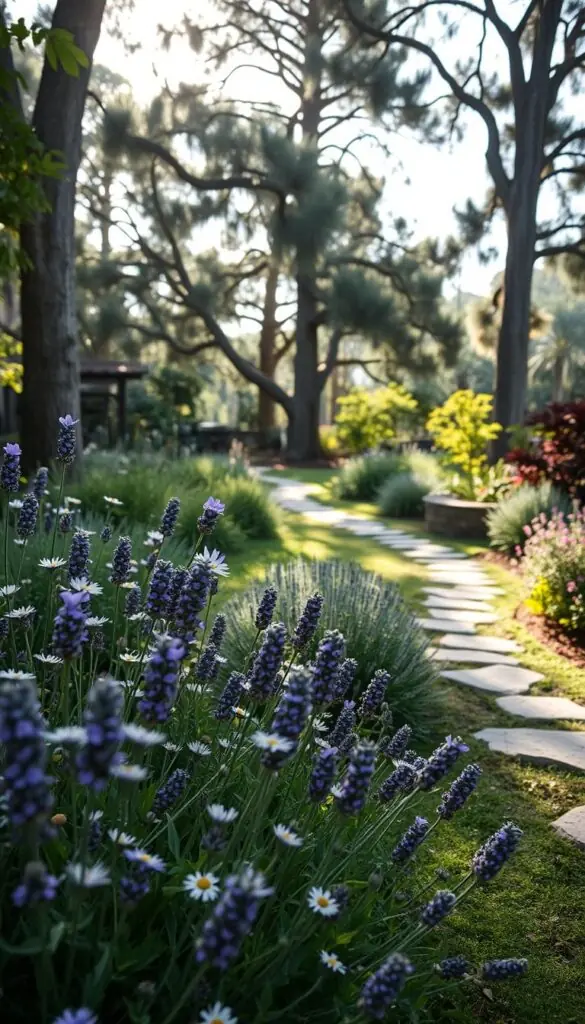
Design a simple spot that uses scent, texture, and soft sound to slow your day. Start with one chair, a clay pot of English lavender, and a shallow birdbath to catch morning light.
Sensory layers: tuck chamomile along a path for its gentle fragrance and place lamb’s ear at the edge for velvety touch. Add rosemary near steps for its mood-lifting scent and occasional kitchen snips.
Sensory plants to use
- Lavender (zones 5–9) in full sun and well-drained soil.
- Chamomile in dappled sun along walkways.
- Lamb’s ear at reach for soft texture.
Simple water features
Add a low-splash bubbler or a tabletop solar fountain to mask street noise. A shallow birdbath draws finches and brings a gentle focus through birdsong.
Quick seasonal setup
- Winter: sketch the layout and order plants.
- Spring: plant lavender in sun; set chamomile and lamb’s ear where you’ll touch them.
- Summer: deadhead, top up the birdbath daily, and mulch 2 inches to keep roots cool.
Keep tools simple: a lightweight hose, a 2-gallon watering can, and a trowel. Quick tip: let lavender soil dry slightly between waterings to avoid root rot.
If a spot makes you breathe deeper, you’ve created what matters—expand gently from there.
Native beauty and rewilded borders that welcome wildlife
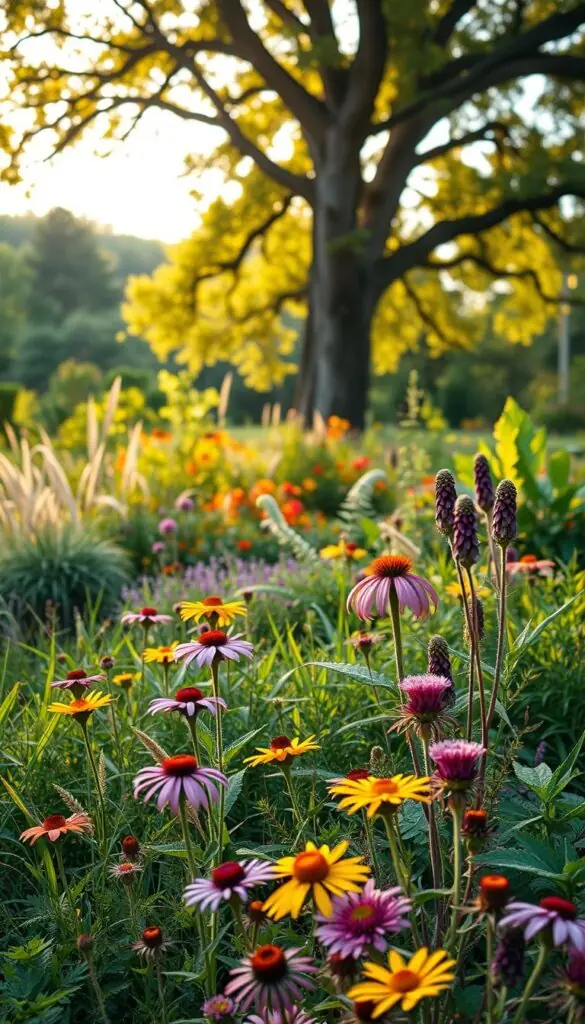
Create a small, rewilded border that feeds pollinators and gives birds a place to rest. This is an easy way to add life to your yard without a big project. Pick a few regional anchors and let them spread slowly.
Plant lists by region
- Three native anchors: milkweed for monarchs, mountain mint that hums with pollinators, and fall-blooming asters for late nectar.
- Add a small native tree like serviceberry for spring blooms, summer berries, and bird shelter.
- Include a tuft of little bluestem or other native grasses for winter seed heads.
Simple habitat steps and seasonal tasks
- Create layered edges: perennials front, shrubs like inkberry or viburnum mid, and small trees behind for nesting.
- Leave the leaves: rake only paths; tuck leaves into beds to feed soil life and insects.
- Set shallow bee water pans with pebbles and refresh them every few days.
- In spring, stagger bloom times—early columbine, summer coneflower, autumn asters—to keep food coming.
- Quick tip for gardeners: avoid pesticides; let beneficial insects arrive naturally.
These small choices change how your landscapes look and feel. Over time, the design grows into a lively, low-maintenance landscape that supports plants and wildlife alike.
Climate-smart color: water-wise flowers and gravel-style beds
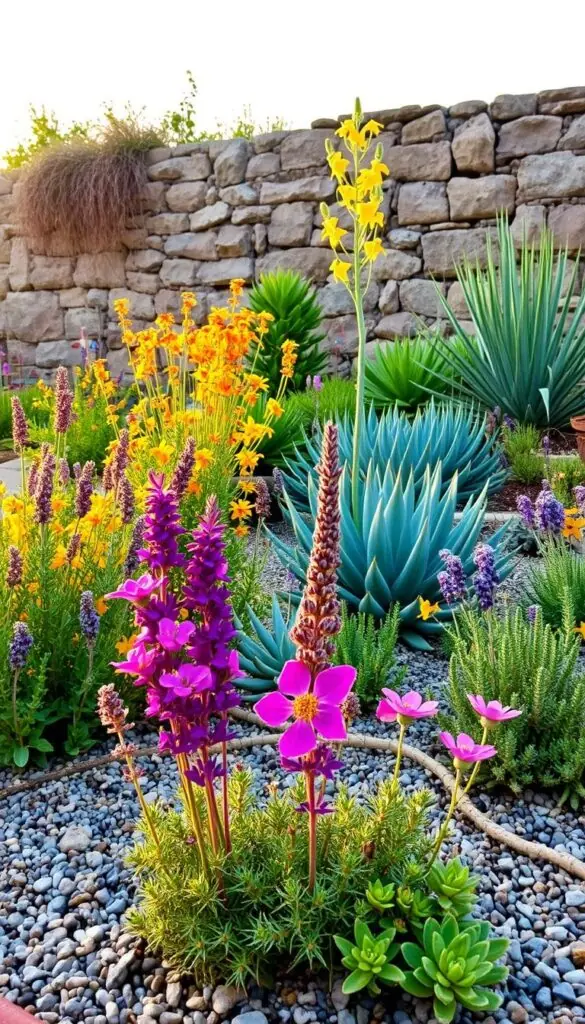
A small, sunny strip can become a climate-smart ribbon of long-lasting color and low water use. This approach blends hardy plants, heat-holding stone, and a simple drip system.
Start small: convert a 4x8' strip with sun-loving salvias, Achillea (yarrow), and low-water succulents. Add ornamental grasses like blue fescue for texture and movement.
Drought-tolerant allies
- Salvia — long-season spikes that pollinators enjoy.
- Yarrow — flat umbels, low water once established.
- Succulents — hold moisture and need infrequent watering.
- Feather reed and blue fescue grasses for structure.
Tools, materials, and quick steps
- Clear 4x8' bed and loosen soil with a soil knife.
- Lay drip lines on soil; install a simple timer on a 50' drip kit.
- Cover with 2–3" washed gravel (skip landscape fabric).
- Water new plants daily for two weeks, then deep and infrequent.
Common mistakes to avoid
Do not overwater xeric plants; soggy roots kill more than drought. Avoid fabric under gravel — it clogs and hinders roots. Check emitters each spring and flush lines to prevent surprises.
| Plant | Water Need | Best Placement |
|---|---|---|
| Salvia | Low | Full sun, front or middle |
| Yarrow (Achillea) | Low | Front, mass for color |
| Blue fescue | Very low | Edges for texture |
| Succulents | Very low | Rocky crevices or pockets |
Include a drought-tolerant tree or large shrub nearby, like serviceberry, to frame the view and offer light shade as the world warms.
Edible elegance: roses, veggies, and backyard fruit sharing the stage
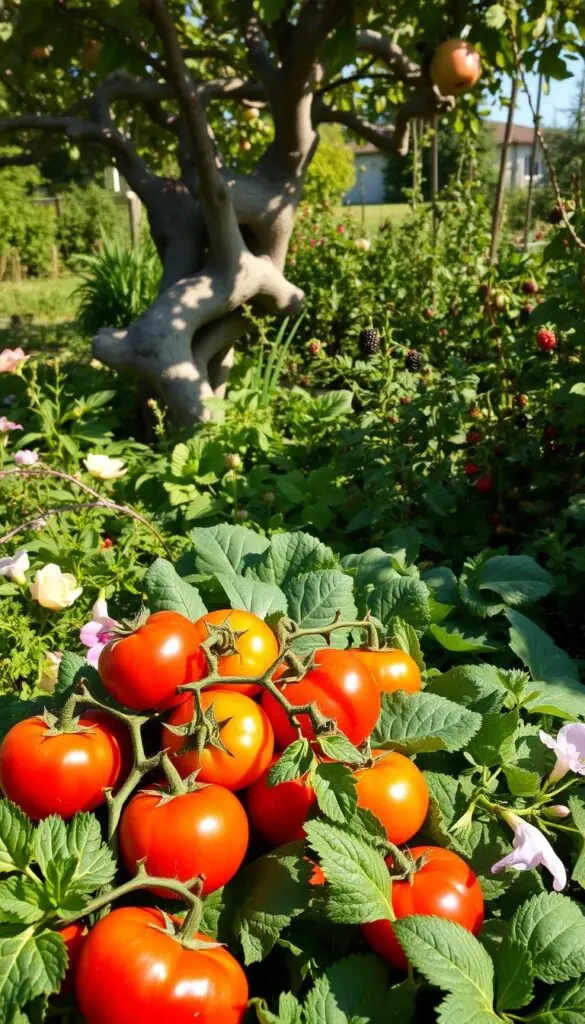
Mix beauty and harvest by planning a small, productive plot that looks as lovely as it tastes. Start near your home so scent and cut stems are always within reach. A compact plan makes maintenance easier and keeps yield high.
Potager ideas and companion planting
Keep beds tidy and fragrant. Lay out 3–4 raised beds in a simple grid. Edge each bed with calendula and thyme to attract pollinators and soften hard lines.
Plant climbing beans on a trellis, basil beneath, and marigolds at the margins for airflow and scent. This pairing reduces pests and gives you layered harvests.
Compact fruit picks for small spaces
- Try columnar apples (Fruit Snacks line) in half-barrels for narrow spots.
- Use compact blueberries like Bushel and Berry in sunny pots or on patios.
- Place a fig in a 20–24" container and wheel it to shelter for winter in cooler zones.
Roses and easy-care planting tips
Weave fragrant shrub roses between beds for cut flowers and pollinator blooms. Choose disease-resistant varieties shown at recent shows for color and hardiness.
Timing & spacing: plant roses and fruit trees in full sun, amend soil with compost, and mulch 2–3" to retain moisture. Prune lightly in late winter to open the canopy and improve bloom.
- Separate drip zones: steady flow for fruit, gentler cycles for roses.
- Underplant trees with alpine strawberries to create edible groundcover.
- Harvest in the morning for the best flavor; deadhead roses weekly to encourage more blooms.
Patio and container design that turns hardscape into soft bloom
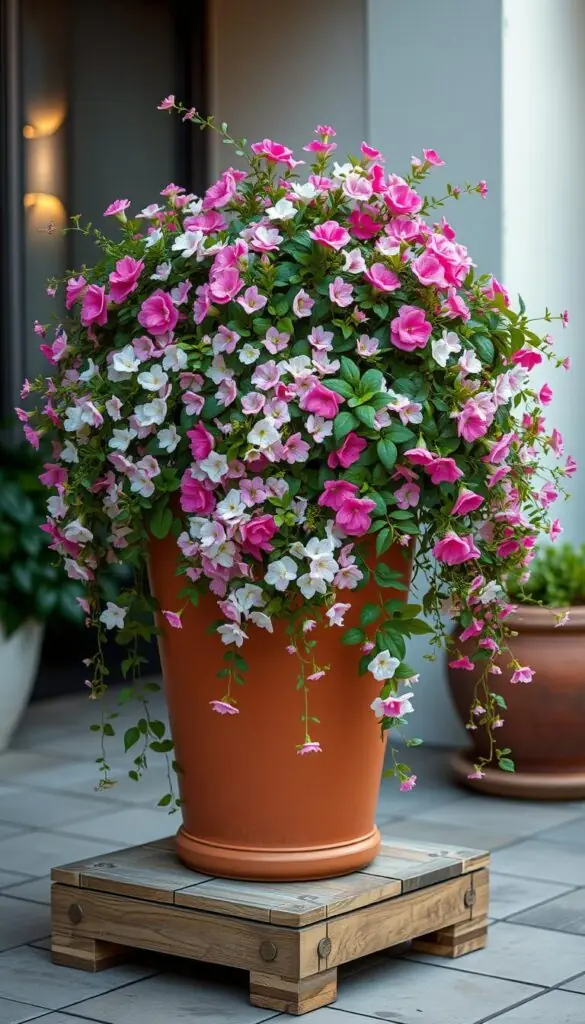
A handful of well-chosen pots makes any outdoor space feel intentional and alive. Arrange scents, textures, and movement so your patio becomes an inviting room.
Fragrant containers
Choose plants that reward you when you pass by. Build a trio: a tall pot with star jasmine trained on a small trellis, a medium glazed pot with rosemary and trailing thyme, and a low bowl of English lavender for immediate perfume.
Structure and movement
Add a dwarf boxwood or myrtle topiary for upright form. Flank it with airy ornamental grasses or a fern to catch the breeze and soften hard edges.
- Pots & soil: use glazed or fiberclay pots 16–24" wide and a high-quality potting mix plus pine bark for drainage. Avoid garden soil in containers.
- Watering: water deeply until a little drains; check daily in peak summer and add a saucer reservoir for thirsty specimens.
- Care tips: feed lightly every 2–3 weeks with balanced liquid fertilizer and pinch mandevilla tips to boost branching and more blooms.
- Group several pots to create a shared microclimate and hold humidity.
- For shade, swap star jasmine for a fern and mandevilla for impatiens for lush foliage and steady color.
- Refresh tired pots in late summer with petunias or verbena to carry color into early fall.
Quick note: Monrovia reports a surge in fragrant container choices—use this momentum to try one recipe this season and see how the space responds.
Vertical, urban, and under-glass gardening for tiny spaces
Small rooms outdoors can feel abundant when you grow upward and under glass. This section gives simple, exact moves for balconies, windowsills, and tiny patios.
Outdoor green walls & trellises:
- Install a pocket panel on a sunny wall and plant sedum and hens-and-chicks for low-care color. Full sun, very little water once set.
- Add a narrow trellis to a railing box for peas or climbing beans to save floor space and boost yield.
- For renters, use tension-pole trellises or over-the-railing boxes—no drilling required.
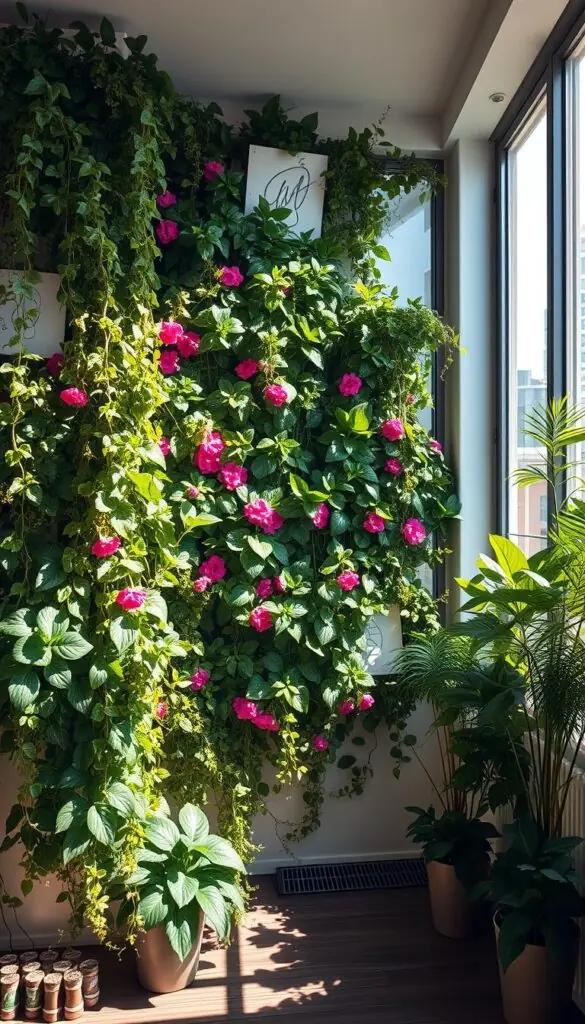
Living walls and indoor screens
Mount a philodendron or pothos living wall in bright, indirect light. Mist lightly and feed monthly.
Light needs: bright indirect for philodendron; morning sun OK for sturdier pothos.
Terrariums and mini-greenhouses
Build a lidded glass terrarium with fittonia, selaginella (spikemoss), and tiny ferns for a humid micro-world on a bright windowsill.
Choose compact begonias under glass for patterned leaves and filtered color.
"Water vertical planters from the top and let them wick down; rotate modules monthly for even growth."
- Top-water pocket panels weekly, then check drainage.
- Use a pump mister for terrariums and a narrow watering can for containers.
- Store hand pruners, mister, and a small can in a caddy by the door for quick care.
| Solution | Best Light | Maintenance |
|---|---|---|
| Outdoor pocket panel (sedum) | Full sun | Low — occasional deep soak |
| Indoor living wall (philodendron) | Bright, indirect | Monthly feed, light misting |
| Lidded terrarium (fittonia, spikemoss) | Bright, filtered | Very low — monitor humidity |
Quick tip: track light—if foliage pales, move plants one step closer to the window. Small shifts make a big difference in tight areas for home gardeners and balcony growers.
Artful palettes and bold foliage for four-season interest
A single color story can feel rich when you mix bold foliage and fine flowers. Pick one family of hues—peaches and apricots or deep reds—and build layers of shape and height for a seamless look.
Monochromatic borders:
Monochrome layering
Start with a low perennial edge like heuchera in matching tones. Add mid-height perennials with varied forms and finish with taller structural plants to give the bed a backbone.
Stagger bloom times: spring geum, summer daylilies, fall asters. This keeps your color story full through the seasons without extra fuss.
Tropical foliage drama:
Summer foliage and placement
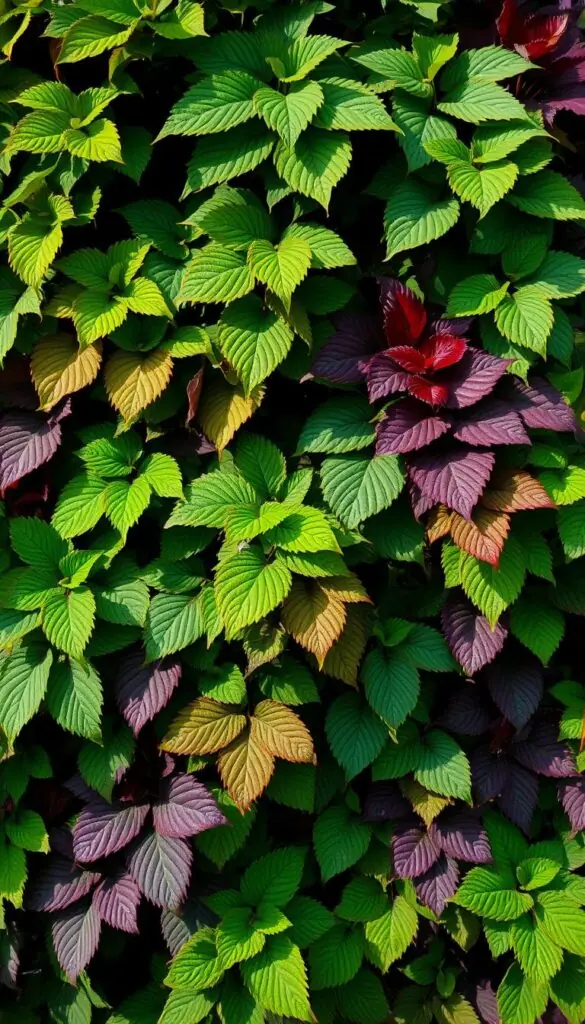
Use coleus and caladium toward the front for saturated leaves. Place elephant ears behind to frame views and add height.
Give tropicals morning sun and afternoon shade during heat spells to preserve leaf color and vigor.
Design tip:
Contrast for depth
Pair glossy leaves like camellia or laurel (in suitable zones) with airy blooms such as gaura and cosmos. The contrast creates depth without clutter.
Repeat two foliage varieties down the bed to build rhythm. Add one conversation plant, for example a Rex begonia in a container, to anchor a focal point.
| Move | Example Plants | Seasonal Role |
|---|---|---|
| Edge color | Heuchera, low pansies | All seasons — holds color |
| Mid-layer | Geum, daylily | Staggered blooms — spring to summer |
| Foliage anchor | Coleus, caladium, elephant ear | Summer drama — texture & height |
| Fine movement | Feathery grasses, gaura | Light motion — links color blocks |
Your year of garden trends: a simple plan to try two ideas per season
Tackle two focused ideas each season to build a cohesive and thriving outdoor plan.
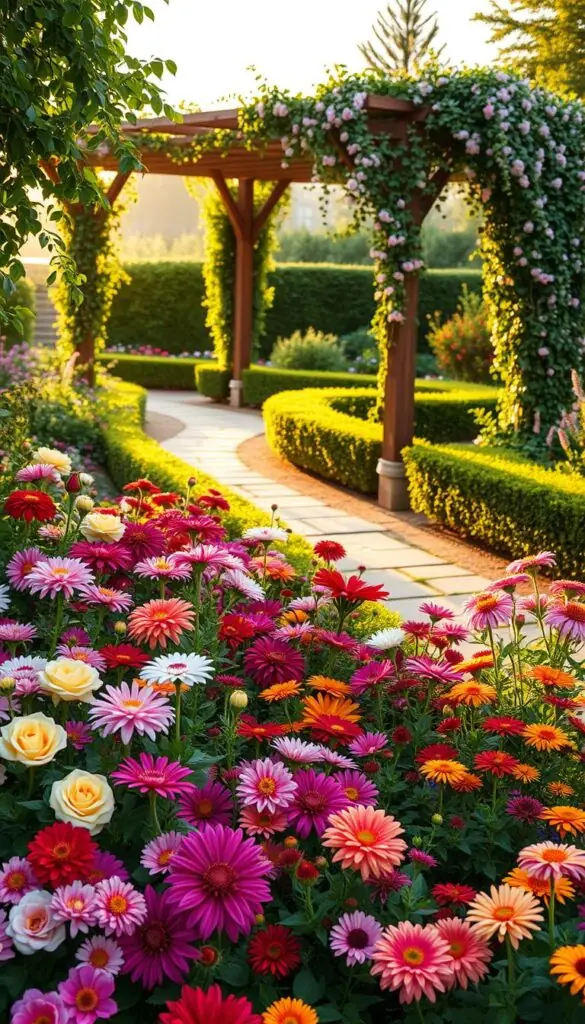
Spring: native perennials and a wellness corner
Ideas: plant milkweed, mountain mint, and asters to feed pollinators. Create a wellness corner with lavender, a birdbath, and a chair so you use the space.
Tools & timing: plant in early spring after frost; use a trowel, compost, and a 2-gallon watering can for new plants.
Summer: water-wise upgrades and patio fragrance
Ideas: convert a sunny strip to a gravel bed with yarrow and salvias and add a basic drip kit. Refresh patio containers with star jasmine and rosemary for evening scent and cooking snips.
Quick wins: install drip on a timer; mulch 2–3" to cut water use.
Fall: plant a fruit tree and add grasses
Ideas: plant a columnar apple and tuck in ornamental grasses for winter silhouette. Mulch beds and leave leaf litter under shrubs for habitat.
Winter: map next year’s palette and prep irrigation
Ideas: sketch a color plan, order seeds, and flush or repair drip lines. Wrap spigots and inventory tools so spring starts easy.
| Season | Two Ideas | Quick Tools |
|---|---|---|
| Spring | Native perennials + wellness corner | Trowel, compost, watering can |
| Summer | Gravel bed + fragrant containers | Drip kit, mulch, pruning shears |
| Fall | Compact fruit tree + grasses | Spade, mulch, stakes |
| Winter | Palette map + check irrigation | Notebook, wrench, brush for lines |
Quick tip: pace yourself—two ideas per season keep gardening joyful and sustainable. Avoid overcommitting; one thriving corner per season becomes a garden you’ll love for years.
Conclusion
Take one small idea and start this week. Pick a pot, a bed, or a sunny corner and add a few reliable plants. You’ll see beauty and scent appear quickly.
These trends—wellness plantings, native plants, gravel beds, fragrant containers, vertical and under-glass options, bold foliage, and sturdy roses—offer easy ways to shape your space. Choose what fits your time and light.
Keep it climate-smart with drip lines or drought-wise choices. Mix edible plants with perennials and invite wildlife with native choices for a living landscape that feels both useful and calm.
Plan simply, plant thoughtfully, and enjoy the small daily moments. We’re cheering you on—step outside, breathe in something green, and watch your garden grow this year.
FAQ
How can I create a wellness-forward flower area that helps me relax?
Start with sensory plants like lavender, chamomile, and lamb’s ear for scent and touch. Add a small water feature such as a bubbler or birdbath for gentle sound and wildlife visits. Keep paths wide and seating sunlit yet shaded to invite slow, mindful moments.
Which sensory plants work best for scent and texture?
Choose lavender for fragrance, chamomile for soft blooms and calming tea, and lamb’s ear for tactile appeal. Layer in scented geraniums or rosemary in containers to boost aroma near seating areas.
What’s an easy water feature to install for sound and wildlife?
A simple recirculating bubbler or a classic birdbath is low-cost and low-maintenance. Place it near flowering perennials and a shallow bee water pan so birds and pollinators can both benefit.
How should I plan seasonally for quick setup and upkeep?
Use winter for mapping beds and ordering plants, plant in spring when frost risk passes, and focus on mulching and deadheading in summer. In fall, plant bulbs and check irrigation for winter maintenance.
Which native plants are best for welcoming wildlife in rewilded borders?
Select species suited to your region—milkweed for monarchs, mountain mint for pollinators, asters for late-season nectar, and serviceberry for birds. These choices build habitat and seasonal interest.
How do I support year-round habitat with simple steps?
Leave leaf litter and dead stems through winter for insects, provide bee water pans, and avoid heavy pruning until spring to preserve shelter and food sources for wildlife.
What are drought-tolerant flower options for color in dry landscapes?
Use ornamental grasses, yarrow, salvias, and succulents to add texture and persistent blooms while using less water. Pair with gravel-style beds and mulch to reduce evaporation.
Which tools and materials improve water efficiency for color-rich beds?
Install drip irrigation, use organic mulch, and consider gravel or permeable paths to direct water to roots. These measures save water and help drought-tolerant plants thrive.
What common mistakes should I avoid when installing xeric beds?
Don’t overwater newly planted drought-tolerant species, and avoid laying landscape fabric under gravel—it can trap water and limit soil life. Instead, prep soil and mulch well.
How can I blend edibles with ornamentals attractively?
Try a potager approach: mix herbs, calendula, and climbing beans with roses and small fruit. Use companion planting to boost pollination and visual rhythm while keeping everything accessible for harvest.
What fruit varieties suit small spaces?
Choose columnar apples, compact blueberries, and dwarf figs for limited areas. Grow them in containers or tight beds to enjoy fresh fruit without a large orchard.
Which roses are good for fragrance and modern color schemes?
Look for fragrant shrub roses and newer color-forward varieties from reputable breeders. Select disease-resistant cultivars and plant with companion herbs to enhance scent and health.
Which plants are best for fragrant containers on patios?
Mandevilla, star jasmine, rosemary, and English lavender offer scent and visual appeal. Combine with trailing sweet potato vine or calibrachoa for spillover and continuous color.
How do I add structure and movement to container and patio plantings?
Use ferns for soft texture, ornamental grasses for movement, and small topiaries for vertical form. Layer heights and choose contrasting foliage to create a lush, sunlit feel.
What works well for vertical and under-glass gardening in tiny spaces?
Install green walls or trellises with sedum or climbing beans outdoors; indoors, try philodendron on frames. For under-glass, use terrariums or mini-greenhouses for begonias, ferns, and fittonia.
Which plants suit terrariums and mini-greenhouses?
Begonias, ferns, fittonia, and spikemoss prefer humid, protected environments. Use well-draining mix, keep light indirect, and ventilate occasionally to prevent mold.
How can I design four-season interest with foliage and palette choices?
Build monochromatic borders by layering shapes, textures, and staggered bloom times. Add tropical foliage like coleus, caladium, and elephant ears in summer for drama, and plant grasses for winter movement.
Any quick design tip for depth and contrast?
Pair glossy leaves with airy blooms to create depth. Mix broad-leafed plants with fine-textured grasses or airy perennials to keep beds lively year-round.
How do I plan a simple schedule to try two new ideas each season?
Spring, add native perennials and a wellness corner; summer, upgrade to water-wise plants and fragrant patio containers; fall, plant a fruit tree and introduce ornamental grasses; winter, map next year’s palette and set up or tweak drip irrigation.