Imagine stepping outside to a patch of jewel-toned petals and a cool, clean scent drifting from the beds. Do you notice dry spots or empty planters and wish for quick, cheerful color? You can bring bright, dependable life to your yard even while frost lingers.
We’ll give calm, friendly guidance so you feel confident starting sooner than you thought. Simple tools—a trowel, mulch, plant labels, and a watering can—are enough for easy wins.
Bulbs and perennials like crocus, daffodils, tulips, and snowdrops often arrive before trees leaf out. Heights run from about 3 to 30 inches, so you can match size to beds and containers for a balanced display.
We’ll also point out native ephemerals and early shrubs that add wildlife value and lasting beauty to your landscape. Expect clear timing cues, zone tips, and quick steps to avoid common mistakes.
Key Takeaways
- You’ll welcome reliable color that handles cold snaps.
- Choose plants by size to fit beds and containers.
- Use simple tools and tidy steps for quick results.
- Pick species that support wildlife as they bloom.
- Know when to plant, mulch, and let nature finish.
Welcome the first color of the year: how to think about spring flowers before the last frost
A few bright faces in March can lift the whole yard and give hungry bees their first meal. Think of this time as a bridge between cold winter nights and the warmer days ahead.
Choose spring flowers that open in cool weather and offer nectar and pollen. Honeybees often fly on sunny days above about 45°F and March can be a real starvation month for them. A few clustered food sources make a big difference.
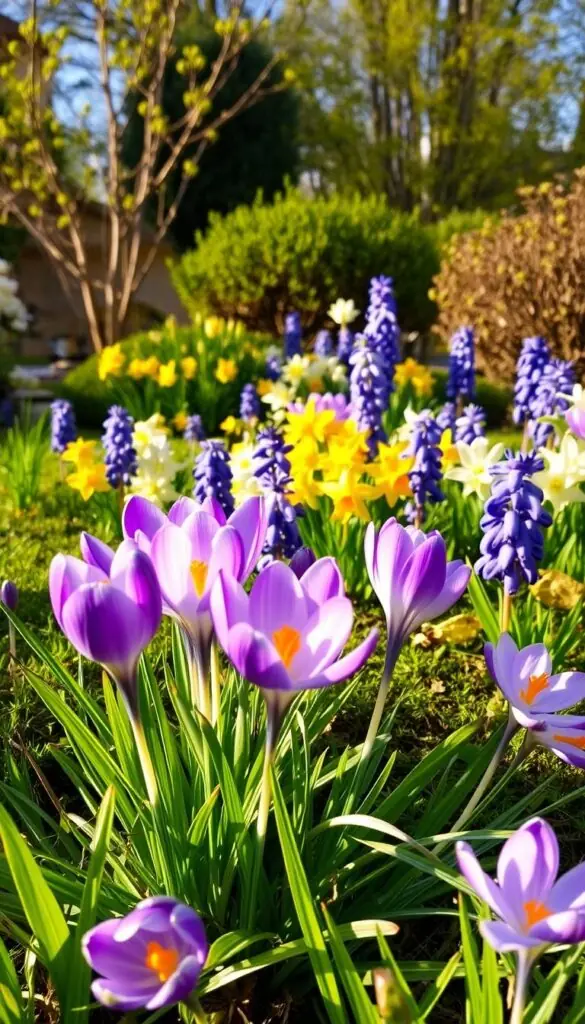
Read your yard for sun and shade now. Bare branches create full sun pockets that change once trees leaf out. Note soil warmth and moisture—bulbs tolerate cold soil well, while woodland plants like steady damp.
- Plant in small batches for steady color instead of one quick show.
- Keep tools handy: a trowel, mulch, labels, and a watering can.
- Expect light frosts: many cool-season plants tolerate them so you can skip full covers.
Take slow walks after sunny afternoons. New sprouts often reveal themselves then, and you can protect tender growth or add another small grouping of plants to help pollinators thrive.
Quick prep before planting: soil, tools, and simple steps for late winter
Before you plant, give the beds a gentle once-over to find tiny shoots and hidden bulbs.

Clear debris to reveal buds and protect emerging leaves
Gently rake away loose litter and snip only what is truly dead. This shows where snowdrops and winter aconite are pushing up so you don’t accidentally dig them up.
Let bulb foliage wither naturally after bloom so bulbs recharge. When tulip flowers fade, you can snip the heads to tidy the display without cutting the leaves too soon.
Soil check and light test: where full sun, part shade, or shade really is
Test your soil by squeezing a handful; if it smears, wait to dig so you don’t compact the bed. Note where full sun hits for six hours and which spots shift to part shade or shade once trees leaf out.
Hand tools and materials that help: trowel, mulch, labels, and a watering can
Keep a clean trowel, pruning snips, and a watering can at the ready. Set simple labels now to avoid disturbing hidden bulbs later.
- Start with a light hand rake to uncover sprouting tips.
- Check drainage by filling a small hole with water; improve soil if it pools.
- Group bulbs by size so short and tall flowers don’t crowd each other.
Early spring blooms for full sun: bright color when days are still cool
When the air is still cool, sunny-sited flowers offer bold color and sturdy stems you can rely on. Plant choices below suit full sun spots and give clear cues for size, spacing, and care.

Crocus: jewel-toned cups that sparkle in cold mornings
Height: 3–6 in.; Zones 3–8. Plant in sunny pockets where snow melts first.
Care: Well-drained soil, 2–3 in. spacing. Their saturated petals glow on chilly mornings and invite pollinators.
Daffodils: deer-resistant trumpets that return for years
Height: 6–12 in.; Zones 3–9. Tough and low-maintenance.
Care: Full sun, well-drained beds. Let foliage fade naturally so bulbs recharge for the next season.
Tulips: bold shapes and sizes from 4 inches to multi-foot-high
Height: 4–30 in.; Zones 3–7. Mix heights and variety types for drama along paths or beds.
Care: Deadhead after bloom and keep stems tidy to help energy return to bulbs.
Grape hyacinths (Muscari) and winter aconite
Muscari: 6–9 in.; Zones 4–8. Use as an edging plant—tight clusters read well from a distance.
Winter aconite: 3–6 in.; Zones 3–7. Plant near dark soil or stone so their golden cups really pop.
Pansies: cheerful faces that thrive in crisp air
Height: 6–12 in.; Zones 3–11. These cool-weather performers do well near steps and mailboxes.
- Keep spacing generous for airflow—short bulbs up front, taller plants behind.
- Choose a unified palette or play with contrast; both deliver joyful color while days stay cool.
- Water new plantings if dry; clip a few sturdy stems for tiny vases indoors.
Part shade favorites: layered color under open canopies
Under open canopies, cool, dappled light invites soft color that feels like a quiet welcome. Choose plants that enjoy part shade and give texture as well as color.
Virginia bluebells
Plant bluebells in part shade where morning sun meets afternoon cool. They reach 1–3 ft tall and 1–2 ft wide (Zones 3–8).
Placement: middle layer of beds, moist but well-drained soil. Let the foliage fade naturally—the clump rests after flowering.
Puschkinia (striped squill)
Puschkinia is tiny (3–6 in., Zones 4–8) with white petals brushed with blue stripes. Use it at the front edge to brighten dim corners.
Care: Plant in groups of three to five bulbs for fuller display. They weave well with other low bulbs and add continuous interest.
Pasque flower and marsh marigold
Pasque flower (8–12 in., Zones 4–8) offers silky buds and ferny foliage. Tuck it near stones for texture before larger leaves appear.
Marsh marigold (8–12 in. tall, 12–18 in. wide, Zones 3–7) needs consistently moist soil. Place it beside rain gardens or swales where its buttercup-yellow flowers can glow.
- Keep size in mind: low bulbs along paths, bluebells in the middle for a gentle rise.
- Water new plants a bit more in wind; part shade can dry quickly on breezy days.
- Mix foliage textures—broad leaves with lacey forms—to maintain interest between bloom moments.
Shade garden wake-up: woodland flowers for dappled light
In the hush beneath canopy leaves, tiny woodland flowers quietly steal the show. These low-growing natives fit dappled light, offer short windows of color, and then rest as the trees fill in.
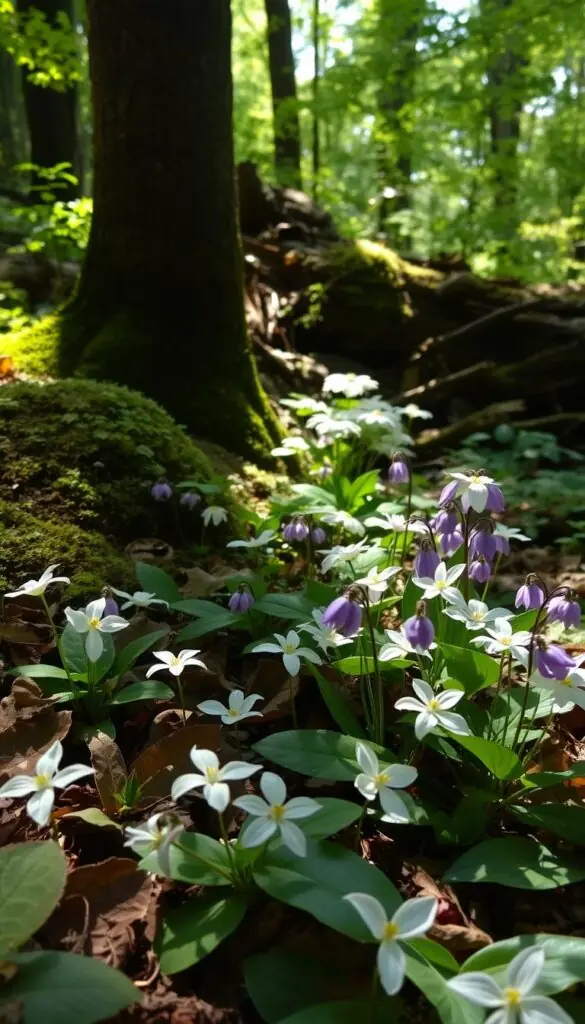
Bloodroot
Height: 6–12 in.; Zones 3–8. Plant near paths so its white flowers open on sunny mornings and close at dusk. Leaves follow the bloom and then fade.
Spring beauty (Claytonia)
Height: 6–12 in.; Zones 3–8. Pink-pinstriped blooms carpet leaf litter. Let this ephemeral spread where thin humus holds moisture.
Trillium
Trillium luteum: 12–19 in.; Zones 4–9. Tuck in shaded, moist pockets. Its marbled foliage and refined blooms reward quiet walks.
Trout lily, Dutchman’s breeches, and merrybells
Trout lily (4–6 in.) shows speckled leaves and nodding yellow bells. Dutchman’s breeches (6–12 in.) adds playful clusters. Merrybells offer pendant yellow blooms on graceful stems.
Woodland phlox
Up to 12 in.; Zones 3–8. Use phlox for fragrant clouds of blue, purple, or white flowers that linger in still shade.
- Placement: plant under trees in humus-rich pockets and near paths for easy viewing.
- Care: keep soil leaf-mulched and moist but well drained; accept the ephemerals’ rhythm of foliage then rest.
- Companions: pair with Virginia bluebells or hellebores for staggered color and longer interest.
Pollinator-first picks for “starvation month” in late winter
On bright, mild days when the air tips above about 45°F, bees start looking for food around yards and hedgerows.
Choose plants that feed them first and add structure for the season ahead. These selections give nectar and pollen when little else is open, and they also offer fruit or shelter later.
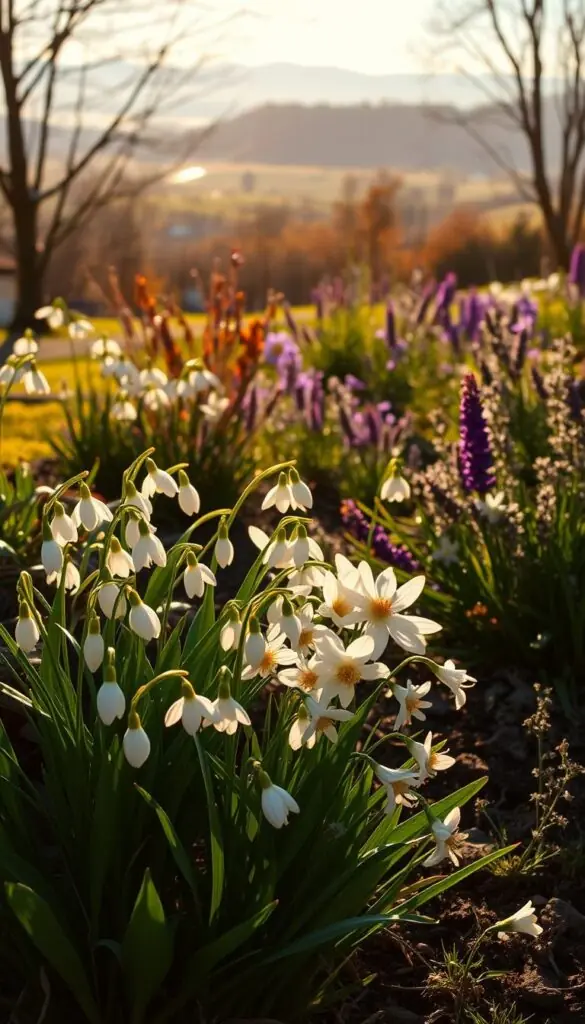
Pussy willow
Why it matters: Catkins open in February–March and provide prime food for early bees. Cluster willows where you’ll hear the buzz on warm afternoons.
Hellebores
Why it matters: Long-lasting cups in cream, pink, yellow, and maroon. Plant near entries so their flowers brighten gray days and offer nectar to visiting insects.
Spicebush
Why it matters: Small yellow-green flowers appear before the leaves. This native shrub tolerates shade and later produces fruit that birds favor. It also hosts spicebush swallowtail caterpillars.
Witch hazel
Why it matters: Fragrant, ribboned yellow flowers open on cold, sunny days. Place witch hazel where you pass daily to enjoy scent and pollinator visits.
| Plant | Peak months | USDA zones | Best placement |
|---|---|---|---|
| Pussy willow | Feb–Mar | 4–8 | Hedgerow, wet edge |
| Hellebores | Late winter–early spring | 4–9 | Near entries, part shade |
| Spicebush | Mar–Apr | 4–8 | Woodland edge, fence line |
| Witch hazel | Late winter | 3–8 | Garden path, mixed shrub border |
- Planting tips: Water new shrubs their first season for strong flowering next year.
- Pruning: Keep cuts light after bloom so you don’t remove next season’s buds.
- Design: Mix natives like spicebush and witch hazel with hellebores for continuous food and visual interest.
- Observe: Note which spring bloomers draw the most visitors and add more of those near seating areas.
Native shrubs and trees that flower early and anchor your landscape
Layering a small tree with a fruiting shrub and bulbs creates a garden that reads beautifully through the seasons. Choose species that give you interest in leaf, flower, bark, and fruit so the yard feels lively from leaf-out to fall color.

Serviceberry
Why pick it: White flowers in April, edible blue–purple fruit, attractive bark, and showy fall color.
Height: 10–15 ft; cold-hardy; great for a small lawn tree or mixed border.
Sassafras
Why pick it: Mitten-shaped leaves that glow in red and orange come fall. Greenish-yellow flowers appear in March–April and the tree hosts local wildlife.
Height: 35–60 ft; best as a specimen or sheltering backdrop.
Red chokeberry
Why pick it: Delicate white spring flowers followed by bright red berries that persist into winter.
Height: 3–6 ft; drought-tolerant and excellent as a low-care hedge.
Azaleas and rhododendrons
Plant these in dappled light. Trusses and single flowers add layered color in shade to part shade. Use them as mid-layer shrubs under taller trees.
Pagoda dogwood and fringe tree
Pagoda dogwood offers creamy clusters and tiered branching for patio screens. Fringe tree brings feathery, fragrant white flowers that draw butterflies in late spring.
Pagoda dogwood: Zones 4–9, part shade. Fringe tree: 12–18 ft, sun to part shade.
| Plant | Height | Best spot | Wildlife value |
|---|---|---|---|
| Serviceberry | 10–15 ft | Border, lawn specimen | Fruit for birds; early pollinators |
| Sassafras | 35–60 ft | Background, shade edge | Host plant; autumn color |
| Red chokeberry | 3–6 ft | Hedge, mixed shrub bed | Berries through winter for birds |
| Azaleas/Rhododendrons | Varies (2–8 ft) | Shade to part shade | Spring nectar; understory structure |
| Pagoda dogwood / Fringe tree | 12–20 ft | Patio edge, specimen | Attracts butterflies and birds |
- Siting tip: Think layers—one tree, one shrub, and bulbs at their feet for continuous interest.
- Water: Water weekly the first season to set roots, then reduce for low-maintenance growth.
- Design: Combine fruiting shrubs with serviceberry so birds have diverse food as the season shifts.
Easy bulbs that naturalize: simple color that spreads over time
Planting generous clumps of bulbs gives your beds steady, naturalized color that grows stronger each year. These small plants work quietly and reward patience. Think of them as the slow, kind helpers of your garden.
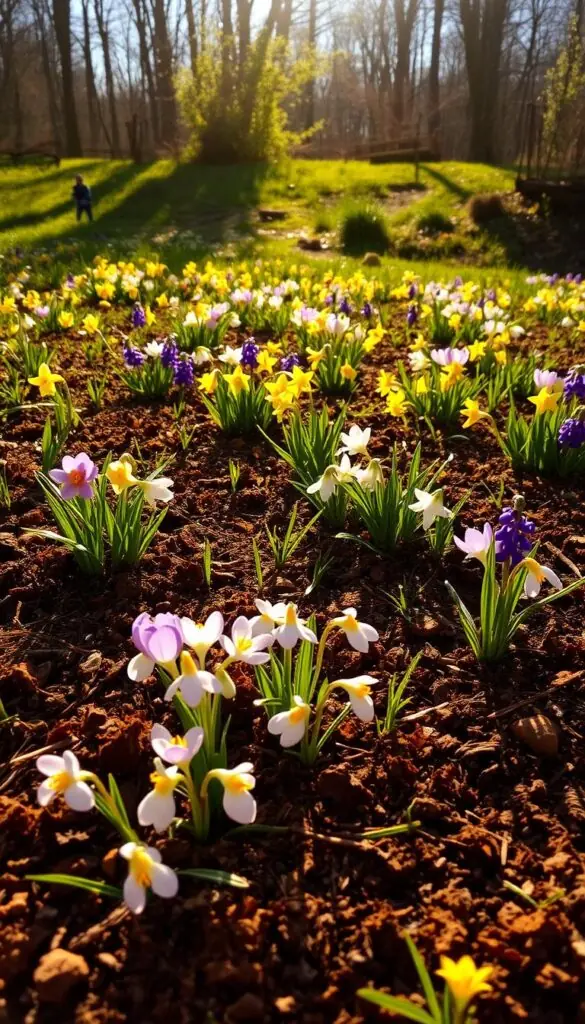
Snowdrops: tiny white charms that shine en masse
Snowdrops (3–12 in.; Zones 3–9) look best in drifts along borders and beneath shrubs. Plant in fall and tuck groups where light is brightest before leaves return.
Naturalizing note: Give them space to settle for a couple seasons. They multiply and create a soft welcome of white that reads as a single, lovely wash rather than scattered dots.
Grecian windflower: daisy-like carpets in blue, pink, and white
Anemone blanda (6–8 in.; Zones 5–8) forms low carpets of color. The daisy-like flowers shine under trees and beside paths, then die back as summer approaches.
- Plant bulbs in generous clumps so the blooms read as bright drifts.
- Mix shades in one spot for lively contrast and layered interest.
- Let foliage linger after flowering to recharge bulbs for next year.
- Split clumps gently after dormancy to spread the display.
- Tuck these bulbs under deciduous shrubs for a sunny window before canopies fill.
Simple promise: a little patience now means more color later — these small bulbs carry your garden through the shoulder season toward summer.
Timing your planting for success: fall bulbs, spring perennials, and zone cues
Good timing turns a busy garden season into a calm, steady rhythm of tasks you can actually finish. Follow a few clear dates and you’ll save effort and get stronger results.
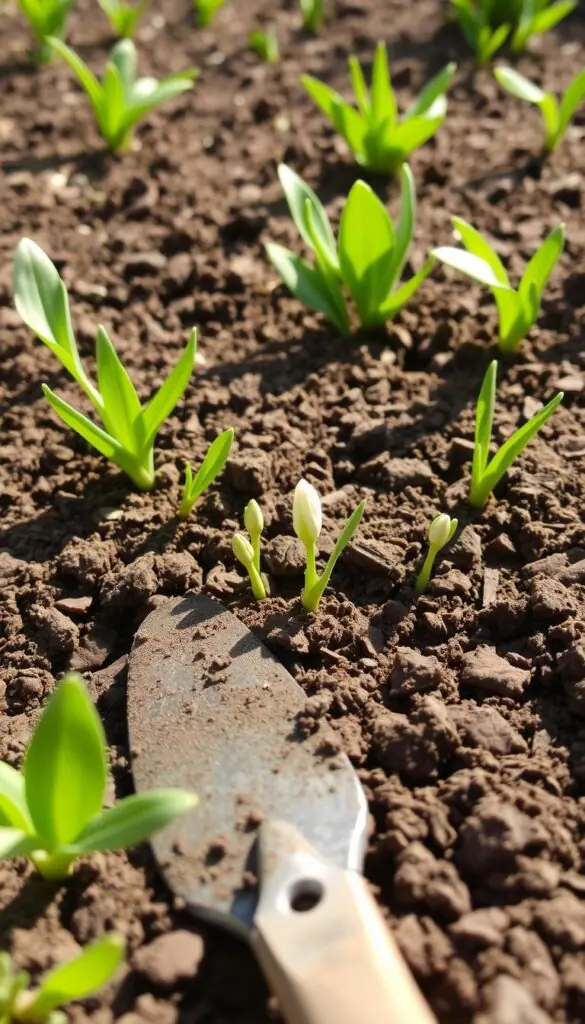
Plant bulbs in fall; tuck perennials and shrubs as soil thaws
When to act: Put hardy bulbs in the ground in fall, after the soil cools but before freeze. Roots form ahead of the cold so bulbs fill and return the next spring.
Tip: Let bulb foliage yellow and die back on its own—this stores energy for next year.
Use your USDA zone and frost dates to pace your work
In early spring, wait until beds drain and the soil is workable before you plant perennials and shrubs. Check your local frost dates and your USDA zone to pick safe days.
- Plant fall bulbs: yes—once soil cools, not frozen.
- Set perennials/shrubs: yes—when soil thaws and isn’t muddy.
- If very wet, pause digging—protect soil structure.
- Deadhead tulips after petals fade to help rebloom.
- Keep a shed checklist: bulbs in fall; perennials/shrubs in spring; mulch refresh as needed.
"Pace your tasks into short sessions; small, steady efforts finish beds faster than one long day."
Design ideas: sun-to-shade swaths for steady bloom across weeks
Design choices that follow light and height create a steady succession of interest for weeks.

Start with a simple recipe you can copy and repeat. Place low, mid, and tall plants in bands so color moves across the bed naturally.
Full-sun strip: crocus, daffodils, and tulips
Front row: crocus. Mid row: daffodils. Back row: taller tulips. Repeat this cluster every 3–4 feet.
That spacing lets the display feel like a wave that travels down the bed for several weeks.
Woodland edge: hellebores, spring beauty, and Virginia bluebells
Mingle hellebores as long-lasting anchors. Scatter spring beauty for a soft carpet. Plant bluebells for bold mid-season drifts.
Use gentle curves so beds read deeper and feel natural in the landscape.
- Repeat colors and groups to tie sun and shade areas together.
- Mulch lightly; let foliage fade to feed bulbs.
- Add a bench where you can enjoy both displays from one seat.
| Recipe | Placement | Heights | Repeat spacing |
|---|---|---|---|
| Sunny strip | Open bed, border edge | 3–30 in (crocus → tulips) | Clusters every 3–4 ft |
| Woodland edge | Part shade, under trees | 3–36 in (spring beauty → bluebells) | Drifts and scattered clumps |
| Finished view | From path or porch | Mixed heights for depth | Curved lines, small pathways |
"Think rhythm, not perfection; overlapping bloom periods create a relaxed, lived-in garden feel."
Care that keeps blooms coming back year after year
Keep a gentle rhythm after flowers fade; small rituals now give you richer displays next year. These habits are simple, repeatable, and kind to both bulbs and the soil.
Let foliage do its work. Treat fading foliage as next year’s food. Wait until leaves yellow before you tidy beds so bulbs can store energy for the next season.
Deadhead, seed, and avoid tying leaves
Snip off tulip heads right after petals fall so the plant sends energy back to the bulb. For small bulbs like crocus or Muscari, let seed set if you want naturalized drifts over time.
Water, feed, and mark for memory
Water lightly during dry spells so bulbs charge before summer arrives. Feed sparingly with a balanced, slow-release fertilizer in early spring if soil is lean.
- Do not tie foliage into knots—leave full leaf surface to soak up sun.
- Mark clumps with labels so you remember where foliage will fade.
- Split crowded bulbs in late summer or fall to refresh next year’s display.
- Keep mulch thin over bulb zones to hold moisture without smothering.
"Small, steady care stacks up to generous returns each year."
Soil, moisture, and mulch: simple tweaks for stronger plants
Test your planting spot, then add compost and a thin mulch to give new shoots the best start.
Many bulbs need crumbly, well-drained soil. Standing water is the top reason bulbs fail.
Woodland natives like bloodroot, trillium, and trout lily prefer even moisture and rich humus. Add leaf mold or composted bark to hold water without making the bed soggy.
Quick tests and easy fixes
Dig one shovel deep in the spot you plan to plant. Fill the hole with water and wait an hour. If water lingers, raise the bed a few inches or improve drainage with coarse sand and compost.
- Crumbly beds: aim for loose texture so roots breathe.
- Moist woodland areas: mix in leaf mold to hold gentle moisture.
- Watering: water at the base in the morning so foliage dries by afternoon.
Mulch basics that protect new growth
Apply a light spring mulch about a finger deep to frame fresh leaves and slow early weeds. Pull mulch back from crowns so shoots get warmth and air and to avoid rot.
"A thin, well-placed mulch holds moisture and keeps beds tidy without smothering bulbs."
| Need | Bulb beds | Woodland ephemerals |
|---|---|---|
| Soil | Well-drained, crumbly | Rich humus, moisture-retentive |
| Mulch | Light, finger-deep; pulled from crowns | Leaf mold or compost; gentle cover |
| Watering | Base watering; 1" per week guideline | Keep even moisture in the growing part of the season |
Wildlife moments: butterflies, birds, and the joy of early nectar
When your garden wakes, it brings company. A few well-placed shrubs and a cluster of food plants make the yard a stage for butterflies, bees, and songbirds.
Host and nectar plants connect life cycles. Spicebush feeds spicebush swallowtail caterpillars and offers small flowers that attract insects. Serviceberry and red chokeberry give white flowers that feed pollinators and then fruit for birds later in the year.
Planting tips that invite visitors
- Plant spicebush to support caterpillars and provide early nectar for bees and butterflies.
- Add serviceberry for spring flowers and summer berries that draw songbirds close.
- Include red chokeberry to extend the food supply; its fruit often lasts into winter.
- Cluster small flowers so honeybees and other pollinators spend less energy flying and more time feeding.
- Skip pesticides where you can to protect beneficial insects—this keeps the garden’s living beauty intact.
"Enjoy the soft buzz that returns on the first truly mild day; it’s the sound of your garden waking up."
Place a couple of flowering trees or large shrubs near your bench so you can watch the daily parade. Leave a shallow dish with stones and water on warm afternoons so pollinators have safe sips. Note which flowers draw butterflies and repeat those plantings next season.
| Plant | Role | Wildlife helped |
|---|---|---|
| Spicebush | Host plant; early nectar | Spicebush swallowtail caterpillars; bees |
| Serviceberry | Flowering shrub/tree; fruit later | Pollinators; songbirds |
| Red chokeberry | Long-lasting fruit | Birds in fall and winter |
| Pagoda dogwood / Fringe tree | Attracts butterflies & birds | Various pollinators; songbirds |
Small actions yield big rewards. Plant a few of these species and you’ll add food to the yard and daily moments of wonder to your routine. Share a cutting or two with neighbors—one patch of color can lift the whole block.
Common mistakes to avoid with early spring bloomers
Many gardening problems start with impatience; a calm approach saves bulbs and perennials. A few kind checks now will protect your beds and keep plants thriving.
Cutting foliage too soon or overwatering dormant ephemerals
Don’t remove green foliage or leaves while they are still photosynthesizing. Let them yellow naturally so bulbs store energy.
Avoid heavy watering once woodland ephemerals have gone dormant. Too much moisture on cool soil leads to rot.
Planting the wrong spot or ignoring drainage
Match each plant to light. Put sun lovers in full sun and shade lovers where light is filtered. Siting matters more than fertilizer.
- Fix soggy beds with raised rows or added grit before planting.
- Keep mulch light over bulb zones; deep piles can smother shoots.
- Label clumps so you don’t dig into them later and be patient—some bulbs need a season to settle.
"A little restraint now saves time and plants later."
Quick-start shopping list by spot: full sun, part shade, and shade
Pick plants by the light each bed actually gets and by a clear sense of size. That keeps shopping fast and placement simple.
Full sun
Choose short and tall combinations so the bed reads well from the path.
- Daffodils — 6–12 in.; sunny pockets, mid-bed.
- Tulips — 4–30 in.; place taller varieties toward the back.
- Muscar i (Grape hyacinth) — 6–9 in.; front-edge drifts.
- Winter aconite — 3–6 in.; tuck near stone or dark soil to pop color.
- Pansies — 6–12 in.; use along walkways or containers for immediate color.
Part shade
Let the taller pieces give mid-height interest and keep low bulbs at the edge.
- Virginia bluebells — 1–3 feet tall; center or middle layer.
- Puschkinia — 3–6 in.; front edge or mixed with low bulbs.
- Pasque flower — 8–12 in.; rock edges or border pockets.
Shade
Layer low and mid-height ephemerals so color rises gently through the bed.
- Bloodroot — 6–12 in.; near paths for neat viewing.
- Trillium — 12–19 in.; place in moist, shaded humus pockets.
- Trout lily — 4–6 in.; carpet where leaf litter holds moisture.
- Dutchman’s breeches — 6–12 in.; tuck into rock gardens or cool corners.
Shrubs and small trees
Add one shrub per bed for structure across seasons.
- Serviceberry — 10–15 feet; anchors a mixed bed.
- Witch hazel — shrub/small tree; fragrant, late-winter flowers.
- Spicebush — understory shrub; great in part shade for wildlife.
- Pussy willow — shrub; wet edges and hedgerows.
| Spot | Plants (sample) | Typical height / size | Light need |
|---|---|---|---|
| Full sun | Daffodils, Tulips, Muscari, Aconite, Pansies | 3–30 in (mix by size) | Full sun |
| Part shade | Virginia bluebells, Puschkinia, Pasque flower | 3 in–3 feet | Part sun / part shade |
| Shade | Bloodroot, Trillium, Trout lily, Dutchman’s breeches | 4–19 in | Shade / dappled light |
| Shrubs/trees | Serviceberry, Witch hazel, Spicebush, Pussy willow | 10–60 feet (varies) | Sun to shade, check tags |
Tip: Buy bulbs in groups of 3–10 so the planting reads as a drift. Check labels for sun/part shade/shade icons to speed placement on planting day.
Cut flowers for the table: gentle, long-lasting stems to clip
Bring a handful of garden stems indoors to lift a table and slow the day down. Small arrangements of the right picks last longer and feel effortless.
Hellebores, daffodils, select tulips, and Virginia bluebells make friendly, enduring vases when you handle them kindly.
Simple cutting and conditioning tips
- Hellebores: Clip when centers are open; mature stems hold well in shallow vases.
- Daffodils: Harvest as color shows, then let them sit in their own water to condition before mixing.
- Tulips: Choose firm, cool stems; recut under water and use tall vases for support.
- Virginia bluebells: Gather gently; use short vessels so their bells read sweetly.
Cut in the cool of morning and place stems into water immediately. Strip leaves that would sit below the water line so the water stays clear.
Keep arrangements out of direct sun and heat. Refresh water daily and recut stems every couple days. Mix in a few pussy willow branches for structure and texture.
| Flower | When to cut | Vase tip |
|---|---|---|
| Hellebore | Centers open | Shallow vase; low water |
| Daffodil | Bud cracks color | Condition alone, then mix |
| Tulip | Firm stem before flopping | Tall vase; recut under water |
| Virginia bluebell | When bells are fresh | Short vase; cool room |
"Even a handful of simple stems brings the season indoors."
Conclusion
A modest plan and a handful of bulbs can set a steady rhythm of color that carries you through the year.
Start with one bed or a few trusted bulbs and shrubs. This small step brings spring flowers, pollinators, and reliable beauty back to your garden without overwhelming your schedule.
Trust sturdy favorites for a dependable bloom, then add one new variety each fall to keep the show fresh. Let the season teach you; it will reward simple care across the year.
When you’re ready, pick a sunny patch, plant with confidence, and enjoy the small moments of color and wildlife that follow. That little action is all the encouragement you need to start.
FAQ
What are reliable early spring flowers that bloom before the last frost?
Look for bulbs and perennials known to emerge in cool weather: crocus, daffodils, tulips, grape hyacinths (Muscari), snowdrops, and winter aconite. Add hellebores, pansies, and hardy native ephemerals like trout lily or Virginia bluebells for layered color. These plants handle cold mornings and often return year after year when planted in suitable soil and light.
How do I plan color before my last frost date?
Start with a simple plan: place sun-loving bulbs (crocus, daffodils, tulips) in full sun strips and reserve part shade or shade areas for Virginia bluebells, hellebores, and trillium. Use USDA zone and frost dates to time planting and to stagger bloom for weeks of interest.
What should I do the week before planting to prepare soil and tools?
Clear debris to reveal emerging buds and protect new leaves. Do a soil check and light test to confirm whether a spot is full sun, part shade, or shade through the day. Gather basic hand tools: a trowel, labels, mulch, and a watering can. Lightly loosen soil and amend with compost if drainage or fertility is poor.
Which early bloomers work best in full sun?
In bright sites try crocus for jewel-toned cups, daffodils for reliable deer-resistant trumpets, tulips for bold shapes and varied heights, grape hyacinths for clustered blue, winter aconite for golden flashes, and pansies for cheerful faces that tolerate crisp air.
What plants thrive in part shade under trees or shrubs?
Choose Virginia bluebells, Puschkinia (striped squill), pasque flower, and marsh marigold. These species layer nicely beneath open canopies where mornings get sun but afternoons are dappled.
What are good woodland choices for deeper shade?
For dappled light, plant bloodroot, spring beauty (Claytonia), trillium, trout lily, Dutchman’s breeches, merrybells (Uvularia), and woodland phlox. They naturalize in leaf litter and need well-drained, humus-rich soil.
Which plants are best for pollinators in late winter “starvation month”?
Pussy willow provides early catkins for bees, hellebores offer long-bloom nectar, spicebush flowers feed early insects and later fruit supports wildlife, and witch hazel blooms with fragrant, ribboned flowers that attract pollinators on cold days.
What native shrubs and trees flower early and provide landscape structure?
Serviceberry, sassafras, red chokeberry, azaleas and rhododendrons, pagoda dogwood, and fringe tree are excellent. They offer blossoms, fruit for wildlife, and attractive foliage into fall, anchoring your garden through seasons.
Which bulbs naturalize easily for effortless drifts of color?
Snowdrops and Grecian windflower naturalize well. Plant them in groups in well-drained soil and allow foliage to die back naturally so the bulbs can multiply and form carpets over time.
When is the right time to plant bulbs, perennials, and shrubs?
Plant spring-blooming bulbs in fall so roots establish before winter. Tuck perennials and shrubs into the ground as soil thaws in late winter or early spring. Always check your USDA zone and local frost dates to pace planting.
How can I design for continuous bloom from sun to shade?
Layer plantings by light: a full-sun strip of crocus, daffodils, then tulips; a woodland edge with hellebores, spring beauty, and Virginia bluebells. Stagger heights and bloom times so color moves through the landscape over several weeks.
What care practices help bulbs and perennials come back each year?
Let foliage fade naturally so the plant stores energy for next year. Deadhead spent tulips, but allow smaller bulbs to set seed if you want naturalized drifts. Avoid cutting leaves too soon and maintain steady, moderate watering.
How do soil, moisture, and mulch affect early bloomers?
Well-drained soil is essential for bulbs; woodland ephemerals prefer even moisture and rich humus. Apply a light spring mulch to hold moisture, suppress weeds, and frame fresh leaves without smothering emerging buds.
Which early plants make good cut flowers for the table?
Virginia bluebells, daffodils, hellebores, and select tulips provide gentle, long-lasting stems. Cut in the morning, place in fresh water, and rotate stems in the vase to extend vase life.
What common mistakes should I avoid with early bloomers?
Don’t cut foliage too soon, overwater dormant bulbs, or plant sun-loving species in shade. Also avoid poor drainage and overcrowding; these will reduce flowering and invite disease.
What should be on a quick shopping list by light condition?
Full sun: daffodils, tulips, Muscari, winter aconite, pansies. Part shade: Virginia bluebells, Puschkinia, pasque flower. Shade: bloodroot, trillium, trout lily, Dutchman’s breeches. Shrubs/trees: serviceberry, witch hazel, spicebush, pussy willow.