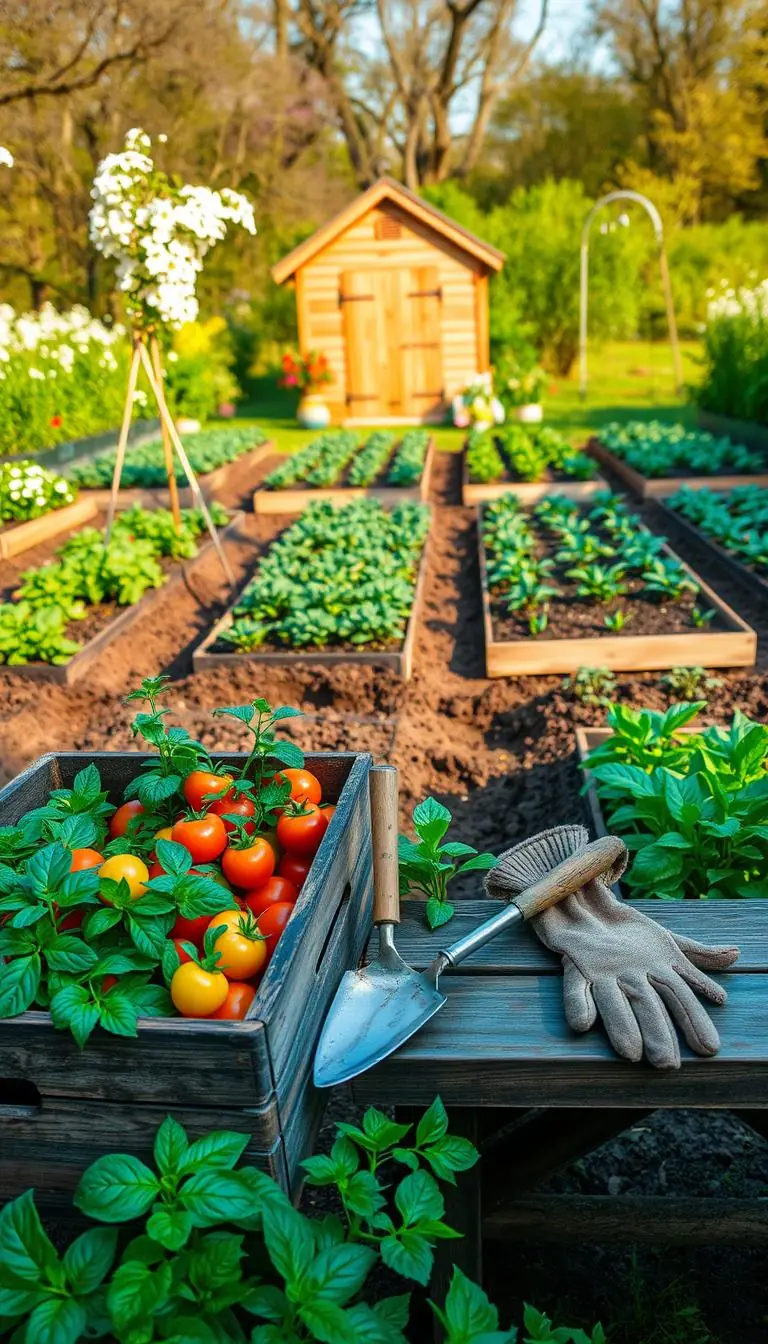
Imagine the sweet, sun-warmed scent of a tomato as you step into your garden at dusk. You bend to feel its gentle give and know it will brighten your dinner.
Have you ever wondered the best way to pick so plants keep giving? In Zones 4–10 across the U.S., a few small habits make a big difference. You’ll learn simple routines that help beds look lush and keep bowls full through the warm season.
Bring a tiny kit: snips or hand pruners, a harvest knife, clean food-safe buckets, and soft towels. Use a shady place to sort and cool produce fast. These tools protect texture and flavor from garden to kitchen.
We’ll show sensory cues—blush on tomatoes, a firm snap in cucumbers, that sun-warmed fruit aroma. You’ll also see which plants keep ripening off the vine and which need to be picked ripe.
By the end, you’ll have a calm, repeatable rhythm that makes picking feel like a peaceful part of your day, not a chore. Enjoy the season, and trust your senses.
Key Takeaways
- Build a small kit (snips, knife, buckets, towels) to make picking easy and safe.
- Use sight, scent, and touch to spot ripeness and protect quality.
- Pick herbs in the morning and leafy greens in the cool evening.
- Know climacteric vs non‑climacteric fruit so you handle each plant right.
- Keep a simple routine that fits your time and your garden’s varieties.
Get in the rhythm of summer: how harvest timing keeps plants blooming and fruiting
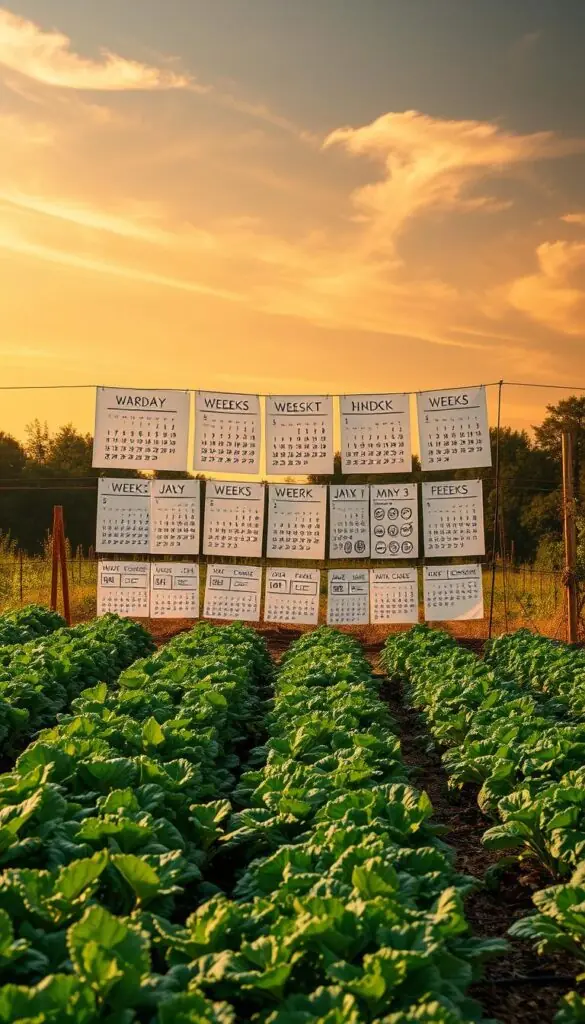
Treat your garden like a living calendar. Walk beds two to three times a week for ten calm minutes. Look for color shifts, new blooms, or fruits that grew since your last visit.
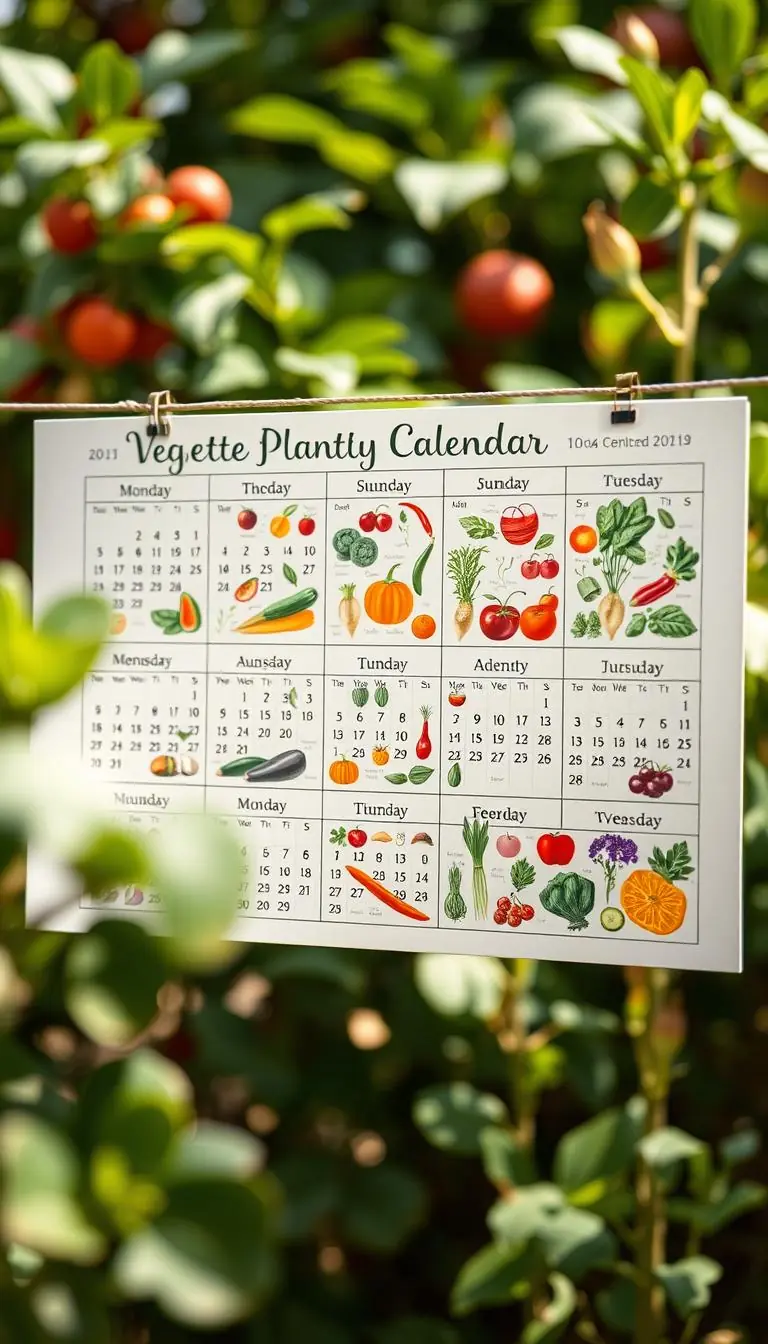
Make a simple weekly plan: Monday herbs and cucumbers, Wednesday tomatoes and peppers, Friday zucchini and beans. Check onions and melons on the next pass.
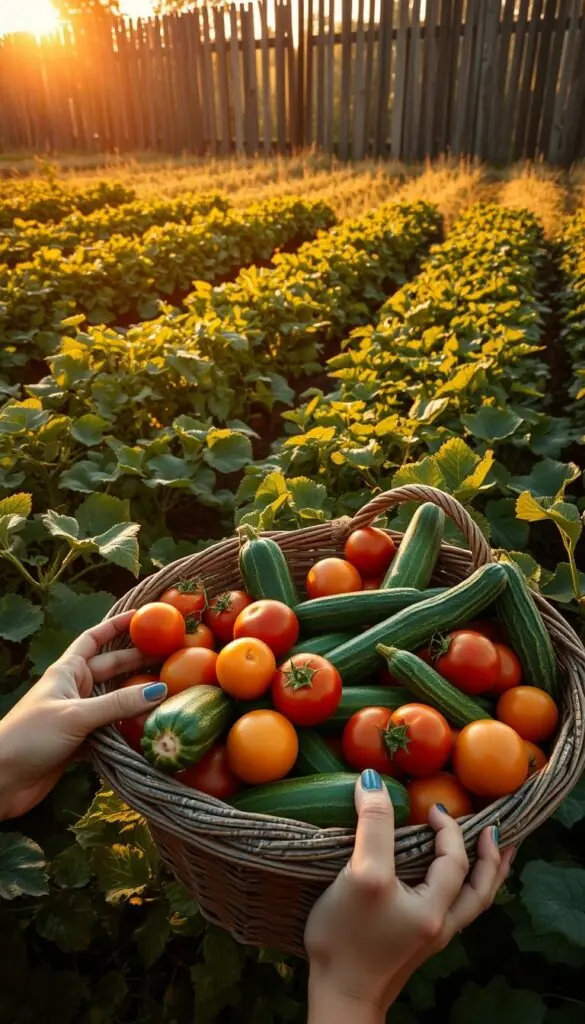
"A short, steady routine keeps plants producing and makes picking feel peaceful."
Use weather to guide you. After hot, sunny days pick in the evening when plants are less stressed. After cool, cloudy days you can wait a bit longer.
- Pick early for peas, kohlrabi, cucumbers, zucchini, and eggplant; peppers usually wait for full color.
- Lettuce and leafy greens are best picked in the evening; harvest herbs in the morning.
- Thin crowded branches, remove ripe fruit promptly, and check soil moisture after long heat spells.
Keep a shaded crate for cool rest between rounds and jot one quick weekly note. Over the year, these small steps tune your rhythm to each variety so your beds stay productive.
Spot-on harvest timing: quick visual cues by crop
A few simple looks and gentle feels tell you when each crop is at its best for the table. Walk with snips or pruners and use light handling so skin and flavor stay intact.
Tomatoes, peppers, and other climacteric fruit: color, scent, and ethylene savvy
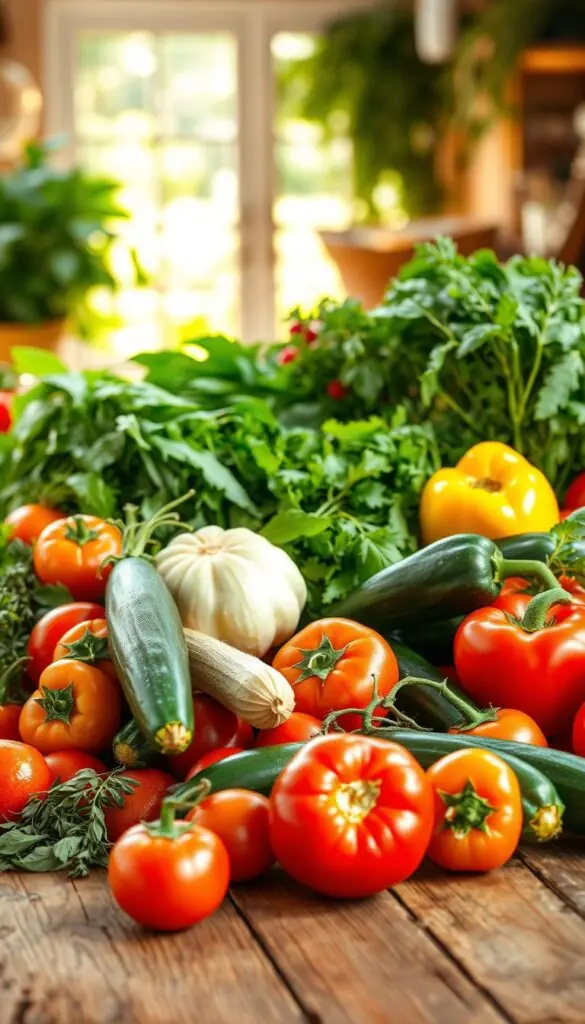
Tomatoes show full color and a sun‑warmed scent; they are climacteric and can finish ripening off the plant if you pick with a blush before storms.
Peppers gain sweetness at full color. Green picks are fine for crunch, but waiting to maturity brings thicker walls and richer flavor.
Cucumbers, zucchini, and eggplant: pick on the early side for tender texture
Cucumbers should be firm and not yellow—most slicers do best around 8 to 11 inches with a gentle snap at the tip.
Zucchini are tastiest at 6 to 8 inches, glossy and firm. Eggplant is right when skin is shiny, gives slightly, and seeds remain white.
Peas, kohlrabi, and cauliflower: stage matters more than size
Pick peas when pods feel plump. Kohlrabi should be about tennis‑ball size for crisp flesh.
Cut cauliflower when heads are white and tight; tie leaves over sun‑exposed heads to prevent discoloration.
Onions, pumpkins, and sweet potatoes: foliage flop, hollow tap, and a simple cut test
Lift onions when tops fold and dry; cure them on the ground in a dry spot for a few days.
Tap pumpkins—hollow sound and a rind that resists your thumbnail mean readiness. Leave 2 to 3 inches of stem. For sweet potatoes, a small test cut that dries fast with little juice signals you can dig and cure.
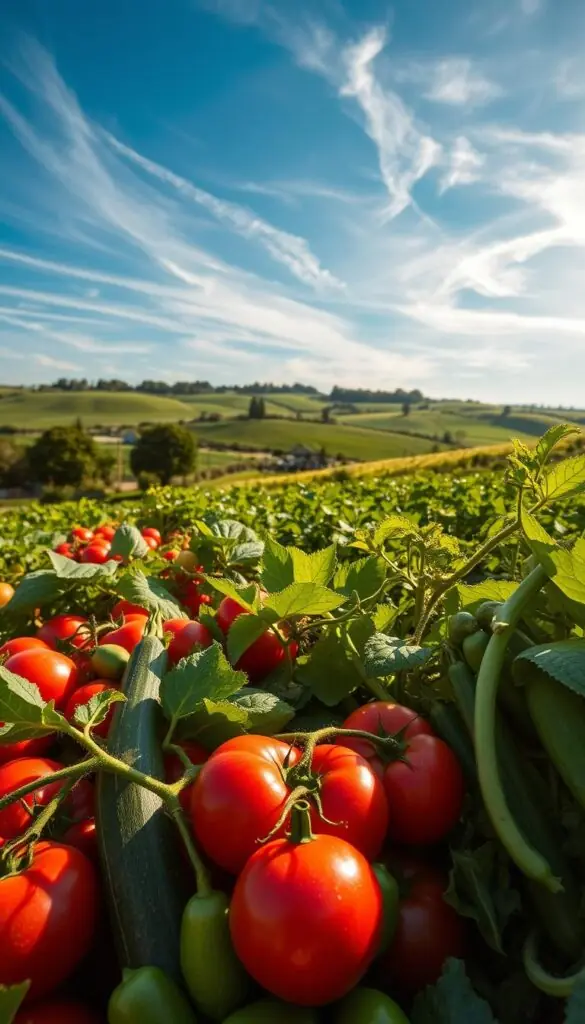
| Crop | Visual cue | Size / feel | Tool & handling |
|---|---|---|---|
| Tomato | Full color, fragrant | N/A, pick at color | Snips; gentle twist |
| Cucumber | Green, not yellow | 8–11 inches; firm | Pruners; gentle snap |
| Zucchini | Glossy skin | 6–8 inches; firm | Snips; avoid bruising |
| Pumpkin | Hollow sound | Rind resists thumbnail | Knife; leave 2–3 inches stem |
Climacteric vs. non‑climacteric: use ethylene to your advantage
Some fruits keep ripening after you pick them, while others need to be fully ready on the plant.
Who continues ripening off the vine—and who doesn’t
Climacteric fruit (apples, peaches, tomatoes, melons, avocados) give off ethylene and can finish ripening after you pick them.
Non‑climacteric items—like berries, cucumbers, peppers, and eggplant—won't ripen further once cut from the plant. Keep that in mind when you plan a pick.
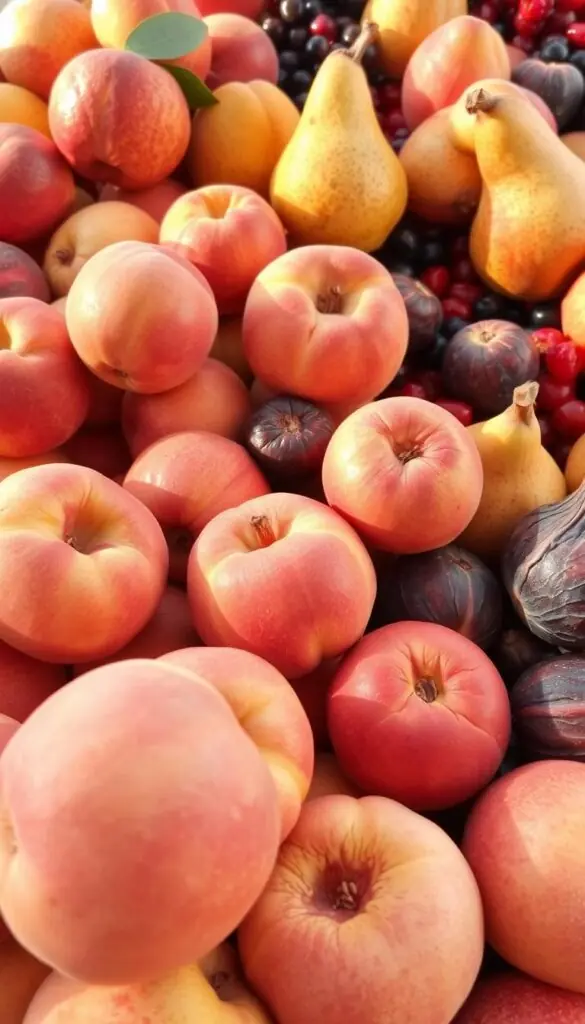
Storage placements that protect quality and extend your window
Group climacteric fruit on a counter or a quiet tray to ripen. A ripe banana nearby speeds the process.
Store non‑climacteric produce away from ethylene sources. Put cucumbers and berries in the fridge crisper to keep texture bright.
"A little sorting at harvest makes your bowls last longer and your meals taste better."
| Type | Examples | Best place | Notes |
|---|---|---|---|
| Climacteric | Tomato, peach, apple | Counter tray | Allow to finish ripening; ethylene speeds change |
| Non‑climacteric | Cucumber, berry, pepper | Fridge crisper | Keep away from ethylene to avoid softening |
| Storage tips | - | Cool, shaded spot for just‑picked items | Use breathable bins or towels; avoid moisture buildup |
Harvest timing for corn: from milk line to black layer for top quality ears
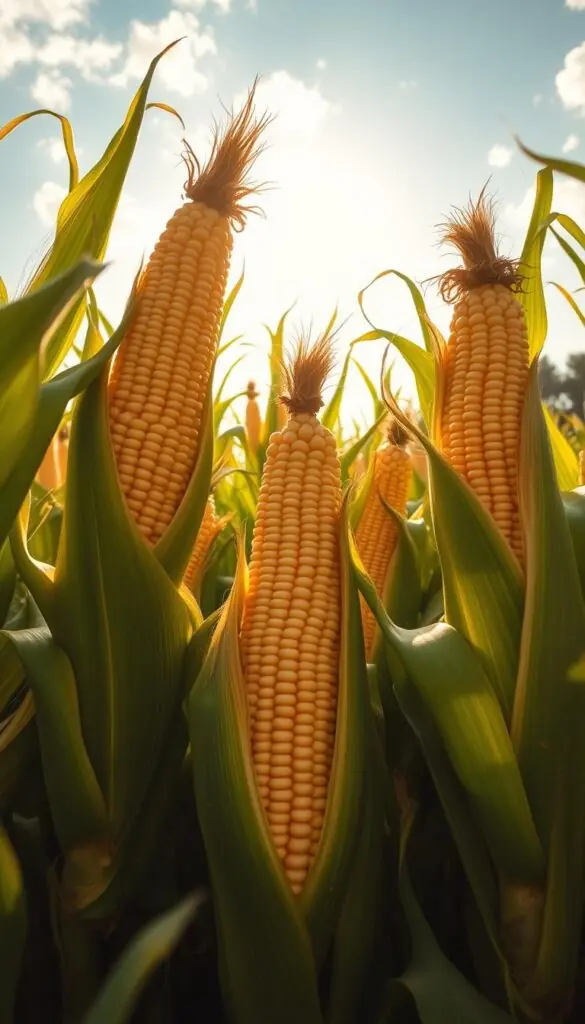
Corn gives clear signals as it moves from milky kernels to physiological maturity. Peel back a husk and check silk color, kernel dent, and the milk line to read where an ear sits in maturity.
Quick field cues:
- Brown silks and a visible kernel dent mean kernels are firming from crown to tip.
- Milk line stages: 1/4 (~45–50% moisture), 1/2 (~40–45%), 3/4 (~35–40%), R5 appears near 50–55% at ~400 GDUs.
- Black layer (R6) marks ~28–32% moisture and the end of dry matter gain.
Weather and drydown
Warm September days speed drying—about 1% moisture loss per day. Cool October days slow it to 0.5% or less. Use forecast stretches of dry air to plan your passes.
Preventing losses: scout stalks and shanks
Two to three weeks before your planned harvest date, pinch the stalk at the first elongated internode and do a push test 8–12 inches up. If more than 10–15% show weakness, prioritize those patches.
"Small scouting checks now often save dropped ears and extra work later."
| Check | What to look for | Field cue |
|---|---|---|
| Silk & husk | Silks brown; husk tight | Ears filling; denting begins |
| Milk line | 1/4 → 3/4 to R5 | Estimate moisture: 45% → 35% → 50–55% |
| Stalk strength | Pinch/push test | >10–15% weak = prioritize |
| Drydown | Sept–Nov rates | ~1%/day Sept → ~0.25% mid-Nov |
Time of day matters: evening leafy harvests, morning herbs, and cooler handling
A small shift in when you pick can change how crisp and flavorful your bowls feel. The right time of day keeps color vivid and reduces unwanted concentration of nitrates in leaves and roots.
Leafy greens and roots: lower nitrate levels and crisper salads
Pick lettuce, spinach, and similar greens in the cool evening. At that time leaves have a lower nitrate level and a firmer snap. Roots like radishes, beetroot, kohlrabi, and daikon taste sweeter when pulled later in the day.
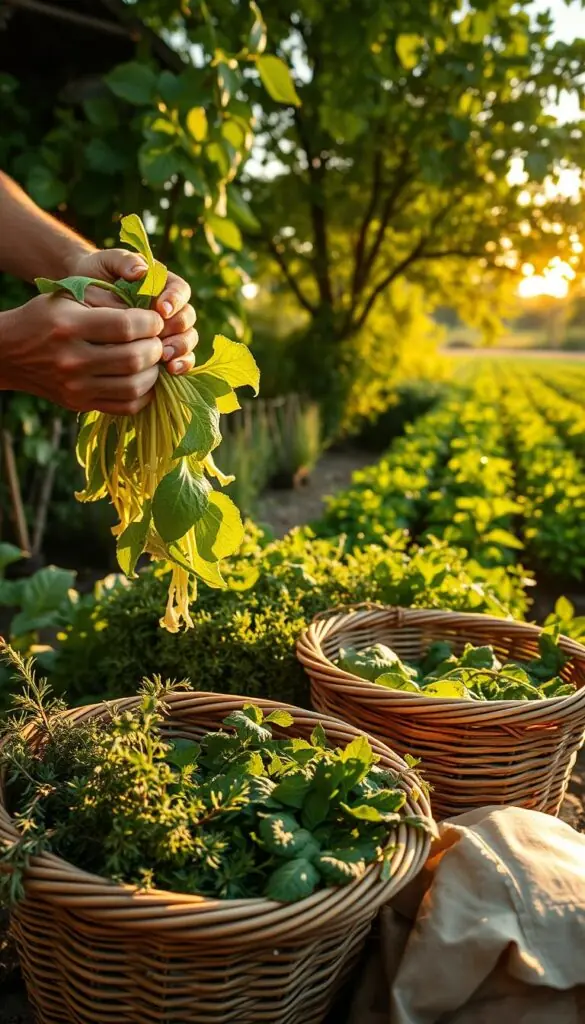
- Evening picks keep greens crisp and color bright; you’ll feel leaves snap.
- Morning snips capture herb aroma—snip before midday and tuck stems in a damp towel.
- Bring a clean bucket of cool water to the beds: dunk gently, spin or pat dry, and chill fast.
- Use sharp snips and cut about 1 inch above the crown on cut‑and‑come‑again lettuces to help regrowth.
- If you’re short on time, pick delicate items first and sturdier ones later to protect flavor and texture.
"A simple split—morning herbs, late‑day greens—makes kitchen prep easier and keeps produce tasting its best."
Simple tools and gentle handling that protect flavor, color, and texture
A few well-chosen tools and gentle hands keep your harvest looking and tasting its best. Bring a small kit and you’ll save time and protect quality from the bed to the kitchen.
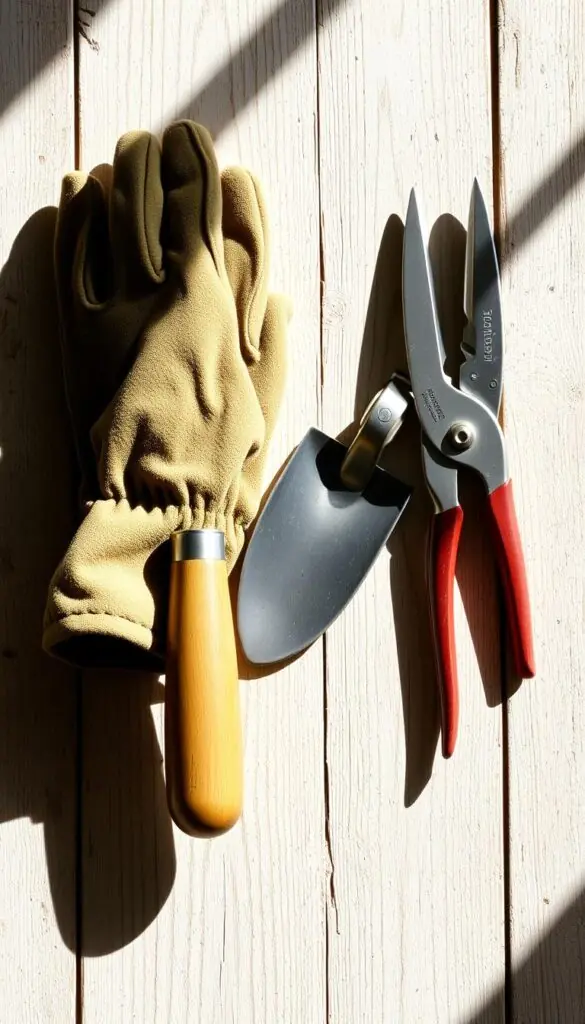
Kit to keep close:
- Sanitized snips and a sharp harvest knife.
- Soft towels, shallow bins, and a small brush for soil.
- A fan or cool water for quick pre‑cooling before storage.
Handle produce gently: cut, don’t yank. Leave 1 to 2 inches of stem on squash and pumpkins so the blossom end stays sealed and keeps longer.
Set full bins off the ground in shade and avoid stacking too high. Weight bruises tender skins and lowers overall quality.
At the point of attachment, free ripe tomatoes with a soft twist rather than pulling. Sort as you go—firm fruit in one bin, soft or scuffed in another—so you use tender items first and reduce waste.
"A tidy kit and calm hands protect flavor and unlock each plant’s full potential."
Keep knives clean and sharp; ragged cuts on stalks make produce weep and shorten shelf life. Use breathable bags in the fridge to balance moisture and keep a small tasting plate nearby to check texture and sweetness as you go.
Small grower notes: balancing harvest date, moisture, and storage quality
Small decisions at the bed edge can make a big difference to what fits in your pantry. You’ll trade a touch of sweetness for longer keeping if you pick tender crops a few days early and chill them fast.
Early vs. later picking: quality tradeoffs you can see and taste
For perishable crops, pick slightly earlier when storage space is tight. Texture and shelf life often beat a few extra days of peak flavor.
For pantry crops like onions and winter squash, wait for full maturity—tops down or firm rind—then cure for weeks of reliable storage.
- If corn stalk strength slips in fall, bring ears in sooner and dry below 18% to protect grain quality.
- Studies show little dry matter loss in corn after maturity, but delayed picks risk stalk or ear rots; weigh drying costs against losses.
- For silage, cut when whole‑plant moisture is toward the high end; raise cutting height in drought to lower nitrates near the ground.
- Mark dates and note which varieties held quality best—some varieties peak earlier, others later.
"Taste and simple checks guide you: a snapping cucumber or squeaky zucchini tells you your choice was right."
Seasonal pacing: week-by-week cues to keep summer crops producing
A gentle weekly rhythm keeps beds productive and prevents sudden piles of overgrown veg. Small checks, a short list, and a reminder on your phone are all you need to stay on top of the season.
Week 1: Pick zucchini at 6–8 inches and cucumbers before yellowing. Set a phone reminder every two days so nothing slips past its sweet spot.
Week 2: Thin tomato clusters and remove split fruit. Harvest little and often to keep flowers coming and fruit forming through the hottest period.
Week 3: Do evening passes for leafy greens and roots; mornings are for herbs and crisp cucumbers. This split protects texture and aroma.
Week 4: Scan the weather and move a day earlier if heat or storms are forecast. A one‑day shift can protect flavor and reduce splitting.
- Keep a small "use‑first" basket on the counter so ripe items don't hide in the fridge and go to waste.
- As nights cool toward fall, expect slower maturity and plan for steadier, smaller pickups.
- For backyard corn, watch maturity by date and weather; if a cool snap slows progress, add a few days before your next check.
- Rotate tasks by varieties so each crop gets attention without overwhelming your week.
"A steady, kind routine keeps plants happy and your kitchen full."
Conclusion
When you tune in to color and feel, the garden tells you what it needs.
Keep your approach simple: watch color, feel texture, and follow the quiet cues each time you walk the beds. A calm routine turns chores into a gentle habit that protects flavor and keeps plants producing.
Trust the signs of maturity. Corn reaches physiological maturity at the black layer and stops adding dry matter, so use that cue to plan your corn picks. For climacteric fruit, manage ripening with ethylene‑aware storage to let sweetness finish off the plant.
Use cool evenings for greens and bright mornings for herbs. Store separately so ethylene‑active fruit don’t soften nearby. With a few tools and a steady rhythm, you’ll enjoy color, scent, and flavor all the way to the end of the season.
FAQ
How can I keep summer vegetables producing longer?
Regularly picking ripe fruit and cutting back spent blooms encourages plants to set more flowers and fruit. For vining crops like beans and cucumbers, harvest every few days to prevent oversized, woody produce. For tomatoes and peppers, remove any diseased foliage and pinch late-season suckers sparingly to focus energy on fruit that’s forming.
When should I pick tomatoes, peppers, and other climacteric fruit?
Look for full color, a slight softness at the stem end, and a fragrant scent. These crops can often finish ripening off the plant because they respond to ethylene. Harvest when color and touch feel right rather than strictly by calendar, and store in a single layer at room temperature if they need a few days to fully ripen.
How do I know the best moment to pick cucumbers, zucchini, and eggplant?
Choose smaller, firm specimens for the best texture and flavor. For zucchini, aim for 6–8 inches; for cucumbers, 6–8 inches for slicers and shorter for picklers. Eggplant should be glossy and spring back slightly when pressed. Picking early keeps plants productive and prevents bitterness or fibrous flesh.
What signs tell me peas, kohlrabi, and cauliflower are ready?
For peas, pods should be plump but not bulging. Kohlrabi bulbs are firm and the size of a tennis ball to softball depending on variety. Cauliflower heads should be compact, white (or varietal color), and 4–8 inches across before curds separate. Harvesting at the right stage gives best tenderness and taste.
How do I know when onions, pumpkins, and sweet potatoes are mature?
Onions show neck collapse and tops that fall over; allow a few days to cure in dry, ventilated space. Pumpkins develop hard rinds and a dull sound when tapped; vines will often die back. Sweet potatoes are ready when foliage dies and you dig carefully for firm tubers; cure them in warm, humid conditions to boost sweetness and storage life.
What’s the difference between climacteric and non‑climacteric crops?
Climacteric crops—like tomatoes, peaches, and peppers—continue ripening after harvest due to ethylene gas. Non‑climacteric crops—such as cucumbers, grapes, and strawberries—do not ripen further once picked, so you must harvest them fully ripe for best flavor. Use this knowledge to decide when to pick and where to store produce.
How can I use ethylene to improve ripening and storage?
Keep ethylene producers (bananas, tomatoes, melons) separate from ethylene-sensitive items (leafy greens, potatoes) to avoid off-flavors or premature spoilage. To speed ripening, place climacteric fruit in a paper bag with a ripe banana for a day or two; to slow it, refrigerate suitably and ventilate storage areas.
How do I read a corn ear to pick at peak quality?
Check silk color (brown and dry), denting of kernels for dent corn, and the milk line for sweet corn: puncture a kernel — if milky liquid appears, you’re in the sweet spot. The black layer signals physiological maturity for field corn. Harvest when ears feel full and kernels are plump for best flavor and sugar content.
What do weather and drydown mean for corn harvest decisions?
Warm, dry September days speed down moisture loss and ease harvest, while cool, wet October slows drydown and raises the risk of stalk rot. Monitor stalk strength and ear attachment; if stalks fall or shanks shatter, harvest sooner to prevent losses and preserve kernel quality.
Why does time of day matter for picking leafy greens and herbs?
Harvest in the cool morning for herbs and leafy greens to retain crispness, aroma, and higher water content. Late afternoon or evening picks can be softer and more prone to wilting. If you must pick midday, place produce in shade and cool it quickly to maintain texture.
What simple tools and handling tips protect produce quality?
Use sharp shears or a knife to make clean cuts, avoiding torn stems. Handle gently to prevent bruises, work with baskets that allow airflow, and sort damaged items immediately. For delicate fruits, lay them soft-side up and avoid stacking more than one layer when possible.
How do small growers balance picking date, moisture, and storage quality?
Pick slightly earlier if you expect warm storage or long transport, and a touch later if you plan immediate market sales for optimal flavor. Manage field moisture by avoiding harvest when foliage is wet to reduce disease spread. Cure root crops properly and store at recommended temperatures to extend shelf life.
What are the tradeoffs between early and later picking?
Early picking can preserve texture and reduce pest damage but may sacrifice peak flavor or sugar. Later picking can increase taste and drydown but risks overripeness, cracking, or loss from weather and pests. Choose based on use: fresh eating favors peak ripeness; processing often tolerates slightly earlier picks.
What week-by-week cues help pace summer garden work?
Set a routine: check beans and cucumbers every 2–3 days, harvest tomatoes and peppers every 3–4 days, and pick greens twice weekly in heat. Watch plant vigor—yellowing leaves, flower drop, or pests—and adjust watering, feeding, and picking frequency to keep growth steady into fall.
What common midsummer mistakes should I avoid?
Don’t let overripe fruit linger; it attracts pests and reduces plant vigor. Avoid irregular harvesting—missed picks can slow production. Also, don’t overwater during peak heat; soggy roots reduce flavor concentration. Consistent, gentle care preserves both yield and quality.