Imagine warm sunlight on a small patch of green and the soft hum of life nearby. Have you noticed a bare spot by your porch or dreamed of a lively view outside the kitchen? This guide gives you a calm, practical start.
We’ll help you match sun and soil, pick a few starter plants, and water in the morning so your garden thrives from spring into summer and beyond.
Start simple: choose coneflower, bee balm, lavender, or zinnia as easy options that serve as a reliable nectar source for bees and butterflies. These choices support honey bees, native bees, bumble bees, and gentle winged visitors through the bloom season.
You’ll get short, hands-on tips—think gloves, a trowel, and a short list for the nursery—so you feel confident planting this year. We keep the steps clear and neighborly so your space becomes beautiful and low-maintenance.
Key Takeaways
- Match plants to your sun and soil for quick success.
- Pick a few nectar-rich starters like coneflower and lavender.
- Water in the morning and mulch for steady growth.
- Plan for continuous bloom from spring through summer.
- Avoid pesticides to protect bees, butterflies, and other insects.
Start Here: Simple Rules for a Pollinator-Friendly Garden
Start small: map light, soil, and the space you have before buying any seeds or plants. A little prep saves time and gives you a lively, sunlit patch that fits your view and routine.
- Walk your space at different times to note where sun lingers; most nectar-rich plants want 6+ hours.
- Do a squeeze test: crumble soil for good drainage or add compost if it ribbons tight.
- Measure planting areas so young plants have room—spacing cuts disease and saves you time later.
Practical care and plant choices
Pick a small seed and plant list for the first season. Favor single blooms and a range of shapes—tubular, flat-topped, and daisy-like—to welcome more visitors.
Skip broad‑spectrum insecticides. Those sprays harm bees, butterflies, and other beneficial insects your garden needs. Water deeply in the morning, mulch 2–3 inches around beds, and check your patch weekly to learn what thrives.
Understand Your Visitors: Bees, Butterflies, Hummingbirds, and Moths
Notice the colors and shapes in your patch to invite the right winged visitors to your view. A short watch in the morning or late afternoon tells you who comes and when. That helps you pick plants and place them where they’ll get the most use.
Bee favorites
Look for purple, blue, orange, or yellow blooms with open faces. Bees need easy access to nectar and pollen. Plant these in full sun where bees are active.
Butterfly needs
Butterflies like flat, clustered blooms they can land on. Mass plantings help them feed without wasting energy. White, pink, red, yellow, and purple tones often attract more visits.
Hummingbird picks
Hummingbirds reach into long, tubular shapes. Bright red, yellow, and purple spikes are ideal. Place taller tubular plants near a sunny fence or branch where they can perch.
- Keep a shallow water saucer with pebbles so small visitors can sip safely.
- Add a few pale, scented night bloomers to welcome moths in the evening.
- Plant in clumps of three to five of the same type to make feeding easier.
| Visitor | Color Cues | Shape | Best Placement |
|---|---|---|---|
| Bees | Purple, blue, orange, yellow | Open, daisy-like | Sunny patches, low to mid height |
| Butterflies | White, pink, red, yellow, purple | Flat clusters, landing pads | Mass plantings, warm sunny spots |
| Hummingbirds | Red, yellow, purple | Tubular, deep | Tall spikes near perches |
| Moths & other insects | Pale, scented tones | Night-blooming, fragrant | Near porch or evening seating |
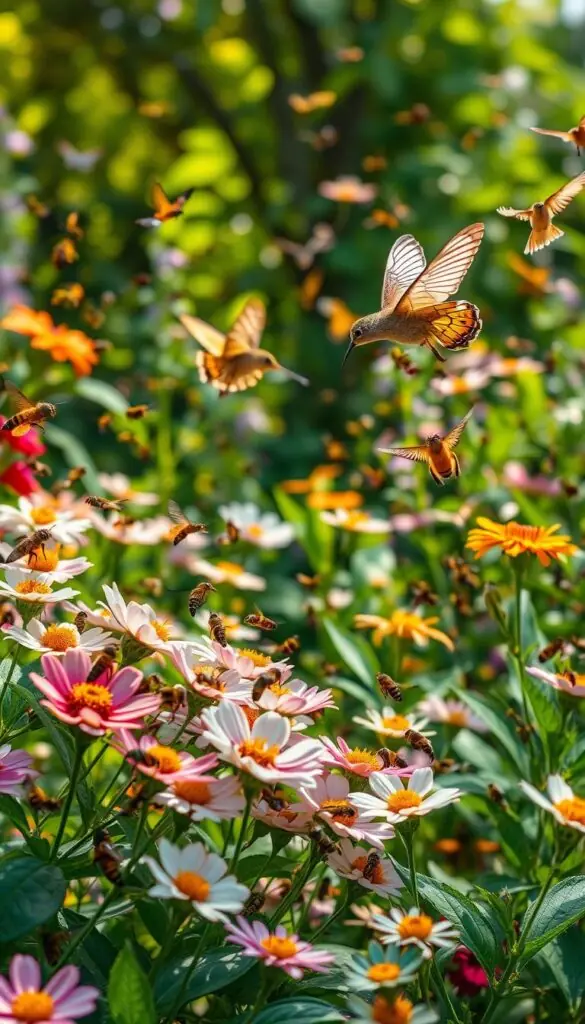
Native Plants First: Easy, Beautiful, and Better for Local Pollinators
Planting natives is an easy way to turn a small patch into a thriving neighborhood habitat. Start with one or two regionally native perennials this spring and you’ll see how quickly local insects and birds visit your view.
Why choose native plants? They evolved with local insects, so they often provide better food and shelter than nonnatives. Native shrubs and perennials — like buttonbush, chokeberry, oakleaf hydrangea, coneflower, goldenrod, aster, and Joe Pye weed — supply nectar, pollen, seeds, and winter cover.
Oakleaf hydrangea is a standout: summer blooms plus peeling bark that gives overwintering shelter to beneficial insects.
Simple steps to get started
- Use a spade to loosen the hole and set the plant so roots sit level with the soil.
- Water in slowly with a watering can, then add 2–3 inches of mulch to hold moisture.
- Cluster natives in groups so they’re easier for pollinators to find.
- Blend these with your favorite garden plants and watch which ones attract the most activity; add more of those next season.
| Plant type | Season | Benefits |
|---|---|---|
| Coneflower, Aster | Spring–Fall | Nectar, long bloom, easy care |
| Oakleaf Hydrangea | Summer | Blooms, bark shelter, structure |
| Buttonbush, Chokeberry | Spring–Fall | Flowers for insects, berries for birds |
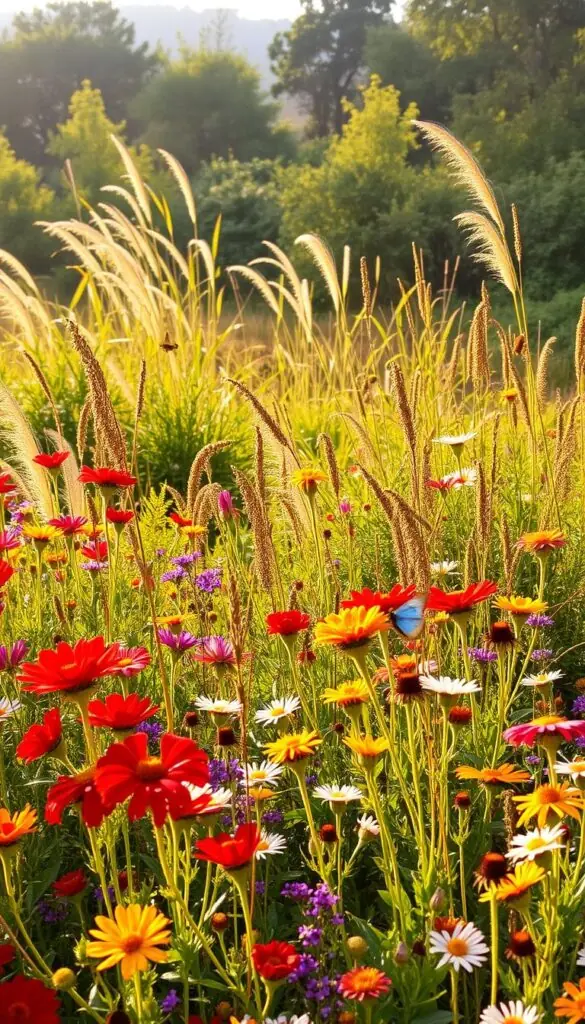
Perennial Pollinator All-Stars for Years of Color
Planting a few hardy perennials gives your bed steady bloom and easy care across seasons. These picks make your view lively while serving as a reliable nectar source for bees and butterflies.
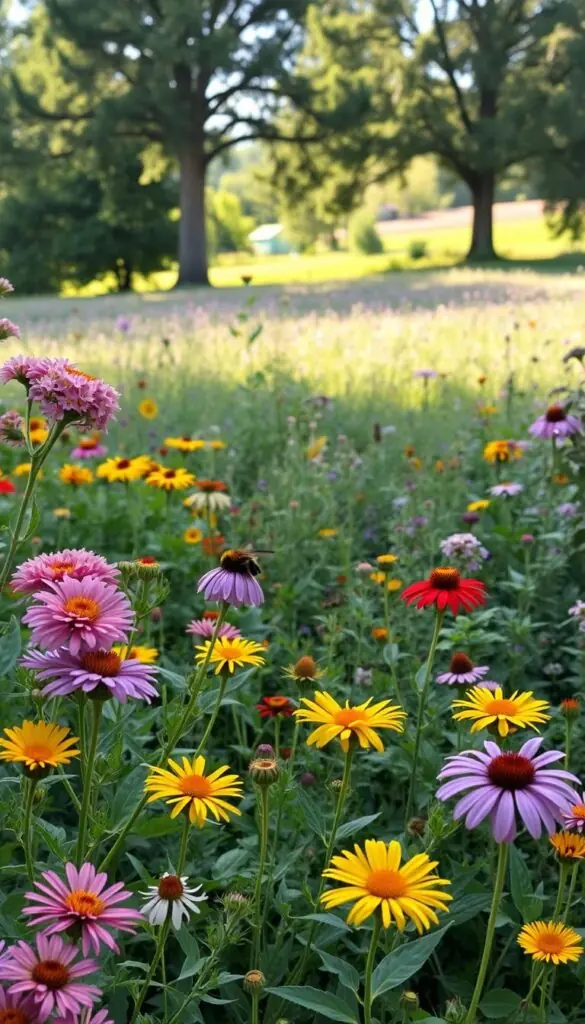
Spring into early summer
Columbine (Zones 3–9): early nectar for hummingbirds and bees. Baptisia (4–9): tall spires that native bees love. Allium (4–10): spring bulbs that draw honey bees and bumble bees.
Midsummer mainstays
Coneflower (3–9) feeds butterflies. Anise hyssop (5–9) supports hummingbirds, bees, and butterflies. Catmint (3–9) and salvia (4–10) bloom long in full sun. Yarrow (3–11) is drought-tough and steady.
Late-summer to fall lifelines
Aster, goldenrod, Joe Pye weed, and liatris keep nectar flowing for bees and migrating monarchs when many other plants fade.
Sensory picks and care
Enjoy lavender’s calming scent and bee balm’s bold petals. Group plants in threes, site them in full sun where possible, and water deeply in the morning during dry spells.
| Plant | Zones | Sun | Notes |
|---|---|---|---|
| Columbine | 3–9 | Part sun | Early nectar; good for hummingbirds and bees |
| Coneflower | 3–9 | Full sun | Butterfly magnet; leave some seed heads |
| Lavender | 5–9 | Full sun | Fragrant foliage; minty-scented appeal |
| Aster / Goldenrod / Liatris | 3–10 | Full sun | Late-season nectar for bees and migrating butterflies |
Tip: Deadhead lightly to extend bloom, but leave a few seed heads for birds and winter interest. These perennials repay you for years with little fuss.
Annuals that Keep Nectar Flowing All Season
A few well-chosen annuals turn small pots and beds into a steady nectar source from June to frost and brighten your view.
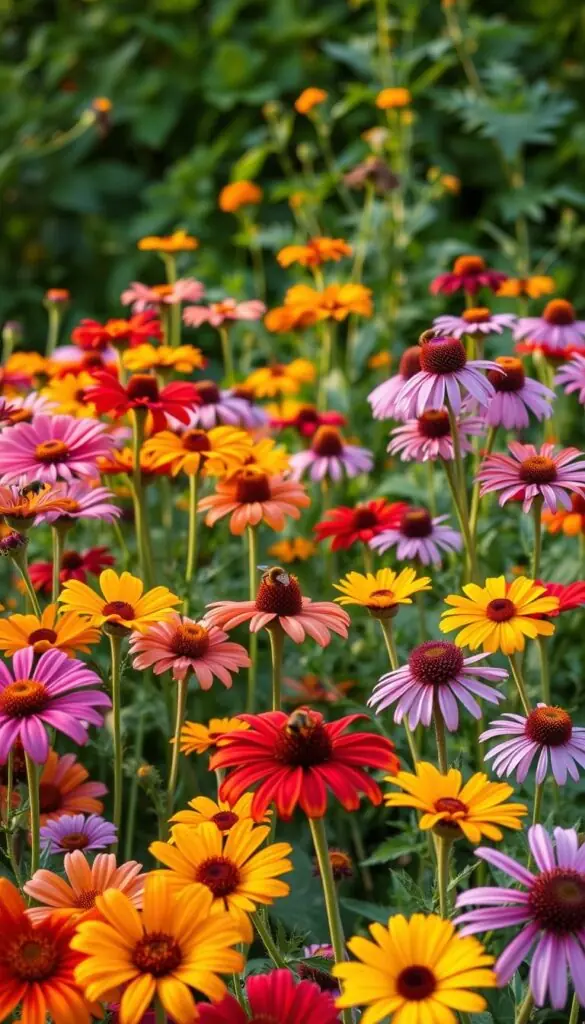
After your last frost, sow zinnia and cosmos from seed for budget-friendly color. Choose single forms for easier nectar access; these two bloom until frost and draw bees and butterflies daily.
Quick wins for containers and beds
- Tuck sweet alyssum at edges and in pots for tiny, fragrant flowers from spring to frost.
- Plant sunflowers in the back row as a sunny landing zone for bees.
- Add lantana, cuphea, pentas, and gomphrena to containers for heat-loving, nonstop bloom.
- Pop borage near tomatoes and squash—its sky-blue blossoms help pollinate veggie beds.
Use potting mix with good drainage and containers with holes. Water in the morning during hot summer days and feed lightly midseason. Keep snips handy to deadhead weekly and enjoy a lively, cottage-style patch.
Flowering Shrubs that Feed Pollinators and Frame Your Garden
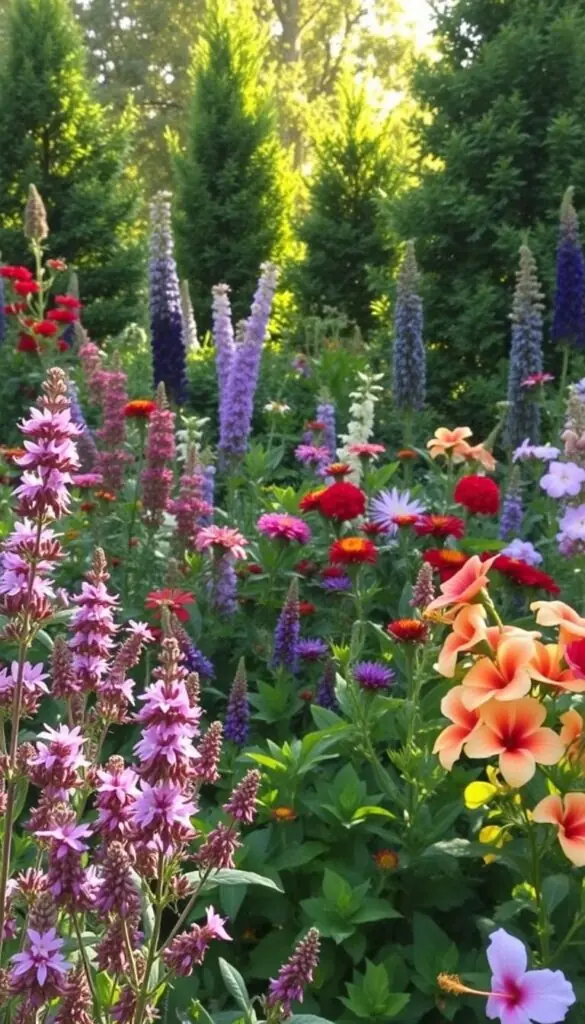
Layering shrubs into beds brings fragrance, movement, and reliable food across spring to winter. These woody plants give your view shape while serving as a steady nectar source for bees, butterflies, and hummingbirds.
Wet to woodland edges: choose buttonbush for damp spots, summersweet along paths, and chokeberry at the shade line. Buttonbush’s fragrant pincushion blooms attract hummingbirds and many bees; place it where you can watch the activity up close.
Summersweet blooms mid to late summer when few shrubs flower, keeping your garden lively. Chokeberry offers spring blossoms for pollinators and then berries that feed birds in fall and winter.
Four-season structure and shelter
Oakleaf hydrangea gives summer nectar and peeling bark that shelters overwintering insects. It’s a four-season workhorse for form and wildlife value.
"Use shrubs to anchor beds: cluster them, space to mature, and enjoy the changing textures through the year."
- Placement: space shrubs to their mature width so pollinators can move freely.
- Companion planting: add perennials at the feet of shrubs for an understory of nectar-rich plants.
- Watering: water new shrubs deeply once or twice a week in their first summer; mulch 2–3 inches to keep roots cool.
- Pruning: prune lightly with hand pruners after bloom to shape; avoid heavy cutting that removes next season’s buds.
| Shrub | Best spot | Seasonal benefit | Care notes |
|---|---|---|---|
| Buttonbush | Wet edges, near ponds | Fragrant spring–summer blooms; draws hummingbirds and bees | Keep soil moist; plant where you can watch blooms |
| Summersweet | Path edges, partial sun | Mid–late summer nectar when others rest | Mulch and regular watering first year |
| Chokeberry | Woodland edge, dappled shade | Spring flowers for insects; fall berries for birds | Low pruning; leave some fruit for wildlife |
| Oakleaf hydrangea | Mixed borders, filtered sun | Summer blooms; winter bark shelters insects | Minimal pruning; protect next year’s buds |
Season-by-Season Picks to Support Pollinators All Year
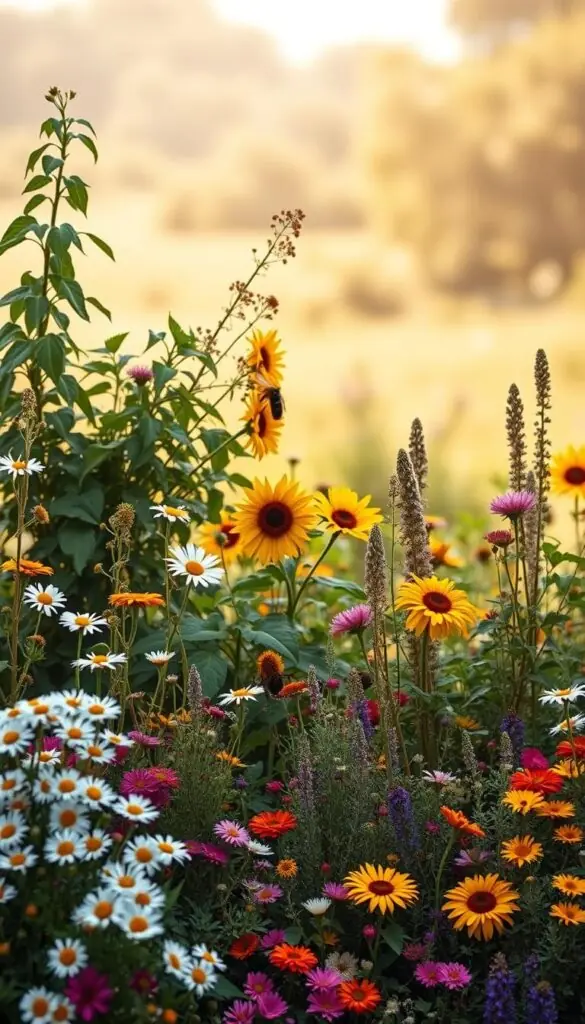
A simple seasonal plan keeps your beds blooming and wildlife fed all year. Use short lists and a few reliable plants to cover each season. This gives you a steady stream of nectar and a cheerful view through the months.
Spring wake-up
Plant columbine and allium early to jump-start nectar for hummingbirds and bees. Add chokeberry for white blooms that smaller bees love.
Summer abundance
Trust bee balm, salvia, coneflower, and lavender for continuous bloom and low fuss. Mulch in late spring and water deeply during dry spells.
Fall fuel-ups
Bring in aster, goldenrod, sunflower, and Joe Pye weed to feed late migrants and local bees and butterflies before cold arrives.
Winter interest
Leave seed heads and hollow stems through winter. Finches eat the seed while hollow stems shelter overwintering insects. Tidy beds in early spring.
| Season | Key plants | Quick notes | Maintenance |
|---|---|---|---|
| Spring | Columbine, Allium, Chokeberry | Early nectar; jumps starts the year | Plant early; water after planting |
| Summer | Bee balm, Salvia, Coneflower, Lavender | Long bloom; steady food source | Mulch; deep soak 1–2× weekly |
| Fall | Aster, Goldenrod, Sunflower, Joe Pye Weed | Power-up for migrants | Plant in groups; leave some seed |
| Winter | Seed heads, hollow stems | Food for birds; shelter for insects | Leave 12–18" stems; tidy in spring |
Color Cues: Purple Flowers and Beyond that Bees Can’t Resist
Color can be your shorthand for a busy, buzzy summer border that bees spot from across the yard. Use clear color blocks to guide foraging and to make your view feel arranged and calm.
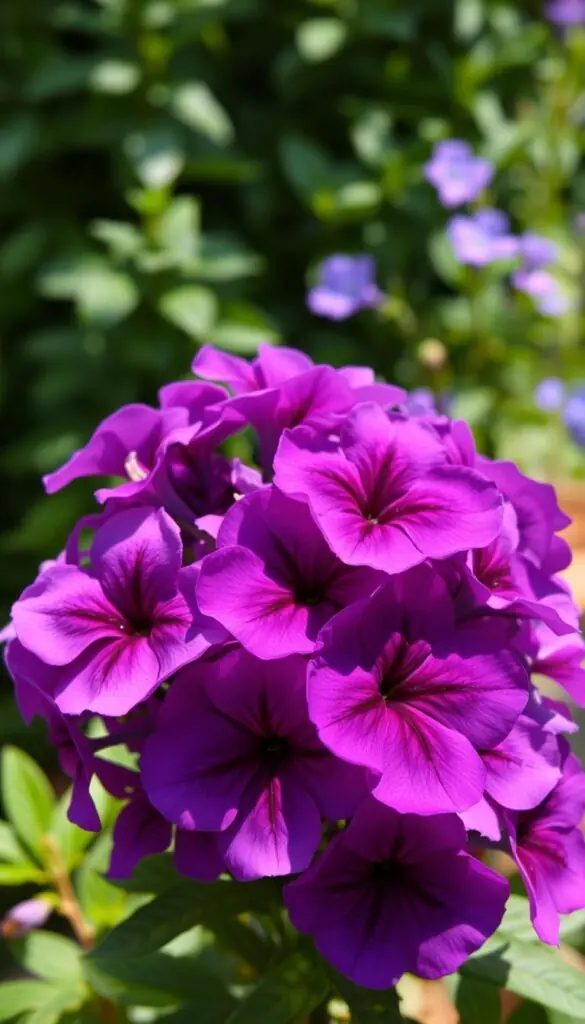
Purple and blue winners
Catmint, salvia, lavender, and liatris form a cool, long‑blooming bed. Catmint blooms for months and lavender is a beekeeper favorite. Liatrisspikes add vertical interest and salvia brings movement.
Sunny tones that work
Yarrow, coreopsis, and sunflower offer daisy-like faces rich in pollen. These warm tones pair well beside purples to create contrast that attracts more visits.
- Plant in full sun for stronger color and fuller flowering.
- Group each type in threes to fives so bees can forage efficiently.
- Repeat the purple–gold combo down a bed to lead the eye and encourage traffic.
- Add lavender along a path edge for scent and a steady hum near your seating area.
| Color Group | Plants | Best Placement |
|---|---|---|
| Purple/Blue | Catmint, Salvia, Lavender, Liatris | Mid‑border to back; full sun |
| Sunny/Gold | Yarrow, Coreopsis, Sunflower | Front row or sunny patch; visible contrast |
| Mixed Texture | Pair yarrow with liatris | Alternate heights for perching |
Designing Bloom Layers: From Groundcovers to Tall Spires
Start from the front edge and work back: fragrant low plants, sturdy mids, and tall, airy spires. This simple layout gives each plant sun and makes your bed easy to care for.
Easy layout recipe and tools
Use a string line and a measuring tape to mark beds and spacing. Space plants to their mature width so you save time on pruning and disease control later.
- Front: sweet alyssum for a fragrant edge that blooms through spring to frost.
- Middle: coneflower for summer nectar and late seed that feeds birds and adds texture.
- Back: Joe Pye weed for height, movement, and late-season nectar for bees and butterflies.
Repeat this trio down the border for rhythm; it creates a polished view and helps visitors find food easily. Tuck spring bulbs or early perennials up front to extend bloom time.
Add stepping stones or a narrow path so you can deadhead and water without compacting soil. Leave some coneflower seed heads through fall for wildlife value, and stand back as plants grow—moving one spot can improve balance for years.
| Layer | Plant example | Spacing guidance |
|---|---|---|
| Low (edge) | Sweet alyssum | 6–12" apart; keeps edge tidy |
| Mid (border) | Coneflower | 18–24" apart; allow seed heads |
| Tall (back) | Joe Pye weed | 24–36" apart; gives height and shelter |
Milkweed Matters: Supporting Monarch Butterflies
A small stand of milkweed creates a welcome nursery for caterpillars and a beacon for adults. Milkweed is the sole food source for monarch caterpillars, so it’s the essential host in any garden that hopes to help this treasured species.
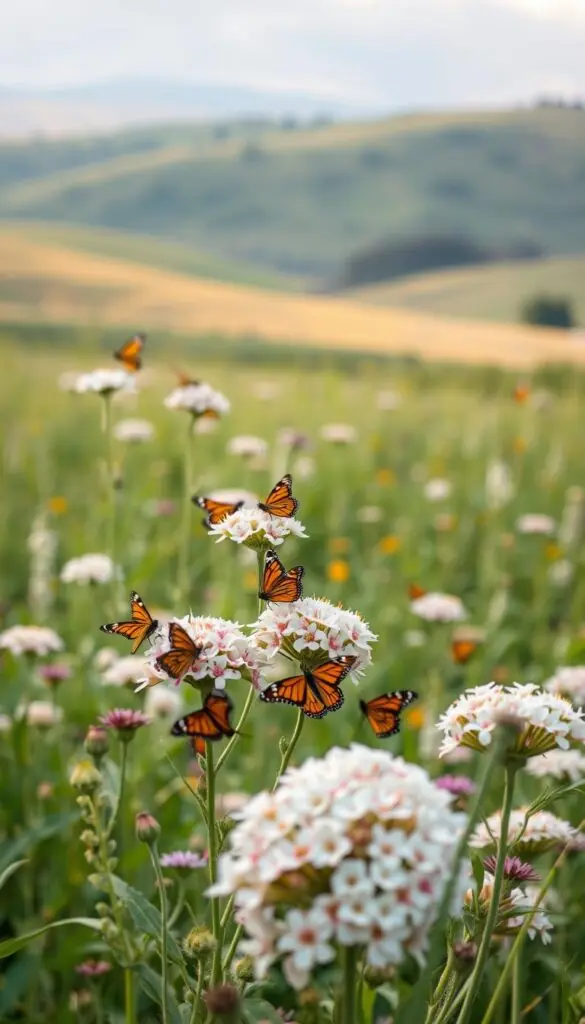
Host plus nectar: surround milkweed with aster, coneflower, and Joe Pye weed so adult monarchs find fuel through summer and into migration. Stagger these bloomers so nectar is available from mid‑summer into fall.
- Plant milkweed from seeds or small plants after your last frost; water steadily while young.
- Place milkweed in full sun with room for tall stems to sway and grow.
- Avoid insecticides on or near milkweed — caterpillars need clean leaves to thrive.
Simple planting combo and timing
| Plant | When to plant | Benefit |
|---|---|---|
| Milkweed | After last frost (seed or plug) | Host & caterpillar food source |
| Aster / Coneflower | Spring or early summer | Late-season nectar for migrating adults |
| Joe Pye weed | Spring (transplant) | Tall nectar source through summer |
Tip: let a few pods ripen for seeds to share and keep a small notebook to mark your first monarch sighting — it’s a simple seasonal joy that connects you to the wider migration.
Pollinator Flowers for Small Spaces, Patios, and Balcony Gardens
Even the smallest balcony can become a bright, buzzing corner with a few well-placed pots. Use lightweight containers and good potting mix to keep roots cool and moisture steady. This makes it easy for you to enjoy visits up close from bees and butterflies.
Container-friendly picks
Zinnia, pentas, cuphea, and sweet alyssum bloom nonstop in pots and draw hummingbirds as well as winged visitors. Sow a few zinnia seed in warm mix for quick color and tuck alyssum at the rim for a soft cascade.
Sunny railings and steps
Lantana and compact sunflowers love heat and full sun. Clip pots to railings or set them on bright steps for steady bloom through long summers. Group pots for a lush feel and easier watering.
- Choose lightweight containers with drainage holes and quality potting mix.
- Water in the morning; check with a finger an inch down during hot spells.
- Add a small saucer with pebbles for sipping and a shallow herb pot for scent.
- Rotate containers weekly and feed lightly every 3–4 weeks for steady bloom.
| Need | Picks | Why it works |
|---|---|---|
| Quick color | Zinnia, Pentas | Fast to bloom; attract bees and butterflies |
| Edge & spill | Sweet Alyssum | Fragrant, cascades over rims |
| Heat spots | Lantana, Compact Sunflower | Thrives in sun; long season reward |
One small cluster of pots changes your view and gives you easy snips for bouquets. This is gardening that fits your space and your time.
Plant Once, Enjoy for Years: Low-Maintenance Perennials for Busy Gardeners
Set up a sunny patch with four easy perennials and you’ll enjoy a lively summer view with little upkeep. These choices give you color for years and free up your time for other things you love.
drought-tolerant standouts: yarrow, coneflower, catmint, anise hyssop
Choose yarrow, coneflower, catmint, and anise hyssop for sunny, low‑fuss beds that reward you season after season. Water deeply the first year; after that these plants often sail through hot weeks with minimal attention.
Catmint blooms for months and brings a gentle mint scent that guests notice. It also draws bees and hummingbirds. Yarrow’s flat tops are perfect for small visitors, while coneflower gives nectar and later seed heads for birds. Anise hyssop adds upright spikes and a soft herbal note.
Simple care: add a thin mulch layer, water in the morning during dry spells, divide clumps every few years, and deadhead briefly for tidiness. Five minutes a week keeps beds neat and inviting.
| Plant | Sun | Key benefit | Routine |
|---|---|---|---|
| Yarrow | Full sun | Heat‑tough, flat blooms | Thin mulch; divide every 3–4 years |
| Coneflower | Full sun | Nectar then seed for birds | Leave some seed; light deadhead |
| Catmint | Full sun | Long bloom, minty scent | Cut back in spring; low water |
| Anise hyssop | Full sun | Vertical spikes; drought tolerant | Divide sparingly; morning water in dry spells |
Water, Mulch, and Maintenance Tips for Healthy Nectar Flow
Set a few easy habits now and your spring and summer beds will reward you with steady nectar and bird-friendly seed. These simple routines save you time and give your view lasting color and life.
Water deeply in the morning; mulch to keep roots cool
Water in the morning to cut evaporation and lower disease risk. Set a time reminder on your phone twice a week during hot spells so you don’t forget.
Check moisture by inserting your finger two inches into the soil. If it feels dry at that depth, give a slow, deep soak rather than quick sprinkles.
Mulch 2–3 inches deep, keeping it a few inches from stems. Replenish mid‑summer where it thins, especially in sunny beds.
Deadhead or not? When to let flowers go to seed for birds
Deadhead annuals and some perennials to extend bloom. But leave some coneflower and sunflower seed heads for birds and winter interest.
In spring, cut back only what you didn’t leave for wildlife. Keep 12–18 inches of hollow stems where possible to shelter beneficial insects.
- Group plants by water needs so you don’t overwater drought‑tolerant varieties.
- Use clean pruners and a bucket to keep maintenance quick and tidy.
- During peak summer heat, give a deep soak less often to encourage stronger roots.
| Task | How often | Why it helps | Quick tip |
|---|---|---|---|
| Morning watering | 2× weekly in heat | Reduces evaporation; healthy roots | Set phone reminder |
| Soil check | Weekly | Prevents over/under watering | Finger test, 2" deep |
| Mulch | Apply spring; top-up mid‑summer | Keeps roots cool; retains moisture | Keep mulch off stems |
| Deadhead vs seed | As needed | Extends bloom; supports birds in winter | Leave some seed heads |
Result: a low‑effort routine that keeps nectar flowing for bees and other visitors, saves you time, and makes your garden look cared for across the seasons.
Avoiding Common Mistakes with Pollinator Plants
A few common gardening habits hide nectar and drive helpful insects away. Fixing these keeps your view lively and the summer hum steady.
Go easy on fertilizer. Too much nitrogen makes lush leaves and few blooms. Fewer blooms mean less nectar for bees, honey bees, and bumble bees.
Pick single‑petaled varieties. Single blooms give easy access to pollen and nectar. Read plant tags and avoid types bred mainly for double petals and showy form.
Rethink pest control
Skip broad‑spectrum insecticides. Sprays can harm honey bees, bumble bees, butterflies, and helpful predators like wasps and beetles.
- Encourage natural allies — wasps, beetles, and flies — by planting diverse beds.
- Hand‑pick pests or use targeted, least‑toxic products at dusk when bees are less active.
- If needed, spot‑treat the affected leaf or stem and follow the label to protect nearby visitors.
| Common mistake | Red flag | Safer alternative |
|---|---|---|
| Over‑fertilizing | Lots of green leaves, few blooms | Light compost in spring; slow‑release low‑N feed |
| Choosing double blooms | Showy petals, no open center | Single‑petaled varieties for easy nectar access |
| Broad insecticide use | Dead or absent bees and helpful insects | Hand removal, traps, or targeted, low‑toxics at dusk |
Keep soil healthy with compost and mulch so plants resist pests and need fewer quick fixes. Balance is the goal: healthy plants, gentle buzz, and minimal inputs.
Pollinator Flowers: A Practical List You Can Plant This Week
Bring home a few tried-and-true plants today and watch bees, butterflies, and hummingbirds visit your view by mid-summer. Use this short shopping list to pick healthy starts with clear sun and bloom notes so you can plant with confidence.
Perennials (sun to part sun)
- Bee balm — summer bloom; great for bees, butterflies, hummingbirds.
- Coneflower — long summer bloom; leave seed heads for birds.
- Aster & Goldenrod — late-season source for bees and migrating monarchs.
- Joe Pye weed — tall, late nectar for summer into fall.
- Salvia, Lavender, Liatris — steady bloom; draw bees and hummingbirds.
Annuals (fast color)
- Zinnia, Cosmos (single forms best) — nonstop bloom; easy to sow or buy.
- Sweet Alyssum — fragrant edge; long season.
- Sunflower, Borage — big bee magnet; borage helps veggie beds.
- Cuphea, Gomphrena, Pentas, Lantana — heat‑loving, hummingbird‑friendly.
Shrubs (structure + forage)
- Buttonbush — fragrant pincushion blooms for hummingbirds and bees.
- Summersweet — midsummer nectar when few shrubs bloom.
- Oakleaf Hydrangea — summer nectar and winter shelter from peeling bark.
- Chokeberry — spring bloom for insects, fall berries for birds.
"Bring a short seed-and-plant plan to the nursery — pick strong starts and group sun lovers together for the quickest reward."
| Type | Sun | Best season | Supports |
|---|---|---|---|
| Perennials | Full–part sun | Spring–summer–fall | Bees, butterflies, hummingbirds |
| Annuals | Full sun | Summer–frost | Bees, hummingbirds, quick color |
| Shrubs | Sun–filtered | Spring–summer–fall | Nectar, seed, shelter |
Conclusion
With a bit of planning, your patch can feed bees and butterflies while giving you a calm, colorful view. Start small and enjoy quick wins: a native perennial, a pot of zinnias, and a shrub for structure.
Leave some seed heads and hollow stems through winter. Birds will glean seeds and overwintering pollinators get shelter. These simple choices connect your space to the wider ecosystem across the year.
Gardening is steady work and steady reward. Keep watering in the morning, mulch thoughtfully, and skip harsh sprays. Trust the process — your care will bring joy for years.
When you step outside and hear that friendly buzz, you’ll know your garden makes a difference. Here’s to simple, joyful gardening that fills your days with color and calm.
FAQ
How do I choose plants that attract butterflies and bees?
Pick species that match your yard’s sun, soil, and space. Favor native perennials like coneflower, bee balm, and aster, and add annuals such as zinnia and cosmos for continuous bloom. Offer a mix of shapes, heights, and bloom times to supply nectar and pollen through spring, summer, and fall.
What are simple rules to make a garden welcoming to pollinators?
Match sun exposure and soil before you buy. Avoid pesticides, provide a variety of colors and flower shapes, and include water and shelter. Stagger blooms with early, midsummer, and late-season plants so bees, butterflies, hummingbirds, and moths always find food.
Which visitors should I expect and what do they need?
Bees prefer purple, blue, and yellow blooms with easy nectar access. Butterflies need flat landing pads and clustered nectar sources. Hummingbirds favor vivid tubular flowers like salvias and penstemon. Moths seek night-blooming, fragrant plants and late-season nectar.
Why plant native species first?
Native plants evolved with local insects and provide the best food and habitat for caterpillars, bees, and beneficial beetles and flies. They’re usually lower-maintenance, more drought-tolerant, and support birds and other wildlife better than many exotics.
Which perennials keep gardens colorful for years?
Early options include columbine and allium. Midsummer favorites are coneflower, anise hyssop, catmint, yarrow, and salvia. For late summer into fall, plant aster, goldenrod, Joe Pye weed, and liatris to sustain pollinators before winter.
What annuals are best for steady nectar all season?
Choose continuous bloomers like zinnia, cosmos, and sweet alyssum. Sun-loving magnets include sunflowers, lantana, cuphea, gomphrena, and pentas. Borage is a great companion in veggie beds with sky-blue blooms that bees adore.
Which shrubs feed pollinators and shape the garden?
Buttonbush, summersweet, and chokeberry suit wet or woodland edges. Oakleaf hydrangea adds structure and shelter through multiple seasons while offering blooms useful to insects and birds.
How can I support pollinators year-round?
Plant seasonally: early spring columbine and allium, summer bee balm and lavender, fall aster and sunflower. Leave seed heads and stems over winter for birds and shelter. Provide water and nesting spots to keep insects thriving year to year.
Which colors attract bees most strongly?
Purple and blue are top picks—catmint, salvia, lavender, and liatris are reliable. Bright sunny tones like yarrow, coreopsis, and sunflower broaden appeal to other insects and hummingbirds.
How should I design bloom layers in a garden bed?
Stagger heights: use low groundcovers like alyssum at the front, mid-border plants like coneflower, and tall spires such as Joe Pye weed at the back. This creates visual depth, continuous nectar, and shelter for different insects and birds.
Why is milkweed important and how do I use it?
Milkweed is the essential host for monarch caterpillars and also supplies nectar. Plant it with companion bloomers such as aster, coneflower, and Joe Pye weed to provide both larval food and adult feeding sites.
What are good choices for small spaces, patios, and balconies?
Container-friendly picks include zinnia, pentas, cuphea, and sweet alyssum. For sunny railings, use lantana and compact sunflowers. Choose shallow, well-draining mixes and position pots where insects can easily visit.
Which low-maintenance perennials suit busy gardeners?
Drought-tolerant standouts like yarrow, coneflower, catmint, and anise hyssop return year after year with minimal care. Mulch to conserve moisture and cut back in late winter to tidy beds for spring growth.
What watering and maintenance practices help nectar flow?
Water deeply in the morning and mulch to keep roots cool. Deadhead spent blooms for extended flowering, but leave some seed heads into winter for birds and overwintering insects when appropriate.
What common mistakes should I avoid?
Don’t over-fertilize or plant double-flowered cultivars that reduce nectar. Avoid insecticides that harm bees, butterflies, wasps, and beneficial flies and beetles. Also, don’t clear all stems in fall—many species overwinter in stems and seedheads.
What practical list can I plant this week?
Perennials: bee balm, coneflower, aster, goldenrod, Joe Pye weed, salvia, lavender, liatris. Annuals: zinnia, cosmos, sweet alyssum, sunflower, borage, cuphea, gomphrena, pentas, lantana. Shrubs: buttonbush, summersweet, oakleaf hydrangea, chokeberry. These choices give immediate bloom and long-term habitat for bees, butterflies, hummingbirds, and other beneficial insects.