Feel the warm sun on your back as you press a seed into crumbly soil. The rough stem, the bright face turning slowly—this is the quiet joy of tending a small patch of sunflowers in your yard.
You’ll find friendly, step-by-step guidance you can use today. We explain when to plant by frost dates and soil temperature, how much sun and water plants need, and simple support tips like bamboo canes and soft ties.
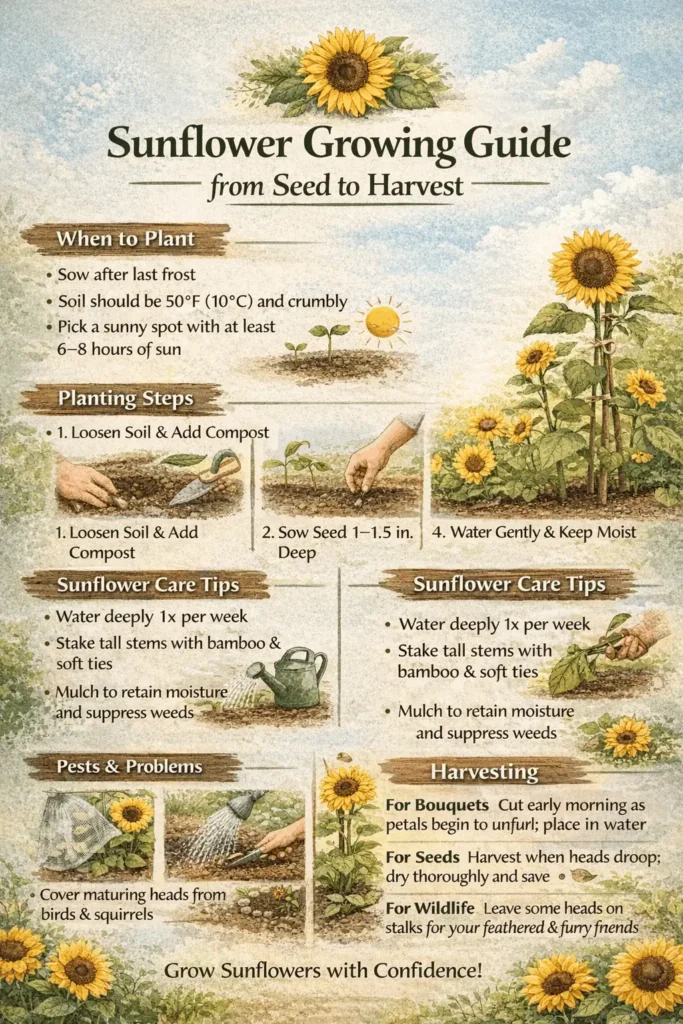
Most varieties mature in 70–95 days, thrive with 6–8 hours of direct sun, and prefer well-drained soil loosened deeply and enriched with compost. Sow seeds after frost when the soil warms to about 50°F.
Expect clear tool advice—gloves, trowel, rake, pruners—and practical cues like harvesting early in the morning when petals begin to unfurl. You’ll avoid common mistakes like crowding or overwatering so your garden looks intentional and joyful.
Key Takeaways
- Sow after frost when soil is ~50°F; most mature in 70–95 days.
- Provide 6–8 hours of direct sun and well-drained, compost-rich soil.
- Use bamboo canes and soft ties for tall stems; space to avoid crowding.
- Water deeply about once a week in normal weather; avoid overwatering.
- Harvest cut flowers early in the morning as petals begin to unfurl.
Meet your sunflowers: varieties, colors, and where they shine
Think of this as a friendly map to help you choose the right variety for each spot. A few simple choices — height, color, and pollen traits — decide whether a plant suits a border, a pot, or a vase.
Annual vs. perennial
Annual Helianthus annuus gives those big, classic faces in a single season. They come in yellow, red, orange, maroon, and deep brown.
Perennial types like ‘Lemon Queen’ return each year with masses of smaller, lemon-yellow blooms that fill beds without replanting.
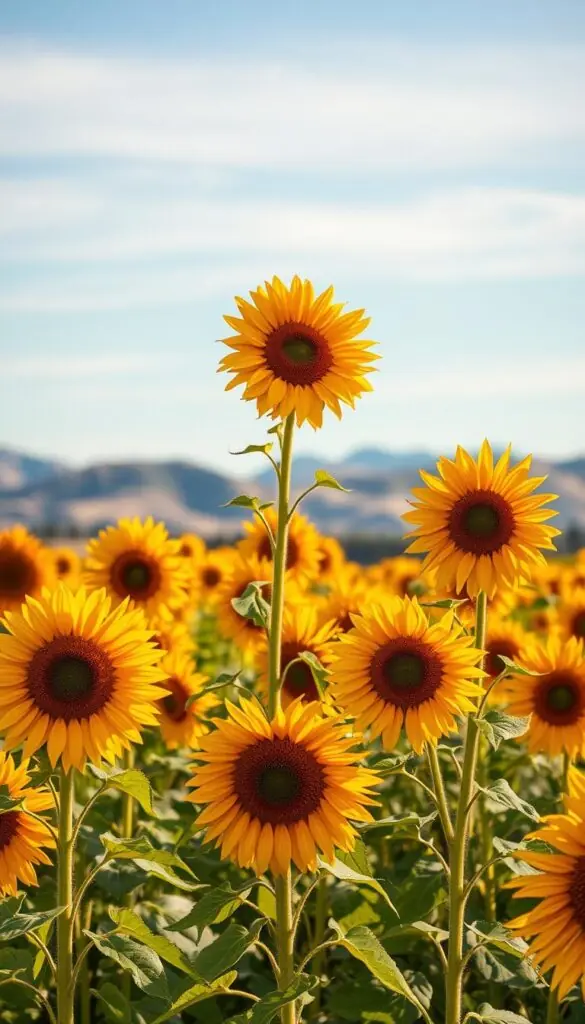
From towering to tiny
If you want drama, choose a name like ‘Mammoth’ — it can top 12 feet and yields snack-worthy seeds. Mid-size branching varieties such as ‘Autumn Beauty’ reach about 7 feet with yellow, bronze, and mahogany blooms ideal for family bouquets.
Dwarf choices like ‘Teddy Bear’ (2–3 feet) fit containers and kids’ gardens with plush, deep-gold flowers close at hand.
Color and pollen: bouquets vs. bees
For clean indoor arrangements, pick pollen-free stems such as ‘Sunrich Gold’ — a 5-foot, single, pollenless flower that keeps tabletops tidy.
If you want to welcome pollinators, choose branching, pollen-rich types that feed bees and butterflies while brightening your gardens.
"Match the variety to the place — giants at the back, mediums in the middle, and dwarfs where you walk by."
- Mix heights to layer your beds and containers.
- Consider pollen traits when planning bouquets or pollinator plots.
- Save a few seeds for next season or to share with neighbors.
When and where to grow sunflowers in the U.S. right now
A few weekend chores—soil, sun, and shelter—set the stage for steady seasonal blooms.
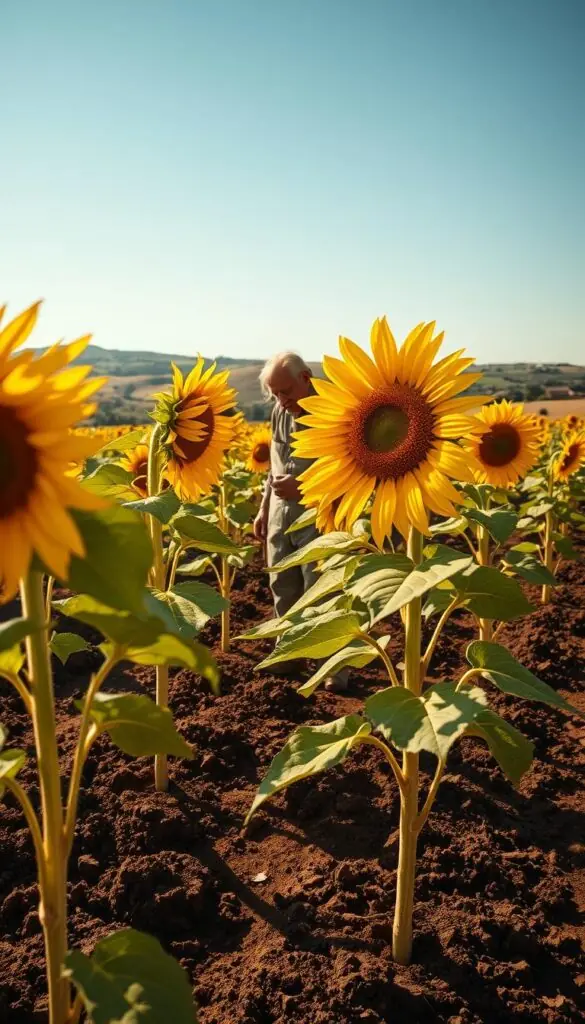
Frost and timing: Direct sow after the last spring frost when the soil reaches about 50°F. Seeds sprout best when the ground feels cool and crumbly, not icy or wet.
Regional cues
If you garden in the northern half of the U.S., plan to sow from April through mid-June. In the South, aim for mid-March into early April, adjusting for local weather swings and late cold snaps.
Sun, wind, and shelter
Choose a site that gets 6–8 hours of direct sun and has some shelter from strong gusts. A fence or the south side of a shed keeps tall stems from rocking and breaking.
Soil prep and quick steps
- Pick well-drained soil—avoid low, soggy spots that hold water after rain.
- Loosen the bed about 2 feet deep so roots can run, then mix in compost or aged manure.
- Water the area the day before sowing so the seedbed is evenly moist, not muddy.
Quick mistakes to avoid: planting too early in cold ground or in a soggy patch. Pause a week if a late freeze threatens; a little patience protects seedling growth and your effort.
Planting sunflower seeds outdoors for sturdy stems and big flower heads
Planting seeds with clear spacing and depth sets the stage for tall, steady stems and big, healthy heads.
Where to start: Rake the top few inches of soil smooth. Press shallow furrows with your hand and drop each seed about 1 to 1.5 inches deep so it stays moist and anchored.
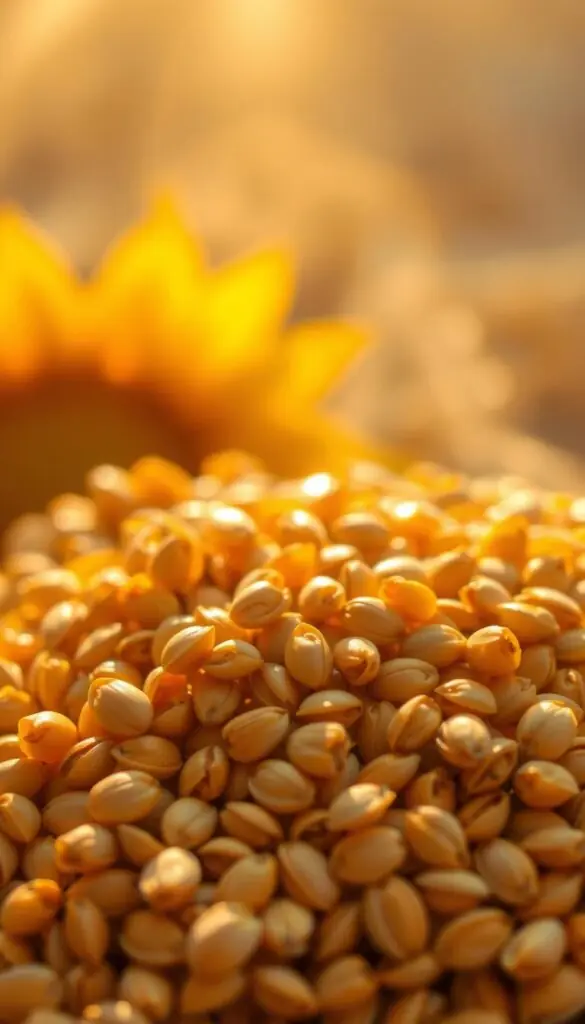
Sowing depth and spacing
Place seeds roughly 6 inches apart in rows about 30 inches wide. That spacing makes weeding and watering easier and prevents crowding, which weakens stems.
Thin for strength
When seedlings reach about 6 inches tall, choose the healthiest plant and remove the others. Thinning gives the remaining plant room for thick stems and broad leaves.
Succession sowing
To extend blooms, sow again every 2–3 weeks through early summer. Staggered seed plantings keep a steady parade of flowers from summer into fall.
Protecting seeds
If birds scratch up the bed, stretch lightweight netting until seedlings appear. Use copper tape rings or wildlife-friendly slug barriers around stems to deter slugs and snails.
- Water the furrow after planting to settle soil—aim for even moisture, not puddles.
- Scratch in a light, balanced fertilizer at planting to encourage roots. Don’t overfeed.
Care that keeps sunflowers thriving all season
A few clear habits—deep water, light feedings, and good spacing—help plants stay healthy. Follow a gentle weekly plan and your patch will reward you with sturdy stems and big heads.
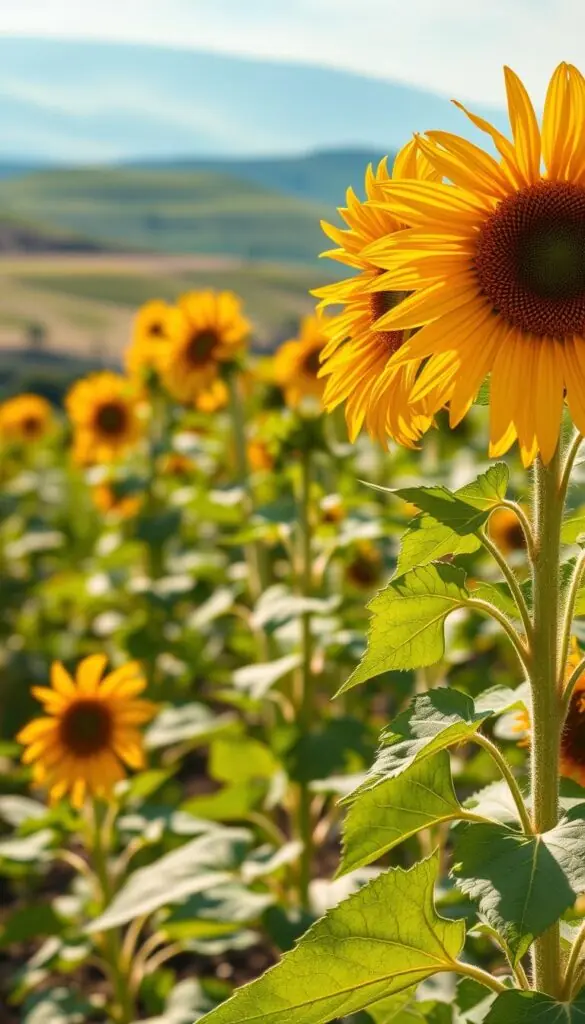
Watering rhythm
Water deeply once a week in normal weather so moisture reaches the lower root zone. Let the top inch of soil dry before the next soak; this encourages roots to dive and keeps stems firm.
Feeding wisely
Start with rich soil at planting. Apply a light, balanced fertilizer every few weeks in a shallow moat about 18 inches out from each plant to protect delicate stems and leaves.
Staking and spacing
Tie tall varieties to bamboo canes with soft ties and add another tie after storms to stop wind rock. Leave 1–2 feet or more between larger plants so air moves freely and flowers have room to size up.
Containers and mulch
Use 30 cm pots with loam-based compost for container plants. Water daily in hot weather and switch from gentle nitrogen feed to a high-potash tomato feed when buds form. Mulch lightly, keeping a small gap at the stem.
"Deep soaks, light feeding, and a simple stake can turn a flimsy stem into a proud, sunlit column."
| Need | Timing | How | Why |
|---|---|---|---|
| Water | Weekly (daily in heat for containers) | Deep soak to lower root zone | Encourages deep root growth |
| Fertilizer | Every few weeks | Light feed in a moat 18" out | Supports steady growth without brittle stems |
| Support | When 1–2 ft tall | Bamboo cane + soft ties | Prevents wind rock and root loosen |
| Spacing & weeds | At planting; ongoing | 1–2 ft spacing; hoe or hand-pull weeds | Thicker stems and larger flower heads |
Pests and diseases: simple steps to protect your plants, seeds, and leaves
Protecting your patch is mostly about early checks and gentle fixes. A calm, regular walk through the bed helps you spot trouble before it spreads.
Wildlife pressure
As seeds plump, slip breathable mesh or white polyspun garden fleece over each head to keep birds and squirrels honest while still allowing airflow.
In deer-prone yards, install a tall wire barrier early so curious deer won't nip young tops.
Insect issues
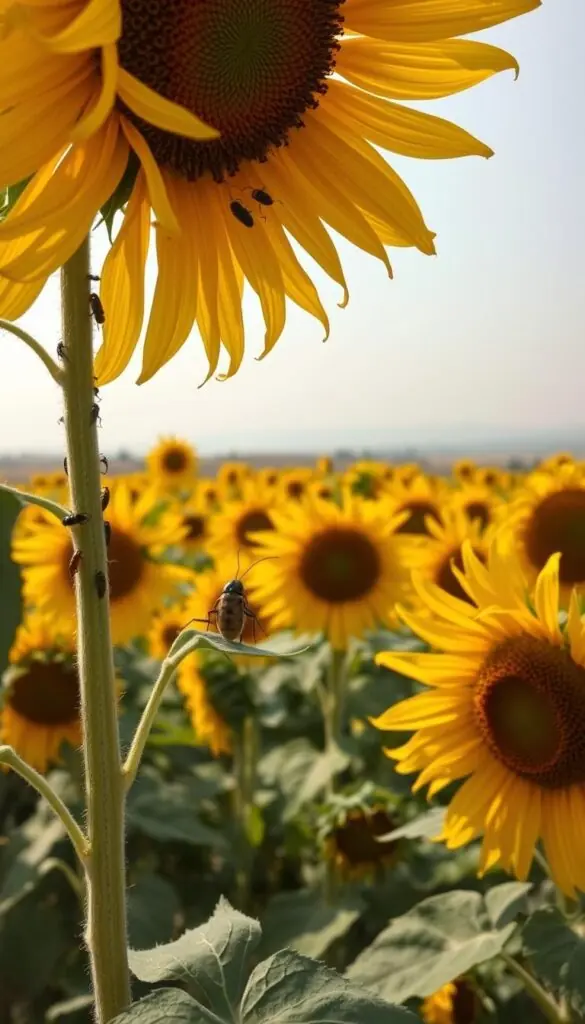
Check leaves and buds every few days. Hand-pick sunflower moth larvae and caterpillars in the cool morning when they move slowly.
For aphids, rub them off with your fingers or a soft cloth. A gentle spray of water helps rinse the rest away.
If Japanese beetles appear, shake them into soapy water or use a label-approved control for ornamental plants.
Fungal troubles
Space plants well and remove crowded lower leaves to improve airflow. Better circulation reduces powdery mildew, downy mildew, rust, and leaf spots.
Prune affected foliage early and consider a general garden fungicide if spots spread. Mulch lightly to limit soil splash and water at the base so leaves dry quickly after rain.
- Cover heads with mesh or fleece as seeds set.
- Use a wire fence for deer where needed.
- Hand-pick moths and caterpillars; rinse or rub off aphids.
- Promote airflow and treat early fungal signs to protect healthy tissue.
| Issue | Quick action | Tools/materials | Why it helps |
|---|---|---|---|
| Birds & squirrels | Cover maturing heads | Breathable mesh, garden fleece | Protects seeds while keeping air moving |
| Deer | Barrier early | Tall wire fencing | Prevents browsing of young tops |
| Insects | Hand-pick or targeted control | Gloves, jar of soapy water, approved insecticide | Removes pests with minimal impact |
| Fungal disease | Prune, improve airflow, treat early | Pruners, mulch, fungicide if needed | Keeps leaves healthy and prevents spread |
Harvesting your sunflowers: bouquets, birds, and sunflower seeds
Harvest time arrives with the cool hush of morning and the papery scent of petals. Bring a clean bucket of cool water and sharp pruners. Work while stems drink and the air stays still.
Cut flowers that last
Cut single stems just as the first petal unfurls, early in the day. Strip lower leaves and recut stems at a 45° angle so they take water easily.
Place stems straight into the bucket. Single-stem flowers can last up to 14 days with fresh water changes; branched types usually keep about a week.
Seed maturity signs
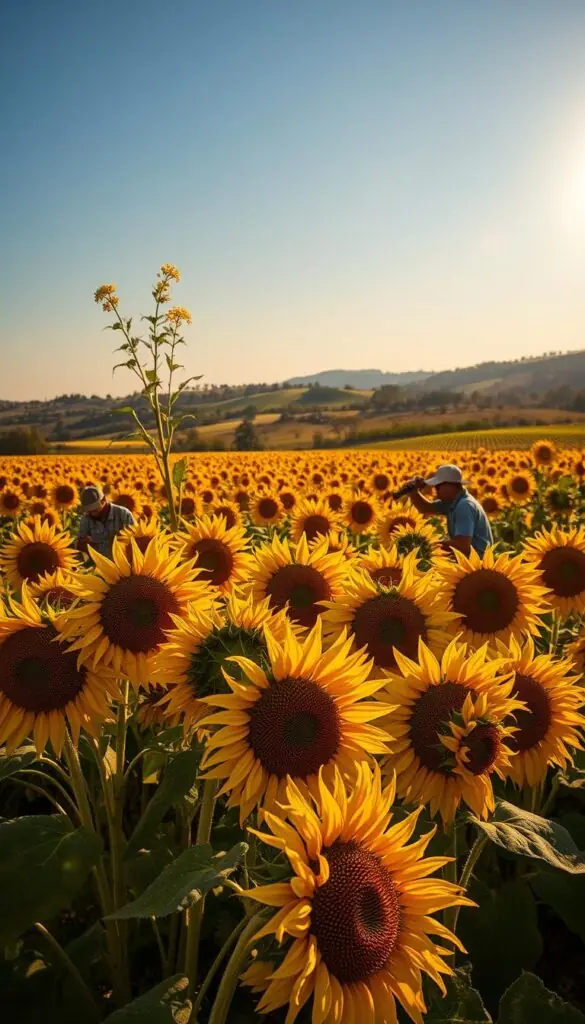
Seeds are ready when heads droop, petals wither, and the back of the head turns yellow to brown. The center will darken and seeds feel plump between your fingers.
Remove seeds and dry
Cut the head with a short stem using pruners. Rub seeds free with your palm, or use a gentle brush for a large head.
Rinse seeds, spread them to dry for several hours or overnight, then finish until fully dry. Store in an airtight jar in a cool, dry place.
Share the bounty
Slip a mesh bag over maturing heads if birds visit early, or leave a few heads as a treat. You can also hang whole heads upside down in a dry room to finish drying.
"A few saved seeds and a few left on the plant make your patch useful to both your pantry and the local birds."
| Task | When | Tools | Result |
|---|---|---|---|
| Cut for bouquets | Early morning, first petal | Pruners, bucket | Long-lasting stems (up to 14 days) |
| Harvest seeds | Heads droop; backs yellow-brown | Pruners, gloves, mesh bag | Plump seeds ready to dry |
| Dry & store | After rubbing/rinsing | Tray, airy room, airtight jar | Stable seed storage; labelled by variety |
| Protect for birds | As seeds plump | Mesh bags, leave a few heads | Wildlife fed; pollinators thanked |
Conclusion
Take a deep breath, step outside, and tuck a few seeds into warm soil. Most varieties finish in about 70–95 days, and a couple of staggered sowings every 2–3 weeks will stretch color through the season.
Pick a sunny spot that gets 6–8 hours, wait until soil is near 50°F, and keep a steady rhythm: deep weekly water, light feedings, and room for each plant to thrive.
Harvest early in the morning for long-lasting cuts, and leave a few heads for birds. With basic tools and a little time, growing sunflowers brings bright, steady joy to your garden.
Now is a great time to start — step into the yard and enjoy the process of learning as your patch comes to life.
FAQ
When should I plant seeds outdoors after the last frost?
Sow seeds only after the danger of frost has passed and soil temps reach about 50°F. In northern zones that’s often April to mid‑June; in warmer southern areas you can start as early as mid‑March to early April. Planting at the right time helps seedlings establish fast and produce sturdy stems and large flower heads.
How deep and far apart do I plant seeds for strong stems?
Plant seeds about 1 to 1.5 inches deep and roughly 6 inches apart in rows about 30 inches apart. Once seedlings reach about 6 inches tall, thin to the strongest plants so remaining ones have room to develop thick stems and big heads.
Which varieties are best for containers, borders, or cutting?
Dwarf or patio varieties suit containers and small beds; medium types work well for borders and bouquets. Tall varieties like Mammoth give big seed heads for birds and harvest, while pollen‑free or single‑flower types make long‑lasting cut flowers. Choose by height and whether you want seeds, stems for bouquets, or pollinator favorites.
How much sun and wind protection do they need?
Pick a spot with 6–8 hours of direct sun. Provide some shelter from strong gusts—wind can topple tall stems—by planting near a fence, hedgerow, or using bamboo stakes to tie taller plants securely.
What soil works best and how should I prepare it?
Use well‑drained soil, loosened about 2 feet deep with added compost for nutrition and texture. Sunflower roots like loose, slightly acidic to neutral soil so they can dive deep and anchor the stem.
How often should I water and fertilize?
Water deeply and infrequently to encourage deep roots—about once a week in normal weather, more in heat. Feed lightly: mix rich compost at planting and use a balanced fertilizer sparingly during growth, switching to a higher‑potash feed as buds form to support blooms.
Do tall varieties need staking and how do I do it?
Yes, tall types often need support. Use bamboo canes or stakes and soft ties, anchoring ties to the stake—not the stem—to prevent wind rock. Tie loosely and adjust as plants grow to avoid girdling.
Can I stagger sowings for continuous blooms?
Absolutely. Succession sow every 2–3 weeks to enjoy fresh blooms from summer into fall. This also spreads out maintenance and seed harvest times.
How do I protect seeds and maturing heads from birds and squirrels?
Cover maturing heads with netting or mesh to deter birds and small mammals. For young seedlings, use slug and snail barriers and consider row covers until plants are established.
What common insects and diseases should I watch for?
Watch for aphids, caterpillars, sunflower moth, and Japanese beetles—hand‑pick or treat with targeted insecticidal soaps if needed. Fungal issues like powdery mildew and leaf spots appear in poor airflow or wet conditions; improve spacing, prune for airflow, and treat early with appropriate fungicides or cultural measures.
When is the best time to cut flowers for bouquets?
Cut when the outer petals just start to unfurl, ideally early morning. Strip lower leaves and place stems in water immediately. This timing extends vase life and helps blooms open fully indoors.
How can I tell when seeds are ready to harvest?
Seeds are mature when heads droop, the back of the head turns yellow then brown, and the centers darken with plump seeds. Leave some heads for birds if you like wildlife visitors.
What’s the easiest way to remove and store seeds?
Rub seeds out of the dried head, rinse to remove debris, and dry them overnight on a tray. Store in a cool, airtight container for later roasting or replanting. Proper drying prevents mold and preserves flavor.
Can I grow them in pots and what size is best?
Yes—choose pots at least 30 cm (about 12 inches) deep and wide for single medium plants. Containers need daily watering in hot weather and benefit from regular feeding; move to a higher‑potash feed once buds appear to encourage strong blooms.