Morning light warms the soil, and you notice tiny green shoots pushing up by the kitchen window. Have you ever wished your garden could look lovely and also help feed your table?
We’ll walk you through gentle, practical steps to pair blooms with vegetables so your vegetable garden becomes more productive and colorful. Expect calm, neighborly guidance on seeds, a trowel, mulch, watering cans, and simple seasonal timing.
Planting the right mixes draws pollinators and bees, improves pollination for peas and beans, and helps keep pests in check. Use pesticide-free choices for healthier pollinators and better food.
Think bright zinnias, soft lavender, sun-loving sunflowers, and mint kept in containers. We’ll cover soil and sun needs, spacing tips, and quick ways to avoid crowding so your beds stay lush and thriving.
Key Takeaways
- Pair blooms with veggies to lure pollinators and boost yields.
- Choose pesticide-free plants to protect bees and beneficial insects.
- Match each plant to your sun exposure and soil needs.
- Use simple tools and seasonal cues for sowing and transplanting.
- Keep mint in pots and use sunflowers for support and light shade.
Why companion flowers belong in your vegetable garden right now
A small row of spring blossoms gives bees and butterflies the food they need to help your veggies thrive.
You’ll notice early spring offers few nectar sources. Add a tidy strip or a couple of pots near beds and you give pollinators a reliable food source when the season still feels spare.
Planting untreated starts or seed keeps forage safe for insects and helps fruit set on cool crops like sugar snap peas and fava beans.
Lightly loosen soil, scratch in a little compost, and water gently. Match placements to sun so the blooms stay sturdy and keep a steady sequence of bloom by sowing every two weeks.
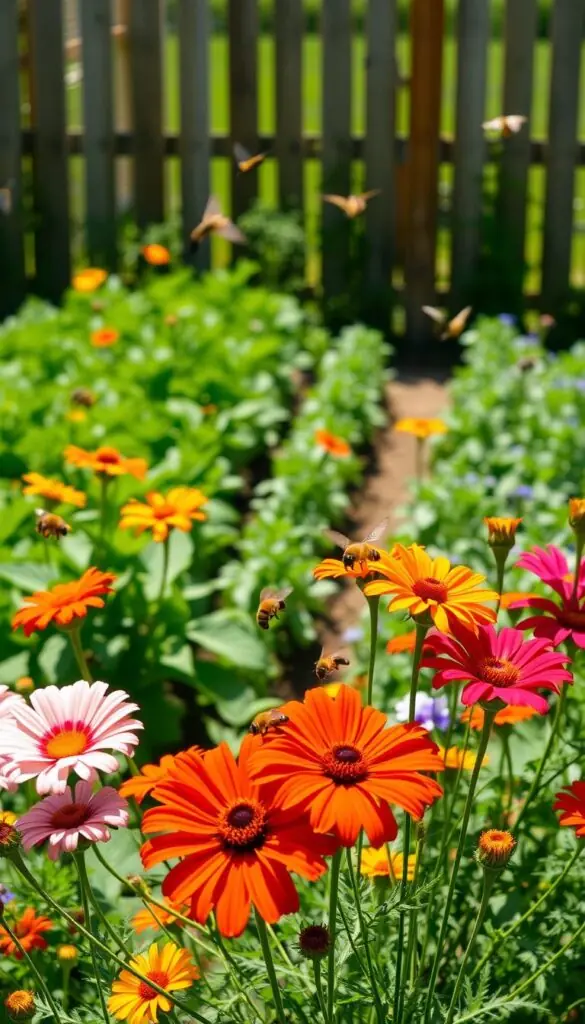
- Small actions now mean fuller harvests later and fewer pests as beneficials move in.
- Think alyssum at the edge or calendula by greens for morning movement and color by afternoon.
- Even tight spaces can be part of the solution—containers work well near raised beds.
| Quick Spring Choice | Where to Plant | Immediate Benefit |
|---|---|---|
| Alyssum | Edge of bed | Attracts small pollinators, early nectar |
| Calendula | Near greens | Edible petals, draws beneficial insects |
| Chamomile | Part sun spots | Cool-season blooms, gentle insect support |
| Container mix | Along path or on patio | Portable forage, protects soil and roots |
Companion flowers that work: a gardener’s short list with real benefits
Here’s a short, friendly list of reliable plants that do real work in your garden—each with practical tips and sensory notes.
Marigolds (Zones 2–11): Sunny, herbal-scented blooms that repel nematodes and deter moths that lead to tomato hornworms. Plant near tomatoes, peppers, or eggplant in full sun and well-drained soil to welcome ladybugs and lacewings.
Zinnias
Zones 3–10. Bold summer color that draws butterflies, bees, and predatory wasps. Give them full sun and space; they help pollination and support tiny predators that curb beetles and other pests.
Calendula
Zones 2–11. Soft orange petals are edible and useful in salves. Calendula attracts hoverflies and ladybugs, and can help fend off aphids. It reseeds easily from seed in part sun.
Cosmos
Zones 2–11. Airy stems and pastel blooms sway in a breeze and lure parasitic wasps and hoverflies. They help reduce thrips and flea beetles while adding delicate texture.
Nasturtiums
Zones 2–11. Peppery, trailing blooms act as a trap crop for aphids and squash bugs. Pull out a loaded plant to protect nearby greens. They like poorer soil and sun to part shade.
Alyssum
Zones 3–9. Low, fragrant edging that feeds lacewings and hoverflies. Use it along paths or bed edges to keep beneficial insects close to vegetables.
Sunflowers
Zones 2–11. Towering sentinels that attract bees and butterflies. Use them as living trellises or to cast light shade on heat-stressed crops in summer.
Lavender
Zones 5–9. A soothing purple line with a calming scent. Lavender draws pollinators and helps repel moths and flies; plant where sun and good drainage meet.
Echinacea & Bee Balm
Zones 3–9. Reliable perennials that pull pollinators through summer. Their bold blooms keep pollination humming and add long-lasting color to the bed.
Chamomile
Zones 3–9. Tiny daisy-like blooms with an apple scent. Chamomile attracts hoverflies and predatory wasps and offers mild antifungal benefits when used in teas or mulch.
Petunias
Zones 2–11. Prolific, forgiving bloomers that boost pollination in sunny spots. Great for edges or containers when you want steady color with little fuss.
Mint in containers
Zones 3–10. Fragrant herb blooms that stay put in a pot. Mint can deter ants and cabbage moths; keep it contained to protect nearby leaves and roots.
Queen Anne’s lace & Hibiscus
Zones 3–9 and 4–11. Queen Anne’s lace offers umbrella blooms where parasitic wasps hunt aphids. Hibiscus brings large, showy flowers that attract pollinators and provide light shade to delicate seedlings.
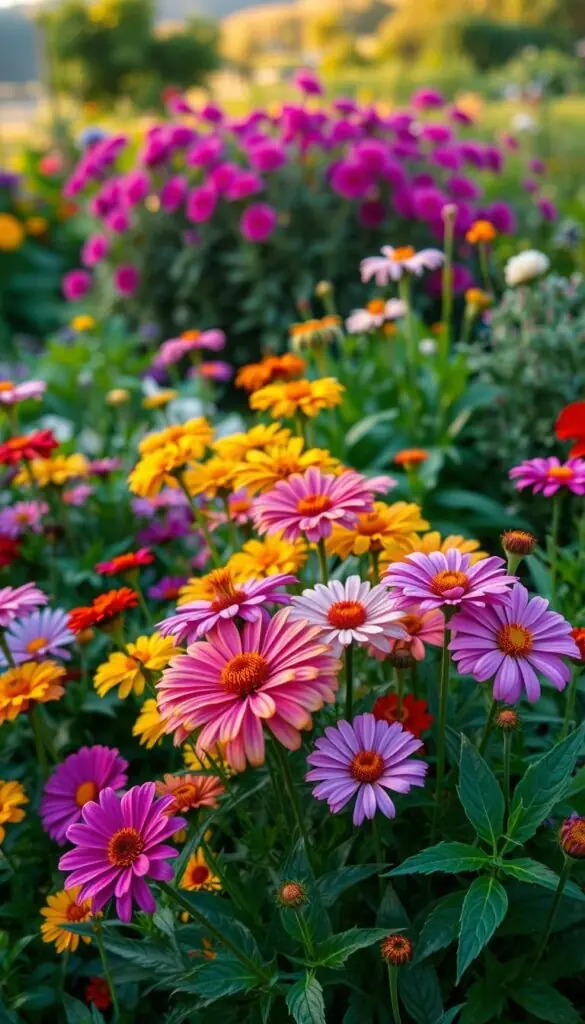
| Plant | Zones & Sun | Key Benefit |
|---|---|---|
| Marigold | 2–11, full sun | Nematode & pest deterrent; attracts beneficial insects |
| Zinnia | 3–10, full sun | Pollinator magnet; brings predatory insects |
| Calendula | 2–11, sun to part shade | Edible petals; deters aphids, draws hoverflies |
| Sunflower | 2–11, full sun | Living trellis; shade for heat-stressed crops |
| Mint (container) | 3–10, part sun | Fragrant herb; repels some pests, stays contained |
Smart pairings: flower-and-vegetable combos that make sense
Practical pairings let each bed work smarter. Small, thoughtful mixes can protect crops, boost pollination, and keep your garden looking sunlit and lively.
Tomatoes with marigolds and zinnias
Why it works: Marigolds confuse moths that lay tomato hornworms and bring beneficial insects. Zinnias keep pollination steady by drawing bees.
Plant marigolds at the tomato base and line zinnias a short row nearby. Give each tomato a palm-width of clear soil around its stem and full sun.
Cucumbers with zinnias and nasturtiums
Zinnias attract pollinators to ripen fruit. Nasturtiums act as a trap plant for aphids and beetles; remove any loaded nasturtium to protect vines.
Space cucumber hills so leaves can breathe. Put nasturtiums in containers beside the trellis if you’re tight on space.
Beans and peas with sunflowers and alyssum
Sunflowers make sturdy living stakes and offer light shade. Alyssum along the row brings lacewings and hoverflies that patrol for pests.
Plant sunflowers to the north of vines so they don’t steal midday sun. Scatter alyssum at the edge in part sun to full sun.
Brassicas with nasturtiums and chamomile
Nasturtiums draw aphids away from kale and cabbage while chamomile invites helpful wasps and hoverflies. This mix calms pest pressure and encourages steady growth.
Quick care tips:
- Keep soil lightly mulched to keep roots cool under the sun.
- Water at the base in the morning for healthy growth without wet leaves.
- Add a handful of compost at bloom to support both blossoms and vegetables.
| Combo | Sun & Soil | Immediate Benefit |
|---|---|---|
| Tomatoes + Marigolds/Zinnias | Full sun, well-drained soil | Deters hornworms; boosts pollination |
| Cucumbers + Zinnias/Nasturtiums | Full sun, fertile soil | Pollinators; trap crop for beetles |
| Beans/Peas + Sunflowers/Alyssum | Full sun to part sun | Support; attracts beneficial insects |
Season-by-season plan for planting companion flowers
A simple calendar helps you sow, tend, and enjoy steady color and helpful insects all year.
Early spring
Sow alyssum and chamomile along bed edges once the soil is workable. These cool-tolerant starts welcome the first pollinators and give quick, low growth at the edge of young beds.
Add calendula starts or direct-sow; calendula can be started indoors if you want an earlier show of nectar for bees.
Late spring
When the soil warms, direct-sow zinnias, cosmos, and marigolds. They sprout fast in steady sun and bring bright blooms and bold colors within weeks.
Summer
Tuck petunias into gaps, set bee balm divisions where you have room, and plant sunflowers where they won’t shade short crops. Stagger sowings every two weeks for a longer run of bloom through summer.
Fall
Keep deadheading zinnias and calendula to extend blooms. Let a few seed heads dry and collect seed on a calm, dry day so you have seed for next year.
- Water new sowings with a gentle rose until established.
- Use a hand fork to loosen crusted soil and press seed at packet depth.
- Pick a calm morning to sow so light seed doesn’t blow away.
- Save a small basket for petals like calendula to dry or use fresh in salads.
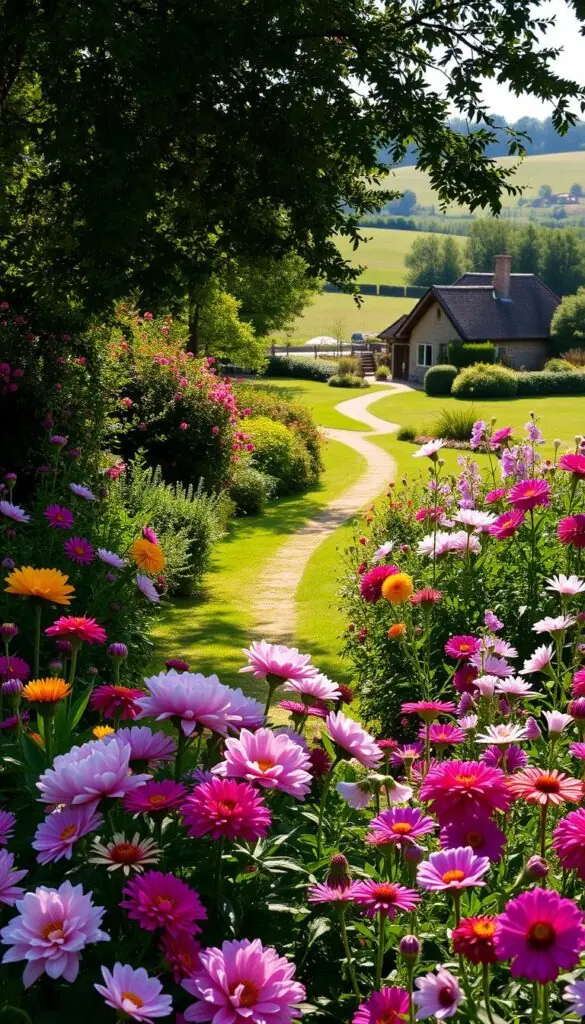
How to place companion flowers for pollinators, predators, and space
Think in layers: tall stems for support, mid-height color for pollinators, and low edges that let tiny insects travel safely.
Tall plants such as sunflowers and cosmos belong on the north or west side so they don’t steal sun from shorter crops. They offer shade and living support for vining plants.
Edge beds with low growers like alyssum, calendula, or petunias. These little plants give pollinators quick landing spots and keep paths clear for you to work the beds.
- Leave 8–12 inches of breathing room around vegetable stems for airflow and dry leaves after watering.
- Group blooms in small drifts rather than single plants so hoverflies, lacewings, parasitic wasps, and bees can find them easily.
- Match soil to each plant—lavender prefers lean, well-drained, slightly alkaline soil; zinnias prefer richer, well-drained beds.
- Place a shallow dish with stones for insects to sip safely and use mulch to keep soil cool and roots protected.
In tight space, pick compact varieties or use containers. Stagger bloom times and move pots as shadows shift to keep the bed lively and productive.
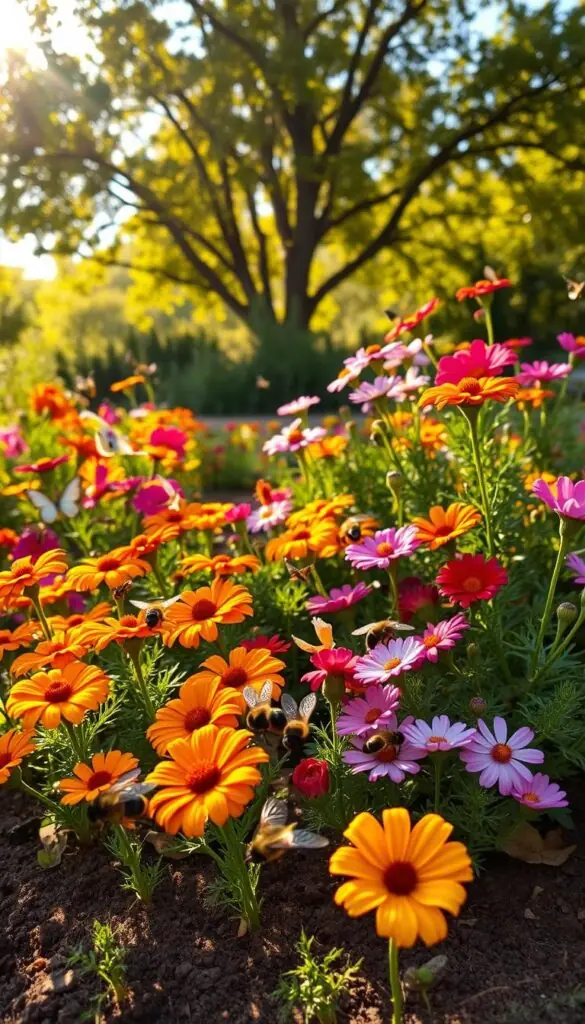
| Placement | Why | Quick tip |
|---|---|---|
| Tall (north/west) | Support, shade, backdrop | Sunflowers as living trellis |
| Mid-height | Attract pollinators | Cluster zinnias and bee balm |
| Low edge | Safe landing for small insects | Alyssum or petunias at paths |
| Containers | Control spread, adjust sun | Pot mint at edge |
Quick-start steps, tools, and timing for planting flowers among veggies
A quick plan, a handful of tools, and the right timing will get nectar and color into your vegetable beds fast.
What you need
- Quality seeds or seed packets and a spare seed for testing.
- A trowel, hand fork, watering can with a gentle rose, mulch, and fresh labels.
- Snips for deadheading and a small notebook to track what works and when.
Simple steps to follow
- Prep: loosen the top 2–3 inches of soil and fold in compost so tiny roots have a soft runway.
- Sow: place seed at the depth shown on the packet, water slowly until evenly moist, and mark rows clearly.
- Check daily the first week; keep the surface from drying, especially in wind or bright sun.
- Thin: give seedlings elbow room to improve air flow and reduce pest pressure.
- Mulch lightly after establishment to hold moisture and buffer temperature.
- Deadhead spent blooms every few days to encourage nonstop color and more blooms.
Many of these varieties can be direct sown when your soil reaches the right time and temperature. Use pesticide-free practices to protect pollinators and beneficial insects.
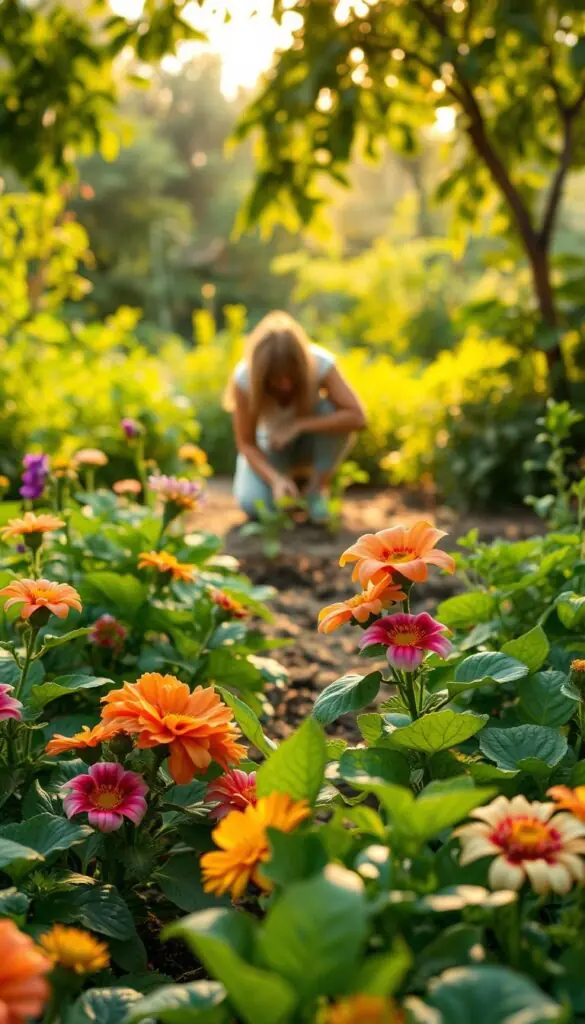
| Step | Tool | Why it matters |
|---|---|---|
| Prep soil | Trowel, hand fork, compost | Creates loose seedbed and improves germination |
| Sow & label | Seeds, labels | Prevents mix-ups and tracks timing |
| Water & watch | Watering can | Keeps seed moist without washing it away |
| Thin & mulch | Snips, mulch | Reduces crowding and conserves moisture |
Common pitfalls to avoid when using companion flowers
A few simple missteps can invite pests and make your beds less productive.
Give plants room. Don’t overcrowd beds. Tight plantings trap humidity and invite fungal issues.
Avoid blanket spraying for bugs. Sprays can wipe out helpful insects like hoverflies and wasps that control aphids and other pests.
Use trap crops carefully. If nasturtiums draw aphids, remove the infested plant before they develop wings. Replant a fresh trap if needed.
- Check sun exposure before planting flowers and veggies.
- Water deeply but less often; avoid soggy soil.
- Stagger sowings so nectar stays available through the season.
- Skip heavy chemical fertilizers on blooms to keep pollinators safe.
"Small, consistent habits—like cleaning tools and labeling beds—save time and protect the whole garden."
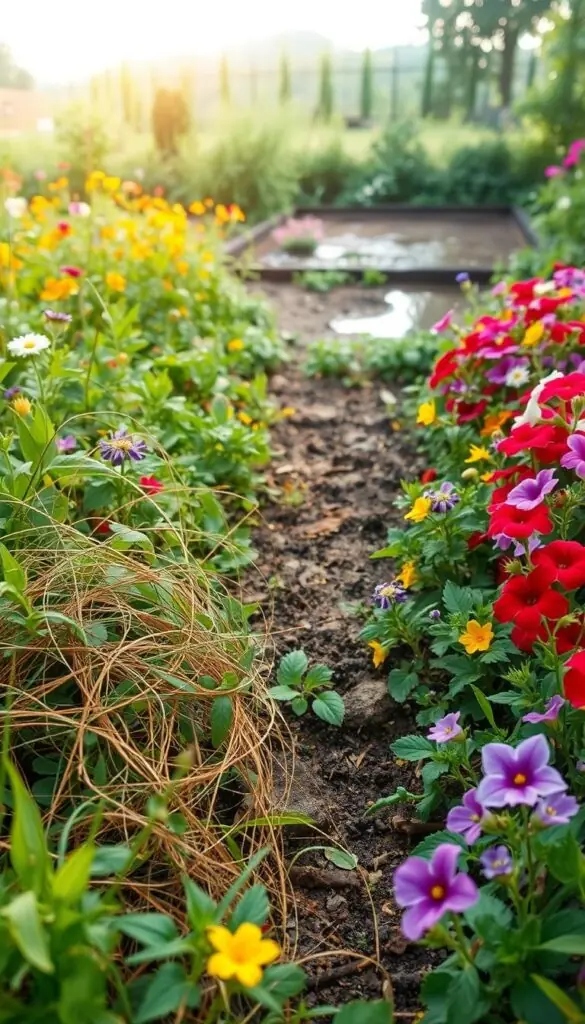
| Problem | Quick Fix | Why it helps |
|---|---|---|
| Overcrowding | Thin seedlings; space to 8–12 inches | Improves airflow and reduces pests |
| Blanket spraying | Use selective, organic methods | Protects beneficial insects |
| Soggy soil | Deep watering + mulch | Builds strong roots and fewer diseases |
| Tall plants shading low crops | Place tall at north/back | Prevents unwanted shade and stress |
These tips help you keep a healthy, sunlit garden and fewer pests. Small steps make you a more confident gardener.
Organic-first: pesticide-free blooms for healthy bees and better harvests
Start with small, pesticide-free choices that keep bees fed and your garden calm all season.
Choose organic or untreated seed and starts so nectar and leaves stay safe for pollinators and beneficial insects. Clean nectar helps early-season visitors find steady food.
Plant a diversity of blooms—calendula, zinnias, and lavender—to offer nectar across the season. A flowering herb like mint in a pot perfumes the air and stays neatly in bounds.
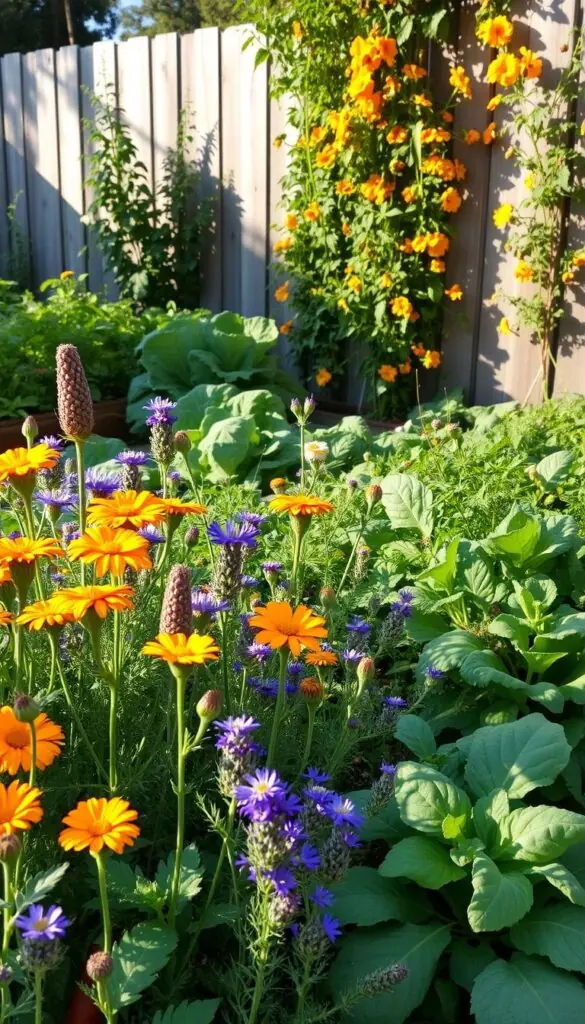
- Skip synthetic sprays; let predators and helper insects do quiet work.
- Hand-pick problem spots, prune for airflow, and water at soil level.
- Use compost instead of salty fertilizers to grow sturdier plants.
- Let some seed heads dry so you save seed and keep local strains.
Watch for curling leaves or sticky residue—early signs of aphids. A quick rinse and a little patience often lets predators catch up before pests spread.
"The payoff is a calm, buzzing space at home where blooms, veggies, and helpers all support one another."
| Action | Why it helps | Quick tip |
|---|---|---|
| Use untreated seed | Protects bees and insects | Label packets and buy organic |
| Plant diverse blooms | Steady food across season | Mix calendula, lavender, zinnias |
| Contain mint | Repels some pests, feeds insects | Use a pot at the bed edge |
Regional notes for U.S. gardeners: sun, soil, and zones
A little regional planning helps you pick the right variety for lasting color and steady pollination.
Match varieties to zones and microclimates for reliable blooms
Start by checking your USDA zone and then map sunny and shady pockets in your yard. This helps you choose plants that will thrive in each spot.
Hot, dry regions: Lean soils and full sun favor lavender (Zones 5–9) and echinacea (Zones 3–9). These Mediterranean types like to dry a bit between waterings.
Humid areas: Give bee balm (Zones 3–9) and zinnias (Zones 3–10) extra spacing and airflow to reduce mildew. Mulch lightly and avoid wet leaves.
Coastal and foggy spots: Pick part-sun tolerant choices such as chamomile or echinacea and save the brightest beds for zinnias or sun-loving annuals.
Heavy clay or sandy soil: Improve clay with compost and raised beds. Add organic matter to sandy beds so roots hold moisture for crops and blooms.
Short season? Start trays indoors and harden off seedlings so they bloom earlier in the season. In heat waves, use sunflowers (Zones 2–11) as a light screen for tender crops.
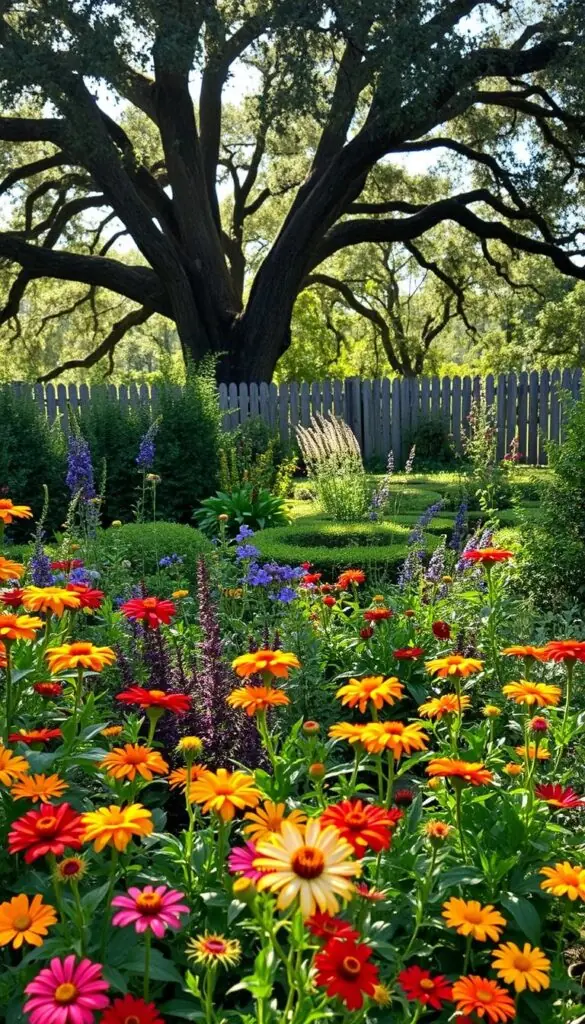
| Region | Suitable plants | Quick tip |
|---|---|---|
| Hot, dry | Lavender, Echinacea | Lean soil; full sun; let soil dry between waterings |
| Humid | Bee balm, Zinnias | Space plants for airflow; morning watering |
| Coastal/fog | Chamomile, Echinacea | Use part sun spots; reserve brightest areas for zinnias |
| Heavy clay / Sandy | Sunflower, Hibiscus | Raised beds for clay; add compost to sandy soil |
"Keep simple notes by bed so you match the right plants to each pocket of sun and soil next year."
Companion flowers that fit small gardens, raised beds, and containers
Small spaces can still be lush—choose a few smart plants and arrange them for both color and purpose.
Pick compact, reliable bloomers. Alyssum, dwarf zinnias, and petunias fill corners with steady colors and low growth. They give quick visual payoff without crowding your beds.
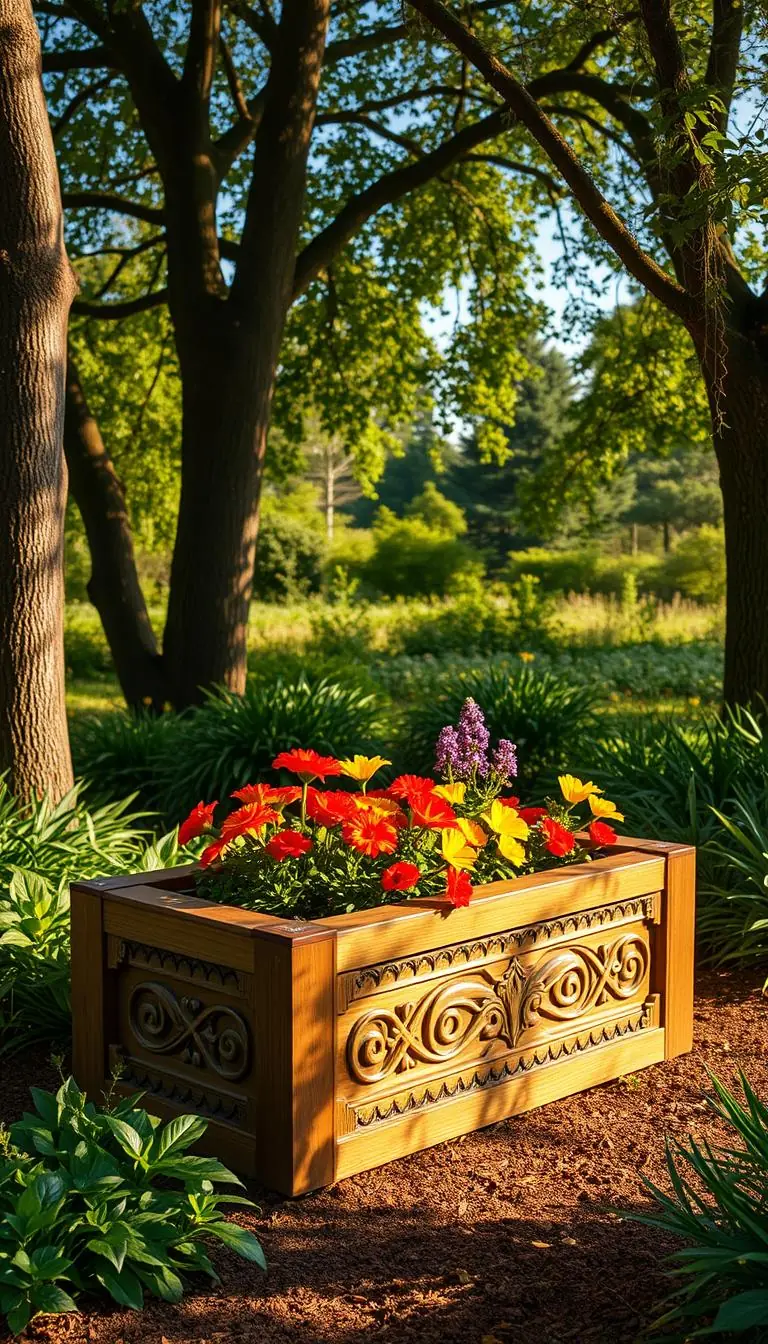
Use a container for a flowering herb like mint so it scents the air and feeds insects without running through your soil. Keep pots light and easy to move so you can follow the sun.
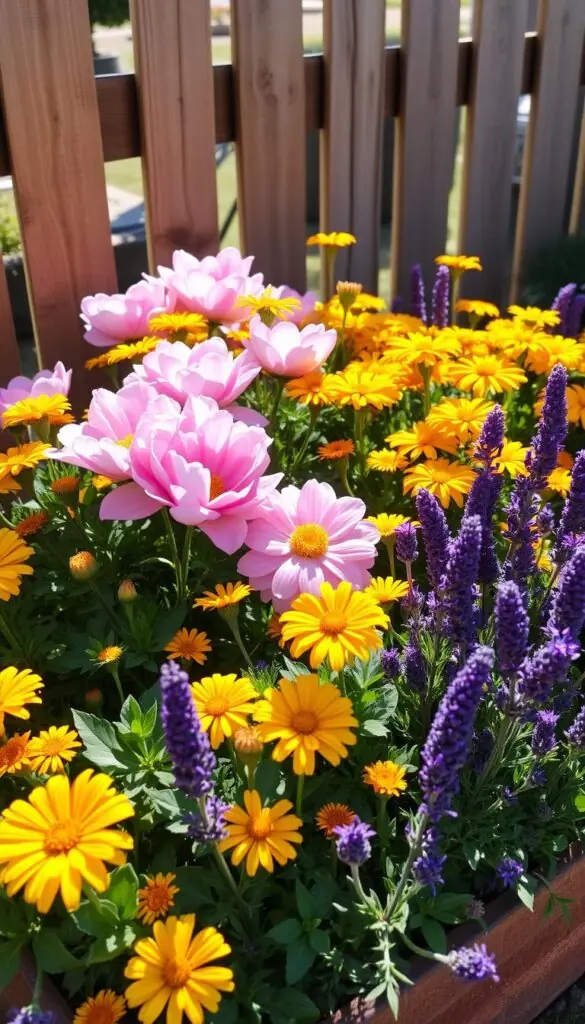
- Let nasturtiums spill over raised bed edges as a trap crop and splash of bright color.
- Tuck zinnias in a narrow strip behind tomatoes for pollination help and a tidy backdrop.
- Train one sunflower in a large pot by a trellis for gentle afternoon shade and support.
- Refresh the top 2 inches of container soil with compost midseason to boost blooms.
- Combine small planters into a pollinator station near seating to keep insects busy and your harvest happier.
Deadhead often and keep a small watering can handy. These tiny routines make even the smallest garden thrive.
Conclusion
Let your beds do double duty—serving dinner and hosting nectar-rich visitors that help your crops thrive.
Companion planting is simple and rewarding. Start with one or two favorite plants near your vegetables for instant color and pollination help.
Keep a pot of mint or a row of zinnias, match sun and soil, and give things a little time. These small steps cut pest pressure and invite helpful insects to the garden.
If aphids appear, remove trap plants and trust beneficials. Spend a few minutes each morning to water, deadhead, and notice growth.
Over a season you’ll see brighter beds, healthier crops, and more confidence. Step outside, plant a few blooms, and enjoy a more abundant vegetable garden.
FAQ
What are the easiest flowers to plant with vegetables for quick benefits?
Marigolds, zinnias, calendula, and alyssum are great starters. They establish quickly, need similar sun and soil as many veggies, and attract pollinators or beneficial insects that help control pests.
How do flowering plants help improve vegetable yields?
Blooms draw bees and hoverflies that increase pollination, which boosts fruit set. Other blooms lure predatory insects like lady beetles and lacewings that eat aphids and caterpillars, reducing crop damage and improving overall yields.
Can I plant herbs like lavender or mint with my tomatoes and peppers?
Yes. Lavender offers a pest-repellent scent and attracts bees, while mint can help deter certain pests. Keep mint in containers to prevent it from overtaking beds. Both add aroma, pollinators, and practical benefits when placed thoughtfully.
Which blooms work as trap crops to protect key vegetables?
Nasturtiums are classic trap crops: their peppery foliage and flowers attract aphids and squash bugs away from brassicas and cucurbits. Plant them nearby to draw pests off your main crops.
How should I space plants so flowers benefit without shading vegetables?
Use low, edging plants like alyssum and calendula around bed edges and taller blooms like sunflowers at the north side so they don’t shade sun-loving veggies. Stagger heights and give each plant its root space to avoid competition.
When is the best time to sow flower seeds for pollinators?
Early spring plantings of alyssum and calendula get first pollinators going. After the last frost, sow zinnias, cosmos, and marigolds. In summer, add petunias and bee balm for continuous bloom; keep planting through early fall for late-season pollinators.
Are there any risks to mixing plants—like disease or nutrient competition?
Overcrowding can stress crops and increase disease risk. Avoid planting heavy feeders right next to each other, rotate plant families yearly, and use organic mulch and balanced fertility to reduce competition and fungal problems.
What low-maintenance flowers suit small gardens and containers?
Zinnias, petunias, calendula, and dwarf marigolds perform well in containers and raised beds. Use compact varieties, good potting mix, and regular watering. Mint should stay in its own pot to prevent spreading.
How do I encourage beneficial insects without harming pollinators?
Favor organic methods: hand-pick pests, use insecticidal soaps selectively, and avoid broad-spectrum pesticides. Plant a diversity of blooms with staggered bloom times to provide nectar and pollen all season for bees, butterflies, and predators.
Which pairings reliably reduce common pests like aphids, hornworms, and cucumber beetles?
Tomatoes with marigolds and zinnias help deter hornworms and boost pollination. Cucumbers paired with zinnias and nasturtiums can reduce beetle pressure. Brassicas benefit from chamomile and nasturtiums as buffers against aphids.
How can I plan seasonally for continuous blooms and benefits?
Plant cool-tolerant alyssum and calendula in early spring, sow warm-season zinnias and cosmos after soil warms, add summer bee balm and sunflowers for peak pollination, and carry calendula and zinnias into fall—saving seeds for next year.
Do sunflowers really help trellis or shade other crops?
Yes. Tall sunflowers can act as living trellises for vining beans and provide gentle shade for heat-sensitive crops. Place them where they won’t cast midday shade on sun-loving vegetables.
Should I match varieties to my USDA zone or microclimate?
Absolutely. Choose varieties rated for your zone and consider microclimates—sheltered corners, reflective heat, or cooler shade. Local extension services and seed catalogs list zone-adapted options for more reliable blooms.
What simple tools and steps do I need to add blooms to a veggie bed?
Gather seeds or plants, a trowel, hand fork, good potting mix or garden soil, mulch, labels, and a watering can. Prep beds, sow or transplant, water well, thin seedlings, and deadhead spent blooms for continuous flowering.
Can flowers reduce the need for chemical pesticides?
Yes. A diverse planting that attracts predators and pollinators creates a self-regulating ecosystem. Combined with good cultural practices—crop rotation, sanitation, and hand removal—you can significantly cut pesticide use and protect bees.