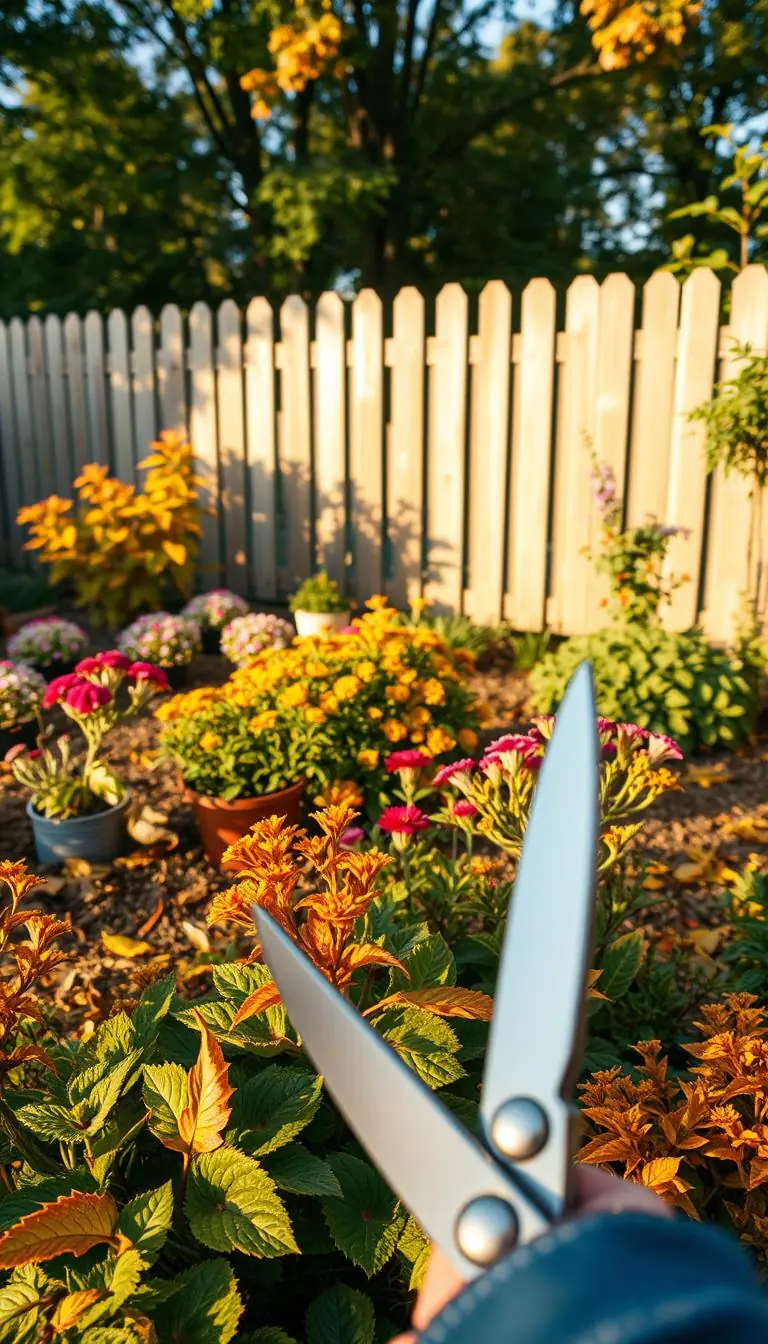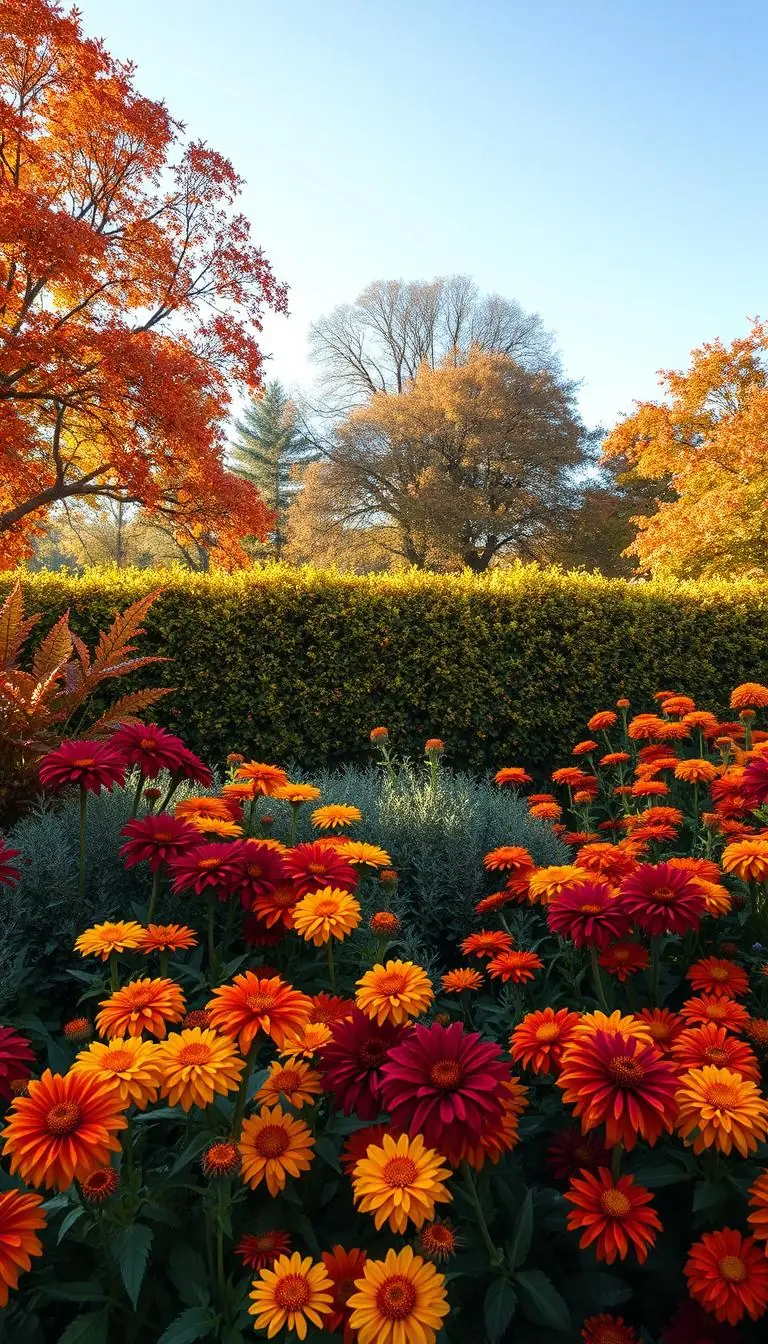
Imagine stepping outside to warm, late light and a spill of bright blooms that carry your yard through cooler evenings. You might notice hardy heads of Suncredible® sunflowers standing tall, pansies softening edges, or sedum turning richer as temperatures drop.
You’ll learn easy, dependable picks that keep a cheerful display from summer into frost. We explain simple placements for full sun and gentler spots so your plants get what they need.
Many choices act like long-haul performers: some bloom until the first hard freeze, others overwinter and rebloom in spring. We also highlight perennials that behave differently across USDA zones, and offer low-effort care tips that buy you more bloom time.
Think of this as friendly, practical guidance: color ideas, container recipes, and pollinator-friendly picks that make your outdoor space feel calm and inviting as the season shifts.
Key Takeaways
- Choose resilient varieties like Suncredible® sunflowers and pansies for long-lasting color.
- Match plants to light—place full-sun lovers in bright beds and shade-tolerant choices in cool corners.
- Look to sedum, Russian sage, and purple fountain grass for texture and interest through cooler months.
- Understand your local zones and frost timing to pick the right types for your climate.
- Use simple container mixes and mulch to extend bloom time and protect overwintering plants.
Why fall planting feels good and looks great
Now is a peaceful time to plant. Cooler temperatures ease the work for you and for new plants. Roots move in while tops slow down, so transplants set a firm base for next spring.
Monrovia experts note that cool soil encourages steady root growth. That means stronger starts and earlier blooms when warmth returns.
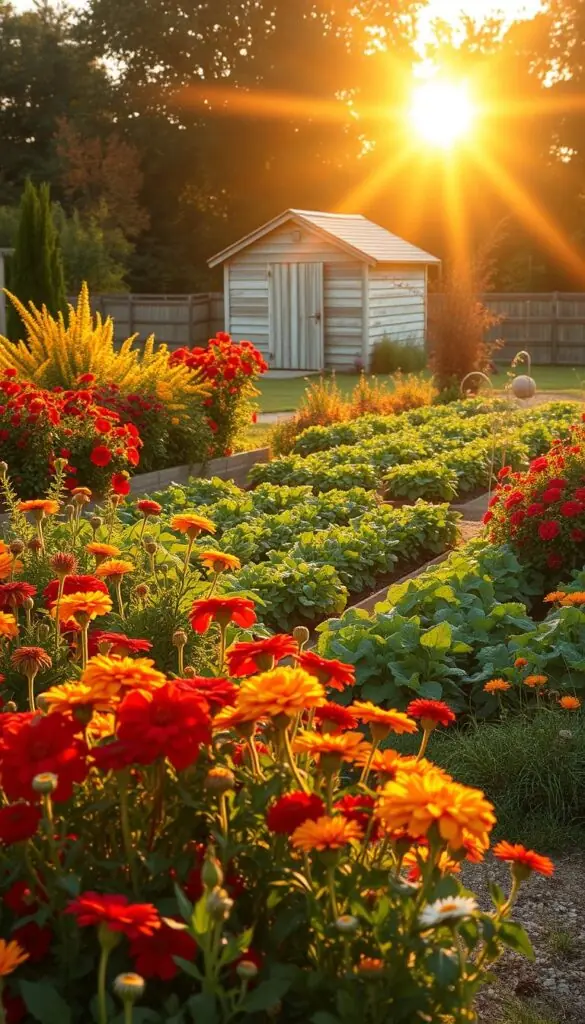
Cooler weather, calmer gardening: roots settle in while you sip something warm
You’ll notice the air is softer and watering needs drop. Working outside feels easier and more relaxing. Small steps now offer big returns in color and vigor later.
"Planting in cool weather helps roots establish quietly so plants arrive stronger in spring."
Present-day timing: what “until frost” means for your garden right now
“Until frost” depends on your local zones. Check your average first frost date to plan realistic bloom time. Full-sun spots still warm enough for quick rooting, while lower-sun areas welcome sturdy picks.
- Mulch and water a couple of weeks before frost.
- Choose plants labeled for your zone for best overwintering or late-season performance.
- Refresh tired beds now to extend color without a full redo.
| Benefit | Why it helps | What to do now | Result by spring |
|---|---|---|---|
| Cool soil | Roots grow, tops slow | Plant and mulch | Stronger, earlier blooms |
| Gentler weather | Less stress for you and plants | Water lightly; enjoy planting | Better establishment |
| Zone-aware choices | Matches hardiness and frost timing | Pick labeled varieties | Reliable returns next season |
Plan your palette: warm harvest hues, cool blues, and soft neutrals
Start with the feeling you want—warm, cool, or soft—and let that guide every planting choice.
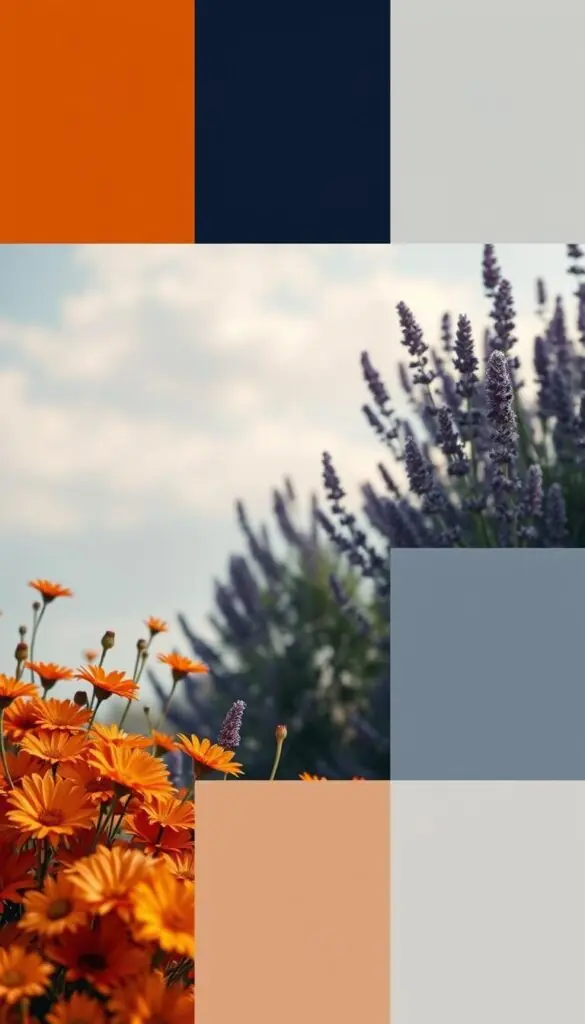
Warm tones to anchor the view
Choose marigolds, sunflowers, sneezeweed, and blanket flower for rich, inviting warmth. These plants give steady orange, gold, and red tones that read as cozy from a path or porch.
Cooling contrast for balance
Asters and Russian sage lend cool purples and blues that calm brighter beds. Nemesia and violas handle cooler nights and bring soft, repeatable accents in partial sun or light shade.
- Pick a vibe: warm harvest glow, cool serenity, or soft neutrals—then repeat 3–5 plants to unify beds.
- Place boldly: put bright hues where you’ll see them daily and softer tones near seating for quiet views.
- Match to zones: choose varieties rated for your zones so colors and blooms last reliably.
| Palette | Suggested plants | Best spot |
|---|---|---|
| Warm harvest | Marigold, Sunflower, Sneezeweed, Blanket flower | Full sun beds, walk edges |
| Cool calm | Aster, Russian sage, Nemesia, Viola | Partial sun, near benches |
| Soft neutral blend | Mix pale violas, light nemesia, muted sedum | Containers and quiet corners |
Know your first frost date and pick dependable bloomers
A quick check of your local first frost date gives a clear picture of how many bright weeks remain. That one date guides what to plant now and where to place it for the most reliable color.
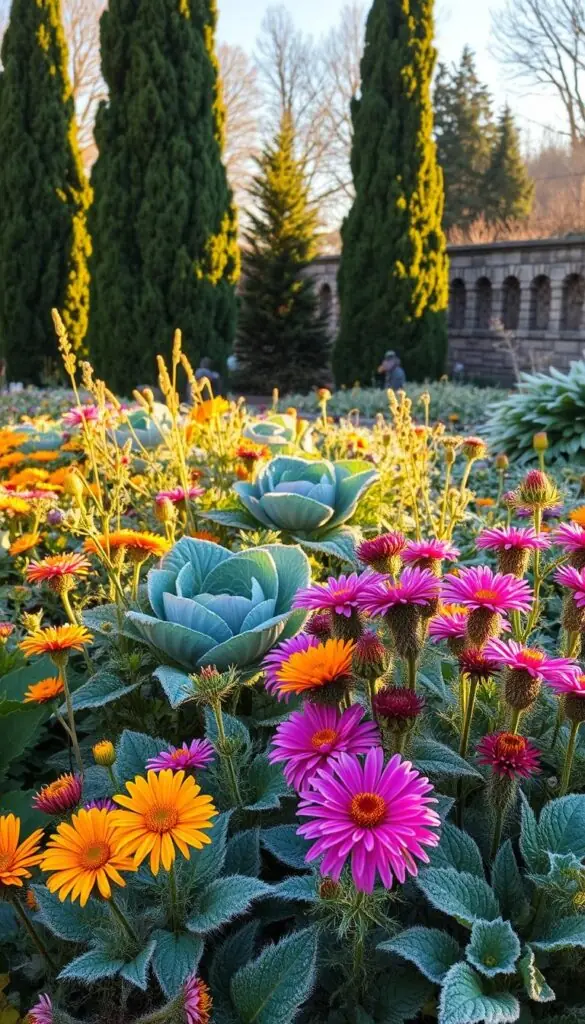
Start by looking up your average first frost date for your USDA zones. That tells you roughly how much bloom time to expect and whether a plant can make it through light freezes.
Frost-savvy choices: pansies, violas, mums, and sweet alyssum
Pansies and violas are among the toughest cool-season annuals. They often shrug off light freezes and can even return in spring with a bit of mulch.
- Mums usually bloom from September until frost and can carry color into November in milder areas.
- Sweet alyssum fills paths and boxes with scent until the first hard freeze hits.
- Layer containers with at least one frost-tolerant plant so your porch looks cared-for as nights cool.
If your frost date is early, choose extra-hardy options and add a light mulch to protect roots through winter. Look for nursery tags that say "cold tolerant" or "blooms until frost" when you shop.
| Step | Why it helps | Quick tip |
|---|---|---|
| Check first frost date | Sets realistic expectations for bloom time | Use local extension or weather sites |
| Pick frost-tolerant plants | Keeps borders lively longer | Choose pansies, violas, mums, alyssum |
| Protect with mulch | Shields roots for winter | Apply 2–3 inches after soil cools |
Little planning goes a long way. A short check and a few steady performers keep your beds and containers showing color from crisp fall days into early spring.
Sun or shade? Match fall flowers to your light
Match each bed to its light and you’ll be rewarded with steady color and less fuss. A quick check of hours of direct sun helps you pick the right spot for each plant.
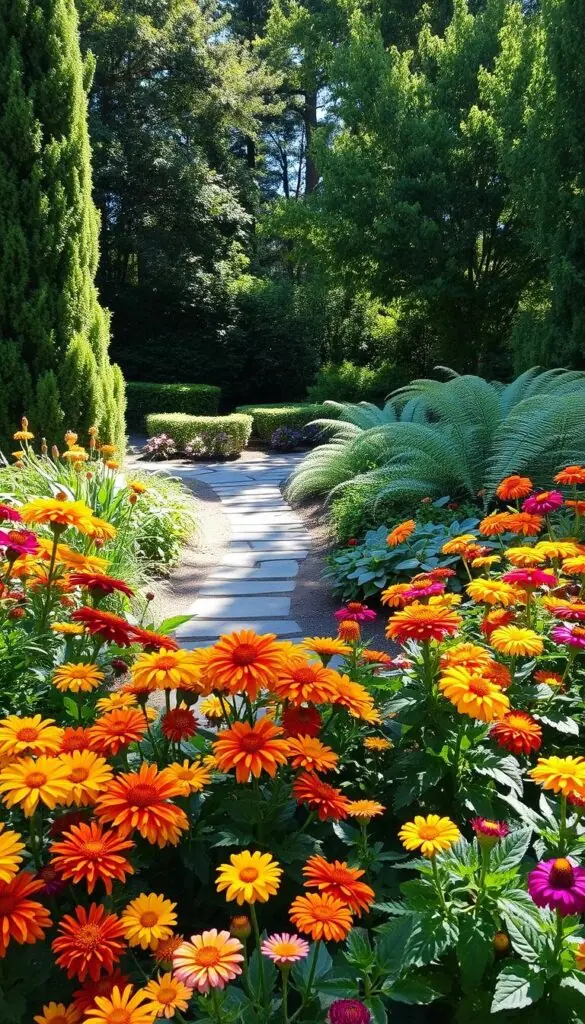
Full sun champions to set and forget
Choose ironclad bloomers for bright beds. Sun lovers like Suncredible® sunflowers thrive in full sun and carry blooms to frost. Luscious® lantana blooms until frost and resists deer. Sedum blooms from August to the first freeze and keeps its dried heads as winter interest. Black-eyed Susan is easy and keeps color from late summer into the cooler months.
Partial shade partners that glow in softer light
In lighter shade, pick plants that welcome gentler rays. Japanese anemone prefers partial shade to full sun with steady moisture. Pansies and violas handle partial shade and bounce back on crisp days. Late-summer hydrangeas dry beautifully and brighten dimmer corners.
- Place taller sun lovers toward the back (2–3 feet) and lower growers in front for clear sightlines.
- Group by light, water, and soil so care stays simple across beds and containers.
- Read plant tags for zones, exposure, and mature height to avoid surprises.
| Light | Good picks | Why |
|---|---|---|
| Full sun | Sunflower, Lantana, Sedum, Black-eyed Susan | Long bloom, low fuss, drought-tolerant |
| Partial shade | Japanese anemone, Pansy, Viola, Hydrangea | Cooler color, moisture-loving, soft texture |
| Mixed light | Containers with movable plants | Shift color as sun angle changes |
Standout annuals that bloom from late summer to frost
Bring steady, low-fuss color to containers with annuals that thrive as days shorten. These picks are perfect for porch pots, hangers, and mixed combos where you want reliable blooms and minimal upkeep.
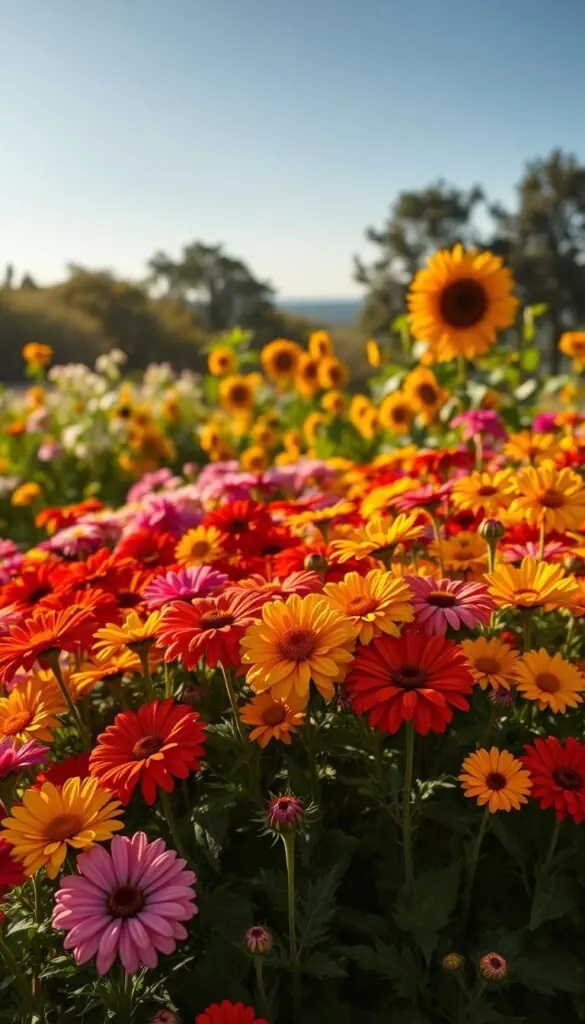
Sweet alyssum: honey-scented carpets for beds and baskets
Sweet alyssum forms a low, fragrant edge that blooms from spring to the first hard frost. Use it as a soft skirt in containers or to line paths for scent and soft texture.
Petunias and calibrachoa: self-cleaning color for containers
Choose Supertunia® petunias and Superbells® calibrachoa for containers that stay tidy. They are often self-cleaning, which means less deadheading and more time to enjoy your space.
Lantana and salvia: heat to cool, nonstop color and pollinators
Luscious® lantana (12–30 feet tall) delivers bold blooms to frost and resists deer. Rockin’® Playin’ the Blues® salvia blooms to frost and draws bees and hummingbirds. Pair one as a mounded thriller with trailing companions for a full look.
Nemesia and African daisy: cool-loving bursts for crisp days
Aromance® and Sunsatia® nemesia prefer cool temps and bring delicate scent. Bright Lights™ African daisy loves shoulder-season air and offers vivid contrast in pots and mixed beds.
- Combine lantana as a mounded focal point with trailing calibrachoa and a sweet alyssum skirt in full sun containers.
- Check tags for zones and how many feet tall each variety grows to size plants right.
- Water deeply, let the top inch dry, fertilize lightly every two weeks, and rotate pots for even sun exposure.
| Plant | Height (inches) | Best use |
|---|---|---|
| Sweet alyssum | 4–8 | Edging, baskets |
| Calibrachoa / Petunia | 6–12 | Trailing containers |
| Lantana / Salvia | 12–30 | Thriller, full sun pots |
Reliable perennials for an autumn garden backbone
A few hardy perennials can form a calm, reliable backbone that carries color through the cooler months. These plants earn their place by offering repeat bloom, seedhead interest, and steady habitat for pollinators.
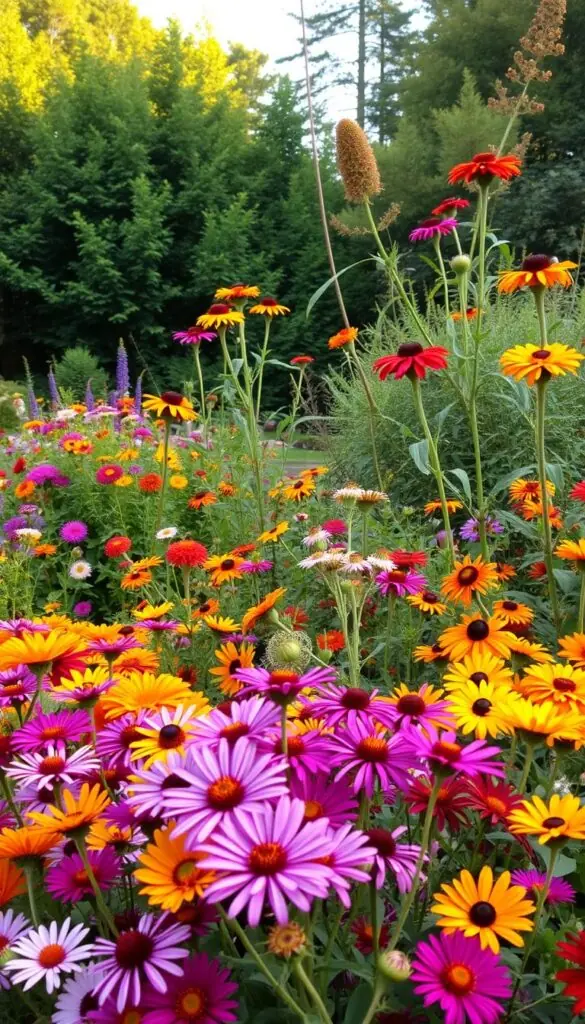
Asters and mums: classic color that carries into November
Asters (Zones 3–10) bloom August–October and attract bees and butterflies. They work well along fences and path edges for repeatable color.
Mums (Zones 5–9) shine from September until frost and give dependable late-season blooms with minimal fuss.
Sedum (stonecrop): starry clusters that deepen in color
Sedum (Zones 3–9) blooms from August to frost. Its flat, starry clusters deepen to warm tones and dry into attractive seedheads for winter texture.
Japanese anemone: graceful blooms that sway in the breeze
Japanese anemone (Zones 4–8) blooms August–October. It adds movement in gentle shade and prefers even moisture for a soft, billowing display.
Goldenrod and sneezeweed: native-inspired autumn shine
Goldenrod feeds migrating monarchs and other late-season pollinators. Sneezeweed blooms from late summer into mid-fall and benefits from light deadheading to extend its show.
- Build structure: use a few dependable perennials that look good both in bloom and as seedheads.
- Place taller clumps toward the back (2–4 feet) and repeat them every few feet for a relaxed rhythm.
- Sun to partial sun: these plants thrive with good light—check your zones to match long-term performance.
- Leave seedheads for winter texture and wildlife; trim in early spring for fresh growth.
- Mix with annuals to refresh color without redoing whole beds; deadhead lightly to keep blooms going.
| Plant | Zones | Bloom |
|---|---|---|
| Asters | 3–10 | Aug–Oct; attracts bees & butterflies |
| Mums | 5–9 | Sep–frost; strong late show |
| Sedum | 3–9 | Aug–frost; dries for winter interest |
Fall flowers, autumn garden favorites for containers
A simple trio of tall, mid, and trailing plants gives containers a polished, balanced look. Use this to craft calm, moveable displays that feel lush without fuss.
Thriller, filler, spiller combos with bold movement
Pick a dramatic thriller like purple fountain grass (30–36 inches) for height and sway. Add lantana or calibrachoa as the steady filler for reliable color and low care.
Finish with trailing calibrachoa or sweet alyssum to soften rims and add scent. Many of these are annuals except in Zones 9–11, where some varieties return.
Fragrant edges for window boxes and paths
Sweet alyssum spills honey-scented blooms until the first freezes. Group pots in threes—tall, medium, low—to make any porch feel abundant and calm.
- Place containers in sun or partial shade per plant tags and rotate weekly for even growth.
- Water deeply but less often as nights cool; check 1–2 inches down before watering again.
- Use compact varieties for small spaces and repeat one accent color across multiple pots.
| Role | Plant | Height / Notes |
|---|---|---|
| Thriller | Purple fountain grass | 30–36 in; adds movement and plumes |
| Filler | Lantana or Calibrachoa | 10–18 in; steady color, pollinator-friendly |
| Spiller | Sweet alyssum / trailing calibrachoa | Low spill; fragrant edge until frost |
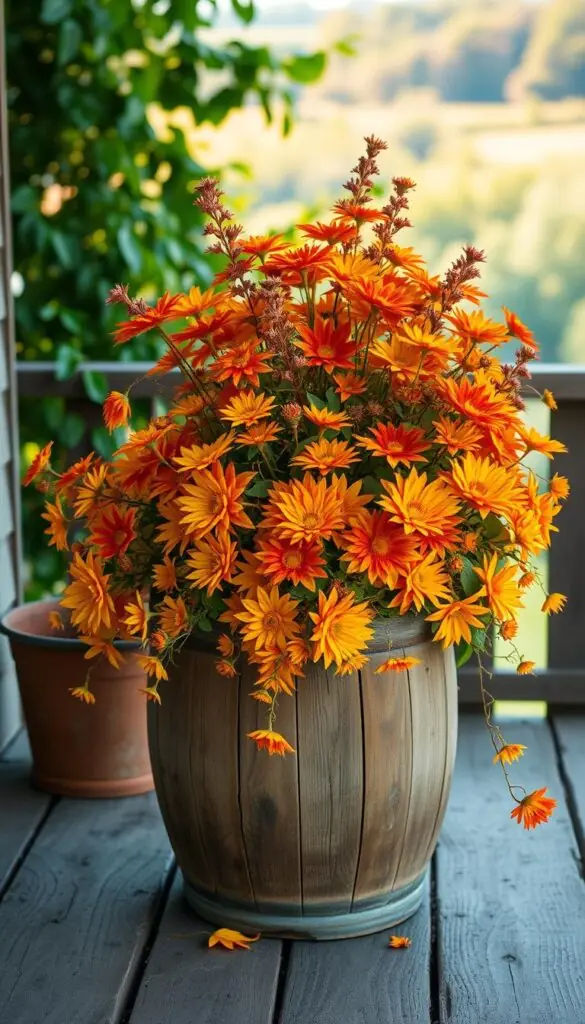
Full sun showstoppers that carry color to the finish line
Put the sunniest beds to work with bold, low-effort plants that keep color deep into cooler nights. These picks thrive in full sun and give steady bloom with minimal fuss.
Suncredible® sunflowers stay compact at about 2–3 feet tall and produce hundreds of cheerful heads. They need no deadheading and create instant impact in borders and containers.
Blanket flower and black-eyed Susan are classic, daisy-like flowers that run late spring through the first hard freezes. Both are easy to grow and look great massed for curb appeal.
- Mass 3–5 of the same plant for a bold, unified statement that reads from the curb.
- Stagger heights—mid-height sunflowers behind, lower blanket flower at the front—for a layered border.
- These plants prefer lean soil and heat; avoid overfertilizing to keep stems sturdy.
- Check plant tags for zones; treat some as annuals in colder areas for a reliable display.
- Water deeply but infrequently and leave seedheads for birds as the season winds down.

| Plant | Height / Notes | Best use |
|---|---|---|
| Suncredible® sunflower | 2–3 feet tall; no deadheading | Mid-border, containers |
| Blanket flower | 12–24 inches; long season | Front of bed, mass planting |
| Black-eyed Susan | 18–36 inches; tough and easy | Mixed borders, pollinator patches |
Cool-season charmers that bounce back in autumn
Late-season planting gives instant charm and sets up plants for a spring encore. These cool-season picks are cheerful now and resilient through chilly nights.
Start with pansies and violas. They are among the most frost-tolerant cool-season annuals. Plant in early fall to refresh tired beds. Mulch lightly after planting so roots stay insulated through winter. In milder zones they often overwinter and offer a surprise return in spring.
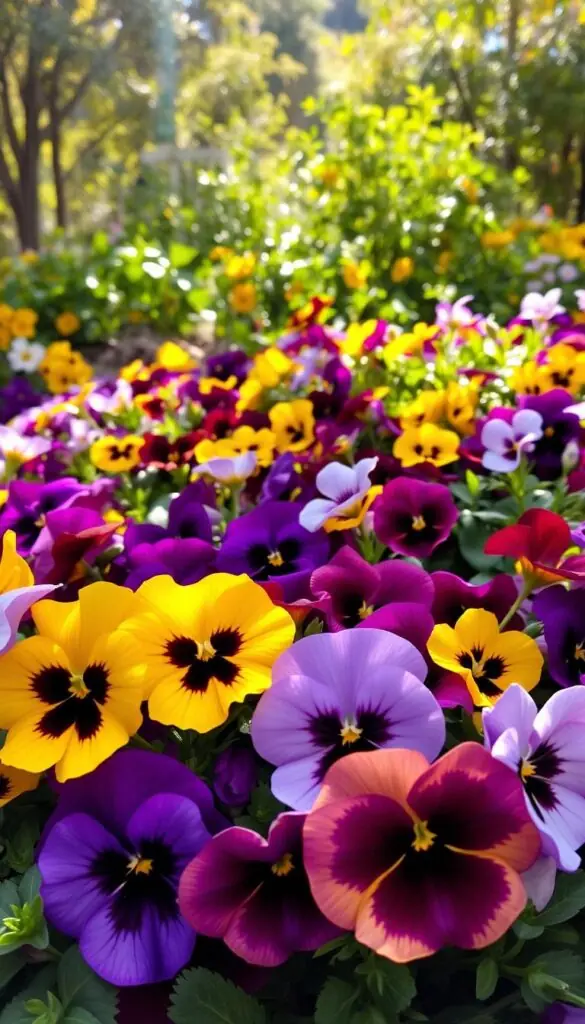
Pansies and violas: tough little faces that can overwinter
These small plants handle dipping temperatures and still show steady blooms. Tuck them near entryways so you see their bright faces daily. Water in well and feed lightly—cool air reduces stress, so they settle fast.
Snapdragons: rich, saturated spikes for crisp days
Snapdragons prefer cool temps and add vertical color to beds and porch pots. They pair well with pansies for contrast. Deadhead for a neater look, or leave a few seedheads to invite bees on sunny afternoons.
Autumn crocus: surprise petals on leafless stems
Plant autumn crocus bulbs by late summer and they send up satiny blooms on bare stems when days cool. They are a subtle, elegant touch in temperate spots and fit into mixed borders or containers.
- Refresh tired beds in early fall with pansies and violas; they’re small but mighty.
- Mulch lightly to protect roots through winter in colder areas.
- Use snapdragons for vertical interest and autumn crocus for late surprises.
"Choose resilient choices now and they’ll reward you again when days warm."
| Plant | Best time to plant | Hardiness | Key benefit |
|---|---|---|---|
| Pansy / Viola | Early fall | Often hardy in milder zones | Frost-tolerant; may overwinter and rebloom in spring |
| Snapdragon | Late summer–early fall | Prefers cool temperatures | Vertical color; blooms until frost |
| Autumn crocus | Plant bulbs by late summer | Temperate regions | Leafless, late-season blooms |
Texture and movement: foliage and grasses for fall drama
Soft plumes and ruffled leaves bring a quiet, moving charm to late-season plantings. Use texture to add interest without extra work. A few tall accents and sturdy rosettes change how a bed reads in low, golden light.
Purple fountain grass: silky plumes that dance in the breeze
Pennisetum types reach about 30–36 inches and offer purplish, silky plumes that sway with the slightest wind. They act as an instant thriller in containers or as repeated anchors in beds.
Place clumps about every few feet for rhythm, or use one clump as a focal point in a pot. These grasses thrive in full sun and catch morning light beautifully as seedheads age.
Flowering kale: ruffled rosettes that outlast a light frost
Flowering kale is prized for its frilly, sturdy foliage; centers color to white, pink, or purple as temperatures cool. It holds up well to light frost and pairs nicely with low violas at its feet.
Water at the base to keep leaves tidy and remove any yellowing lower leaves. In most zones treat kale and fountain grass as annuals, except where winters stay mild.
- Add movement and texture to make your planting feel alive in low, golden light.
- Use grasses as a tall anchor (around 3 feet tall) with kale and violas at their feet for soft contrast.
- Choose foliage colors that echo your flowers so the whole display feels unified.
"Let plumes and ruffled rosettes do the heavy lifting—texture reads as color and calm from a distance."
| Plant | Height / Notes | Best use |
|---|---|---|
| Purple fountain grass | 30–36 inches; purplish plumes | Container thriller; repeated anchor in beds |
| Flowering kale | Low, ruffled rosettes; frost-tolerant look | Foreground contrast; window boxes |
| Violas | 4–8 inches; small color accents | Edge planting beneath tall foliage |
Pollinator-friendly picks for late-season support
As daylight shortens, a few smart plant choices can keep bees and butterflies visiting your beds. These simple swaps help your outdoor space act as a small refuge when nectar gets scarce.
Asters shine from August through October and offer plentiful nectar for foraging bees and butterflies. Plant clumps in sunny corners so pollinators find them easily.
Goldenrod lights up borders and feeds migrating monarchs with rich, late nourishment. Let a few stems stand after frost; seedheads help wildlife into winter.
Annual salvias like Rockin’® Playin’ the Blues® send continuous bloom spikes until frost and draw hummingbirds and other visitors.
- Choose overlapping bloom from late summer into fall for a steady buffet.
- Plant in sunny patches near paths to enjoy close-up visits.
- Avoid pesticides near blooms; a water rinse often fixes small pest issues.
"Simple choices now help pollinators thrive as the season winds down."
| Plant | Best time to bloom | Pollinators helped |
|---|---|---|
| Asters | Aug–Oct | Bees, butterflies |
| Goldenrod | Late season | Monarchs, bees |
| Annual Salvia | Late summer–frost | Hummingbirds, bees |
Deer-resistant choices for peaceful borders
You can enjoy steady color without the nightly scavengers with a few smart picks. These plants give bright, lasting blooms while being less appealing to deer. That means calmer evenings and fewer surprises at dawn.
Annual salvia, Luscious® lantana, and Superbena® verbena bloom from planting until frost in full sun to part sun. They come in many varieties and colors, and they work as spreaders, trailers, or mounded accents.
Salvia, lantana, and verbena: color critters tend to skip
Salvia gives steady vertical spikes. Lantana brings bold cluster color. Verbena spills and spreads to fill sunny beds.
Mix matching palettes of these plants for a cohesive look. Place them near entry beds, mailboxes, or other vulnerable spots to reduce frustration.
- Check zones and exposure; most prefer bright sun and well-drained sites.
- Combine with textured foliage, like kale, or grasses for contrast and motion.
- Water in well at planting, then let soil dry a bit between sessions.
- Deadhead verbena lightly if needed—many modern varieties self-clean.
"Lean on deer-resistant varieties and you’ll spend less time repairing nibbled borders and more time enjoying your outdoor space."
| Plant | Best exposure | Notes |
|---|---|---|
| Annual Salvia | Full sun–part sun | Steady spike blooms; attracts pollinators; deer-resistant |
| Luscious® Lantana | Full sun | Bold clusters; mounded habit; many color varieties |
| Superbena® Verbena | Full sun–part sun | Spreading trailers; self-cleaning types available; great in borders |
Small-space solutions: porch pots, window boxes, and hanging baskets
A few well-placed containers give renters and tiny yards big seasonal impact. Use medium pots you can move so you can protect them during a surprise chill and restyle each season.
Build a simple trio: one tall grass for height, one mounded bloomer for body, and one trailer to soften the edges. Purple fountain grass adds graceful plumes, while calibrachoa and petunias serve as long-lasting fillers and spillers.
Sweet alyssum perfumes edges and makes window boxes feel abundant. Violas and nemesia thrive in cool weather, so tuck them into light shade for early and mid-fall charm.
- Moveable pots: pick medium containers so you can group and shelter plants quickly.
- Combo rule: thriller (grass), filler (petunia/calibrachoa), spiller (alyssum) for a full look.
- Compact varieties: choose smaller types for rail planters and baskets to avoid constant trimming.
Place sun lovers on the brightest ledge and tuck cool-season blooms where they won’t dry out fast. Check your local zones—many of these are annuals unless you live in Zones 9–11.
Group two or three pots by your front door for a welcoming, layered touch. Water deeply when the top inch of mix feels dry; cooler air means fewer waterings overall. Repeat one color across containers for a calm, collected look that flatters your home and makes quick swaps easy.
"Portable pots let you refresh tired summer plants with ready-to-bloom options in seconds."
Quick-start combinations for instant fall color
Try three-plant recipes that layer height, texture, and repeatable color for immediate impact. These combos are easy to copy and plant today. They give you a polished look without extra fuss.
Harvest glow: marigold + sneezeweed + sedum
Marigolds bring bright orange and yellow tones and help deter pests. Pair them with sneezeweed’s daisy-like blooms that last into the cooler weeks.
Sedum anchors the mix with deepening clusters that dry nicely as the season ends. Use this trio as a low border or in grouped pots for a radiant edge of color.
Sunset sweep: petunia + calibrachoa + purple fountain grass
Center a clump of purple fountain grass for motion and height. Ring it with self-cleaning petunias and calibrachoa for nonstop color that needs little deadheading.
This combo excels in a single large pot or a sunny porch grouping. It reads as one calm sweep of warm tones and texture.
Cool calm: pansy + viola + Russian sage
Pansies and violas handle cool nights and offer delicate faces at the front of a bed. Weave in Russian sage for an airy, blue haze that stretches the palette into deeper, soothing tones.
This grouping is ideal for partial sun and soft seating areas where you want subtle, lasting color and scent.
- Repeat each trio in two or three spots to create a coordinated look across your yard.
- Choose complementary varieties and matching tones so the scene stays calm, not busy.
- Check plant tags for zones and exposure before you plant.
- Use quality potting mix in containers and water new plantings well; cool air helps them settle.
- Step back and edit—repeating fewer plants often looks more polished.
| Combo | Role | Best use |
|---|---|---|
| Harvest glow | Marigold (color, pest-deterrent), Sneezeweed (late daisy-like bloom), Sedum (textured seedhead) | Low border, grouped pots, pathway edge |
| Sunset sweep | Purple fountain grass (height), Petunia & Calibrachoa (self-cleaning color) | Large containers, sunny porch displays |
| Cool calm | Pansy & Viola (cool-weather faces), Russian sage (airiness, blue contrast) | Partial sun beds, near seating |
Simple care to keep blooms going longer
Gentle, routine care helps your beds and pots look their best as temperatures dip. Small, consistent habits save you time and keep color steady through the season.
Deadhead or choose self-cleaning varieties to save time
Pick low-effort options like many modern petunias, verbena, and calibrachoa. They cut chores because they self-clean and need little pinching.
Where needed, a quick pinch of spent blooms sends energy into new buds and keeps plants tidy. Do this weekly for the best payoff.
Water wisely in cooler temps and mulch before hard freezes
Water less often but more deeply as evenings cool. Let the top inch dry before you water again to avoid overwatering.
Add a light mulch a week or two before a hard freeze to protect roots, retain moisture, and help hardy plants return in spring.
Late-summer trims for stronger fall flower shows
A gentle trim in late summer encourages compact growth and a stronger bloom flush into fall. Trim leggy stems and remove obvious dead growth.
Feed lightly—cooler weather means slower nutrient use. Group pots so they buffer wind and cut watering needs.
"These tiny, steady habits extend your season without taking over your weekends."
- Save time by choosing self-cleaning varieties when possible.
- Pinch spent blooms only where needed to focus plant energy.
- Water deeply, check the top inch, and mulch before hard freezes.
- Trim lightly in late summer and feed on a gentle schedule.
- Watch your zones and local frost outlook; cover vulnerable pots if a light freeze is forecast.
| Task | When | Why it helps |
|---|---|---|
| Choose self-cleaning varieties | At planting | Saves time and reduces deadheading |
| Deadhead / pinch spent blooms | Weekly as needed | Redirects energy to new blooms |
| Mulch | Before hard freeze | Protects roots; aids spring return |
| Late-summer trim | Late summer | Encourages compact growth and stronger fall bloom |
Conclusion
Tidy, small steps today give you a calm, colorful yard that holds through the shifting season.
Match each plant to its sun and soil needs and check your zones so choices thrive with little fuss. Blend sturdy perennials for backbone and easy annuals for instant impact.
Many picks—Suncredible® sunflowers, sedum, asters, mums, pansies and violas, Russian sage, lantana, sweet alyssum, and purple fountain grass—carry color from late summer into frost while roots settle for a strong spring return.
Keep watering simple, deadhead where useful, and leave some seedheads for winter interest and wildlife. Enjoy the calm color you create; small, steady care makes your space welcoming and uniquely yours.
FAQ
What are the best plants to add late in the season for bright color?
Choose reliable, bloom-heavy choices that establish quickly: pansies and violas for cool weather, sedum and blanket flower for sunny spots, and marigolds or lantana where you need nonstop color. These give fast payoff and often attract bees and butterflies.
When should you plant so roots have time to settle before the first hard freeze?
Aim to plant perennials and hardy annuals at least 4–6 weeks before your average first frost date. That window lets roots spread while temperatures are cooler but soil is still warm, helping plants overwinter or bloom through crisp days.
How do you pick plants for full sun versus partial shade?
Match light needs to the spot. Full sun favorites include sunflowers, black-eyed Susan, lantana, and sedum. For partial shade, choose Japanese anemone, pansies, violas, or late-season hydrangeas. Consider bloom time and height so taller plants won’t shade smaller ones.
Which annuals keep blooming from late summer through the first freezes?
Look for heat-to-cool performers like lantana, salvia, petunias, calibrachoa, and sweet alyssum. They handle warm days and continue to produce blooms as temperatures drop, especially if you deadhead or pick spent flowers on self-cleaning varieties.
Which perennials provide dependable color into late season?
Asters and mums are classic choices that hold color into November in many climates. Sedum deepens in tone as weather cools, while Japanese anemone and goldenrod add height and native-friendly blooms for pollinators.
Can I get long-lasting color in containers and small spaces?
Yes. Use thriller-filler-spiller combos like purple fountain grass (thriller), calibrachoa or petunia (filler), and sweet alyssum (spiller). Choose compact perennials or annuals that tolerate container conditions and water more frequently than beds.
What low-maintenance plants work well in full sun and need little deadheading?
Sunflowers (many suncredible series), blanket flower, sedum, and black-eyed Susan are carefree choices. They tolerate heat and poor soil, and several varieties need minimal deadheading to stay tidy and blooming.
Which cool-season plants tolerate light frosts and can overwinter in milder zones?
Pansies, violas, snapdragons, and some cultivars of ornamental kale and pansy blends handle light freezes and can bounce back on warmer days. In USDA zones 7–9 they often persist through winter with little protection.
What foliage and grasses add movement and texture when blooms fade?
Ornamental grasses like purple fountain grass and foliage plants such as flowering kale create late-season drama. Their plumes and ruffled rosettes hold color and structure after many blooms have passed.
How can you support pollinators late in the season?
Plant nectar-rich species like asters, goldenrod, and salvia to provide vital food for bees and butterflies as other sources dwindle. Leaving some seedheads and avoiding late-season heavy pruning also helps wildlife find shelter and food.
Which plants tend to be deer-resistant for border plantings?
Salvia, lantana, and verbena are less palatable to deer and still offer strong color. Combine these with native goldenrod or sedum for added resilience and habitat value.
What quick combinations deliver instant seasonal impact?
Try harvest-glow mixes like marigold + sneezeweed + sedum for warm tones; sunset sweep with petunia + calibrachoa + purple fountain grass for contrast; or cool calm with pansy + viola + Russian sage for soothing, late-season color.
How do you care for late-season plantings to extend blooms?
Deadhead spent blooms or choose self-cleaning types, water deeply but less often as temperatures cool, and apply mulch before hard freezes to protect roots. A light trim in late summer can also encourage a stronger fall display.