Imagine stepping onto your porch on a warm morning, the air threaded with a honeyed scent and soft petals brushing your fingertips. You want a lush, low-fuss display that lifts your patio and feels like home.
We’ll guide you, step by step, to pick and care for the best hanging basket flowers—from Supertunia petunias that bloom to frost to shade-loving Browallia and sweet-scented Lobularia. Expect calm, practical tips that help you match plants to sun, wind, and busy days.
We share a clear list of quick picks, simple planter basics, and midseason fixes like a light shear for petunias or trim for lobelia. You’ll learn watering and feeding routines that fit a busy life, and seasonal notes so your baskets stay colorful through spring and summer.
Key Takeaways
- You’ll get a short, useful list of reliable hanging plants for sun and shade.
- Simple planter tips—size, mix, and liners—help avoid dry, crowded roots.
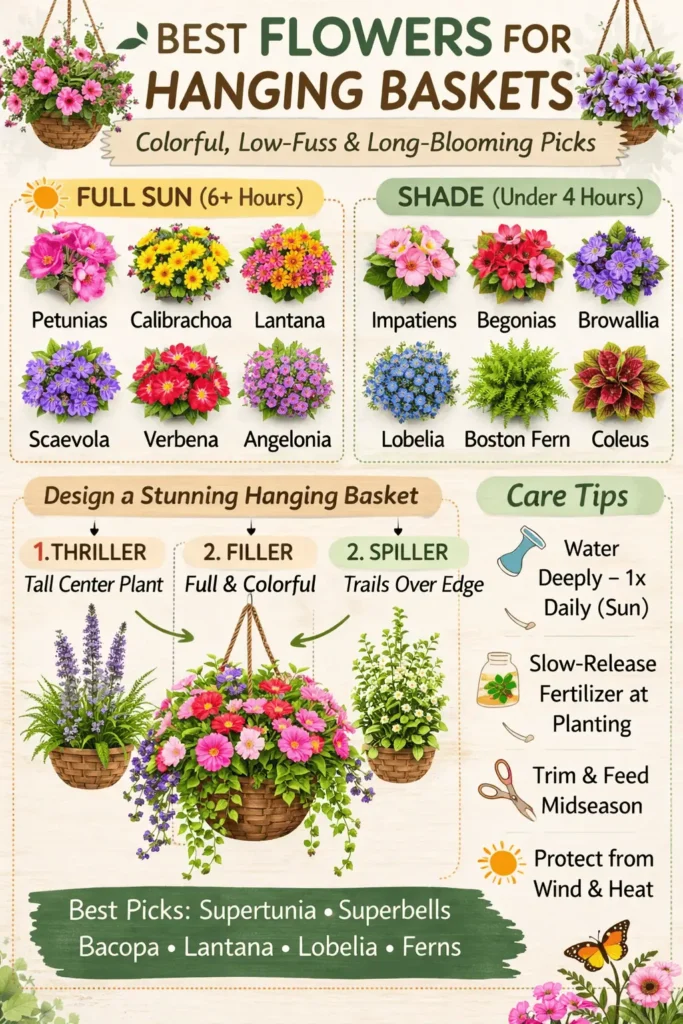
- Pick plants like Supertunia, Superbells, Bacopa, and Lantana for long bloom and pollinators.
- Easy care routines (consistent watering, slow-release feed) keep blooms steady.
- Quick midseason trims revive tired displays and boost new blooms.
Why Hanging Baskets Make Your Porch and Patio Shine
Bring color and texture up to eye level so your patio feels finished the moment you step outside.
Elevated planting gives instant curb appeal. Hanging flowers lift color to eye level and make your porch glow. They keep walkways clear while showing off cascades that spill like soft ribbons over the rim of a basket.
Use a single lush piece by the entry or group three at staggered heights to frame a seating nook. Suspend pieces from eaves, sturdy brackets, or tree limbs. For soil spots, set shepherd’s hooks into the ground to display a planter safely.
- Match mood with color: cool blues for calm mornings, citrusy brights for sunny cheer, or white for evening glow.
- Combine textures—airy Euphorbia with bold petunias or the feathery sweep of a Boston fern for shady spots.
- Repeat two or three colors across hanging and ground pots to tie your yard and home together.
Quick wins: One statement basket on a small porch transforms the whole facade; in larger yards, echo that palette through nearby beds for a coordinated look.
How to Choose Hanging Basket Plants for Your Light, Climate, and Style
Start by watching how sun and shade move across your porch for a few days to pick plants that truly thrive.
Count direct sun hours: 6+ hours favors sun lovers; under 4 means shade fans. Use your phone compass to see if the space faces south or west (hotter) or east (gentle morning light).
Check wind and microclimates. If your yard channels breeze, choose flexible, sturdy plants like lantana, scaevola, and verbena that stand up to gusts without snapping.
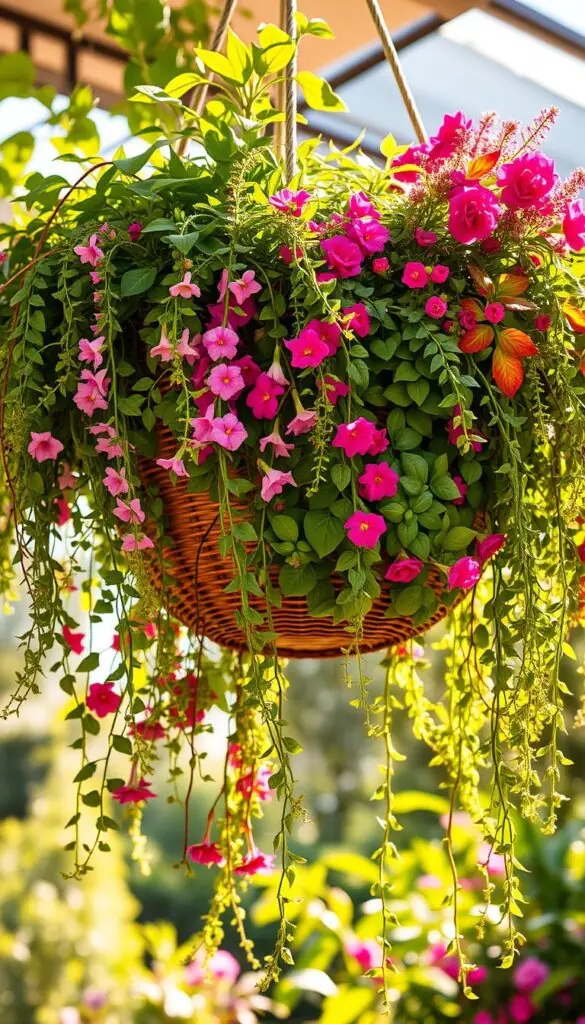
Simple tools and a quick routine
Use a moisture meter or the finger test to know when to water—baskets dry faster than beds, especially in full sun. A phone compass and a notebook make this easy: log sun hours for three days and note wind patterns.
Match plants to zone and season
In hot, humid southern zones pick heat-tough kinds like Angelonia Cascade and Verbena rigida. Cool northern springs suit lobelia, nemesia, and alyssum before summer heat sets in.
| Light | Best USDA Zones | Good Picks and Notes |
|---|---|---|
| Full sun (6+ hrs) | 7–10 | Supertunia, Superbells — bright through the season; lantana for heat and drought tolerance. |
| Part sun / part shade | 5–9 | Angelonia and bacopa — cascade well; Bacopa needs steady water. |
| Shade (under 4 hrs) | 4–8 | Browallia, impatiens, begonias — keep color in dappled light. |
- Style tip: Choose low-maintenance plants if you prefer easy care—calibrachoa and many modern petunias self-clean.
- Seasonal note: Lobelia ‘Laguna® Sky Blue’ handles heat better than older lobelia types and is a great spring-to-summer option.
Hanging Flowers That Love Full Sun
Bright, sun-soaked baskets need plants that shine all day and shrug off heat. Below are reliable picks, with color, texture, and simple care notes so your patio looks full all season long.
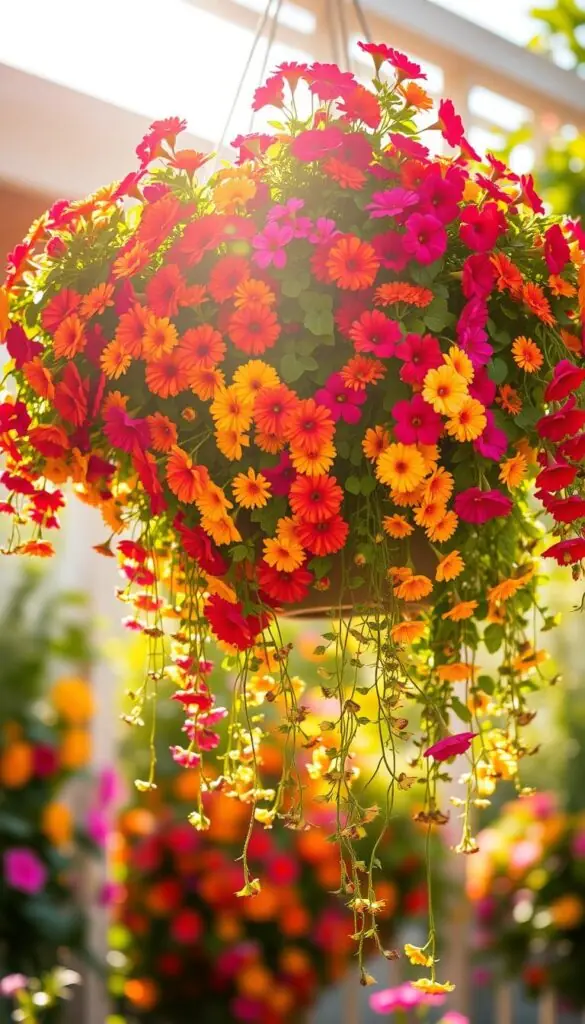
Petunias and Supertunias
Supertunia® ‘Lovie Dovie™’ gives bold, months-long bloom and trails nicely without deadheading. Use it as a moundy focal plant in a 12–16” planter for a season long display.
Calibrachoa (Million Bells)
Superbells® calibrachoa offers tiny trumpet blooms in sunset hues. It self-cleans from planting to frost and only needs an occasional light shear to refresh shape.
Lantana
Lantana Luscious® Citrus Blend™ brings citrusy clusters that attract hummingbirds and butterflies. Its nectar-rich color pops in hot afternoon sun and resists deer.
Scaevola (Fan Flower)
Scaevola ‘Whirlwind Blue’ spills fans of sky-blue petals and thrives in blistering sun with almost no deadheading. It’s a perfect spiller to soften edges.
Angelonia Cascade
Angelface® Cascade Snow makes airy white spikes that stand tall and trail about 20", adding vertical interest and contrast to rounded petunia mounds.
Verbena and Verbena rigida
Verbena rigida ‘Cake Pops Purple’ and Superbena ‘Cobalt’ hold color through heat and dry spells. Use them as bright clusters that add grit to a soft mix.
Mandevilla
SUN PARASOL® XP Mandevilla vines twist along railings and pergolas with tropical trumpets that tolerate heat and heavy rain. Plant near a support so the vine can climb.
- Mix textures: petunia mounds + verbena clusters + scaevola fans for layered color.
- Use a 12–16" basket-style planter, add slow-release fertilizer at planting for season long energy.
- Water deeply until runoff, then let the top inch dry; in peak heat, check daily.
Shade and Part-Shade Hanging Flowers for Cool, Calm Corners
Cool, shaded porches reward plants that offer calm colors and lush leaves without fuss. Choose steady performers that brighten dim spots with color and texture rather than raw sun tolerance.
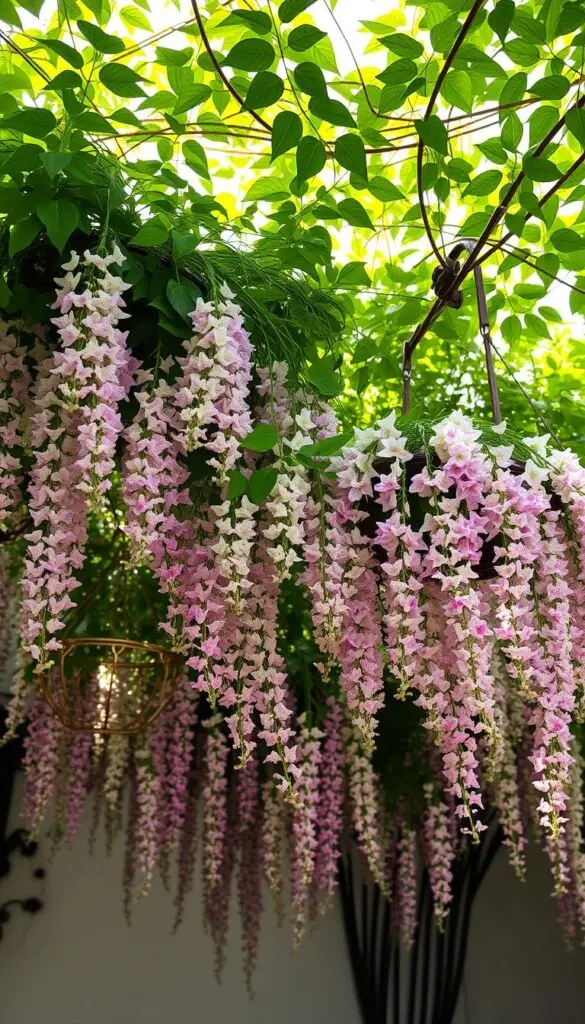
Impatiens and Double Impatiens
Rockapulco® Double Impatiens fill a 12–14” planter with rosebud blooms in orange, salmon, and peach. They are self-cleaning, so you spend less time deadheading and more time enjoying color.
Begonias
Tuberous and Dragon Wing begonias bring glossy foliage and showy blooms from primrose yellow to bold red. Double Delight® Primrose is fragrant and likes some shade in southern climates.
Browallia and Lobelia
Browallia Endless™ Illumination sprinkles violet-purple dots across fresh green leaves and stays tidy without extra fuss. Lobelia ‘Laguna Sky Blue’ adds airy, sky-blue cascades; a light midseason trim refreshes bloom for summer.
- Pair with variegated coleus or Dichondra ‘Silver Falls’ for layered foliage contrast.
- Use a moisture-retentive mix and water when the top inch feels dry—often every 2–3 days in cool shade.
- Feed lightly every two weeks and tidy edges with small snips to keep the display neat.
- If you love fuchsia shapes, add a single pendant accent in a bright, protected shade spot.
Fragrant and Pollinator-Friendly Picks
Let scent and steady nectar guide your choices—pick plants that invite pollinators and perfume your porch.
Lobularia (Sweet Alyssum) — Blushing Princess® offers a soft honey scent that drifts through seating areas on warm afternoons. It can cascade up to 36" and makes a delicate, white-to-purple carpet that tempts bees and small butterflies.
Lantana and Verbena — Lantana Luscious® Citrus Blend™ brings bright, citrusy color in yellow, orange, and red that hummingbirds love. Superbena® verbena supplies large clusters all season without deadheading and resists powdery mildew.
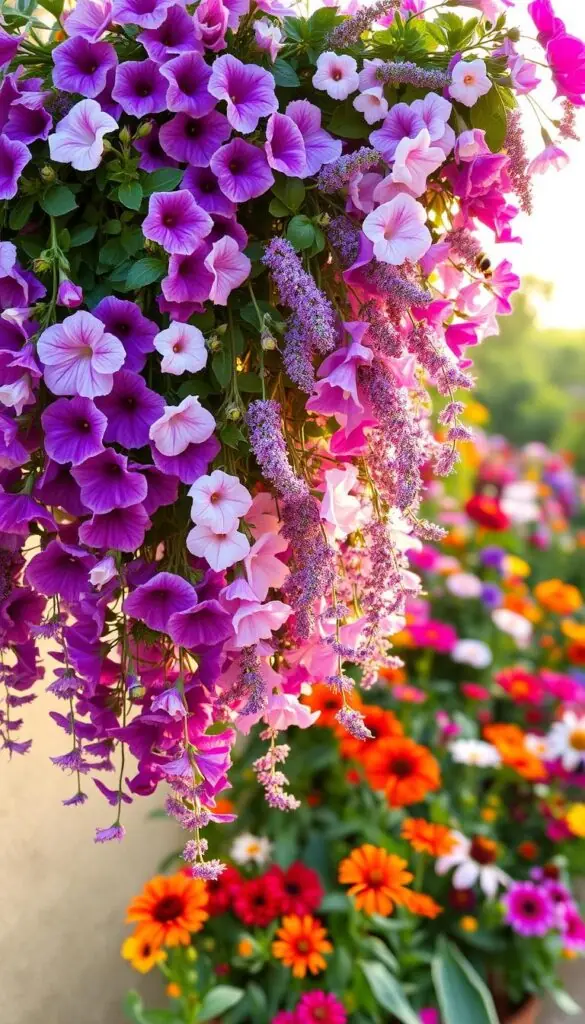
Place one basket close to a sunny bench or above a pathway so scent and pollinators meet you as you sit. Use a 12" planter, slow-release fertilizer, and a gentle liquid feed every 2–3 weeks in peak bloom.
"Sweet scent plus steady nectar makes your patio feel alive and calm."
- Water consistently—alyssum likes even moisture; verbena shows best when not stressed.
- These picks are low-fuss: mostly self-cleaning or helped by a light trim.
- Let some stems spill; that natural habit invites birds and butterfliers into your yard.
Foliage and Texture Stars That Elevate Any Basket
Texture and movement turn a simple planter into a living piece of porch art.
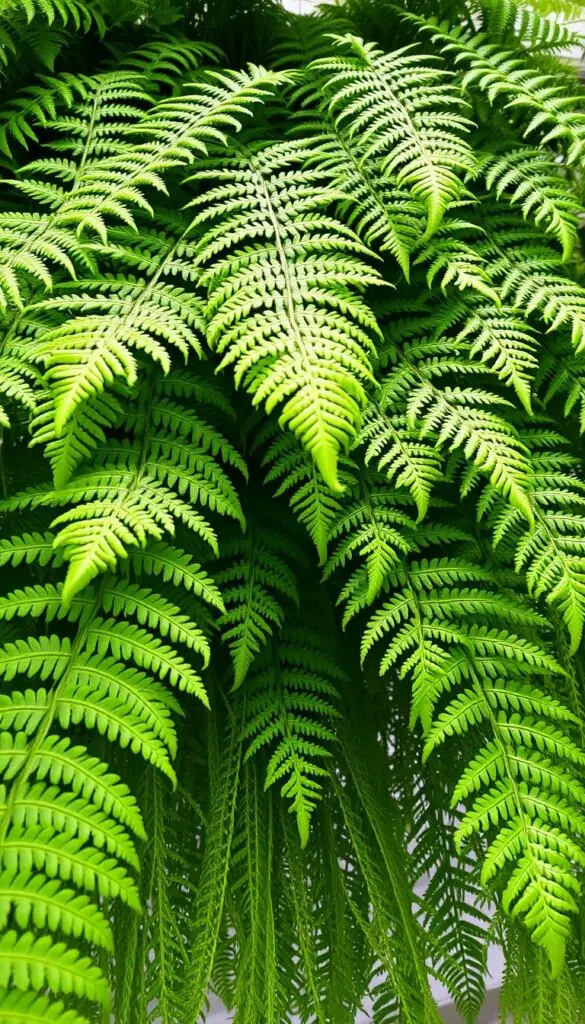
Boston fern creates a graceful dome of soft fronds that makes shaded porches feel cool and classic.
Acclimate your boston fern for a week or two in a protected spot before settling it in its final home. This reduces shock and helps the fronds stay lush.
Keep the root ball evenly moist. Give a thorough soak until water runs from the base, then let the top inch feel just slightly damp before the next deep water.
Euphorbia ‘Diamond Frost’ and airy accents
Diamond Frost weaves a cloud of tiny white blooms that acts like baby’s breath among bolder plants.
It needs little fuss and adds motion and lightness when paired with petunia or a trailing vine.
Spillers and pairing ideas
For effortless spill, pair with sweet potato vine or Dichondra ‘Silver Falls’ to add shimmering strands over the rim.
In deeper shade, let the fern be the star. In brighter spots, mix Diamond Frost with petunias for an airy, floral lace.
- Trim browned fronds and lightly shape euphorbia midseason to keep the display tidy.
- Use a breathable liner and quality mix so roots stay happy and leaves stay fresh and green.
- If wind hits your porch, tuck the fern in a corner; fronds prefer gentle movement to strong gusts.
- Add a matching ground planter to echo foliage and tie the entry together.
"Soft fronds, airy sprays, and trailing vines give your entry a calm, lived-in beauty."
| Plant | Best Spot | Care Notes |
|---|---|---|
| Boston fern | Shade, sheltered porch corner | Acclimate 1–2 weeks; keep root ball evenly moist; trim browned fronds |
| Euphorbia ‘Diamond Frost’ | Part sun to sun; mixes well in brighter baskets | Low maintenance; midseason light shaping; pairs well with petunia |
| Dichondra / Sweet potato vine | Edge of basket for spill | Provides trailing shimmer; complements begonias and ferns |
Best Mixed Combos for Color All Season
These plug-and-play mixes make planting day fast and the whole season less fussy.
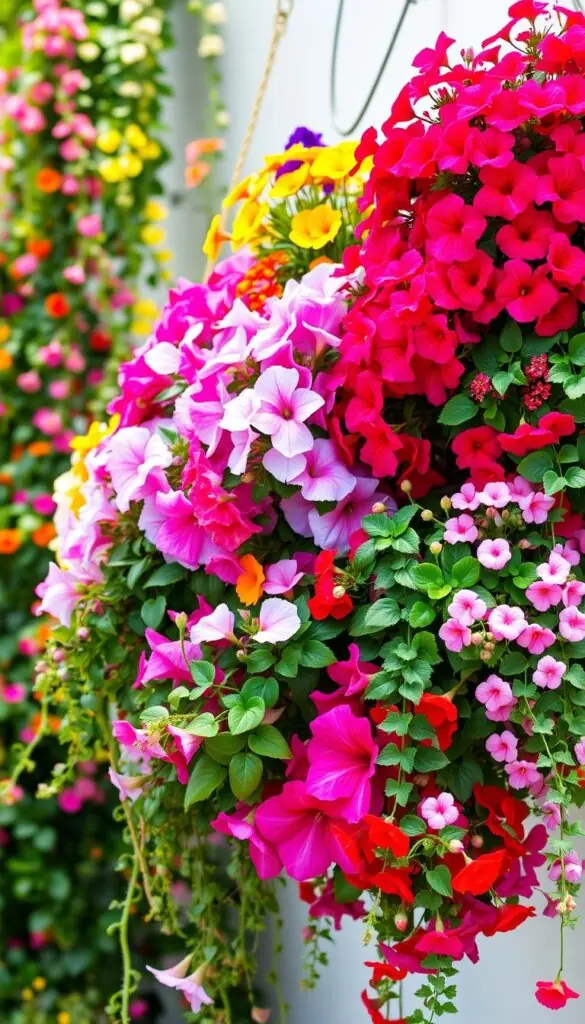
Classic trio: Supertunia + Superbena + Superbells
Recipe: 2 Supertunia (filler/spiller), 1 Superbena (filler), 1 Superbells (spiller) in a 14–16" planter.
Plant Supertunia off-center so it can cascade. Place Superbena nearby as a color anchor. Tuck Superbells at the rim to trail and soften the edge.
Cool blue harmony: lobelia + bacopa + white angelonia
Recipe: 1 Angelonia (thriller), 2 Lobelia (fillers), several Bacopa at the edge as spillers.
Put the Angelonia in the center for height. Surround with lobelia for airy blue. Add Bacopa Snowstorm® Giant Snowflake® along the perimeter—keep its soil evenly moist for best bloom.
Heatwave hero: lantana + scaevola + verbena rigida
Recipe: 1 Lantana (focal), 2 Scaevola (fillers), 1 Verbena rigida (cluster).
This mix stands up to strong sun and July heat. Anchor with scaevola and Superbena-like sturdiness if your site is windy.
- Planting order: thriller (center), fillers (around), spillers (edge).
- Fertilizer rhythm: add slow-release at planting; follow with a light liquid feed every 2–3 weeks for season long color.
- Watering: water deeply at planting, then let the top inch dry before repeating. Bacopa needs steadier moisture—check daily in hot sun.
- Echo colors (repeat blues or purples) and tuck a sprig of Euphorbia ‘Diamond Frost’ to soften bold hues.
"Simple ratios and a steady feed keep baskets blooming through heat and busy days."
| Combo | Planter Size | Key Care Notes |
|---|---|---|
| Classic trio | 14–16" | Slow-release at planting; light shear midseason; allow top inch to dry |
| Cool blue harmony | 12–16" | Keep bacopa moist; center angelonia as thriller; trim lobelia lightly |
| Heatwave hero | 14–18" | Full sun; heat-tough picks; anchor for wind; water deeply but infrequently |
Container, Soil, and Basket Size: Set Yourself Up for Success
Start with the right container and you’ve solved half the battle for a reliable, season-long display.
Pick a 12–16" basket so roots have room and the soil holds moisture longer. Larger planters stay cooler and keep blooms happier during hot spells.
Choose liners and drainage that balance moisture
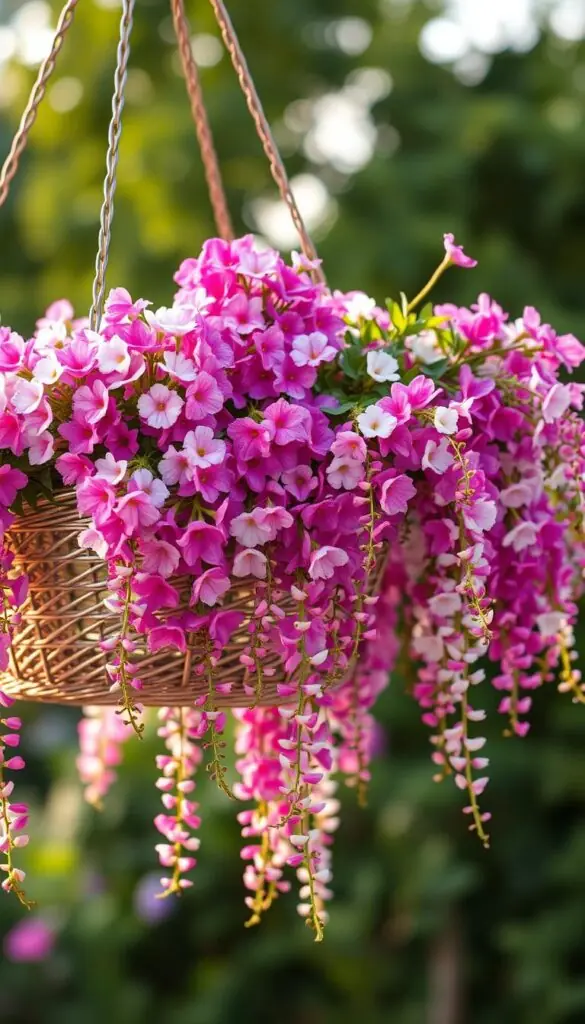
Use a coco or moss liner with a hidden punctured plastic liner beneath. This keeps the mix from drying too fast while preventing waterlogging.
Mix, fertilizer, and simple tools
Fill with a lightweight potting mix—no garden soil. Stir in a slow-release fertilizer at planting for steady nutrients through the season.
- Ensure at least one drainage hole; standing water invites rot.
- Water with a soft-flow watering wand until runoff to soak the whole root ball.
- Top off soil midseason if settling occurs; tuck edges neatly for a finished look.
"A balanced setup means fewer chores and more time enjoying your porch."
| Item | Purpose | Quick Care |
|---|---|---|
| 12–16" basket | Room for roots; moisture buffer | Use larger size in hot sites; check daily |
| Coco/moss + punctured plastic liner | Holds moisture, prevents runoff | Puncture for drainage; avoid sealed pots |
| Lightweight potting mix + slow-release fertilizer | Airy roots; season-long feed | Mix at planting; light liquid feed if needed |
| Watering wand | Even, gentle soak | Water until base drains; check weight limits |
Planting Day: Simple, Confident Steps
Planting day should feel calm and purposeful. With a short routine you turn nursery pots into a polished display that you’ll enjoy all season. This quick guide helps you set a thriller, fillers, and spillers with confidence.
Arrange: thriller, filler, spiller made easy
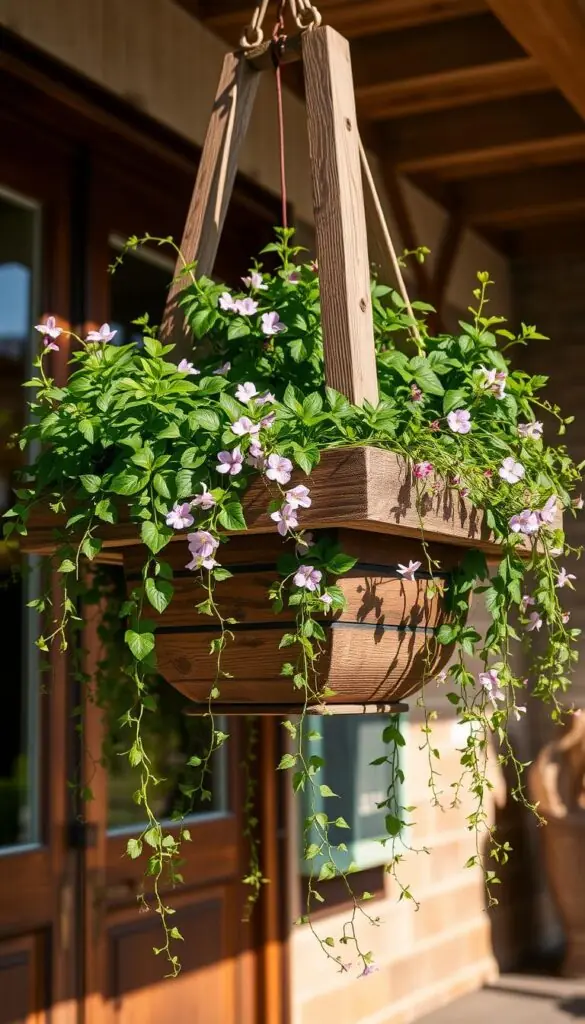
Gather tools: gloves, hand trowel, watering wand, and small pruners. Start by placing your thriller (try Angelonia Cascade) slightly off-center. Nestle fillers like Supertunia and Superbena around it.
Tuck spillers—Scaevola, Bacopa, or Dichondra—along the rim so they can cascade naturally. Step back to check the look from all sides.
Plant, water in, and tuck: firm roots and clean edges
Loosen roots gently and set crowns at or just above the soil line for airflow. Backfill with a quality potting mix and press lightly to remove air pockets without compacting.
Water in thoroughly until runoff appears. Leave a 1-inch watering lip at the rim so water soaks in, not overflows. Snip any damaged stems and tidy liner edges for a crisp finish.
"A confident, short routine on planting day saves time and keeps your basket thriving."
- Rotate the planter as you work; fill small gaps by shifting a plant.
- Place the hanging plant in its final spot and check light—sun lovers forward, shade lovers under cover.
Watering and Feeding Made Easy
Keep your baskets blooming all season by turning simple daily checks into a short, reliable rhythm.
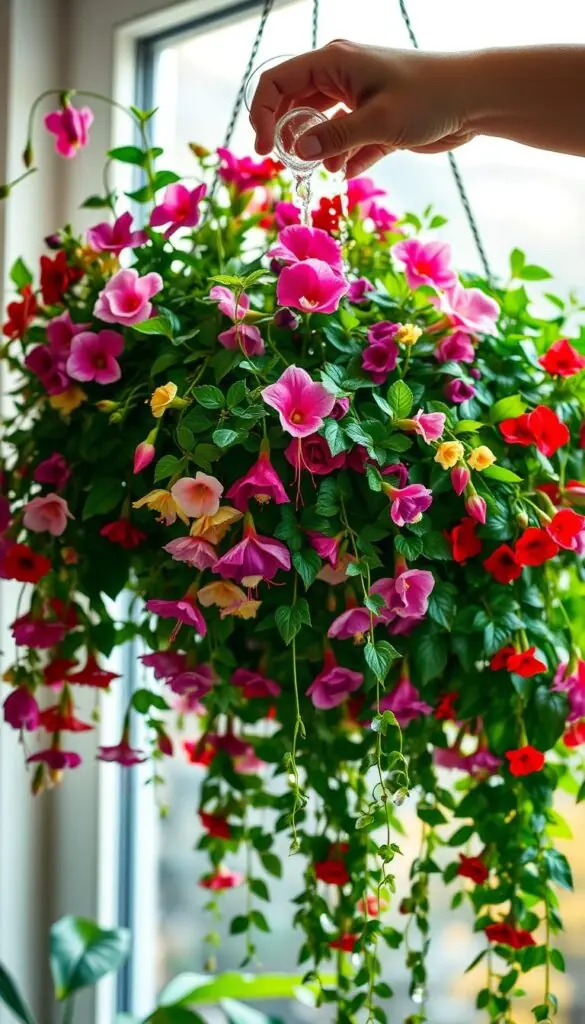
Why steady moisture matters: consistent water and gentle feeding keep roots active and blooms steady. Sudden dry-outs pause bloom and stress tender annuals like bacopa and calibrachoa.
How often to water by season
Spring and fall: water every 1–3 days depending on sun and wind. In peak summer, expect daily checks for sunny sites. Use the finger test—if the top inch is dry, it’s time to water.
Fertilizer rhythm that works
Start with a slow-release at planting. Then give a gentle liquid boost every 2–3 weeks. Most annuals will bloom from planting to frost with that steady feed. If growth slows, a light shear for petunias and lobelia plus a feed sparks new buds.
Guard against dry cycles in sensitive types
- Water in the morning so soil hydrates before heat and foliage dries by night, lowering disease risk.
- Bacopa Snowstorm® and calibrachoa dislike hard dry-outs; keep their root zone even and check daily in summer.
- Use a watering wand and, if water runs off quickly, water once, wait 10 minutes, then water again to fully soak the root ball.
"A short log of watering and feeding helps you catch patterns before blooms fade."
Pruning, Deadheading, and Midseason Refresh
Midseason pruning is the secret to a fuller habit and more blooms before fall. A calm, 20-minute refresh can revive a tired planter and extend the season.
When to shear and what to use: Work in the cool of morning with clean snips. If petunias look leggy by midsummer, trim back about one-third, then water and feed to prompt new growth. When lobelia slows, give a light haircut; blue blooms return quickly with steady moisture.
- Lean on no-deadhead champs — calibrachoa, verbena, scaevola, and Supertunia — for low fuss.
- Cut just above a leaf node to encourage branching and a fuller habit.
- Remove yellow leaves and tidy trailing stems for a neater look.
- If one plant crowds others, edit it back to give neighbors light and air.
- Top-dress with a light layer of fresh mix and follow with a gentle liquid feed.
"Small, regular edits keep baskets generous and easy to enjoy."
| Task | Timing | Tools |
|---|---|---|
| Shear leggy petunias | Midsummer | Clean snips, water, liquid feed |
| Trim lobelia | When blooms slow | Pruners, steady moisture |
| Midseason refresh | Midseason | Top-dress, tidy stems, light feed |
Seasonal Color Plans You Can Copy Now
Use simple combos to get instant, reliable color that matches sun exposure and your routine.
Spring cool-toned basket: nemesia, lobelia, alyssum
What to plant: 2 Nemesia ‘Sunsatia Lemon’, 2 Lobelia ‘Laguna Sky Blue’, 1 Alyssum ‘Blushing Princess’.
Place taller nemesia near the center or slightly forward. Tuck lobelia around it and let alyssum trail at the rim.
Timing and scent: Enjoy crisp spring mornings scented with alyssum; nemesia and lobelia bloom best in cool weather.
Peak-summer heat combo: lantana, angelonia, scaevola
What to plant: 1 Lantana Luscious® Citrus Blend, 1 Angelface® Cascade Snow, 2 Scaevola ‘Whirlwind Blue’.
Set angelonia toward the back as a thriller, lantana as a focal cluster, and scaevola to spill over the edge.
Sun and stamina: This mix is sunproof for full-sun patios; lantana and angelonia power through heat while scaevola offers steady blue fans.
Late-summer into fall: verbena rigida, calibrachoa, geranium
What to plant: 2 Verbena rigida ‘Cake Pops Purple’, 1 Superbells® calibrachoa, 1 Pelargonium ‘Boldly Dark Red’.
Place verbena slightly forward for strong color, keep calibrachoa at the rim, and set the geranium where it can show bold contrast.
Cool nights: As fall evenings cool, verbena intensifies and calibrachoa with geranium carry the basket toward first frost.
- Match each plan to your sun: spring mix for part sun, heat mix for full sun, fall plan for bright sun through September.
- Water cadence: every 2–3 days in spring, daily in summer sun, then 1–3 days again as fall cools.
- Add a sprig of Euphorbia ‘Diamond Frost’ to any plan for airy texture and a light, lacy finish.
| Season | Plants (qty) | Placement & notes |
|---|---|---|
| Spring (part sun) | 2 Nemesia, 2 Lobelia, 1 Alyssum | Nemesia center-forward; lobelia around; alyssum at rim; scented mornings |
| Summer (full sun) | 1 Lantana, 1 Angelonia, 2 Scaevola | Angelonia back; lantana focal; scaevola spillers; heat-tough mix |
| Fall (bright sun) | 2 Verbena rigida, 1 Calibrachoa, 1 Geranium | Verbena forward for color; calibrachoa and geranium to finish; long-season textures |
"Small, copyable recipes take the guesswork out of seasonal color and keep your patio looking cared for all year."
Hanging Basket Care by Region and USDA Zone
Small regional changes make a big difference. Match picks and placement to local sun patterns, seasonal weather, and how much time you want to spend watering your yard. Below is a short list of practical swaps and tips for three common climates.
Humid South: heat-tolerant picks and airflow tips
Choose heat lovers like Angelface® Cascade, Verbena rigida, and Lantana for steady color in high humidity.
Space baskets for airflow to cut mildew risk. Water early and deeply; humidity slows surface drying, so check soil rather than guessing.
Arid West: drought-savvy combos and deep watering
Pair drought-tough scaevola, lantana, and verbena to save water. Use a larger planter to buffer hot afternoons and mulch the top thinly to slow evaporation.
Deep-water less often so roots search deeper. This builds resilience in dry sun and keeps your garden looking full with fewer visits.
Cool North: spring stars and frost timing
Start with nemesia, lobelia, and alyssum for bright spring color, then move to petunias or calibrachoa as nights warm.
Mind last frost: set tender baskets out after danger has passed, or shelter them at night if a late chill threatens.
"A few regional swaps and simple placement choices protect bloom and cut chores."
Common Mistakes With Hanging Baskets and How to Avoid Them
You can rescue a tired porch display with a short, practical checklist. A few simple fixes restore color and keep plants thriving.
Size, roots, and crowding
Mistake: small planters dry out fast and cramp roots. Fix: move up to a 12–16" planter so roots have room and the soil holds moisture longer.
Watering and windy porches
Mistake: light, frequent sprinkles that don’t reach the root ball. Fix: water until it runs from the base, or water twice with a 10-minute pause so the soil soaks fully.
Mistake: baskets on gusty porches drying quickly. Fix: move them nearer a wall for protection or check water daily during windy spells.
Wrong light for the plant
Mistake: sun lovers stuck in shade or shade lovers in harsh sun. Fix: swap plants to match the spot—lantana to full sun, impatiens to dappled shade.
- Keep bacopa and calibrachoa evenly moist; they cycle out if allowed to dry.
- Give petunias a light midseason shear to spark new buds.
- Add slow-release fertilizer at planting and a light liquid feed to sustain color.
- Avoid overcrowding—fewer, well-grown plants will look fuller than many cramped starts.
- Use hardware rated for outdoor loads so the basket stays secure and your porch looks safe.
"A few smart switches—bigger pots, fuller watering, correct light—bring the color back fast."
Porch, Patio, and Yard Placement Ideas
Good placement turns plants into a scene — not just single pots. Think in layers, sightlines, and small repeat colors to make a porch or patio feel considered and welcoming.
Layering heights with brackets, shepherd’s hooks, and trees
Stagger heights for depth. Hang one basket from a sturdy porch bracket, place another on a shepherd’s hook in the yard, and suspend a third from a strong tree limb. The eye moves through the space and the arrangement reads like a curated vignette.
Use railings and pergolas to guide a mandevilla vine so its large trumpets frame seating areas naturally. Let one planter climb while neighbors spill — movement and contrast add life.
Color stories: patriotic red-white-blue vs. tropical sunset
Patriotic palette: pair Pelargonium ‘Boldly Dark Red’ with blue lobelia and white bacopa for crisp summer charm. Repeat that trio in three spots to tie porch and yard together.
Tropical sunset: blend lantana’s gold and orange with pink calibrachoa and purple verbena for warm evening glow. Add a mandevilla vine on a railing for vertical drama.
- Flank an entryway with matching planters on the patio to welcome guests.
- Place a shepherd’s hook near a path corner so cascades spill into view as you round the bend.
- Keep sightlines open: hang pieces high enough to walk under, yet low enough to enjoy scent and detail.
- Shift placements seasonally — morning sun spots in spring, then move toward partial shade in midsummer heat.
"Repeat one color in three spots — it’s the simplest way to make separate plantings feel like a single, calm design."
| Placement | Tool or Support | Best Use |
|---|---|---|
| Front porch | Bracket or railing | Frame the doorway; match planters for balance |
| Patio edge | Pergola or railing with vine support | Use a mandevilla vine to add height and blooms near seating |
| Yard path | Shepherd’s hook | Layer at different heights to create depth along walkways |
| Under a tree limb | Sturdy branch hook | Soft, shaded drifts of scaevola and verbena for a cool nook |
Final tip: Be bold but simple. Choose one dominant color, place it in three locations, and let reliable spillers like scaevola and verbena soften the edges. This small plan makes your yard and porch feel put together with very little fuss.
Hanging Flowers Care Calendar for the Present Season
Use this quick seasonal checklist to time planting, pruning, and overwinter moves with confidence. It gives clear cues so you spend less time guessing and more time enjoying a lush porch.
Now: planting windows, first feed, and acclimation
After the last frost, plant sun lovers such as Supertunia, Superbells, lantana, and angelonia in a 12–16" planter. Mix a slow‑release fertilizer into the soil at planting.
Acclimate Boston ferns in bright, protected shade for 1–2 weeks before hanging on their permanent hook.
Midseason: light shearing, top-ups, and pest checks
Settle into a steady watering rhythm early in summer. Check baskets daily in sun and give a gentle liquid feed every 2–3 weeks.
Shear leggy petunias and lobelia by about one‑third to revive blooms. Top up soil that has settled and rotate planters for even light.
Watch for aphids or whiteflies; rinse with a firm spray or use a mild insecticidal soap if needed.
Late season: extend bloom, plan fall swaps, overwinter choices
Keep feeding lightly so color carries into cool mornings and warm afternoons. For fall swaps, pair verbena rigida and calibrachoa with geraniums to bridge into October.
Before frost, bring ivy geraniums or small mandevilla inside to try overwintering in bright indoor light. Clean and store hardware and liners at season’s end and note what thrived for next spring.
"Small, timed steps through the season make your porch look cared for with very little fuss."
Conclusion
A few steady habits turn planters into a dependable, joyful part of your home.
Pick forgiving, mostly self‑cleaning varieties and match each plant to light and soil. Many of the featured picks are heat tolerant and bloom from planting to frost with basic watering and feeding.
Keep a short routine: water deeply, feed gently every 2–3 weeks, and trim lightly when a plant gets leggy. That small effort keeps baskets full and the porch looking cared for.
Mix textures—airy Euphorbia with bold petunia or cool‑blue lobelia—and let scent, like alyssum’s honeyed note, greet you as you step outside. Use this list as a simple guide and try one new plant each year.
You’ve got this. With the right planter and a little care, your patio and garden will feel more welcoming, calm, and unmistakably yours every day.
FAQ
What are the best flowers for hanging baskets that give season-long color?
Choose mixes that combine a thriller, filler, and spiller. Supertunias and calibrachoa offer nonstop color; scaevola and sweet potato vine provide great spill and texture. Add a slow-release fertilizer and a moisture-retentive potting mix for consistent bloom all season.
How do I read my porch or patio light conditions to pick the right plants?
Observe the space at several times of day. If it gets six or more hours of direct sun, treat it as full sun; four hours is part sun/part shade; under four hours is shade. Match sun-loving varieties like lantana and petunia to bright spots, and choose impatiens or begonias for dappled light or deep shade.
How should I match plants to my local zone, heat, and wind exposure?
Know your USDA zone and note daily high temps and prevailing winds. In hot, humid zones pick heat-tolerant choices like verbena rigida and scaevola. In arid climates favor droughtwise options and deeper watering. Protect baskets from strong wind with sheltered placements or sturdier hooks.
Which options thrive in full sun?
Petunias, Supertunias, calibrachoa, lantana, scaevola, angelonia, verbena, and mandevilla all love bright sun. They tolerate heat and reward you with vivid color and steady blooms when watered regularly and fed monthly.
What works best for shade and part-shade corners?
Impatiens (including double varieties), begonias, browallia, and lobelia suit cool, calm corners. Pair them with rich potting mix and avoid afternoon sun for longer bloom and lush foliage.
Any fragrant or pollinator-friendly picks to attract butterflies and hummingbirds?
Sweet alyssum (lobularia) adds a honeyed scent and ground-hugging flowers. Lantana and verbena draw butterflies and hummingbirds. Position them where you can enjoy scent and wildlife visits up close.
Which foliage plants add texture and balance to a basket?
Boston fern brings classic lush fronds, euphorbia ‘Diamond Frost’ adds airy white texture, and sweet potato vine or dichondra create dramatic spill. Foliage reduces the need for constant deadheading and keeps the basket visually full.
What are reliable mixed combos for lasting color?
Try a classic trio of Supertunia + Superbena + Superbells for nonstop bloom; a cool blue combo of lobelia + bacopa + white angelonia for serenity; or a heatwave mix of lantana + scaevola + verbena rigida for tough summer performance.
How do I choose the right basket, liner, and soil mix?
Pick a basket size that allows root room — don’t crowd. Use liners that retain moisture but drain well. A premium potting mix with slow-release fertilizer keeps plants fed; add water-absorbing granules in very sunny sites.
What are easy steps for planting day?
Arrange plants with a tall centerpiece (thriller), fuller companions (fillers), and trailing plants (spillers). Plant at the same depth as nursery pots, water in firmly, and tidy edges so roots settle quickly.
How often should I water and feed during summer versus spring and fall?
In summer check daily; many baskets need watering once or twice a day in heat. In spring and fall, water every few days as needed. Feed with a slow-release at planting and give liquid fertilizer boosts every 2–4 weeks during peak bloom.
When should I prune, deadhead, or refresh midseason?
Shear petunias and lobelia lightly to encourage new growth when they look leggy. Calibrachoa and many verbena types are mostly no-deadhead. Midseason, trim back overgrown stems and tuck in fresh annuals to revive color.
What seasonal color plans are easy to copy?
Spring: nemesia, lobelia, and alyssum for cool tones. Peak summer: lantana, angelonia, and scaevola for heat. Late summer into fall: verbena rigida, calibrachoa, and hardy geraniums extend bloom and bridge into cooler weather.
How should I adapt care for humid, arid, and cool regions?
In the humid South choose airflow-friendly placements and heat-tolerant plants. In the arid West use drought-wise combos and deep, infrequent watering. In cool northern gardens focus on spring favorites and time planting after frost risk passes.
What common mistakes do people make with baskets and how do I avoid them?
Avoid undersized containers that crowd roots, under-watering on exposed, windy porches, and mixing sun-loving varieties into shade spots. Match plants to conditions, use right-sized pots, and monitor moisture often.
Where should I place baskets for best visual impact?
Layer heights using wall brackets, shepherd’s hooks, and tree branches for depth. Group baskets with similar water needs and coordinate color stories—patriotic red-white-blue or a tropical sunset—to unify the space.
What should I do now, midseason, and late season to keep baskets thriving?
Now: plant during the right window, give a first feed, and harden off. Midseason: light shearing, top-ups of soil and fertilizer, and pest checks. Late season: extend bloom with targeted feeding, plan swaps, and decide which plants to overwinter indoors.