There’s something unmistakably comforting about daffodils. They don’t arrive with drama or excess. They appear quietly — often before the garden feels ready — and suddenly everything looks a little more hopeful.
When daffodils bloom, the air still carries a chill, trees are barely awake, and lawns are just beginning to green. And yet, there they are. Upright, cheerful, unbothered by the in-between season. That’s what makes them so loved — and so easy to live with.
This guide isn’t about doing more. It’s about noticing what already works, and using daffodils in ways that feel natural, calm, and deeply spring-like.
Why Daffodils Feel Different From Other Spring Flowers
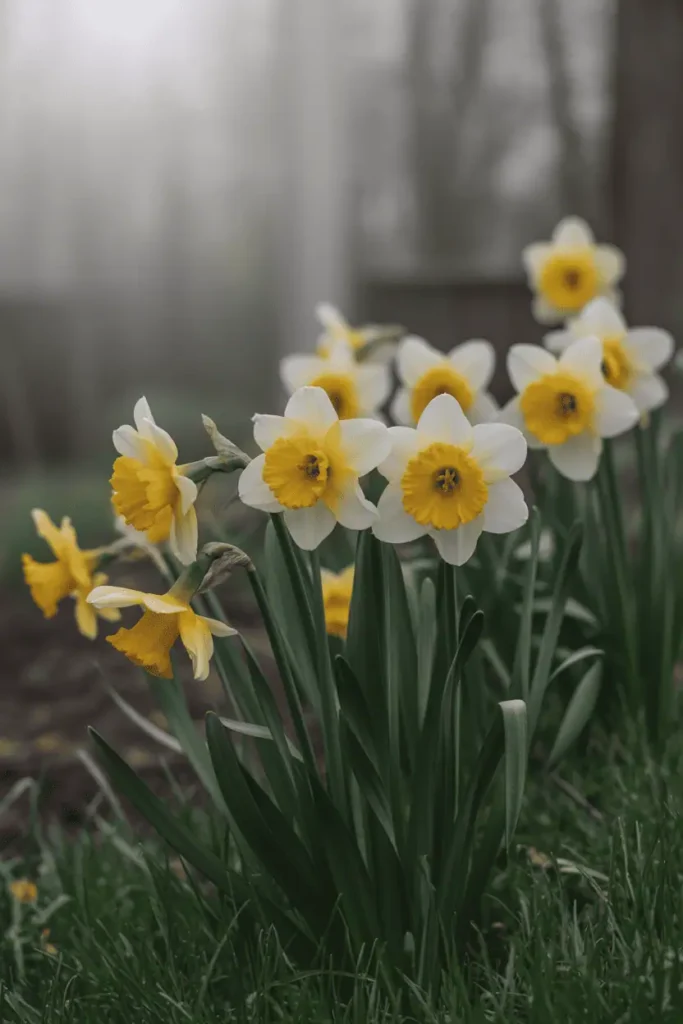
Daffodils don’t compete for attention. They don’t ask to be center stage. Instead, they brighten spaces that would otherwise feel empty or unfinished.
They’re often the first real color in the garden, and that timing matters. When most plants are still dormant, daffodils step in and quietly change the mood.
People love them because:
- They return every year without effort
- They thrive even when neglected
- They look just as beautiful scattered casually as they do planted with intention
They’re not precious — and that’s exactly their charm.
How Daffodils Naturally Want to Grow
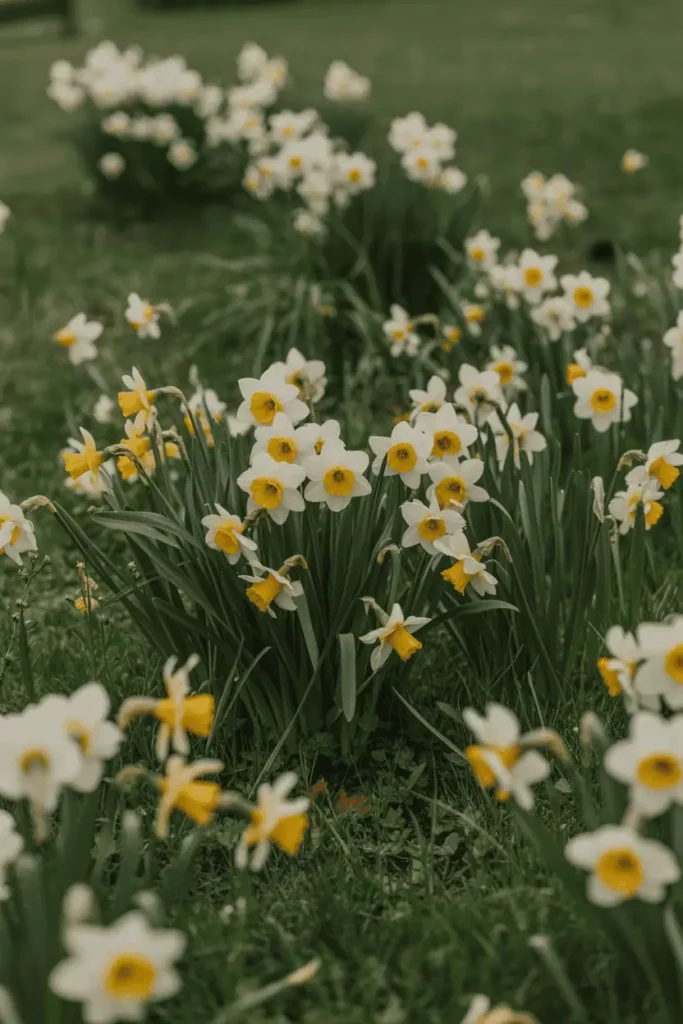
If there’s one thing daffodils teach us, it’s this: straight lines aren’t necessary.
Daffodils look best when they’re allowed to grow the way they want to — slightly irregular, loosely grouped, and never overly controlled. When planted in clusters that vary in size and spacing, they feel as though they’ve always belonged there.
You’ll often see the most beautiful daffodil displays:
- Along old garden paths
- Beneath trees
- In lawns where they’ve been left undisturbed for years
That sense of ease is what Pinterest users respond to most.
Choosing Daffodils That Fit the Mood of Your Garden
Not all daffodils feel the same, even if they share a color.
Some are bold and upright, others softer and more romantic. Instead of focusing on names, think about how you want the space to feel.
Classic Trumpet Daffodils
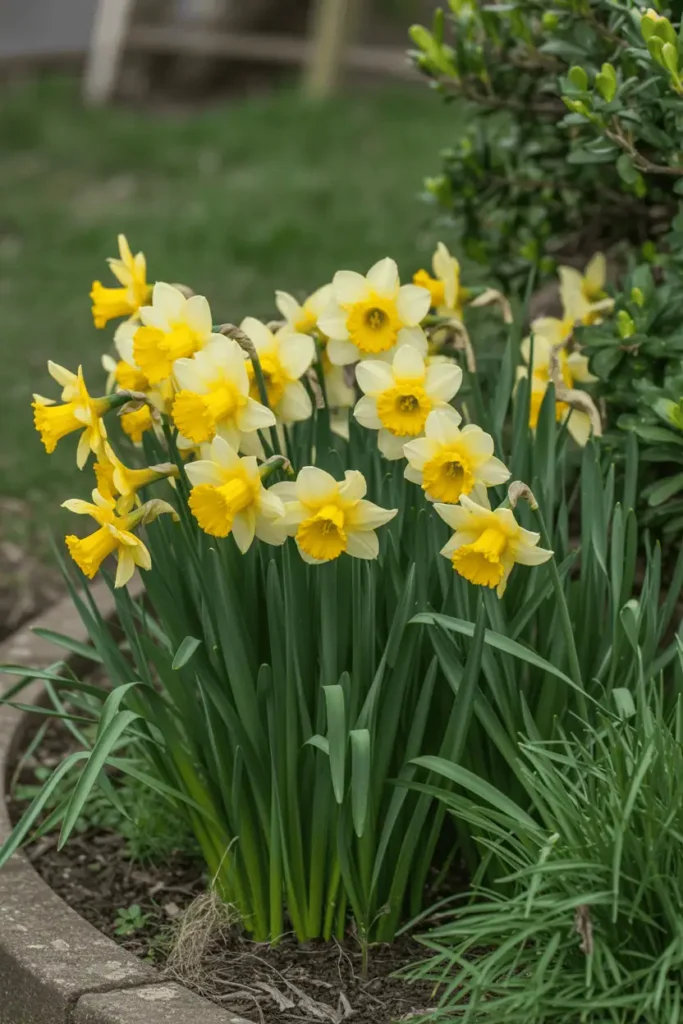
These are the familiar, golden blooms that instantly say “spring.” They’re confident, bright, and reliable.
They work beautifully in:
- Lawns
- Garden borders
- Naturalized areas
Softer, Pale Varieties
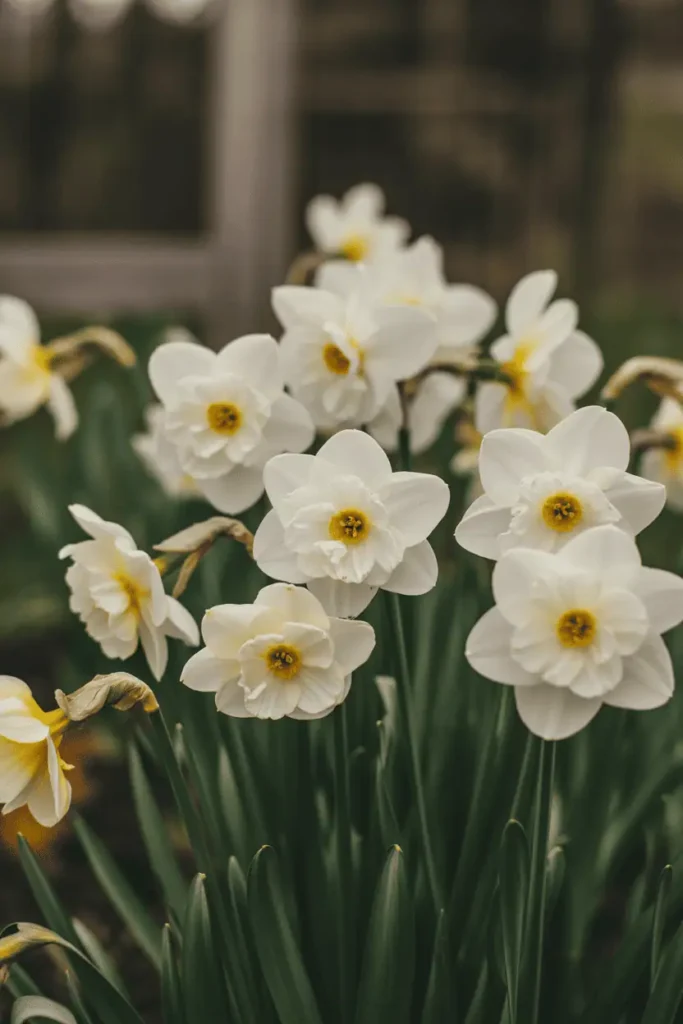
White or cream daffodils with subtle centers feel quieter and more refined. They blend seamlessly into calm gardens and pair well with early greenery.
They’re especially lovely near:
- Entryways
- Stone paths
- Cottage-style beds
Smaller, More Delicate Types
Miniature daffodils don’t dominate a space. They add detail instead — perfect for small gardens or containers.
Using Daffodils in a Way That Feels Intentional
Daffodils don’t need complicated designs. In fact, they shine most when they’re used simply.
In Lawns and Open Areas
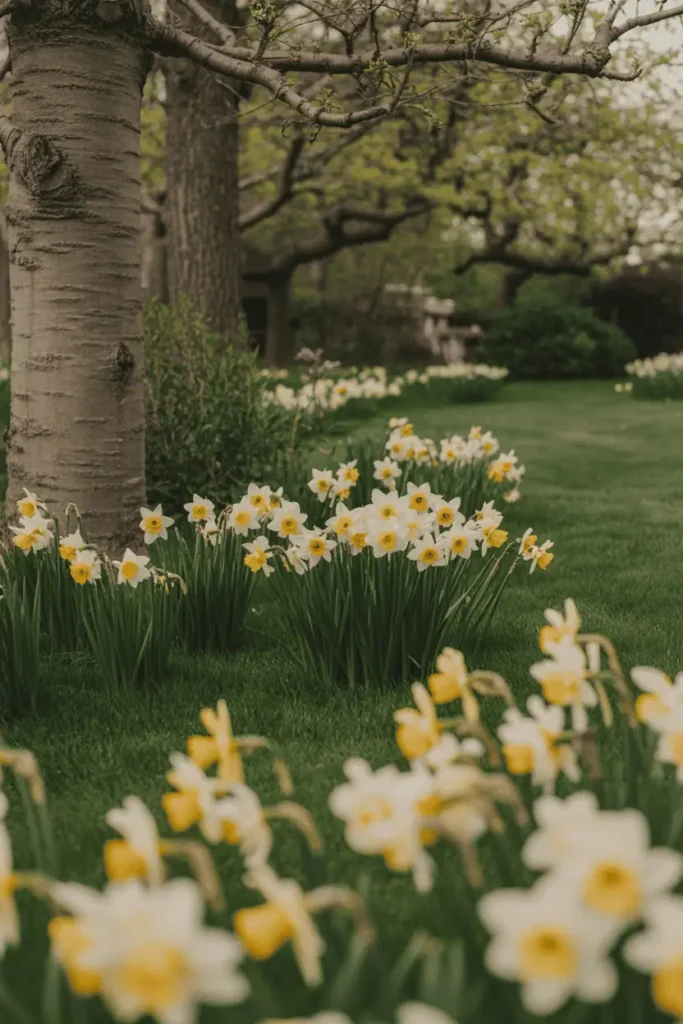
Scatter bulbs in loose groups rather than rows. Vary the spacing. Let some clusters feel fuller than others. This creates a natural rhythm that looks effortless once they bloom.
In Flower Beds
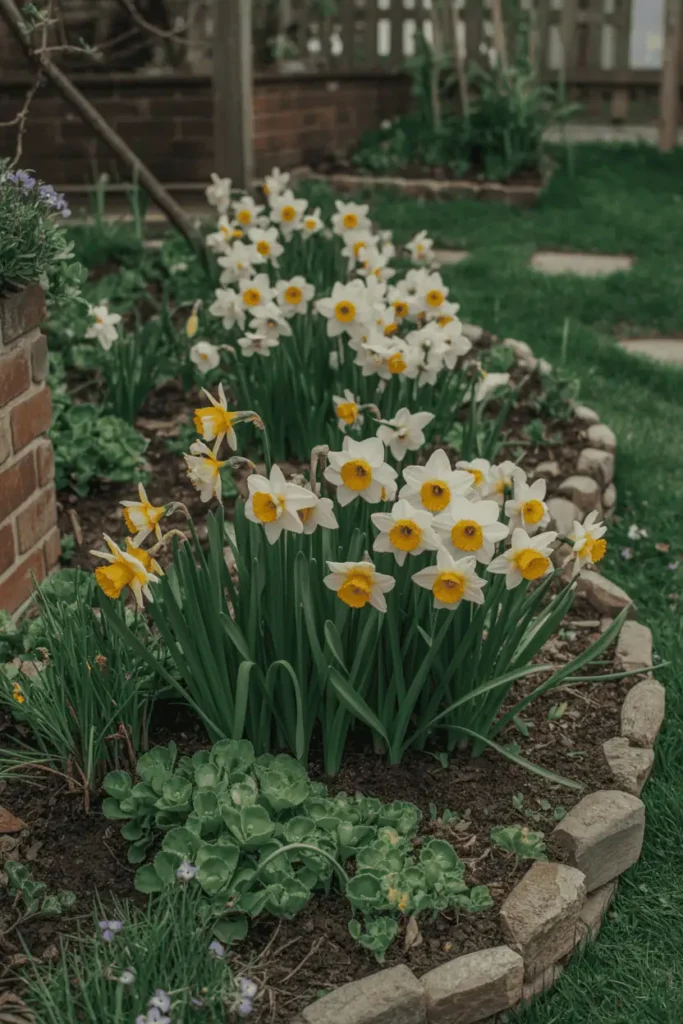
Daffodils are ideal early anchors. They fill space while other plants are still waking up, then quietly fade as later flowers take over.
In Containers
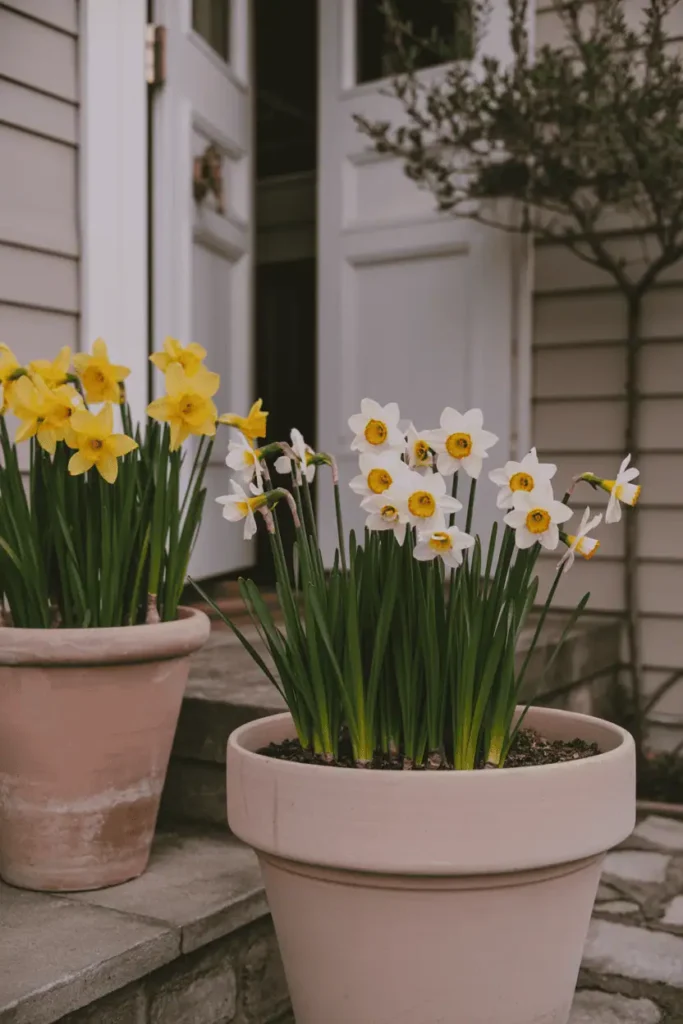
A single pot of daffodils near a door or on a patio can carry the entire spring feeling. You don’t need many — just enough to mark the season.
Color: Staying Soft Makes a Difference
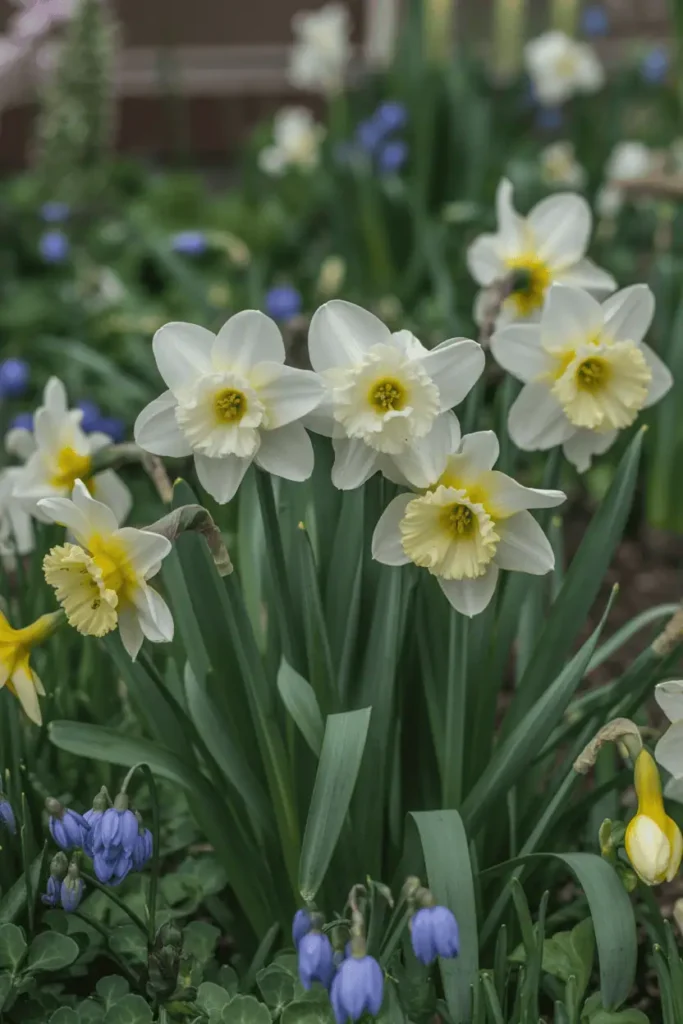
Bright yellow is classic, but softer combinations tend to photograph and age better.
Some Pinterest-favorite pairings:
- White daffodils + pale green foliage
- Soft yellow daffodils mixed with early blue flowers
- Creamy tones in neutral containers
The goal isn’t contrast — it’s harmony.
Living With Daffodils (The Easy Part)
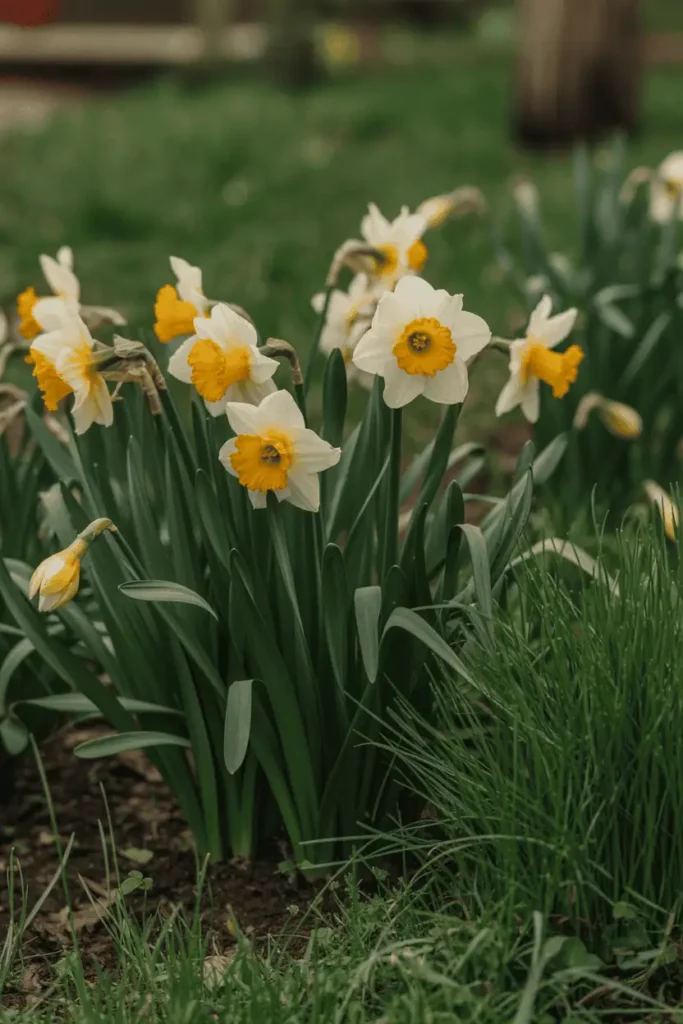
Daffodils are famously low-maintenance, but they do appreciate patience.
Once they finish blooming, their leaves can look a little messy. It’s tempting to tidy them away, but letting them fade naturally helps ensure strong blooms the following year.
Think of it as a quiet exchange:
a few untidy weeks now, years of spring blooms later.
Daffodils in Small Spaces
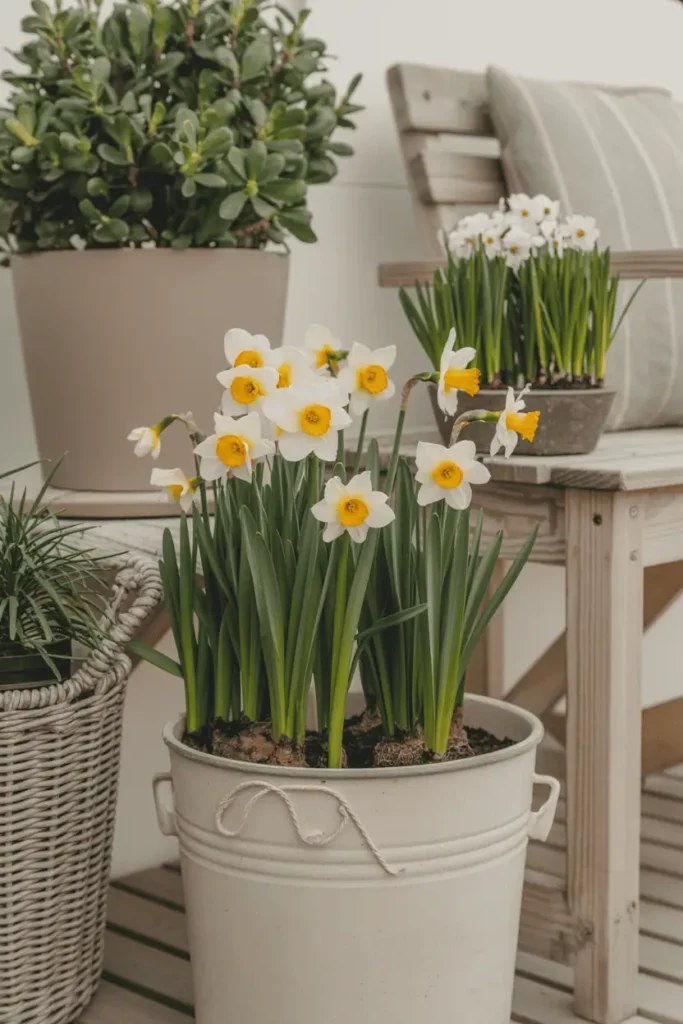
Even in the smallest garden — or on a balcony — daffodils work.
A few thoughtful choices make all the difference:
- Choose larger pots so roots stay cool
- Plant bulbs closer together than you would in the ground
- Group containers to create a sense of abundance
Small doesn’t mean sparse. It just means intentional.
A Thought Worth Keeping
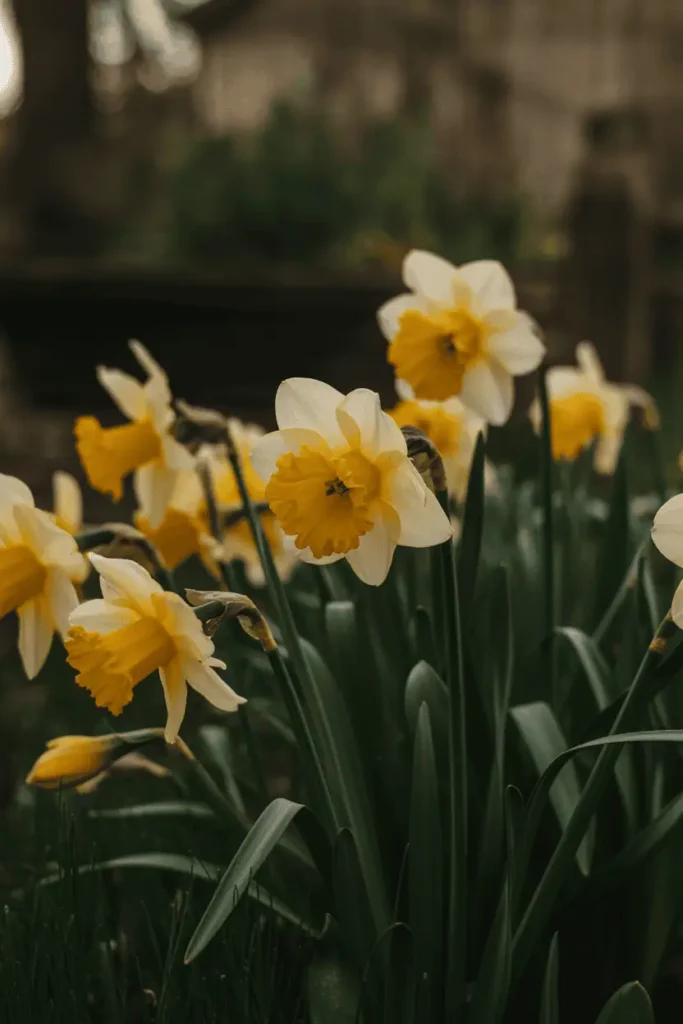
Daffodils don’t try to impress. They simply return, year after year, exactly when they’re needed.
They remind us that spring doesn’t have to arrive all at once — sometimes it starts with just a few bright notes, scattered gently through the garden.
And often, that’s more than enough 🌼