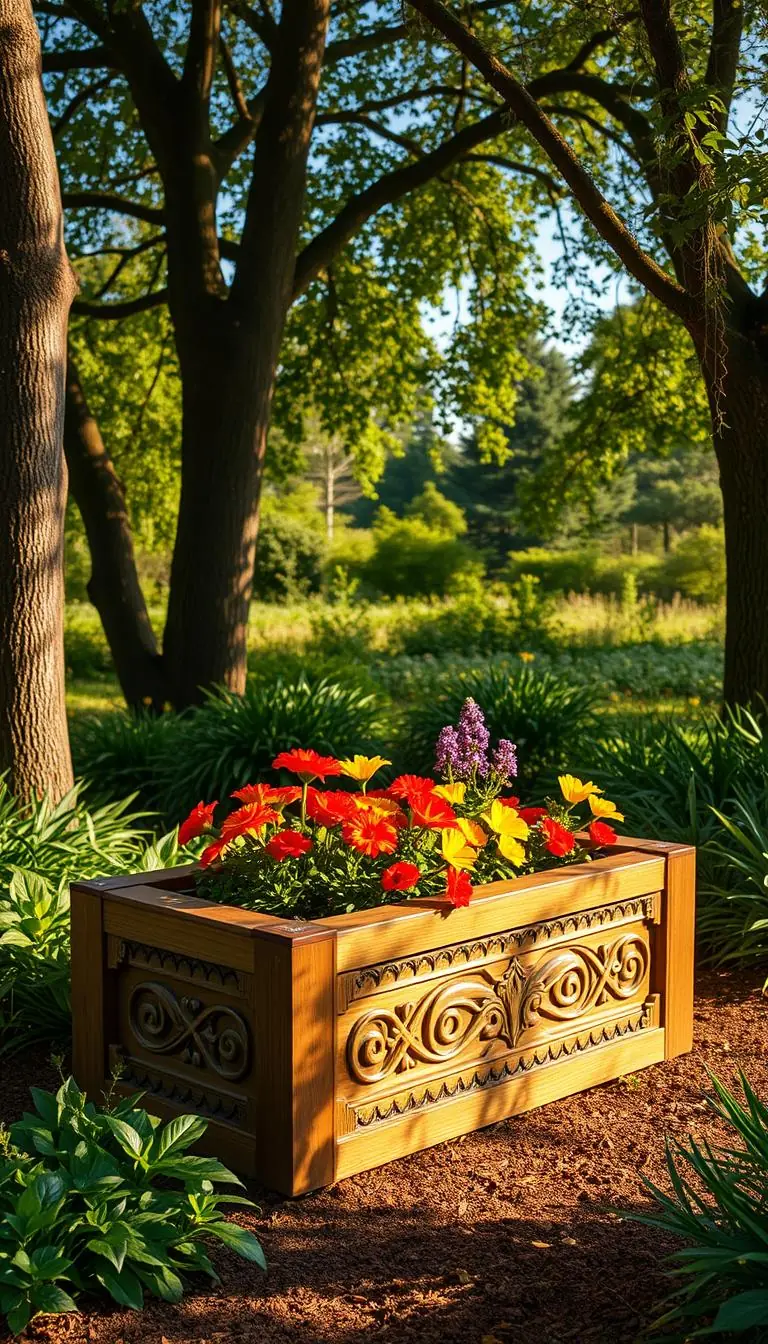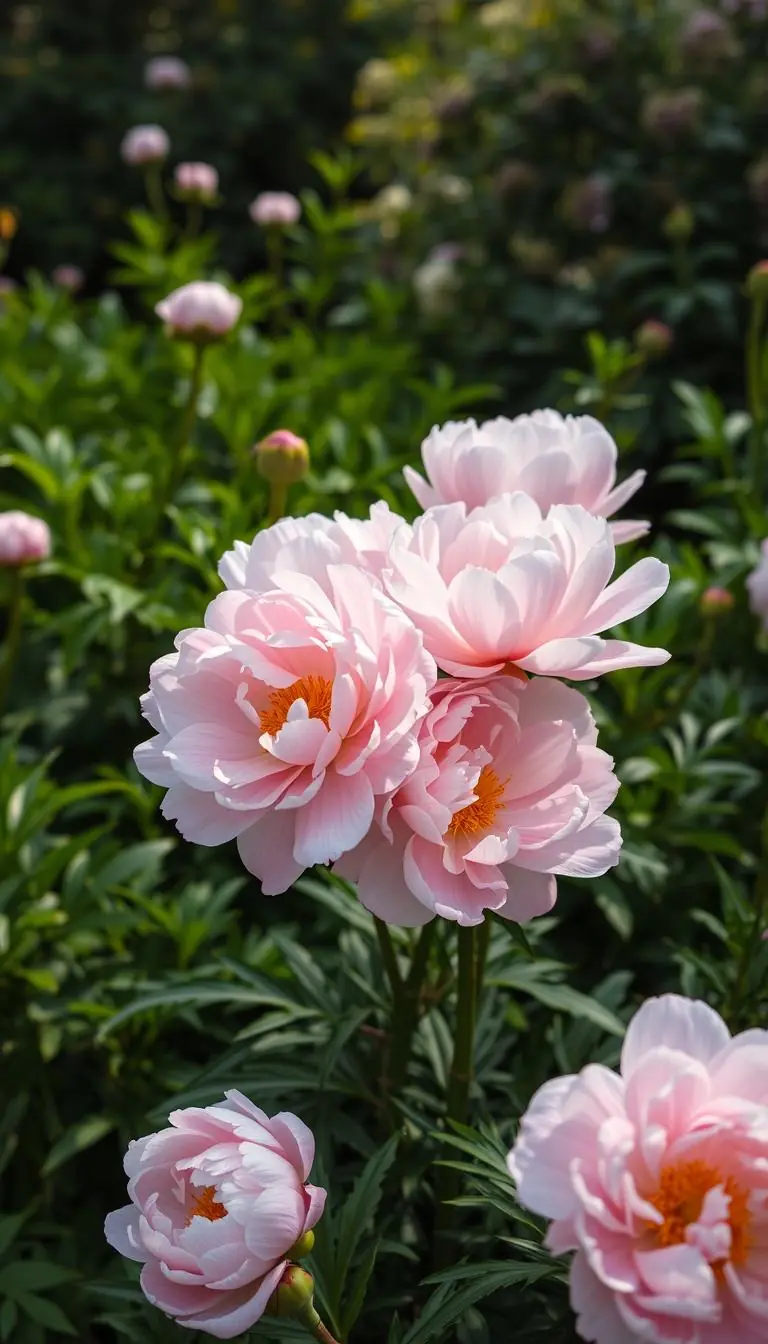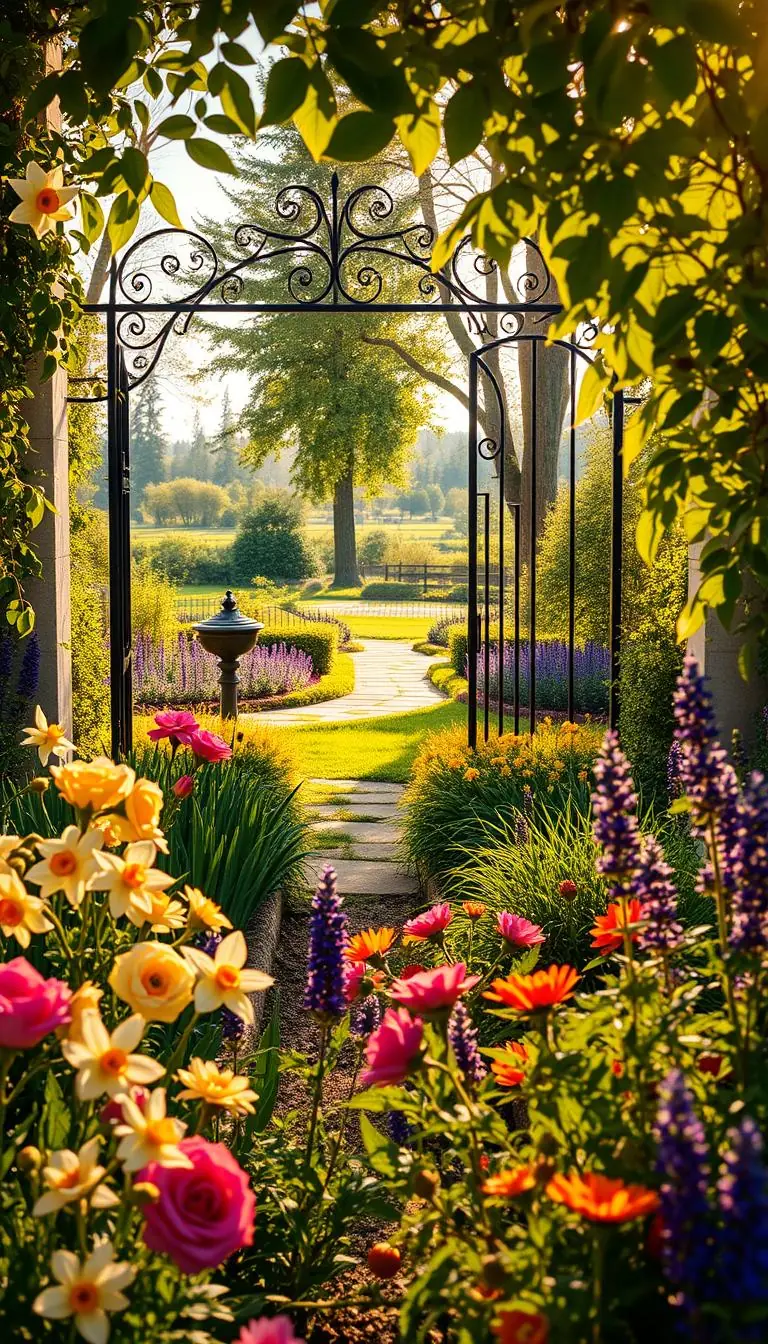
Morning light warms the soil and you notice the soft rustle of grasses by the path. Do you dream of steady color outside your kitchen window but worry it will feel like too much work?
We’ll walk with you like a friendly neighbor. Simple steps will help you assess your yard, match plants to light, and plan a tidy 12-by-4 raised bed for easy harvesting.
Imagine tall dahlias at the back, snapdragons up front, and oregano or dill tucked between annuals for scent and texture. For shady spots, try Virginia bluebells, hellebore, and hostas to bring airy spring charm.
Expect clear seasonal tips, a short tools list, and common mistakes to avoid so your space looks intentional without a big time or money commitment. By the end you’ll feel calm and able to pace your project across the year.
Key Takeaways
- Start by assessing light and soil in your yard before picking plants.
- Layer tall-to-short and mix perennials with annuals for steady blooms.
- Use a sunny 12x4 raised bed for easy cutting and a shady strip for woodland plants.
- Keep tools minimal: spade, hand fork, mulch, and a drip line.
- Follow seasonal checklists to plant, divide, deadhead, and rest with confidence.
Start with a Simple Plan: Your Yard, Your Light, Your Zones
A quick, three-time-of-day stroll tells you more about your space than any map. Take a notepad or your phone and note where sun, wind, and moisture settle. This small habit saves time and helps pick the right plants for each part of your yard.
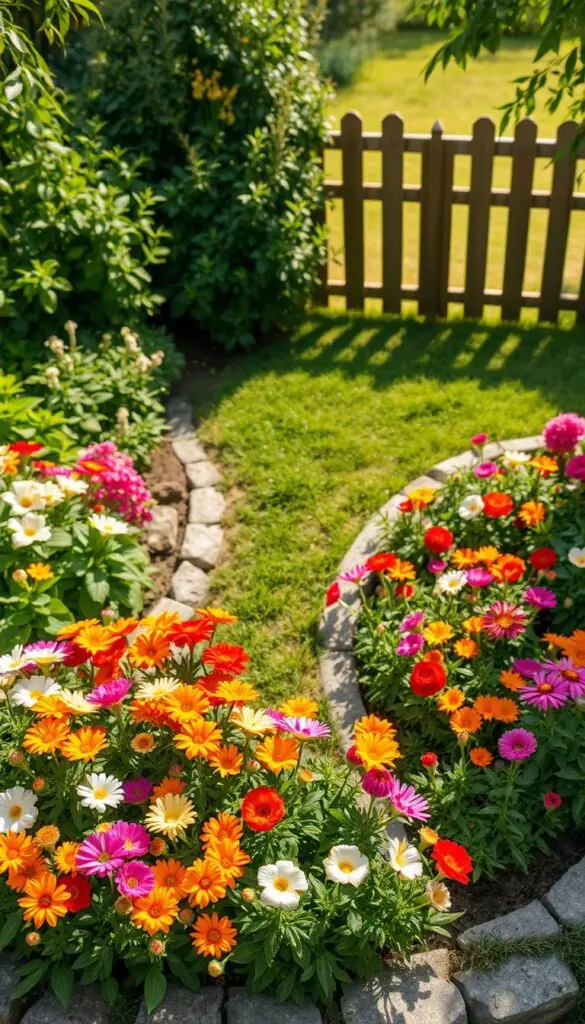
Quick yard walk: mapping sun, shade, and wind in morning, noon, and late day
Do three short walks—morning, noon, and late day. Mark where trees cast long shade and where the sun lingers. Notice wind funnels and damp low spots.
- Jot notes or snap photos; draw a simple sketch of sunny, partial, and deep shade.
- Plan access so a 12-by-4 raised bed sits where you can reach plants from all sides.
- Tuck taller varieties, like dahlias, at the back so they don’t shade smaller snapdragons up front.
USDA Hardiness Zones and microclimates: front vs. back yard realities
Use your USDA zone as a baseline, then adjust for microclimates. The front often warms faster than the back. A south-facing wall can reflect heat, while a shaded strip under trees stays cool and damp.
Tip: Sheltered side yards may overwinter borderline plants that fail in an open landscape. For shady strips near fences, choose hellebore and Virginia bluebells for a woodland feel.
"One well-placed bed that you pass every day beats many small beds you forget."
Design Principles That Make Gardens Sing (and Avoid the “Onesies” Trap)
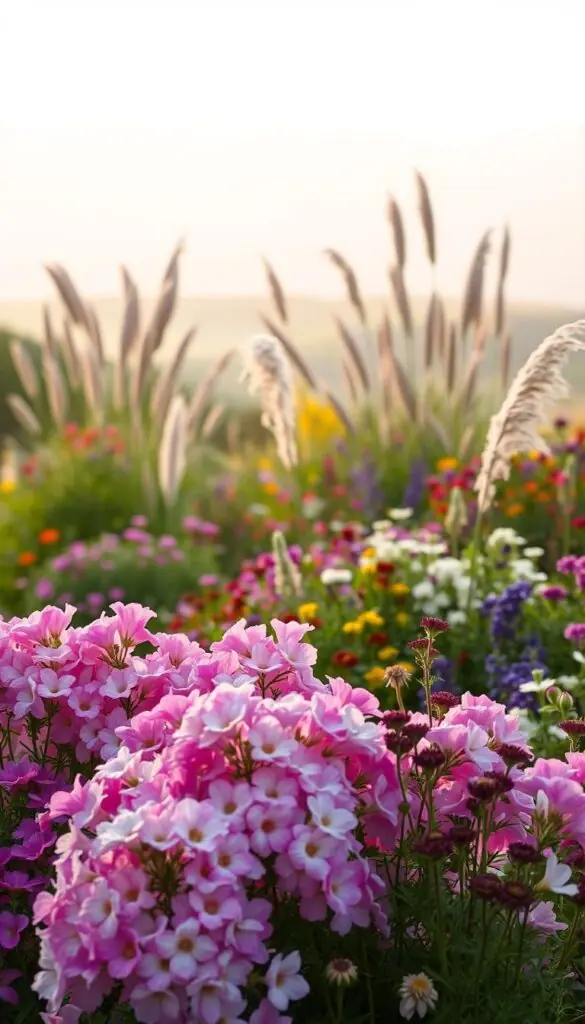
Think in sweeps, not singles: a few repeated plants give instant calm and cohesion. Buying one of everything leads to a patchy look. Pros plant in drifts, not isolated "onesies."
Group in odd numbers and blocks. Plant 3, 5, or 7 of the same variety. A sweep of Russian sage or a cluster of allium reads as one strong note. That rhythm helps the eye move across the bed and keeps the color story steady for years.
Edit kindly, edit often
Remove what you don’t love, move what’s crowded, and divide mature perennials. Split asters in early spring. Wait until after bloom to divide spring favorites.
"A few thoughtful changes each season add up to a space that truly sings."
- Choose 2–3 star plants and repeat them for unity.
- Keep a limited palette so the overall look feels calm.
- When buying, skip the single—get three of the same plant.
| Action | When | Why |
|---|---|---|
| Divide asters | Early spring | Restores vigor and creates more clumps for drifts |
| Divide spring perennials | After bloom | Preserves flowers and reduces shock |
| Repeat strong performers | At planting time | Builds cohesion and lasting color |
| Edit and gift extras | Any season | Prevents overcrowding and spreads good plants to friends |
Shape the Space: Beds, Paths, Edging, and Vertical Interest
Shape your outdoor rooms so caring for beds feels simple and even a little peaceful. Pick layouts that match how you want to work and sit in the yard. Rectangles make weeding and watering straightforward. Gentle curves soften a landscape and lead the eye.
Practical bed choices and access
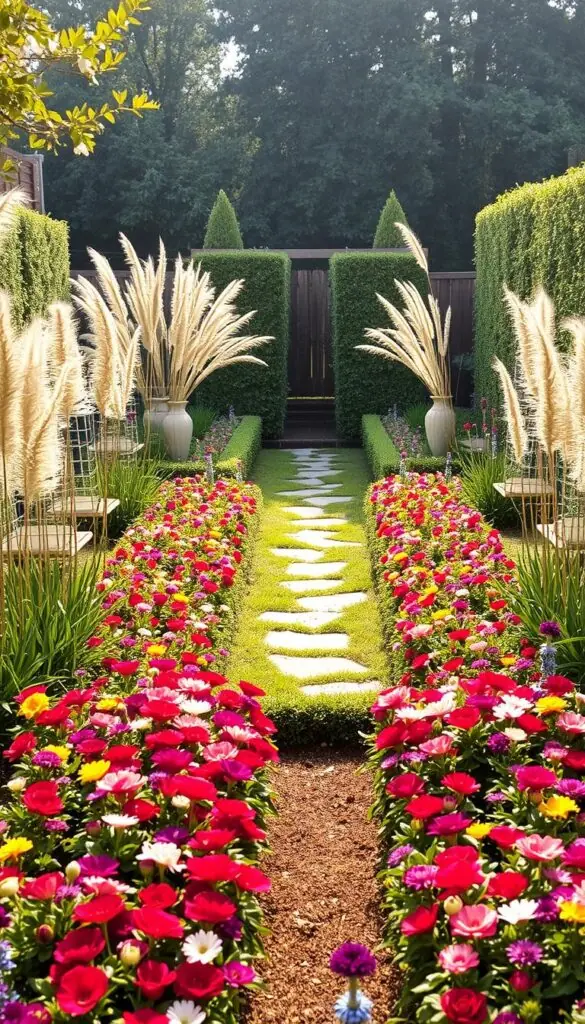
A 12-by-4-foot raised bed lets you reach the middle from both sides without stepping on the ground. That keeps the soil healthy and harvests easy.
- Rectangular beds are low-maintenance and fit tight areas.
- Curved beds feel natural near trees and paths.
- Keep paths wide enough for a wheelbarrow; gravel gives a pleasant crunch underfoot.
Edges, borders, and slope solutions
Use a spade for crisp, spade-cut edges, or add bricks and stone to hold mulch in place. Low retaining walls of limestone or concrete make terraces on slopes and add planted tiers.
Vertical elements and finishing touches
Add trellises, arbors, or fence lines for vines and tall flower stands. Tuck a bench under an arbor for dappled shade and the soft rustle of leaves.
- Anchor beds with a few small shrubs for winter structure.
- Plan hose routes and consider buried drip lines to reduce daily fuss.
Build Healthy Soil and Gather Tools Before You Plant
Good soil makes everything that follows easier and more joyful. Spend a little time prepping the area so planting feels calm and productive.

Turn, aerate, and amend
Start with the soil—turn the top 6–8 inches with a spade or fork to improve drainage and aeration.
Mix in compost until it smells rich and earthy. Add a gentle starter fertilizer for steady, stress-free growth of new plants.
Test drainage by filling a hole with water; it should empty within an hour. If it lingers, add compost and coarse material to help flow.
Helpful tools and simple habits
Gather basics: spade, hand fork, pruners, gloves, wheelbarrow, and a drip line or soaker hose to save watering time.
Spread 2–3 inches of mulch after planting to hold moisture, cool roots, and cut weeds. Pre-stage materials near the bed so work moves smoothly.
"Avoid working the ground when it’s soggy; wait until a handful crumbles."
Quick tip: Keep a small bucket for weeds and a kneeling pad. Comfort makes the whole way easier and keeps you coming back.
Season-by-Season Planting Guide for Continuous Color
A steady show comes from layering bulbs, long-blooming perennials, and a few reliable annuals. This simple plan helps your yard give interest all year without heavy work.
Early spring spark
- Tulips, daffodils, and allium wake the bed with bright color and scent.
- In shade, add hellebore and Virginia bluebells for soft, cool-season charm.
- Tip: plant bulbs in fall and photograph bloom timing each year to spot gaps.
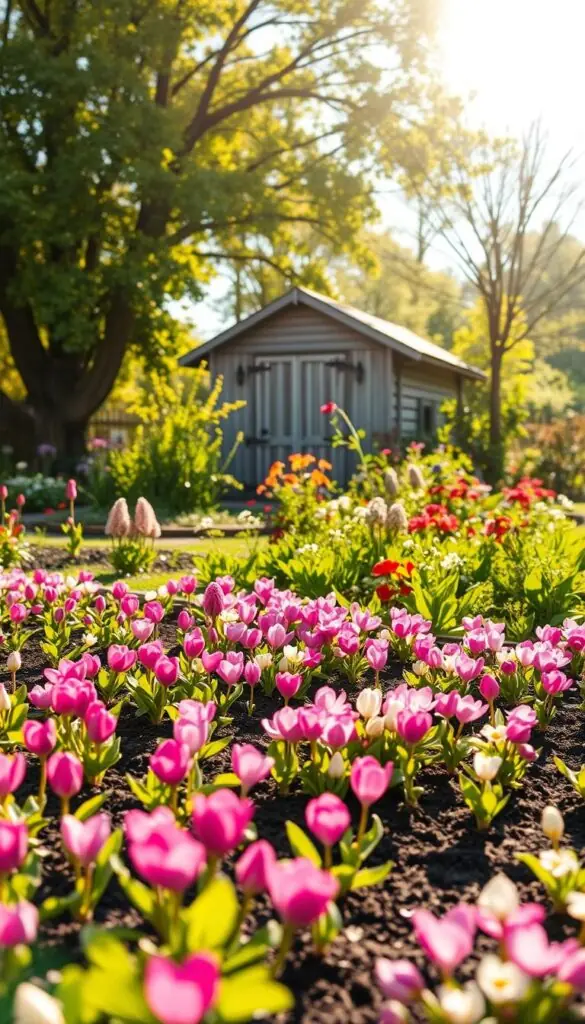
- Set anchors like coneflower, salvia, and catmint; thread in zinnia for quick color.
- Stake tall stems such as dahlias and deadhead regularly to extend bloom and draw pollinators.
- In hot zones, plant a bit earlier; in cool zones, wait for steady warmth.
Fall finale and seedheads
- Aster drifts and ornamental grasses add late color and texture in low light.
- Leave some seedheads for birds and visual interest through cold months.
Winter interest
- Rely on evergreens, striking bark, and a few small trees or shrubs to hold form.
- Tuck in nectar-rich plants across seasons so pollinator friends find food year-round.
Quick habits
- Keep short notes and monthly photos to track where color dips.
- Adjust planting windows by zone and give spring perennials extra time if your lot stays cool.
flower garden design: Layer Heights, Color, and Texture for All-Year Interest
Think of your bed as three simple bands that dance together through the seasons. This approach keeps the space readable and makes care easier.
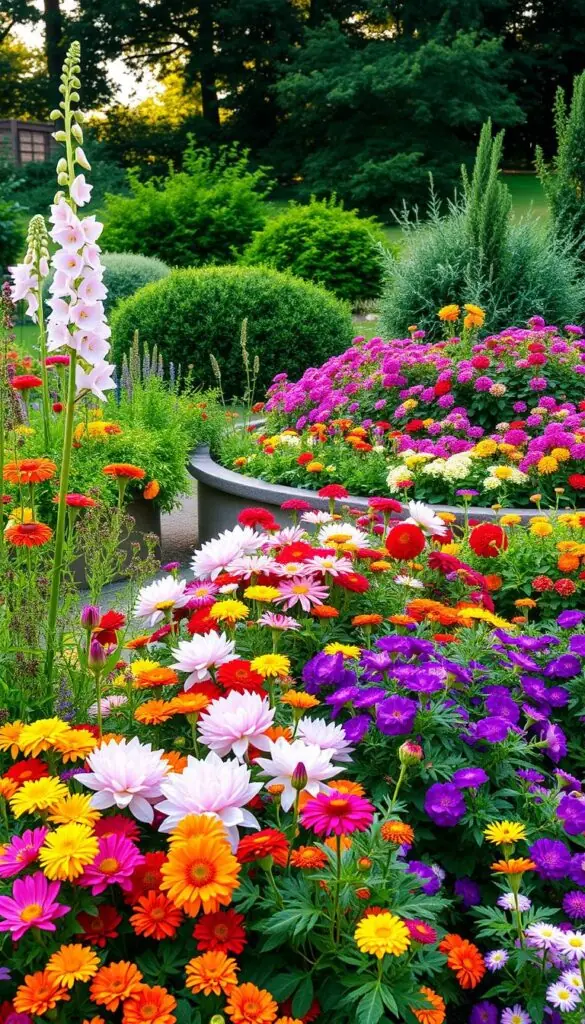
Back‑middle‑front layering: tall spikes, mounded mids, soft groundcovers
Place tall stakes like dahlias or hollyhocks at the back so they don't shade smaller plants. Mid‑height mounds—salvia, coneflower, or catmint—sit in the center and carry the main color notes.
Edge the front with thyme or sweet alyssum to spill onto paths. Give each plant breathing room; airy gaps in spring will fill into a lush summer tapestry.
Color stories: harmonious palettes vs. bold contrasts
Calming palettes use related hues—pinks and purples for a soothing look. Bold contrasts pair golds and deep violet for punch and drama.
Repeat two or three colors across the bed so the whole space feels unified from a distance.
Texture play: fine vs. coarse foliage, grasses with blooms
Mix feathery grasses with large, velvety petals for tactile contrast. Silky petals next to wispy seedheads add motion and scent on warm evenings.
"A few repeated textures make each plant read clearer and give the bed gentle rhythm."
- Picture tall at the back, mounded mids in the middle, and soft groundcovers up front.
- Repeat colors and leaf shapes to create unity and long‑term interest.
- Drop a fragrant accent—lavender near a seat—for sensory moments each visit.
Smart Plant Lists and Real Combinations for US Gardens
Start with combos that work—then repeat them across beds so your yard reads as one calm whole. Below are simple, reliable mixes you can copy into a sunny bed, a shady strip, or along a path.
Sunny combos
Try: coneflower, Russian sage, and allium as anchors. Thread salvia and zinnia between them for steady bloom and bright color.
Shade and woodland mixes
Try: hellebore tucked under trees, astilbe plumes behind hosta mounds, and Virginia bluebells for spring lift. These perennials suit cool, dappled areas.
Pollinator-friendly picks
Try: a lane of monarda and liatris to draw pollinators. Add fragrant lavender, dill, and oregano for scent and bouquet fillers. These plants reward bees and butterflies.
Evergreen and structural anchors
Try: boxwood or hollies for year-round bones. Mix in ornamental grasses for texture and winter movement. Think of trees and shrubs as anchors, then weave perennials and annuals between them.
"Repeat your best perennials across the garden to tie different beds together."
Specialty Beds That Boost Bloom and Joy
Set aside a modest plot for cutting, a scented herb corner, and a shady ribbon under trees. These focused beds make care predictable and joyful.
Cut flower bed — Use a 12-by-4-foot raised rectangle with rows by variety. Plant tall dahlias at the back and snapdragons near the front so nothing shades the lower stems. Leave a 2-foot path on one side for easy picking and a corner for overflow annuals like zinnia or strawflower.
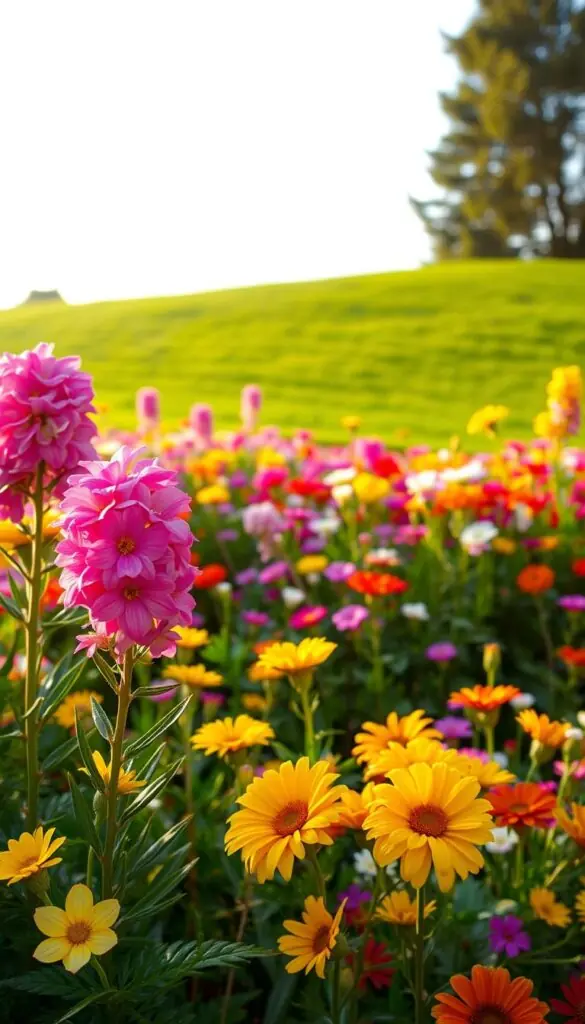
Herb cut‑flower garden
Mix basil, dill (that quintessential summer scent), and oregano for scent and volume. Oregano is hardy and fragrant; dill gives airy yellow blooms that lift bouquets.
Contain spreading herbs—mint and borage—either in pots or a raised edge. Harvest often to keep them in check and your vases fragrant.
Woodland strip in shade
Along a fence path under trees, stitch in hellebore, Virginia bluebells, lily of the valley, astilbe, and hostas with chocolate ajuga as groundcover.
Elevate a few houseplants on stands for dappled drama and trim vines for unexpected bouquet accents.
Blended native and non‑native bed
Anchor with perennials like monarda, columbine, coneflower, and yarrow. Add containers of star jasmine or celosia for scent and flexible height.
Leave pollinator favorites such as allium and liatris uncut in parts of the area to feed wildlife while other blooms fill your vases.
- Quick caution: give vigorous plants boundaries so one bed doesn’t overrun the rest.
- Simple paths and a 2‑foot access strip keep maintenance easy and peaceful.
Seasonal Care Calendar: Watering, Mulch, Dividing, and Editing
A monthly checklist keeps your beds productive without overwhelming your weekends. Use short, steady tasks so care fits your schedule and the season.
Spring — Early in the season, refresh mulch and top-dress soil with compost. Divide last year’s fall-blooming asters in early spring. Plant cool-season annuals and set stakes before tall stems stretch.
Summer
Water deeply and less often to encourage strong roots. Deadhead spent blooms and photograph any empty spots so you can plan edits.
Keep pruners and stakes handy. Late summer sales are a great time to buy duplicates and build drifts rather than one-off plants.
Fall
Plant spring bulbs and move or divide spring-blooming perennials. Add a fresh layer of mulch to tuck beds in for cooler months.
Cut back only what flops; leave sturdy stems and seedheads for birds and winter texture.
Winter
Prune lightly, protect tender crowns with extra mulch, and review your photos to sketch next year’s color plan. Give yourself grace—small, steady care across years builds a resilient landscape.
- Tools to keep near the bed: pruners, stakes, mulch, and a notebook for notes and photos.
- Quick habit: take one photo each month and jot a sentence about what to change.
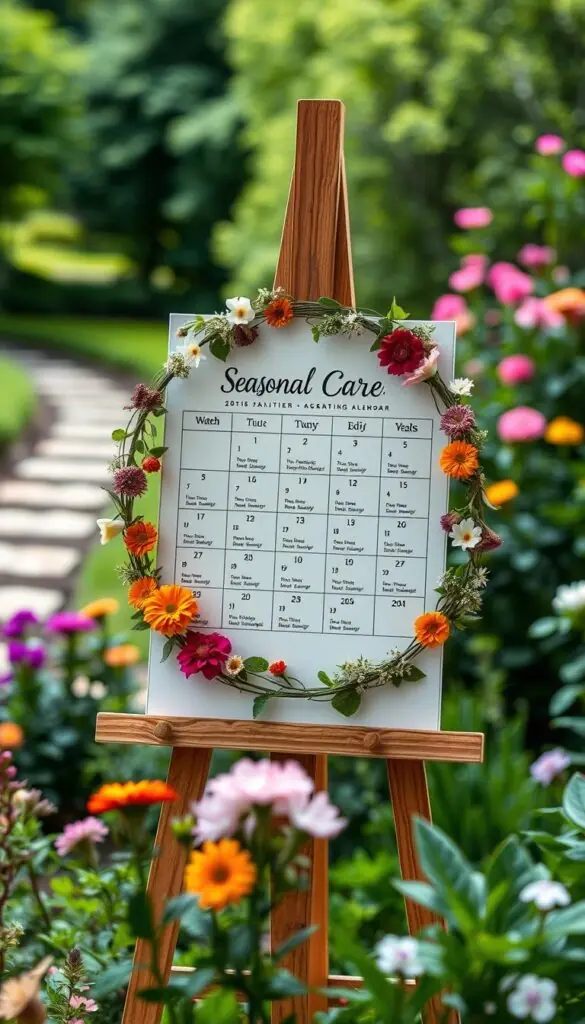
"Small seasonal steps make caring for a flower bed feel doable and joyful."
Conclusion
A few steady choices—repeats, layers, and evergreens—give your space lasting charm. Use the simple steps here as a way to shape a flower garden that feels alive through the year.
Start with light and soil, pick a focused palette, and repeat your best plants so the whole yard reads as one welcoming space. Layer heights and weave textures; let small trees and shrubs carry interest when flowers rest.
Trust your notes and make small edits each spring and fall. Picture a sunny coneflower‑and‑sage sweep or a shady hellebore‑and‑hosta pairing and enjoy how those combos hold interest across seasons.
Step outside tonight, breathe under the trees, and choose one easy task—edge a bed, set a trellis, or add compost. That small act will bring calm and momentum for years to come.
FAQ
How do I start planning a yard that blooms through spring, summer, fall, and winter?
Begin with a quick yard walk to map sun, shade, and wind at morning, noon, and late day. Note microclimates—front yards often differ from back yards—and check your USDA hardiness zone. Sketch simple zones for sunny beds, shady strips, and a low-maintenance anchor area with evergreens or shrubs. This gives a roadmap for plant placement and seasonal interest.
What’s the easiest way to arrange plants so the beds look natural and full?
Group plants in drifts and odd-numbered clusters to create rhythm and visual flow. Use back-middle-front layering—tall spikes in back, mounded perennials in the middle, and soft groundcovers or low fillers in front. Repeat key colors and textures across beds to tie the space together.
How do I choose shapes for beds, paths, and edges that are both pretty and practical?
Opt for gentle curves to make the space feel lush and invite movement, or straight lines for a formal look. Include access paths wide enough for wheelbarrows and pruning. Clean edges with stone, brick, or metal keep beds tidy and reduce mowing. Add a trellis or arbor for vertical interest where you want vines or climbers.
What are the most important soil steps before planting?
Turn and aerate the bed, then mix in plenty of compost to improve texture and fertility. Test soil pH if you suspect problems. A light starter fertilizer helps new transplants; avoid overfeeding. Mulch after planting to conserve moisture and suppress weeds.
Which tools should I have on hand for planting and ongoing care?
Keep a sturdy spade, hand fork, pruning shears, gloves, a rake, and a watering tool like a hose with a fine nozzle or a drip line. Mulch and a lightweight wheelbarrow or cart make maintenance easier. Proper tools speed tasks and protect your back.
How can I plan for continuous color throughout the year?
Build a season-by-season plan: bulbs and cool-season perennials for early spring, long-blooming perennials and heat-tolerant annuals for summer, asters and grasses for fall texture, and evergreens, bark, and berries for winter interest. Stagger bloom times in each bed for steady color.
How do I balance height, color, and texture without overdoing one plant type?
Keep layers in mind and choose a mix of fine and coarse foliage. Pair tall, spiky plants behind mounded mid-height perennials and soft groundcovers. Create a color story—either harmonious tones or bold contrasts—and limit any single variety so it doesn’t dominate the space.
What are reliable plant picks for sunny and shady areas in U.S. yards?
For sunny beds, consider coneflowers, Russian sage, allium, salvia, and zinnia. Shady strips do well with hellebore, astilbe, hosta, and Virginia bluebells. Add pollinator-friendly choices like monarda, liatris, lavender, and herbs such as dill and oregano. Use boxwood or hollies as structural anchors.
Can I combine native and non-native plants effectively?
Yes. Blend natives for habitat value and low maintenance with carefully chosen non-natives that offer long bloom times or unique textures. Place them in compatible conditions and avoid invasive species. This approach widens seasonal interest while supporting pollinators.
How do I set up specialty beds like cut-flower rows or an herb-cut flower mix?
For a cut-flower bed, plant in rows from tall to short with easy access paths and a nearby harvest station. An herb-cut-flower garden pairs basil, dill, and oregano with fragrant fillers like calendula or cosmos. Keep soil fertile and deadhead regularly to extend blooms.
What seasonal chores keep beds healthy and blooming year after year?
Spring: divide crowded perennials, plant bulbs, and refresh mulch. Summer: deadhead, stake tall plants, and water deeply when needed. Fall: plant bulbs, move or divide spring bloomers, and add a final layer of mulch. Winter: prune lightly, protect crowns from extreme cold, and plan next year’s changes.
How often should I divide perennials and when is best to do it?
Most perennials benefit from division every 3–5 years to rejuvenate growth and control size. Divide spring- and summer-flowering perennials either in early spring or right after they finish blooming, depending on the species. Watch for overcrowding or reduced blooms as a cue to act.
How can I make the beds more friendly to pollinators and beneficial insects?
Choose a mix of native nectar and pollen sources that bloom across seasons—monarda, lavender, liatris, and dill are great examples. Avoid broad-spectrum insecticides, provide a shallow water source, and include sheltered spots like dense shrubs or groundcover for nesting.
What’s a simple editing routine to keep beds from getting messy?
Walk your beds weekly during the growing season. Remove spent blooms, trim diseased foliage, and tidy edges. Each season, decide what to keep, divide, move, or donate. Ruthless editing prevents overcrowding and maintains a clean, intentional look.