You notice a flash of scarlet at the window and pause—heart a little lighter, day a little brighter.
Have you ever wanted to see those glittering visitors more often? You can, with a few simple changes to your yard and a short, friendly plan.
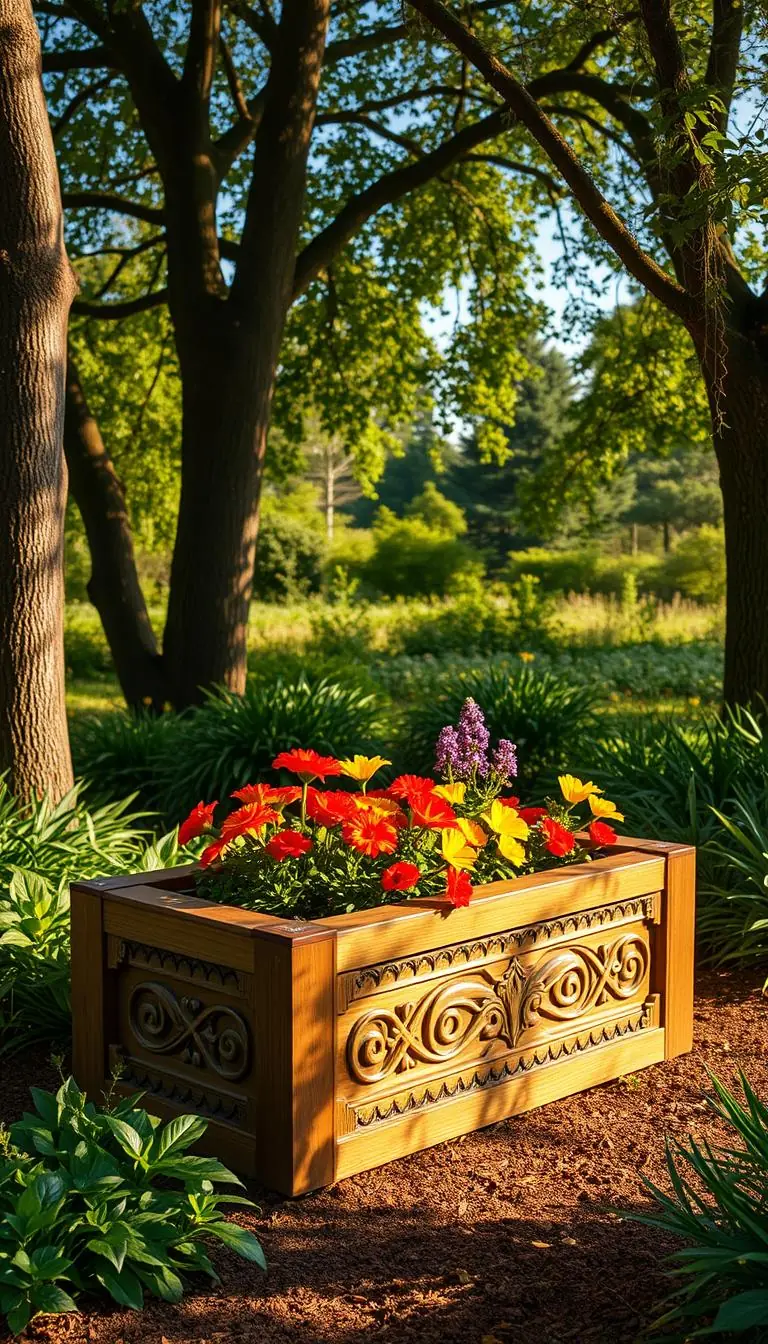
Start small: a sunny window box or a trellis by the deck can host tubular red, orange, and pink blooms that hummingbirds love. Plant in patches so nectar is reliable from early spring through fall.
Include native plants when you can, add a gentle mister or shallow basin, and leave soft fibers and spider silk for nesting. Avoid insecticides so the birds and their food stay safe.
We’ll walk you through easy steps, seasonal timing, and a short tool list—sketch pad, trellis, pruners, and a hose-end mister—so you feel calm and ready to create a hummingbird garden you can enjoy from your favorite chair.
Key Takeaways
- Plant clusters of tubular, brightly colored flowers to attract hummingbirds.
- Match early, mid, and late-season blooms for continuous nectar.
- Provide gentle water sources like misters or shallow basins.
- Use native plants and avoid insecticides to support local birds.
- Place perches and small trees 10–20 feet from flowers for resting and nesting.
- Keep the plan simple: small tools and seasonal timing make it doable.
Plan your space for hummingbirds: light, layers, and easy views
Start by sketching a simple layout so flowers, perches, and paths fall into place. A quick plan on graph paper helps you see sun patterns, existing trees, and where a focal bed will shine.
Pick a viewing spot near a window, deck, or patio and place the main bed about 10–20 feet away. That distance gives you close views without disturbing nesting or feeding.
Watch light for a few days. Note full sun stretches and pockets of shade, then position beds so petals glow during peak feeding times.
Think vertical and tiered
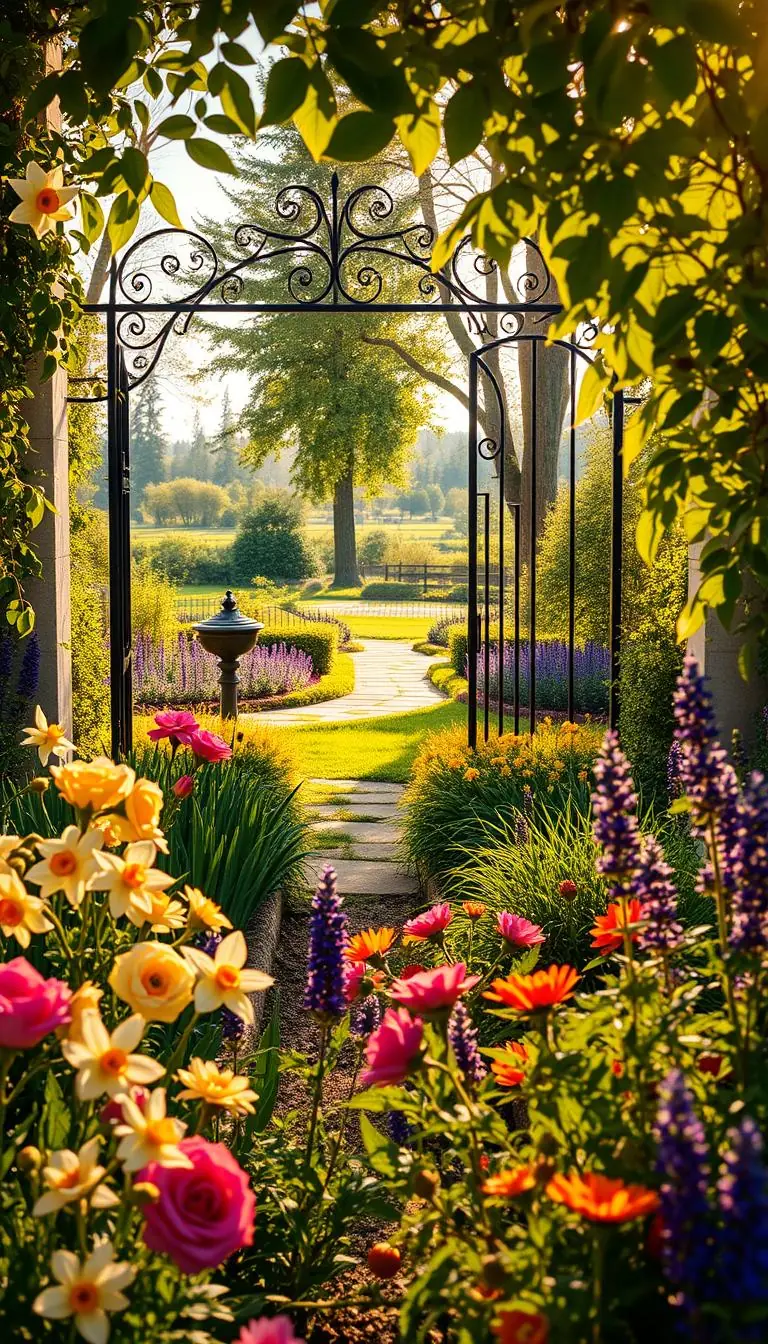
Use trellises, arbors, or window boxes to raise blooms to eye level. Tier heights: taller shrubs or small trees in back, mid-level salvias, and low mounding flowers up front.
- Shape beds with gentle curves for smooth flight paths and better views.
- Group plants by water needs so maintenance is simple; use drip lines or a soaker hose.
- Plan bloom times on a calendar: early spring, summer, and late-season color to match migration and nesting times.
| Feature | Example | Why it helps |
|---|---|---|
| Focal spot | Bench 12–15 ft from bed | Close viewing with minimal disturbance |
| Vertical accents | Trellis or arbor | Add nectar at different heights and save ground space |
| Bed shape | Long, gentle curves | Open flight paths and pleasing landscape lines |
Choose flowers and native plants that attract hummingbirds all season
Choose plants that flash scarlet, coral, and sunset-orange to turn your yard into a nectar highway.
Color and shape cues: Red, orange, and pink tubular blooms act like neon signs to small birds. Look for coral trumpets, scarlet spikes, and minty-scented leaves. These shapes hold deep nectar and let birds feed efficiently.
Native powerhouses by region and zone
Pick species that suit your climate. Firebush (Hamelia patens, zones 9–11) offers long orange-red tubes in sun. Coral honeysuckle (Lonicera sempervirens, zones 4–10) climbs trellises with bright red trumpets. Scarlet sage (Salvia coccinea, zones 7–11) blooms spring–fall in full sun.
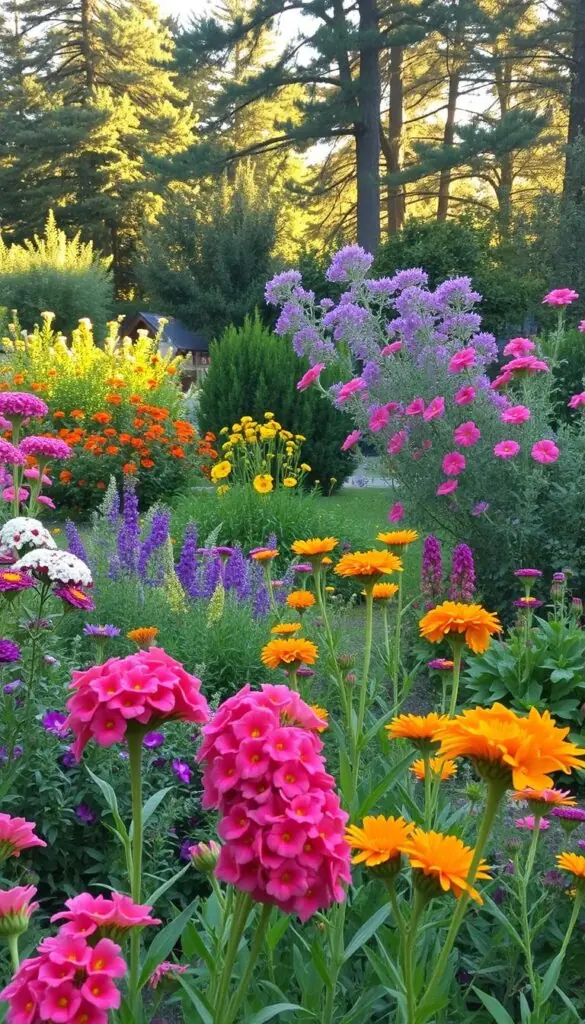
Other standouts: cardinal flower (Lobelia cardinalis, zones 3–9) for moist spots, red buckeye (Aesculus pavia, zones 6a–9a) for spring clusters, and coral bean (Erythrina, zones 8–11) for showy tubular blooms. Note: some species have poisonous parts—site them away from children and pets.
| Use | Examples | Care tip |
|---|---|---|
| Early spring | Red buckeye, salvias | Plant in groups of 3+, mulch lightly |
| Summer workhorses | Firebush, bee balm | Full sun, deadhead after flush |
| Containers & small spaces | Petunias, trailing salvias | Use pots, railing boxes, hang baskets for height |
Simple care: Plant in generous patches (three or more), stagger bloom times from early spring to late fall, and prune lightly after big flushes. Avoid low-nectar cultivars and invasive honeysuckles—favor local native plants to support pollinators and keep maintenance easy.
Build a hummingbird garden that supports feeding, water, and safe perches
Sparkling water, tidy perches, and clean nectar make your space a reliable stop for tiny, quick birds. Start with a simple layout: place water near blooms but with a clear flight path back to cover.
Water that sparkles
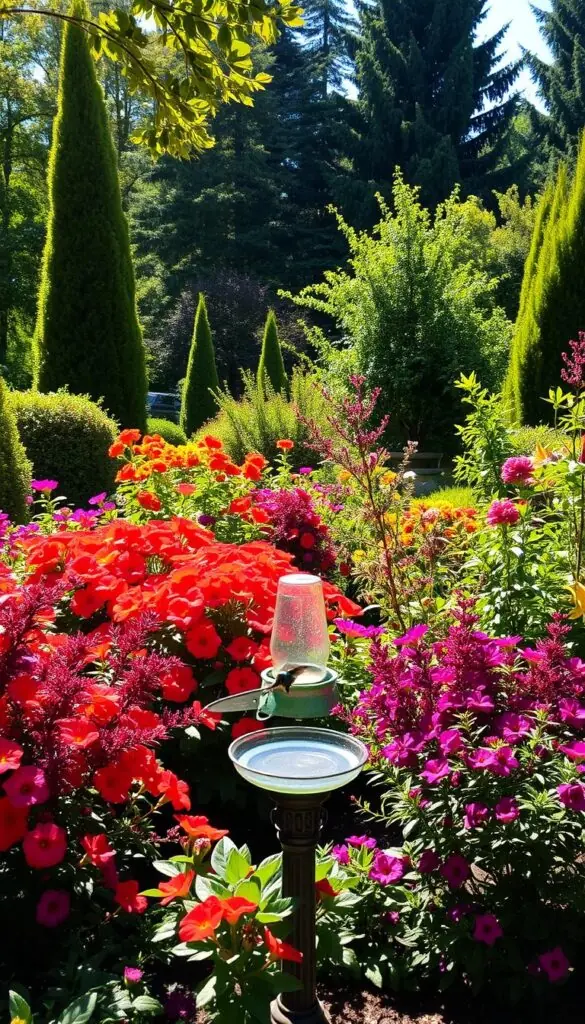
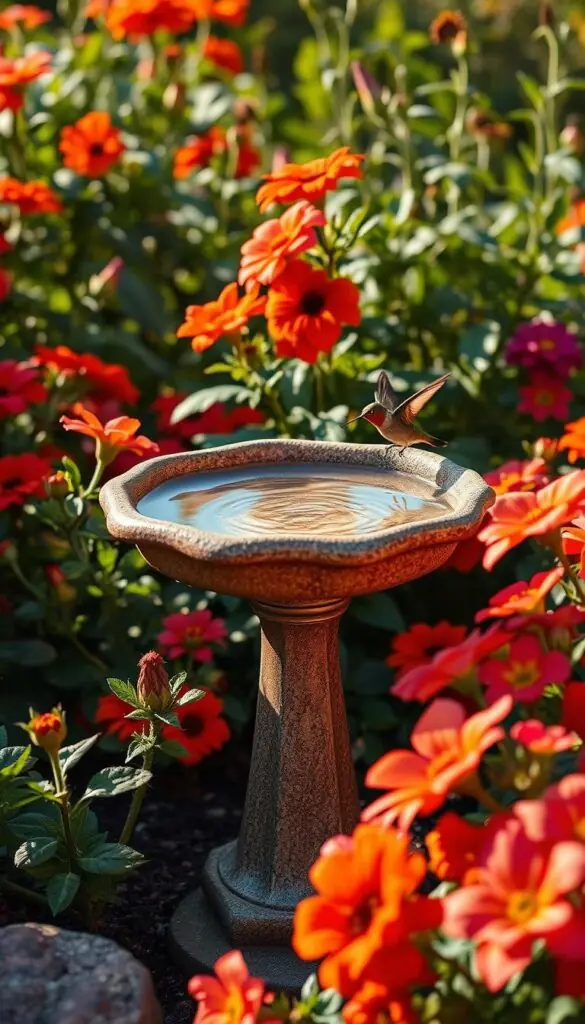
Add a hose-end mister or a slow dripper over a shallow birdbath so droplets bead and catch the sun. Hummingbirds love to fly through mist and to bathe on broad leaves after warm afternoons.
Use a pebble layer in a low basin for traction, refresh water daily, and set the bath near foliage so leaves hold droplets for quick, safe dips.
Perches and trees
Offer slender branches and twiggy stems 10–20 feet from flowers so birds can rest between sips. A dwarf tree near the bed gives a close, quiet perch for displays and nesting.
Keep one or two larger trees if possible; trunks with lichens supply camouflage and shelter during storms. Use branch pruners to tidy perches without removing protective cover.
Feeders as a clean backup nectar source
Hang feeders in partial shade to slow spoilage and space multiple units to reduce squabbles. A good rule: clean feeders every 2–3 days in warm weather.
Mix 1 part white sugar to 4 parts water, skip dyes and honey, and rinse with hot water before refilling so the feeder stays safe and the nectar remains a reliable source.
Healthy habitat care
Build soil with compost to support flowering plants and the small insects that supplement nectar in a nesting season. Avoid insecticides and systemic herbicides—they can reduce insect food and contaminate nectar.
Leave spider webs and soft fibers in quiet corners; birds use silk and plant down to bind tiny nests. Protect feeders and perches from predators by avoiding dense cover where cats can hide.
- Tools: hose-end mister, shallow birdbath, branch pruners, compost.
- Placement tips: water near flowers, perches 10–20 ft away, feeders in shade and cleaned regularly.
Conclusion
Begin today with a sketch and one plant, and let color and water guide your next moves.
Start small—a pot of salvias on the patio or a railing box of bright flowers—and build from there. Keep your plants simple: native plants and sturdy tubular varieties feed birds through the season.
Keep water sparkling, refresh feeder nectar, and offer perches or a small tree about 10–20 feet from beds. Skip sprays, add compost, and leave soft fibers for nesting; these few choices create reliable visits.
With time and gentle care, your hummingbird garden will bring motion, color, and quiet joy to your yard every season.
FAQ
What are the best flowers and native plants to attract hummingbirds?
Choose tubular, nectar-rich blooms in red, orange, and pink. Good options include scarlet sage (Salvia splendens), cardinal flower, coral honeysuckle, red buckeye, and regionally native salvias. Plant generous patches so pollinators can find concentrated food and avoid invasive species that offer little nectar.
How should I plan my space for the best light, layers, and viewing spots?
Sketch your yard and pick a focal spot near a window, deck, or patio for easy viewing. Position beds so blooms get morning sun and afternoon dappled shade. Add vertical elements like trellises and arbors for vines, and create tiered plantings and gentle curves to give open flight paths and layered perches.
When should I plant to provide nectar throughout the season?
Stagger bloom times from early spring through late fall. Combine early bloomers, summer performers, and late-flowering varieties so migrating and nesting visitors find continuous food. Check local bloom calendars or native plant guides for timing in your USDA zone.
Can I use containers and small-space plantings to attract these birds?
Yes. Use pots, railing planters, and hanging baskets with compact nectar-rich plants like salvias, petunias, and fuchsias. Place containers near windows or patios at varied heights to create nearby feeding zones and perches for viewing.
How do I provide water that appeals to pollinators?
Offer shallow water sources like basins, drippers, or misters. Broad leaves that hold droplets are also attractive. Keep water clean and change it regularly to avoid algae and mosquito issues. A gentle mister mimics natural dew and bathing behavior.
Should I put out feeders, and how do I maintain them?
Feeders are a useful, clean backup to flowers. Use a simple nectar mix of four parts water to one part white sugar; never use red dye. Clean feeders and replace nectar every few days in warm weather to prevent fermentation and mold. Space feeders away from dense cover to reduce predator risk.
What plants or practices should I avoid?
Avoid low-nectar hybrids and invasive species that crowd out natives. Limit broad-spectrum insecticides—many natural pest predators and even spider silk help nesting. Keep dense chemical use off the property to support healthy insect populations that feed fledglings.
How can I create safe perches and nesting habitat?
Provide slender branches, small trees, and shrubs near feeding areas for perching and displays. Preserve native trees and add sheltering evergreens or thickets for wind protection. Leave soft fibers, fine moss, and spider silk undisturbed in spring for nest building.
How much pruning and care do flowering plants need to maximize blooms?
Prune lightly to remove dead wood and shape plants, and deadhead spent flowers to encourage more blooms. Fertilize sparingly with a balanced, low-nitrogen formula to avoid excessive leafy growth at the expense of flowers. Regular compost and mulch improve soil health and flowering.
What if I live in a small yard or on a patio—can I still attract them?
Absolutely. Use vertical planters, railing boxes, and hanging baskets loaded with nectar plants. Position feeders and water sources near seating for close-up enjoyment. Even a single cluster of tubular flowers on a balcony can become a daily stop for local species.