Imagine a sunlit morning, the soft scent of your garden and a few faded blossoms on the path. Have you noticed spent blooms that make your beds look tired? A few calm minutes with your fingers or small pruners can change that.
Removing old blooms and any developing seed helps plants redirect energy into new color. Start in spring and keep the habit through early summer across much of the United States for the best results.
Many modern varieties clean up on their own, so you won't need to fuss with every pot. But for the ones that benefit, you'll learn where to snip so you don't harm growth and how small weekly checks can add weeks of color.
This short guide keeps things simple: what to do, where to cut, common mistakes to avoid, and which plants truly need attention. Step outside today and try a few gentle trims—your garden will thank you with brighter, longer-lasting blooms.
Key Takeaways
- Removing spent blooms and seed redirects a plant’s energy to new blooms.
- Start in spring and continue into early summer for the best chances of a second flush.
- Use fingers or small pruners; no special tools are needed.
- Know which plants self-clean so you save time.
- A few minutes each week can extend color through the warm season.
What Is Deadheading and Why It Matters for a Longer Bloom Season
A quick tidy of faded heads tells a plant to keep producing instead of making seed.
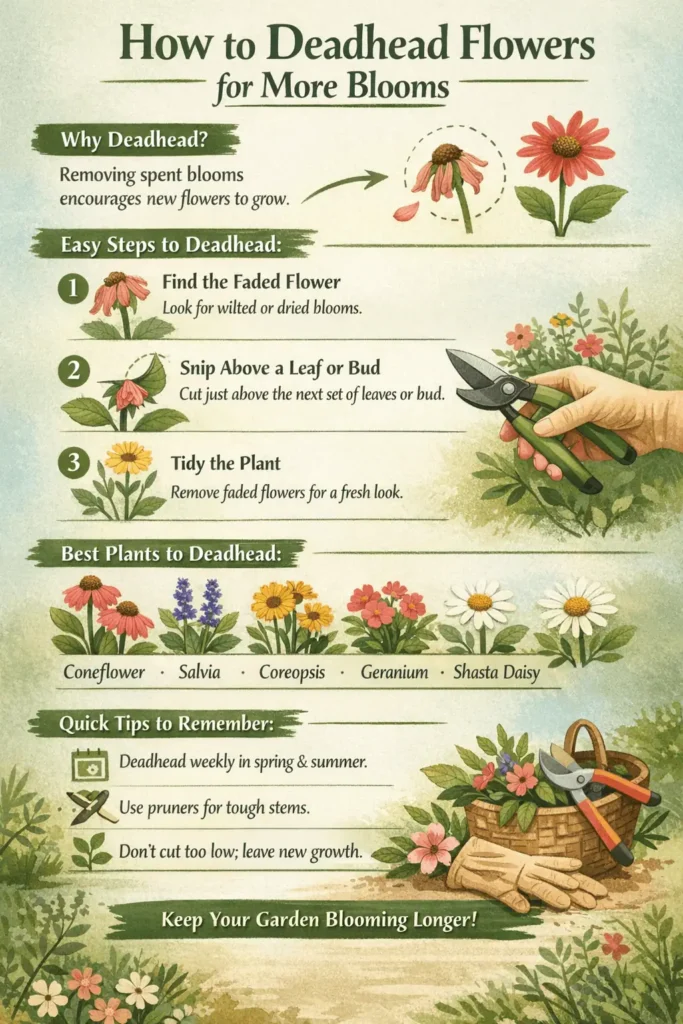
Deadheading removes spent blooms and the developing seed so your plants send energy back into new color. When a bloom turns papery and dull, that visual cue is also a biological one: the plant starts to set seeds and slows growth for more blossoms.
This is light, regular care you can do as you walk through the garden. Use your fingers on soft stems and secateurs for tougher stems. Make cuts just above the next healthy set of leaves or a visible bud so the plant rebounds fast.
Deadheading vs. Pruning
Think of deadheading as quick housekeeping. Pruning is a seasonal shaping that guides overall growth and health.
- Deadhead for weekly touch-ups and more repeat bloom.
- Prune when you need to reshape, reduce size, or remove large, old wood.
- Many plants show when they need deadheading by looking tired; some modern types clean up on their own.

| Care Action | When to Use | Benefit |
|---|---|---|
| Deadhead | Weekly during spring and summer | Encourages repeat bloom; reduces seed set and debris |
| Prune | Seasonal or when reshaping is needed | Improves structure and long-term growth |
| Leave (self-cleaning) | For many modern types and some perennials | Low maintenance; saves time for gardeners |
How to Deadhead Flowers: Simple, Step‑by‑Step Techniques and Tools
A quick, confident snip or gentle pinch sends a clear signal for new growth. Start by looking for a spent flower that has lost its color or feels papery. Cradle the bloom between your thumb and finger before you act.
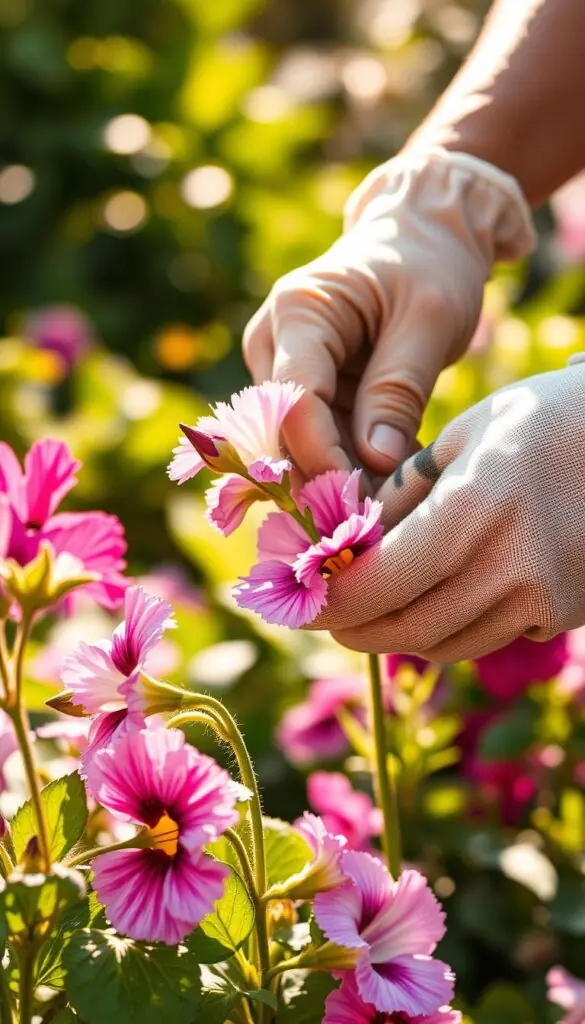
Pinch soft stems: place your thumb and forefinger just below the faded head and nip the spent flower back to the first healthy leaf. You should feel a clean release and see a short, tidy stem left behind.
Use secateurs or scissors when a stem feels tough or stringy. A crisp cut with clean secateurs closes more neatly and improves the plant’s appearance. Wipe blades between heavy uses to prevent disease.
Heads and spikes: for delphiniums, lupines, and roses, remove individual faded florets, then cut the finished head back to a lower bud or leaf. For roses, cut just above the first leaf below the bloom for reliable rebloom.
Short vs. long stems: pinch old blooms and seed pods on calibrachoa, petunia, and lobelia. For long-stemmed types like gerbera daisy, heuchera, and shasta daisy, follow the flower stem to its base and remove the whole stalk without nicking foliage.
Shearing and safety: when many small blooms fade, a light shear of about one-third refreshes the plant before seeds form. Keep tools sharp, wear gloves if needed, and check for hidden buds before cutting.
- Watch for firm green leaves and plump buds—those mean the plant will respond well.
- Avoid pulling petals and leaving seed pods behind, and don’t cut so low you remove fresh side shoots.
- Work in calm morning light and move row by row for steady, confident results.
Timing, Seasons, and Plants That Reward Deadheading Flowers
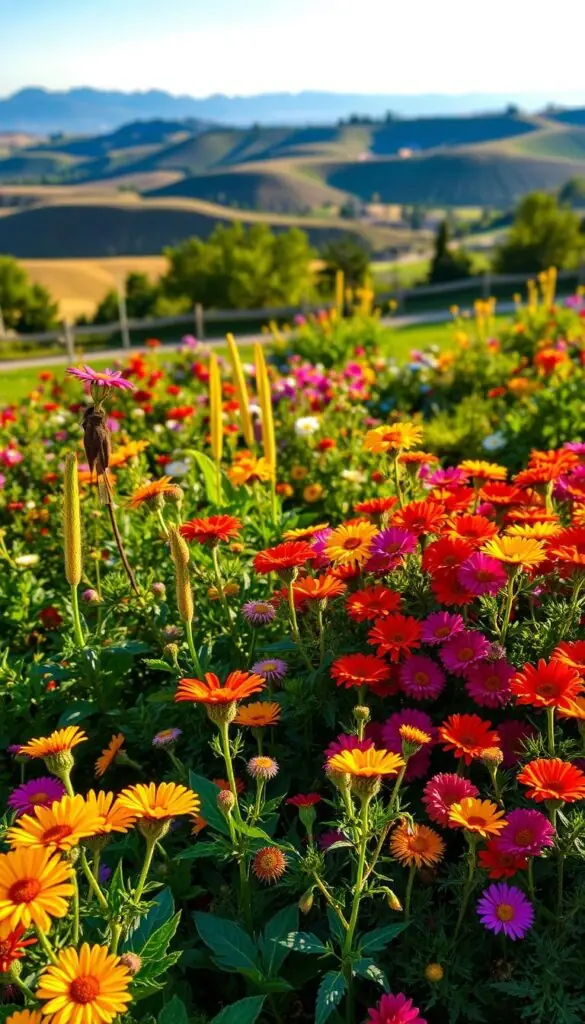
Late spring marks the ideal moment to start light trims that keep your beds lively through summer. Begin when the first flush fades and make a quick weekly pass to keep color steady. Waiting until fall makes the task harder and yields fewer returns.
Best time across the United States
Start in late spring and continue through summer. A short, regular rhythm helps many species push a second bloom and uses their energy more efficiently.
Annuals and repeat‑blooming perennials
Coreopsis, salvia, coneflower, phlox, yarrow, and shasta daisy respond well when you remove each spent head. These types often produce fresh buds fast after a tidy cut.
Low‑maintenance and self‑cleaning choices
Many modern petunias and osteospermum varieties stay neat with little work. Seed‑sterile cultivars also reduce time spent trimming.
Cut‑back strategies and plants to leave
Shear hardy geraniums, catmint (Nepeta), and lady’s mantle back for a second flush. Pulmonaria and oriental poppies benefit from a post‑bloom trim to refresh foliage.
Let sedum seed heads stand through winter; frost catches on them and visiting birds find winter food. Remove heuchera flower stem mainly for tidiness in spring.
| Action | When | Benefit |
|---|---|---|
| Weekly trims | Late spring–summer | More repeat bloom |
| Cut‑back | After bloom | Second flush, fresh foliage |
| Leave standing | Winter | Structure and bird food |
Conclusion
plants respond to small, regular care. A few simple trims each week keep beds bright and encourage more color all season.
Make a soft snip above a leaf or bud, and you will see fresh blooms where a tired one stood. Clean cuts on the stem help the plant send energy to new growth.
Use this guide for easy rhythm: a calm minute or two per bed, weekly. Some types self-clean, so focus on those that reward a tidy hand.
Step outside in gentle light, enjoy the breeze, and feel the satisfaction of a neat, colorful bed. Small, steady care brings big joy.
FAQ
What is deadheading and why does it matter for a longer bloom season?
Deadheading means removing spent blooms or seed heads so the plant redirects energy into new buds instead of seed production. This simple tidy task helps many annuals and perennials produce more colorful, repeated flowering across spring and summer, keeping beds looking lush and thriving.
How is deadheading different from pruning?
Deadheading is a quick, focused removal of faded blooms to encourage reblooming. Pruning shapes woody growth, removes old or diseased branches, and improves overall plant structure. Both improve appearance, but pruning is deeper and done less frequently.
When should you start and how often should you remove spent blooms?
Start in late spring as the first flowers fade, and check plants every week or two through summer. Regular light attention prevents seed set and keeps plants producing fresh buds. Timing varies by species and local climate.
What tools do I need for neat, healthy cuts?
For soft stems, use your thumb and forefinger to pinch just above the first healthy set of leaves. For thicker stems, use sharp secateurs or scissors for a clean cut. Keep tools clean and sharp to reduce stress and disease risk.
How do I deadhead spikes and clustered heads like delphiniums or lupines?
Snip or pinch the spent flower just above the first healthy leaf or emerging bud on the spike. For tall spires, work from the top down so new buds lower on the stem can open without obstruction.
Where do I cut on short-stemmed plants like petunias or calibrachoa?
Remove the faded bloom and a small section of stem just above a set of healthy leaves or side shoot. This encourages branching and more blooms on compact plants such as petunia, calibrachoa, and lobelia.
How should I handle long-stemmed garden plants like gerbera or shasta daisy?
Cut the spent stem back to the base leaves or to an outward-facing bud to preserve the plant’s shape. For gerbera and shasta daisy, removing the whole stem at the crown keeps foliage tidy and invites new floral stems.
When is it best to shear massed annuals before they set seed?
For plants producing lots of small blooms, a light shear of about one-third in mid-summer can stimulate a second flush. Do this before most flowers turn to seed and after the main display starts to fade.
What safety and care tips should gardeners follow when deadheading?
Wear gloves for thorny species like roses, use clean, sharp tools, and watch for hidden buds so you don’t remove potential new growth. Dispose of diseased material and sanitize blades between plants to prevent spreading pathogens.
What common mistakes should I avoid when removing spent blooms?
Don’t just pluck petals off without taking the seed pod, avoid cutting too low into healthy stems, and don’t wait until fall on repeat-blooming plants. These missteps can reduce reblooming or harm plant vigor.
Which perennials and annuals benefit most from regular bloom removal?
Many repeat-blooming perennials and annuals respond well, including coreopsis, salvia, coneflower (Echinacea), phlox, yarrow, and shasta daisy. Regular removal extends the season and keeps beds producing.
Are there plants I can mostly leave alone?
Yes. Some species are effectively self-cleaning or low-maintenance: many modern petunias, osteospermum, and seed-sterile varieties need little attention. Others, like heuchera or sedum, often get tidied mainly for appearance rather than reblooming.
Can deadheading encourage a second flush of blooms and which plants respond best?
Yes. Hardy geraniums, catmint (Nepeta), and lady’s mantle often reward a trim with a second wave of flowering. Cutting back massed stems or removing spent heads refreshes foliage and prompts renewed bloom production.
What about leaving seed heads for wildlife—when should I skip removal?
If you want to support birds and pollinators, leave some seed heads through fall and winter. Choose areas where you want wildlife benefits and balance them with beds you prefer to keep looking neat and reblooming.
How do I tell if a plant needs a full prune instead of just bloom removal?
If growth is overgrown, woody, diseased, or the plant hasn’t rebloomed despite regular deadheading, it may need pruning. Pruning reshapes and rejuvenates, while bloom removal keeps plants actively flowering without major cuts.