Imagine cool fall air, the smell of fresh soil, and a neat row of waiting shapes under your feet. You notice a patch in your garden and think, could these come back each spring? You can—without fuss.
This friendly guide gives simple, step-by-step advice so you feel confident from the first chill of fall to bright spring color. We share practical timing, where to plant, and which variety choices improve return rates.
Plant tulip once in fall when temperatures dip and let the cold do the work. Choose a sunny spot with good drainage, water after planting, and deadhead after bloom while leaves yellow to recharge the root store.
You’ll also get neighborly tips on tools you already own, how to buy smart at reasonable price, and quick fixes for common mistakes so these flowers come back year after year.
Key Takeaways
- Plant in fall for a strong spring display.
- Pick full sun and well‑drained soil.
- Use simple tools: hand trowel and bulb planter.
- Choose sturdy varieties for better return.
- Buy a mix on sale and compare unit price per bag.
Welcome to Spring’s Easiest Beauty: Why Returning Tulips Are Worth It
A few smart steps now mean cheerful, long-lasting blooms every spring with minimal work.
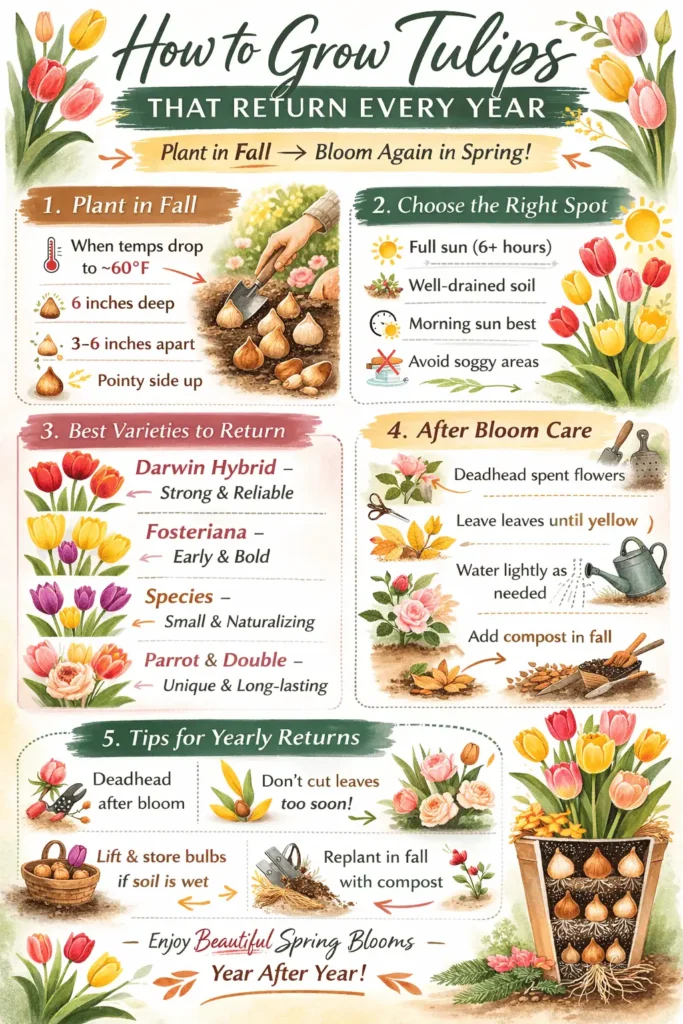
You save time and money when you plant once in fall and enjoy returns the next season. In cool, dry winters these flowers often come back readily. In milder areas they can behave like annuals, so choose hardy types such as Darwin Hybrid for bigger, sturdier stems and repeat shows.
Plant at the first chill (about 60°F) to give a true cold period. In Zone 9 and warmer, consider forcing in a cool garage or fridge so the bulbs get enough chill time.
Morning sun and quick-draining soil help petals hold color through warm spells. In Zones 7–8, a bit of afternoon shade protects late blooms from harsh heat.

| Benefit | How to Achieve It | Example |
|---|---|---|
| Repeat blooms each year | Plant in fall; leave foliage until yellow | East-facing border with morning sun |
| Less work and cost | Buy on sale; compare unit price per bulb | Buy a few bags for beds & containers |
| Longer color span | Mix early, mid, late season types | Staggered planting in mixed beds |
- Avoid soggy spots and hot afternoon sun.
- Deadhead spent blooms and feed after leaves fade.
Choose Tulip Varieties That Truly Come Back
Good variety choices let you enjoy long seasons of color without extra fuss.
Darwin Hybrid selections are your go-to for dependable return. They have large, classic cups, strong stems, and hold up well in breezes. Plant these midseason in sunny beds for a steady, elegant display.
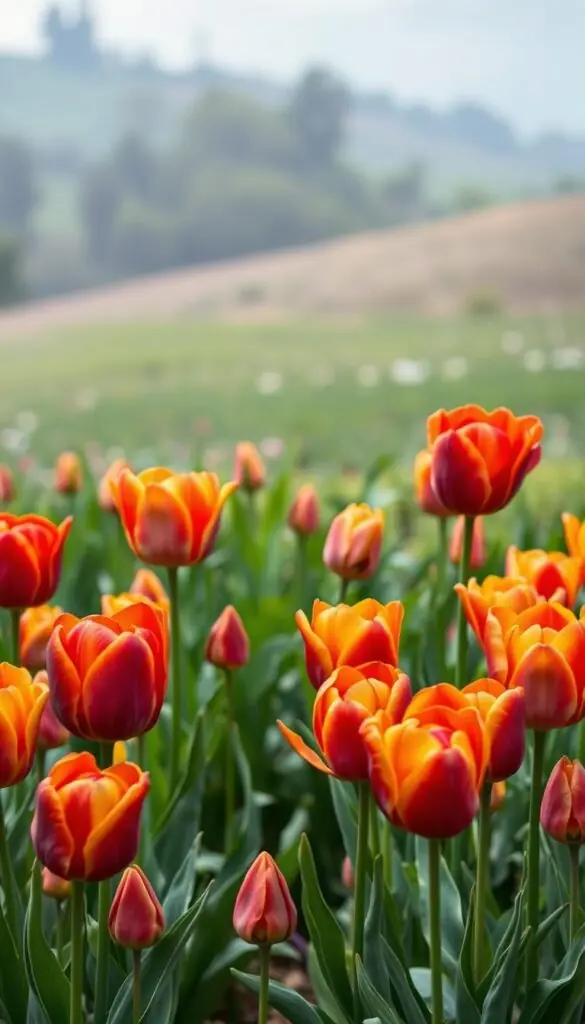
Parrot and Double/Peony forms give drama and texture. Parrot types show ruffled, painted petals that flash in sun; an Apricot Parrot mix offers soft peach tones with green feathering. Double flowers feel like a bouquet on a stem—place them near patios for close-up enjoyment.
Fosteriana and species types bloom early and naturalize easily. Fosteriana makes bold, oversized blooms in mass plantings. Low-growing species suit rock gardens and sunny edges, where they slowly multiply and add charm to gravel paths.
- Build a balanced mix: early species and Fosteriana, midseason Darwin Hybrid, late parrot or Double for a grand finale.
- Match height and texture: tall Darwins behind low species for layered interest.
- Shop smart—compare the unit price per bag and price per bulb to get the best value for your garden.
Planting tulip bulbs for long‑lasting blooms
A cool autumn evening is the signal to plant so roots can grow through winter and reward you in spring.
Right season and zones
Wait until nighttime temps dip near 60°F and the soil is cool but workable. Planting in October–November lets the chill do its work and builds stronger roots for the next season.
Depth, spacing, and sun
Set bulbs about 6 inches deep and 3–6 inches apart. Pointy end up, flat base down for steady stems and balanced blooms. Choose morning sun and avoid hot afternoon rays, especially in Zones 7–8.
Soil prep and tools
Work crumbly sandy‑loam with a scoop of compost so the soil drains fast. If your garden holds water, add grit or sand to prevent soggy beds.
Use a hand trowel or bulb planter. Water once after planting to settle the soil; then let fall rains do the rest.
Containers and warm regions
Group 8–12 bulbs in a wide pot and keep the pot in a cool, shaded spot so roots form before shoots appear. In Zone 9 and warmer, prechill packs in a spare fridge for 10–12 weeks before you plant outdoors.
"Plant in fall before the ground freezes; a little patience in autumn gives you weeks of color in spring."
| Need | How-to | Why it matters |
|---|---|---|
| Depth & spacing | 6" deep, 3–6" apart | Strong stems and fuller blooms |
| Soil | Sandy‑loam + compost | Good drainage prevents rot |
| Sun | Morning sun, afternoon shade in warm zones | Extends color and reduces heat stress |
- Blend early, mid, and late types for a simple mix that lengthens bloom time.
- Shop smart: larger bags often offer a better unit price per bulb at sale time.
Simple care so tulips return year after year
After the show fades, a few calm steps help your spring display come back stronger next year.
After bloom: Snip spent flowers to stop seed set, but leave the foliage until it turns papery yellow. The leaves feed the bulb for next season. Ease up on water once petals fall so the soil dries and the bulbs rest.
Lifting and storing option: If beds stay wet, dig bulbs after the foliage ripens. Brush off excess soil and cure them in a cool, dry, dark place with good air. Store bulbs in mesh or paper bags, labeled by variety and sale date, until you plant in fall.
Choose Darwin Hybrid tulips when you want stronger stems and a better chance of repeat shows. In beds, give morning sun and shelter from hot afternoon sun to keep flowers fresh a little longer.
- Top-dress soil with compost each fall rather than heavy feeding the bulb.
- Discard any soft or moldy bulbs before replanting to avoid disease.
- Refresh thin clusters by splitting and replanting healthy bulbs in a new mix of soil.
"Leave leaves until they are fully yellow; that quiet time is how bulbs gather energy for next year."

| Task | When | Why it helps |
|---|---|---|
| Deadhead spent flowers | Immediately after bloom | Prevents seed set and directs energy back to the bulb |
| Cure and store | After foliage yellows (summer) | Prevents rot in wet soils and allows replanting in fresh soil in fall |
| Top-dress with compost | Each fall | Feeds soil for healthier bulbs and reduces need for fertilizer |
Design ideas and smart buying tips for your garden
Think like a painter: pick a limited palette, then layer bloom times for a longer show.
Create a color mix and staggered season
Plan a simple mix: early Fosteriana in lemon and white, midseason Darwin reds, and late Parrot in apricot parrot tones for a soft finale.
Layer heights so low species sit in front and tall stems stand behind. Use groups of 9–25 for a natural, lush look that reads from the street.
Shop with confidence
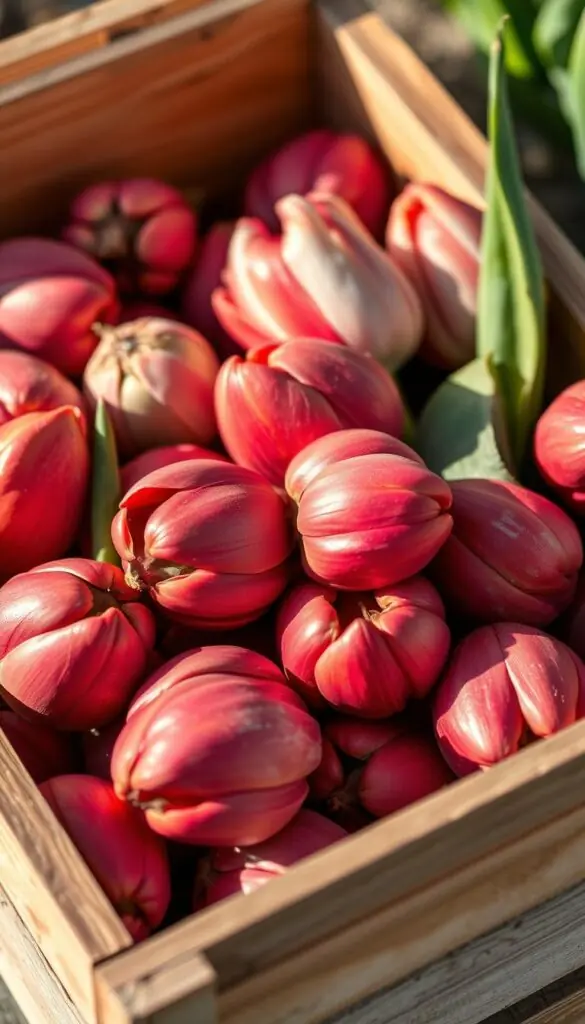
Buy Dutch-grown collections from reputable sellers for uniform size and better return. Order in summer or early fall so shipments arrive when planting time comes.
Fill big beds affordably by choosing bulk or curated collections. Compare the unit price per bag and the price per bulb to find true value.
- Watch for a tulip bulbs sale or bulbs sale early in fall to secure favorite colors.
- For containers, pick wide pots (12–16") and keep them cool so roots set before shoots appear.
- Choose morning sun and quick-draining soil; avoid hot afternoon sun in warm regions to protect petal color.
"A small splurge on a well-coordinated collection saves time and gives a unified spring display."
| Tip | Why it helps | Example |
|---|---|---|
| Buy collections | Coordinated color & timing | Darwin + Fosteriana + Parrot |
| Compare price per | Best value per planting | Unit price per bag vs single packs |
| Choose guarantees | Peace of mind & quality | Dutch-grown, top-sized stock |
Conclusion
With one thoughtful planting this fall, your garden can wake each spring fuller and brighter.
Set bulbs about 6 inches deep and 3–6 inches apart in a well‑drained, sunlit spot. Choose a few sturdy varieties—Darwin Hybrid is a reliable choice—to help blooms come back year after year.
Keep care simple: deadhead spent flowers, leave leaves until yellow, and water lightly as plants quiet down. If your bed stays wet, lift and replant into fresh soil to maintain vigor.
For an easy, curated look pick a small collection from creamy white to apricot. Shop early, compare the unit price per bag and the price per bulb, and you’ll stretch your budget and space.
Plant this fall, enjoy the quiet winter pause, and welcome the confident, bright show that greets you each spring.
FAQ
How do I choose varieties that are likely to come back each year?
Pick sturdy Darwin Hybrid types for reliable perennial performance and strong stems. Include species and Fosteriana varieties for early naturalizing in rock gardens. Use Parrot or Double/Peony forms mainly for cutting and short‑term display, as they often need more care to return.
When is the right time to plant for best returning blooms?
Plant in fall when daytime temperatures drop toward 60°F and the soil cools. The chilling period is essential for flower set the following spring, so aim to plant several weeks before the ground freezes.
How deep and how far apart should I plant each unit?
Set bulbs about 6 inches deep with 3–6 inches between each unit. This provides room for roots and prevents overcrowding so leaves can store energy for next year.
What soil and light conditions help them thrive?
Use sandy‑loam enriched with a scoop of compost for good drainage. Morning sun with protection from hot afternoon rays works best. Avoid soggy sites and heavy clay that hold moisture.
Can I grow them in containers or in warm climates?
Yes. Keep pots cool and well‑drained, and provide afternoon shade in Zones 7–8. In warm regions, pre‑chill bulbs if natural winter chill is insufficient.
What should I do after flowers fade to ensure return next year?
Deadhead spent blooms but let foliage yellow and wither naturally so leaves can replenish the bulb. Only remove the foliage once it’s fully brown.
Is lifting and storing necessary, and how do I do it?
Lifting is optional. If you lift, cure bulbs in a dry, dark place, then store them cool and ventilated. Replant in fresh soil that fall to reduce disease and refresh planting sites.
What common mistakes shorten their lifespan?
Avoid planting in soggy beds, placing them where hot afternoon sun scorches leaves, or cutting foliage too soon. Also skip overcrowding and poor drainage, which invite rot.
How can I design for a longer bloom season?
Combine early species or Fosteriana types with mid‑season Darwin Hybrids and later varieties. Staggered planting and mixed collections create a continuous, sunlit display across spring.
Where can I find good value when shopping for collections?
Look for seasonal sales and bulk collections that list a clear unit price per bulb. Choose reputable nurseries and verified retail brands for disease‑free stock and reliable varieties.