Imagine warm morning light touching velvety petals as a soft breeze carries a peppery green scent. Have you ever wished the show in your yard could last a little longer each year?
You can get steady waves of color with simple, friendly steps you can use today. Start by placing each plant in a sunny, well‑drained spot and keeping the soil evenly moist so buds open fully without stress.
We’ll keep tools simple: a clean pair of bypass pruners, a soaker hose or watering wand, and a 2–3 inch layer of mulch to hold moisture and tidy beds. Learn the right time to prune in early spring, how container options fit beginner gardeners, and the planting depths that protect crowns through winter.
Through short, seasonal tips—after last frost, mid‑summer checks, and fall wind‑down—you’ll build small habits that add up to long, healthy blooms across the growing season.
Key Takeaways
- Match each plant to a sunny, well‑drained spot for long bloom time.
- Water slowly at ground level about 1 inch per week to keep petals plump.
- Use simple tools: bypass pruners, soaker hose, and mulch for moisture and tidiness.
- Choose disease‑resistant varieties and prune in early spring for steady rebloom.
- Try container or bare‑root options and follow planting depth tips for winter protection.
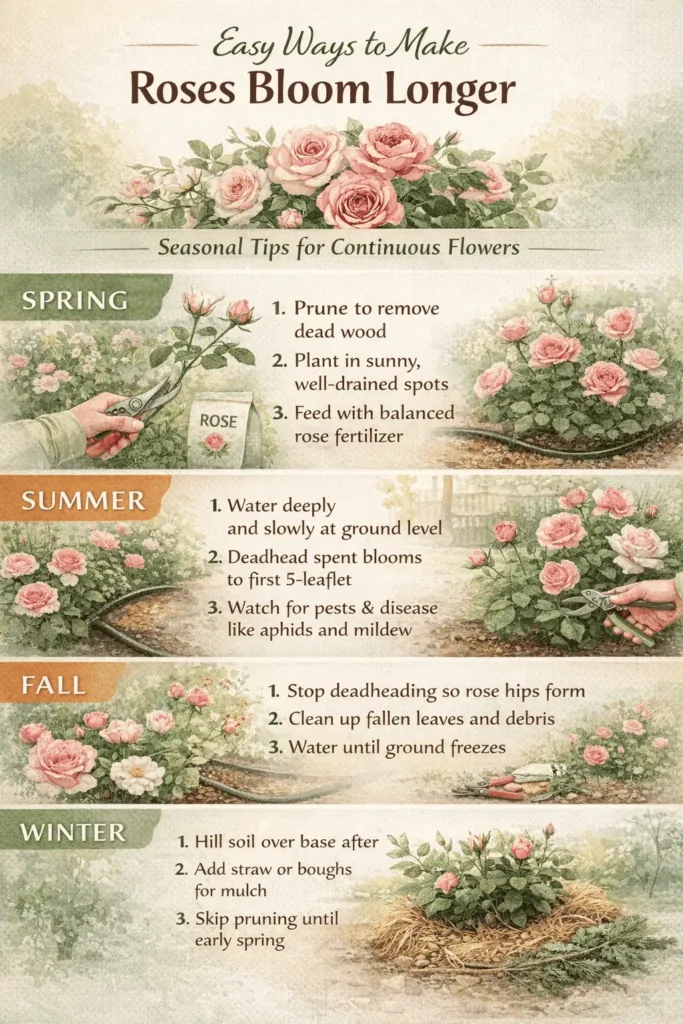
Season-by-season plan to keep blooms coming from spring to fall
A simple seasonal plan keeps blooms coming from thaw to frost without guesswork.
Spring start: prune, plant, and feed for a strong first flush
Once the ground thaws, remove winter coverings and prune out any brown, winter‑killed canes. Open the center so light and air reach the heart of each plant.
Plant bare‑root specimens after soaking roots overnight, or set container plants from April through midsummer. Firm soil around the crown and water slowly at the ground.
Fertilize with a 10-10-10 at the recommended rate—1/4 cup around each plant—and water it in to wake roots and fuel that first flush.

Summer rhythm: deadhead, water wisely, and watch for disease
Deadhead repeat‑bloomers by cutting back to the first five‑leaflet. This keeps stems tidy and buds coming.
Water deeply every 7–10 days during dry spells, at ground level to keep leaves dry and reduce powdery mildew and black spot.
"A quick evening check for beetles or powdery mildew saves weeks of trouble later."
Fall wind-down: stop deadheading, hydrate, and clean up for next year
Stop deadheading so hips can form and wood hardens. Keep watering until the ground freezes.
After the first killing frost, remove fallen leaves and debris to lower disease carryover. Wait to do major pruning until spring.
Winter protection that preserves next season’s growth
After hard frosts, hill 10–12 inches of loose, well‑drained soil or compost around the base for insulation. Once frozen, add straw or evergreen boughs for extra protection.
Use a hardware‑cloth collar to hold the mound in place or ventilate cones to avoid moisture damage. For climbers, gently bend canes and insulate in place with straw and burlap.
| Season | Key action | Timing |
|---|---|---|
| Spring | Prune winter‑killed canes, plant, apply 10‑10‑10 | Early spring; plant April–midsummer |
| Summer | Deadhead, deep water every 7–10 days, scout for pests | Midseason; add light fertilizer in late July |
| Fall | Stop deadheading, keep watering, clean up leaves | After first frost until ground freezes |
| Winter | Hill soil 10–12 in, cover with straw or boughs, protect canes | After hard frosts through freeze |
rose care essentials that extend bloom time
Picking the right varieties and soil will reward you with more repeat flowering all season. Start by matching types to your USDA zone and the sun available. Shrub and landscape varieties are low‑effort winners and do well with 6–8 hours of light.
Planting and soil setup: dig a wide, roomy hole in friable soil and mix in compost. Set the crown at ground level in mild areas or 2–3 inches deeper in cold zones. Firm soil around the root, water thoroughly, backfill, and water again so soil settles without air pockets.
Keep soil evenly moist; aim for about an inch of water per week. Use a soaker hose or long‑spout can and water at the ground in the cool morning to reduce powdery mildew and black spot.
Pruning, hygiene, and pests: major pruning in early spring removes dead canes and opens the center. Deadhead repeat bloomers to the first five‑leaflet. Improve air movement by spacing and thinning, remove diseased foliage early, and handle aphids with a morning spray or neem oil if needed.

Quick wins and common mistakes to avoid
When the sun hits hard, small nudges to soil and shade save a week's worth of blooms. These actions take minutes and fit nicely between errands. They keep your garden feeling cool and flourishing.
Five-minute fixes on hot days: mulch check, soaker hose, and shade tweaks
Press your fingers into the mulch; if it feels warm and dry, add a 2–3 inch blanket to keep the ground evenly cool.
Lay a loose ring of soaker hose around plant bases and set a hose timer. This delivers deep water with the right frequency without splashing leaves.
Clip a small square of breathable shade cloth to a stake for a couple of hours on blazing afternoons. It prevents petal scorch and helps buds stay hydrated.

What shortens bloom: late-summer feeding, wet leaves overnight, and crowded canes
Stop fertilizers by mid to late summer in cold areas. Late feeding pushes soft growth that can suffer winter damage.
Water early so foliage dries in morning sun; wet leaves overnight invite black spot and powdery mildew. Snip crowded canes to improve air flow and speed drying.
Quick reminder: give plants about 3 feet of space, keep tools clean, and clear fallen leaves around plant to reduce disease pressure.
Conclusion
Small, steady actions each season lead to longer bloom time and healthier growth.
Keep a simple rhythm: tidy and feed in spring, water and snip in summer, let hips form in fall, and add gentle winter protection. This routine helps your garden return with confidence year after year.
Choose reliable varieties that match sun and space. Many shrub and landscape roses need less fuss, while modern types may want mid‑summer feeding and winter help. Climbing roses can be insulated on supports or gently laid down for protection.
Trust your senses—cool soil, perky morning leaves, and soft scent—and enjoy the colors and textures you’ve grown, one peaceful season at a time.
FAQ
How can I make my roses bloom longer through the season?
Start with the right varieties for your climate and give them rich, well-draining soil. Feed with a balanced fertilizer in early spring and again midseason, keep a regular watering rhythm (deep and infrequent), and deadhead spent blooms promptly. Prune for shape in spring and remove weak canes to encourage strong new growth. Good airflow and mulch help conserve moisture and suppress weeds, so blooms stay healthy and last longer.
What should I do in spring to set up a strong first flush of flowers?
In early spring, prune to open the center of the plant and cut back to healthy outward-facing buds. Replace winter mulch if needed and top-dress soil with compost. Apply a slow-release fertilizer formulated for flowering shrubs. Plant new varieties now so roots establish before hot weather. Check canes for winter damage and remove any dead wood to focus energy on fresh shoots.
How do I care for roses during summer to keep them producing?
Deadhead regularly to encourage repeat blossoms, water at the base early in the morning to avoid wet leaves overnight, and use drip irrigation or soaker hoses for deep moisture. Feed with a bloom-boosting fertilizer every 4–6 weeks during the active growing season. Monitor for pests and treat gently—use insecticidal soap for aphids and hand-remove larger beetles. Shade cloth during extreme heat can prevent stress.
When should I stop deadheading and begin fall prep?
Stop deadheading about 6–8 weeks before your expected first hard frost to allow hips and canes to set semi-dormant growth. Continue watering deeply until the ground freezes, and reduce nitrogen-rich feeds late in the season. Clean up fallen leaves and spent blooms to limit disease carryover into winter.
What winter protection helps preserve next season’s growth?
After hardening off in late fall, mound loose soil or mulch around the base to protect graft unions and shallow roots. For grafted plants, add extra mulch or use rose cones in very cold zones. Prune lightly only to tidy up—heavy cuts now can spur tender growth that freezes. Ensure good drainage to keep roots from sitting in ice-cold water.
How do I choose varieties that rebloom reliably?
Pick repeat-flowering types such as hybrid teas, floribundas, shrub roses, and many modern climbers appropriate for your USDA zone. Look for disease-resistant cultivars from reputable nurseries like David Austin, Jackson & Perkins, or local garden centers. Consider bloom form and growth habit so plants suit your sun exposure and garden space.
What soil mix and planting steps give repeat flowers the best start?
Use deep, friable soil amended with compost and well-rotted manure for steady nutrition and drainage. Plant so the graft union is slightly above soil level in cooler climates and at soil level in warmer zones. Water thoroughly after planting, mulch 2–3 inches thick, and avoid compacting soil around the roots so air and water move freely.
How often should I water and fertilize during the growing season?
Water deeply once or twice a week depending on heat and soil type—sandy soils need more frequent watering than clay. Fertilize with a balanced rose formula at bud break, then every 4–6 weeks while they’re blooming. Stop heavy feeding late in summer to allow hardening before winter.
What pruning and deadheading techniques promote continuous flowers?
Remove spent blooms down to the first five-leaflet leaf to encourage a new shoot. In spring, cut to outward-facing buds and remove crossing canes to open the center. Make clean cuts at a 45-degree angle just above a swollen bud so water runs off. Regular light pruning and shaping during the season keeps energy focused on flowering.
How can I prevent powdery mildew and black spot on leaves?
Improve airflow by spacing plants and thinning crowded canes. Water at ground level in the morning so foliage dries quickly. Remove infected leaves promptly and clean up debris at season’s end. Use sulfur or potassium bicarbonate sprays as a preventive in humid conditions and choose resistant varieties when possible.
What gentle pest control works for aphids, beetles, and mites?
Blast aphids off with a strong jet of water early in the day, and introduce beneficials like ladybugs. For persistent infestations, apply insecticidal soap or neem oil following label directions. Monitor for spider mite damage in hot, dry weather and increase humidity or use miticides only when necessary. Handpick larger pests like Japanese beetles.
What five-minute fixes help on hot days?
Check mulch depth and add a fresh layer to retain moisture. Turn on soaker hoses for a deep soak rather than quick surface sprays. Temporarily provide afternoon shade with light fabric or a shade cloth for delicate varieties. Mist pathways to cool the surrounding air and reduce heat stress.
What common mistakes shorten bloom time?
Avoid late-summer heavy fertilizing that pushes tender growth into frost. Don’t water overhead at night—wet leaves encourage disease. Keep canes from getting crowded; poor airflow invites black spot and powdery mildew. Finally, avoid shallow, frequent watering that creates weak roots and fewer flowers.