Imagine warm sunlight on your porch and a simple pot of blooms brightening your morning. Have you noticed a bare patch or dreamed of a splash of color outside the kitchen window?
We’ll help you choose low-fuss plants that bring cheerful colors and soft fragrance without heavy work. This guide focuses on reliable picks like zinnias, marigolds, sunflowers, pansies, and lavender that often thrive in full sun and well-drained soil.
You’ll get calm, step-by-step tips for planting seeds, matching plants to your spot, and timing for spring and summer success. We’ll point out which picks tolerate drought once established and which attract bees and butterflies so your garden hums with life.
Expect quick wins—sow zinnias and sunflowers after the last frost, tuck pansies into pots for early color, and mix textures like feathery cosmos with bold zinnias for a lush look. Small habits, like watering at the base and a light mulch, help your flowers grow healthier with less effort.
Key Takeaways
- Pick hardy varieties that match your sun and soil for reliable blooms.
- Sow seeds like zinnias and sunflowers after frost for quick rewards.
- Use simple tools and light mulch to reduce watering and weeds.
- Mix textures and color for a fuller, low-maintenance look.
- Time plantings for spring and summer to keep color through the season.
Start here: simple steps to grow with confidence
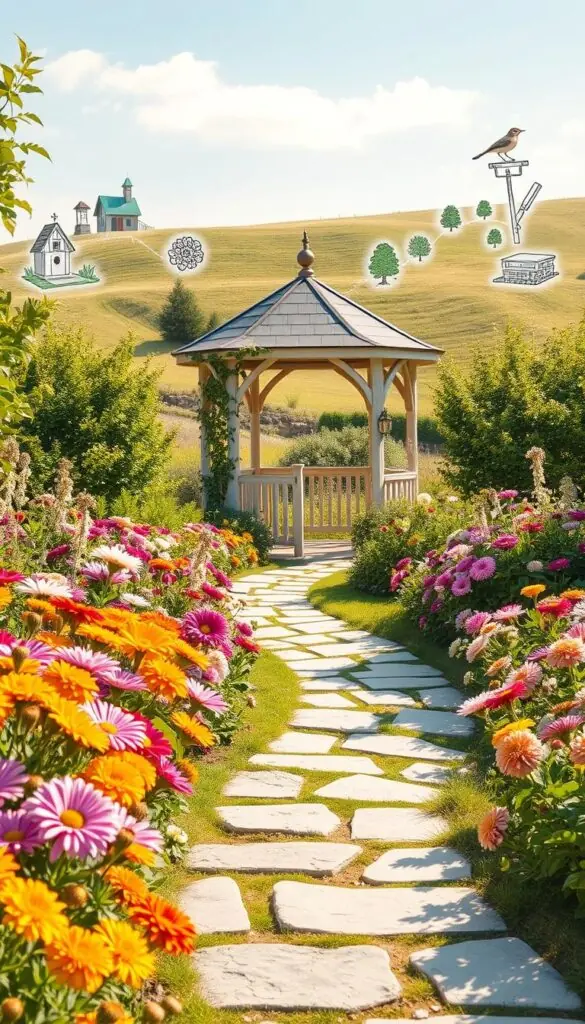
Begin by watching where sunlight falls through the day; that small habit maps your best planting spots. A few minutes at breakfast, midday, and late afternoon tells you whether a spot gets full sun or gentle shade. Picture morning light on the porch and cool shade under a maple—those moments decide which plants will thrive.
Set your sun map and soil basics
Stand outside at three times of day to note light. Full sun means six or more hours; part shade is about half a day. Match your choices to the spot for steady success.
Dig a handful of soil and wet it. If it forms a sticky ball and drains slowly, mix in compost to make it well-drained. Most annuals like zinnias, marigolds, and sunflowers prefer well-drained soil; shade lovers (like impatiens) do better where the soil stays a bit moist.
Tools that help without fuss
Keep your kit light: a hand trowel for planting, bypass pruners for quick trims, and a watering wand to reach the root zone. Mulch helps keep moisture steady in hot or windy spots.
- Start small: one or two types so you enjoy quick wins.
- Water at the base in the morning so leaves dry fast and disease stays low.
- For beginners, check soil once or twice a week—if the top inch is dry, water deeply.
Easy flowers for beginners: how to choose what fits your garden
Choosing the right plants for your yard begins with your USDA zone and a clear idea of the season you want color.
Look up your USDA zone once and you’ll know which perennials return each year and which annuals you’ll replant after frost. In cooler zones, lean on hardy perennials like catmint and sedum (USDA 3-9). In warmer zones, pansies can bloom winter through spring and daffodils, planted in fall, will return each year.
Match timing to the plant: zinnias, marigolds, and sunflowers are warm-season annuals you start from seed after the last frost. Note mature size in feet so tall sunflowers frame a fence while compact marigolds edge a path.
For steady color all season, blend perennials that come back each year with annuals you refresh midseason. Start with a few reliable varieties you love, then add one new type each year to build confidence.
| Plant | USDA Zones | Season | Mature Size (feet) |
|---|---|---|---|
| Catmint (Nepeta) | 3–9 | Perennial, spring–summer | 1–3 |
| Sedum | 3–9 | Perennial, late summer–fall | 0.5–2 |
| Pansies | 6–9 (milder) | Cool-season (winter–spring) | 0.25–0.5 |
| Sunflowers | Annual in many zones | Warm-season (summer) | 2–10+ |
Sun-loving standouts with nonstop color
When a bed basks in steady sun, certain plants will reward you with nonstop color. Choose a sunny spot and plan for bright, sun-warmed petals that draw bees and butterflies all day.
Zinnias: summer-long blooms from seeds
Zinnias thrive in full sun and well-drained soil. Sow seeds after the last frost and watch vibrant colors fill the bed from summer to frost.
Deadhead spent blooms to keep more buds coming. They tolerate dry spells once established and make excellent cut blooms.
Marigolds for sunny borders
Marigolds bring bold orange and gold at the front of beds. Plant in well-drained soil and water, then let it dry slightly between drinks.
Space plants to give air and reduce disease. They also serve as a helpful companion near veggies.
Sunflowers and lantana: height and heat
Sunflowers can grow several feet tall; place them where they can be staked to avoid breakage. Avoid water-logged soil and expect visits from birds and pollinators.
Lantana shines on hot patios and in containers. Its multicolor clusters lure butterflies and hummingbirds and handle dry heat with ease.
"Morning sun brings petals alive; by midday, their colors glow."
- Sow zinnias and marigolds by scattering seeds and raking lightly.
- Stake tall sunflowers before winds pick up.
- Mix low marigolds, mid zinnias, and a sunflower or two for depth and variety.
Shade and part-shade charmers that still bloom big
Even under trees, you can create bright pockets of color with thoughtful plant choices. Pick shade-tolerant plants that show off rich foliage and steady blooms so your shadowed spots feel lively all season.
Impatiens for bright, continuous color in dappled light
Impatiens bloom nonstop from June until frost when tucked into part or full shade. They do best with soil that stays evenly moist but never waterlogged.
Slide pots of impatiens along a porch edge where morning light filters through. In many U.S. zones they’ll keep their vivid colors without fuss.
Coral bells for foliage glow and hummingbirds
Coral bells (Heuchera) are grown for colorful foliage—peach, burgundy, and chartreuse add depth to shady beds.
They prefer partial shade and hardy zones 3–9. Delicate flowers attract hummingbirds while the leaves create season-long interest in small gardens.
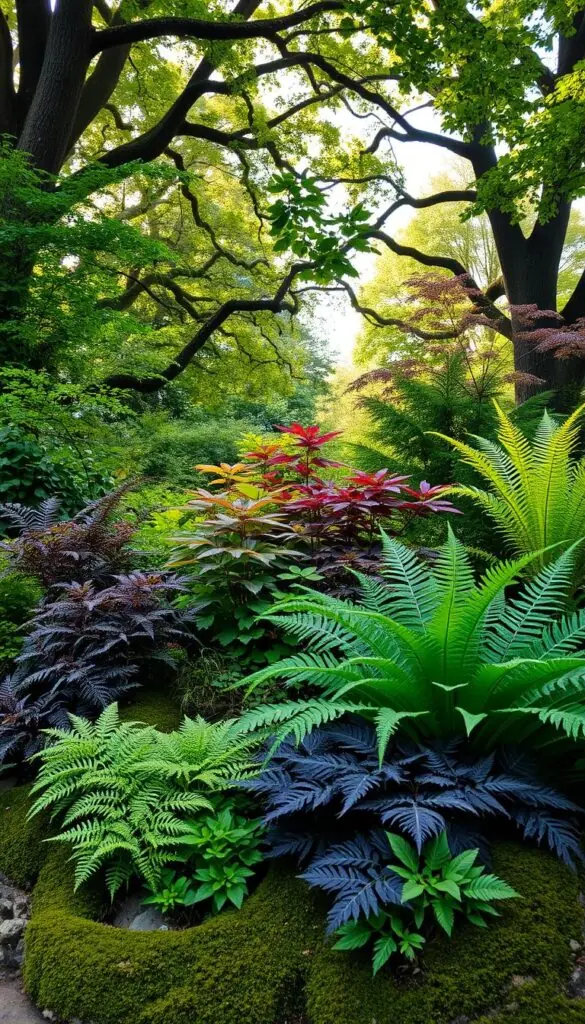
- Fill dappled spots with impatiens for vivid flowers; keep soil evenly moist so colors stay fresh.
- Mix coral bells at a tree’s edge and add a light mulch to hold moisture without smothering trunks.
- Choose soft pinks, creamy whites, or bold reds to make shadowed corners pop.
- Rotate containers a quarter turn weekly for even growth and a fuller look on all sides.
Container-friendly flowers that forgive missed waterings
Create a container corner that hums with color and velvety leaves, even between waterings. Small pots can make a big impression when you choose forgiving plants and the right soil mix.
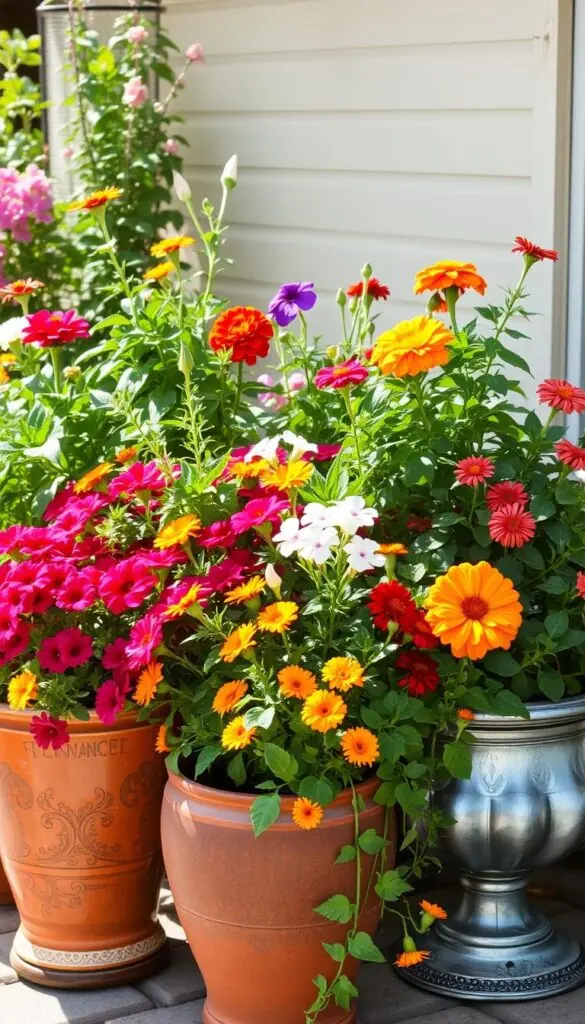
Calibrachoa: no-deadhead cascades
Calibrachoa loves full sun to partial shade and a rich, well-drained soil mix. Plant near the rim so its trailing blooms spill over and soften railings and steps.
These tiny, trumpet-shaped blooms keep going through heat and short dry spells. They rarely need deadheading and look generous in medium to large containers.
Coleus: bold foliage for sun or shade
Coleus brings velvety foliage in dramatic colors and works in sun or shade depending on the variety. Choose the type that matches your spot and pinch small flowers to keep leaves lush.
It prefers moist, well-drained soil and pairs beautifully with trailing calibrachoa for contrast in texture and color.
- Choose containers with drainage holes and a lightweight potting mix so roots get air and water evenly.
- Use pots 8–14 inches for mixed combos; larger planters suit bold displays and reduce watering frequency.
- Top-dress with mulch or compost to hold moisture and tuck a slow-release fertilizer at planting.
- Water deeply until you see a drip, then let the top inch dry before the next soak; group containers to form a cooler microclimate.
- Place a shallow saucer of water nearby to invite butterflies while keeping potting soil well-drained.
| Feature | Calibrachoa | Coleus |
|---|---|---|
| Sun | Full sun–partial shade | Sun or shade (by type) |
| Soil | Rich, well-drained | Moist, well-drained |
| Care | No deadheading; tolerates dryness | Pinch flowers; keep moist |
| Best container | Hanging or rim-full pots | Medium to large pots for foliage |
"A well-chosen pot and the right mix make your containers thrive with less fuss."
Seed-to-bloom stars you can sow this spring
With a few simple sowing steps you can watch airy stems and edible blooms appear in weeks. These two picks suit a sunny bed and reward you with motion, color, and visits from pollinators.
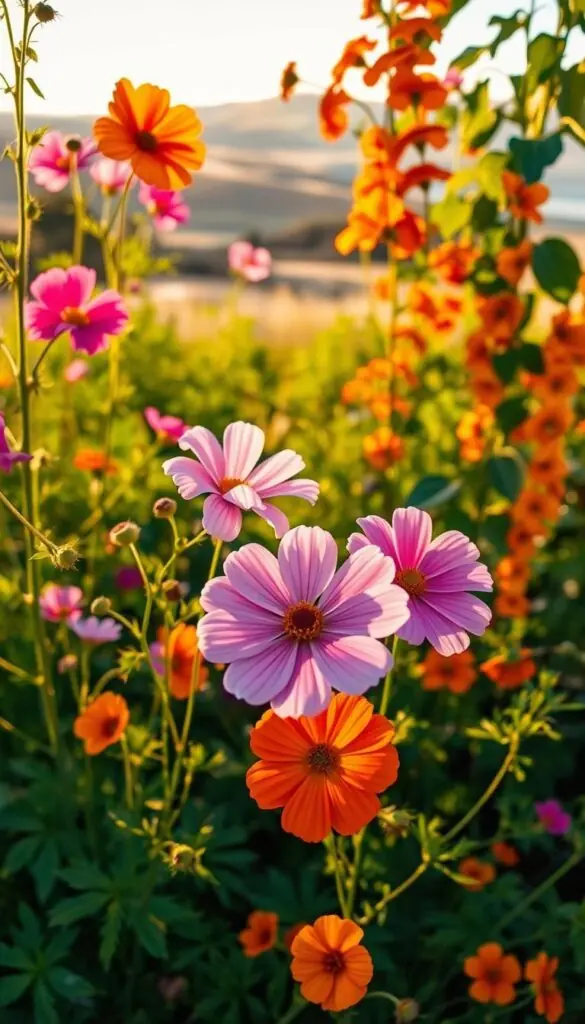
Cosmos that sway on feathery stems
Cosmos loves full sun and average, well-drained soil. Wait until after your last frost, then sprinkle seeds in a sunny bed and rake lightly.
Loosen the soil a few inches so the long taproot can stretch. Water deeply at planting, then allow the topsoil to dry between drinks. Their feathery foliage and floating blooms sway in every breeze and draw butterflies.
Nasturtiums with edible blooms and a trailing habit
Sow nasturtiums along edges or in a window box for cascading color. Their leaves and bright blooms are edible and add a peppery snap to salads.
- Give nasturtiums well-drained soil and steady, not soggy, moisture.
- Avoid overly rich soil; that encourages foliage over flowers.
- Mark a small patch for beginners so you can track each seedling and celebrate sprouts.
- Water at the base with a narrow stream to keep young stems upright.
- Resow a few seeds every two weeks for a rolling show through summer.
Fragrance and texture: flowers that delight your senses
Place fragrant spikes and airy vines near where you pause so the garden greets you with scent. A small grouping of scent-rich plants turns a path, gate, or porch into a calm, living corner.
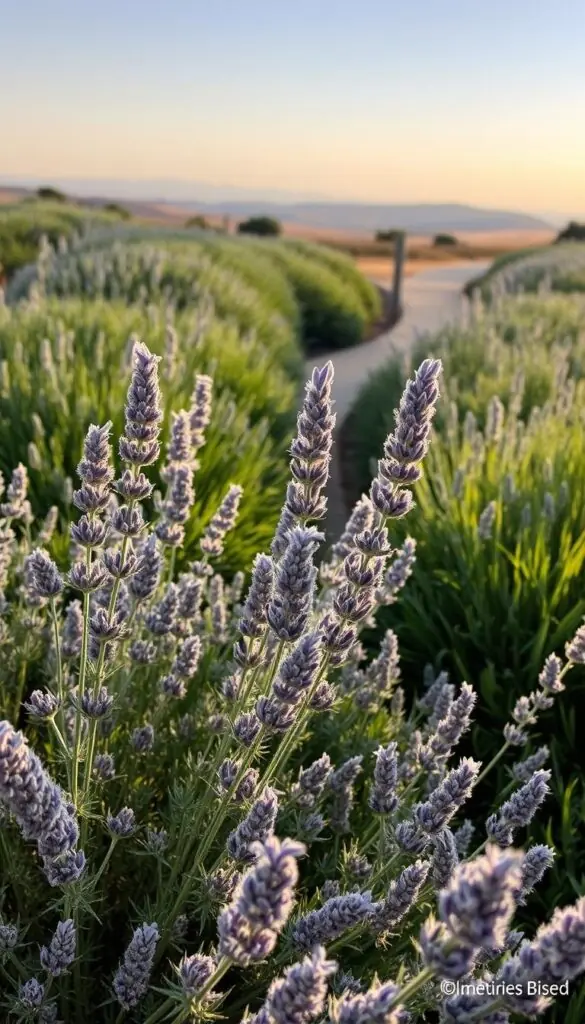
Lavender’s purple spikes, silvery foliage, and soothing scent
Lavender loves full sun and well-drained soil. Plant it where the sun warms the ground so its silvery foliage and purple spikes scent warm afternoons.
Use gravel or sand to improve drainage. Water deeply but infrequently; once established, lavender tolerates dry spells and draws bees and butterflies.
Sweet peas for spring perfume on a trellis
Sweet peas offer an old-fashioned, highly fragrant show in early spring. Give them a simple trellis and tie soft stems as they climb.
They prefer loamy, well-drained soil and regular moisture at the base. Clip spent stems to keep blooms coming and to enjoy soft petals in shades from blush to deep violet.
- Plant lavender near a sunny path so brushes of your hand release scent.
- Set a basic trellis for sweet peas and tie stems with soft twine.
- Space plants for air flow to keep leaves dry and happy.
"Snip a few lavender sprigs for a bedside jar; the calm scent carries a peaceful note into the evening."
Mix in pale colors to brighten a shady corner and deepen the blues of a clear morning sky, and place both plants where they gently perfume your everyday garden.
Pollinator magnets that keep the garden buzzing
Create a buzzing corner of your garden by planting a few tried-and-true nectar sources. These two choices bring long bloom times and wildlife benefits with little fuss.
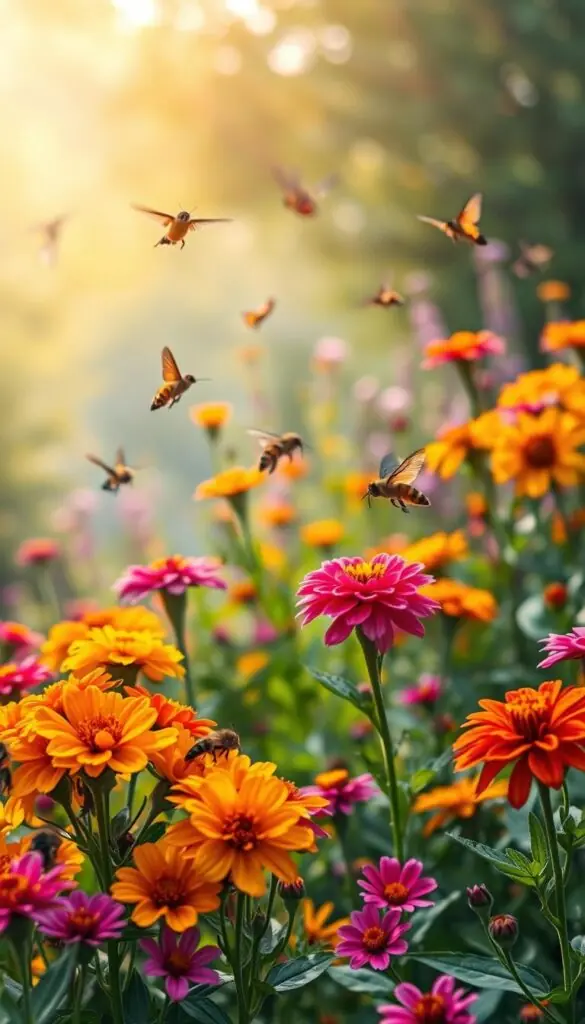
Black-eyed Susan for bees and seed-loving birds
Black-eyed Susan (Rudbeckia) prefers full sun to partial shade and shows off golden petals through late summer into fall.
Plant them in a sunny patch where bees and butterflies will find the nectar. Let some seed heads stand after bloom so finches can feed as seasons shift.
Avoid overly rich soil; average garden soil keeps stems sturdy. These plants often self-seed, giving you more color next year.
Catmint’s purple haze that butterflies adore
Catmint (Nepeta) creates a soft purple haze that hums with pollinators for months. It tolerates drought and resists deer and rabbits.
Tuck catmint in front of roses or along a walkway to soften edges and invite visits from butterflies and bees. Shear lightly after the first bloom wave to encourage fresh flowers.
Both plants handle heat well. Water new transplants until they root, then cut back on irrigation as they establish.
"A few thoughtful plants can turn a quiet bed into a lively habitat for birds and pollinators."
- Plant black-eyed Susan in a sunny spot for late-season color and seed for birds.
- Place catmint where its scent and color will be noticed—near paths or entrances.
- Give both at least half a day of light and skip heavy fertilizers for best form.
- Mix with other pollinator-friendly selections so your garden hums from morning to evening.
| Plant | Light | Key Benefit | Care Tip |
|---|---|---|---|
| Black-eyed Susan | Full sun–partial shade | Attracts bees, butterflies; seed heads feed birds | Average soil; avoid heavy fertilizer; allow self-seeding |
| Catmint (Nepeta) | Full sun–partial shade | Long bloom; drought tolerant; deer/rabbit resistant | Shear after first blooms to refresh flowers; low water once established |
Cold-season color when other flowers sleep
A small container of hardy pansies brightens entryways while bulbs sleep below. With a little fall work, you can enjoy cheerful faces and returning blooms before the busy spring rush.
Timing is simple: plant pansies and bulbs in fall so roots establish before hard freezes. Pansies handle frost and often bloom through winter in milder U.S. zones. Daffodils sit quiet belowground until late winter and lift bright trumpets in early spring.
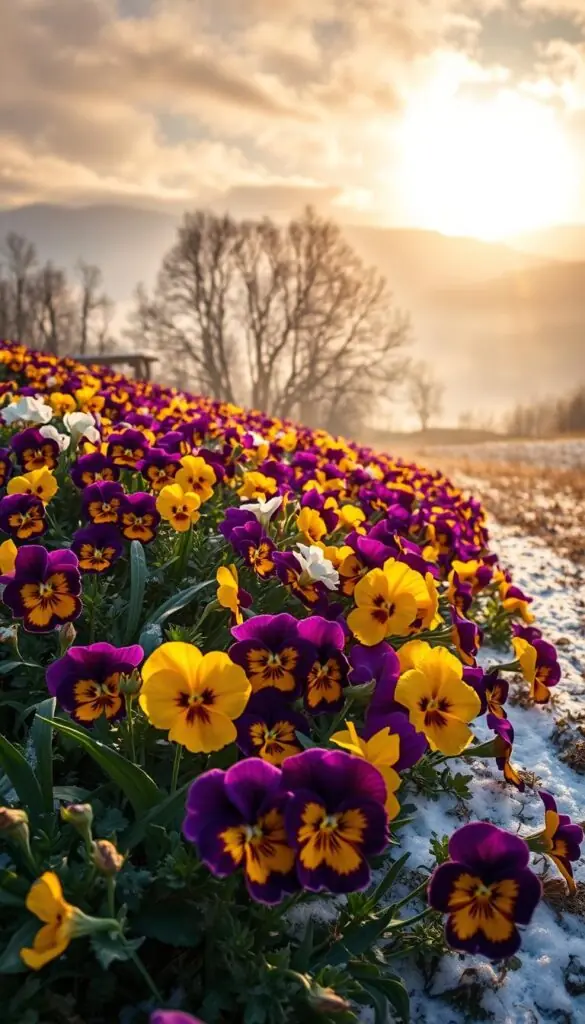
Pansies for winter-to-spring cheer
Tuck pansies into porch containers in fall for long-lasting color. Use a rich, well-drained potting mix and water during dry spells, even in cool weather. Choose mixes of velvety purple, lemon, and white for a lively welcome by your steps.
Daffodils that come back each year
Plant daffodil bulbs in fall at two to three times bulb depth. They prefer full sun to part shade and well-drained soil so bulbs don’t sit wet. Heights range from a few inches to about 2 feet—place shorter pansies in front and taller daffodils behind for layered color.
- Combine early daffodils and pansies in containers for a staged bloom.
- Watch temps near freezing—pansies perk back up as days warm.
| Plant | Planting Time | Light | Height (feet) |
|---|---|---|---|
| Pansies | Fall | Sun or partial shade | 0.1–0.2 |
| Daffodils (Narcissus) | Fall (bulbs) | Full sun–part shade | 0.2–2 |
Heat- and drought-tolerant options for low-water gardens
For sunbaked spots where water is scarce, a few tough picks will keep color through the heat.
Choose plants that hold water in glossy, succulent leaves and open wide on bright days. These picks shine in full sun and ask for lean, well-drained soil.

Sedum’s succulent foliage and late-season blooms
Sedum comes in many varieties, from tight mats to taller stems. The foliage stays glossy in hot summer weather and sends up late-season flowers when others fade.
Most sedums are drought tolerant once established and suit USDA Zones 3–9. Mix low, spreading types with upright forms to add a subtle height shift without more water.
Portulaca (moss rose) for poor, sandy spots in full sun
Portulaca thrives in poor, sandy ground. Its succulent leaves store moisture and its bright petals—think hot pink and pure orange—open on sunny days.
It stays low, about 3–8 inches, and self-seeds where it likes the heat. Plant it at pathway edges or gravel strips so shallow roots won’t compete with larger neighbors.
- Start-up water: water new transplants deeply, then switch to a deep, infrequent routine; both plants reward restraint.
- Spacing: give generous gaps measured in feet rather than tight clumps so air flows and summer growth stays tidy.
- Soil tip: improve only the worst patches; these plants prefer lean, well-drained spots in low-water gardens.
| Plant | Sun | Height | Best use |
|---|---|---|---|
| Sedum (many varieties) | Full sun | 0.1–2 feet | Rock gardens, curb strips, late-summer color |
| Portulaca (moss rose) | Full sun | 3–8 inches | Pathway edges, gravel beds, containers |
"Choose restraint: less water, generous spacing, and lean soil let these plants shine."
Full sun flowers that thrive in summer beds
A sunlit border is easiest to design when you layer plants by height and repeat color for rhythm. Start with a clear front-to-back plan so each plant gets light and room to grow.
Hardy geraniums as low groundcover color
Hardy geraniums (USDA 4–8) make a fuss-free groundcover. They like average soil and need little watering except in drought.
Plant them in front rows to knit the bed together. Shear lightly after bloom to refresh foliage and keep a tidy edge.
Rudbeckia and daylilies for bold sunny borders
Rudbeckia shines in full sun to part shade. Their golden blooms read across the garden, attract butterflies, and often self-seed.
Daylilies prefer rich soil and sun. Each blossom opens for a single day—plant where you can enjoy that fresh bloom and watch the next bud open by morning.
- Layer heights: geraniums in front, rudbeckia mid, daylilies behind so nothing shades its neighbor.
- Space clumps in feet not inches to ease weeding and improve airflow on hot summer days.
- Water deeply once a week at peak heat, then let soil rest so roots grow strong.
- Keep fertilizer light; average soil suits geraniums and rudbeckia—too-rich beds can flop.
"Plant so each day brings a fresh bloom and each season feels planned, not crowded."
Easy flowers that grow in containers, beds, and cutting gardens
A small patch of mixed beds and pots can keep your kitchen jar full of fresh blooms all season.
Zinnias are quick from seeds and make wonderful cut stems that last in a vase through summer into frost. Sow every 2–3 weeks for succession blooms. Plant in full sun and well-drained soil for best results.
Dianthus offers clove-scented blooms and sturdy stems. Set them at the front of beds or in containers near the door so you can snip often. They like sun to light shade and tidy, well-drained soil.
Asters and late-season color
Asters bloom late in summer and into fall. They attract butterflies and extend your cutting season when other blooms fade.
- Mix heights: dwarf sunflowers, airy cosmos, and trailing nasturtiums create ready-made bouquet components.
- Harvest in cool mornings and snip above a leaf node to encourage more stems.
- Place stems in lukewarm water and remove lower leaves so bouquets stay clean longer.
- Keep notes on vase life and re-seed favorites next season.
| Plant | Best use | Light | Tip |
|---|---|---|---|
| Zinnias | Cutting garden, containers | Full sun | Sow seeds every 2–3 weeks for steady stems |
| Dianthus | Border edge, vase | Sun to light shade | Well-drained soil; fragrant, long-lasting stems |
| Asters | Late-season cut blooms | Full sun–partial shade | Attracts butterflies; extends bouquet season |
"Mix containers by the back door with beds in the yard so you can snip on your way inside."
Season-by-season care made simple
A gentle yearly rhythm—small tasks each month—keeps your garden lively from thaw to frost. This calm plan helps you match simple actions to the weather so work stays light and results stay bright.
Spring
After your last frost, sow warm-season seed of zinnias, cosmos, and marigolds into warming soil. Refresh beds with a thin layer of compost for a healthy start.
Set out hardy annuals and check bulb foliage. Let daffodil leaves fade naturally so bulbs gather energy for next year’s bloom.
Summer
Water deeply once or twice a week, then let the top inch of soil dry so roots grow downward. This suits cosmos and lavender especially well.
Deadhead spent blooms—zinnias respond with more buds and longer color without extra fuss.
Fall and winter
Plant pansies in porch containers and sunny beds to bridge cold mornings and mild afternoons. Clean up leaves and add a light mulch around perennials to steady temperatures.
On dry, above-freezing days, water containers so roots do not desiccate. Keep a simple monthly checklist and care stays doable all year.
"A few seasonal habits—deep water, tidy beds, and a touch of mulch—keep your garden resilient and joyful."
Quick tips to avoid common mistakes
A few simple adjustments now can spare you surprise wilt or crowded beds later. These friendly fixes save time and help your garden feel confident, not fussy.
Don’t overwater; keep soil well-drained and water at the base
Water at the base early in the day and let the surface dry between sessions. This keeps roots healthy and cuts disease risk.
Avoid water-logged soil—most sun-loving plants prefer soil that drains well.
Read plant tags for height, sun, and zone; provide support for tall growers
Read each tag for sun needs, mature height, and USDA zone before planting. That tiny step prevents crowding and unhappy roots.
Space in feet, not inches, so air flows and stems don’t touch in humid months.
Stake tall growers like sunflowers before wind hits. Early support prevents breakage and saves time later.
Practical checklist for beginners
- Start with a small patch and a short list of favorites so you can learn your spot.
- Use marigolds as a companion near veggies and sunny beds to add color and help deter pests.
- Avoid heavy feeding; many easy flowers grow best in average soil.
- Keep pruners clean, mulch light, and watering calm—these habits keep your garden low-stress.
"Small steps—right spacing, steady water, and early support—protect your plants and make gardening more joyful."
Conclusion
Close the season by enjoying small rituals—morning watering, a quick snip, and a moment to notice color.
With a handful of easy flowers and steady, simple habits you can have a colorful, low-stress garden that suits your life. Zinnias, marigolds, pansies, lavender, sedum, and sunflowers reward basic care from spring through the year.
Choose sun or shade friends, water deeply and let soil breathe. Blend scent and texture—silvery lavender with bright zinnias or a trail of nasturtiums by the step—so each corner invites you to pause.
Start small, add one new plant each season, and trust the process: seeds sprout, a single cut flower brightens the kitchen, and your flowers grow as you learn. Step outside with your coffee and enjoy the calm your garden brings.
FAQ
Which of these low-maintenance plants need full sun?
Many of the sun-loving standouts prefer full sun — zinnias, marigolds, sunflowers, lantana, portulaca, and rudbeckia all thrive in six-plus hours of direct light. Choose well-drained soil and avoid planting where water pools.
Can I grow these in containers on a sunny patio?
Yes. Calibrachoa, geraniums, lantana, coleus (sun or shade varieties), and sun-loving zinnias do well in pots. Use a good potting mix, a container with drainage, and mulch the surface to reduce watering frequency.
What are the easiest seed-to-bloom options for spring sowing?
Cosmos and nasturtiums are top picks from seed. Sow after the last frost in well-drained soil and full sun. They establish quickly and reward you with long bloom times and attractive foliage.
How do I help pollinators with these plant choices?
Plant a mix of shapes and bloom times: black-eyed Susan, catmint, lavender, and sunflowers attract bees, butterflies, and birds. Provide continuous blooms through summer and into fall, and avoid pesticides.
Which varieties give winter or early-spring color?
Pansies and daffodils are reliable for cold-season interest. Pansies handle chill and look cheerful through winter into spring; daffodil bulbs planted in fall return each year as bright early bloomers.
How often should I water heat- and drought-tolerant plants like sedum and portulaca?
Water deeply but infrequently. Allow soil to dry between waterings — these succulents and moss roses prefer poor, sandy spots and are harmed by constant wet feet. In summer heat, check moisture every few days for containers.
What basic tools do I need to keep a low-maintenance garden healthy?
A hand trowel, sharp pruners, a watering wand for gentle reach, and mulch are plenty. These tools help you plant, deadhead, and water at the base to prevent disease and conserve moisture.
How do I match plants to my USDA zone and seasonal needs?
Read plant tags for hardiness and bloom season. Pick perennials hardy to your zone for year-after-year color, and use annuals like zinnias, marigolds, and cosmos to fill seasonal gaps. Local extension services can confirm zone-specific advice.
Any tips to avoid common beginner mistakes?
Don’t overwater; ensure good drainage and water at the base. Read tags for sun exposure and plant height, stake tall sunflowers or cosmos if needed, and deadhead spent blooms to extend flowering.
Which picks are best for cutting gardens and bouquets?
Zinnias, dianthus, asters, and sunflowers make great cut flowers. Grow them in a sunny spot, harvest in the morning, and place stems in fresh water for lasting arrangements.
Can foliage plants like coleus double as bloomers in mixed beds?
Absolutely. Coleus brings bold, colorful foliage that complements bloomers in both sun-tolerant and shade-tolerant types. Use them to anchor container compositions or as contrast in borders.
How do I extend bloom time through summer?
Deadhead regularly, water deeply but less often, and add a slow-release fertilizer early in the season. Choose long-blooming varieties such as zinnias, marigolds, and lantana for continuous color.
Which fragrant options should I plant near seating areas?
Lavender and sweet peas are ideal for scent near patios or trellises. Lavender offers a dry, soothing aroma and silvery foliage; sweet peas provide heady spring perfume on supports.
Are there low-growing groundcover bloomers for sunny borders?
Yes — hardy geraniums and certain low zinnia varieties work well as groundcover or low borders, adding color without tall maintenance.
When should I plant bulbs, seeds, and annuals through the seasons?
Plant bulbs in fall for spring blooms, sow hardy annual seeds after the last frost in spring, and place heat-tolerant annuals in late spring to early summer once soil has warmed. Mulch perennials in fall for winter protection.