
Morning light warms a patch of grass and you notice a thin, pale spot near the walkway. Have you ever stood in the aisle, puzzled by the three figures on a bag and wondered which one will bring that lush, sunlit green back?
We help you move from confusion to calm. The three numbers on a label are the fertilizer grade — the N‑P‑K ratio — and they show the percentage by weight of nitrogen, phosphorus, and potassium.
Think of nitrogen as the green booster, phosphorus for roots and energy, and potassium for stress resistance. Simple examples like 23-3-8 or 10-10-10 make more sense once you see how those percentages map to real lawn health and visible results.
By the end of this short guide, you’ll know what the label tells you, when to test your soil, and which tool fits your yard so you can pick a product with quiet confidence.
Key Takeaways
- The three numbers are the N‑P‑K ratio and show nutrient percentages by weight.
- Nitrogen greenness, phosphorus root strength, potassium stress tolerance.
- Common examples (23-3-8, 10-10-10) illustrate how ratios affect your lawn.
- Test soil and start light if you’re unsure to avoid overapplication.
- Choose the right spreader for even coverage and predictable results.
Fertilizer Numbers Meaning: What N-P-K Really Tells You
Think of the three figures on the bag as a simple map to your lawn's needs. The first number is nitrogen (N), the second number is phosphorus (often shown as P2O5), and the third number is potassium (listed as K2O).

The three numbers as percentages by weight on the bag
These are percentages by weight. A 24-3-6 label means 24% N, 3% P (as phosphate), and 6% K (as potash). That tells you the actual amount of each nutrient in the mix.
What each nutrient does for lawns and plants
- Nitrogen fuels leafy growth and deep green color. It helps grass recover after mowing and wear.
- Phosphorus builds strong roots and moves energy through the plant system. It matters for establishment and drought resilience.
- Potassium improves stress tolerance — better water use, tougher cell walls, steadier color in heat or cold.
Watch for sensory cues: rich green leaves, springy turf underfoot, and roots that hold soil during dry spells. Together, these nutrients support overall plant health so your yard looks and feels thriving.
How to Read a Fertilizer Label Like a Pro
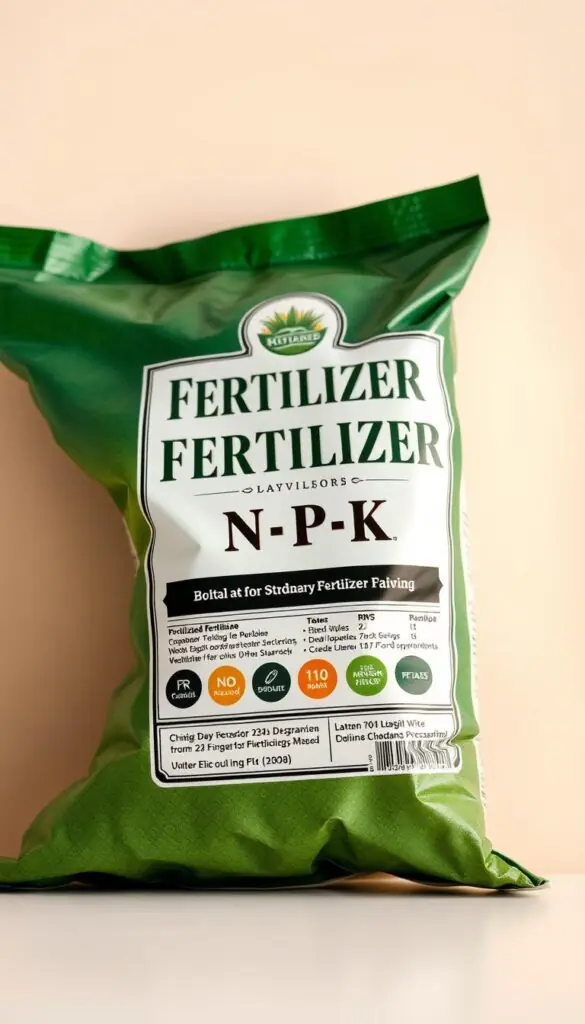
A clear front-of-bag grade and a quick back-of-bag scan give you a fast, confident pick. Read the bold grade first to see the N‑P‑K headline. Then flip the bag and read the guaranteed analysis for details.
Spot the grade and the guaranteed analysis
Front: Find the large N‑P‑K grade (for example, 23-3-8). This tells the primary focus: green-up, root work, or general care.
Back: Look for the guaranteed analysis. It lists N, P2O5 and K2O and any micronutrients like iron or zinc.
Practical match-ups and spreader tips
- 23-3-8 or 24-3-6 — lawn-focused blends for strong green-up.
- 10-10-10 or 5-5-5 — balanced options for steady growth and establishment.
- Find application charts and note spreader settings. Match the chart to your tool.
- Slow-release on the label means steadier feed and fewer quick growth spurts.
| Grade | When to Use | Look On Back For |
|---|---|---|
| 24-3-6 | Spring green-up for established turf | Guaranteed analysis, spreader setting, slow-release note |
| 10-10-10 | General maintenance or new seed | Micronutrients, application rate, safety guidance |
| 5-5-5 | Regular, gentle feeding for mixed plants | Analysis and watering instructions |
Tip: Take a quick photo of the label and your spreader setting. It makes application easy and repeatable.
From Ratio to Reality: Calculating Nutrient Amounts from the Bag
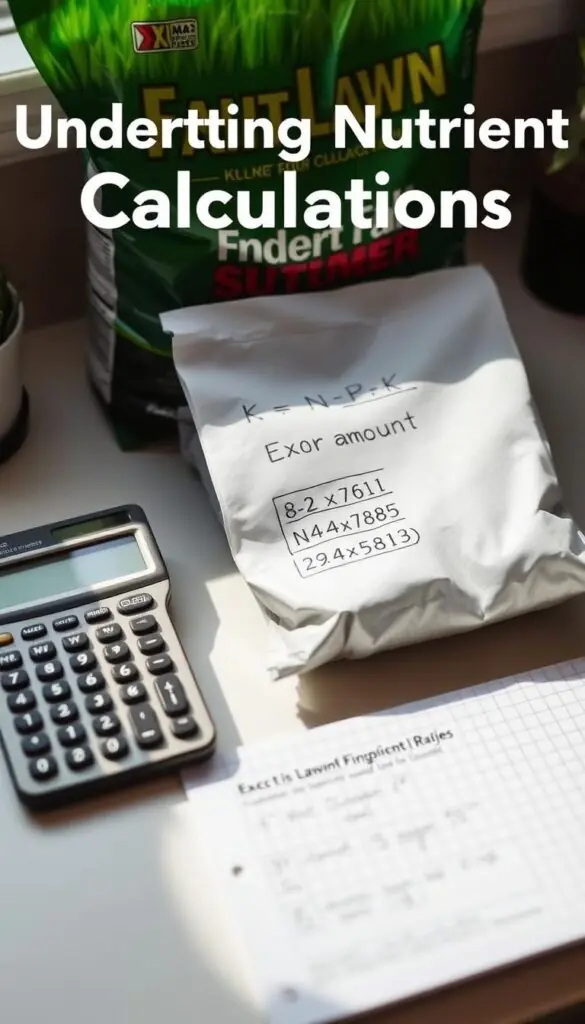
Turn the labeled ratio into real pounds you can count on your phone. Percentages on the bag are by weight, so a quick multiply gives you the true amount of each nutrient.
Quick math: turning percentages into pounds
Multiply the bag weight by each percentage (as a decimal). For example, a 40 lb bag labeled 24-3-6 contains 40 × 0.24 = 9.6 lb of N, 40 × 0.03 = 1.2 lb of P2O5, and 40 × 0.06 = 2.4 lb of K2O.
Or use the classic: a 100 lb bag of 5-5-5 gives you 5 lb of each nutrient and 85 lb of the rest.
Why the "rest" is filler and how it helps
The remaining weight is filler: sand, limestone, or inert carriers. It isn't waste. It helps granules spread evenly and prevents striping.
Balanced blends versus high-nitrogen mixes
Balanced fertilizer like 10-10-10 or 5-5-5 spreads even nutrition for general care. High-nitrogen blends push leaf growth and quick green-up.
- Use the calculated pounds to set your spreader by target pounds of nitrogen per 1,000 sq ft.
- Pick slow-release when you want steady color without surge growth.
- Measure your yard so you buy the right bag amount and avoid leftovers in the garage.
Soil Test First: Match the Right Fertilizer to Your Lawn’s Needs
A simple soil test saves time and money by pointing to what your lawn truly needs. Start here and you buy only what helps your grass and plants, not what sits in the garage.
Using Cooperative Extension soil tests and understanding results
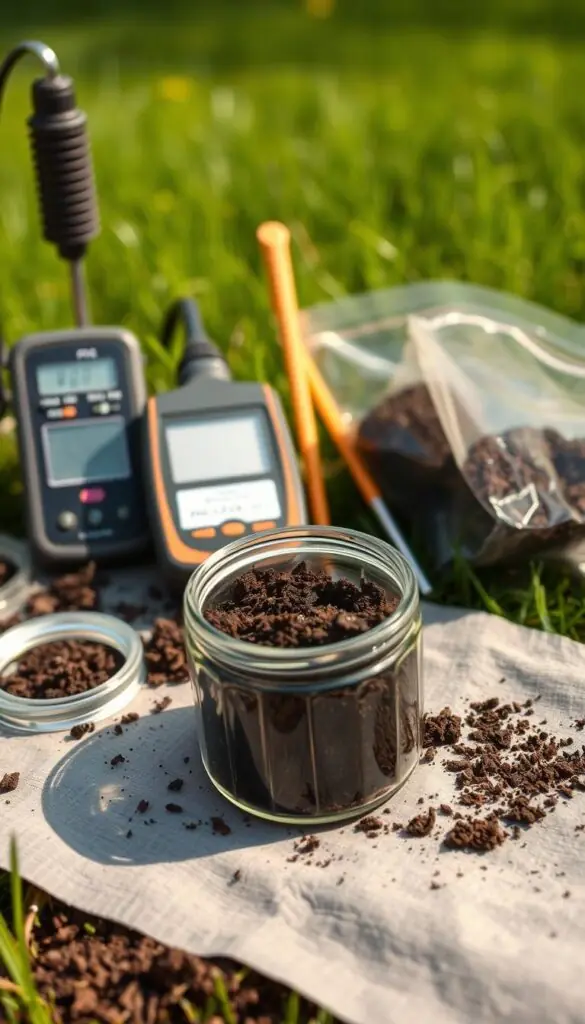
Collect 10–12 small cores from across your yard, 2–4 inches deep. Mix them in a clean bucket and let the soil air-dry before packing.
Use your state Cooperative Extension system kit, mail it in, and expect lab results in about a month for roughly $15–$20. The report shows pH and key nutrient levels plus a recommendation for the right fertilizer blend.
pH, nutrients, and timing: when to choose phosphorus or potassium
Read pH first. It controls how nutrients reach your plants, especially phosphorus. If the lab flags low phosphorus, the recommendation may call for a higher P blend to build roots.
- If phosphorus is adequate, pick a low‑P product; many areas limit P unless tests show need.
- Follow advice on potassium before stress seasons, and consider lime or sulfur if pH is off.
- Retest every 2–3 years, jot dates and application rates, and calibrate your spreader so results stay steady.
"Healthy soil smells earthy and crumbles in your hand."
Start conservatively if you’re unsure. Small, repeatable steps deliver steady improvements and fewer surprises.
Seasonal Strategy for U.S. Lawns: Picking N-P-K by Time and Turf
A seasonal rhythm—spring push, summer steady, fall build—keeps lawns resilient.
Spring kickstart: When soil warms, choose higher nitrogen blends like 25-5-10 to drive green-up and healthy growth. Prefer slow-release types to avoid a sudden surge that leads to extra mowing.
Summer feeding: Keep nitrogen steady and raise potassium so turf handles heat and foot traffic. Slow-release granules cut stress by feeding over weeks. Water in lightly after applying to help granules start working.
Fall and winter prep: Shift to less N and more K—blends such as 22-2-12 help roots store energy and tolerate cold. For cool-season lawns, give a late fall, light feed to strengthen roots without forcing tender blades.
Cool-season vs. warm-season grasses
Cool-season grasses (fescue, bluegrass) do best with spring and fall attention. Ease up in hot midsummer to avoid stress.
Warm-season turf (Bermuda, zoysia) needs most feeding in late spring and summer. Reduce applications as nights cool and growth slows.
- If unsure, apply a balanced fertilizer once per season to maintain color while you refine a schedule.
- Watch weather—skip applications before heavy rain to prevent runoff and wasted product.

| Season | Typical Blend Example | Primary Goal |
|---|---|---|
| Spring | 25-5-10 | Green-up and steady shoot growth |
| Summer | Slow-release N with added K | Stress tolerance and steady feeding |
| Fall/Winter prep | 22-2-12 | Root strength and cold resilience |
"Treat the year like a calendar: small, timed steps keep lawns healthy and predictable."
Beyond the Big Three: Micronutrients, Organic vs. Synthetic, and Watering
Small additions can make a big difference. Trace elements like iron, manganese, and zinc help deepen color and improve vigor when basic nitrogen, phosphorus, and potassium aren’t the whole story.
Iron and friends: If your lawn stays pale after a proper N feed, an iron or manganese boost can darken blades without pushing extra growth. Micronutrients act in tiny amounts, so follow label rates and add them only when soil tests or symptoms point to a need.
Organic vs. conventional options: Conventional products work fast and dissolve in water, which makes them handy before a weekend event. Be careful—overapply and you can burn grass or cause salt build-up. Organic choices feed slowly, improve soil texture, and help moisture retention over time.
Watering and tools: Lightly water granules in until the blades glisten so nutrients move into the soil. Use a broadcast spreader for wide lawns and a handheld for edges and tight spots. Overlap wheel tracks for even coverage and keep a brush or blower nearby to sweep stray granules back onto turf.
- If pale color persists after proper nitrogen, consider iron or manganese.
- Choose organic for steady soil health; pick conventional for quick greening when needed.
- Water gently after application; it helps nutrients reach the root zone.
- Protect beds and hardscape with an edge-deflector to prevent drift.
"Add micronutrients only when needed; a soil report or clear symptoms will guide you."
Application Made Simple: Steps, Safety, and Common Mistakes to Avoid
Small, careful steps make applying product simple and worry-free. Start with the bag chart and your spreader and plan one steady pass at a time.
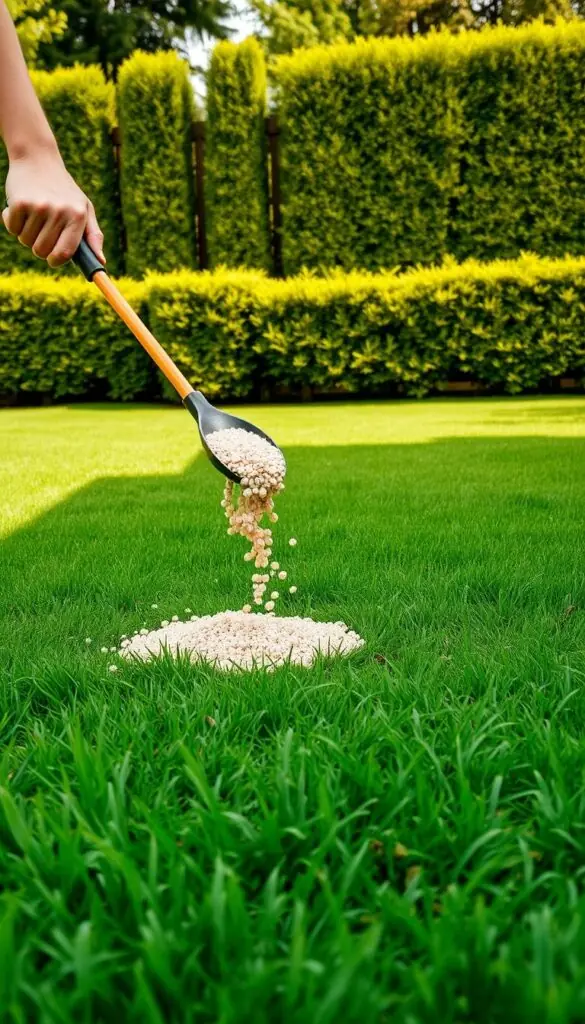
Practical steps
Calibrate first. Use the bag’s spreader settings, test on a tarp, and adjust until output matches the recommended rate.
Apply to dry grass in calm weather so granules fall where you want them. Walk at a steady pace and slightly overlap wheel lines for even coverage.
After application, water in with a light, even soak. Aim for that fresh, earthy scent and a faint shimmer on leaves—not puddles.
Quick tips and safety
- Avoid over-applying; excess can burn turf and stress soil life.
- Use a spreader guard at edges and sweep stray granules off hard surfaces to prevent runoff.
- Check the forecast and skip application before heavy rain so nutrients reach the soil, not storm drains.
- Keep kids and pets off the lawn until watering is done and the surface is dry.
- Store leftover product sealed and dry; label the date and rate for the next use.
| Action | Why it matters | Quick check |
|---|---|---|
| Calibrate spreader | Ensures correct application rate | Test on tarp, match bag chart |
| Apply on dry grass | Granules land on turf, not clump | Morning or calm day |
| Water in lightly | Moves nutrients into soil and reduces burn risk | Even soak, no runoff |
"A careful routine saves time, prevents mistakes, and keeps your lawn looking tidy."
Conclusion
<!-- Suggested meta: -->A little knowledge turns the shelf of options into helpful choices that fit your yard.
Now that you’re understanding fertilizer numbers, pick the right fertilizer for the season and your goals. Use soil tests to guide higher phosphorus for roots or extra potassium for stress months. Lean on nitrogen for quick green-up and a balanced fertilizer when you want steady color while you fine-tune.
Feed for what you want to see: stronger roots, sturdy stems, and greener leaves. Pair nutrients with proper watering, higher mowing heights, and a calm, consistent routine.
Keep notes, trust your senses, and enjoy the small, sunlit moments. With simple steps and time, your lawn and plants will grow healthier each season — you’ve got this.
FAQ
What do the three numbers on a bag like 24-3-6 represent?
They show the percentage by weight of the three main nutrients: nitrogen (first), phosphorus (second) and potassium (third). For example, 24-3-6 means 24% nitrogen, 3% phosphorus and 6% potassium. The rest of the bag is filler, carriers, and any added micronutrients or slow‑release coatings.
How does nitrogen affect lawn and plant growth?
Nitrogen promotes leafy, green growth and vigorous top growth. It helps lawns thicken and recover quickly. Too much, though, can burn grass, encourage disease, and reduce root development if applied improperly.
When does my lawn need phosphorus?
Phosphorus supports root development, seedling establishment and early growth. Most established lawns in the U.S. already have adequate phosphorus, so soil testing is the best way to know if you should add more—especially before seeding or when establishing new turf.
Why is potassium important for turf health?
Potassium strengthens roots and helps plants tolerate stress from heat, drought and cold. It improves overall resilience and disease resistance, so fall applications higher in potassium are common to prepare grass for winter.
How do I turn the percentages into pounds of nutrient to apply?
Multiply the bag weight by the nutrient percentage (as a decimal). For a 50‑lb bag at 24% nitrogen: 50 × 0.24 = 12 pounds of actual N in the bag. Then calculate how much product you need to deliver your target pounds of nutrient per 1,000 sq ft.
What does it mean when a product is labeled balanced, like 10-10-10?
A balanced blend supplies roughly equal amounts of each primary nutrient. It's useful when soil tests show low levels across the board or for general maintenance, but specific issues often call for targeted mixes with higher N, P or K.
How do I read the analysis panel versus the front label?
The front usually shows the grade (the three numbers) and marketing claims. The analysis panel on the back lists guaranteed minimums for nutrients, micronutrients, sources, and application rates—you should rely on that for precise dosing and safety info.
How often should I apply product during the growing season?
That depends on the product type and grass. Fast‑release synthetics give quick green‑up and may be applied more often at low rates. Slow‑release or organic options feed for weeks and need fewer passes. Follow package directions and your soil test recommendations.
Should I test my soil before buying a bag?
Yes. A soil test from your county Cooperative Extension tells you exact nutrient levels and pH. That helps you choose the right formulation and avoid unnecessary phosphorus or potassium applications.
How does pH affect nutrient availability?
Soil pH controls how well plants can take up nutrients. Most turf prefers slightly acidic to neutral pH. If pH is off, plants may show deficiency signs even when nutrients are present. Lime or sulfur may be needed to correct pH before adding nutrients.
When should I use a high‑nitrogen blend versus a high‑potassium one?
Use higher nitrogen in spring and during active green‑up to promote growth. Use higher potassium in fall or during stress periods to support roots and resilience. Always match timing to your grass type—cool‑season and warm‑season grasses have different schedules.
Are micronutrients like iron and zinc worth adding?
Trace elements matter when soil tests or plant symptoms indicate a shortage—yellowing, poor color or stunted growth. Iron gives deep green color without forcing excessive growth, while manganese and zinc correct specific deficiency symptoms.
What are the pros and cons of organic vs. synthetic products?
Organic options build long‑term soil health, release nutrients slowly, and lower salt burn risk. Synthetic products act fast and give predictable nutrient numbers but can leach or burn if overused. Many gardeners use a mix for steady results.
How should I apply product to avoid uneven coverage and runoff?
Calibrate your spreader, overlap passes slightly, apply to dry grass, then water lightly to move nutrients into the soil. Avoid applying before heavy rain, and follow local rules about runoff and phosphorus use near waterways.
Can I overapply and harm my lawn?
Yes. Overapplication can burn grass, cause excessive top growth with weak roots, and pollute water. Stick to recommended rates per 1,000 sq ft and space applications according to the label and your soil test advice.
How do cool‑season and warm‑season grasses differ in feeding schedules?
Cool‑season grasses (fescue, Kentucky bluegrass) need spring and fall feeding with a strong fall emphasis. Warm‑season grasses (zoysia, bermudagrass) peak in summer and respond to mid‑season nitrogen. Adjust ratios and timing to the turf type.
What tools make application easier and more accurate?
A broadcast or drop spreader calibrated to the product is best for granular blends. Hose‑end sprayers work for liquid feeds. For small patches, hand‑held spreaders or a scoop and careful measuring do fine; always follow calibration steps on the label.
How soon will I see results after applying?
Fast‑release products can show greening in days. Slow‑release and organic options take weeks as microbes break down nutrients. Expect steady improvement rather than instant transformation with long‑term soil health approaches.
What mistakes should I avoid when applying to my lawn?
Don’t guess rates—measure your area and follow label instructions. Avoid applying before heavy rain, don’t overapply, and don’t spread on paved surfaces where runoff can occur. Rake up clumps and keep kids and pets off treated areas until safe per the label.
Where can I get reliable soil testing and local guidance?
Your county Cooperative Extension office or state university lab offers affordable soil tests and interpretation geared to local turf conditions. They can help you choose the right blend, correct pH, and set a seasonal plan.