Imagine the fresh scent of cut grass and a crisp edge along a sunlit walkway. Have you ever stood at your back door, wondering what to do next to get that look without stress?
We offer a calm, confidence-boosting path to choosing the right gear and timing. You’ll see clear steps that fit small city yards and large backyards alike.
Quiet reel mowers suit small, tidy spaces, while riding and zero-turn models save time on wide open areas. Simple gear like spreaders, sprayers, moisture meters, hand rakes, and a steady wheelbarrow make chores faster and more effective.
We’ll match the right equipment to the season and USDA zone so you buy and use each item at the right time. Expect practical tips—how to sharpen a blade, calibrate a spreader, and avoid common mistakes—explained like a helpful neighbor.
Key Takeaways
- Match the right lawn care equipment to your yard size for better results and less time spent.
- Reel, riding, and zero-turn mowers fit different ranges—choose what matches your grass and space.
- Use spreaders, sprayers, and moisture meters to feed and water accurately and reduce waste.
- Keep hand tools and safety gear handy: rakes, wheelbarrow, gloves, and eye protection.
- Follow simple, season-aware timing so small steps lead to a thriving, lush yard.
Start here: a calm, confident plan for year-round lawn care
Begin with small, regular actions that add up to big, healthy results.
Build your plan around the growth rhythm of your grass. Cool-season fescue in Zones 5–7 wakes early in spring, while Bermuda in Zones 7–10 peaks in summer. This helps you choose the right time for each job.
Keep a basic kit: a sharp mower, garden rake, broadcast spreader, and a hose with a good spray nozzle. Add a soil probe or moisture meter and a hand weeder. Rent a core aerator once a year for deeper gains.
Simple checklist for each season:
- Five-minute start: sharpen blades, check fuel or battery, clean filters.
- Work in short windows — 10 to 20 minutes to edge, rake, or spot-pull weeds.
- Test soil in early spring before you feed; water at dawn to reduce evaporation.

| Item | Why it helps | When |
|---|---|---|
| Sharp mower | Clean cuts, healthier growth | Every 4–6 weeks |
| Broadcast spreader | Even fertilizing, fewer bare spots | Calibrate each spring |
| Soil probe / moisture meter | Right feed and water decisions | Test in spring and as needed |
seasonal lawn tools: what to use in spring, summer, fall, and winter
Small, timely chores let your yard breathe, recover, and thrive over the growing season.
Spring reset
Start with a gentle rake to lift thatch and a soil test to guide feed choices. Run a core aerator if turf feels compacted.
Light mowing with a sharp mower and a fresh blade helps new shoots grow cleanly.
Summer upkeep
Raise your mower deck a notch to protect crowns and keep blades sharp. Spot-treat weeds with a handheld sprayer and edge lightly with edgers or trimmers for neat borders.
Fall renovation
Mow shorter, overseed, and apply a balanced fertilizer with a calibrated spreader. Remove leaf layers so grass can photosynthesize and fill bare spots.
Winter readiness
Store machines clean and dry, charge batteries, and stage snow shovels or a walk-behind blower for quick clear paths. Proper winter prep saves time next spring.
Transitional tips by region
"Warm-season grasses thicken later; cool-season types respond best to spring and early fall work."
| Season | Top actions | Key gear |
|---|---|---|
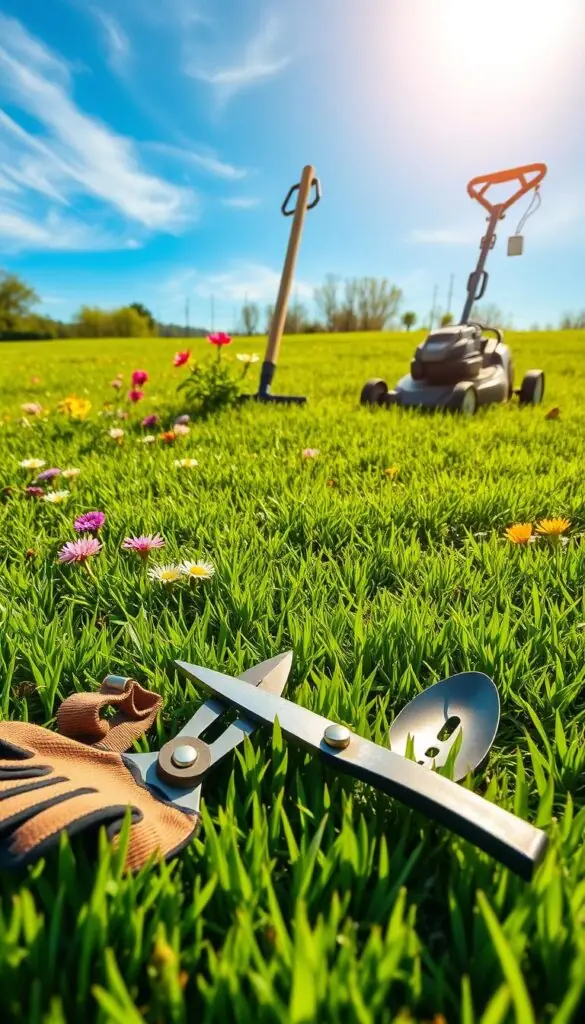
| Spring | Rake, soil test, core aerate | Rake, mower, soil probe |
| Summer | Raise deck, sharp blades, spot weed control | Mowers, sprayer, trimmers |
| Fall | Overseed, feed with spreader, clear leaf | Spreader, seed, leaf rake |
| Winter | Store gear, stage snow removal | Snow shovel, blower, dry storage |
Quick tip: Adjust timing by USDA zone—warm-season grass peaks later, cool-season grass prefers spring and early fall care.
Cutting and edging essentials for a clean, healthy cut
A crisp cut and tidy edge can change how your yard looks and feels in a single afternoon.
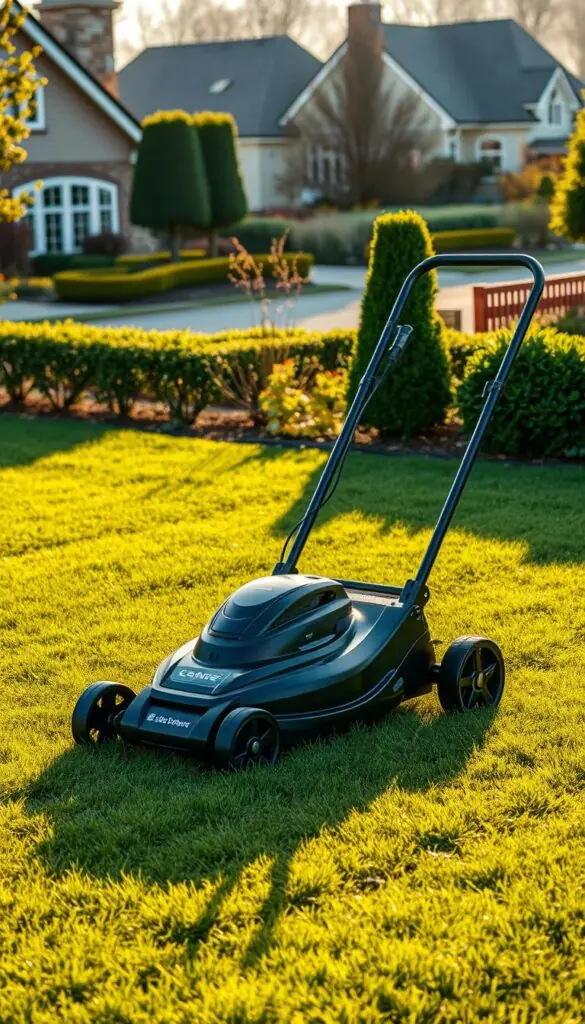
Choose the right mower for your space. A quiet reel mower suits small, flat yards and gives a fine finish. Rotary mowers fit most homeowners, and self-propelled models ease steep areas. Riding and zero-turn mowers speed work on large properties.
Blade care and height settings
Keep blades sharp at least once per season. A sharp blade makes a clean cut and prevents brown tips on grass and turf.
Set cutting height to match grass type. Raise the deck in hot months and lower it in cool, active growth periods.
Trim versus edge
Use trimmers to reach under fences and around steps. Use edgers for crisp lines along beds and walkways.
Walk slowly and listen for a clean snip. The finish will add instant polish to your landscape.
Comfort and safety
Wear gloves, goggles, and ear protection every session. Store care equipment—spare blades, trimmer line, and basic mower tools—in one place for quick maintenance.
| Task | Recommended equipment | Benefit |
|---|---|---|
| Mowing | lawn mower, sharp blades | Clean cuts, healthier grass |
| Edging | edgers, trimmers | Crisp lines along beds |
| Storage | Organized equipment | Faster upkeep and safety |
Soil, seed, and nutrients: build a resilient lawn from the ground up
Healthy grass starts with the soil beneath your feet, not the seed bag on the shelf. Take a soil-first approach so every choice—seed, fertilizer, or spreader—fits your yard.
Soil tests and probes: read pH and nutrients before you feed
Pull 6–10 small samples from across your lawn and mix them. Send that composite to a lab or use a home probe to check pH and nutrient levels.
Feed with confidence: use fertilizer only where tests show a gap. That saves money and protects new growth.
Aerators that fit your yard: spike vs. plug and when to aerate
Spike aerators pierce the ground for light loosening. Plug (core) aerators remove small cores and relieve heavy compaction.
Aim to core-aerate during active growth so plugs heal and roots go deeper.
Spreaders and seeders: drop vs. rotary for even coverage and overseeding
Use a drop spreader near walkways for clean edges. Use a rotary spreader for wide, even passes across open areas.
Mow slightly lower, bag grass clippings, rake so seed meets soil, then water gently each morning until seedlings set.
- Calibrate your spreader once and walk steady to avoid striping.
- Overlap passes a little for even coverage and consistent germination.
- Keep a simple record of dates, rates, and results to refine future care.

| Task | Best option | Why it helps |
|---|---|---|
| Aeration | Core (plug) aerator | Relieves compaction, improves air and water flow |
| Edge seeding | Drop spreader | Precise placement, clean borders |
| Open area seeding | Rotary spreader | Fast, even coverage across wide spaces |
Watering and irrigation that saves time and reduces waste
Water well, waste less: simple habits and the right gear make a big difference. You’ll learn to check soil, hear a steady spray, and set systems that run while you enjoy your morning coffee.
Hoses and nozzles:
Durable hoses, steady flow
Pick rubber or reinforced vinyl in a length that reaches the farthest bed. A proper diameter keeps steady flow so your nozzle performs smoothly.
Choose a comfortable nozzle that gives the spray pattern you need for quick spot work.
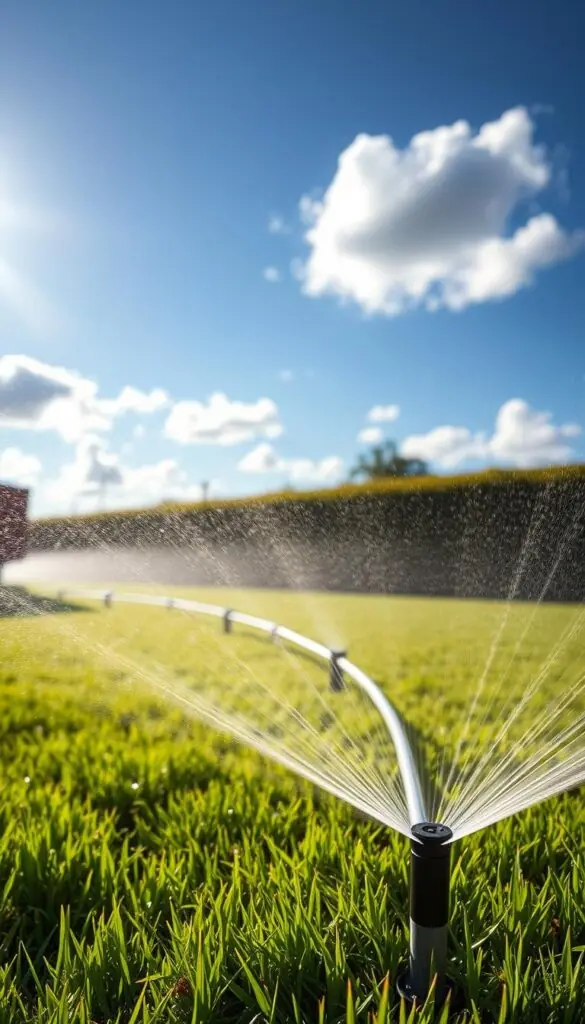
Sprinklers and drip systems
Match sprinkler type to shape: oscillating for rectangles, rotating for wide circles, stationary for small spots. Use drip lines in garden beds and borders to keep foliage dry and roots happy.
Smart controls and moisture checks
Install a smart controller or simple timer and add a moisture meter. Check soil 3–6 inches down: if it’s dry and crumbly, water deeply to train roots.
- Tip: Water at dawn to cut evaporation and disease risk.
- Tip: Use a rain gauge to aim for about 1 inch per week during the growing season.
- Tip: Fix leaks and clear kinks so every drop reaches your grass, not the sidewalk.
| Item | Best for | Key benefit |
|---|---|---|
| Reinforced hose | Long reach, steady flow | Fewer kinks, reliable watering |
| Oscillating sprinkler | Rectangular lawns | Even coverage without puddles |
| Drip line | Beds and borders | Water to roots, less weed growth |
| Smart controller + meter | Automated schedules | Precise water and better results |
Cleanup, transport, and winter gear to keep surfaces clear
Smart prep and the right handling make cleanup feel fast, light, and almost restful.
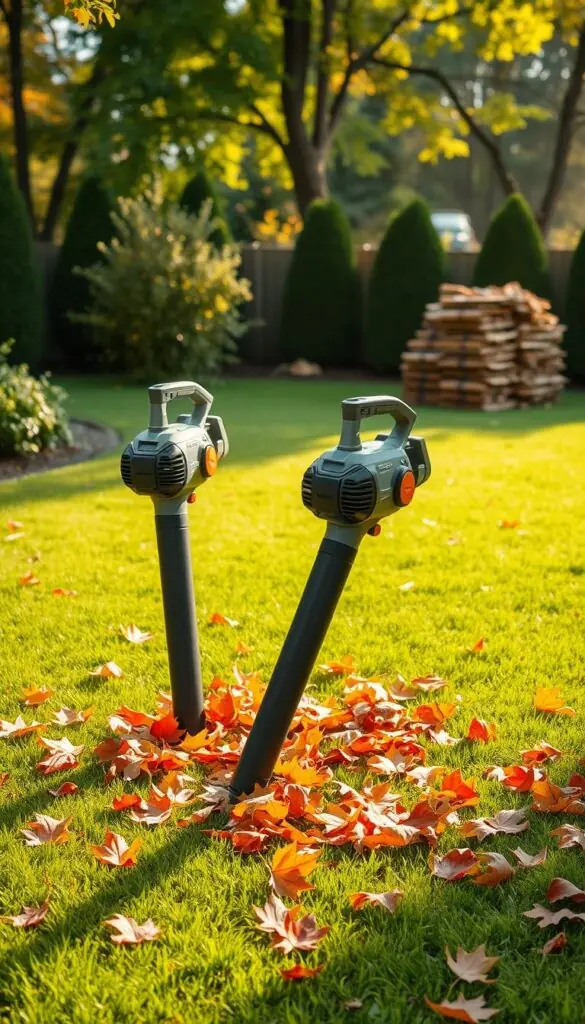
Leaf blowers for fast, tidy work
Choose a handheld blower for small patios and tight beds. It’s light and simple to use.
Pick a backpack blower if you cover bigger yards; it spreads weight and saves your hands.
Use a walk-behind when piles are heavy. It moves more material with less strain.
Rakes, shovels, and safe handling
Keep a leaf rake for gentle cleanup and a thatch rake to slice buildup for better airflow.
A landscape rake levels soil and spreads mulch. Round-point shovels dig; square-point shovels scoop and edge.
Wear gloves, goggles, and hearing protection and work with the wind to avoid blowback.
Wheelbarrows, carts, and winter prep
Wheelbarrows turn easily for quick loads. Garden carts hold heavier materials on rough ground.
Stage snow shovels by the door and add pet-safe traction for paths after storms.
Park mowers and small engines clean and dry before winter so the first spring start is smooth.
| Item | Best for | Benefit |
|---|---|---|
| Handheld blowers | Small patios, steps | Lightweight, precise control |
| Backpack blowers | Large yards | Comfortable for long periods |
| Walk-behind blowers | Heavy piles | Fast debris movement, less fatigue |
| Wheelbarrow / Garden cart | Soil, mulch, seed | Maneuverable or stable hauling |
Weed and pest control tools for targeted, tidy results
Control weeds and pests with a light, confident hand so your grass looks tidy without extra fuss.
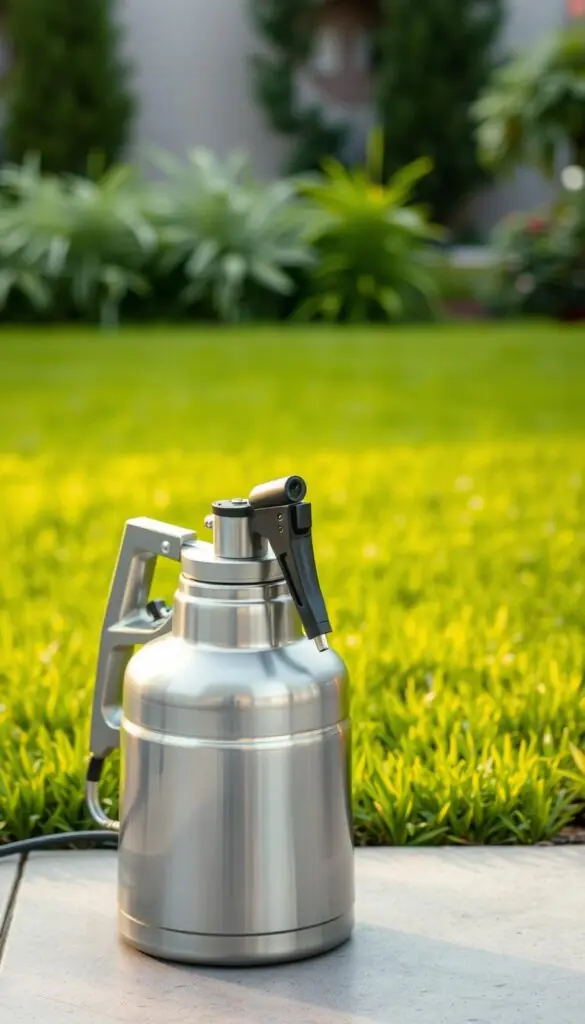
Backpack, handheld, and hose-end sprayers: selective coverage without overspray
Match the sprayer to the job. A handheld sprayer is perfect for a few dandelions or small patches. A backpack covers a backyard sweep with less fatigue. A hose-end gives broad, quick coverage for bigger areas.
Tip: Use selective herbicides on broadleaf weeds so desirable grass stays safe. Non-selective products will damage any green growth, so use them only where you mean to clear every plant.
Manual weed pullers and dandelion diggers: precise removal by the roots
Pull deep-rooted weeds after rain when the soil is soft. A narrow weeder or dandelion digger pops the taproot cleanly with little disturbance.
Combine manual removal with spot treatments. This reduces repeat spraying and helps avoid herbicide resistance over time.
Safety first: nitrile gloves, label directions, and weather-aware application
Wear nitrile gloves, long sleeves, and eye protection every time you mix or spray. Read label directions and measure carefully.
"Spray on calm mornings; a light breeze can carry droplets where they don't belong."
- Spot-check a small area first to confirm no discoloration.
- Rinse sprayer tanks and wands after use and store equipment upright.
- Rotate manual removal and targeted herbicides to keep control efficient.
| Task | Best option | Benefit |
|---|---|---|
| Spot weed control | Handheld sprayer / weeder | Precise coverage, less chemical use |
| Whole-yard sweep | Backpack sprayer | Even coverage, comfortable for large areas |
| Quick broad coverage | Hose-end sprayer | Fast application for established lawns |
Conclusion
You can make a big visual difference with small, consistent maintenance.
Keep it simple: a sharp mower, a calibrated spreader, and a quick soil test guide your fertilizer and seed choices. Smart watering at dawn saves water and protects turf and roots.
Store balanced equipment and comfy gloves so care feels easy. Use blowers, edgers, and trimmers for crisp lines. Rely on targeted herbicides only when needed to protect plants and pollinators.
With a steady rhythm of small steps, your lawn care becomes less work and more pleasure. Enjoy the clean edge, the soft surface underfoot, and the calm of a yard that grows with you.
FAQ
What are the essential tools to start year‑round care for a healthy lawn?
Start with a quality mower (choose reel, rotary, or self‑propelled to fit your yard), a reliable string trimmer for edges and tight spots, a sturdy rake for leaves and thatch, and a spreader for seed and fertilizer. Add a soil probe or test kit to read pH and nutrients, a decent garden hose with a nozzle, and safety gear like gloves and eye protection. These basics let you mow, feed, water, and repair turf through every season.
How do I decide which mower type is right for my grass and yard size?
Match the mower to your yard and turf. Reel mowers give a clean cut for fine grasses and small, flat lawns. Rotary walk‑behind mowers suit most home yards. Self‑propelled models reduce strain on slopes and larger spaces. Riding and zero‑turn mowers speed up maintenance on large properties. Consider blade quality, deck width, and adjustability of cut height to protect turf health.
When should I aerate, and which aerator should I use?
Aerate during the primary growing season for your grass—spring for cool‑season turf or early fall for cool grasses and late spring for warm‑season varieties. Use a core (plug) aerator to remove soil plugs when compaction is significant. Spike aerators work for light compaction, but core aeration is generally more effective for improving root growth and water penetration.
How often should I sharpen mower blades and set cutting height?
Sharpen blades at least once per mowing season or whenever you notice tearing rather than clean cuts—usually every 20–25 hours of run time. Keep cutting height conservative: raise the deck during heat and drought to reduce stress (longer blades shade soil), and lower slightly during active growth. Proper blade care prevents brown tips and promotes a lush, even turf.
What’s the best way to overseed and fertilize in the fall?
Rake and aerate before overseeding for good seed‑to‑soil contact. Use a calibrated drop or rotary spreader to apply seed and starter fertilizer at recommended rates. Water lightly and regularly to keep the seedbed moist until germination. Fall’s cooler temperatures and steady moisture help seedlings establish strong roots before winter.
How can I save water while keeping a healthy yard?
Water early morning to reduce evaporation, and use a moisture meter or rain gauge to avoid overwatering. Match sprinkler spray patterns to lawn shape and consider drip for beds. Adjust timing seasonally—less frequent, deeper watering encourages deep roots. Smart controllers and soil moisture sensors help automate efficient irrigation.
Which spreader should I use for seed, fertilizer, and salt in winter?
For even coverage on seed and granular fertilizer, a drop spreader gives precision, while a rotary spreader covers larger areas faster. For salt and ice melt in winter, use a rotary spreader on walkways and driveways, keeping application light to protect turf and nearby plants. Calibrate each pass to match package rates for best results.
When and how should I manage leaves and debris without harming turf?
Remove heavy leaf layers in fall with a rake, blower, or mulching mower to prevent smothering. Lightly mulch thin layers with a mower to return nutrients. Use a blower or walk‑behind unit for fast cleanups near beds and hard surfaces. Regular cleanup keeps grass healthy and reduces pests and disease.
What pest and weed control methods work with minimal chemical use?
Start with cultural practices: proper mowing height, regular aeration, balanced fertilization, and targeted watering to promote strong turf that resists weeds. Use manual weed pullers for isolated weeds and spot‑treat only when necessary with labeled herbicides. For insects, monitor turf and apply treatments only when thresholds are reached, or choose biological controls where suitable.
How should I store and winterize equipment for safe off‑season care?
Clean mowers, blowers, and trimmers free of grass and debris. Drain fuel or add stabilizer, change oil, and remove or charge batteries per manufacturer instructions. Store blades and metal parts indoors to prevent rust, and keep snow shovels and ice tools accessible for sidewalks. Proper storage extends equipment life and ensures readiness when growing season returns.
How do regional and USDA zone differences affect timing for core tasks?
Timing depends on your grass type and USDA zone. Cool‑season grasses (northern zones) benefit from fall aeration and overseeding; spring is ideal for early cleanup and soil testing. Warm‑season grasses (southern zones) focus on late spring fertilization and spring aeration. Check local extension resources for zone‑specific calendars to time mowing, fertilizing, seeding, and pest control.
What safety gear and best practices should I follow during mowing and spraying?
Always wear gloves, eye protection, and hearing protection when operating mowers, blowers, or sprayers. Use nitrile gloves when handling herbicides or pesticides, read and follow label instructions, and avoid applying chemicals on windy days. Keep bystanders and pets away during application and maintain equipment to prevent leaks and malfunctions.