Imagine stepping outside to a honeyed scent and buttercup-bright blooms against glossy leaves. Have you ever wished your yard felt alive when days are short? You can bring scent, texture, and steady color to your garden with simple, reliable choices.
Start small. Choose three easy winners for paths, entryways, or sunny strips. Use a hand trowel for bulbs, add mulch to steady soil, and keep a light frost cloth handy for surprise cold snaps.
We’ll match plants to your USDA zone so you plant with confidence. From hellebores that bloom mid to late winter to early spring crocuses and snowdrops, many options thrive across climates. Shrubs like camellia and mahonia add glossy foliage and scented sprays that lift gray days.
Key Takeaways
- Pick hardy, zone-appropriate plants for steady color through cold months.
- Use simple tools: hand trowel, mulch, frost cloth, and pruning shears.
- Layer scent, texture, and bright accents in borders and containers.
- Plant bulbs at the right time for blooms from late winter into early spring.
- Choose fragrant shrubs like daphne or witch hazel for morning perfume.
Meet the winter flowers that lift your mood when days are short
A tidy patch of hardy plants brings scent and color when daylight is low. Choose a mix of forms—glossy shrubs, ruffled rosettes, and small bulbs—to make your yard feel welcoming on quick, bundled-up walks.
What to expect: a steady relay of blooms from December through early spring. Hellebores hold long-lasting blooms in shade, camellias and witch hazel add honeyed perfume, and snowdrops often push through cold ground late in the season.
Simple pairings work best. Place fragrant shrubs by entries and mailboxes so you notice their perfume. Tuck bulbs at the front of borders where snow melts first. In mild areas, keep pots of pansies near bright doorways for instant color.
- Quick wins: hellebores (shade, persistent blooms), pansies (pots and beds), snowdrops (fall-planted sparkle).
- Use a bag of mulch and a hand rake to tidy leaves and cushion roots.
- Mix heights—upright witch hazel behind low carpets of bulbs—to keep scenes lively as one bloom fades and another takes center stage.
Color in the cold: bright yellow flowers for late winter and early spring
Place bold yellow blooms where you pass most, and the garden greets you back. These sunny accents bring scent and cheer when other plants are quiet.
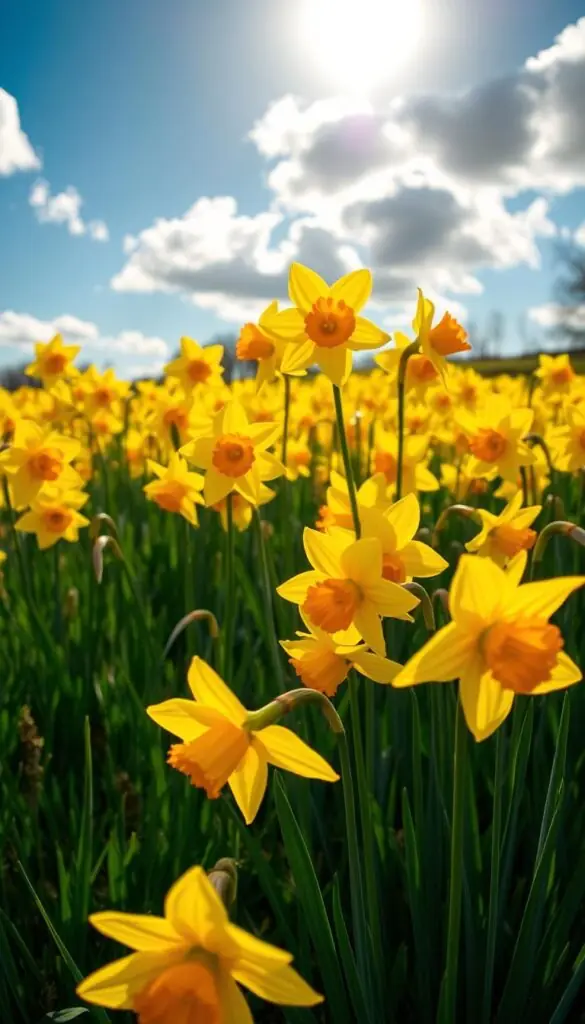
"A few bright yellow accents lift the whole winter landscape, making gray days feel lighter and more hopeful."
Witch hazel and winter hazel
Witch hazel blooms January–March with fragrant, spider-like flowers on bare branches. Set it at the back or midpoint of borders so its bright yellow sprays show against the sky.
Winter hazel offers pendulous, scented clusters in February–March. Use pruning shears after bloom to shape it without losing next year’s buds.
Winter aconite
Tuck winter aconite at the front edge of beds and along paths. These buttercup-bright mats naturalize quickly and pop against lingering snow.
Keep drainage sharp; mix in leaf mold and grit so tubers don't sit in soggy soil.
Mahonia and Carolina jessamine
Plant mahonia for bold texture and fragrant yellow sprays from late fall into midwinter. Wear gloves when pruning its holly-like leaves.
In the Southeast, train Carolina jasmine on a fence or arch. Its sweet-scented trumpets arrive in late winter to early spring and perfume mild days.
- Layer fragrance near paths and entries so you enjoy honeyed notes on crisp mornings.
- Pair yellow accents with blue partners like scilla for striking contrast.
Bulbs that bloom with snow on the ground
Bulbs tucked into drifts can push up through late snow and bring bright color when the garden is still asleep.
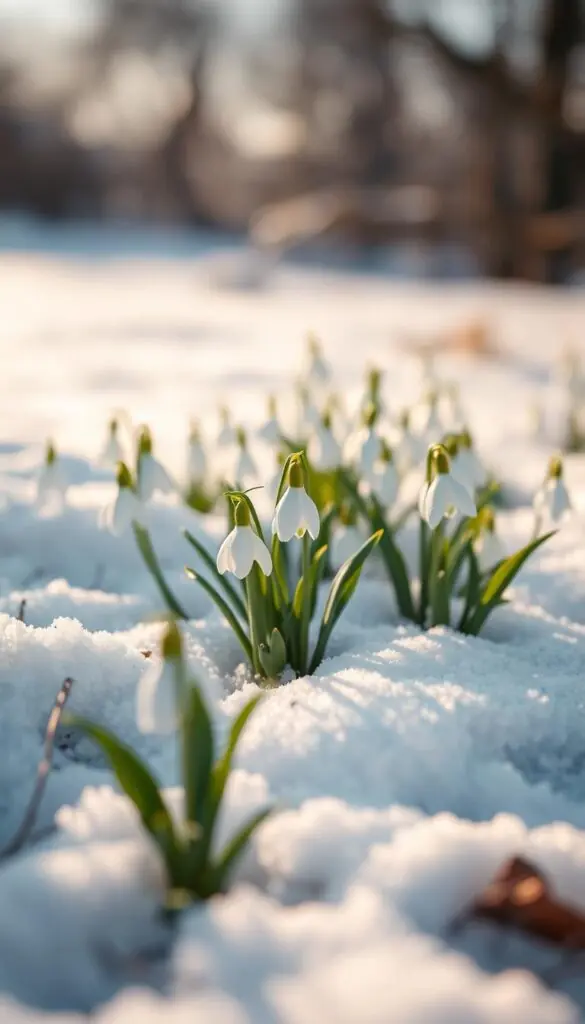
Snowdrops and glory of the snow
Plant snowdrops and glory of the snow in fall while soil is warm. Use a bulb planter or a hand trowel to set bulbs 2–3 times their height deep.
Tip: Add grit or coarse sand to the hole so water drains freely and bulbs stay moist—not soggy—over cold spells.
Crocuses and iris reticulata
Crocuses are corms that bloom from late winter into early spring. Iris reticulata flashes vivid blue in March.
Space small bulbs about 3 inches apart in drifts at the front of borders or rock gardens. Replant a few iris reticulata bulbs each fall for consistent displays.
Daffodils and grape hyacinth
Daffodils are cold-hardy and often avoided by rodents, so plant them among more tempting corms. Grape hyacinth adds a sweet scent and neat edging.
| Bulb | Planting Depth | Best Timing | Notes |
|---|---|---|---|
| Snowdrops | 2–3 times bulb height | Fall (bloom late Jan–Mar) | Naturalizes; shows through snow |
| Crocuses | 2–3 inches | Fall (bloom late winter–early spring) | Plant in drifts; watch for rodents |
| Daffodils | 3–6 inches | Fall (emerge Feb) | Rodent-resistant, reliable returner |
| Grape hyacinth / Iris reticulata | 3 inches / 3–4 inches | Fall (bloom late winter–Mar) | Fragrant edging; replant iris for consistency |
- Water once after planting, then mulch lightly to reduce freeze-thaw stress.
- Mark bulb spots with labels so you don’t disturb them during cleanup.
Evergreen shrubs that carry flowers and foliage through winter
A few well-placed shrubs will keep your garden smelling sweet and looking alive.
Choose a camellia for plush, rose-like blooms from late fall into spring. Site it in bright shade with shelter from cold winds. Test soil pH first—camellias prefer slightly acidic, well-drained soil. Add composted bark and keep a wide mulch ring.
The Japanese pieris brings dangling bells in late winter and glossy foliage that flushes bronze-red in spring. Plant it near paths so you notice its texture and scent.
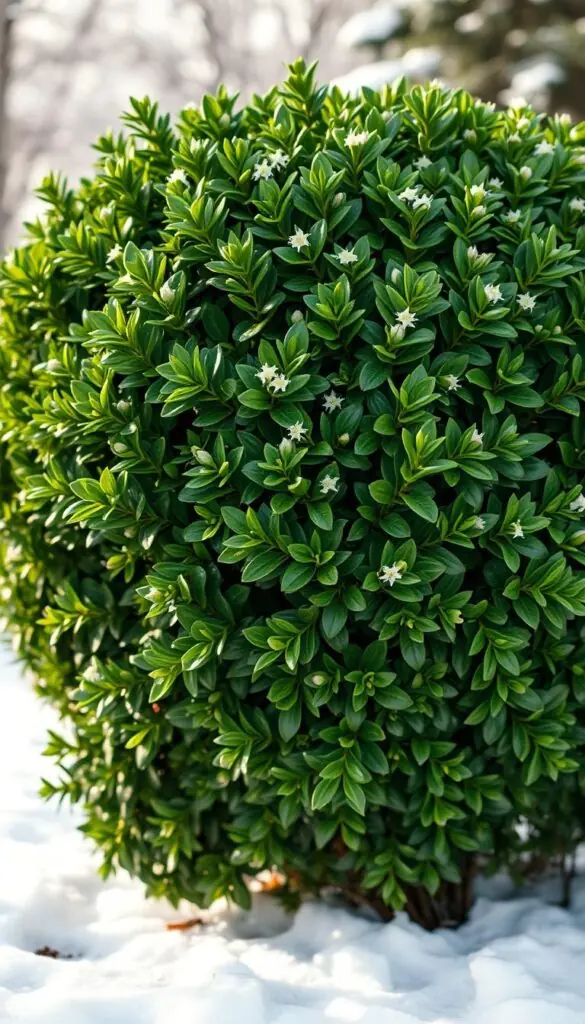
Winter jasmine sends arching green stems and sunny yellow blooms earlier than many shrubs. Train it on a trellis or let it cascade as a groundcover for long-lasting color.
daphne and sweet box are compact and shade-friendly. They perfume entries in mid to late winter, so tuck them beside doors or along walkways.
- Prune camellia and pieris right after bloom with clean hand pruners to avoid cutting next year’s buds.
- Keep roots evenly moist; use a soaker on mild afternoons in Zones 7–10.
- Avoid waterlogged spots—raise beds or add grit for sharp drainage.
| Shrub | Site | Soil | Timing |
|---|---|---|---|
| Camellia | Bright shade, wind protection | Acidic, well-drained | Mid–late winter to spring |
| Pieris (Japanese) | Part shade, near paths | Moist, well-drained | Late winter–early spring |
| Winter jasmine | Sunny wall or groundcover | Average, good drainage | Late winter (long bloom) |
| Daphne / Sweet box | Bright shade by entry | Rich, well-drained | Mid–late winter (fragrant) |
Cold-hardy perennials that bloom in late winter
Choose low-fuss perennials that quietly brighten paths and edges in late winter. These plants work well in shaded beds and near walkways so you can enjoy their color without disturbing soil.
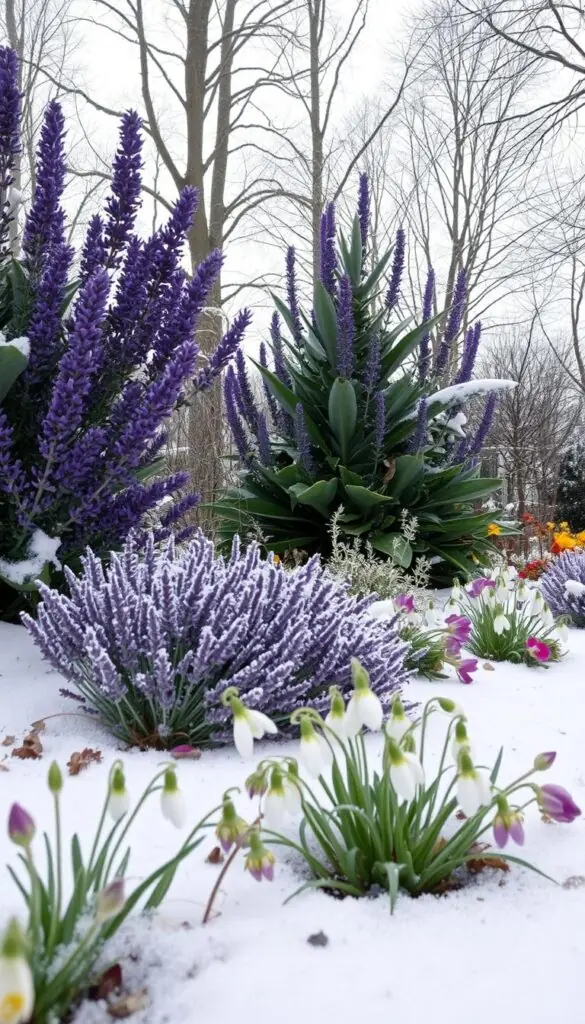
Hellebores and primrose
Hellebores bloom mid to late winter and hold waxy, long-lasting blooms for weeks. Keep crowns high, mulch lightly, and in late winter snip old hellebore foliage with clean shears to show new flowers and lower disease risk.
Primrose brightens woodland edges and can open as early as March. Give primroses consistent moisture and avoid planting too deep so crowns sit just at soil level.
Winter heath
Winter heath forms a dense evergreen mat dotted with bell-shaped blooms from winter into spring. It’s ideal for slopes or edging where drainage is sharp and maintenance is low.
Cyclamen coum
Cyclamen coum brings heart-shaped, marbled leaves and nodding blooms from December to March. It naturalizes in shade and looks lovely tucked beneath shrubs.
Simple care:
- Plant in partial shade and firm soil gently; avoid deep planting.
- Use a hand fork to loosen light soil and mound beds for sharp drainage.
- Mulch to buffer temperature swings but keep mulch off crowns to prevent rot.
- Water midday during long, dry cold spells so foliage can dry before night.
- Tuck plants near paths to enjoy blooms at eye level without trampling beds.
| Perennial | Bloom time | Site | Care tip |
|---|---|---|---|
| Hellebores | Mid–late winter | Partial to full shade | Snip old leaves in late winter; keep crowns high |
| Primrose | Late winter–early spring | Partial shade, moist soil | Keep soil evenly moist; avoid deep planting |
| Winter heath | Winter into spring | Sunny to part shade, well-drained | Great groundcover; use on slopes or edging |
| Cyclamen coum | Dec–Mar | Shade, naturalizes | Plant shallowly; mulch lightly and protect crowns |
Annuals and cool-season color that last through frost
A few hardy annuals can carry color from fall into the cold months with minimal fuss. Plant in autumn so roots establish before hard freezes and your pots and beds look full when days shorten.
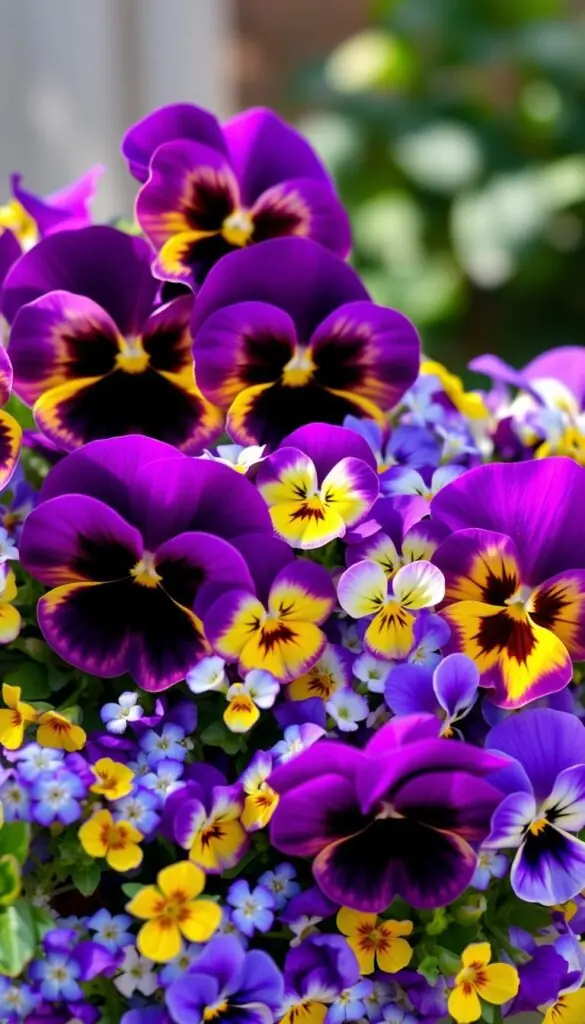
Pansies and violas
Pansies and violas are top picks for long-lasting charm. Plant in fall for best root growth.
They need 4–6 hours of sun; in warm climates give afternoon shade. In mild areas they often bloom through winter and rebloom in spring. Violas may self-seed, giving you surprises next year.
Snapdragons
Snapdragons make sturdy shoulder-season spikes. They do well in Zones 7–11 and shrug off light freezes if you mulch crowns.
Space them so air circulates. Deadhead spent blooms weekly to keep color coming.
Ornamental cabbage and kale
Ornamental cabbage and kale form ruffled rosettes that deepen as temperatures dip. They shine in porch pots and mixed planters.
Use a high-quality potting mix with perlite for drainage, water when the top inch dries, and feed lightly every 3–4 weeks.
- Planting window: fall.
- Sun needs: 4–6 hours (protect from harsh afternoon sun in warm zones).
- Protection: keep frost cloth handy for sudden deep cold; cover at dusk and uncover by day.
| Plant | Best time to plant | Sun | Care tip |
|---|---|---|---|
| Pansies / Violas | Fall | 4–6 hours | Deadhead weekly; violas may self-seed |
| Snapdragons | Fall (Zones 7–11) | 4–6 hours | Mulch crowns to survive light freezes |
| Ornamental cabbage and kale | Fall | 4–6 hours | Colors intensify as temperatures drop; great in containers |
Blue notes for the winter garden
A band of low blue bulbs along walkways gives scent and a gentle visual anchor. Plant these blues where you pass most so scent meets you on the way out the door.
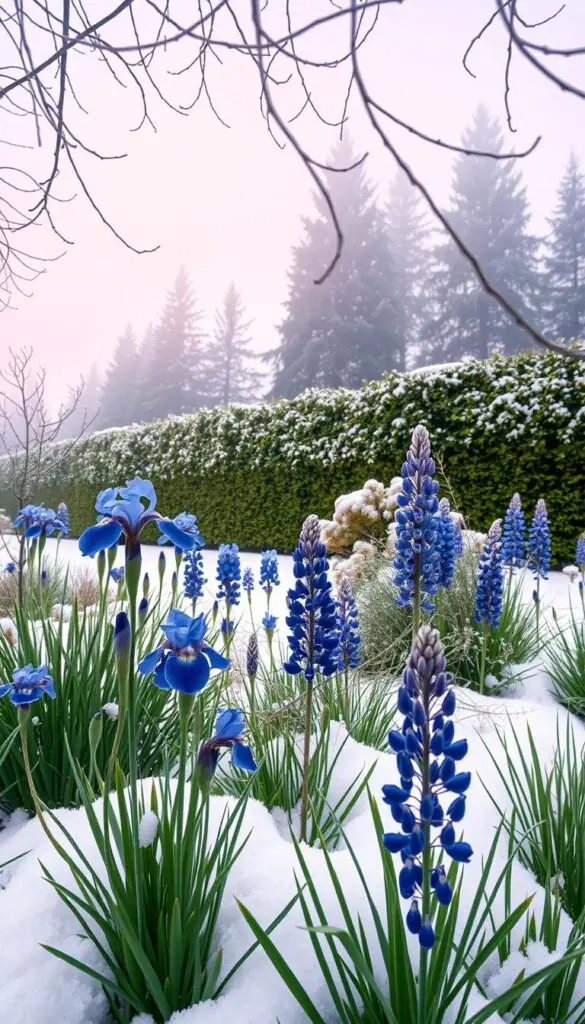
Cornflowers and scilla: meadowy blues for mild climates and rock gardens
Cornflowers add meadow-like blue when sown in mild climates about 6–8 weeks before you want color. Seed in drifts for a natural look.
Scilla has tiny, bright blooms that shine in rock gardens and at the front of borders. Plant in clusters for sparkle in cool light.
Starflower: sweet perfume along paths in late winter
Starflower (Ipheion) offers scented white, pink, or blue blooms in late winter to early spring. Tuck it beside steps so its perfume greets you on cool mornings.
"A sweep of blue calms the eye and makes nearby yellows appear even brighter."
- Mix blues beside witch hazel or winter aconite for vivid contrast.
- Use a gritty, well-drained mix; these bulbs hate soggy soil.
- Group bulbs 5–7 per hole; set with a hand trowel at about 3 inches deep.
- In containers, pair scilla with dwarf evergreens and white violas for a serene palette.
Fragrance you can follow on crisp mornings
A living scent trail—set fragrant shrubs near entries and you’ll find reasons to step outside on crisp mornings. One well-placed shrub by the door makes a warm, fragrant hello each time you come or go.
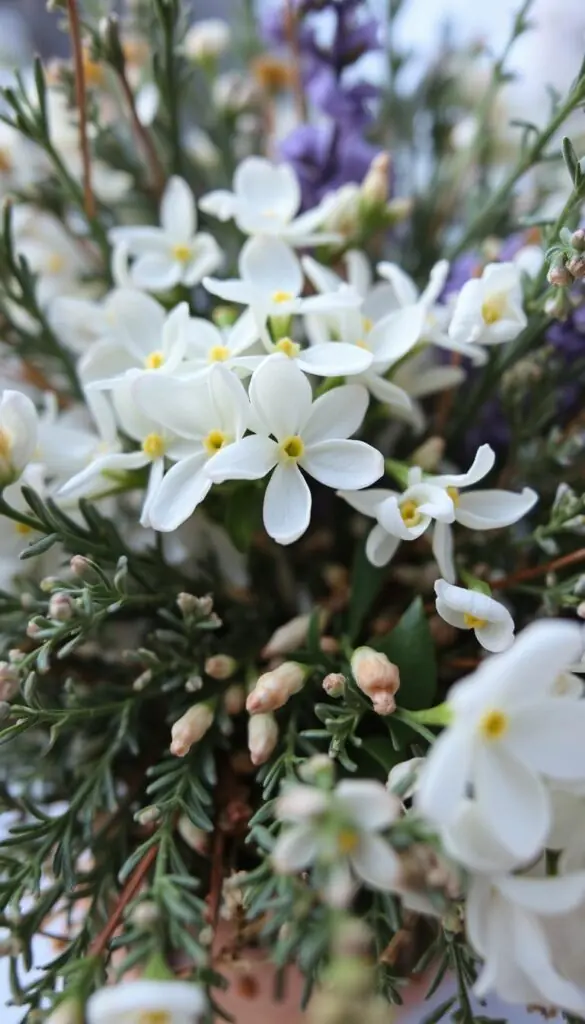
Daphne, witch hazel, and mahonia: plant near entries for maximum effect
Daphne rewards a sheltered, well-drained spot with late-season perfume; it can be picky, but worth the care. Witch hazel blooms January–March with intense scent—prune lightly after bloom so you don't remove next year's buds. Mahonia gives lightly fragrant yellow sprays from late fall into midwinter and adds bold texture near a doorway.
Algerian iris and sweet box: walkway bloomers with subtle scent
Algerian iris offers purple blooms and a gentle perfume in mild climates from December onward—plant them along a path for small bursts of color. Sweet box thrives in shade and releases a surprisingly strong scent in mid to late winter, ideal beside steps.
- Water deeply during dry spells and mulch to conserve moisture and steady soil temperature.
- Build scent layers: one shrub at the door, another by the garage, and one along the front path.
- Drape frost cloth only in very cold snaps; remove by day to avoid moisture issues.
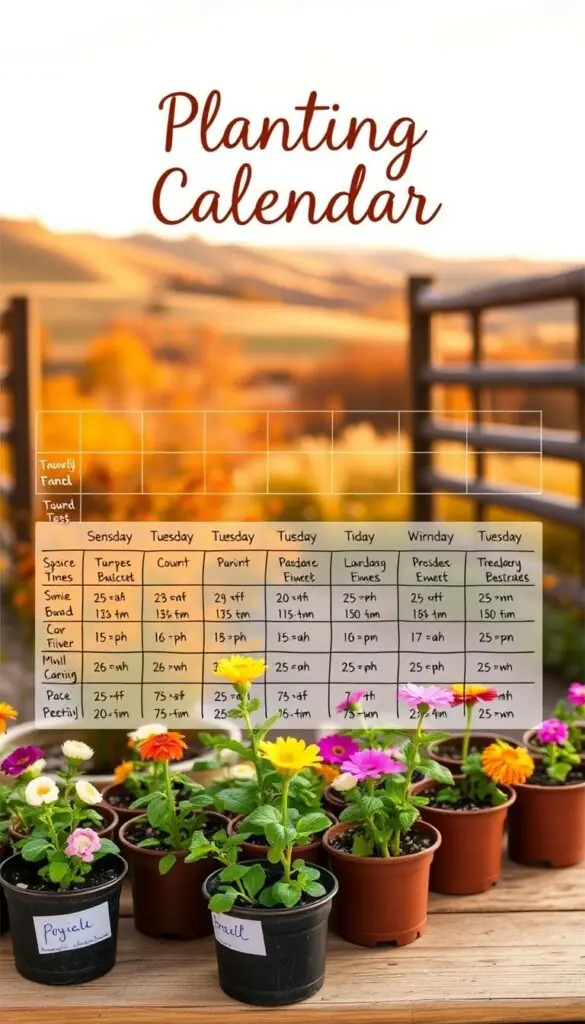
Planting calendar: what to plant in fall for winter and early spring blooms
A simple month-by-month plan takes the guesswork out of fall planting. Follow these easy timing cues so bulbs and shrubs root well and give you color in winter early and into early spring.
🌿 Winter Planting Calendar – Verdanly Guide
Plan your eco-friendly winter garden with this calm, month-by-month planting guide. Discover when to sow, prune, and nurture beautiful blooms that thrive in cold days.
🌲 December
- • Plant pansies and violas in pots or borders
- • Start amaryllis bulbs indoors for mid-winter blooms
- • Protect garden beds with mulch and compost
- • Trim dead stems and prepare soil for frost-hardy planting
❄️ January
- • Sow sweet peas under cover for early spring color
- • Enjoy hellebores and cyclamens in bloom
- • Check frost protection on sensitive plants
- • Water pots lightly on frost-free days
🌸 February
- • Plant primroses and early daffodils
- • Divide snowdrops after flowering
- • Prepare beds for spring bulbs
- • Feed winter blooms with organic fertilizer
Bulbs and corms in fall
September–October is the time to plant bulbs. Set snowdrops, crocuses, daffodils and glory of the snow 2–3 times their height deep.
Tip: Use a soil thermometer and plant when soil stays above 45°F for two weeks so roots can get going.
Shrubs now, joy later
October–November is ideal for shrubs. Plant camellia, witch hazel, pieris and mahonia so roots establish while soil is still warm.
Give shrubs a single deep watering after planting and mulch after the first frost to buffer freeze-thaw cycles.
Cool-season annuals and timing
In mild areas, tuck in pansies, violas and snapdragons in October for color that lasts into winter and rebounds in spring.
Label plantings and snap a quick photo map so you avoid digging up bulbs during cleanup.
- Avoid soggy beds—improve drainage with compost and grit before planting.
- Feed lightly with bulb food at planting; hold heavy fertilizer until growth resumes.
- In colder zones, plant a touch earlier so roots anchor before hard freezes arrive.
USDA zones and microclimates: matching plants to your winter
A few degrees’ difference on a south-facing wall can change which shrubs will thrive.
Match plant picks to your local climates and typical nighttime temperatures. Check plant tags for hardiness ratings so you know what will reliably return.
Cold regions (Zones 3–6) benefit from cold-hardy champions: snowdrops, crocuses, daffodils, hellebores, witch hazel, winter aconite and winter heath. Mulch 2–3 inches after the ground cools to steady soil around crowns.
Mild climates (Zones 7–10) let you enjoy camellias, daphne, Algerian iris, mahonia, pieris and winter jasmine. In rainy winters focus on sharp drainage—raised beds and grit help roots breathe.
"Plant where frost melts first — south-facing walls and courtyard nooks give tender picks a big boost."

| Site | Best picks | Simple tip |
|---|---|---|
| Open, cold yards | Hellebores, witch hazel, winter heath | Mulch thick; add windbreaks |
| Sunny, mild yards | Camellias, daphne, Algerian iris, winter jasmine | Improve drainage; use raised beds |
| Marginal sites | Container plantings of tender shrubs | Move pots close to house in cold snaps |
Simple designs: easy winter flower combinations that just work
A few tidy combinations make a path or border feel complete with very little fuss. These three layouts pair scent, color, and texture so your yard reads as intentional from the first step up the walk.
Front walk welcome
Anchor with witch hazel at the back, add hellebores in the mid-row, and plant snowdrops along the edge. The result is a layered late winter early spring glow with honeyed scent where you pass most.
Woodland edge
Tuck cyclamen coum in drifts, space primrose between clumps, and weave grape hyacinth for bright blue pops as light returns. This mix looks natural and needs only a hand trowel and light mulch to settle in.
Sunny strip
Plant ribbons of winter aconite up front, iris reticulata midline, and early daffodils behind for a simple color wave. Place bulbs about 3–4 inches apart and perennials 18–24 inches for breathing room.
- Space shrubs 6–8 feet apart; perennials 18–24 inches; bulbs 3–4 inches. Use a measuring tape and an edging spade for crisp lines.
- Top with 2 inches of fine mulch, keeping it off crowns and stems to prevent rot.
- Add a simple steel edging to keep mulch tidy so beds look crisp along paths.
- Water in after planting and check weekly during dry cold spells; little care yields big payoff.
Container ideas for porches and patios
Bring close-up color and scent to your door with compact, weatherproof pots. Containers let you enjoy blooms and perfume at eye level, even when beds are resting.
Mixing pansies, violas, and ornamental cabbage and kale for long-lasting color
Blend pansies and violas with ornamental cabbage and kale for months of interest. Pansies and violas carry on through mild cold, while kale deepens its hue as temperatures drop.
Use a premium potting mix with perlite and add a slow-release fertilizer at planting. Water when the top inch feels dry and water in the morning so foliage can dry before night.
Fragrant pots near the door: daphne and sweet box in bright shade
Place a compact daphne or sweet box in a bright-shade pot by your entry so scent greets you daily. Choose lightweight frost-proof pots on wheeled caddies for easy repositioning.
"Group pots close to the door and you’ll notice scent and color every time you step outside."
| Pot size | Soil mix | Drainage | Watering |
|---|---|---|---|
| 14–18 inches wide | Premium mix + perlite | Clear drainage holes; gravel layer optional | Top inch dry → water; morning schedule |
| Lightweight frost-proof | Slow-release fertilizer at planting | Wheeled caddy for moving in freezes | Liquid feed monthly in cold season |
- Tuck moss or fine bark on top to insulate roots and finish the look.
- Deadhead pansies and violas weekly and remove weathered kale leaves.
- In hard freezes, group pots or slide them under an overhang for extra warmth.
- Add a small evergreen for structure that lasts beyond the cold months.
Step-by-step: how to plant, mulch, and protect winter bloomers
Prepare your bed with clear steps so plants settle in and reward you with reliable winter blooms. Below are short, practical actions you can follow at planting time.
Soil prep and spacing
Loosen soil 8–10 inches with a shovel or fork. Mix in compost and a scoop of grit to sharpen drainage.
Set crowns slightly high—level with or just above the soil line to avoid rot in wet, cold periods.
Use these spacing rules: small perennials 18 inches, bulbs about 3 inches apart and 2–3 times their height deep, shrubs per tag.
Mulch and frost cloth
After you water in to remove air pockets, add a 2-inch mulch blanket. Keep mulch off stems and crowns.
Keep a roll of frost cloth handy. Drape it before a hard freeze and secure with clips or bricks.
Watering and winter care
Check moisture weekly. When temperatures rise above freezing by midday, water deeply so roots get time to absorb moisture before night.
Use a hose and timer for consistent deep soaks. Add a windbreak of burlap around young shrubs to reduce desiccation.
- Tools: shovel, hand trowel, rake, hose, timer, soil test kit, clean pruners and alcohol wipes.
- Use a soil test kit in fall and adjust pH for camellias and pieris with composted bark.
"A steady routine at planting time keeps blooms healthy through shifting temperatures."
Quick tips to avoid common winter gardening mistakes
A short checklist can prevent soggy pots and hungry rodents from ruining your beds.
Keep containers raised on pot feet so drainage stays clear and roots don't sit cold against the ground. Water only when the top inch is dry and avoid heavy, frequent watering.
Add grit to the planting hole and set bulbs at the correct depth to stop rot during wet months. Favor daffodils where rodents dig; they tend to be rodent-resistant and help protect nearby corms.
Read plant tags before buying. For winterberry holly, buy one male for every 5–7 females so berries form. Choose named winter-blooming types—camellia, Jasminum nudiflorum (winter jasmine), and witch hazel—to match bloom time and site.
Skip big pruning in fall and hold off on heavy feeding until growth resumes in spring. Use frost cloth on forecasted freezes and remove it by day to avoid trapped moisture.
- Use a plank to avoid compacting wet soil when you must step into beds.
- Label plantings with bloom months and zone info so expectations match reality.
| Common Mistake | Why It Happens | Quick Fix |
|---|---|---|
| Soggy containers | Poor drainage, no pot feet | Raise pots; check top-inch dryness |
| Bulb rot | Soggy ground, wrong depth | Add grit; plant 2–3× bulb height |
| No berries on winterberry | No compatible pollinator | Buy 1 male per 5–7 females; check tags |
| Pruning off buds | Pruning at wrong time | Avoid fall pruning; prune after bloom |
Cut stems and indoor enjoyment
Forcing branches and small bouquets is an easy way to stretch your garden’s season into the house. You’ll enjoy scent, color, and a sense of connection when outdoor stems open indoors.
Forcing branches: witch hazel and other flowering shrubs
Pick a mild day to cut branches. Use clean snips and make a 45-degree cut to increase water uptake.
Tip: Split thick stems slightly with a knife to help them drink. Place branches in deep, tepid water and keep them in a bright, cool room at night. Witch hazel often opens in a week or two and perfumes the space.
Bringing in blooms: hellebores, daffodils, and grape hyacinth
Harvest hellebores when petals feel papery and seed pods start to form. Briefly sear stem ends over a flame to reduce sap that can block water.
Snip daffodils and hold them in a separate vase for 24 hours before mixing with other stems. Clip grape hyacinth spikes for tiny bedside vases—the scent is delightfully grape-like.
- Cut on mild days and recut stems every other day.
- Use tepid water and change it frequently to lengthen vase life.
- Avoid direct sun and heat vents and give fresh-cut stems cool nights for best bloom timing.
"Time your forcing two to three weeks before guests arrive so blooms peak when you want them."
Conclusion
A small plan—bulbs at the front, a scented shrub by the door, and a pot of pansies—changes how your garden feels each morning.
With the right mix—witch hazel, hellebores, snowdrops, camellias, pansies and a touch of mahonia—you’ll enjoy color, scent, and texture from December into early spring.
, Simple care makes a big difference: sharp drainage, a light mulch, and a roll of frost cloth for surprise chills. Match plants to your USDA zone and tuck fragrance by entries so each step outside rewards you.
Plant in fall when you can, water during dry spells, and snip a few stems to bring indoors. Step outside with a warm mug and take it in; your efforts will bloom into quiet, steady joy when spring arrives.
FAQ
What bright, yellow-blooming plants are best for late winter and early spring?
Look for reliable choices like winter jasmine, mahonia, Carolina jessamine, and winter aconite. These give vivid yellow color when days are short and often stand out against snow or frosty ground. Bulbs such as daffodils and grape hyacinth also return each year for sunny border glow.
Which bulbs should I plant in fall to bloom during the cold months?
Plant snowdrops, glory-of-the-snow, crocuses, and daffodils in autumn so roots establish before frost. These bulbs tolerate chilly soil and reward you with early-season blooms that lift a winter landscape.
Can evergreen shrubs carry both flowers and attractive foliage through the season?
Yes. Camellia offers rose-like blooms into spring, Japanese pieris shows dangling bells with glossy leaves, and winter jasmine gives arching stems with sunny flowers. Daphne and sweet box add compact form and fragrance for shady corners.
Which perennials are cold-hardy and bloom in late winter?
Hellebores and primroses produce long-lasting blooms in partial shade. Winter heath works as a dense groundcover with bell-shaped flowers, and Cyclamen coum brings heart-shaped leaves and nodding blooms to sheltered spots.
Are there annuals that provide cool-season color through frost?
Yes. Pansies and violas planted in fall can brighten mild climates all winter. Snapdragons tolerate light freezes, and ornamental cabbage and kale develop richer color as temperatures drop.
How can I add blue tones to a cold-season garden?
Try scilla, cornflowers (in mild sites), and starflower to create meadowy blues. These work well in rockeries, borders, or where you want soft blue notes amid warmer hues.
Which fragrant plants should I place near entries or walkways?
Plant daphne, witch hazel, and mahonia near doors for scent on crisp mornings. Algerian iris and sweet box also scent paths subtly and reward close-up enjoyment.
How do I match plants to my USDA zone and microclimate?
In colder zones (3–6), focus on bulbs, hellebores, witch hazel, and winter heath. In milder zones (7–10), camellias, daphne, Algerian iris, and winter jasmine thrive. Consider sheltered corners and south-facing spots to eke out a longer bloom season.
What simple planting combinations work well for a winter display?
For a welcoming front walk, pair hellebores, snowdrops, and witch hazel. At a woodland edge, mix cyclamen, primrose, and grape hyacinth. For a sunny strip, use winter aconite, iris reticulata, and early daffodils.
Can I grow containers with plants that last through cold months?
Absolutely. Mix pansies, violas, and ornamental kale for long-lasting color. Place fragrant pots with daphne or sweet box near doors in bright shade so scent and form lift your porch or patio.
What are the key steps to plant, mulch, and protect cold-season bloomers?
Prep well-draining soil and space plants so crowns sit slightly high. Use mulch to buffer temperature swings but keep it away from crowns. Frost cloth and timely watering during dry, cold spells help plants stay healthy.
What common mistakes should I avoid when gardening for cold-season blooms?
Don’t overwater containers; soggy soil damages bulbs. Check for pollination needs—like male and female pairs for winterberry holly—before buying. Choose true cold-season flowering varieties such as camellia, jasmine, and witch hazel for reliable performance.
Which branches and stems force well indoors for early bloom?
Witch hazel and other flowering shrubs force beautifully when cut and placed in a warm room. Hellebores, daffodils, and grape hyacinth also make lovely indoor arrangements after a period of cool treatment.