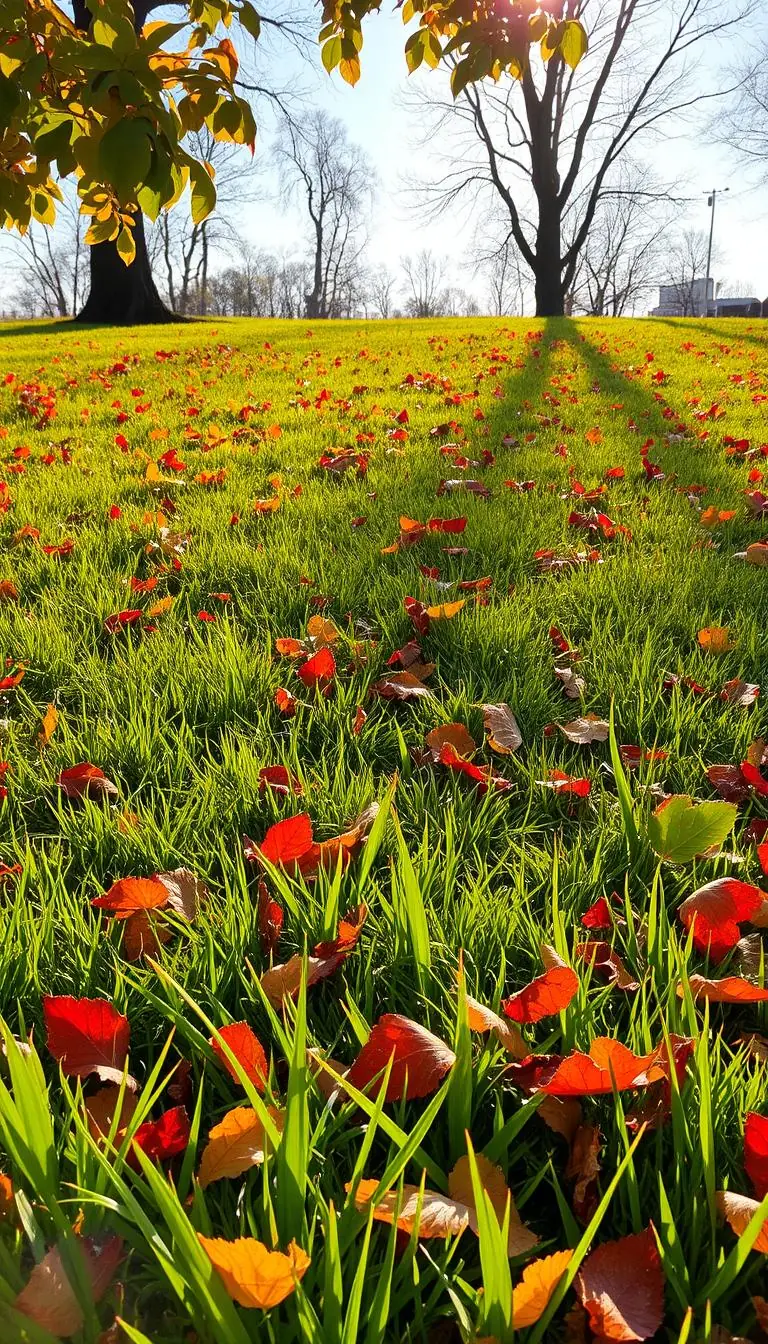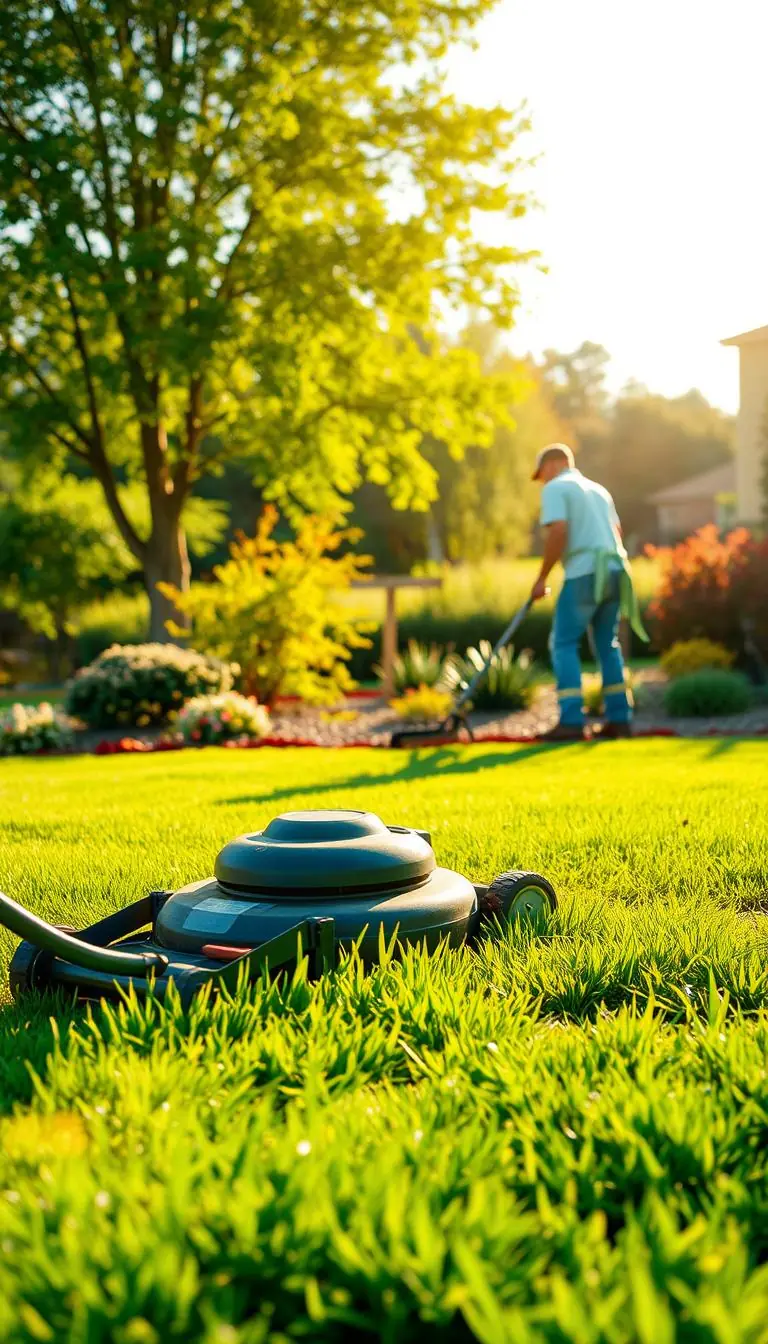
Feel the crisp air as leaves crunch underfoot and the grass gives a soft, cool scent. Have you noticed thinner patches or soggy spots in your yard? You’re not alone.
We’ll walk you through calm, practical steps you can take now so your grass stores nutrients and roots stay strong into the cold season.
Start with a quick soil check and a mow that leaves grass slightly higher in early fall, then lower it a bit to reduce snow mold risk. Mulch light leaves into the turf for added nutrients, or rake when they form wet mats.
We’ll guide you by grass type and USDA zone, so you know when to aerate, when to hold fertilizer, and which tasks to save for spring. Think of this as neighborly advice—simple tools, clear timing, and a few small efforts today that ease stress during the cold months.
Key Takeaways
- Finish key tasks before the first frost to protect cool-season grass.
- Mulch light leaves for nutrients; rake heavy, wet mats.
- Adjust mowing height in early fall, then lower slightly to prevent disease.
- Aerate compacted soil for cool-season grass in fall; wait for warm-season types.
- Use a potassium-rich fall fertilizer for winter protection when appropriate.
Start smart this fall: a calm, step-by-step plan by grass type and zone
Start the season calmly with step-by-step care that matches your grass type and climate.
For cool-season grasses like tall fescue, Kentucky bluegrass, and perennial ryegrass, fall is the prime repair window. Cooler temperatures and soft light help new roots take hold. In Zones 3–7, plan core aeration and overseeding in early to mid-fall, then apply a potassium-forward fall feed as top growth slows.

Cool-season grasses: prime time in fall
Keep mowing gradual and gentle. Aim to bring height toward about 2.75–3 inches by late fall to reduce snow mold risk without stressing turf.
Warm-season lawns: tidy, trim, and time fertilizer for spring
For Bermuda, Zoysia, and St. Augustine, focus on cleanup and regular mowing at your normal height (around 1.5–2 inches). Skip heavy nitrogen in colder zones; save feeding for spring green-up in warmer areas.
- Watch night temperatures. When steady 40s appear and dew lingers, slow mowing and shift to soil care.
- Mulch dry, crunchy leaves with a mulching mower. Rake or bag when fallen leaves form damp mats that block light.
- Homeowners with mixed areas can split tasks: cool-season patches get aeration and feeding now; warm-season sections get cleanup and a spring plan.
Essential fall steps to winterize lawn before the first frost
A short checklist now—done on dry afternoons—helps your grass store nutrients and resist disease.
Manage fallen leaves
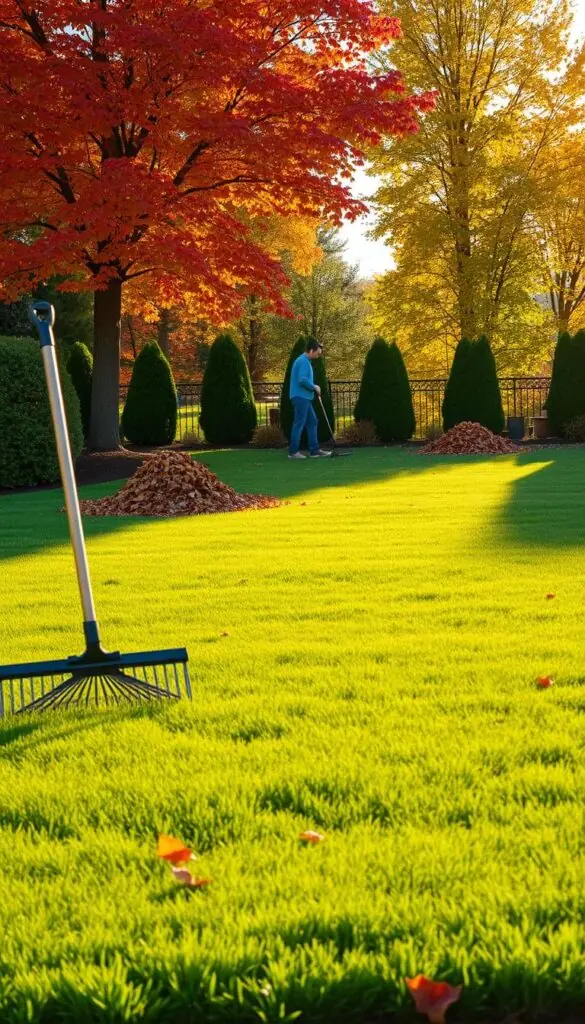
Walk your yard when leaves are crisp. Two passes with a mulching lawn mower shred them into confetti that feeds soil nutrients.
After rain, skip mulching. Rake and remove heavy, wet mats so grass can breathe and mold risk drops.
Remove weeds early
Pull weeds by hand while soil is slightly moist. A handheld weeder or dandelion fork removes taproots and sends resources back to your turf.
Set mower height and aerate
Raise deck slightly in early fall, then lower cool-season grass to about 2.75–3 inches to reduce mold as temperatures dip.
If the ground feels hard underfoot or water pools, rent a core aerator. Focus on compacted areas so water, air, and nutrients reach the root zone.
Feed, test, and overseed
Choose a fall fertilizer higher in potassium and apply when top growth slows, then water lightly to help uptake.
Use a soil test kit to balance pH and add missing nutrients. Overseed bare areas with a spreader so new growth crowds out spring weeds.
Shield your grass from winter stress: frost, snow, and foot traffic
A little attention to frost, snow, and foot traffic now keeps turf and roots healthier come spring.
Prevent frost damage and mold: keep blades modestly short and debris-free
Finish the season with a modestly shorter blade height so dense, wet layers won’t linger under snow.
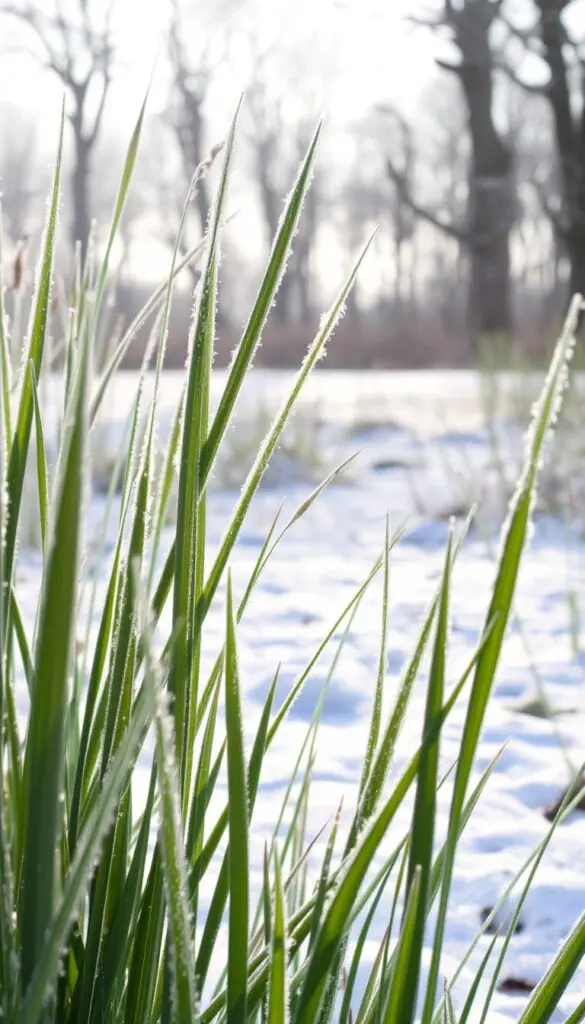
Look for silver frost on blades. Wait until sunlight softens that coating before you walk or mow to avoid brittle damage.
Snow sense: reduce compaction and moisture traps for healthier spring growth
Shift foot traffic away from the same areas. Use stepping stones or a temporary path to protect crowns and roots.
Clear sticks and heavy leaf piles after windy nights so moisture does not trap and invite mold.
- Pile snow off different strips each storm to spread weight and avoid compacted ruts.
- Gently break up icy mats during thaws to let air reach turf and soil.
- Keep edges near driveways clear of salted slush to limit moisture stress and damage.
| Action | When | Benefit |
|---|---|---|
| Lower blade height slightly | Late fall | Reduces snow mold under deep snow |
| Clear debris & wet leaves | After storms or wind | Prevents moisture traps and fungal growth |
| Limit repeated foot traffic | Throughout winter | Protects roots and avoids compacted soil |
| Hand-pull late weeds | Warm spells only | Less stress than spraying cold turf |
Watering and irrigation: adjust for winter, then shut systems down safely
As temperatures cool, scale back irrigation so roots rest and soil stays balanced. Reduce runs as evaporation drops and only water when the ground feels dry to the touch.
Check soil with your hand: cool, slightly damp soil in shade means skip watering. Dry, crumbly soil in sunny areas needs a light soak. When you do water, pick a mild midday window so surfaces dry before night and you avoid frost or ice.
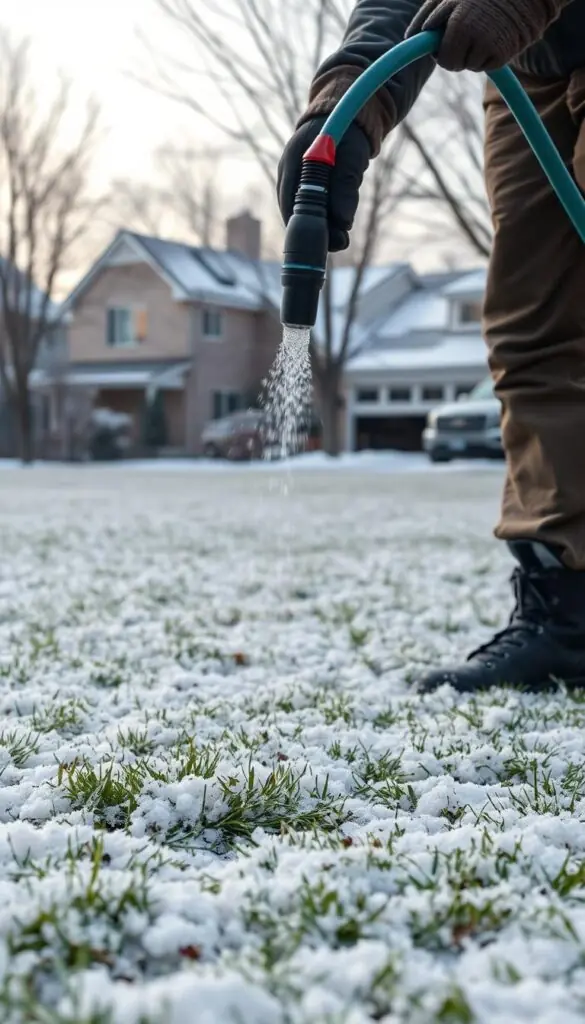
Simple shutdown steps — pick a calm, dry day and follow these practical steps with common tools:
- Turn the main supply valve clockwise to off using a shutoff key or wrench.
- Open manual drain points and plugs to relieve pressure and flush lines.
- If you have a backflow device, open test valves briefly, then protect the assembly.
- Slip insulated covers over exposed valve boxes and heads; foam wraps work well.
- Disconnect hoses and detachable sprinklers, drain them, and store in a dry spot.
After your last fall fertilizer, give a light, even watering to move nutrients into the soil. Walk low spots after storms; open small channels if snowmelt or pooled water collects so standing moisture won’t cause damage.
Care for tools and your mower: clean, sharpen, and store to avoid damage
A little tool care now saves you big headaches when spring green-up arrives.
Start with a quick wash. Use a bucket, brush, scraper, and a wire brush to remove caked soil and dry grass clippings. Scrub until metal shows a clean sheen and then wipe with rags.

Wash off soil and clippings; dry to prevent rust
Let everything dry fully. Rust finds damp metal fast, so air or towel-dry parts before storage. A light wipe of oil adds extra protection and the pleasant, faint oil scent tells you the job is done.
Drain or stabilize fuel, change oil, and lubricate moving parts
Either run the tank nearly dry or add a fuel stabilizer and run the engine for a minute so it circulates. Warm the mower briefly, then change to fresh oil. Add a drop of lubricant to hinges, bearings, and pivot points.
Sharpen mower blades and store gear in a cool, dry area
Sharpen and balance blades with a file so they cut cleanly and reduce wear on grass. Coil hoses, cap open ends, and group small things—nozzles, trimmer line—in a labeled bin for easy grab-and-go.
- Tip the lawn mower safely; scrape the deck clean so airflow stays strong.
- Park tools off the floor, cover with a tarp, and keep them in a cool, dry corner.
- Jot down the servicing date on a tag or in a notebook to track yearly upkeep.
| Task | Supplies | Benefit |
|---|---|---|
| Clean and dry metal parts | Bucket, brush, rags | Prevents rust and keeps parts moving |
| Stabilize or drain fuel | Fuel stabilizer, wrench | Avoids gummed carburetors during cold months |
| Sharpen and balance blades | File, blade balancer | Cleaner cuts help grass heal and resist damage |
| Lubricate and store | Oil, labels, tarp | Smooth starts next year and easier spring work |
Conclusion
A few gentle tasks now set the stage for a vibrant, sunlit spring yard. With calm weekend routines you tuck nutrients into the soil, protect roots, and prepare grass to thrive after snow melts.
The right late-season fertilizer and a light drink of water help plants carry through frost and cold weather. Tidy tools and shut irrigation to avoid freeze damage.
Come spring, you’ll notice steady growth and a cushiony feel underfoot — the reward for small, thoughtful care this season. Keep an eye for a few weeds during thaws and pull them quickly to stay chemical-light.
We’re rooting for you: simple habits now mean a brighter, easier year in your garden and a yard you’ll love to enjoy.
FAQ
How soon should I start prepping my yard for the cold season?
Begin in early fall when nighttime temperatures regularly dip below 55°F. That window gives cool-season grasses like tall fescue and Kentucky bluegrass time to recover, thicken, and build roots before frost. For warm-season turf (Bermuda, Zoysia, St. Augustine), focus on cleanup and tool care now and plan heavier feeding and overseeding in spring.
What’s the best way to handle fallen leaves?
Mulch fine leaves with your mower to return nutrients and protect soil moisture. Remove heavy, wet mats that block light and trap moisture—those can cause mold and smother grass. Rake areas with thick buildup and compost or use them as mulch in beds.
When should I stop regular watering and how much should I water late fall?
Scale back as evaporation slows—usually when nights stay cool. Water only when the top few inches of soil are dry. Give a final light soak after fall fertilizing so roots can take up nutrients, but avoid soggy conditions that invite disease.
How do I set mower height to protect grass through frost and snow?
Keep blades modestly short but not scalped. For cool-season turf, mow to about 2.5–3 inches going into winter to reduce snow mold risk while still shading roots. For warm-season varieties, lower slightly after dormancy begins but avoid cutting below recommended height for your species.
Should I aerate before winter and where is it most important?
Yes—airing compacted patches helps water, air, and nutrients reach roots. Target high-traffic zones, compacted soil, and heavy clay areas in early fall. Aeration paired with overseeding will give thin spots the best chance to thicken before cold weather.
What type of fertilizer is best in fall?
Use a fall formula higher in potassium and lower in quick-release nitrogen. Potassium strengthens roots and winter hardiness. Apply according to soil test results and local extension recommendations to avoid overfeeding and runoff.
How do I overseed bare spots and when is the ideal timing?
Test soil pH and correct if needed, loosen the topsoil, spread seed matched to your grass type, then lightly rake and roll. Early to mid-fall is ideal for cool-season mixes so seedlings establish before frost. Keep seeded areas lightly moist until germination.
What steps prevent frost damage and snow mold?
Keep grass debris-free, maintain proper mowing height, and avoid excessive late-season nitrogen that spurs tender growth. Limit foot traffic on frosty turf—walking on frozen blades causes breakage and stress that lasts into spring.
How should I shut down my irrigation system for winter?
Turn off the water supply, open drain valves, and blow out or drain sprinkler lines to relieve pressure. Close or insulate exposed backflow devices and critical valves. Store hoses and detachable heads indoors to prevent freezing damage.
What routine should I follow for mower and tool winter care?
Clean clippings and dirt from decks and blades, dry thoroughly, and treat metal parts to prevent rust. Stabilize or drain fuel, change oil and filters, lubricate moving parts, and sharpen blades. Store equipment in a cool, dry spot to prolong life.
Can I control weeds effectively in fall?
Yes—pull or spot-treat weeds in early fall before they reseed. Removing competitors lets turf reclaim space and directs nutrients to desirable grasses. For persistent broadleaf weeds, consider a targeted post-emergent herbicide timed for cooler, active-growing conditions.
How does soil testing help before winter?
A soil test reveals pH and nutrient levels so you can apply the right fertilizers and lime. Correcting imbalances in fall gives roots time to absorb nutrients and improves spring vigor—helpful for overseeding and winter resilience.
What are signs my turf is stressed and needs more attention before snow?
Look for thin, yellowing patches, compacted soil, puddling after rain, or persistent thatch. These indicate poor root health or drainage problems. Aerate, address drainage, remove thatch, and apply corrective care so the grass enters winter stronger.