Close your eyes and imagine the first warm morning: a hint of sweet scent at the kitchen window and a patch of bright color waking up in the yard. Do you want that calm, steady joy outside your door?
You’ll feel like you’re chatting with a gardening friend. I’ll guide you step by step so the season feels easy, not overwhelming. We focus on small wins and simple choices that make your beds glow from early to late spring.
Bulbs, perennials, and shrubs can return year after year to give reliable cheer with minimal fuss. You’ll learn which plants open first, which carry color through midseason, and which finish strong as days lengthen.
Expect clear, practical pointers: where to tuck bulbs, how to place shrubs for sun and soil, and a few care tips to protect buds from critters. By the end, you’ll feel calm and confident about filling your garden with steady, joyful color.
Key Takeaways
- Map a simple plan so beds never look bare between bloom cycles.
- Choose bulbs, perennials, and shrubs that return each year.
- Know which plants start early, which carry midseason, and which finish strong.
- Get clear planting tips for depth, placement, and sun exposure.
- Pick fragrant and pollinator-friendly options for quiet mornings outdoors.
How to Plan Your Spring Garden for Continuous Color
Start by picturing three planting layers that hand off color from one to the next. This simple map helps you place early, mid, and late-season highlights so the yard never looks empty.
Map your early, mid, and late spring layers
Sketch beds and mark which spots get early spring light. Use bulbs like snowdrops, crocus, and daffodils for first color. Add tulips, forsythia, and lilac for midseason interest. Finish with iris, azalea, peonies, foxglove, and baptisia to carry you through late spring.
Sun, shade, and soil: setting up easy success
Note morning versus afternoon sun and where shade lingers. Group sun-loving plants together and tuck shade fans under trees so care stays simple.
Plan for good drainage. Most bulbs and many shrubs dislike waterlogged soil over winter. Keep a short calendar: order bulbs in fall, plant shrubs in spring or fall, and prune woody shrubs after they bloom.
- Layer heights: low bulbs front, perennials mid, shrubs back.
- Fragrance placement: near paths and entries for small daily joys.
- Group by need: similar soil and light requirements for easy maintenance.
Early Spring Spark: Daffodils that Bloom for Weeks
Planting daffodils is an easy habit that rewards you with steady, low-fuss color each year. You’ll get cheerful heads in white, yellow, orange, bicolor, and even pink that can last up to six weeks in early spring.
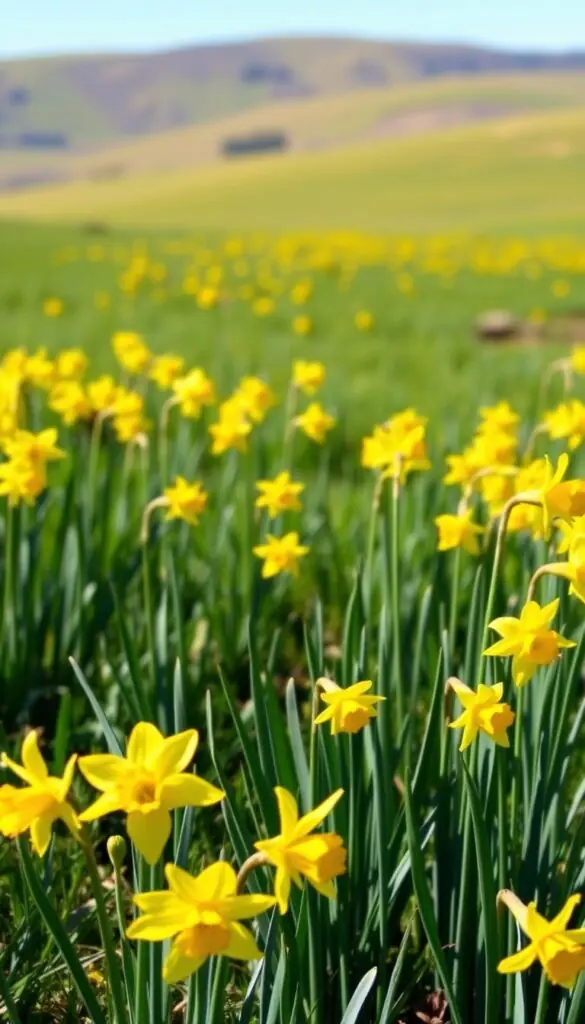
Why you’ll love them: these hardy plants are low maintenance, deer resistant, and hardy in USDA zones 4–8. Note that they are toxic to people and pets, so tuck them away from play areas.
Planting pointers
- Set bulbs in fall, pointy side up, about five inches deep and six inches apart.
- Choose a spot in full sun to partial shade with well-draining soil; water once after planting.
- Group 7–15 bulbs for impact—under deciduous trees or along a path works well.
- Let leaves die back naturally; that foliage feeds next year’s blooms.
- Mix species daffodils or early nectar companions to help bees, since many hybrids are poor pollinators.
Simple, do-able steps: plant in fall, forget about them all winter, and enjoy bright color that returns with almost no fuss.
Tulips for Bold, Seasonal Flowers in Full Sun
Choose tulips that stage their show in waves so your beds stay lively longer. Tulips offer nearly 4,000 cultivars across early, midseason, and late types, plus doubles and species that vary in form and habit.
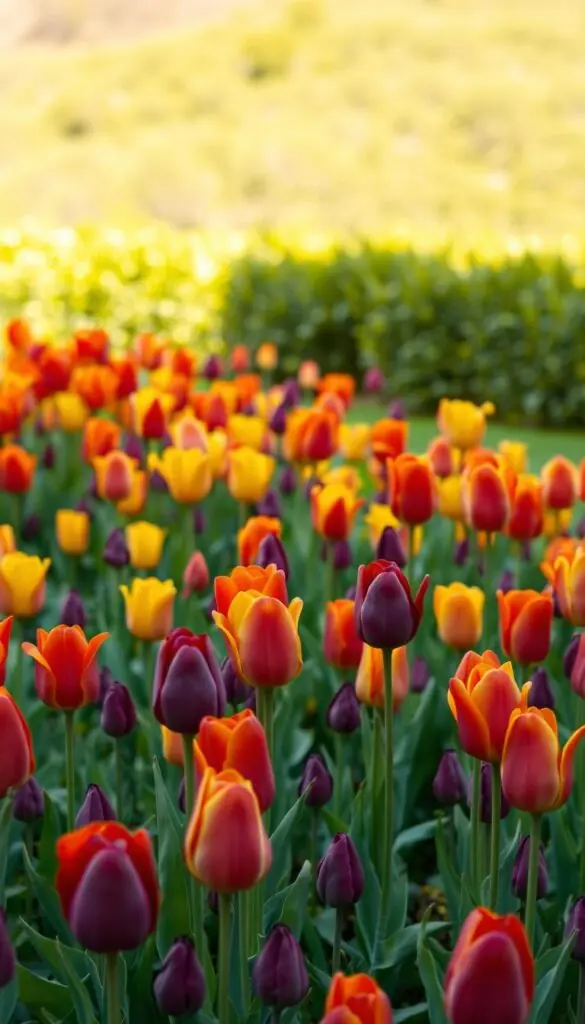
Picking varieties is simple: mix early, mid, and late types so your tulips bloom spring-long in waves of fresh color. Try doubles for lush, peony-like heads and species tulips for better perennial return and pollinator value.
Care tips for reliable results
Plant bulbs in fall in well-draining soil and full sun. Set them four to eight inches deep and four to six inches apart for sturdy stems and big blooms.
For containers, give bulbs an 8–12 week chill in a protected, cold spot, then move pots outside as temperatures rise. Tulips are hardy in USDA zones 3–8 but are toxic to pets and people, so site them thoughtfully in your gardens.
- Replant each fall if your soil or climate weakens second-year flowers.
- Protect bulbs from rodents with sharp gravel, cages, or mixing in rodent-resistant grape hyacinth.
- Leave foliage to yellow naturally after bloom to feed next year’s display.
Hyacinth and Grape Hyacinth for Fragrance and Texture
A doorway lined with hyacinth can make each return home a small, fragrant celebration. You’ll picture that sweet scent greeting you and guiding simple planting choices for borders, pots, and natural drifts.
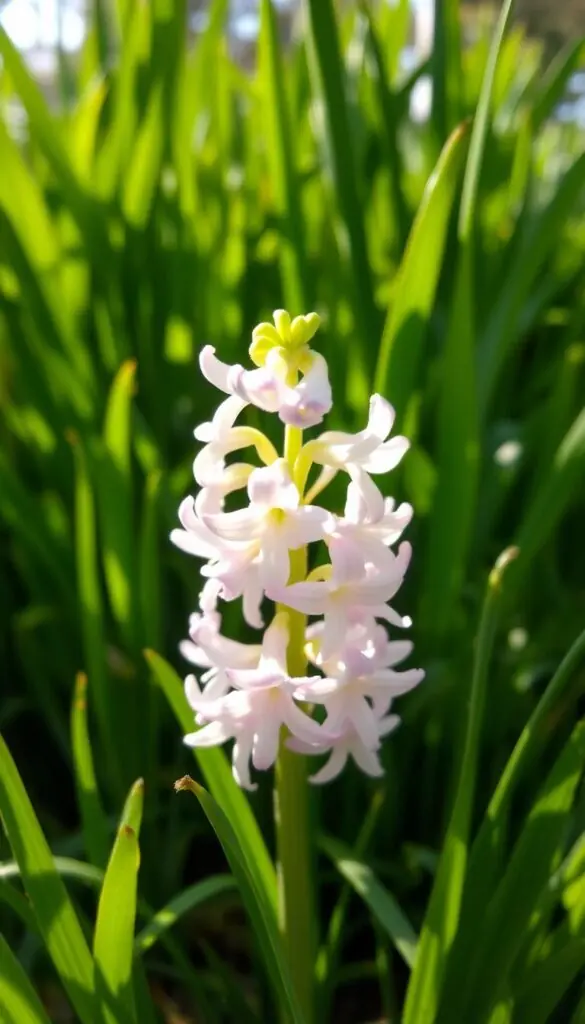
Sweet scent indoors and out: clusters and “grape” spires
Hyacinths bear highly fragrant, star-shaped flowers in tight clusters that perfume paths and porches.
They are hardy in USDA zones 4–8, deer resistant, and attract bees and butterflies on warm days. Note they are toxic to people and pets, so site them carefully.
Where they shine: borders, containers, and naturalizing drifts
Plant bulbs in fall, four to six inches deep and three to six inches apart with the pointed end up. Water thoroughly after planting.
- Place hyacinths by paths and entryways to enjoy scent up close.
- Use grape hyacinth at the front of borders for ribboned colors and dense patches.
- Naturalize grape hyacinths in lawns or under deciduous trees for a woodland look.
- Mix hyacinth colors in porch pots and pair with daffodils or tulips to layer heights.
- After flowering, let leaves feed bulbs before trimming for next year’s show.
Crocus and Snowdrops: First Blooms to Wake the Garden
Small bulbs deliver big early reward. Tuck crocus and snowdrops into corners and edges so you get bright surprises as the ground thaws. These tiny plants are perfect for nooks near paths, under shrubs, or clustered by steps.
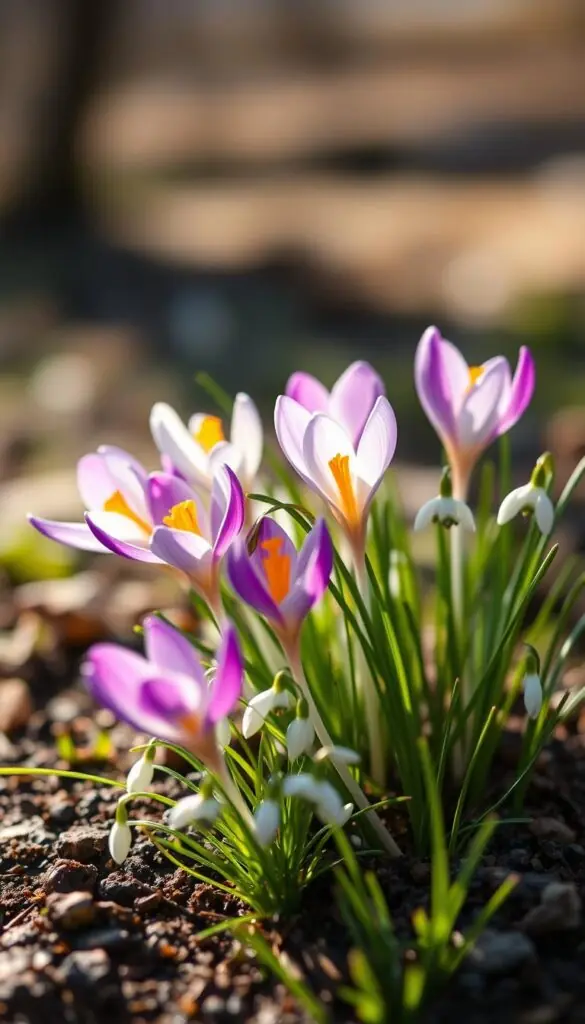
Small bulbs, big joy: planting in fall for early spring color
Crocus shows up first with cup-shaped blooms in many colors. Plant corms in fall about four inches deep and four inches apart in sunny, well-draining soil for a dependable return.
Snowdrops are easy care and go in from early to late fall depending on your region. Both kinds are hardy and attract bees on the first warm days, giving early nectar to pollinators.
- Plant in fall so these bulbs are ready when the first flowers bloom.
- Choose sunny spots with well-draining soil; crocus corms sit about four inches deep.
- Scatter under shrubs and along lawn edges for a natural, surprising look.
- Use clusters of 10–20 for curb appeal despite the bulbs’ small size.
- Combine with daffodils to layer timing: snowdrops, then crocus, then larger bulbs.
- In containers, group bulbs tightly for a concentrated burst near your door.
- Let foliage die back naturally to feed bulbs for next year’s show.
Lily of the Valley for Shade-Loving Beauty
A shady corner can become a soft carpet of green and tiny, scented bells with the right ground cover. Lily of the valley brings low height, glossy leaves, and a gentle perfume that invites quiet moments outdoors.
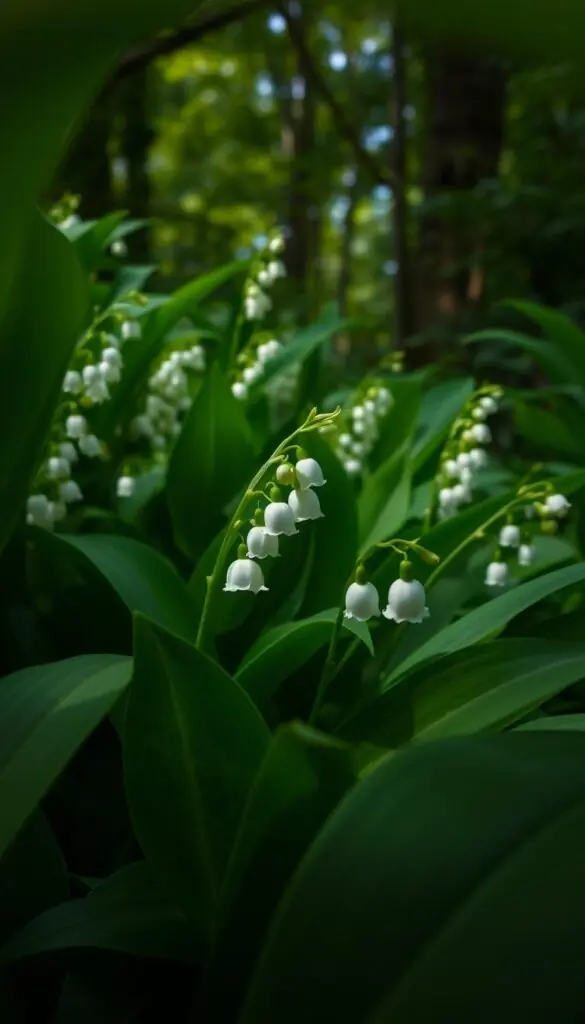
Delicate bells, lush foliage, and lovely ground cover
Planting is simple: set rhizomes about half an inch below the surface in rich, well-draining soil in full shade or part shade. They grow 6–12 inches tall and offer white, bell-like blooms for roughly three weeks in spring.
Give them room. Lily of the valley spreads by rhizomes and makes a dense carpet. Allow space so it does not crowd slower perennials.
- Choose a shady nook where it can form a soft green carpet with delicate scent near paths or seats.
- Plant shallow, water to help rhizomes settle, and divide clumps every few years to keep vigor.
- Pair with ferns and hostas for a woodland look; leaves stay attractive after blooms fade.
- Note safety: all parts are highly toxic to people and pets, so avoid planting where curious animals roam.
Iris Varieties to Bridge Spring into Summer
Iris bring a clean, architectural edge to borders while pushing color from late spring into warm summer days. I’ll show you how to site irises for sturdy stems and brilliant color so they glide into summer with very little extra care.
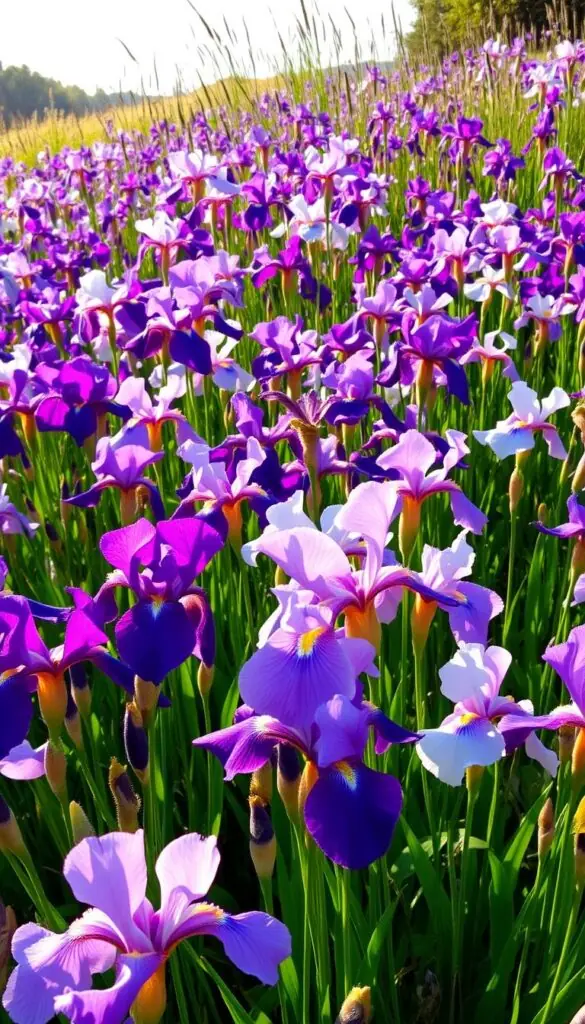
Bearded and Siberian standouts: color, form, and pollinators
Irises include roughly 300 species and thousands of cultivars. These perennials offer nearly every hue, so you can pick colors to match your beds.
Siberian types tend to bloom in late spring. Bearded iris usually peaks in early summer, and some reblooming varieties give a second show.
Planting depth and sun needs for strong growth
Plant bearded iris rhizomes right at the soil surface with roots below; bulbs that go deeper should sit about 4–6 inches down. Most types need at least six hours of sun and do best in well-drained soil.
Irises attract bees and hummingbirds, but note they are toxic to people and pets. Deadhead spent stalks to tidy beds and favor the rhizomes for next year’s health.
- Site in full sun so tall stems stay sturdy and leaves stay upright.
- Group three to five rhizomes per clump for impact and easy dividing.
- Explore varieties in blues, purples, yellows, whites, and more to broaden your palette.
- Keep soil well-drained — irises dislike standing water, especially over winter.
- Add rebloomers if you want another bloom later in the season.
Forsythia: Sunshine-Yellow Shrubs that Signal Spring
Use forsythia as a fast, reliable anchor to lift your beds and bring early cheer to patios and hedgerows. It’s especially good where you want bold color before leaves appear.
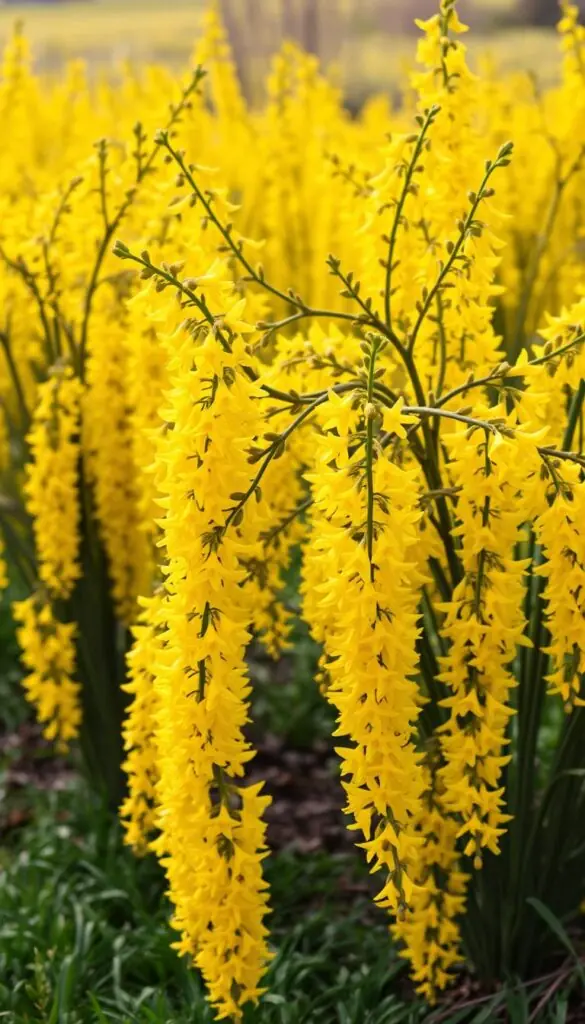
Hedges, cut stems, and fast growth in full sun
Forsythia × intermedia is hardy in USDA zones 3–8 and produces bright yellow blooms on arching stems that can reach up to 10 feet. The branches root where they touch soil, so give each plant room to spread.
"Snip a few stems in late winter to force indoors and bring sunshine to your table early."
- Plant in full sun for the most abundant display along arching stems.
- Use as a fast-growing hedge or let single shrubs billow for a relaxed look.
- Prune right after flowering to shape and encourage next year’s buds.
- Pair with early bulbs at the base to layer yellow with pops of purple or white.
- Water young plants the first season, then reduce as roots deepen.
| Feature | Details | Why it matters |
|---|---|---|
| Hardiness | Zones 3–8 | Reliable in most U.S. gardens |
| Height & Spread | Up to 10 feet; roots at touch | Plan spacing in feet to avoid crowding |
| Uses | Hedge, specimen, forced cut arrangements | Versatile for landscape and indoor color |
| Pests & Wildlife | Deer generally avoid it; modest pollinator value | Low-maintenance and wildlife-friendly |
Azaleas for Soft Shade and Lasting Spring Color
Azaleas thrive where dappled shade or bright morning sun meets rich soil. These shrubs give you painterly swaths of color with minimal fuss when you site them well.
Plant in acidic, well-draining soil during spring or fall, and mulch lightly to keep roots cool and moist. Water consistently through the first year so your new plants establish strong roots.
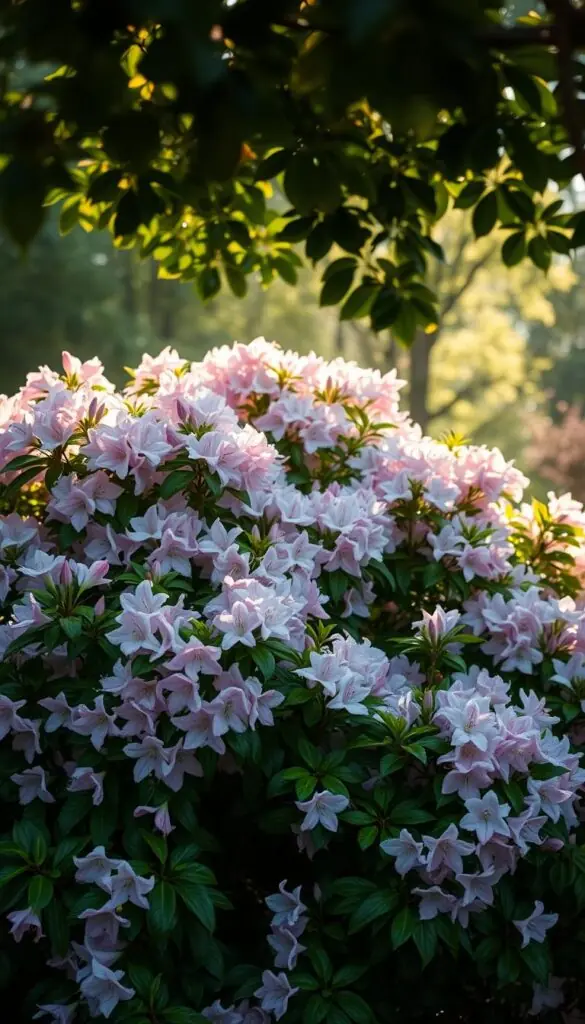
- Choose bright shade or morning sun to keep azalea flowers looking fresh.
- Use containers on porches to control pH and enjoy blossoms up close.
- Prune right after flowering so you don’t cut next year’s buds.
- Mix pinks, whites, and salmon for layered swaths beneath trees.
- Add pollinator-friendly companions nearby to extend interest after the show.
- In deer-heavy areas, protect young plants until they’re established.
"Keep roots cool, feed the soil, and azaleas will reward you with clouds of color."
Quick tip: test and amend soil pH before planting, and choose varieties rated for zones 6–9 for reliable performance.
Lilac for Cottage-Style Scent and Classic Blooms
Give a lilac a sunny, breezy corner and it will become a signature of your garden. I’ll show you how to site lilacs for decades of fragrant blossoms so you can look forward to armfuls each year.
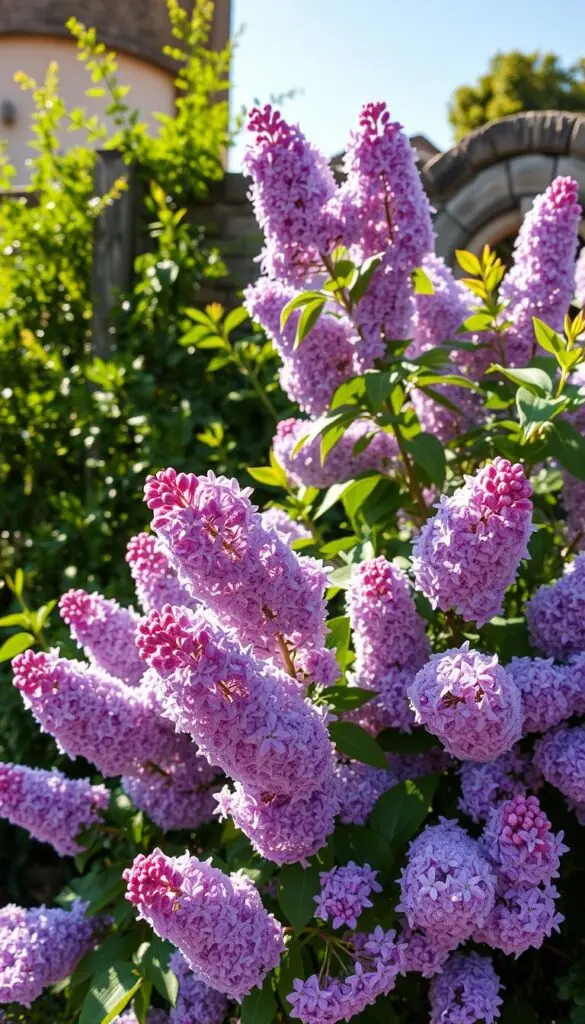
Site it right: full sun, pruning for air flow, long-lived beauty
Plant common lilac and its cultivars in fall in full sun and rich, well-draining soil. Most types do best in USDA zones 3–7 and dislike hot, humid spots.
Prune immediately after the main flush to improve air circulation and cut powdery mildew risk. Lilacs are fairly deer resistant and make excellent pollinator plants; expect bees to visit the fragrant clusters.
"Plant where you pass daily so the scent becomes part of your routine."
- Choose from many varieties in purple, pink, white, and yellow tones.
- Add bulbs at the base to layer color before shrubs leaf out.
- Water deeply in dry spells the first couple of seasons to set strong roots.
| Feature | Advice | Benefit |
|---|---|---|
| Timing | Plant in fall | Strong root establishment before warm weather |
| Care | Prune after bloom; ensure air flow | Reduces mildew and keeps shape |
| Placement | Sunny, breezy site near paths | Maximum scent and daily enjoyment |
Magnolia and Flowering Quince: Statement Blooms on Trees and Shrubs
Place these showstoppers where they can breathe. Magnolias may be deciduous or evergreen and commonly reach around 40 feet, though some grow from 8 to 100 feet. Give them room so broad branches and large blossoms have space to shine.
Space, zones, and bloom timing from late winter to mid-spring
Plant evergreen magnolias in early spring. Set deciduous types in fall if you’re in the South, or in spring if you’re farther north.
- Hardy zones: most magnolias do well in zones 4–9 in acidic, well-draining soil.
- Flowering quince offers vivid colors—red, orange, white, or pink—for about 10–14 days in mid-season.
- Quince makes great cut stems and small fruits used for jellies after the display.
- Underplant with bulbs to fill the ground plane before canopies leaf out.
Tip: Prune lightly right after the show to keep shape but protect next year’s buds. For both magnolia and quince, plan spacing in feet so trunks and shrubs don’t crowd paths or beds.
| Feature | Magnolia | Flowering Quince |
|---|---|---|
| Typical size | 8–100 feet (often ~40 feet) | 3–8 feet (shrub scale) |
| Planting season | Evergreen: early spring; Deciduous: fall (South) or spring (North) | Plant in spring or fall; tolerant of varied schedules |
| Show window | Late winter to mid-spring | About 10–14 days in mid-spring |
| Soil & site | Acidic, well-draining; sunny to part shade | Well-draining, slightly acidic; sun for best color |
Peonies, Violas, and Phlox: Perennials that Keep the Blooms Coming
Peonies, violas, and phlox give you steady stretches of charm between bulb shows. These perennials fill gaps with easy care and reliable reward.
Peonies: big, fragrant blossoms and decades of color
Peonies reach about 3 feet tall and come in doubles, semi-doubles, and singles in red, pink, white, and yellow. They are long-lived in zones 3–8 and make excellent cut flowers when picked at the soft-bud stage.
Violas and phlox: edging, groundcovers, and layered hues
Violas bloom from early to late spring and are perfect for edges and containers. Give them shelter from hot afternoon sun.
Phlox ranges from creeping ground-hug types to taller garden phlox for late spring into summer color. All prefer evenly moist, well-drained soil.
"Mix varieties to stagger bloom and weave consistent color through your beds."
- Plant peonies for decades of low-fuss display.
- Use violas at paths and pots to add early charm.
- Add creeping or tall phlox to layer texture and season-long interest.
| Plant | Height & Zones | Best Use |
|---|---|---|
| Peony | ~3 ft · Zones 3–8 | Specimen, cut flowers, back borders |
| Viola | 4–8 in · Zones 4–9 | Edging, containers, early color |
| Phlox | ground 2–6 in; garden 1–3 ft · Zones 3–8 | Groundcover, mid/late border, summer color |
Foxglove and Baptisia for Height, Drama, and Cut Flowers
Tall spires add instant theater to a border and give you long, dramatic stems for arranging. I’ll show you how to add graceful height that waves in the breeze, offering plenty for vases without leaving gaps in the garden.
Towering spires and pea-like blooms for arrangements
Foxglove often behaves as a biennial, producing tall spires up to 6 feet in its second year. It prefers full to part shade and evenly moist, well-drained soil in USDA zones 3–8.
Baptisia forms hefty clumps 3–4 feet tall and wide. Plant it in sun where it can mature; it becomes drought tolerant once established and gives spring spires in blue, white, yellow, or bicolor.
- Use foxglove for towering stems and speckled throats that draw the eye up through late spring into summer.
- Allow foxglove to reseed so it appears perennial with minimal effort; deadhead spikes if you prefer fewer volunteers.
- Plant baptisia where it can reach several feet across without crowding nearby plants.
- Enjoy baptisia’s pea-like blooms as long-lasting cut flowers for arrangements.
- Stake foxglove in windy spots and water evenly for straight stems; give both room—mature clumps can measure several feet wide.
spring blooms, seasonal flowers: A Simple Timeline You Can Follow
A simple timeline turns planting plans into an easy, glanceable checklist. Use this gentle schedule so one group hands color to the next and your beds never look empty.
Early spring opens with snowdrops and crocus, followed by daffodils and hyacinths for scent and bright patches. Plant most bulbs in fall at the correct depth and spacing so they return reliably.
Early spring: snowdrops, crocus, daffodils, hyacinth
These small bulbs start the year and give early nectar to bees. Cluster them in drifts for best impact.
Mid-spring: tulips, forsythia, lily of the valley, lilac
Mid-period brings bold tulips and forsythia branches, plus shady lily of the valley and fragrant lilac for paths.
Late spring: iris, azalea, peonies, foxglove, baptisia
Late choices add height and texture. Iris and peonies bridge into summer while foxglove and baptisia provide vertical drama.
- Follow this sequence so your beds move from early to mid to late without gaps.
- Make sure bulbs are set in fall and shrubs are pruned after bloom to protect next year’s display.
- Pair containers with borders to fill gaps while young plants mature.
- Keep a simple notebook each year to refine timing and color choices for the next season.
Quick Planting Guide: Sun, Shade, Soil, and Spacing
Match each plant to its ideal light and space, and your beds will feel deliberate, not crowded.
You’ll get a calm, at-a-glance guide that pairs common types with simple depth, spacing, and water cues you can remember.
Full sun favorites and part-shade stars
Full sun spots suit tulips, forsythia, and many irises. Plant tulips 4–8 inches deep for strong stems.
Irises need at least six hours of sun; bearded types sit with rhizomes at the surface while other bulbs go 4–6 inches deep.
Soil drainage, inches and feet for spacing, and watering rhythm
Aim for well-draining soil. Amend heavy clay with compost and grit so roots aren’t waterlogged. Azaleas prefer acidic, well-draining soil in part shade or morning sun.
Use inches as your planting guide: daffodils about 5 inches deep and 6 inches apart; crocus about 4 inches deep and 4 inches apart. For larger mature sizes, plan in feet—magnolias can need many feet of room, sometimes up to 40 feet across.
- Match light: place full sun lovers in the brightest parts of your gardens.
- Tuck shade fans where afternoon shade keeps petals crisp.
- Planting depths: tulips 4–8 inches, daffodils ~5 inches, crocus ~4 inches.
- Spacing in feet: give perennials and shrubs room to spread so beds breathe.
- Water rhythm: water consistently the first season; then water deeply, less often, to build strong roots.
- Timing: bulbs in fall, shrubs in spring or fall, perennials in spring when soil is workable.
"Step back after planting to check heights and flow—simple spacing makes a calm, layered bed."
Conclusion
Take a deep breath—simple choices now make next year’s garden glow. With a few easy-grow bulbs and perennials, you can layer color from the first thaw through the edge of summer.
Pick reliable plants—daffodils give up to six weeks of cheerful heads and resist deer, while tulips do best in full sun at 4–8 inches deep and often benefit from replanting each fall. Add peonies and a shrub or two like lilac or forsythia for structure and scent.
Pay attention to sun and soil, let leaves and foliage feed bulbs, and invite bees with early bloomers. Make sure to water new plantings, enjoy simple arrangements from your own stems, and celebrate each small success—your gardens will grow into lasting beauty year after year.
FAQ
What are the best bulbs to plant in fall for continuous spring color?
Plant daffodils, tulips (mix early, mid, and late varieties), hyacinths, grape hyacinths, crocus, and snowdrops. Space bulbs according to package depth—usually 3–6 inches for small bulbs and 6–12 inches for larger bulbs—and choose well-draining soil in full sun to partial shade for the longest display.
How do I plan layers for early, mid, and late spring blooms?
Map your garden into tiers: low growers like crocus and snowdrops at the front, mid-height bulbs such as hyacinth and some tulips in the middle, and taller showpieces like daffodils, bearded iris, and foxglove toward the back. Stagger planting times and variety types so bloom periods overlap and you get continuous color and texture.
Can I grow these plants in part-shade or do they need full sun?
Many options thrive in part-shade: lily of the valley, certain azaleas, and woodland irises perform well with morning sun and afternoon shade. Bulbs like daffodils and tulips prefer full sun for strongest blooms, but they will tolerate light shade. Match each plant’s sun needs to the site for best results.
How do I care for daffodils so they rebloom for years?
Leave foliage to yellow and die back naturally; this allows the bulb to store energy. Deadhead spent blooms but do not cut leaves until they’ve fully faded. Provide well-draining soil, a few inches of compost at planting, and plant bulbs at the correct depth (about three times the bulb height).
Do tulips need to be replanted every year?
Many garden tulips are treated as annuals for reliable spring display, especially in warmer areas. Species tulips and some Darwin hybrids can naturalize and return for several years if planted in well-draining soil, given a cold period, and protected from rodents and deer.
Which fragrant bulbs are best for indoor arrangements?
Hyacinths and grape hyacinths offer strong scent in small clusters; daffodils provide cheerful stems but can affect other blooms if stored together. For long-lasting indoor fragrance, force hyacinth bulbs in pots or forcible cool treatment to bloom on a table or windowsill.
How soon after planting bulbs in fall will they bloom?
Bulbs planted in fall develop roots before winter and typically bloom the following spring. Early bloomers like snowdrops and crocus are first, followed by daffodils and hyacinths, then mid- to late-season tulips and irises. Timing depends on variety and local climate.
What spacing and soil depth do perennials like peonies and phlox need?
Peonies need deep planting with eyes 1–2 inches below soil and 3–4 feet between plants for air flow. Phlox spreads as edging or groundcover; space 1–2 feet apart. Ensure well-amended, moderately fertile soil with good drainage and follow recommended planting depths on tags.
How do I protect bulbs and young shoots from rodents and deer?
Use physical barriers like wire mesh or daffodil bags at planting, add gritty soil amendments, or plant deterrent varieties (daffodils are deer-resistant). For aboveground shoots, temporary fencing and repellents can reduce deer browsing during peak growth.
Can I naturalize bulbs in lawns or under trees?
Yes—small bulbs like crocus, grape hyacinth, and many daffodils naturalize well in lawns or under deciduous trees. Plant in drifts for a natural look, and avoid mowing until foliage has died back so bulbs can replenish energy for next year.
What are good cut-flower choices from spring plantings?
Daffodils, tulips, hyacinths, foxglove, and peonies make excellent cut flowers. Cut stems early in the day, recut underwater, and place in clean water. Note: daffodils secrete a sap that can harm other stems—condition them separately before combining in mixed bouquets.
How do I extend bloom time across the spring months?
Plant a mix of early, mid, and late varieties and include both bulbs and perennials. Stagger planting depths and choose diverse species such as snowdrops, hyacinths, daffodils, tulips, irises, and peonies so as one set finishes, another begins. Regular deadheading and proper care also prolong displays.
Which shrubs provide long-lasting color and can be used as hedges?
Forsythia and azaleas offer strong seasonal color and work well as hedges in full sun to part shade. Prune after bloom for shape and better air flow, and site them where they get the sunlight needed for abundant flowering.
What simple soil and watering rules help young plants establish?
Use well-draining soil amended with compost, plant at recommended depths, and water deeply but infrequently to encourage strong roots. For newly planted bulbs and perennials, keep soil evenly moist until established, then reduce frequency as needed.