Imagine warm cedar, glossy green leaves, and the scent of tomato vines drifting by your kitchen window. Do you wish a small strip of sun could yield more food and color without taking over your yard?
In this short guide we show how a vertical vegetable garden turns limited space into a tidy, productive strip of green. You’ll picture plants climbing toward the sun and fruit hanging where you can reach it.
We cover easy, budget-wise ways to start vertical gardening — from a simple wall trellis for herbs to an arched tunnel for cucumbers and flowers. Expect clear steps, tool tips like welded wire, T-posts, and pruners, and where to place supports for airflow and light.
Along the way, we point out common mistakes so you feel supported. Plant timing for U.S. zones and gentle care tips will help you make sure your new growing spot stays calm, organized, and rewarding this season.
Key Takeaways
- Small supports can turn limited space into productive, accessible food and beauty.
- Use common materials—welded wire, T-posts, chicken wire—for affordable builds.
- Place trellis north-south and plant on the outside edge for best light and airflow.
- Choose compatible herbs, pole beans, and strawberries to share a support.
- Avoid flimsy ties and shallow posts to keep plants safe and harvests easy.
Why Grow Vertically: Space-Saving Beauty, Easier Harvests, Healthier Plants
When you grow up instead of out, a few square feet can yield surprising amounts of food and charm. Lifting vines frees up space so a single bed can hold more plants and more fruit without crowding the soil.
Harvests get easier on your back because beans, peas, tomatoes, and cucumbers hang at eye level. You simply snip ripe fruit and move on. Cleaner leaves and dryer fruit come from better airflow and less soil splash, which cuts fungal problems and time spent washing produce.
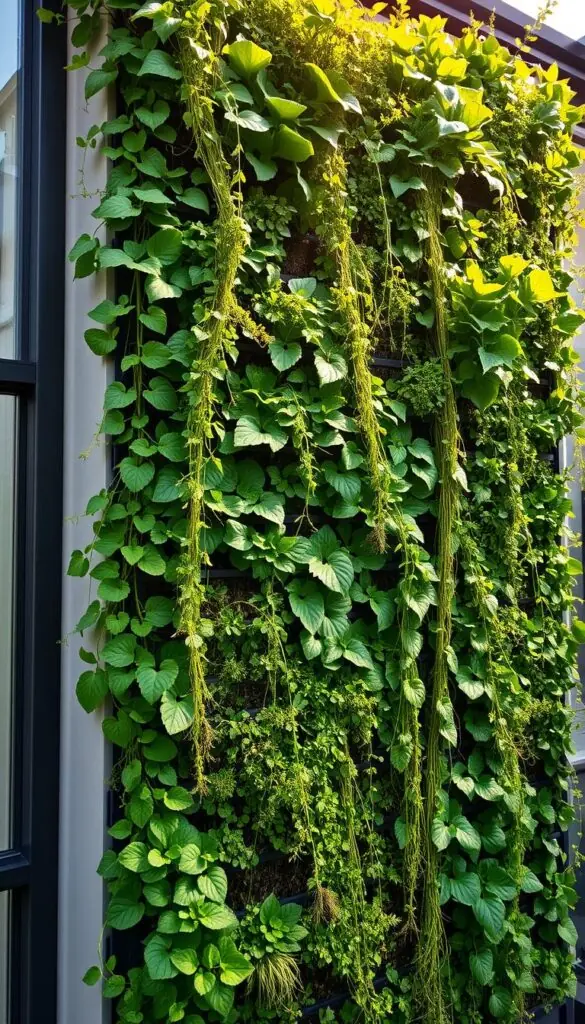
Design adds delight: an arched trellis or a living wall creates dappled shade, floral accents, and a tidy path. Eco wins follow — living walls cool warm walls, save water at the roots, and invite pollinators to visit.
Quick confidence tips
- Match plant vigor to the support so structures stay steady as fruit grows.
- Start with one sturdy trellis, two vining plants, and a sunny spot of six hours.
- Train vines upward early to reclaim space and reduce weeds beneath.
| Benefit | What it helps | Example |
|---|---|---|
| Saved space | More crops per bed | Squash on an arch uses a few sq ft vs ~20 sq ft on the ground |
| Easier harvests | Less bending, fewer missed fruit | Beans and cucumbers hang at arm’s reach |
| Healthier plants | Less disease from splash | Dry leaves reduce blight and rot |
Plan Your Vertical Vegetable Garden
A quick sun check will save time later: note where six or more sunlit hours fall each day. Use a sun calculator app or a simple compass to test a week of light. Aim for a north-south run when possible so plants share sun through the day.
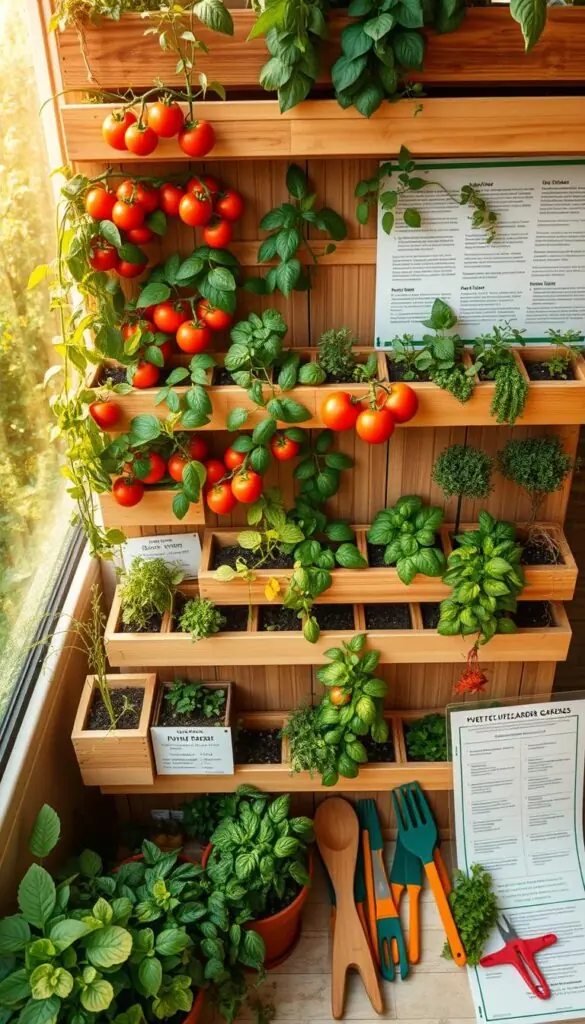
Match structure to your space
Measure the size of your bed, balcony, or patio before choosing supports. An A-frame fits tight beds, a narrow panel works on balconies, and freestanding frames suit raised beds and pots.
Zones and timing
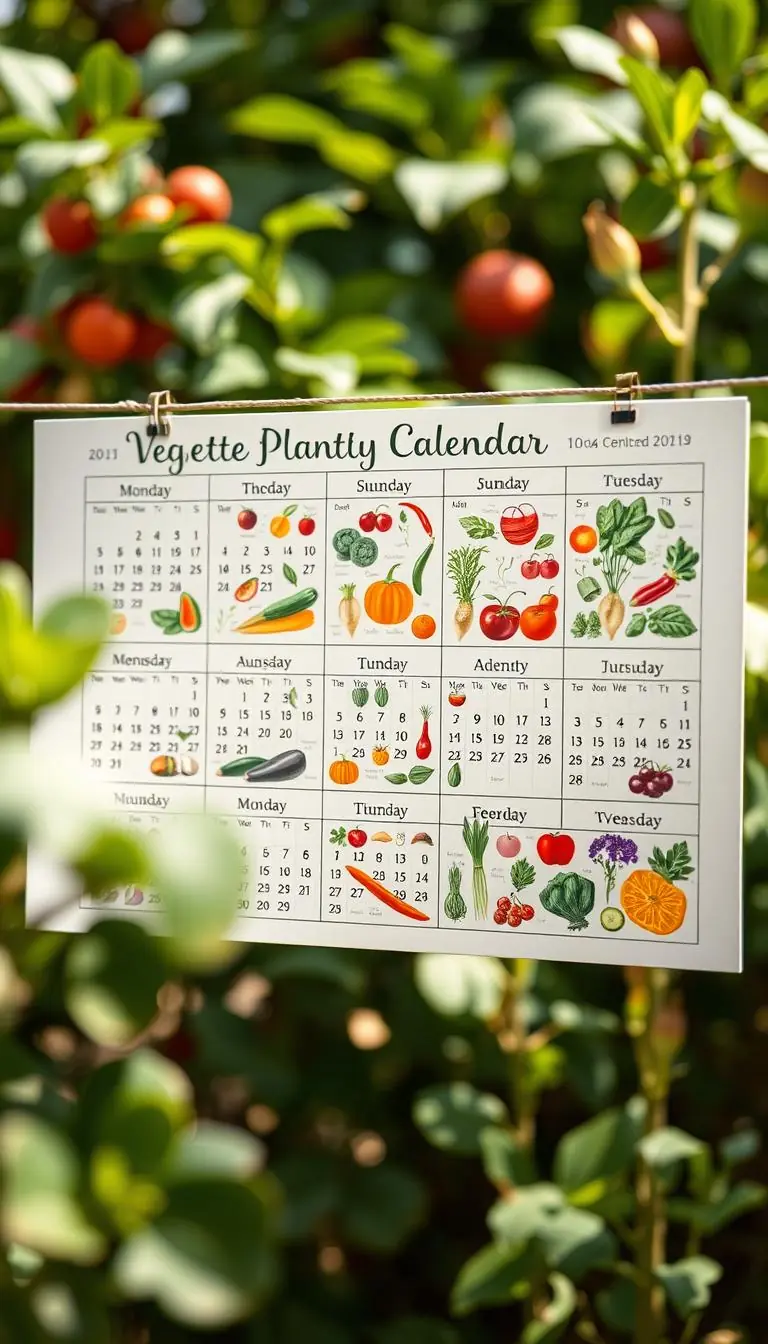
In most U.S. zones, sow peas early as a cool-season crop. After the last frost, set out beans and tomatoes. Keep a simple calendar so you rotate crops and keep the trellis productive.
- Start by watching sun patterns for a week.
- Place plants on the outside edge of the support for easy pruning and harvest.
- Choose netting for lighter climbers and stronger panels for vigorous types.
- Leave room for pathways and secure supports if your space is windy.
Real-world example: On a narrow balcony, use a slim panel against the wall, pots at the base for herbs, and train peas early. After frosts pass, swap to beans and a compact tomato in a larger pot.
DIY Structures, Supports, and Trellises That Last
With a few affordable parts and an afternoon, you can build a reliable trellis system that keeps fruit clean and vines tidy. Pick materials that match the size and strength you need, and aim for durability so the work lasts for seasons.
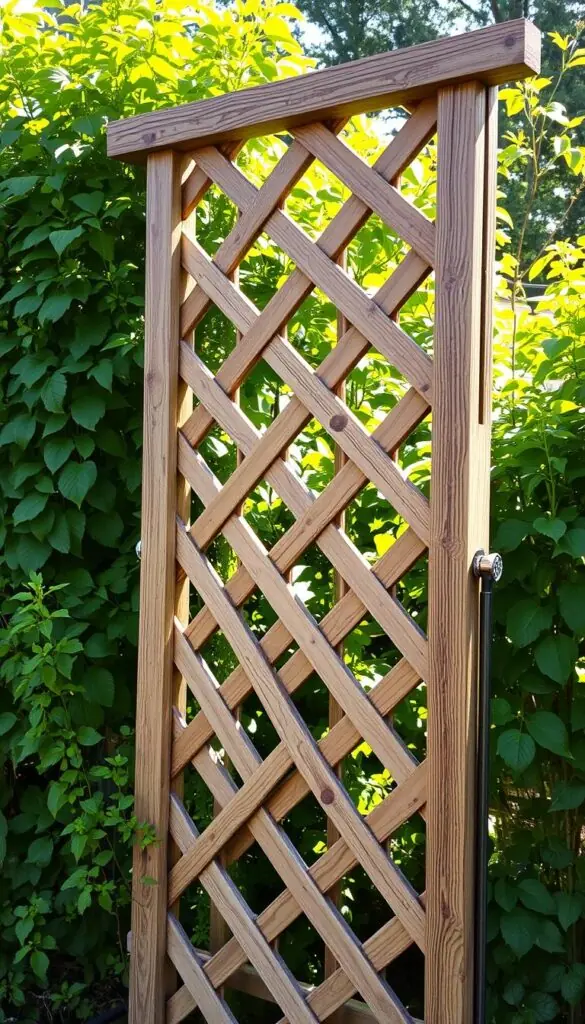
Affordable materials that work
Common choices include welded wire (3' x 50' ≈ $35), T-posts (~$4 each), cattle panels (~$30), and chicken wire (25' ≈ $20). A recycled fence or old gate can become a charming, low-cost fence or trellis.
Pick sturdy trellises
Choose trellises at least six feet tall. Metal or iron frames resist storms; wood can work if you anchor posts deeply. You want a support that feels solid under your hand and stays true all season.
Step-by-step setup
- Place the structure in full sun, running north–south when possible.
- Drive posts a foot into the ground and tighten panels with zip ties — the satisfying click reassures you the job is done right.
- Plant on the outside edge so plants get light and airflow, and water the bed so soil settles around the base.
Smart add-ons and simple tools
A-frames and arched cattle panels make dramatic walkways and support tomatoes and cucumbers while fruit hangs like ornaments. Clotheslines between posts are an easy, storable way to support peas and beans.
Tip: Gather two T-posts, a welded-wire panel, a post driver, and zip ties. You can install a strong trellis in under an hour and spend the rest of the afternoon planting.
Best Vegetables and Herbs for Vertical Gardening
Choose crops that climb willingly and reward you with steady, easy picking. Start with plants that need little coaxing and give big returns.
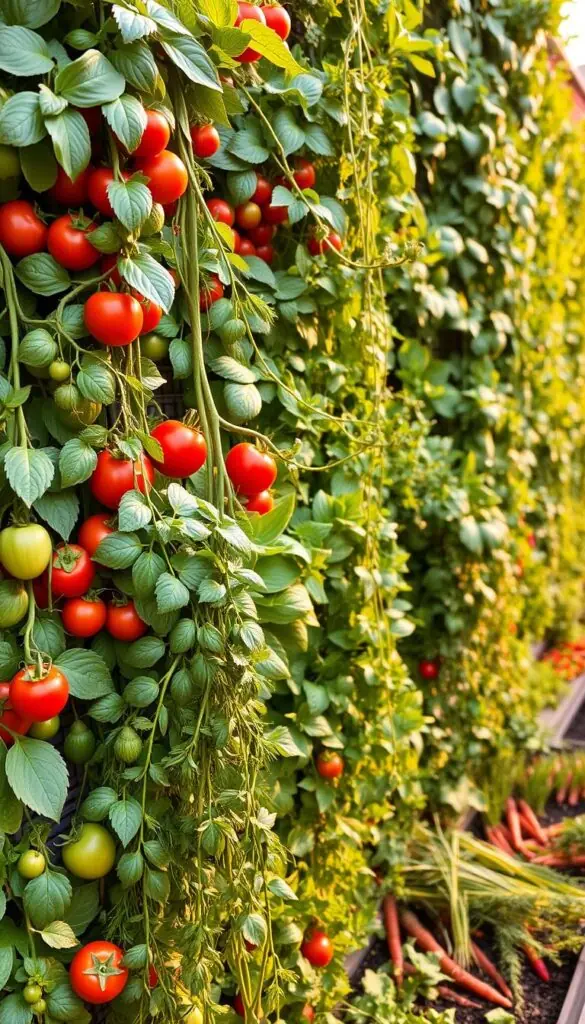
Natural climbers
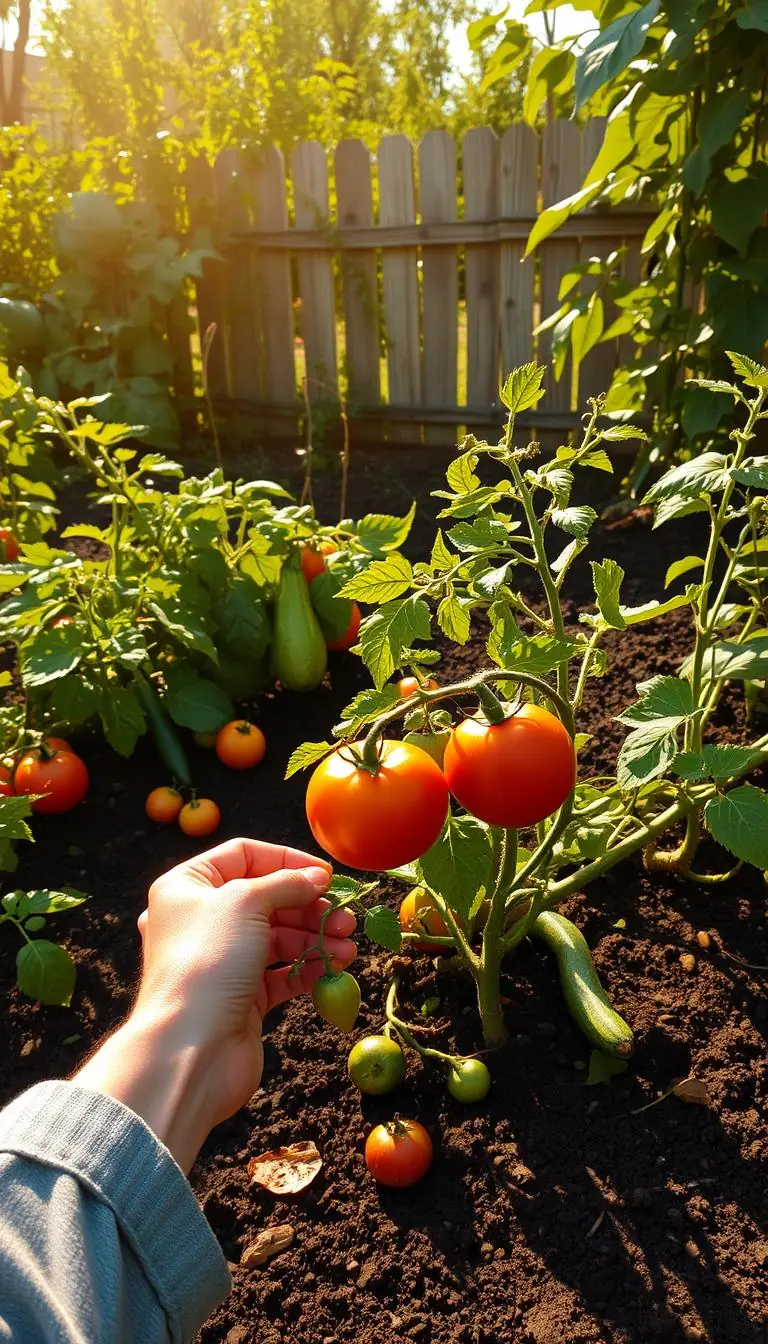
Pole beans, peas, cucumbers, and indeterminate tomatoes are top picks. The snap of fresh pole beans and bright tomato scent make afternoons outside feel like a treat.
Heavier fruit that need support
Pick small melons or baby pumpkins and use soft fabric slings to cradle each fruit as it grows. Squash varieties with compact vines work best when tied gently and checked often.
Container and hanging choices
Strawberries drape from pots and a container panel, keeping berries clean and sweet. Herbs like basil and mint thrive in pots along a sunny wall. Nasturtiums add edible flowers and bring pollinators close.
- Start with reliable climbers for steady harvests.
- Match pot size to root needs: larger pots for tomatoes and cucumbers; small pots for herbs.
- Give plants room to breathe and pinch early growth to guide vines.
| Crop | Support need | Best container |
|---|---|---|
| Pole beans | Simple trellis or strings | Small to medium pots |
| Cucumbers | Sturdy panel; sling for heavy fruit | Large pots (5+ gallons) |
| Strawberries & herbs | Hanging baskets or wall pockets | Shallow pots or vertical container |
Planting, Watering, and Care Made Simple
Good soil, steady water, and gentle training are the small routines that pay off all season. Start by placing your trellis in full sun and planting seedlings along the outside edge so air and light reach leaves.
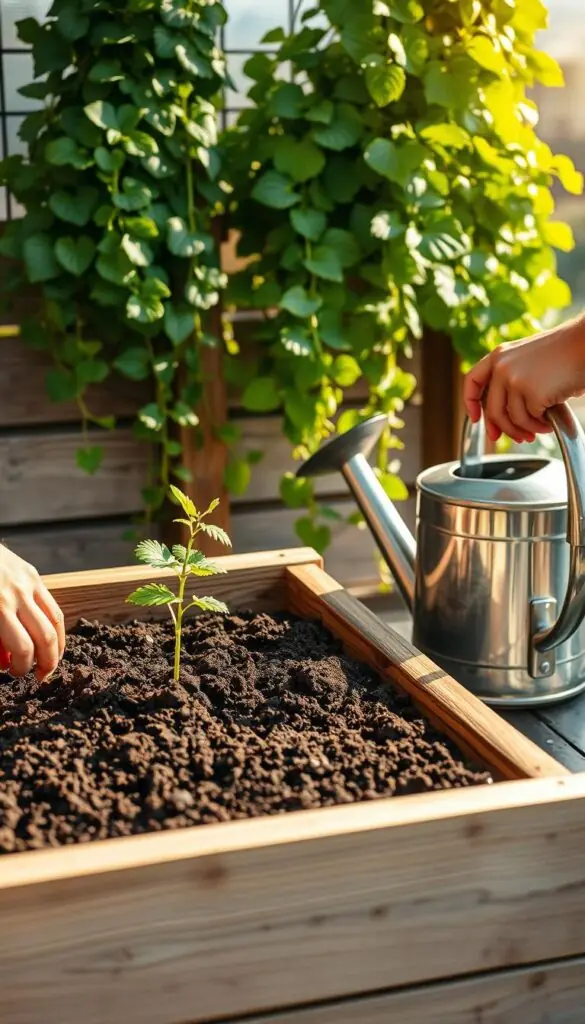
Soil, mulch, and water at the base
Build rich soil with compost and a light layer of mulch to keep roots cool. Water at the base to avoid splash on leaves; this lowers fungal risk and keeps fruit clean.
Train and tie gently
Tuck stems to the trellis and use soft plant ties or strips of old T-shirt to guide growth. Train little and often—two minutes every few days prevents tangles and helps plants grow without kinks.
Common mistakes to avoid
- Avoid flimsy supports that sway—anchor posts at least 12 inches into the ground.
- Space plants so foliage doesn't crowd; tight ties can cut stems and trap humidity.
- Check trellises after storms, tighten zip ties, and remove leaves touching the ground to keep airflow.
For easy care, add a drip line on a timer, keep a small tote with pruners and twine, and spend five minutes each week checking for issues. Harvest often — frequent picking encourages more food and keeps the trellis working well.
| Task | Tool | Seasonal note |
|---|---|---|
| Training | Soft ties / T-shirt strips | Start in early spring |
| Watering | Drip line or watering wand | Keep base moist in summer |
| Support check | Zip ties, post driver | Tighten after storms |
Conclusion
You’re ready. Start with one solid frame and a pair of climbers, and you’ll soon see greenery climb upward and fruit sit clean and easy to reach. A simple trellis and a sunny wall change how much you can grow in tight space.
Choose sturdy materials like welded wire, T-posts, or cattle panels and plant on the outside edge for best airflow and harvest access. Water at the base, tie stems gently, and check supports after storms so your system stays steady.
Begin small: mix pole beans with a tomato and a few herbs in pots or beds. As plants grow, enjoy the quiet rewards—more food in less space, healthier crops, and calm, joyful gardening. Try one small project today and feel how simple success can be.
FAQ
What are the main benefits of growing up instead of out?
Growing up saves space, boosts yields in small yards or balconies, and makes harvesting easier on your back. Plants get better airflow, which reduces disease and keeps produce cleaner. Plus, structures like trellises and living walls add visual interest and can cool a sunlit wall.
How much sun do my climbing beds need?
Aim for about six hours of direct sun for most fruiting plants like tomatoes, cucumbers, and beans. Orient rows north–south when possible so vines get even light through the day. Shade-tolerant herbs and lettuces will handle less sun near taller supports.
What supports work best for beans, peas, and tomatoes?
Use sturdy options: welded wire panels, cattle panels, or metal trellises for heavy vines. For pole beans and peas, A-frames, twine lines, or netting work well. Anchor posts deeply and choose materials that resist rot so the structure lasts season after season.
Can I use containers or hanging baskets for climbing crops?
Yes. Deep containers with good drainage suit tomatoes and dwarf cucumbers; hanging baskets are great for strawberries and trailing herbs. Make sure pots hold enough soil for roots and attach supports or small trellises for vines to climb.
How do I water plants grown on a trellis or wall without wetting the leaves?
Water at the base with a soaker hose or drip system to keep foliage dry and reduce disease. Mulch around the root zone to retain moisture. Monitor containers more often, since pots dry faster than in-ground beds.
Which crops climb naturally and which need help?
Natural climbers include pole beans, peas, cucumbers, and indeterminate tomatoes. Squash and small melons can climb but often need slings for heavy fruit. Bush varieties of some crops won’t climb and are better in raised beds or large pots.
How do I train vines without damaging them?
Use soft ties, strips of old pantyhose, or garden twine to gently loop stems to supports. Tie loosely and re-tie as the plant grows. Guide new shoots along the trellis instead of forcing them; regular pruning of indeterminate tomatoes helps keep weight manageable.
What mistakes should I avoid when building my system?
Don’t skimp on sturdiness—flimsy supports fail under crop weight. Avoid overcrowding that blocks airflow. Don’t tie plants too tightly. Also, place structures where they won’t cast unwanted shade on other beds.
How do I support heavy fruits like small melons or winter squash?
Use fabric slings or mesh hammocks tied to the trellis to cradle fruit as it grows. Check slings regularly and adjust ties to prevent rubbing. For very heavy varieties, keep most of the fruit on the ground or choose smaller-fruited types instead.
Are there eco-friendly materials and add-ons worth using?
Yes. Recycled fencing, reclaimed wood, and galvanized cattle panels are durable and sustainable. Add a rain barrel for irrigation, and plant pollinator-friendly flowers near supports to attract beneficial insects and boost yields.
Which herbs do best when grown on a wall or fence?
Thyme, oregano, sage, chives, and cascading rosemary do well in pockets or hanging planters on walls. They prefer well-draining soil and less water than many vegetables, so choose pockets or containers with good drainage.
How should I plan planting times across U.S. zones?
Stagger plants by season: peas and cool-season greens in early spring, warm-season beans, cucumbers, and tomatoes after last frost. Check your local frost dates and plan succession planting to keep harvests steady into fall.