Imagine the piney scent of rosemary brushing your nose as you open the kitchen window. You want fresh, bright flavor at your fingertips, even when the world outside feels quiet and still. An indoor herb garden brings that warmth into your home with little fuss.
This guide helps you grow resilient plants with simple steps, everyday tools, and realistic timing. We cover hardy rosemary cultivars like ‘Arp’ and ‘Salem’, quick-start parsley and cilantro from seed, and container-grown bay laurel for steady, year-round leaves.
You’ll learn which pots and mixes work best, how to shelter plants during cold snaps using lightweight resin containers, and when to start seeds so you harvest across the months ahead. The routine is short, clear, and easy to keep.
Expect calm, friendly advice that builds confidence. With a few minutes of care each day, your small garden will fill with lush greens, cozy aromas, and meals that make the whole family smile through the season.
Key Takeaways
- Choose sunlit spots and sharp-draining soil for rosemary to thrive.
- Start parsley and cilantro from seed in early fall for steady harvests.
- Use lightweight resin pots to move plants during cold snaps.
- Grow bay laurel in containers and shelter it in the coldest spells.
- Set a simple daily routine for watering, pruning, and checking light.
Why Grow Winter Herbs Indoors: Fresh Flavor, Simple Comfort
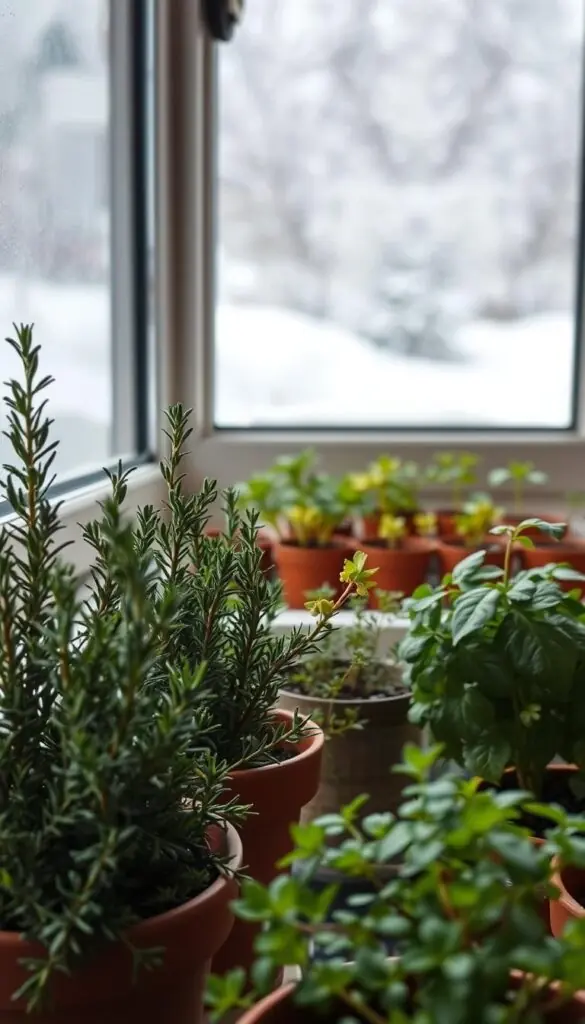
Bring green life into your kitchen so you can clip fragrant leaves for soups and quick meals any day. A few pots near a sunny window give you instant flavor and a calm, living touch when the weather outside feels bleak.
Evergreen choices like rosemary, oregano, and thyme live happily by doors or windows. Resin pots make moving plants easy for short spells of cold. Parsley and cilantro, started in early fall, often provide harvests through the months ahead.
Keeping plants within reach saves money and waste. You’ll snip just what you need and notice growth each week. Fresh bay leaves from Laurus nobilis lift stews and soups more than old jars from the store.
- Fresh snips add bright aroma to simple soups and weekday dinners.
- Living foliage keeps the kitchen lively and invites family to help.
- Small moves—just inches away from a chilly pane—give quick protection to tender plants.
Plan for Success by Zone, Light, and Room Temperatures
Begin with your local climate: that simple step guides which varieties will thrive in your kitchen all season.
Check your USDA zone to learn what winter weather you usually face. Use the zone to choose plants that match your indoor light and heat. This saves time and keeps your pots productive.
Place most pots in a south or west window for best sun. If light is limited, add a full-spectrum grow light on a timer. Try a light meter app to test brightness and set lights 6–12 inches above leaves.
Aim for 12–14 hours of light to support steady growth. Keep room temperatures steady—about what feels comfortable to you—and avoid drafts. A sheer curtain helps protect pots from frosty glass.
- Group plants by needs: dry, sunny mixes for rosemary and thyme; even moisture for parsley.
- Use lightweight resin containers with good drainage for quick protection during cold snaps.
- Track watering in a notebook and run a small fan on low for airflow and sturdier stems.
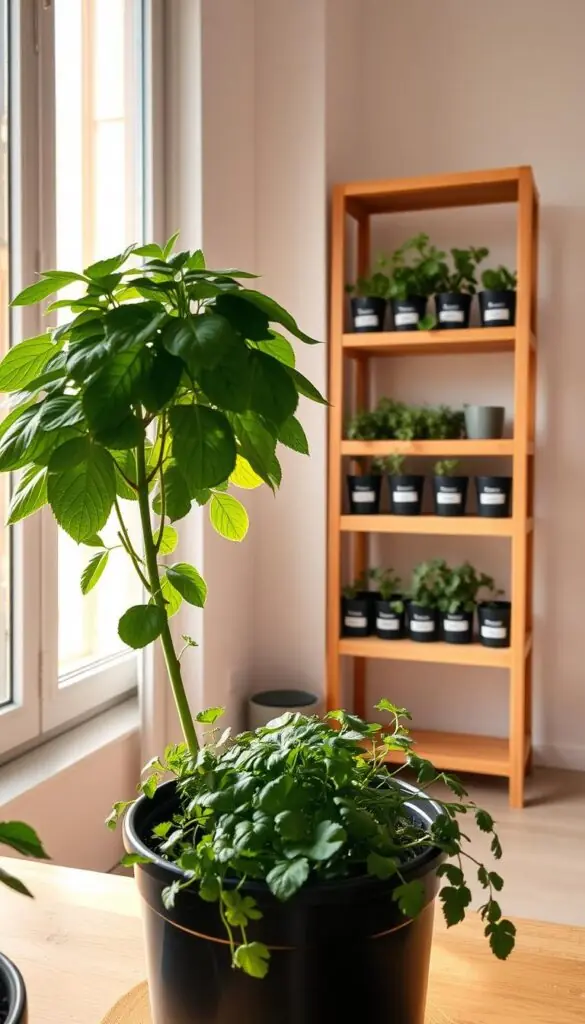
| Light | Soil | Protection |
|---|---|---|
| South/West window or full-spectrum light (12–14 hrs) | Porous potting mix with perlite; allow slight drying between waterings | Resin pots, saucers, sheer curtain near cold glass |
| 6–12" fixture height; use a timer | Drier mix for rosemary and thyme; richer for parsley | Move pots quickly during deep freezes; group similar plants |
| Check with light meter app for consistent flux | Good drainage prevents root rot in cool temperatures | Small fan improves airflow and reduces mildew |
Best Winter-Hardy Herbs for Pots and Kitchen Windows
Pick compact, fragrant varieties that reward small pots with steady, flavorful growth all season long. These selections shine near a sunny window and ask for simple, regular care.
Perennial herbs you can trust include rosemary (‘Arp’, ‘Salem’), thyme (English and lemon thyme), sage, oregano, and chives. Rosemary brings a piney lift and woody stems; grow ‘Arp’ or ‘Salem’ in a gritty, fast-draining mix and give lots of sun.
English thyme stays small and tidy on a sill. Lemon thyme adds a citrusy note that brightens fish and veggies but may not suit every sauce. Sage's velvety gray-green leaves add earthy depth to roasts.
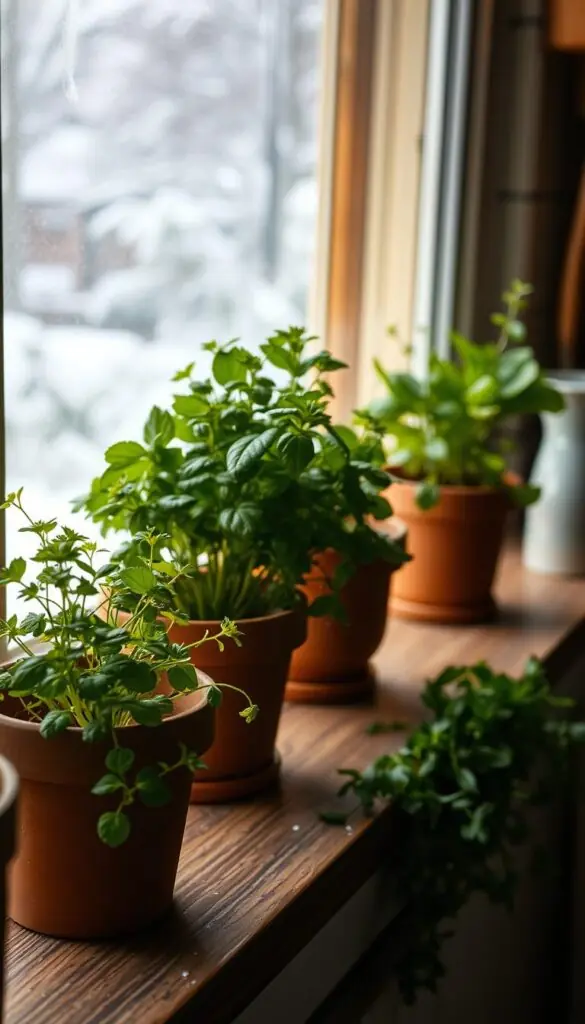
- Oregano is easygoing and fragrant—trim to keep it bushy.
- Chives give oniony green snips all season; cut low to renew growth.
- Parsley and cilantro are cool-season favorites; start small batches for steady harvests.
- Chervil offers delicate, anise-like leaves that pair well with eggs and seafood.
Mix by pot size: thyme and chives in small cups, rosemary and sage in deeper containers. With these varieties, your kitchen plants stay compact and useful, giving steady pinches of fresh flavor.
Supplies You’ll Need for a Calm, Productive Indoor Herb Garden
Gather a few reliable items so daily care stays quick and stress-free. Start with containers that are light and easy to move when protection is needed during sudden temperature drops.
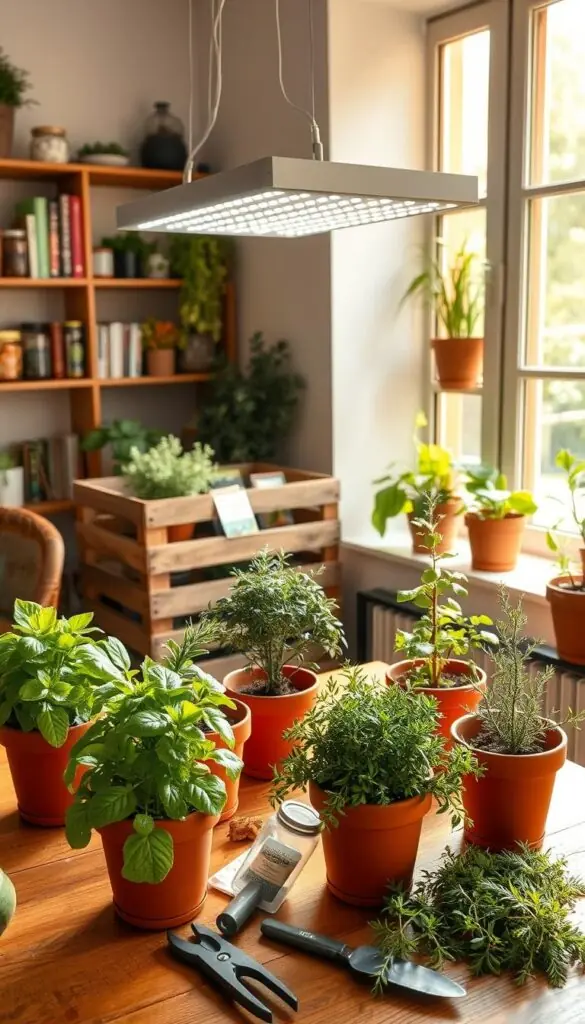
Choose lightweight resin pots with drainage holes, plus sturdy trays and saucers to keep your indoor garden tidy. Fill each pot with porous potting soil blended with perlite so water runs freely and roots breathe.
- Keep a gentle, balanced fertilizer and feed lightly every few weeks to support steady growth.
- Clip-on full-spectrum grow lights on a simple timer provide reliable daily light when the sun is short.
- A small desktop fan on low improves airflow and cuts mildew and fungus gnat problems.
Use plant labels and a pencil to track mixes and dates. Match the soil style you use in beds or raised beds outdoors so watering habits stay familiar.
Simple tools that help: a narrow watering can with a long spout and a soft cloth to wipe leaves and light fixtures. These small acts make your plants look lush and make gardening easier every day.
Step-by-Step: Planting and Potting Up Your Herbs
Ready to pot up and start strong? These clear steps guide you through soil prep, sowing seeds, and settling nursery starts so your kitchen pots grow lush, useful leaves all season.
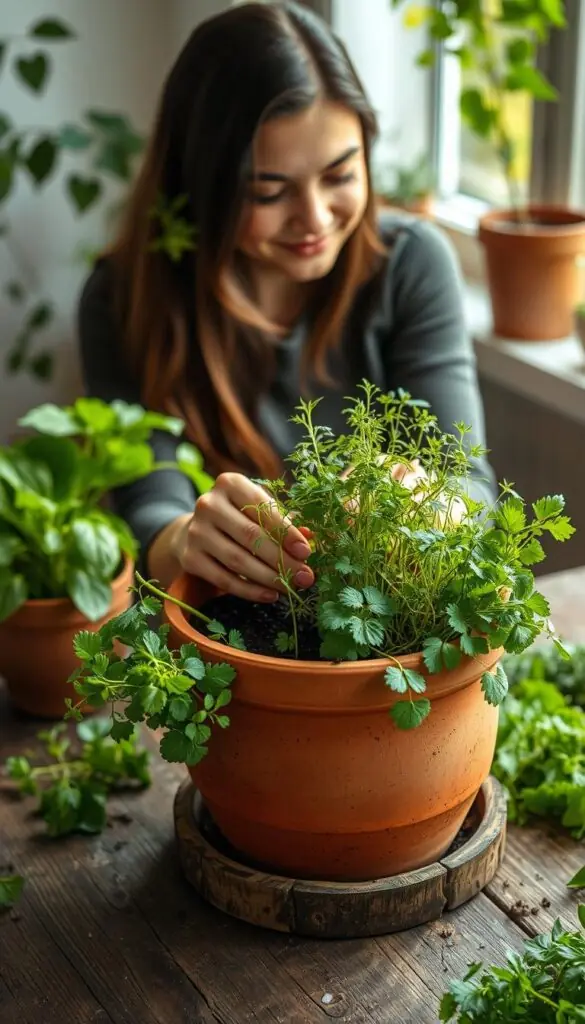
- Prep drainage and mix. Place a small mesh or shard over the drainage hole, then fill the pot halfway with a porous soil mix that feels light and springy in your hands.
- Set nursery starts. Gently loosen roots on rosemary, thyme, sage, oregano, and chives. Position each plant so the crown sits level with the soil line. Firm lightly around stems.
- Sow small-seed varieties. Plant parsley, cilantro, and chervil seeds about 1/4 inch deep. Keep the surface evenly moist and bright until sprouts appear.
- Water and drain. Water until liquid runs from the bottom, then let pots drain fully. Avoid letting stems and roots sit in a soggy saucer to cut risk of rot.
- Label and place. Mark varieties and dates—try notes like “lemon thyme—use with fish.” Put pots where they get steady light and turn them a quarter turn every few days.
Quick tips: Space plants so mature leaves don’t touch. Add a fine bark or perlite top-dressing to reduce splash-back. For seeds, use a clear dome briefly, then remove once sprouts show to prevent damping-off.
“Check moisture with your finger; when the top inch feels dry, it’s time to water.”
| Task | Why it matters | Timing |
|---|---|---|
| Drainage mesh & porous mix | Prevents root rot; supports rosemary and thyme needs | Before planting |
| Loosen nursery roots | Encourages quick establishment and healthy stems | At potting |
| Sow small seeds shallow | Ensures even moisture for parsley, cilantro, chervil | Fall start for extended harvests |
| Label pots | Keeps track of varieties and culinary uses | Immediately after planting |
Light, Water, and Temperature: Daily Care That Builds Flavor
A simple daily routine of light, water, and mild warmth keeps your kitchen pots full and flavorful. Use small, repeatable habits so care stays easy and pleasant.
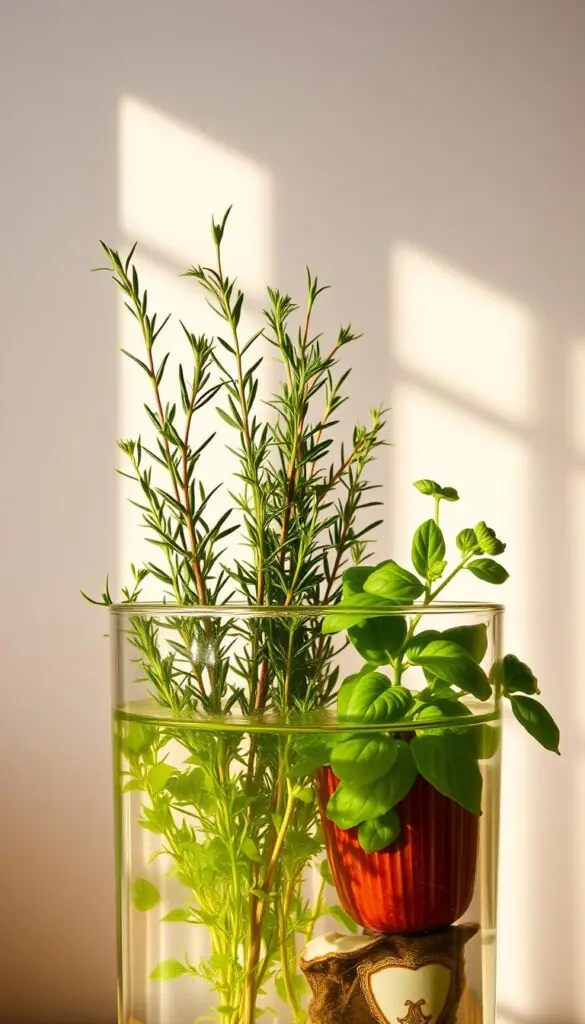
Bright light: make late-spring days indoors
Aim for 12–14 hours of bright light so growth keeps moving. Set a timer on a full-spectrum lamp and point lights where rosemary and thyme get the brightest beams.
Water by feel, not a schedule
Check the top inch of soil with your fingertip. Water only when it feels dry and light.
Pour slowly at the base to keep leaves and stems dry. Empty saucers after drainage so roots can breathe and rot stays away.
Temperatures and quick protection
Keep daytime temperatures near 60–70°F and allow a slight drop at night for better oil-packed leaves. On frosty mornings, slide pots a few inches away from cold glass for quick protection.
- Set lights 12–14 hours daily and use a timer so you never forget.
- Keep thyme and rosemary in the brightest spot for tight, fragrant leaves.
- Run a small fan on low for gentle airflow; plants stay compact and sturdy.
- Feed lightly every 3–4 weeks to support steady growth without legginess.
- Rotate pots a quarter turn each week so all sides get sun and shape evenly.
“Check moisture with your fingertip; when the top inch feels dry, it’s time to water.”
Harvesting and Using Your Herbs in Winter Cooking
Cutting a few stems each morning turns a windowsill into a ready pantry of fresh flavor. Snip with care so plants keep growing and your kitchen smells bright.
Snip smart
Take outer leaves and a few tender stems to let the center push new growth. Cut in the morning when oils are strongest; the scent fills the kitchen and lifts simple vegetables and eggs.
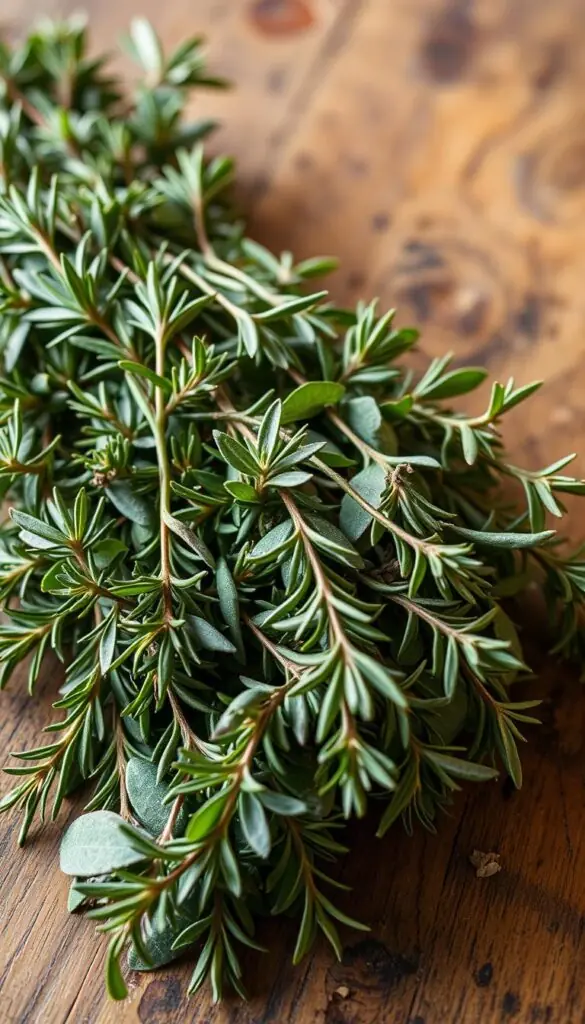
Flavor ideas
Tie a bouquet garni—thyme, bay leaf, and parsley—and drop it into simmering soups for steady, deep flavor. Sprinkle fresh oregano at the end of roasting or use chives and parsley to brighten baked potatoes and creamy dips.
Quick tips:
- Strip rosemary needles or sage into butter for a cozy pan sauce.
- Keep scissors sharp and never remove more than one-third of a plant at once.
- Rinse gently, pat dry, and air-dry bay leaves on paper towels for a small jar of potent, freshly dried flavor.
“Snip in the morning for the best aroma and the healthiest regrowth.”
| Action | Why it helps | Use |
|---|---|---|
| Harvest outer leaves | Encourages new central growth | Fresh snips for salads and eggs |
| Tie bouquet garni | Infuses soups with layered flavor | Remove before serving |
| Dry bay leaves | Stronger, steadier aroma than old jars | Store in a small jar for stews |
Troubleshooting Common Indoor Winter Herb Issues
When growth slows or leaves yellow, calm troubleshooting will get your windowsill garden moving again. Use a few quick checks to find the cause and an easy fix.
Yellow leaves, slow growth, or weak stems
Likely cause: low light or excess feeding.
Raise the fixture, lengthen the timer, or move pots closer to the brightest window. Cut back fertilizer and give plants a week of steady light to recover.
Fungal gnats or mildew
Fixes: improve drainage, let the top two inches of soil dry, and add a perlite or sand top layer.
Space pots farther apart and run a small fan for airflow. These steps reduce mildew and discourage gnats quickly.
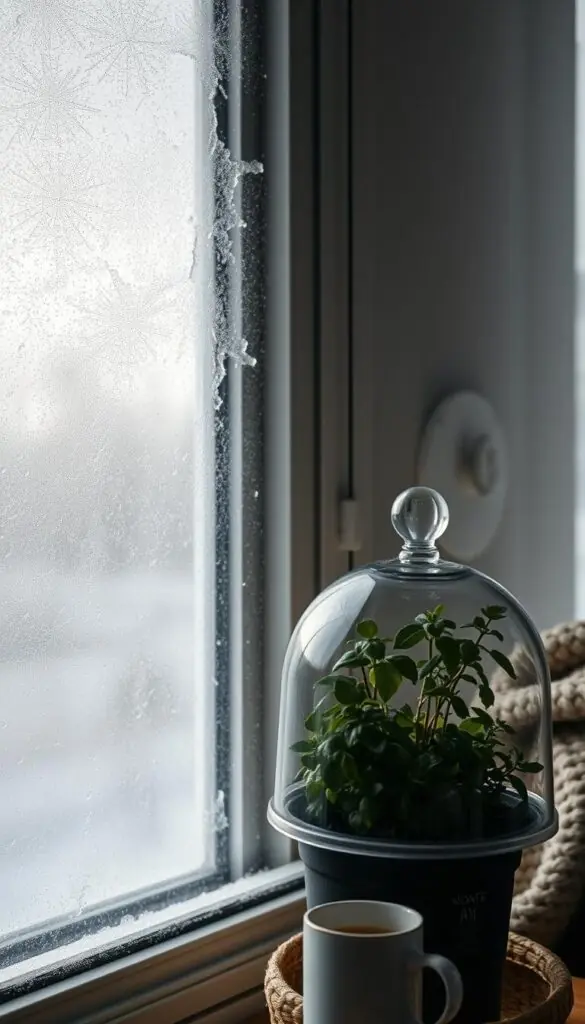
Cold stress and frost risk near windows
Crispy edges or limp leaves mean frost or cold drafts. For short spells, add a towel barrier or shift pots inward for protection.
In bitter weather or odd indoor climate swings, move containers to a sheltered spot like a garage until temps stabilize.
- If problems persist, repot into fresh, porous soil with strong drainage.
- Trim lightly after recovery; new growth shows you’re on the right track.
“Airflow and good drainage solve more problems than you'd expect.”
Seasonal Rhythm: From Fall Start to Spring Transition
Plan a simple cycle that moves your pots from fall sowing to a sunny spring porch with gentle steps. This keeps growth steady and helps you see the full year of flavor from seed to outdoor bed.
Start cool-season plants in early fall for months of harvest
Sow parsley, cilantro, and chervil in early fall so you enjoy months of cool, steady picking indoors. These seedlings often give usable leaves from autumn through winter and into early summer.
Keep a small notebook or phone log. Note sowing dates, mix used, and which pots do best. Over a year, those notes save time and help you sow at just the right moment.
Harden off perennials and move into raised beds or containers outdoors
As days lengthen toward spring, raise feeding slightly and begin hardening off sturdy pots. Move containers to a sheltered porch for a week or two, adding an hour or two of outdoor sun each day.
Shift well-established perennials into raised beds once frost danger passes. Refresh beds with compost and prune lightly so plants put on fresh growth for the new gardening season.
- Record dates: sow (fall), tend (winter), harden off (spring).
- Move pots gradually to sun and breeze over 7–14 days.
- Plan space: biennials like parsley often give a strong second-year push—allow for two years of life when you design beds.
“Keep a simple calendar: fall sowing, winter tending, spring transition—repeat and refine each year.”
| Action | Timing | Why it matters |
|---|---|---|
| Sow parsley, cilantro, chervil | Early fall | Provides months of cool-season harvest indoors |
| Keep notes | Through winter | Helps repeat successes in the next year |
| Harden off containers | Late winter to early spring | Prepares plants for sun and wind without shock |
| Move perennials to raised beds | After last frost | Better drainage and long-term growth over years |
Conclusion
With simple steps you can keep a bright, useful garden on your windowsill. With good soil, steady light, and a small daily routine your plants reward you with glossy leaves and fresh flavor.
Lean on hardy favorites like rosemary, thyme, oregano, sage, parsley, and chives. Add a bay laurel or a pot of cilantro and enjoy varied notes—lemon thyme for citrus, rosemary for piney depth.
When cold weather or frost threatens, move pots a few inches away from glass or use a towel barrier. Protecting pots for a short spell keeps them healthy for months and years to come.
Start one small project today: pot a resilient plant, place it in light, and taste your kitchen’s living flavor as the season unfolds.
FAQ
How do I pick the best plants for indoor cold-season growing?
Check your USDA zone and typical cold-season weather, then choose hardy perennials like rosemary (Arp, Salem), thyme (English or lemon), sage, oregano, and chives for steady kitchen harvests. Add cool-season annuals and biennials such as parsley, cilantro, and chervil for bright, leafy cuts. Match each plant to a sunny window or a grow light and keep temperatures steady to reduce stress.
How much light do these plants need when grown by a kitchen window?
Give most varieties 12–14 hours of bright light. Small-leaved, sun-loving types like thyme and rosemary need the brightest spot or full-spectrum grow lights. Use a timer for consistent daily cycles and rotate pots so foliage gets even exposure.
What potting mix and containers work best for indoor pots?
Use a porous potting soil blended with perlite for sharp drainage. Choose lightweight resin pots or terracotta with good drainage holes and saucers to catch excess water. Proper drainage helps prevent root rot and keeps foliage healthy.
How often should I water to avoid soggy soil but keep herbs happy?
Water when the top inch of soil feels dry. Water thoroughly, let excess drain, and discard standing water. Most plants prefer a wet-dry cycle; avoid misting leaves to reduce mildew risk and keep a small fan on low for airflow.
Can I overwinter outdoor perennials in pots indoors and return them outside later?
Yes. Bring potted perennials inside before hard freezes, keep them in bright, cool rooms (60–70°F days), and ease them back outdoors in spring by hardening off for a week or two. Label varieties and note their preferred sunlight to place them correctly outdoors.
How do I get continuous snips without harming the plant?
Harvest by taking outer stems and leaves, which encourages bushier growth. Snip above a pair of healthy leaves and avoid removing more than one-third of the plant at a time. Regular, light harvests keep flavor fresh for soups, stews, and simple dishes.
What pests and diseases should I watch for and how do I treat them?
Look for fungal gnats, mildew, and yellowing leaves. Improve drainage and airflow, reduce watering frequency, and remove affected foliage. For gnats, let soil dry more and use sticky traps; for mildew, increase light and air circulation. Organic insecticidal soap works for light infestations.
Do herbs need fertilizer during the cold months?
Yes, but sparingly. Use a gentle, balanced fertilizer at half strength every 4–6 weeks for active growers. Reduce feeding for slower plants like parsley and chervil. Overfeeding can cause weak, leggy growth, so watch for steady, compact development.
How do I protect tender pots from chilly glass or drafts?
Move pots a few inches from cold windowpanes, add a layer of insulation like a narrow shelf or thermal film, or place a tray of pebbles between the pot and glass. Keep plants away from drafty doors and vents and maintain slightly cooler nights than days to mimic natural rhythms.
When should I start seeds indoors to get leafy herbs ready by fall and winter?
Start cool-season seeds in late summer to early fall so seedlings establish before temperatures drop. Sow parsley, cilantro, and chervil in shallow trays or small pots, and pot up nursery starts of thyme, sage, and oregano for quicker harvests as the season progresses.