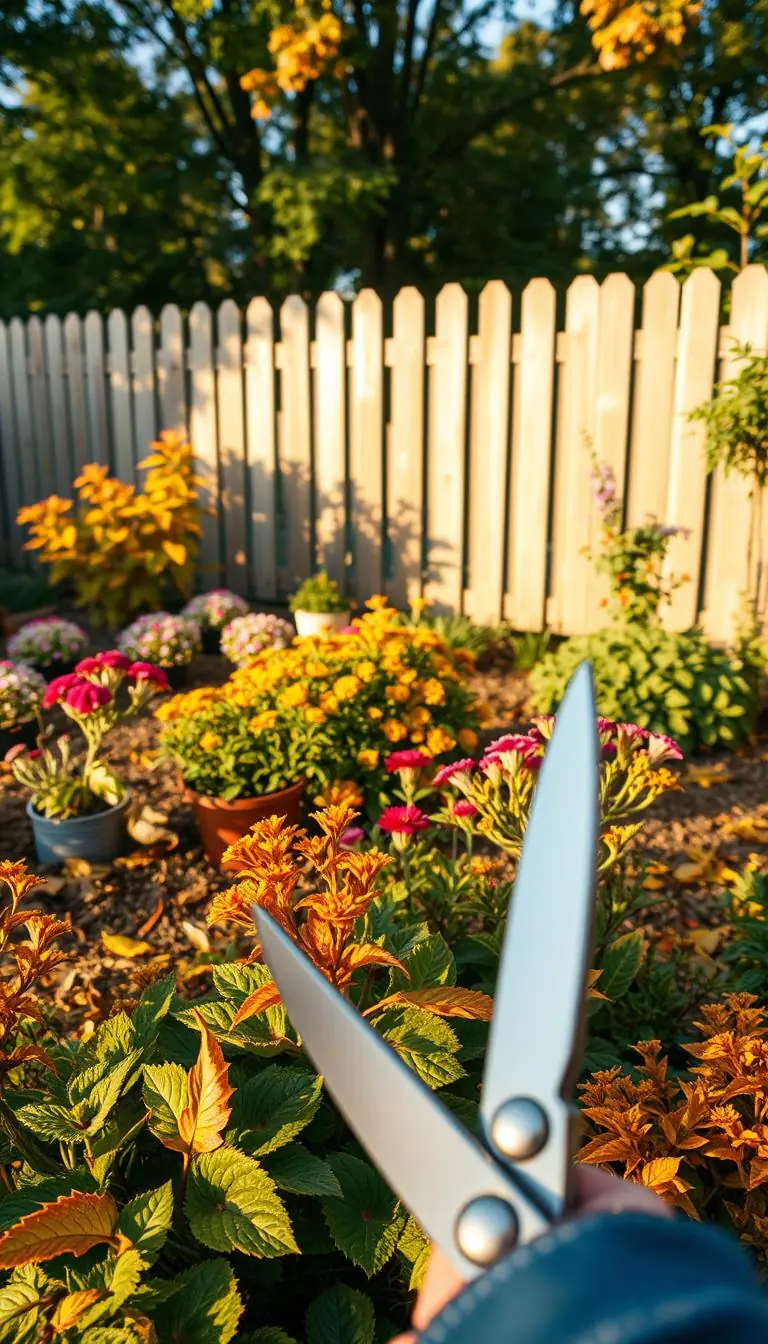
Imagine the piney scent on a crisp morning as you step onto your porch. Do you ever wish your entry felt as calm and welcoming as a neighbor’s cozy porch?
You’ll get friendly, step-by-step guidance to dress your front walk with layered greens and bright accents. Simple materials—birch poles, cedar spill, white pine, and red berries—create a look that reads lush from the street.
We focus on smart choices: durable containers that handle freeze-thaw cycles, a Dwarf Alberta Spruce as a reliable centerpiece, and easy fixes like wiring pinecones to stakes. This helps you avoid cracked pots and droopy branches.
Expect calm, clear instructions and practical tips on timing, tools, and styling. By the end, you’ll have repeatable design ideas that keep your home welcoming through the season and into the new year.
Key Takeaways
- You’ll learn a simple recipe for layered greenery and color.
- Choose durable containers and anchor plants to prevent damage.
- Use a small spruce as a central “thriller” that you can plant out later.
- Simple tools and a short sequence make assembly fast and confident.
- Swap accents to refresh the look while keeping an evergreen base.
Welcome to cozy curb appeal in winter
Picture cedar draping an urn and a pop of red berries against pale afternoons as you open the door.
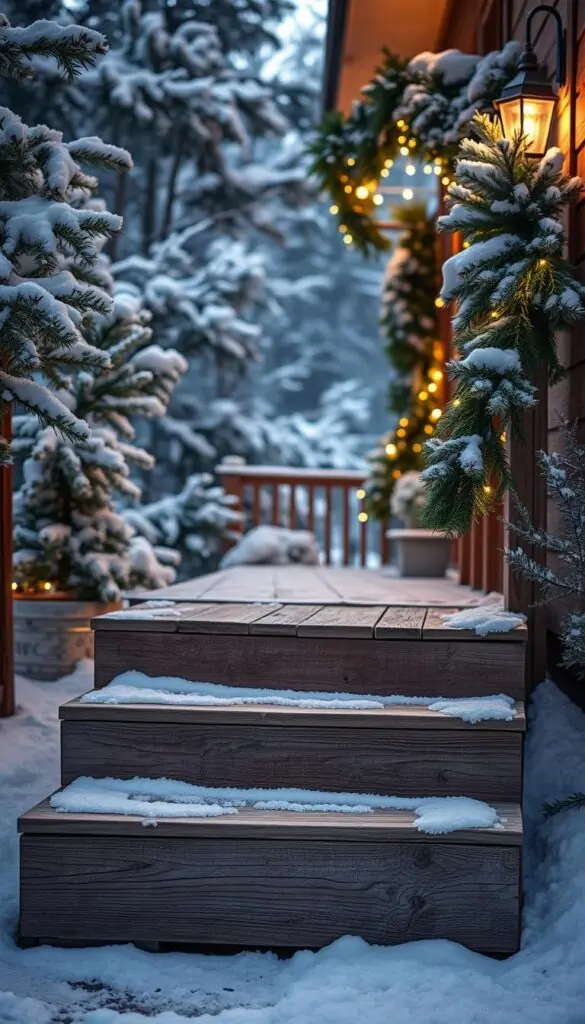
Durable urns and resilient evergreens give your entry reliable structure that looks especially beautiful after a snowfall.
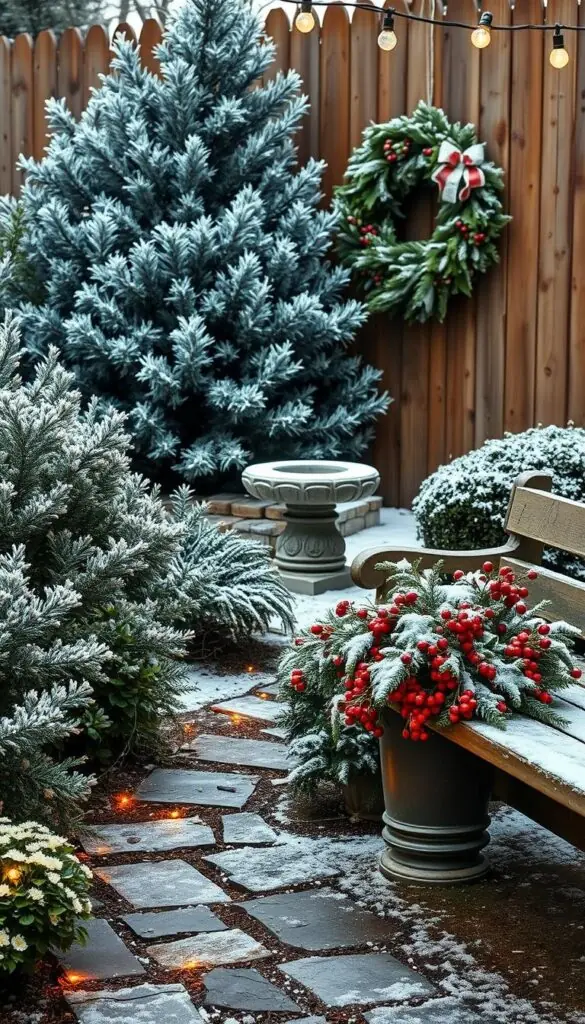
This is about a calm, sensory approach: textured greens, a soft sheen of magnolia leaves, and a careful touch of color to lift gray light.
Start in late fall, before the hard freeze. That extra time helps you anchor branches and work comfortably.
"A few hardy stems and the right base will keep your porch welcoming with very little upkeep."
- Think small stoops to wide steps — the same ideas scale to fit your space.
- Choose hardy stems like cedar and holly for low maintenance and long-lasting texture.
- Keep the palette calm: greens and browns with a touch of red, or add lights if you want more sparkle.
| Element | Why it works | When to add | Low-maintenance tip |
|---|---|---|---|
| Durable urn | Gives structure and resists freeze-thaw | Late fall | Use heavy bases to prevent tipping |
| Evergreen focal | Stays lush and defines the look | Before hard freeze | Anchor roots or stake for wind |
| Seasonal stems | Add texture and bright accents | At setup time | Tuck stems deep to protect from cold |
Pick the right pots and materials before the freeze
Start with durable pots and purposeful soil so stems stay secure and your design endures.
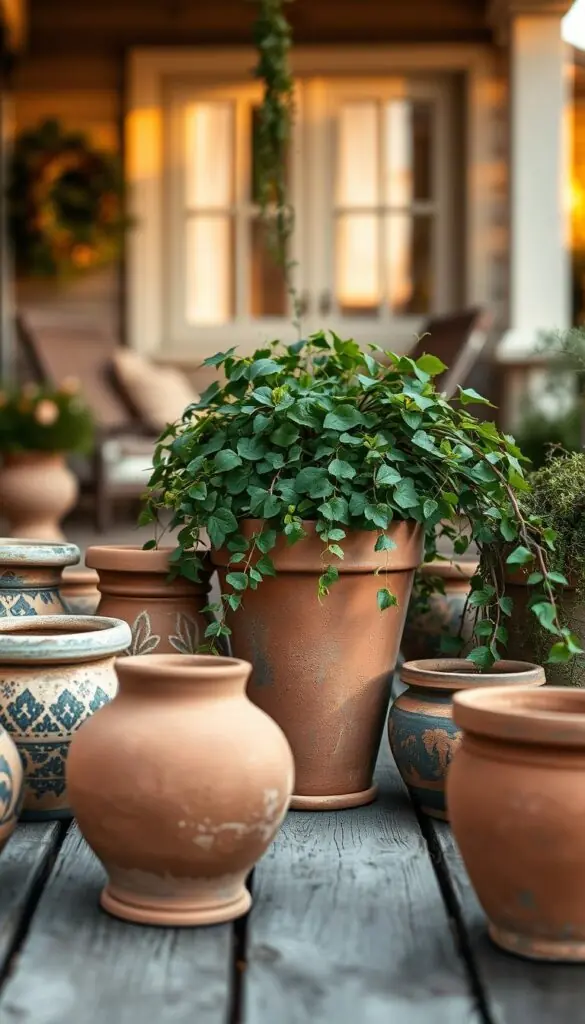
Choose cold-ready containers—metal, concrete, fiberglass, resin, or wood—so your setup resists freeze-thaw damage. Avoid porous terra cotta or thin ceramics that absorb water and crack.
Soil, drainage, and anchoring basics
Make sure every pot has a drainage hole. If it doesn’t, gently drill one so water can escape and not expand when it freezes.
Fill with fresh potting soil to hold stems firmly. For extra weight, add a few inches of sand or gravel under the soil. This helps when wind is a concern.
- Tools: drill for drainage, clean pruners, gloves, and garden wire.
- Water lightly after arranging to settle soil around cuttings.
- Set heavy pots in place before filling to avoid lifting strains.
| Issue | Why it matters | Quick fix |
|---|---|---|
| No drainage | Water freezes and expands, splitting a pot | Drill a hole or use a breathable liner |
| Porous pots | Absorb moisture and crack | Use non-porous material or double-pot |
| Lightweight base | Topple in wind | Add sand/gravel or place near a windbreak |
Plan in fall while soil is workable. With the right materials and a few tools, your porch decorations will stay tidy and secure all season.
Greens and branches that shine all season
Begin by picking strong, small evergreens as anchors, then weave in scented branches and colorful twigs.
Reliable structure for the porch
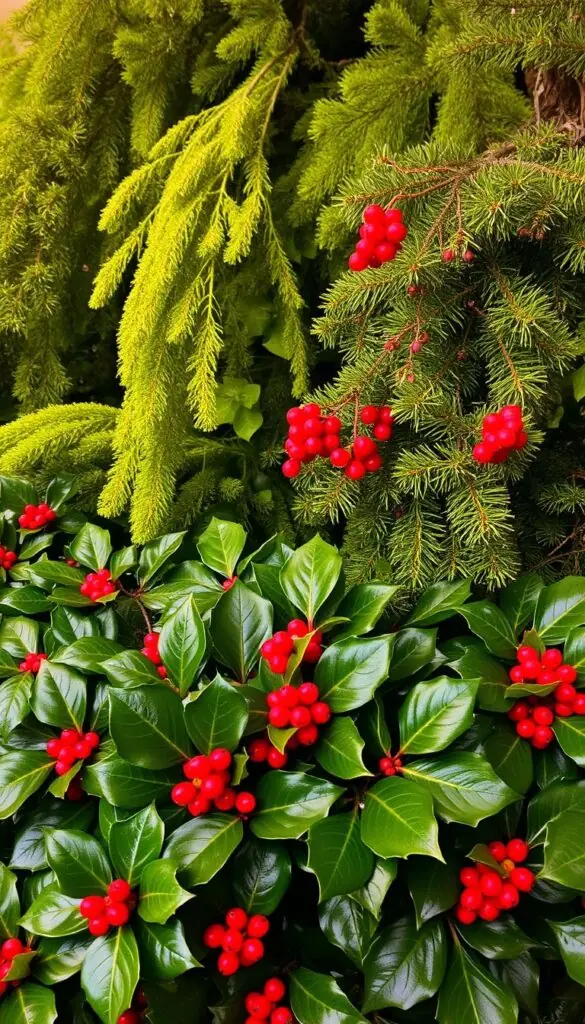
Start with compact shrubs that hold their shape: Dwarf Alberta Spruce, juniper, and boxwood make sturdy focal pieces. These evergreens give a steady silhouette that reads well from the street.
Festive stems and vertical accents
Add birch poles or curly willow for height. Tuck in red twig dogwood or a few winterberry stems for striking color on gray days.
Layered texture and shine
Mix glossy magnolia leaves, leathery rhododendron, and prickly holly to create rich texture. For scent and motion, slip in cedar and a few soft pine cuttings along the edges.
- Use cuttings from your own landscape to save money and help stems hydrate faster.
- Always snip with clean pruners and make angled cuts in the morning.
- Repeat a few stems if your season is harsh to keep the design calm and cohesive.
"Choose repeatable elements—shape, scent, and a touch of color—and your porch will feel intentional all season."
🌿 Related Reading
Step-by-step: Build your winter porch planter
Set a simple foundation first, then layer texture and color until the composition feels right.
What you need: potting soil, three birch poles (staggered heights), flexible cedar, white pine, five red berry sprays, three large frosted pinecones, garden wire, stakes, and clean pruners.
- Set the base: Fill your container with potting soil and press gently so it grips. This holds branches steady and saves time later.
- Add height: Sink three birch poles in the center at staggered heights to create instant height and a natural feel.
- Layer greens: Ring the rim with cedar so it spills softly. Place white pine toward the center so needles drape between birch height and the cedar spill.
- Finish with flair: Tuck in two to five berry sprays for color and add three pinecones. If cones lack stakes, wrap each with garden wire and tie to a birch pole for a snug fit.
- Set and check: Water once to settle soil. After a few minutes, rotate the planter and step back 6–8 feet to fill any bare spots.
| Step | Action | Tool or fix | Quick tip |
|---|---|---|---|
| Base | Fill with potting soil | Hands, press down | Press soil to grip cut branches |
| Height | Insert three birch poles | Stagger poles | Center them for balance |
| Greens | Cedar at rim; pine inside | Pruners, gloves | Cedar makes a soft spill; pine drapes |
| Finish | Add berries, pinecones, ribbon | Garden wire, stakes | Wire cones to birch if needed |
Design like a pro with color, texture, and height
Give your entry a calm, curated feel by balancing a vertical center with lush edges and soft spills.
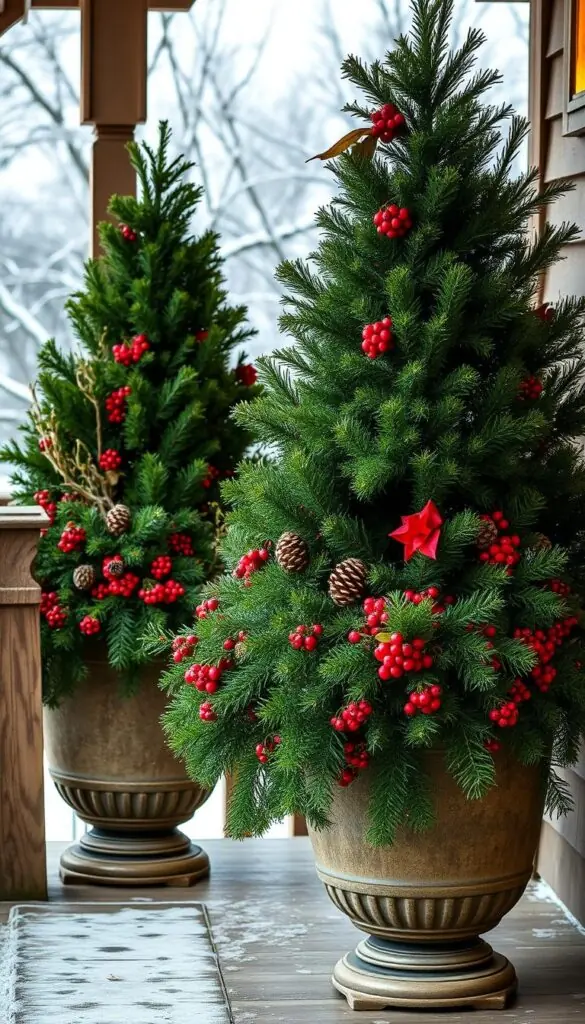
Start with a thriller: Let a compact evergreen — a Dwarf Alberta Spruce works beautifully — carry the height and anchor your container. This single element sets the scale and mood for the whole design.
Fillers for texture: Surround the evergreen with full, varied stems like boxwood, magnolia, and andromeda. They add rich texture without looking busy and keep the palette grounded.

Use thriller, filler, spiller around a permanent evergreen
Soften the rim with spillers such as cedar or fir. These gentle cascades make the planter feel finished and welcoming.
Echo height by repeating a couple of birch or red twig stems. Small repeats create harmony when someone views the design from the sidewalk or the porch.
Calm palettes vs. holiday sparkle: when to add ornaments and lights
Keep the palette calm with layered greens and natural browns for most evenings. If you want sparkle, add a few well-placed ornaments tucked near stems so they nestle in, not dangle.
Warm-white lights give a soft glow on long nights. Hide cords along the container frame and use battery packs if outlets are far.
| Role | Examples | Effect | Quick tip |
|---|---|---|---|
| Thriller | Dwarf Alberta Spruce | Provides height and anchor | Center or slightly off-center for balance |
| Filler | Boxwood, magnolia, andromeda | Adds bulk and texture | Mix leaf shapes for richness |
| Spiller | Cedar, fir, soft pine | Softens rim, creates movement | Tuck under rim so it spills naturally |
| Accents | Birch poles, berries, pinecones, lights | Add vertical rhythm or sparkle | Step back 6–8 feet and adjust one element at a time |
- Check the look from both the front step and the street; gardens read differently at a distance.
- If something feels off, remove or move one piece and the whole composition will settle.
winter containers, holiday planters that last from fall through February
This short guide helps you time, tend, and troubleshoot durable porch pots so they stay fresh from late fall into early spring.
Seasonal timing by region
In colder zones, set your pots in late fall before the hard freeze. That extra time lets stems anchor and soil settle so displays last through the season.
In milder climates you can refresh greens mid-season to carry the look into the new year without rebuilding the whole display.
Where to take cuttings and simple care
Take cuttings in the morning from boxwood, andromeda, rhododendron, cedar, pine, or holly. Disinfect pruners first to avoid spreading disease.
Keep soil slightly moist for the first two weeks so branches stay hydrated. After that, nature often handles watering, but check pots after storms.
If a pot sits under a deep overhang or window, pull it forward during heavy rain or hand-water lightly every few weeks.
Quick fixes and common mistakes
- Overstuffed rim: Trim spillers back a touch so doors and lids don’t snag.
- No drainage: Drill a small hole and angle the pot so meltwater escapes instead of freezing solid.
- Slumping branches: Re-cut stems and push them deeper into the soil; swap a few fresh cuttings mid-season for an instant lift.
"A few tidy checks—moist soil early, good drainage, and light pruning—keep porch displays confident and calm through the year."
Ideas and inspiration: simple urns to lush porch pots
Give your front step a confident, curated look with one simple recipe you can copy again and again.

Black urn look — a copyable recipe: Fill a cast-iron urn with potting soil, set three birch poles at staggered heights, ring the rim with cedar, then tuck white pine toward the center.
Finish by adding five red berry sprays and three oversized frosted pinecones. If the cones lack stakes, wire them to the birch poles for stability. This reads beautifully from the street and from your door.
Quick variations and tips
- Swap birch for red twig dogwood to add deep winter red and elegant vertical lines.
- For extra gloss, tuck in magnolia leaves among the cedar and pine.
- If your pot is large, repeat the recipe twice for a fuller statement.
- In windy spots, press stems deeper and wire pinecones to poles so the design stays steady at home.
- To carry past the holiday season, remove berries and add subtle natural picks or small ornaments.
"Keep materials simple—sturdy urn, fresh greens, and a handful of accents—so the design stays calm and easy to refresh."
| Look | Key materials | Effect | Quick fix |
|---|---|---|---|
| Classic black urn | Soil, birch poles, cedar, white pine, berries, pinecones | Strong contrast, lush spill, subtle sparkle | Wire cones to poles for wind |
| Red-twig variant | Dogwood, cedar, magnolia, berries | Warm vertical lines, glossy leaves | Repeat elements for fullness |
| Full, layered pot | Double recipe, extra magnolia, fir spill | Lush curb appeal from street and porch | Press stems deeper and anchor with gravel |
Conclusion
Conclusion
With durable materials and a few fresh cuttings, you can make a confident, lasting display that reads well from the street.
Choose a sturdy container, good soil, and clear drainage so your work lasts from fall into the new year. Use a compact spruce or boxwood for height, ring the rim with cedar or pine, and tuck in birch or a few bold branches for rhythm.
Water once to set stems, anchor pieces firmly, and swap small accents as you like. A bit of greenery and a touch of ornament is all you need for a calm, polished design.
Takeaway: start small, pick durable materials, and enjoy the way these simple planters bring steady joy to your garden and doorway. You’ve got this.
🌿 Related Reading
FAQ
What pots and materials hold up best in cold weather?
Choose sturdy, frost-resistant pots like metal, concrete, fiberglass, resin, or treated wood. These materials resist cracking and offer good weight to stop tipping in wind. Make sure pots have drainage or add a layer of gravel to prevent waterlogging and freeze-thaw damage.
How do I prepare soil and anchor tall branches in my porch planter?
Use a well-draining potting mix blended with compost for nutrition. Pack soil firmly around birch poles or branches and drive a short stake or rebar beside them for extra support. Anchor heavy stems with landscape wire tied low on the stem so it stays steady without damage.
Which evergreens stay attractive all season for a front porch display?
Reliable choices include dwarf Alberta spruce, boxwood, juniper, cedar, white pine, and spruce. They keep color and structure through cold months and pair nicely with seasonal stems for texture and height.
What woody stems add structure and visual interest to a winter arrangement?
Birch poles, red twig dogwood, curly willow, and winterberry provide strong vertical lines and contrast. Cuttings from these plants add architecture and help define the planter’s silhouette.
How can I mix texture and color without overwhelming the design?
Combine glossy magnolia or rhododendron leaves with matte cedar and fine-textured juniper. Add holly or winterberry for pops of red. Keep a simple palette—one bright accent plus varied greens—so the display reads as cohesive from the street.
What steps should I follow to assemble a porch planter that lasts all season?
Start by placing birch poles or a central evergreen for height. Fill with soil, position spillers like cedar along the edges, add mid-height elements like white pine toward the center, then tuck in berries, pinecones, ribbons, or lights for finish. Step back and rotate the pot to fill bare spots.
How do thriller, filler, and spiller elements work in a cold-season pot?
Use a permanent evergreen as your thriller for vertical focus. Add filler plants or branches—boxwood, small spruce—for body. Let spillers, such as trailing juniper or cedar tips, drape over the pot edge for softness and balance.
When should I add ornaments or lights to my porch planters?
Add delicate ornaments and ribbons early in the season when temperatures are mild. Reserve battery-operated or weatherproof LED lights for later; they brighten long nights and aren’t heat-producing, so they won’t damage foliage.
How long can arrangements last from fall through February, and when should I take cuttings?
With proper materials and care, displays can stay attractive from late fall into February. Take cuttings before hard freezes—late autumn or early winter—and place them in pots quickly so stems retain moisture and structure.
What basic care do porch planters need during cold months?
Water sparingly but regularly when soil isn’t frozen; dry winds can desiccate foliage. Move pots to a sheltered spot during storms, and check for loose branches after heavy snow. Refresh moist soil as needed and remove rotten material promptly.
What common mistakes should I avoid when building cold-season arrangements?
Don’t overfill with heavy mulch that traps moisture against roots, avoid non-breathable plastic liners that hold ice, and skip overcrowding with too many decorative items that hide live greenery. Also, avoid placing pots directly on snow or standing water to prevent freeze damage.
Any simple design ideas for a classic urn look?
For a timeless black urn, use cedar spillers at the edge, draped white pine toward the center, upright birch poles for height, and tuck in red berries and frosted pinecones for contrast. A simple ribbon or warm LED lights finishes the look without clutter.