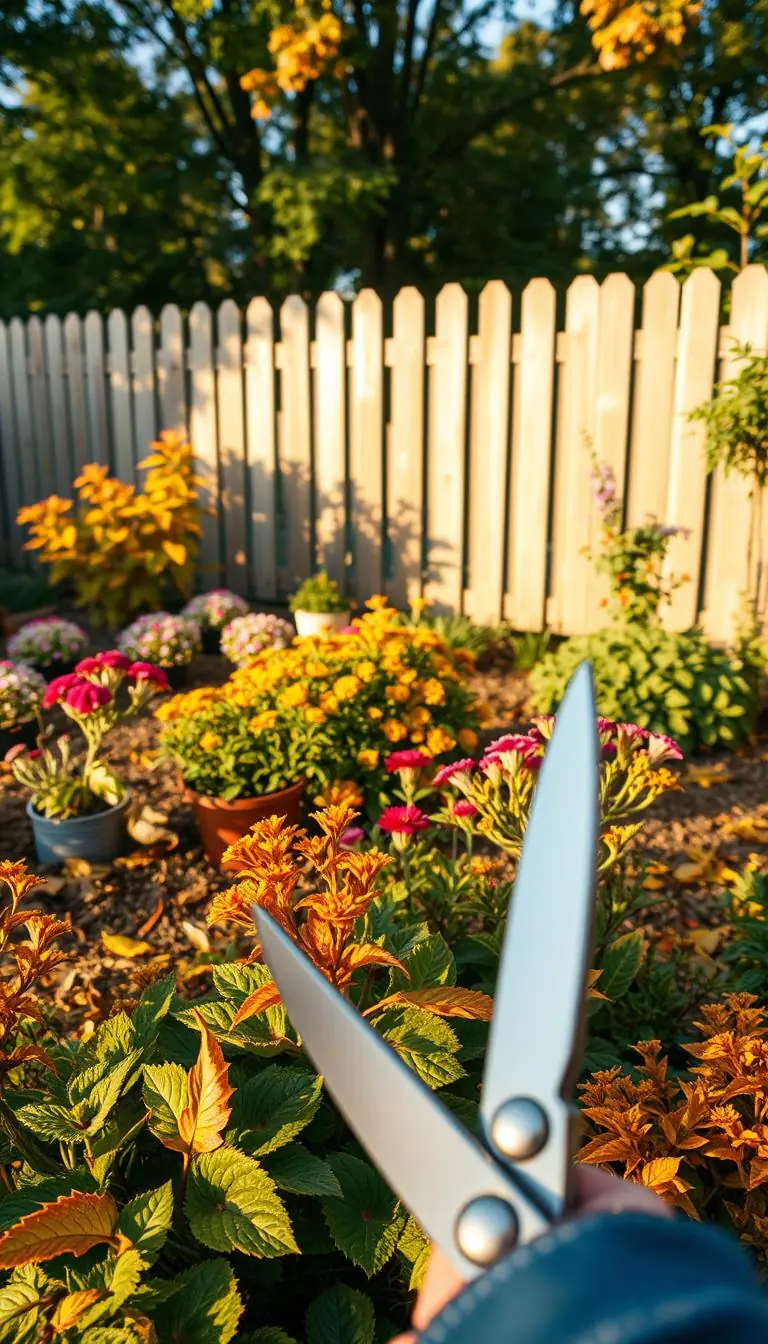
On a crisp morning you might notice glossy leaves glinting like small lanterns as you sip your coffee. Have you ever wished your garden still felt alive on gray days? This guide offers calm, friendly steps to add steady color and structure when light fades.
We’ll help you pick reliable evergreens and evergreen shrubs suited to your zone, light, and space. Expect sensory details—blue berries, honey-scented blooms—and simple care tips like hand pruners, mulch, and burlap for protection.
Along the way you’ll meet useful varieties: hardy boxwood for clipped hedges, compact arborvitae for narrow screens, and low junipers for tough groundcover. Sizes and zones are noted so your landscape and containers stay balanced all year.
Plan for easy wins: pair glossy green foliage with feathery cypress texture, tuck fragrant shrubs near paths, and use containers for pops of color by the door. You’ll leave feeling ready to add a few plants and enjoy steady interest through the cold months.
Key Takeaways
- Choose plants by zone and mature size to avoid crowding and keep design steady.
- Mix foliage textures and berry colors for year-round interest.
- Use simple tools—hand pruners, mulch, burlap—and light pruning for easy care.
- Place fragrant or glossy-leaved shrubs near paths and entries for sensory impact.
- Containers let you test combos and lift color close to the house.
Start here: how to choose winter evergreens for your space
Begin by matching plants to the realities of your yard—sun, soil, and room to grow. A quick check now saves time and disappointment later. Below are simple steps to help you pick the right evergreen shrubs and plant types for your garden and landscape.
Quick checklist: zones, light, sizes, and maintenance
- USDA zone: Choose varieties rated for at least your zone so cold won’t stress roots.
- Light: Be honest—shade lovers like Stonehenge yew do well in low light; sun-lovers such as Tortuga juniper need bright spots.
- Mature sizes: Note final heights and widths. North Pole arborvitae stays narrow (3–5 ft wide) and tall (10–15 ft); Sprinter boxwood reaches about 2–4 ft.
- Drainage & placement: Plant in well-draining soil or raised beds to keep roots healthy in cold, wet conditions.
Tools and materials you’ll actually use
Keep a small kit: clean hand pruners, a bag of shredded mulch, burlap for wind breaks, and a couple of containers if you use pots.
If you use containers, pick pots at least twice the root ball and ensure large drainage holes to avoid freeze-thaw problems. Place specimens where you’ll see them daily—by an entry or along a path—so their shapes and color reward you all year.
Small evergreen shrubs that shine near paths and entries
Place small, tidy shrubs near steps and paths to give your entry a calm, year-round welcome. These compact choices combine form, scent, and easy care so your approach feels finished without fuss.
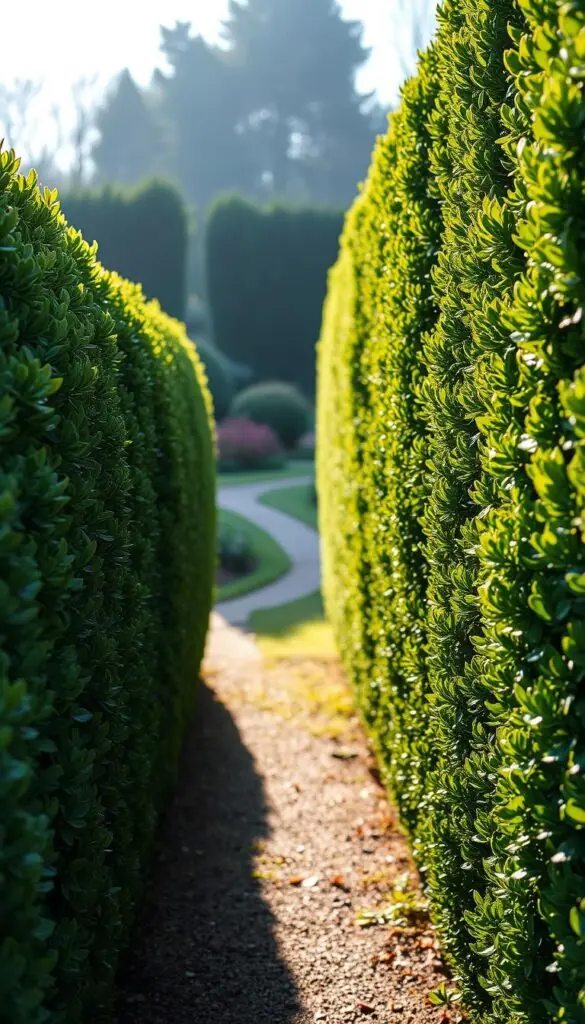
Sprinter Boxwood (Buxus microphylla)
Sprinter boxwood brings glossy green structure that reads polished in low light. It thrives in Zones 5–9 and stays about 2–4 feet tall and wide, so it works well as a low hedge along walkways. Space plants so mature widths just touch; this creates a clean ribbon without constant trimming.
Gem Box Inkberry Holly (Ilex glabra)
Gem Box inkberry holly is a great boxwood alternative for shade near north-facing entries. In Zones 5–9 it forms a dense, ball-shaped habit at 2–3 feet. Its leathery leaves hold up and give a solid texture that plays well against brick or stone.
Tater Tot Arborvitae (Thuja occidentalis)
Tater Tot arborvitae makes tidy, fragrant mounds only 1–2 feet across—ideal for flanking steps. Plant these in full sun to partial sun (Zones 3–8) for soft, fan-shaped foliage that offers contrast to glossy leaves.
- Water new plantings before hard freezes and give deep watering during mild thaws to keep roots healthy.
- Add 2–3 inches of mulch to conserve moisture and protect roots from wind desiccation.
- Use clean hand pruners in late winter for light shaping; avoid heavy cuts until dormancy is certain.
- Alternate textures—glossy boxwood with fine arborvitae foliage—and repeat one shrub every 3–4 feet to guide the eye to your door.
Statement shapes: narrow columns and cones for privacy and structure
A column of green can become a living screen that reads clean and intentional. Use upright forms to give your landscape a clear backbone and to carve private areas without crowding a yard.
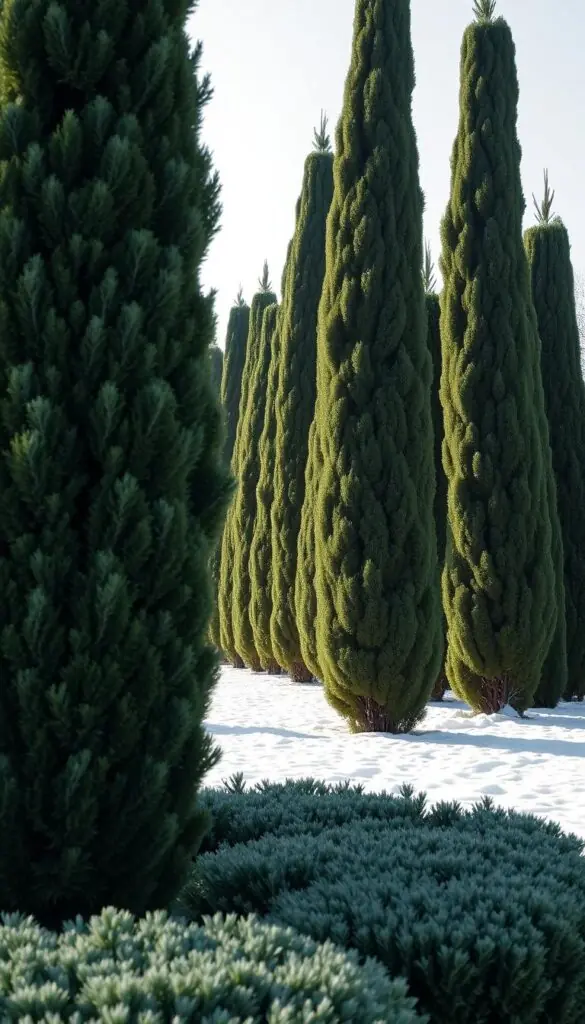
North Pole Arborvitae (Thuja occidentalis)
North Pole arborvitae is a cold-hardy screen that reaches 10–15 feet and stays only 3–5 feet wide. Plant these trees so their mature widths touch to form a tight, living wall. In exposed sites, wrap first-year specimens loosely with burlap to cut wind burn.
Sky Box Japanese Holly (Ilex crenata)
Sky Box holly grows 4–5 feet tall and 2–3 feet wide as a slim vertical accent. Use it between steps or windows for a neat line. Space plants at their mature widths and prune lightly in late winter to nudge shape without shearing the natural habit.
Stonehenge Yew (Taxus x media)
Stonehenge yew tolerates shade where many columns fail. It will reach about 8–10 feet and stay narrow, making it ideal along shaded walls or fences. Water deeply during midwinter thaws when soil is dry to help roots resist cold winds.
Gin Fizz Juniper (Juniperus chinensis)
Gin Fizz offers blue-green berries and aromatic foliage that scent the air on crisp days. It can grow tall and wider (10–18 feet by 7–10 feet), so give it room to keep its cone-like form. Add a mulch ring to protect roots and reduce freeze–thaw stress.
- Space columns at mature widths; avoid crowding so each plant holds its shape.
- Wrap burlap loosely on exposed sides for the first winter; keep pruning light and timed for late winter.
- Mix one cone, one column, and a rounded shrub for layered shapes that read intentional in the landscape.
Color beyond green: berries, buds, and winter foliage tints
A few berrying shrubs and tinted foliage bring calm, reliable cheer to bare beds.
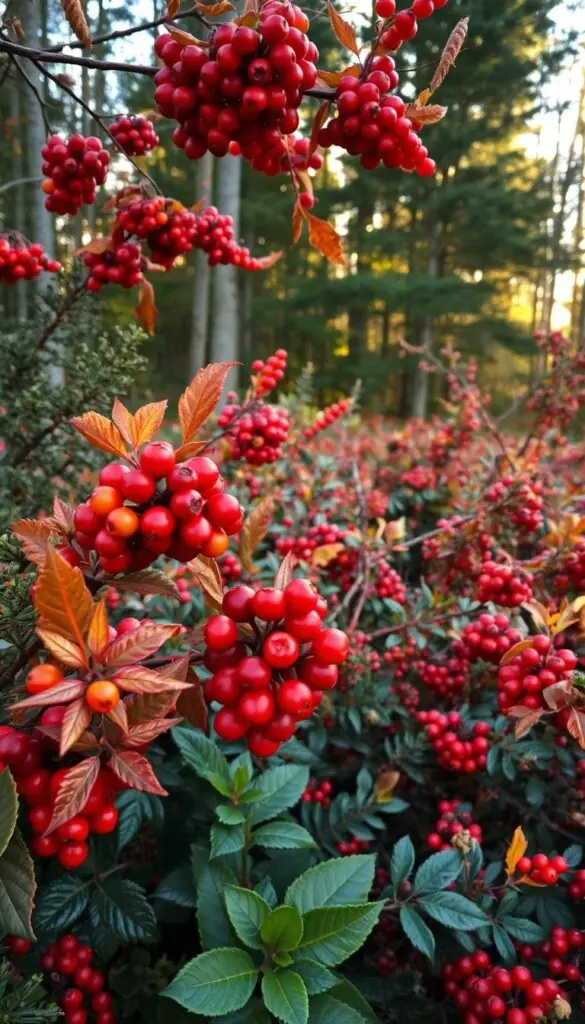
Castle Keep Blue Holly (Ilex x meserveae)
Castle Keep Blue Holly offers deep, serrated leaves and a neat, rounded habit. It fits foundation beds or steps and grows about 3–5 ft tall and 3–4 ft wide in Zones 5–7.
Minimal pruning keeps its shape. For berries, plant a compatible male nearby; otherwise fruit may be sparse.
Sweet Talker Fragrant Viburnum
Sweet Talker scents late-winter air with honeyed trumpet blooms that lead into spring. It reaches 8–10 ft tall and 3–5 ft wide (Zones 7–8).
Its foliage turns burgundy in cold months, giving a warm counterpoint to gray skies. Deer and rabbit resistance makes it low-maintenance.
Sunjoy Todo Barberry
Sunjoy Todo is a compact, semi-evergreen shrub with deep purple leaves and bright red berries that arrive in fall. It stays 18–24 inches tall and wide (Zones 6–8).
Use it in containers or as a low foreground plant to create layered color against stone or brick.
Place one berrying shrub where you’ll notice it daily—by a kitchen window or side door—to enjoy color and scent all season.
| Plant | Zones & Size | Key features |
|---|---|---|
| Castle Keep Blue Holly | Zones 5–7; 3–5 ft × 3–4 ft | Serrated leaves, classic polish, needs male pollinator for berries |
| Sweet Talker Viburnum | Zones 7–8; 8–10 ft × 3–5 ft | Honey-scented blooms, burgundy winter foliage, deer resistant |
| Sunjoy Todo Barberry | Zones 6–8; 18–24 in × 18–24 in | Semi-evergreen purple leaves, yellow flowers, red berries in fall |
- Placement tip: Tuck shrubs near entries or windows so you see scent and color daily.
- Containers: Pair a taller viburnum with a low barberry for a tiered, jewel-toned pot.
- Care note: Water during dry cold spells so berry-laden stems don’t desiccate in wind.
- Pollination: Confirm male holly partners to avoid berry disappointment.
Flower power in the cold season
A single fragrant shrub near the door makes the garden feel alive on quiet afternoons. Pick one that blooms or holds color through chill months and place it where you pass every day. A little scent and a bright petal can lift the whole yard.
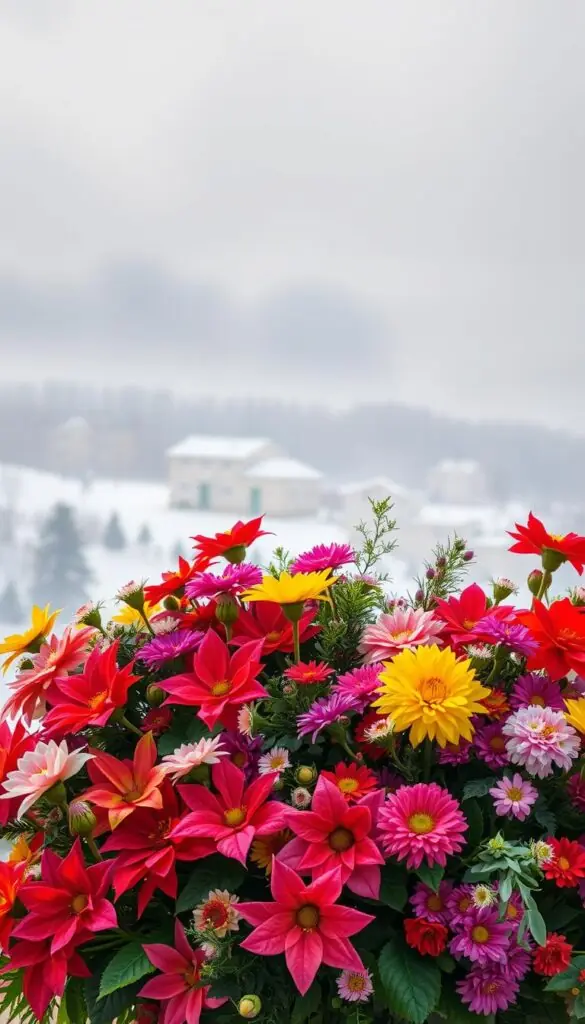
Steady as She Goes Gardenia
Zones 7–10. This evergreen shrub reaches about 3–5 ft tall and 4–7 ft wide. Glossy leaves and creamy white, fragrant blooms reward mild afternoons with a warm perfume.
Plant near an entry or patio so the scent greets you. Give bright light with some protection from harsh cold winds.
Perfecto Mundo Red Reblooming Azalea
Zones 6–9. Compact (about 30 inches tall) and wide (3–4 ft), this azalea flushes lipstick-red flowers in spring, again through summer, and right up to frost for long-season cheer.
It prefers morning sun and afternoon shade. Use it in a layered bed against pale siding to make the red pop.
Dandy Man Purple Rhododendron
Zones 4–8. Hardy and roomy (4–8 ft), this plant holds rich green presence in cold months and then bursts into purple trusses in spring.
Place where light is bright but not harsh. Its glossy leaves contrast nicely with fine-textured evergreens.
- Plant gardenia or azalea by a door or patio to savor scent and color.
- Keep soil evenly moist; water during thaws if leaves flag in a cold, dry snap.
- Mulch 2–3 inches to protect buds from freeze–thaw cycles.
- Avoid hard pruning now; shape lightly in late winter and do major cuts right after spring bloom.
"One flowering shrub by the entry brings winter charm without crowding the yard."
Tip: In small gardens, choose one flowering evergreen shrub to add scent, color, and seasonal interest without overplanting. Pair white blooms with textured greens, or let red flowers stand against light walls for maximum impact.
Soft textures and cozy greens for winter calm
A mix of slightly weeping foliage and low emerald cushions makes paths and slopes feel gentle. These choices focus on soothing texture and simple care so your yard reads calm and inviting through the cold months.

Soft Serve False Cypress (Chamaecyparis pisifera)
Soft Serve grows like a soft, slightly weeping tree, about 6–10 ft tall and 5–6 ft wide (Zones 4–8). Its feathery sprays add delicate texture and a muted color that backs brighter plantings without shouting.
Place it where you can see the form from a favorite window or use it as a gentle backdrop along a path. Add 2–3 inches of mulch to protect roots and to highlight layered branches.
Tortuga Juniper (Juniperus communis)
Tortuga makes a tough, low-mounded ground cover (2 ft × 3–4 ft, Zones 2–7) that stays tidy through snow and thaws. It loves sun on slopes or along drive edges and keeps erosion in check.
Water new plants well, then let established junipers enjoy dry spells. Both plants prefer well-drained soil in cold months and are deer resistant.
- Use cypress as a calm backdrop and pair with low juniper for layered structure.
- Lightly prune stray cypress shoots in late winter to keep a graceful outline.
- Plant Tortuga on sunny slopes or as a neat edge for year-round coverage.
Enjoy the tactile charm—fingertip-soft foliage and dense, cushiony mounds that make your landscape feel peaceful.
Container-friendly evergreens for porches and patios
A porch or patio can stay lively all season with a few potted shrubs chosen for size and calm form. Pick a sturdy pot, then choose plants that match the light and space you have.
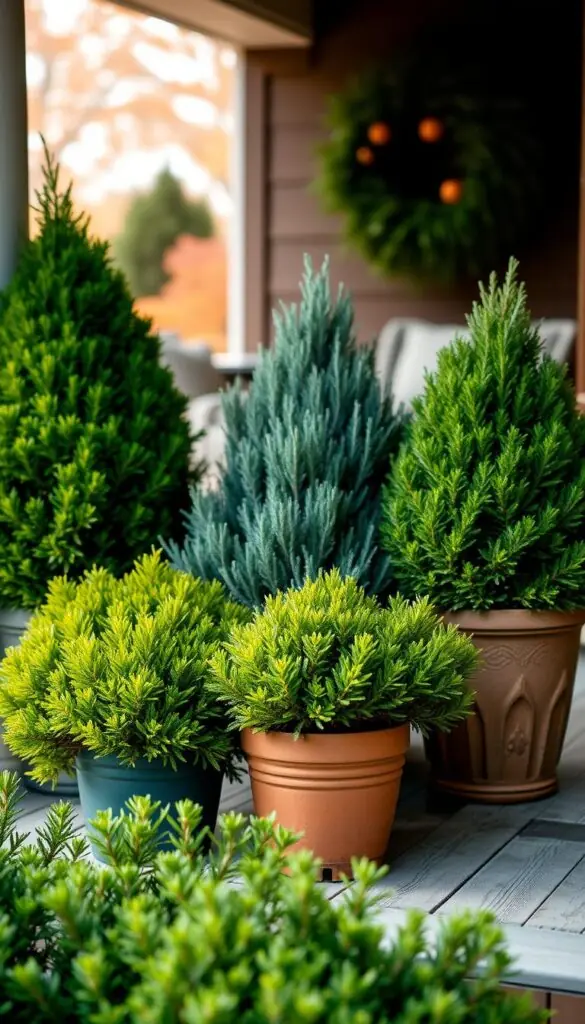
Boxwood ‘Wintergreen’ and ‘Wintergem’
Wintergreen and Wintergem boxwood are slow growers that shape nicely in pots. They like part sun and some wind protection, so place them near a sheltered entry.
‘Emerald Green’ Arborvitae
The slim arborvitae makes a vertical accent and looks festive with soft lights. Plan to transplant it to the garden when roots fill the pot.
Nandina ‘Obsession’ and dwarf cypress
Nandina ‘Obsession’ shows coral-pink new growth in spring and keeps leaves through the year. A dwarf Hinoki cypress adds sculptural texture beside the door.
Design and care tips
- Choose durable containers at least twice the root ball with large drainage holes and quality potting mix.
- Rotate pots every few weeks so each side gets even light and steady growth.
- Water when the top 2 inches of mix feel dry during a thaw; avoid soggy soil before a freeze.
- Top with 1–2 inches of mulch and leave space below the rim to prevent overflow.
- When a shrub reaches two-thirds of the pot’s width, plan a transplant and refresh the container.
"A small group of potted shrubs near the door makes daily moments outside feel bright and cared for."
Design like a pro: mix forms, sizes, and shades for winter interest
Start by choosing one tall shape, one rounded form, and one ground-hugging plant to anchor each view. That trio gives the garden immediate structure and steady visual interest.
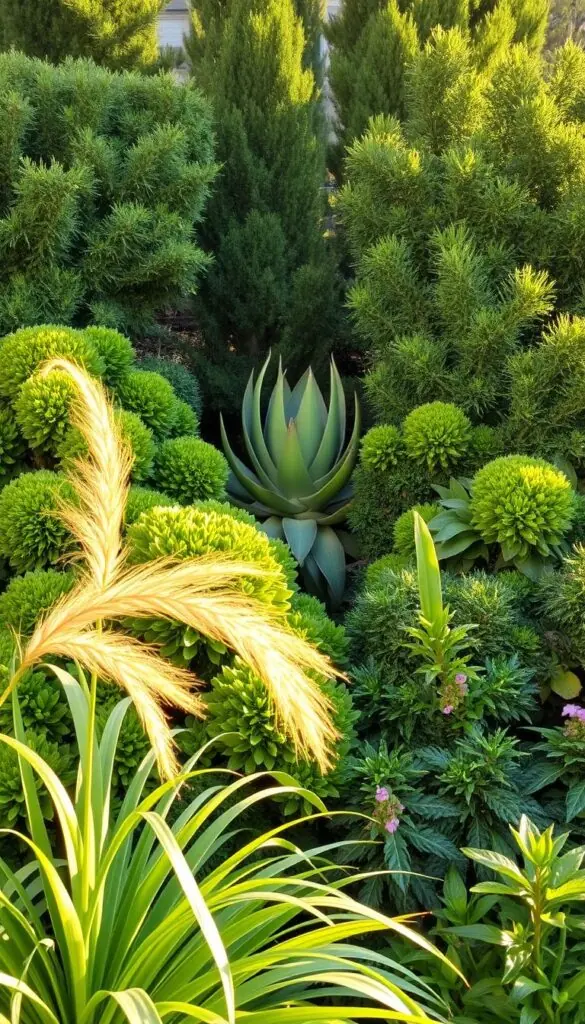
Combine cones, mounds, and ground covers to make garden structure pop
Think in shapes: set a cone (arborvitae or Gin Fizz juniper), a mound (boxwood or inkberry), and a low ground cover (Tortuga juniper) to frame paths and beds.
Use slim accents such as Sky Box holly or Stonehenge yew to mark corners without crowding. Repeat one plant three times to create a calm rhythm.
Play with greens, blues, and golds against bark, snow, and brick
Contrast texture—feathery Soft Serve cypress beside glossy boxwood—to add depth. Blue-green berries and aroma on Gin Fizz juniper catch the eye near brick or melt-colored paths.
- In small gardens, pair one tree-form element with two mounds for balance.
- Mirror beds in containers: tall cone, mid mound, trailing accent to tie entry and yard together.
- Add a low mulch edge to finish the composition and protect roots into summer.
| Design element | Example plant | Why it works |
|---|---|---|
| Cone | Gin Fizz juniper | Vertical focus, blue-green berries, aromatic interest |
| Mound | Boxwood | Clean round form, deep green backdrop |
| Ground cover | Tortuga juniper | Low, tough cover that ties beds together |
| Slim accent | Sky Box holly / Stonehenge yew | Punctuates corners without crowding |
"Use repeated shapes and a few color contrasts to make a quiet, finished landscape that reads well all year."
Care made simple: winter watering, mulching, and pruning
A calm, short routine keeps your shrubs and containers healthy through cold snaps and thaws. Follow timing cues and a few tools to protect roots and leaves without fuss.
When to water during cold snaps and thaws
Check soil during a thaw. If the top 2–3 inches are dry, water slowly at the base until the ground is evenly damp.
Deep, infrequent watering helps roots stay strong. Many plants appreciate a good soak in late winter thaws.
Mulch and wind protection to prevent desiccation
Mulch 2–3 inches around the root zone, keeping it a few inches from stems to prevent rot. A tidy ring also makes the landscape look cared for all year.
In exposed sites, set a burlap screen on the windward side of first-year shrubs to reduce leaf drying.
Light shaping with clean pruners; save hard cuts for late winter
Sanitize hand pruners and do only light shaping in late winter. Save major cuts until plants are fully dormant.
- Brush heavy wet snow upward to prevent breakage; leave light dustings alone.
- Raise containers on feet so water drains and won’t freeze at the base.
- Watch for bronzing or curling leaves—water at the next thaw and add a windbreak if needed.
"Avoid fertilizing now; wait until spring growth begins to reduce risk to tender shoots."
Shade, sun, and small gardens: right plant, right place
A small change—one right-placed shrub—can transform a dim corner into a calm focal point.
Match light and size before you plant. Choose plants that suit the light you actually have and the space you can give them. That saves work and keeps the landscape balanced.
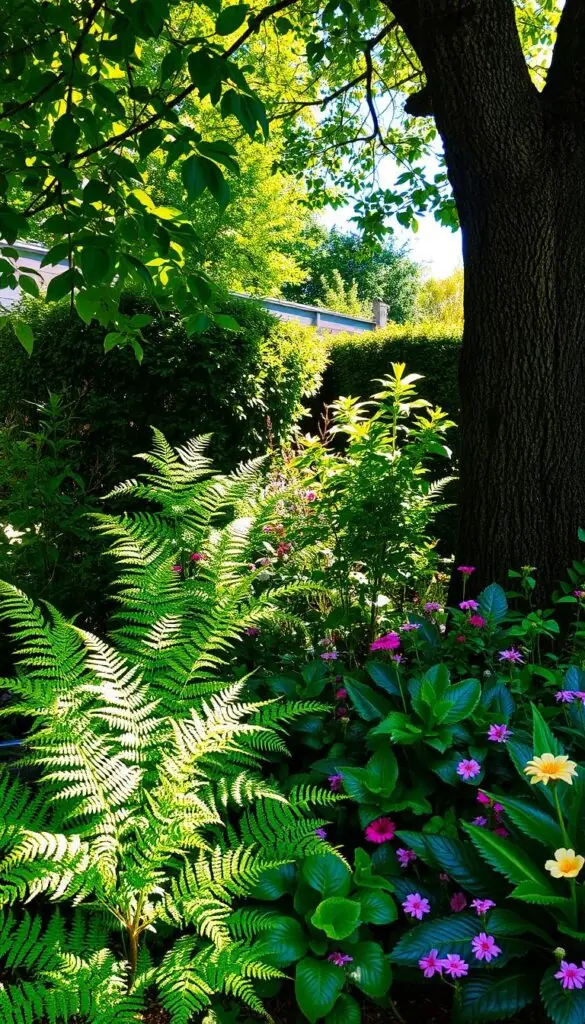
Shady spots
For deep shade, pick Gem Box Inkberry Holly (2–3 ft). It makes tidy low hedges that read clean near paths.
Stonehenge yew tolerates full shade to sun and makes a slim column (8–10 ft × 2–4 ft). Use it where you want vertical structure without bulk.
Dandy Man Purple Rhododendron likes partial sun and brings spring flowers while holding green form through colder months.
Sunny sites
In full sun, lean on junipers and North Pole arborvitae for long-lasting shape and low fuss.
Add Soft Serve False Cypress for softer lines where you want a gentler texture in the landscape.
- Small gardens: One narrow shrub in a container by the entry adds charm without crowding space.
- Group three shade-tolerant shrubs in a triangle to create depth in dim areas.
- Along sunny fences, alternate cones and mounds to break long lines and lower maintenance.
- Use partial-shade beds for rhododendrons so morning sun dries dew and keeps leaves healthy.
- Expect a spring lift: shade picks brighten as days lengthen, and sunny types push new tips.
- Keep watering simple—check the soil with your finger and water during mild spells as needed.
"Place the right plant in the right light and your yard will thank you with steady color and low fuss."
Conclusion
Start with a single planting and watch small choices build a lasting, welcoming landscape.
,With a few well-chosen evergreens you can make garden moments that feel alive in winter and all year. Pick one tidy boxwood by the door, one slim arborvitae for height, and a berrying touch for sparkle.
Mix types for balance — holly for polish, yew for shade strength, and cypress for softness. Choose plants that suit your zone, add mulch, and water during thaws; simple steps keep everything thriving.
If space is tight, use containers and rotate for even light. Enjoy small repeats and a few bright berries or blooms to make your garden feel cared for. You’ve got this — add one plant today and let your yard greet each season with calm color and steady structure.
🌿 Related Reading
FAQ
What should I consider first when choosing plants for cold months?
Start with your USDA hardiness zone, the light your site gets, the mature size you have room for, and how much maintenance you want. Those four checks help you pick shrubs, trees, or ground cover that will give year-round structure and color without overcrowding pathways or containers.
How do I use a simple checklist to narrow choices?
Use this quick checklist: zone compatibility, morning sun vs. shade, final height and spread, and pruning needs. Add soil moisture and drainage. That keeps selections like boxwood, arborvitae, yew, or holly from becoming too big for beds or borders.
Which basic tools and materials will I actually use?
Keep hand pruners, a folding saw, garden gloves, quality mulch, a hose or soaker, and sturdy containers on hand. Burlap and stakes help protect vulnerable specimens from wind, and a moisture meter or simple trowel shows root conditions before planting.
What small shrubs work well near paths and entries?
Choose compact, well-shaped shrubs like boxwood and inkberry holly for tidy structure. Varieties that stay 2–4 feet wide are ideal for narrow beds and containers, giving year-round texture and clear edges by walks and steps.
How can I create privacy with narrow columns or cones?
Use columnar arborvitae and slim hollies to form living screens. Plant in a staggered line for density and rotate varieties if you want mixed texture. These shapes give vertical interest without taking up much horizontal space.
What plants add color beyond green in cold months?
Look for shrubs that show berries, bronze or purple foliage, and scented winter buds. Holly and certain barberries provide berries, while some viburnums and nandina offer seasonal tints that contrast nicely against bark or mulch.
Are there flowering shrubs that still perform in colder seasons?
Yes. Some gardenias and reblooming azaleas, plus select rhododendrons, give late-winter or early-spring blooms. Choose varieties rated for your zone and protect blooms from harsh wind to keep scent and color through cool spells.
Which selections give soft textures and ground-hugging cover?
Feathery false cypress and low-mounded junipers work well as ground cover or soft accents. They add a cozy, layered look around foundations and between taller shrubs without needing deep pruning.
What should I know about container-friendly choices?
Pick slow-growing, hardy cultivars and use containers twice the size of the root ball. Ensure good drainage, rotate pots for even light, and be ready to insulate or move sensitive plants during hard freezes to avoid root damage.
How do I design a mixed planting that looks intentional?
Mix cones, mounds, and low ground covers to create structure. Combine greens, blues, and golds and repeat forms at intervals to create rhythm. Contrast foliage texture and heights to keep interest when flowers are absent.
What are the essentials of cold-season care?
Water established plants during dry thaws, mulch around roots to retain moisture, and shield young shrubs from driving winds. Do light shaping with clean pruners and delay hard cuts until late winter to protect buds and stems.
Which plants suit shady spots versus sunny sites?
In shade, choose inkberry holly, yew, and rhododendron for reliable foliage and blooms. In sun, go with junipers, arborvitae, and false cypress for bright color and drought tolerance. Match soil type and moisture to each plant for best results.