Imagine a sunlit windowsill, the warm scent of basil and rosemary rising as you pot a new plant. You can make a small, lush oasis that brings fresh flavor to weeknight cooking. This guide speaks plainly and kindly so you can start with confidence.
You’ll choose a few staple plants that thrive in pots and fit a small space. We keep steps simple: light, soil, water, and the right tools. You’ll learn easy ways to pot up containers and avoid common mistakes.
Think of snipping basil last to keep its aroma bright, using rosemary stems as skewers, or letting chives finish a dish with a mild onion note. We’ll show when to plant, what to harvest, and how to enjoy the daily ritual of tending a tiny green garden.
Key Takeaways
- Start small with a few staple plants that suit your space.
- Provide good drainage and quality soil for healthy growth.
- Harvest smart: add basil at the end; use rosemary stems for grilling.
- Choose tools you'll use—trowel, pruners, and a watering can.
- Keep care simple: sun, regular water, and occasional compost.
Start with a Vision: What You Want from Your Herb Garden
Begin by imagining how fresh leaves will finish your meals, smell in the air, and brighten plates.
Ask yourself what you cook most and which flavors you reach for first. Do you often add bright parsley to eggs or a citrus lift to tacos?
Decide how the space will serve you: everyday pots for simple meals, or a few special plants for weekend gatherings. Keep it small and joyful to start.
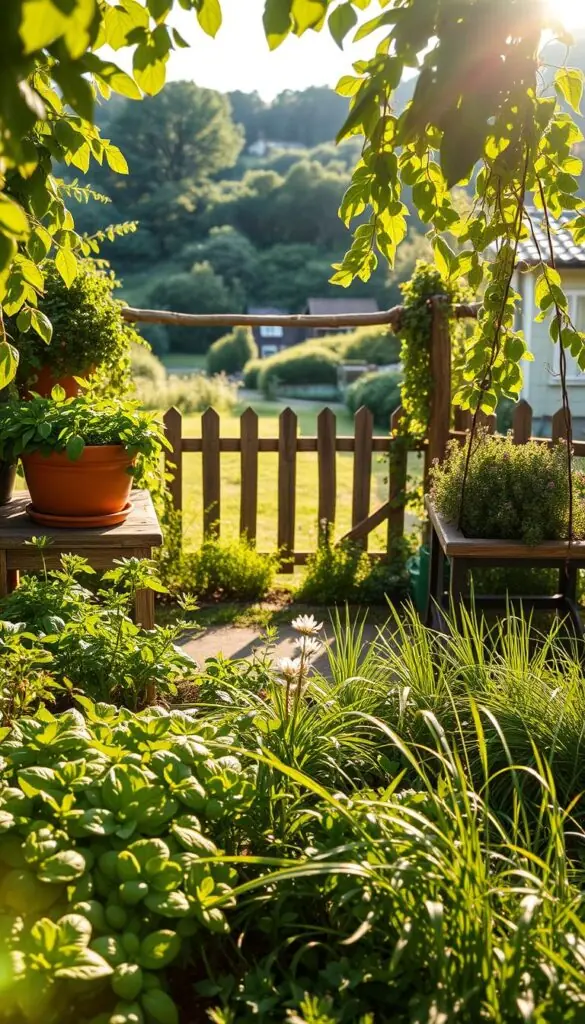
- Think scent and texture as well as taste—soft thyme, glossy basil, or woody rosemary adds character.
- Consider who uses the space: if people love pasta, pick basil and oregano; if you like varied cuisines, add cilantro and chives.
- Plan your harvest style: quick snips each night or larger bunches for sauces and pestos.
- Start on a budget: a few starter plants and one bag of quality mix make a big addition later.
Place a small stool or basket nearby so harvesting feels easy and becomes a happy daily habit.
Plan Your Space and Sun for Kitchen Herbs
Pick a sunny ledge or a busy doorway spot so your pots become part of your daily rhythm. Place containers where you naturally walk—by the door, on a balcony rail, or in a window box. That gentle habit keeps watering and snipping simple.
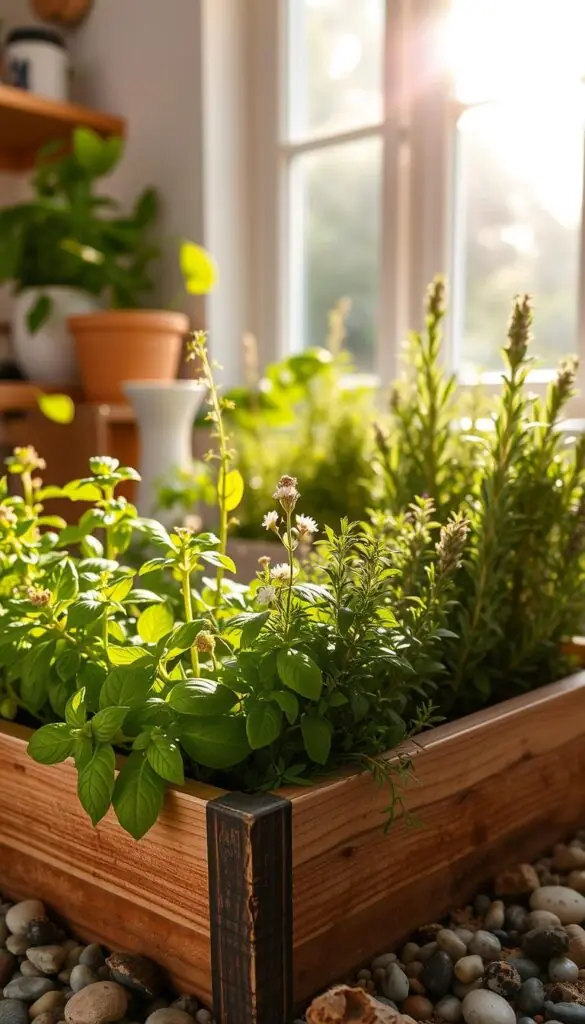
Aim for a true six hours of sun with a little midday airflow. Basil, rosemary, and thyme love warm light and a soft breeze that dries leaves after watering.
- Use pots with drainage holes and a lightweight, well-draining mix with a scoop of compost. The soil should smell earthy and feel springy, never soggy.
- Group thirsty plants together and drier ones together. Basil likes steady moisture; rosemary and thyme prefer to dry slightly between drinks.
- Keep pots a few inches apart for airflow to reduce mildew and keep flavors clean.
- If light is tight, give your brightest spot to basil and tuck lemon thyme or English thyme in slightly shadier corners.
Rotate pots weekly so all sides get sun. This keeps growth compact and boosts the range of flavor you harvest from your small garden.
Gather Simple Tools and Materials
Good basics let you tend plants with confidence, not fuss. Start with a minimal kit that covers potting, pruning, and watering. A few reliable tools make caring for your mini garden feel easy and natural.
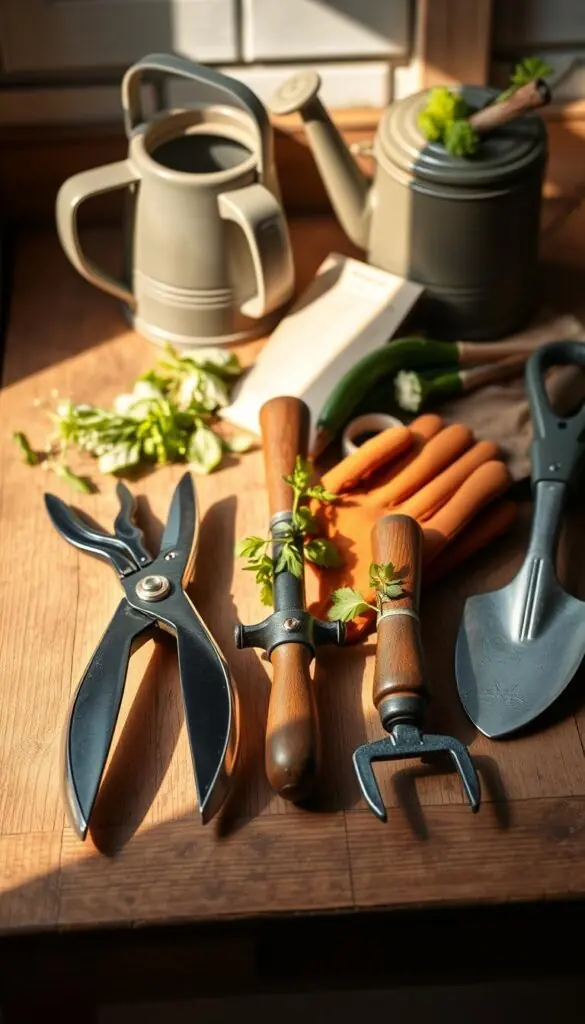
Everyday tools you’ll use
Hand trowel: A small trowel handles potting, mixing compost, and making roomy holes so roots don’t get cramped.
Pruners or kitchen scissors: Sharp blades make clean cuts. Clean stems heal faster and your pots stay tidy. Keep them near the door for quick snips.
Watering can with narrow spout: Gives control at the soil line so foliage stays dry and disease risk drops.
Weatherproof labels: Mark varieties and planting dates so you track growth and harvest habits at a glance.
Smart add-ons that help
- Thin mulch on larger pots slows evaporation and keeps roots cool on bright days.
- Saucers protect floors; empty standing water quickly to keep roots healthy.
- Light, organic liquid fertilizer every few weeks preserves bright flavor without overfeeding.
- A small LED grow light is a great addition if sun is limited; run 12–14 hours to grow compact, lush plants.
Keep a simple bin for these staples so tending becomes a small, satisfying ritual. This kit is a practical way to add fresh ingredients and expand the range of flavor from a few staple plants.
Planting Steps that Set You Up for Success
Start planting with a simple plan so each pot finds its best role in your sun and space.
Pick a few steady favorites first. Begin with parsley, thyme, oregano, and chives for fast wins and steady harvests. These plants tolerate container life and teach you each plant’s rhythm.
Give mint its own pot. Mint spreads quickly and will overrun mixed containers. A single pot keeps its roots contained and the rest of your layout peaceful.
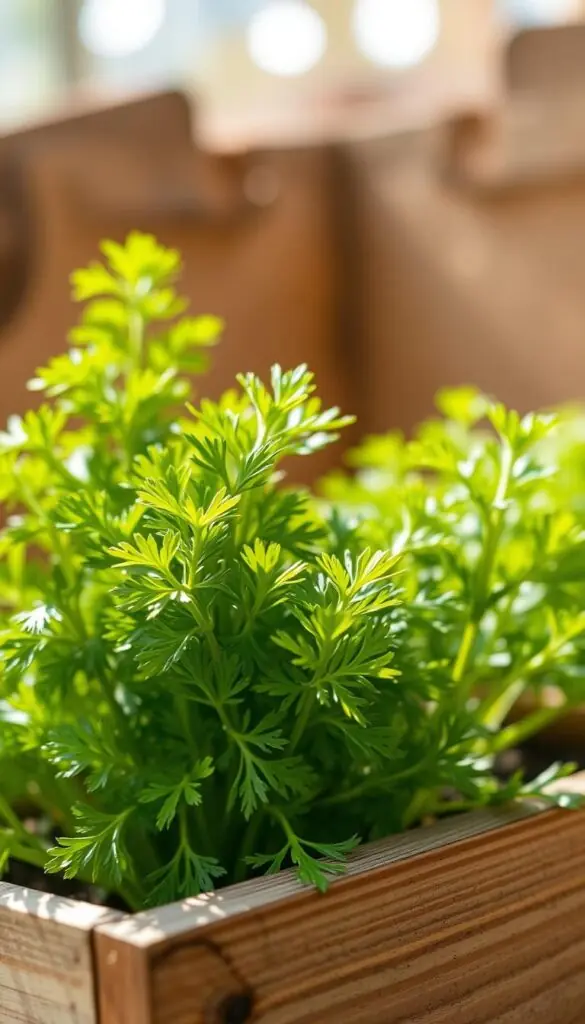
Timing and potting
Wait until after your local last frost to plant warm lovers like basil and dill. If nights still dip, delay a week to avoid replanting.
Use pots with drainage holes and a loose, well-draining mix. Make holes wider than the root ball and gently tease circling roots so they can spread into fresh soil.
Spacing and settling
- Anchor upright plants: place rosemary or other upright types in a larger pot as a focal point.
- Let spillers tumble: set thyme and oregano near edges so they can trail over the rim for easy snipping.
- Water slowly at the base: settle roots until you see moisture drip from drainage holes; add a little more mix if the soil falls.
Remove buried lower leaves and weak stems when you transplant basil to the pot. This prevents rot and encourages sturdy new growth.
Tip: space plants so mature leaves barely touch. A little air keeps foliage vibrant and preserves the full range of flavor you want from your garden.
Simple Care by Season: Water, Feed, and Prune with Confidence
You can tune care to the seasons and watch your plants stay compact, fragrant, and ready to use. This short guide gives timing cues and gentle habits so your small garden hums along with your routine.
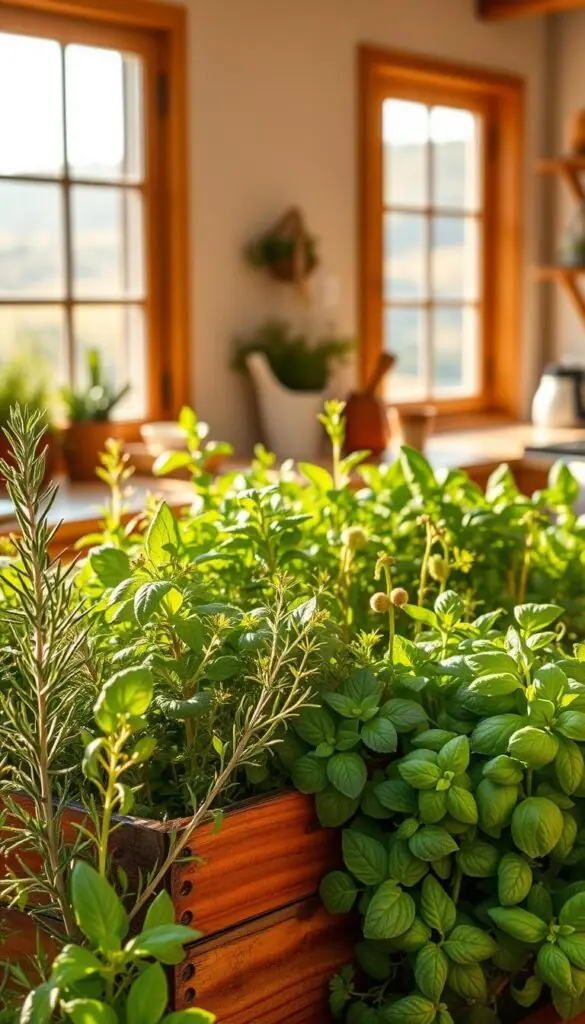
Spring and early summer
Keep the soil evenly moist so new growth is tender and full of flavor. Feed lightly every few weeks to fuel healthy shoots without stretching stems.
Heat of summer
Water in the cool morning so foliage dries fast and roots can sip through the day. Add a thin mulch to keep container roots cool, especially near sun-loving vegetables.
Trust heat-tolerant plants like rosemary to handle strong sun while others need steady drinks.
Fall tune-up
Reduce feeding as growth slows. Trim woody stems after a growth flush to keep form and encourage fresh shoots.
Snip sage lightly and cut thyme often to prevent woodiness, leaving sturdy new growth to carry you to the season's end.
Indoors for winter
Move pots to a bright window or under a small grow light. Water less; let the top inch dry between sips and keep gentle airflow.
Cut back mint if leggy and tidy with clean pruners. Wipe tools between plants—this simple step protects the whole patch of herbs and keeps care the easy way.
- Quick tip: Keep a small note of trims and watering to learn rhythms each year.
Harvest, Store, and Cook with Fresh Herbs
Pick with intention: fresh leaves bring the clearest flavor to simple meals.
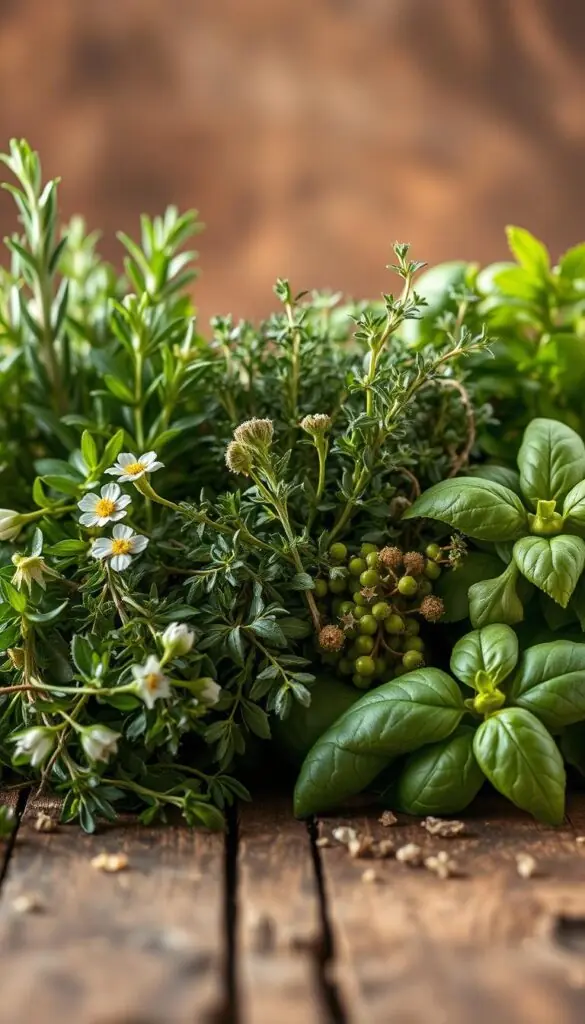
Harvest often and gently. Snip above a leaf pair to encourage new growth. Store trimmed stems in a glass of water for a day or two, or dry leaves flat for longer use.
- Basil: add at the end to avoid blackening; scatter over tomatoes and mozzarella or whirl into pesto.
- Rosemary: strip leaves for roasts and tray-baked potatoes; use woody stems as grill skewers for meat or shrimp.
- Thyme: lemon or English work well; add early to soups and stews, then pull stems before serving.
- Oregano: bold in sauces and tomato dishes—add early so it softens into the dish.
- Parsley: chop for a peppery lift in sauces, salads, and grains—more than just a garnish.
- Chives: snip fresh over eggs, potatoes, and dairy for a mild onion note and pretty purple flowers.
- Cilantro: stems go into stews for depth; leaves finish salsas and brothy dishes with lime or coconut.
- Dill: use fresh with salmon, cucumbers, tomatoes, and potatoes; stir into yogurt dressings.
- Mint: harvest often for tea, fruit, and seafood; it pairs well with lemon and desserts.
- Sage: fry leaves in butter for a nutty garnish or tuck a leaf into pan sauces for fall vegetables and meat.
Common Mistakes to Avoid with Culinary Herbs
A few gentle course-corrections will save you time and keep your mini garden full of bright, useful leaves.
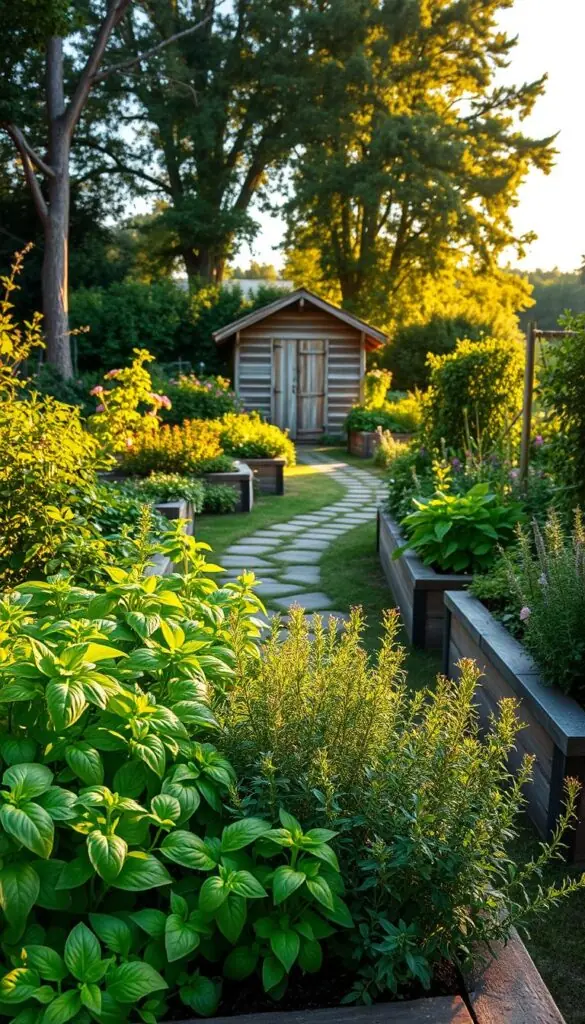
"Tend with small, regular steps—plants respond to routine more than drama."
Overwatering and poor root oxygen
Avoid overwatering: water at the soil line until it drains, then let the top inch dry. That gives roots air and keeps leaves bright with clean flavor.
Give mint its own pot
Keep mint separate: mint spreads fast and will crowd neighbors. A single container keeps moisture and space balanced for the rest of your plants.
Be careful with woody herbs
Don’t cut into old wood: when harvesting rosemary or thyme, snip soft, green tips so the plant rebounds quickly. Cutting too low slows recovery.
- Harvest no more than one-third at once; frequent small snips help regrowth.
- Water in the morning and keep airflow to reduce overnight dampness.
- Keep pruners sharp and clean for crisp cuts on parsley, chives, and other herb stems.
- Leave space in pots and label varieties so people know what to pick.
Conclusion
Your small patch of green will soon offer quick, confident additions that lift every dish. You now have a clear, simple plan to grow a small, beautiful collection you’ll actually use.
Keep choosing what you love: make parsley and oregano nightly staples, add cilantro with lemon to brighten stews, or use sage and dill for cool-weather soups and seafood.
Harvest lightly and often. Taste as you go and let living flavor guide your cooking. Share scissors by the door so people can grab a snip for a garnish or a last-minute addition to a dish.
As seasons shift, trim, refresh soil, and swap plants that pairs well with your favorite meals. Most of all, enjoy the quiet moments—the sun on your shoulders, the onion-sweet scent of chives, and the soft brush of leaves under your fingertips.
FAQ
How much sun do my herbs need?
Most culinary herbs do best with about six hours of direct sun. Place sun-loving varieties like basil, rosemary, and thyme in a bright spot — a south- or west-facing window, a sunny balcony, or a strip of yard by the door. If you lack natural light, a warm grow light keeps plants lush and thriving.
What soil should I use for container herbs?
Use a loose, well-draining potting mix boosted with compost. Good drainage prevents root rot and keeps oxygen flowing. Make sure containers have drainage holes and add a saucer to catch overflow. A light organic fertilizer once a month helps steady growth.
Can I plant mint with other herbs?
Mint spreads quickly and will overrun neighbors. Give mint its own pot or a deeply buried root barrier. Keeping it contained preserves space for parsley, thyme, oregano, and chives to thrive without being crowded.
When should I plant basil and dill outside?
Wait until after your last spring frost. Both basil and dill are warm-season plants and hate cold soil. Start seeds indoors if you want an earlier start, then transplant once nights stay reliably warm.
How far apart should I place rosemary, thyme, and oregano?
Give upright herbs like rosemary a bit more vertical space — a roomy pot or at least 12–18 inches between plants. Low growers such as thyme and oregano can spill over edges, so a 6–12 inch spacing works well depending on the variety.
What tools and extras do I really need?
Keep it simple: a hand trowel, clean pruners, a watering can, and plant labels. Smart add-ons include mulch to retain moisture, saucers for containers, organic fertilizer, and a small grow light for low-light homes.
How often should I water container herbs?
Water when the top inch of soil feels dry. In spring and early summer that may mean every few days; during hot spells, water in the morning and mulch to keep roots cool. Avoid constant wetness — roots need air as much as moisture.
How do I prune woody herbs like rosemary and sage?
Trim lightly and avoid cutting into old, woody stems unless rejuvenating the plant. In fall, do a lighter pruning and save harder cuts for spring. Regular snipping encourages new growth and keeps flavors bright for cooking.
What’s the best way to harvest basil, parsley, and chives?
Harvest basil and parsley by pinching stems above a node so the plant branches out. Snip chives at the base with scissors to keep a tidy clump. For basil, add leaves at the end of cooking; chives are best fresh over eggs, potatoes, and dairy.
How can I store extra herbs like dill, cilantro, or rosemary?
For short-term use, trim stems and place in a glass of water in the fridge (cover loosely). Freeze chopped herbs in olive oil or make pesto with basil. Woody herbs like rosemary freeze well whole or dried for roasts and grilling.
Which herbs are best for beginners?
Start with forgiving, culinary staples: parsley, thyme, oregano, and chives. They tolerate a range of conditions, are useful in many dishes, and teach you watering and pruning habits quickly.
How do I keep herbs healthy indoors in winter?
Move plants to the brightest window or use a grow light, reduce watering, and ensure good airflow. Reduce feeding and trim back leggy growth so plants conserve energy until spring.
What are common mistakes to avoid when growing culinary herbs?
Avoid overwatering containers, planting mint without containment, and cutting woody herbs too low. Also, don't crowd pots — airflow and light matter for flavor and disease prevention.
How do I use rosemary, oregano, and thyme in cooking?
Rosemary shines in roasts and grilled meats; its woody stems can even serve as skewers. Oregano is bold in tomato sauces and benefits from early cooking. Thyme is versatile — adds depth to soups, stews, and lemony dishes.