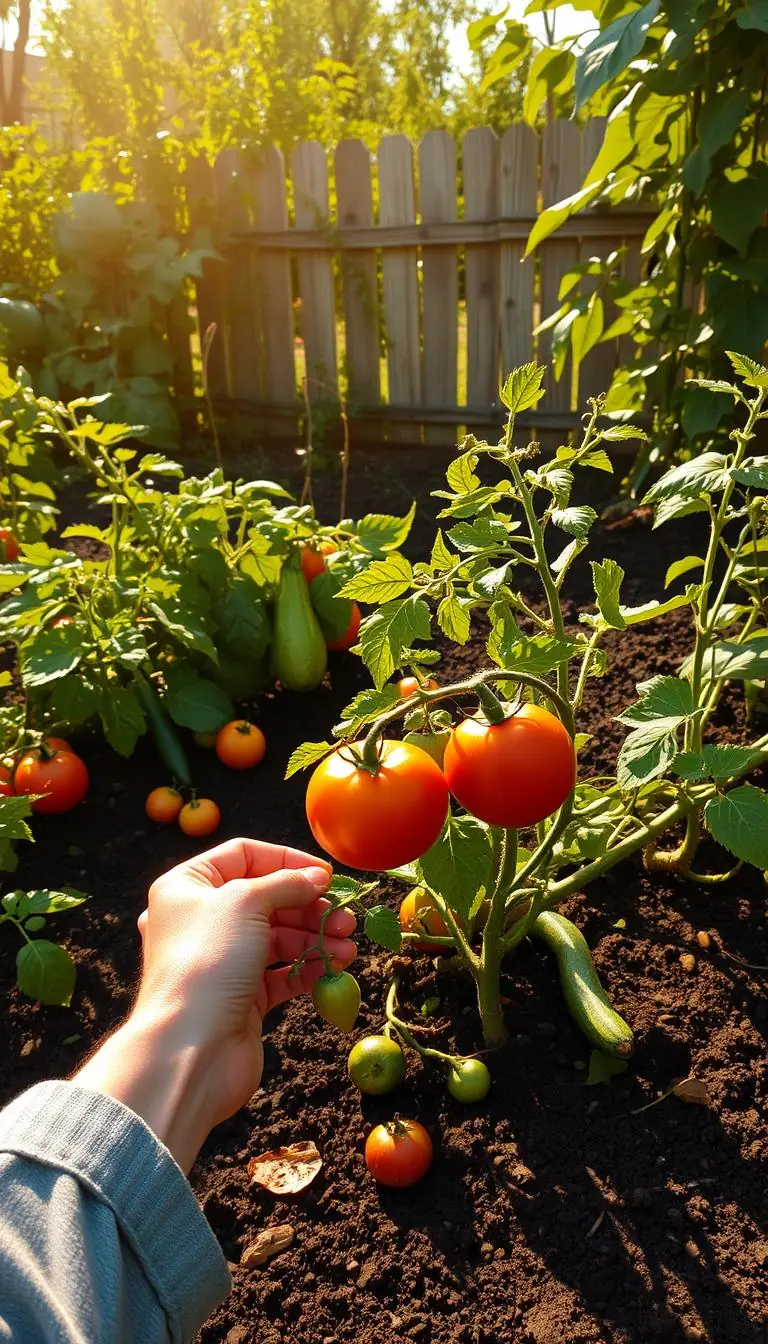
Imagine glossy green leaves gleaming in warm terracotta, with the sweet scent of ripening fruit in the air. You can enjoy that view on a sunny patio or a small balcony, even if you only have a few pots.
You’ll learn simple, step-by-step care to feel confident and calm throughout the season. Start with a 12–16 inch pot, quality potting soil, and a slow-release fertilizer at planting.
Tools like a trowel, hand pruners, a 5-gallon watering can, and a moisture meter make daily tasks easier. Pick a sunny spot—full sun is best—and move pots into light afternoon shade on very hot days.
We’ll cover how to choose a sturdy transplant, water so soil stays evenly moist, and feed lightly for better flavor. A small stake or cage and light pruning keep plants tidy and productive.
Key Takeaways
- Use a roomy 12–16 inch pot with good drainage to start.
- Place pots in full sun, with a little afternoon shade in hot weather.
- Water consistently; check moisture with a meter and water daily when warm.
- Feed at planting and with periodic liquid feedings for steady growth and flavor.
- Support plants with a small stake, prune lightly, and harvest at peak color.
Quick-start guide: your first pepper in a pot, step by step
Make planting calm and easy with a short checklist you can follow in a single afternoon. Feel the warm sun on your shoulders and the earthy scent of moist soil as you work.
Tools & timing:
- 12–16 inches pot with drainage and a sturdy saucer.
- Premium peat-based potting mix, a handful of compost, and slow-release fertilizer.
- Small stake or 12–18 inch cage, trowel, and a watering can.
Gentle steps:
- Set the pot in a spot with 6–8 hours of sun.
- Fill with fluffy mix, blend in compost and fertilizer per label, and set the transplant at the same depth.
- Water slowly until moisture runs out the bottom; the pot will feel heavier and the surface will darken.
| Task | Timing | Why it matters |
|---|---|---|
| Set pot & position | Day 0 | Ensures steady sun and less tipping in wind |
| Plant transplant | Day 0 | Same depth avoids root stress |
| Daily check | Each day first week | Finger check top inch; water when dry |
Neighborly tip: make sure the pot sits near a wall or railing so it won’t tip. Keep a short log of sun, water, and growth to learn your pepper plants’ rhythm.
Choosing containers that set you up for success
Choose pots that give roots room to breathe and fruit a safe place to ripen.
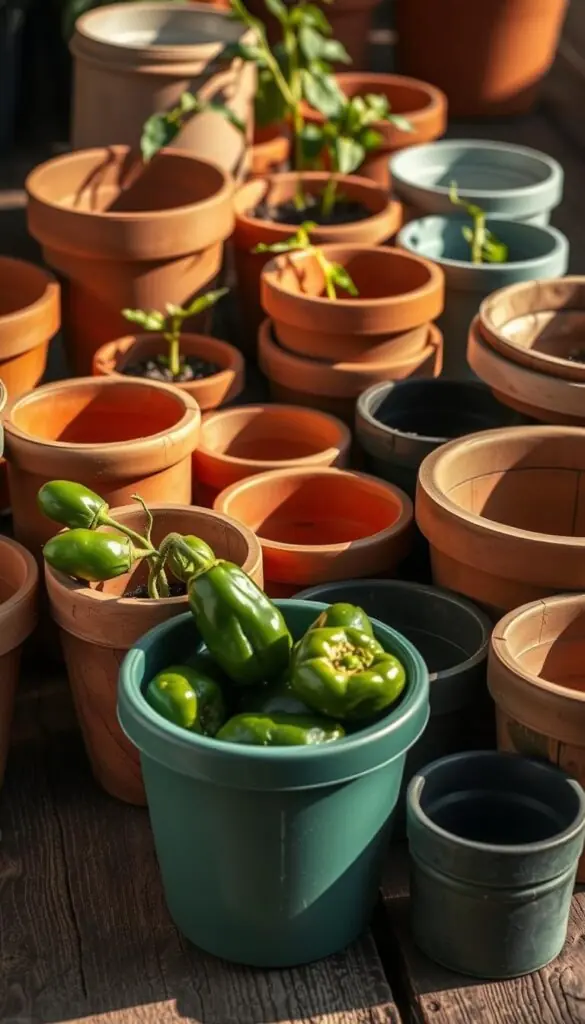
Size matters: Aim for at least a 12-inch diameter and depth; 14–16 inches is better for larger plants. For bell pepper and bigger types, a 10–15 gallon pot or a fabric grow bag like Smart Pots keeps growth vigorous. Compact varieties do fine in 3–5 gallon pots, but more soil helps during heat spells.
Materials and feel: Plastic is lightweight and holds moisture—pick light colors in hot climates. Wood insulates but can rot; use a liner and feet. Metal feels cool to the touch but heats quickly; add an inner pot or shade in hot afternoons. Fabric bags breathe and prevent root circling; they dry faster, so you’ll water more often.
Drainage & stability: Make sure there are drainage holes and use a saucer sized to catch runoff without drowning roots. Self-watering boxes like EarthBox keep moisture steady and are handy for travel. Tuck containers near a wall or fence and add bricks or a heavy saucer to prevent tipping as fruit sets.
| Need | Recommendation | Why it helps |
|---|---|---|
| Large plants (bell pepper) | 10–15 gal pot or 14–16 inches depth | Roomy roots, fewer waterings |
| Compact varieties | 3–5 gal pot or 10-gal grow bag | Saves space; still productive |
| Hot sites | Light-colored plastic or lined wood; add shade | Prevents heat stress on roots |
| Hands-off care | Self-watering box (EarthBox) | Steady moisture for vacations |
Picking pepper varieties for beauty, flavor, and your weather
Pick varieties that match your taste, your climate, and the look you want on the patio. A smart mix gives you colorful harvests, staggered ripening, and dishes that sing.
Sweet choices for small pots: 'Orange Blaze' brings crisp, bright orange fruits perfect for salads. 'Carmen' is meaty and rich — ideal for roasting. Compact standouts like 'Mini Bell' and 'Pretty N Sweet' set tidy plants and reliable yields in a small space.
Hot and compact picks: Try 'Cayennetta' or 'Early Jalapeño' for salsa and pickling. Thai 'Bird’s Eye' and 'Emerald Fire' deliver fiery heat on short stems and ripen quickly in warm zones.
Heirloom vs. hybrid: what to expect
Heirlooms often have unique flavor and old-fashioned charm but can need extra care and airflow in humid climates.
Hybrids usually offer stronger disease resistance and steadier yields — useful if you want predictability and less fuss. Mix both types so you get variety in taste, timing, and color.
- Mix sweet and hot: 'Carmen' for roasting, 'Orange Blaze' for fresh salads, 'Early Jalapeño' for salsas.
- Pick fast-ripening types for short summers; add big bells in long, hot seasons.
- Plant two of a favorite workhorse variety so you always have harvest-ready fruit.
Potting mix and pH: the fluffy, fertile foundation
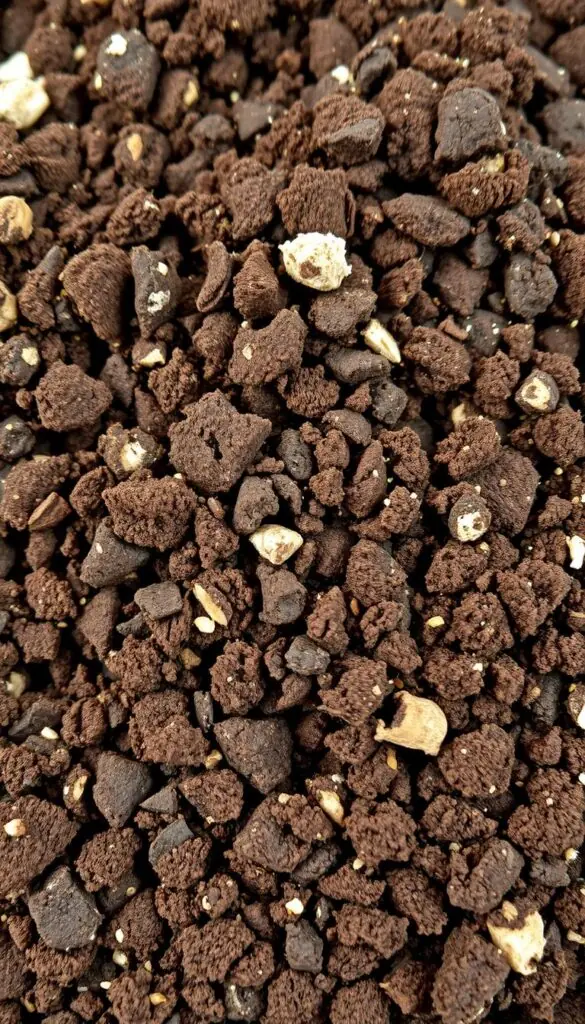
Start with a light, airy mix that smells faintly of earth and feels springy in your hand. Good base mix gives roots room and steady nutrients for healthy growth.
What to include for best drainage and fertility
Use a premium peat-based potting mix and blend in a few handfuls of compost. Add perlite or vermiculite so the mix drains yet holds moisture.
Avoid yard soil — it compacts, holds water poorly, and can bring pests.
Target pH and gentle adjustments
Aim for pH 5.5–7.0 for happy fruiting plants. A simple home pH test kit gives a quick read.
If the mix is too acidic, add garden lime; if it’s too alkaline, use elemental sulfur. Follow package directions and work slowly.
- Moisten the mix before planting so it settles around roots — make sure it feels evenly damp.
- Mix in a mild slow-release fertilizer at planting to feed as the plant establishes.
- Top with 1–2 inches of mulch after planting to protect that light, springy texture and reduce watering frequency.
Planting day: from nursery pot to patio
Planting day arrives with cool morning air and the satisfying rustle of nursery tags as you steady each pot. Move slowly and enjoy the routine; small, careful actions set plants up to thrive.
Set depth and spacing
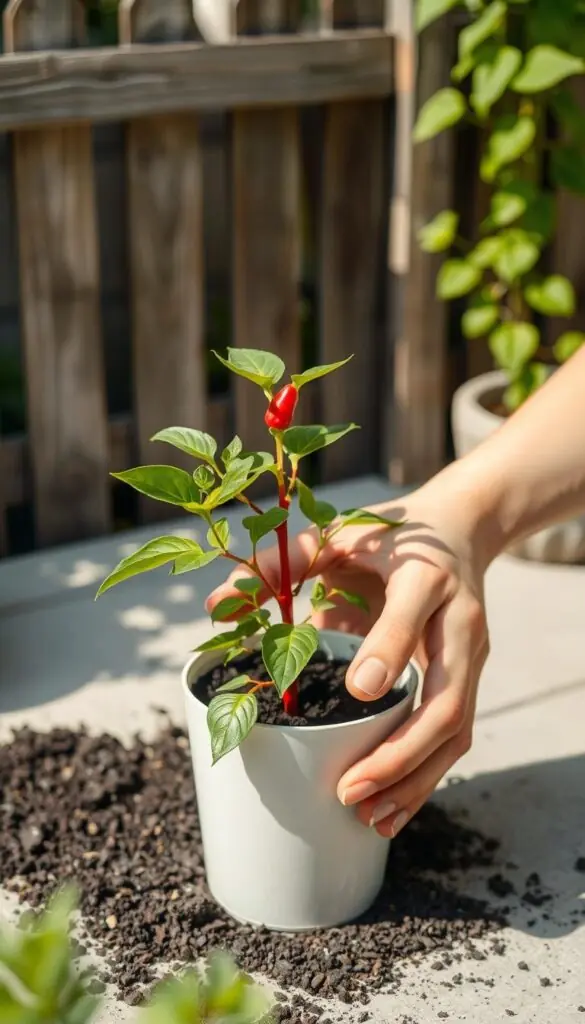
Slide the transplant from its nursery cup by supporting the root ball. Tease any circling roots gently so they spread.
Set the root ball level with the soil line, or about ½ inch deeper for a sturdier stem. In larger planters, space plants 12–18 inches apart so canopies don’t crowd.
First deep watering and quick checks
Make a small watering well at the top and water slowly and deeply until runoff appears. Wait a few minutes and water once more for an even soak.
Tuck a light layer of mulch an inch from the stem to hold moisture and keep airflow at the crown.
- Plant in the cool of morning to avoid heat stress.
- Label each rim with the variety and day planted so you can track harvest times.
- Place the container where it will get sun but stay sheltered from strong gusts.
At sunset, check the top inch of soil; if it feels dry and the foliage looks thirsty, give a gentle second drink. These small habits help pepper plants settle and reward you with steady growth.
Choosing a sunny spot and managing heat
Choose a space that balances full sun with a bit of relief when the day turns hot. Aim for a bright, open spot that gets 6–8 hours of direct light so your peppers set flowers and fruit.
In very hot weather, give your plants morning sun and light afternoon shade. A 30–40% shade cloth cools leaves during heat waves without stopping growth.

- Roll pots on a plant caddy to follow sun in spring and move away from harsh glare in midsummer.
- Nestle containers near a wall or railing as a wind break to lower moisture loss.
- Set pots off hot concrete with a mat or wooden slats so heat does not stress roots.
Keep mulch in place to buffer soil temperature swings on warm, breezy afternoons. Lift the pot—if it feels light, water before leaves start to flag.
"If foliage looks pale or scorched, slide the pot into gentler afternoon light to protect fruit and foliage."
Watch shadows through the day; moving a pot a foot can add an extra hour of full sun and make a big difference in how your pepper plants handle heat.
Season and temperature timing in the United States
A few date checks and a thermometer give you control over spring surprises. That simple routine helps you start at the right moment and protect young plants from late cold.
Last frost, indoor seed starting, and the 60°F nighttime rule
Check your local last frost date, then plan to start seeds indoors 8–10 weeks before that weekend. Use a small grow light or sunny window to keep seedlings compact and strong.
Transplant outdoors only after the last frost and when nights stay above 60°F. Ideal daytime temperatures are 70–90°F so flowers set and fruit develop well.
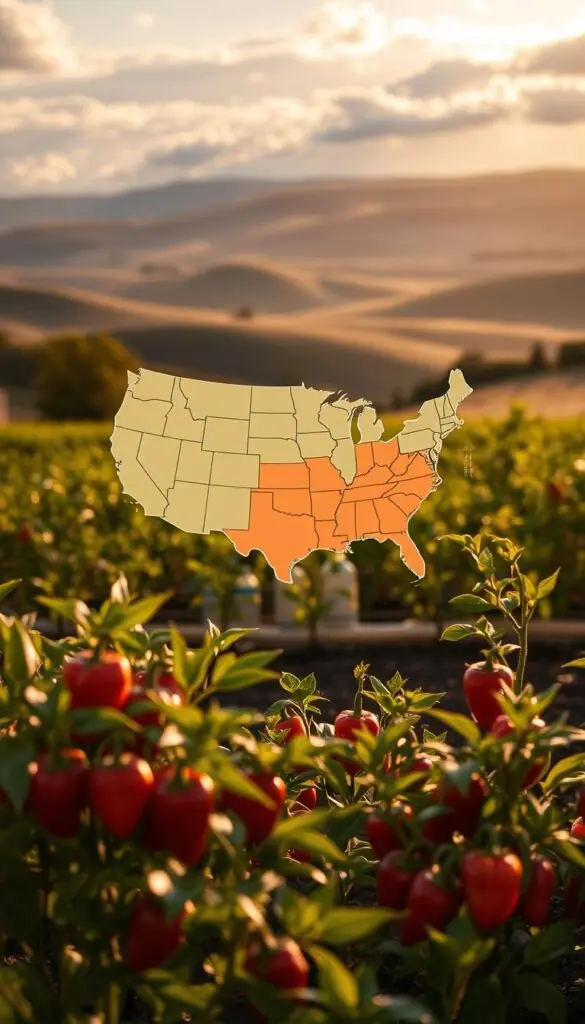
If a late cold snap threatens, move pots inside or cover them with frost cloth overnight. During cool weeks, bring seedlings in at night and set them in protected sun by day to harden off.
- Check local frost calendars and circle a seed-start weekend.
- Keep a cheap digital thermometer on the patio to watch for steady warm nights.
- Short growing seasons? Pick faster varieties so you finish before your first fall frost.
| Region | Quick timing tip | Why it helps |
|---|---|---|
| North | Start seeds early indoors; use dark pots on sunny patios | Warms soil and extends the growing season |
| Southeast/Southwest | Plant a touch earlier; plan for afternoon shade | Avoids heat stress during peak temperatures |
| All areas | Harden off: out by day, in at night for 7 days | Toughens seedlings for abrupt weather |
"Keep a simple routine: check dates, watch temps, and move plants with the forecast."
Watering and mulching for steady growth and flavor
Keep soil evenly moist so roots stay cool and fruit develops strong flavor.
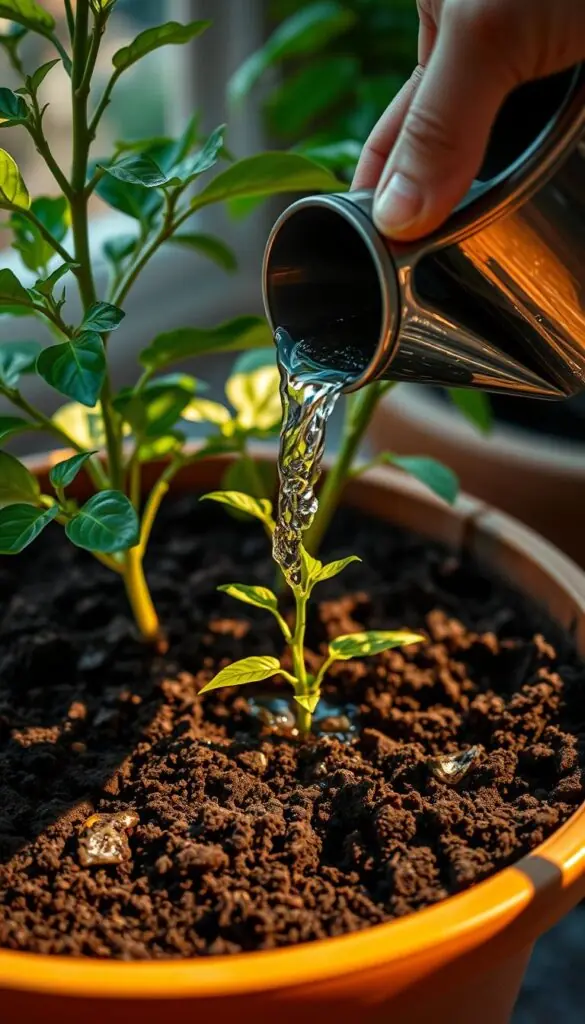
Deep, consistent moisture prevents blossom-end rot. Water deeply so moisture reaches the bottom of the pot; shallow sips stress roots and can cause fruit problems.
Use the finger test: when the top inch is dry, it’s time to water. The pot will feel noticeably lighter. A simple moisture meter also helps you learn your pot’s rhythm.
Self-watering options and mulch
Self-watering systems keep moisture steady and cut chores—great if you travel or forget a day. They build healthy root systems and reduce swings between dry and soggy.
Mulch 1–2 inches with straw, shredded leaves, or coarse bark to slow evaporation and keep soil cool. Keep water off leaves; aim for the soil to lower fungal risk.
- Water in the morning; check again in evening during heat spikes.
- If leaves wilt at midday but recover by dusk, plants are coping; persistent limp means water now.
- For heavy fruiting or heat waves, you may water daily or twice daily.
"Avoid wild swings between bone-dry and soggy—steady moisture gives the best flavor and fewer disorders."
Feeding and fertilizing for flowers and fruits
Think of feeding as routine care: small, regular boosts rather than one big push. Start with a steady base and follow with light, frequent touch-ups.
Slow-release at planting, then gentle liquids
Mix a slow-release fertilizer into the potting soil at planting. This gives a steady baseline so young roots build slowly.
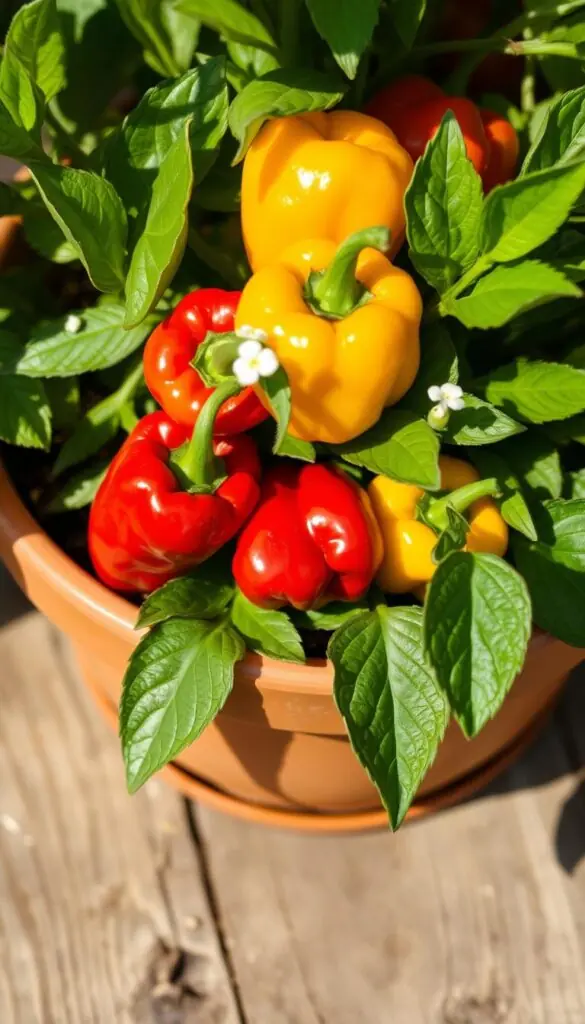
Once your plants flower, use a diluted water-soluble feed every 1–2 weeks. Choose balanced or bloom-leaning formulas. Gentle fish and seaweed blends (for example, a 2-3-1 ratio) add trace minerals and a mild, earthy scent that perks up foliage and boosts bloom set.
Avoid too much nitrogen
High-nitrogen feeds make lush green leaves but fewer blooms and less fruit. Keep doses small during heavy fruit set and feed the soil after watering so nutrients move into the root zone.
- Blend slow-release fertilizer at planting for steady feed.
- Apply diluted liquid feed every 7–14 days while flowering.
- If growth stalls or foliage pales, increase feeding slightly and monitor for a week.
- Pause feeds a week or two before final harvest so fruit ripens evenly.
Keep a simple log of what you feed and when. Your patio microclimate will teach you what your plants like best.
Gentle support: stakes, small cages, and tidy ties
A little tidy support keeps stems upright and fruit from weighing plants down.
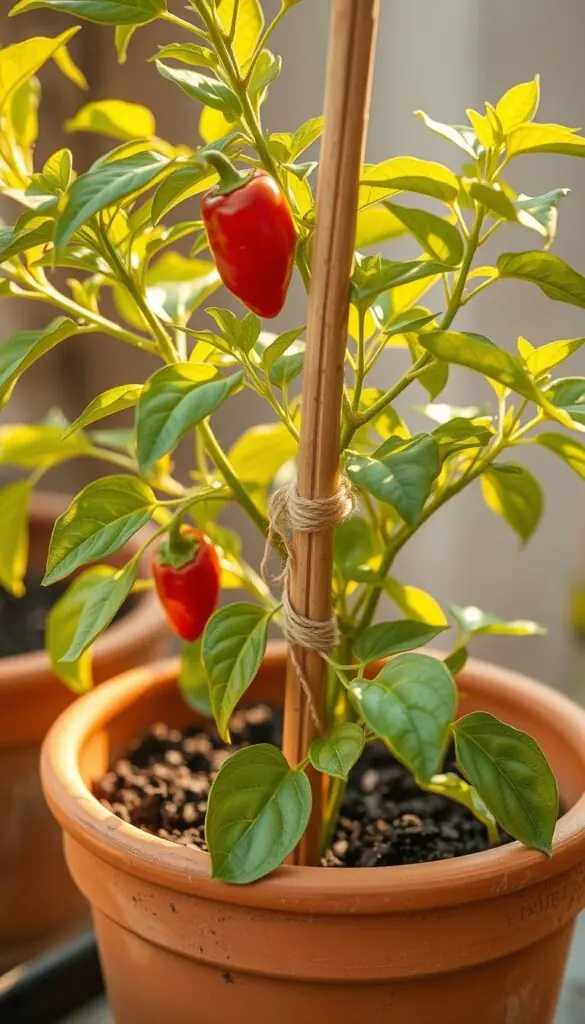
Add support early. Slide a slim bamboo stake or a small, powder-coated mini cage into the pot when plants are young. This simple frame prevents brittle branches from snapping as heavy fruits swell.
Use soft ties, twine, or fabric strips to fasten stems. Tie loosely in a figure-eight so the stem can sway and grow. Picture a soft tie cradling a stem — gentle, secure, and kind to the living tissue.
- Three slim stakes with a single ring make a neat, unobtrusive support around the pot.
- In windy spots, anchor the pot and add a lower tie to steady the main stem.
- Check ties monthly; loosen as stems thicken so you don’t girdle the plant.
Keep the canopy open so light reaches inner branches and fruits color evenly. As harvests stack up, add one extra tie just below the heaviest cluster for added support.
"A neat support system prevents branches from snapping under clusters of peppers."
At season’s end, wash and store bamboo stakes, cages, and ties so they’re ready next spring. With tidy supports, your patio looks cared-for and your pepper plants stay productive all season long.
peppers container garden care through the season
A calm weekly rhythm keeps plants healthy and trouble-free through the season. Short, gentle tasks prevent most problems and help fruit ripen evenly.
Pruning, mulch refresh, and rotation
Each week, spend two minutes at the pot. Pinch small suckers, remove yellow leaves, and tidy ties. The soft brush of leaves under your hand tells you how they feel.
Refresh mulch midseason so soil stays cool and moisture stays steady. Crumble a thin layer of fresh mulch and enjoy the earthy scent.
Rotate the pot a quarter turn weekly for even sun and sturdier stems. Snip the first tiny fruits on young plants to encourage branching and stronger growth.
Wind protection and afternoon shade
During heat spells, move pots to a spot with gentle afternoon shade to protect blossoms. Add a temporary screen or place pots near a wall so wind can’t whip stems.
"A small, steady routine keeps your plants calm and productive."
- Make sure the soil line stays an inch below the rim to catch water.
- Brush the soil surface after heavy rain to break any crust.
- Top-dress lightly with compost midseason for an easy nutrient boost.
Pest and disease watch: simple, organic defenses
A quick sensory sweep—sticky residue, tiny webs, or speckled foliage—tells you when to act. Calm checks once a week keep small issues from growing. This gentle habit fits into any routine and helps your plants stay lush.
Spotting aphids, spider mites, and pepper weevils early
Look under leaves weekly for clusters of aphids or fine webbing from spider mites. Tap stems over white paper—tiny moving specks reveal early mite activity.
- Rinse pests off with a strong stream of water from a spray bottle, then repeat as needed.
- Follow rinsing with insecticidal soap or neem oil if they return; spray in the evening to protect pollinators.
- Pierced buds or small holes in fruit often mean pepper weevils—remove and discard affected parts.
Clean watering habits to prevent fungal issues
Keep leaves dry and aim the water at the soil, not the canopy. Wet foliage invites powdery mildew and other fungal spots.
Ensure pots drain freely—wet feet lead to root rot and weak plants. Clean pruners with alcohol between cuts to avoid spreading disease. If a plant looks stringy or sickly, removing it can protect nearby ones.
"A calm, steady routine and gentle tools—spray bottle, neem oil, clean pruners—are your best defenses."
Troubleshooting growth, flowers, and fruit set
When buds fall or fruit looks sunburned, a few calm steps often bring plants back to health. Start with sensory checks: papery blossoms, pale patches on fruit, or limp stems tell the story.
Blossom drop, sunscald, and slow growth: quick fixes
Blossoms dropping usually means extreme swings in soil moisture or temperature. Check your watering routine first and aim for steady damp, not soggy.
If fruit shows pale, papery patches, this is sunscald. Add 30% shade cloth or drape a light leaf cover during the brightest hours to protect developing fruit.
Slow growth often points to cool nights or hungry roots. Wait for warmer days, then give a light, balanced feed and make sure roots have room to grow.
Cool snaps and frost: moving containers and covering tips
If a late-night frost warning arrives, roll pots indoors, tuck them under a porch, or group them against a warm wall to share heat.
Use breathable frost covers or frost cloth for short spells; they trap a bit of warmth while still letting air move. For borderline nights, clustering containers together helps conserve warmth.
- Blossoms dropping? Keep moisture steady and add light afternoon shade in extreme heat.
- Sunscald visible? Install 30% shade cloth or use leaves to shield fruit.
- Cold night forecast? Move pots inside or cover with breathable frost cloth.
- Leggy or slow plants? Pinch tips to encourage branching once temperatures steady.
- Keep a small rescue kit: shade cloth, clips, and a lightweight breathable cover.
"A small, calm response now saves fruit and keeps the season on track."
Harvesting and storing peppers for peak color and taste
A quiet harvest—sharp pruners, a soft rustle of leaves, and a basket of bright fruit—turns work into pleasure.
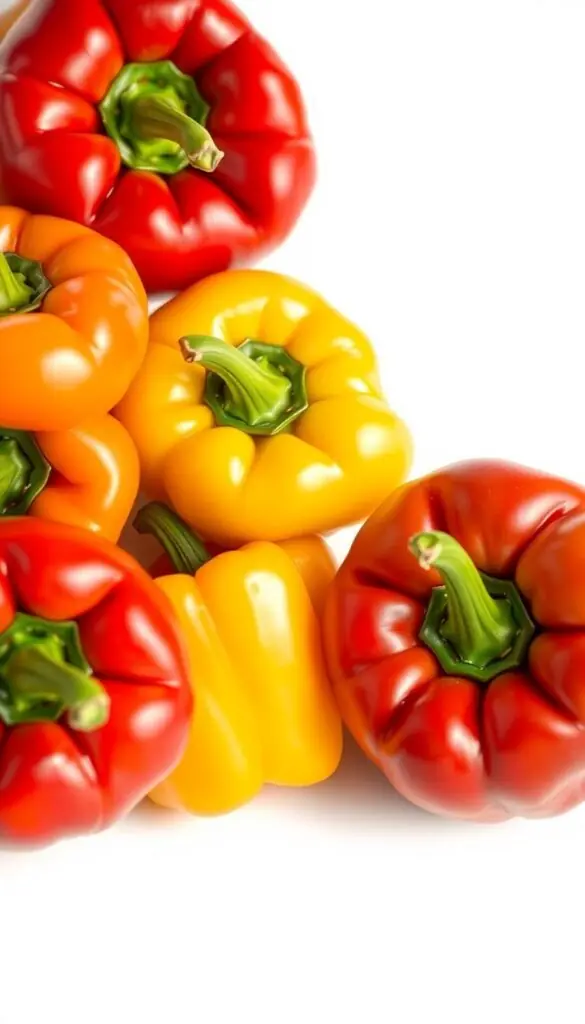
Snip fruit with clean shears or a sharp knife, leaving a short stem to protect the branch and the next flush of flowers. For sweet types, wait for full color; the taste deepens as they ripen. Hot varieties gain heat as they finish coloring—wear gloves and avoid touching your eyes.
Harvest often to encourage steady production. A small midweek pick keeps plants productive and the kitchen supplied. Rinse, dry, and chill fruits in the crisper; use the softest ones first.
"The snap of pruners and the glossy skin of ripe fruit make harvesting a small, joyful ritual."
- Snip with clean tools, leave a short stem to prevent branch damage.
- Let color develop for best flavor; pick hotter types when deeply colored if you want more heat.
- For extras: dry thin-walled chilies, freeze sliced bells, or pickle small green fruit before frost.
| Storage method | Best for | Notes |
|---|---|---|
| Refrigeration | Fresh bells & hot pods | Rinse, dry, store in crisper 1–2 weeks |
| Freezing | Sliced sweet peppers | Blanch or slice, freeze flat in labeled bags |
| Drying/Smoking | Thin-walled chilies | Air-dry or oven-dry; stores long-term |
| Pickling | Small or underripe fruit | Quick brine preserves flavor before frost |
Keep a bowl of mixed colors on the counter for a day—the kitchen will smell like late summer. Note which varieties held the best crunch and flavor so you can replant favorites next year.
Conclusion
A few simple habits each week are enough to carry you through the season with confidence.
With one sunny spot, a roomy pot, and a handful of steady care, you can grow beautiful peppers at home. Set good soil, water evenly, feed lightly, and add gentle support as fruits develop.
Pick a variety that makes you smile. Move pots with the sun and weather, and spend a little time each week checking moisture and ties. Share extras with neighbors and keep short notes so next year is easier.
Take your time, enjoy the process, and savor the warm, fresh rewards of your small garden.
FAQ
How deep and wide should a pot be for bell peppers, jalapeños, or compact varieties?
Aim for at least 12 inches deep and 12–14 inches wide for a single bell pepper. Jalapeños and most compact types do well in 10–12 inch pots. Give larger bells 16 inches or more when you want bigger yields. The key is room for roots and a roomy soil volume that holds moisture without staying soggy.
Which container materials work best: plastic, wood, metal, fabric, or self-watering?
Each has pros. Plastic is lightweight and retains moisture; wood looks great and breathes but can rot; metal heats up fast and needs insulation; fabric bags offer excellent drainage and air pruning; self-watering boxes reduce daily watering chores and cut stress during heat. Choose what fits your sun exposure, budget, and how often you can check plants.
How do I prevent soggy roots and tipped pots in wind?
Ensure good drainage by using pots with multiple holes and a free-draining mix. Add a saucer or tray to catch runoff, but empty excess water. For wind, pick heavier containers, use pot feet to anchor, or group pots together and place near a wall or railing for shelter.
What are reliable sweet and compact pepper varieties for pots?
Look for compact, container-friendly sweets such as Carmen, Mini Bell, California Wonder, and Orange Blaze. These give attractive fruit without huge plants and fit well on patios and balconies.
Which hot and compact varieties are good for small spaces?
Try Early Jalapeño for dependable heat, Bird’s Eye for Thai flavor, Cayennetta for long fruits, and Emerald Fire for color and compact growth. They’re productive and suit tight spots.
Should I choose heirloom or hybrid seeds for pots?
Heirlooms offer unique flavor and seed saving; hybrids often bring higher yield, uniformity, and disease resistance. For a small patio, hybrids can reduce problems; if flavor and saving seed matter, pick heirlooms.
What kind of potting mix and pH do peppers prefer?
Use a fluffy, well-draining mix with plenty of organic matter plus perlite or vermiculite. Target pH near 6.0–6.8. Adjust low pH with lime and high pH with sulfur as needed after a soil test.
How do I transplant a nursery pepper into a pot?
Gently remove the plant, keeping the root ball intact. Plant slightly deeper than it sat in the nursery pot, firm the mix around roots, and water deeply to settle soil. Space multiple plants at least 10–12 inches apart in larger planters.
How much sun and heat do potted pepper plants need?
Most types need 6–8 hours of direct sun daily and warm daytime temps between 70–85°F. Provide afternoon shade during extreme heat to prevent sunscald and keep soil from drying out too fast.
When should I start seeds indoors and when can I move plants outside?
Start seeds indoors 8–10 weeks before your last expected frost. Harden seedlings off gradually and move outdoors after nights consistently stay above 60°F. Wait until the soil and air warm to avoid stunting growth.
How often should I water potted pepper plants?
Water deeply when the top inch of mix feels dry. Frequency varies with pot size, weather, and material, but typically every 2–4 days in warm weather. Mulch the surface to conserve moisture and reduce feeding of blossom-end rot.
Are self-watering pots worth it for peppers?
Yes, especially if you travel or face hot spells. They keep moisture steady, reduce stress, and help fruit set. Still check nutrient levels and clean reservoirs to avoid salt buildup.
How and when should I fertilize peppers in pots?
Use a balanced slow-release at planting, then switch to a low-to-moderate nitrogen liquid feed every 2–3 weeks once flowering starts. Too much nitrogen favors leaves over fruit; boost phosphorus and potassium to support blossoms and peppers.
Do I need to stake or cage pepper plants in pots?
Light staking or a small cage helps support heavy fruit and prevents branches from breaking. Ties should be soft and loose so stems can move a bit in the breeze, which strengthens plants.
What routine care keeps potted pepper plants healthy all season?
Prune small suckers to direct energy, refresh mulch and top-dress with compost midseason, rotate pots for even sun, and watch for signs of stress after heat waves. Replace tired soil between seasons for best results.
How do I spot and treat common pests and diseases organically?
Inspect leaves often for aphids, spider mites, and signs of pepper weevils. Blast small infestations with water, use insecticidal soap or neem, and encourage beneficial insects. Keep watering consistent and avoid wet foliage to reduce fungal issues.
My plants drop flowers or fail to set fruit — what helps?
Blossom drop often follows heat, irregular water, or poor pollination. Keep temperatures moderate, water evenly, and hand-pollinate by gently tapping flowers. Provide shade during heat spikes and steady fertilizer for steady set.
How do I protect potted peppers from cool snaps and frost?
Move pots indoors, into a garage, or to a sheltered spot when frost threatens. Use frost cloths or a plastic tote as a temporary cover for small containers. Warmer microclimates like south-facing walls help extend the season.
When is the best time to harvest for peak flavor and color?
Harvest peppers when they reach full size and color for their variety; many gain sweetness and heat as they ripen. Cutting stems with scissors prevents damage. Frequent picking encourages more fruit.
How should I store harvested peppers for short- and long-term use?
For short-term, refrigerate unwashed in a crisper drawer for up to two weeks. For longer storage, roast and freeze, dry hot varieties, or pickle and jar to preserve flavor through the off-season.