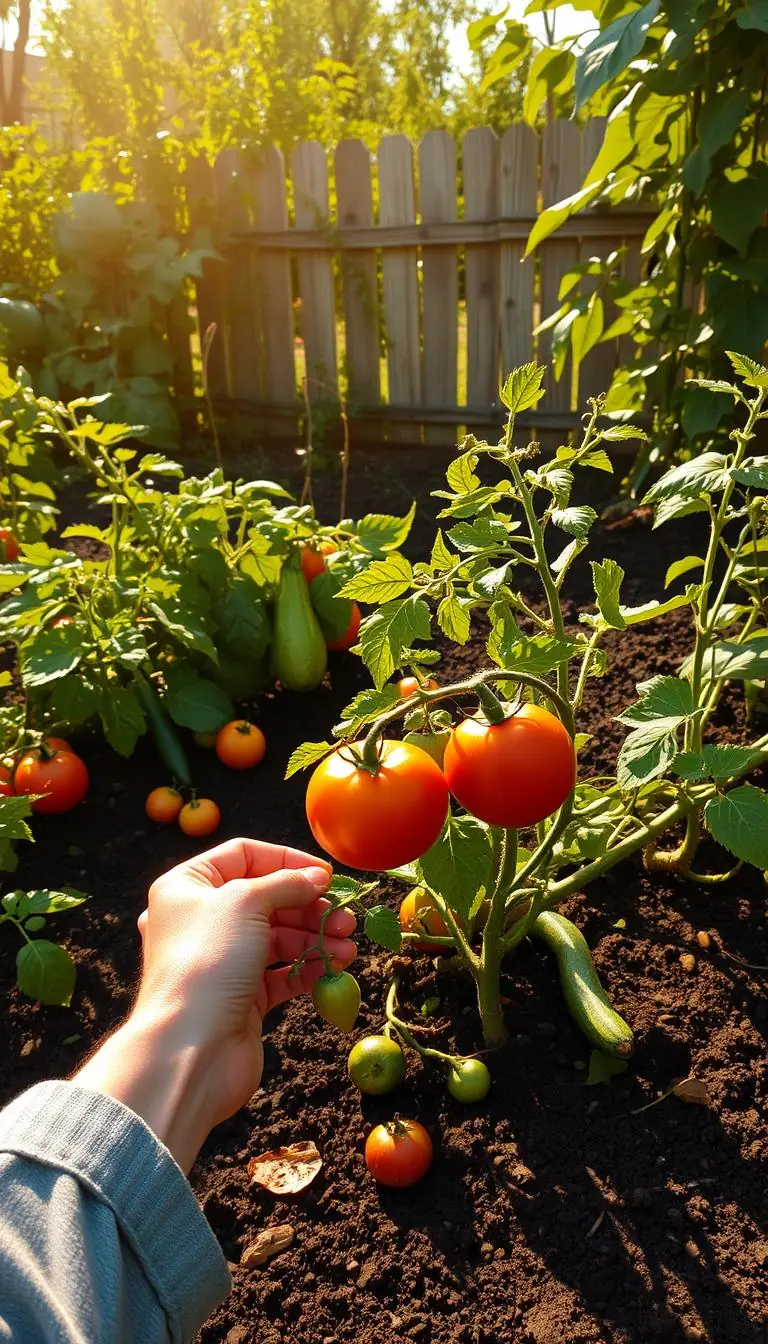
Imagine sun-warmed leaves brushing the window while crisp, clean fruit hangs within easy reach. Have you ever wished your kitchen garden could be both tidy and bountiful?
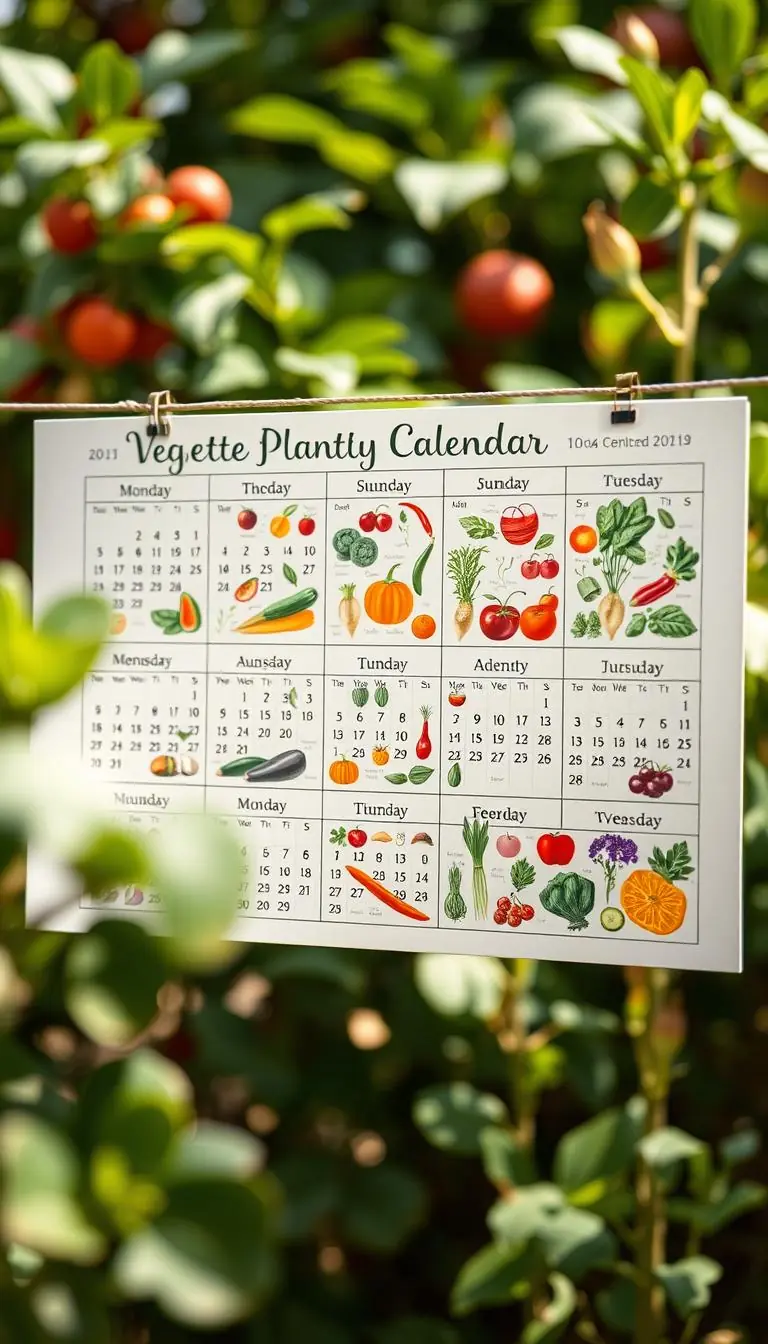
We’ll show you a calm, friendly walkthrough so you can grow cucumbers with confidence and need less space. Start by waiting until soil warms above 60°F, usually two weeks after the last frost.
Simple structures work best: train vines up a sturdy cattle panel arch, weave them along a fence, or build a basic wood-and-string support. Plant 2–3 seeds an inch deep and space them about 12 inches apart on the support.
Keep moisture steady with a soaker hose and mulch. Harvest at 6–8 inches and pick often to encourage more fruit. About 30 days before frost, pinch flowers so remaining fruit can ripen.
Key Takeaways
- Vertical growing saves space and keeps fruit cleaner for easier harvest.
- Use cattle panels, fences, or simple wood-and-string supports to fit your garden.
- Sow after soil warms >60°F; plant seeds 1 inch deep and 12 inches apart.
- Maintain steady root moisture, mulch, and harvest at 6–8 inches.
- Pinch flowers about 30 days before frost to help fruit mature.
Why grow cucumbers vertically: beauty, better harvests, and less space
Growing vines upward turns a small plot into a lush, sunlit wall that feels both tidy and abundant. This way of gardening blends form and function. You get more harvest in less area and a garden that invites you to stroll and pick.
Advantages of growing in a kitchen garden include better spacing, healthier plants, and higher yields. Vines trained up supports let you plant closer, saving room for herbs and flowers beneath.
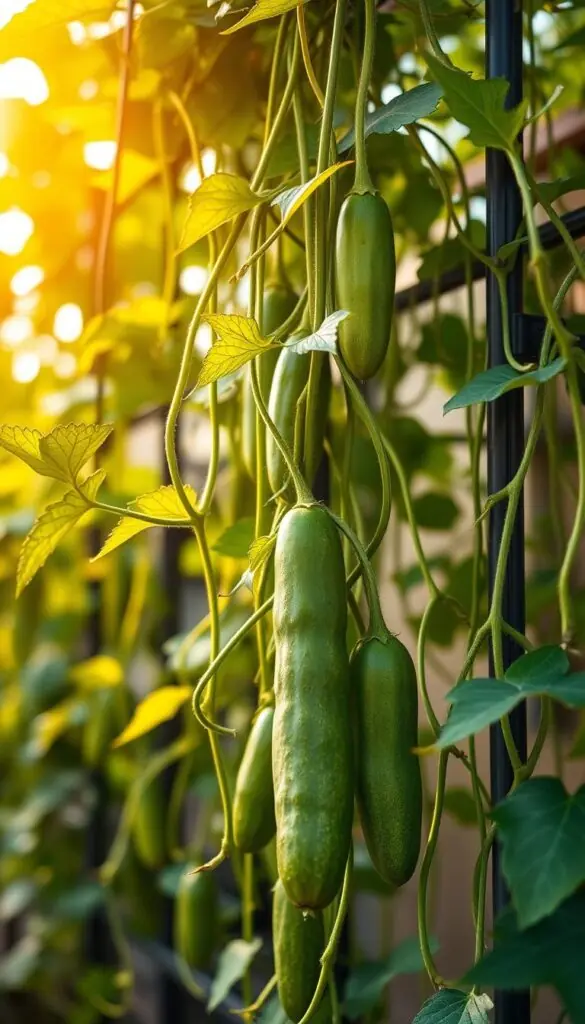
Advantages of growing cucumbers vertically in a kitchen garden
- Fruit hangs clean and straight, reducing soil contact and pale underside spots.
- Air flows freely, drying leaves faster and lowering fungal risks.
- Raised fruits are easier to spot and pick, so you harvest at peak tenderness.
Sensory perks: cleaner, straighter fruits and easier picking
Imagine sunlit leaves forming a green screen while crisp fruits dangle within reach. You water the root zone, not the foliage, so the leaves stay drier and healthier.
"A simple frame can turn a tight corner into a productive wall of green that looks as good as it performs."
| Benefit | What you see | Practical result |
|---|---|---|
| Clean fruits | Hanging, straight fruit | Less washing, fewer white spots |
| Better airflow | Open foliage | Lower disease risk |
| Space savings | Vertical growth | Room for herbs, more plants per bed |
Quick tips: give vines 12 inches between plants on supports, aim for good sun and airflow, and lift fruits to discourage crawling pests. Whether you choose ready-made frames or DIY cucumber trellises, this way of gardening makes small spaces sing.
Plan your space: where vines will climb and how high they’ll go
Begin planning with a clear spot in mind: plenty of sun, easy access, and room for tall vines. Use a tape measure and stakes to map the line where your support will sit.
Site selection: full sun, airflow, and room for 5–7 foot growth
Pick a sunny place that gets 6–8 hours of direct light. Warm afternoon sun helps plants grow strong and keeps fruit flavorful.
Plan for vines to reach about 5–7 feet. Measure so there is a clear path to walk beside or under the support.
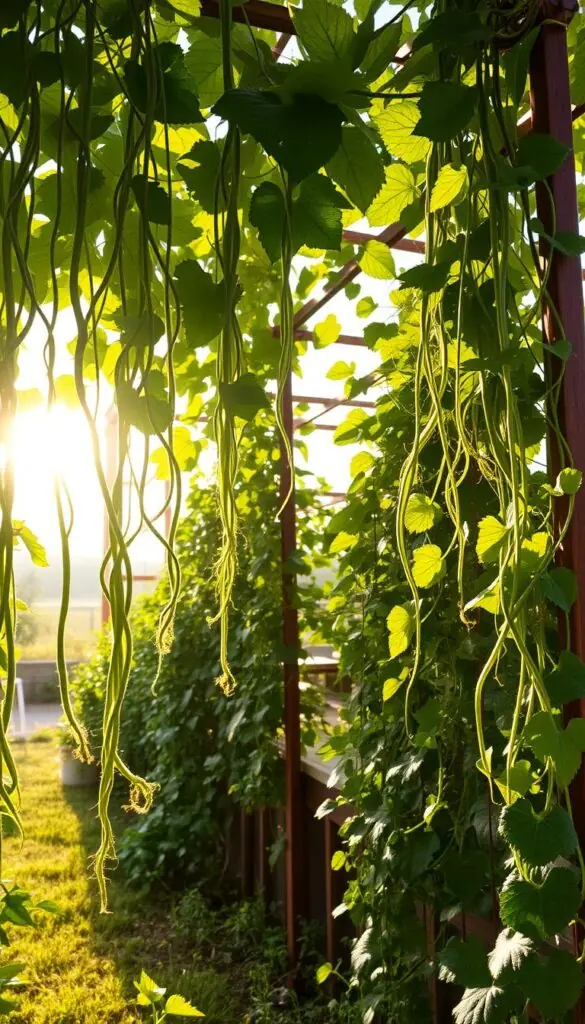
- Give the setup breathing room; a breezy pathway improves airflow and makes daily checks easy.
- If using a cattle panel, note a 16-foot panel can arch between raised beds spaced ~3 feet apart to create a leafy tunnel.
- Check soil drainage after rain—plants dislike soggy feet but need steady moisture.
- Mark holes every 12 inches along the line to prevent crowding so plants climb instead of tangling at the base.
- Watch frost dates and wait the recommended days after the last frost before planting.
"Measure, leave room to move, and let sunlight and breeze do the rest."
Choosing a cucumber trellis
Choosing the right support makes your garden neater and your plants happier. Start by thinking about durability, storage, and how much help you want during the season.
Sturdy options
- Cattle panels: Farm-supply panels are tough, weather-ready, and hold heavy vines well. They have fist-sized openings that make weaving easy.
- A-frame trellises: Ready-made A-frames fold like a ladder, give good height, and store flat when winter comes.
- Garden fences: An existing fence can double as a support—plant at the base and train stems upward. Plan a cleanup at season end.
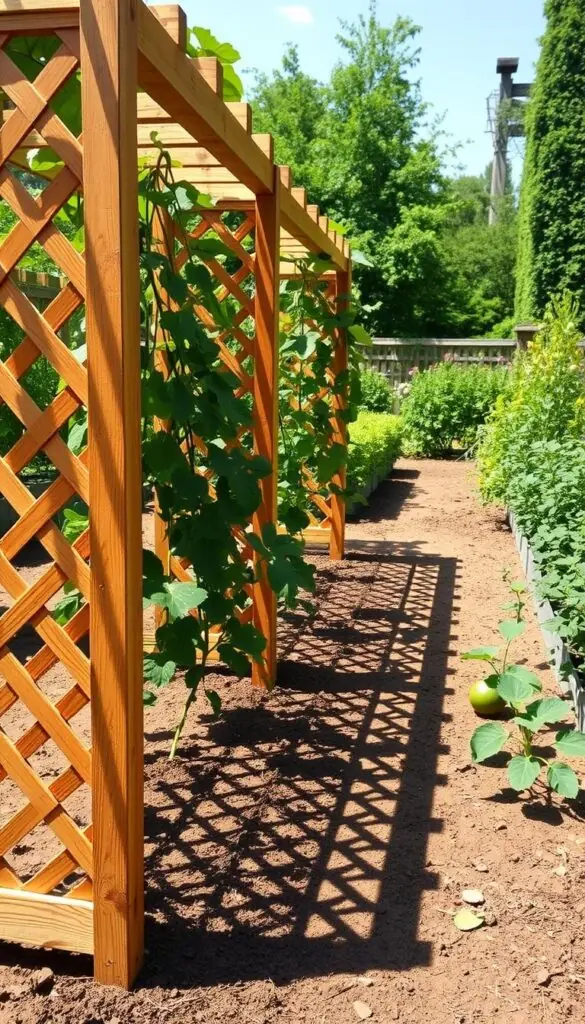
Budget-friendly DIY
You can build simple frames with wood and jute twine, fashion bamboo teepees, or use hardware and chicken wire. These options are easy to source at big-box stores or local garden centers.
What lasts versus what to replace
Galvanized wire panels or powder-coated metal frames will serve you for years. Natural twine and jute ties may need yearly replacement, but they’re cheap and gentle on vines.
"Choose a structure that fits your space—aim for 5–7 feet so you can harvest without a stool."
- Think about storage: A-frames fold flat; panels lean against a shed.
- One strong support can share load with tomatoes nearby—just keep good airflow between crops.
- If soil is shallow or rocky, anchor posts into raised beds or use post anchors for stability.
DIY trellis builds that fit your garden
Make a simple build that suits your bed or creates a cool green tunnel. You can use basic tools — a drill, screws, pruners — and common lumber to shape supports that last.
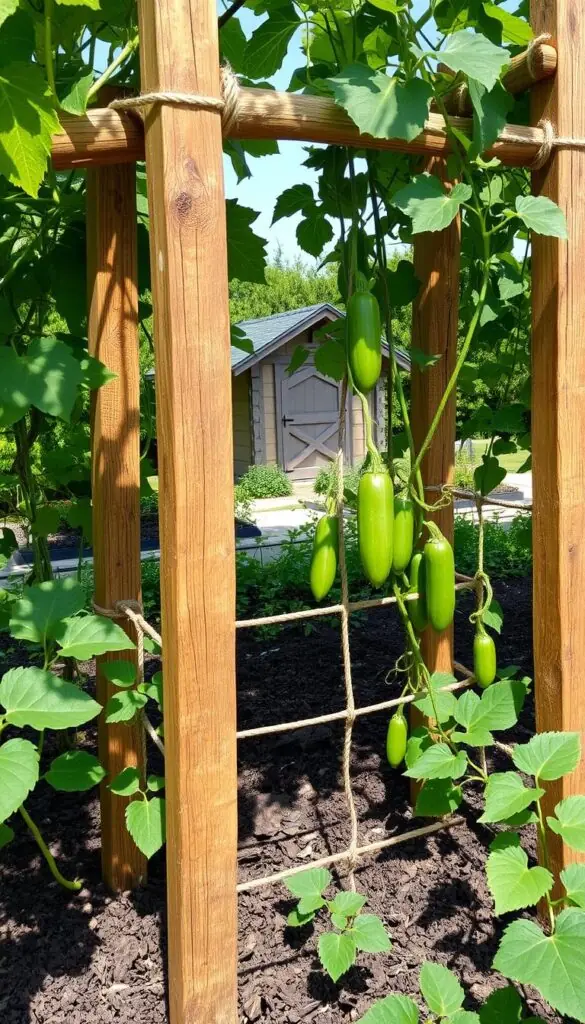
Simple wood-and-string frame for raised beds or ground
Start with two upright posts about 5 feet tall. Attach a top crosspiece roughly 4 feet long and a bottom board about 2 feet long.
Pre-drill holes, screw posts to the raised bed corners or sink them into anchors if you build on the ground. Lace vertical and horizontal string or thin wire for a climbing grid.
Tip: jute twine grips tendrils and gives a natural look, but replace it each season. Cap and sand post ends so ties and sleeves won’t snag.
Arch or tunnel with panels for a productive pathway
Bend a 16-foot panel between parallel beds about 3 feet apart to form a leafy arch. Fasten the panel to each side with heavy staples or zip ties and feel the top for steadiness before planting.
Keep openings hand-sized so you can guide young plants without pinching stems. A taut line should give a soft twang when tightened — not a bite into the vine.
"A steady frame that doesn’t sway saves repair time and keeps vines climbing happily."
- Pre-drill screw holes to avoid splitting lumber.
- Sink uprights or use post anchors so the base won’t wiggle in wind.
- Add a few soft ties near the top as vines reach higher to prevent flopping.
Soil, warmth, and timing: set your cucumber plants up for success
Warm soil and the right timing set the stage for a healthy, steady harvest. Good gardening starts with a quick check of the ground and the calendar.
Soil temp and frost
Use a simple soil thermometer to check the top 2–3 inches. Wait until readings stay above 60°F and about 14 days after your last frost date before you plant.
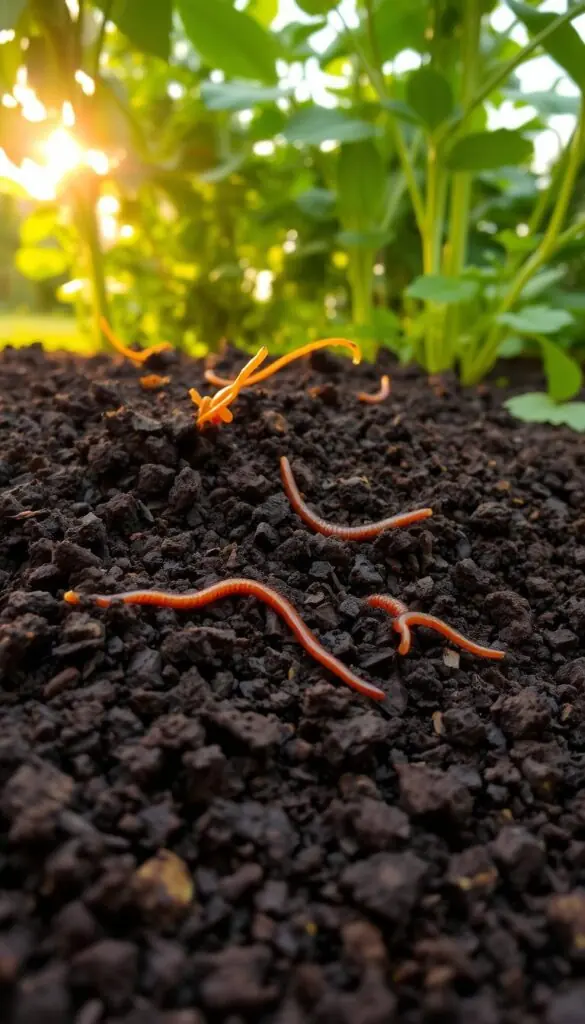
Rich soil and mulch
Work plenty of compost into the bed until the soil feels loose and springy in your hand. This gives roots food and helps retain moisture through the year.
Lay 2–3 inches of mulch—straw, shredded bark, or leaf compost—to keep roots cool and reduce splash that spreads disease.
Watering and simple tools
Water at the base in the morning using a soaker hose or a hose timer. Aim for steady moisture; check the top inch so it feels slightly moist, not dusty-dry.
- Circle your local frost date and add about 14 days to be safe.
- Feed lightly with a balanced fertilizer when the first small fruits appear.
- Keep tools simple: a hand fork for mixing compost, pruners, and a soil thermometer.
"Too early planting into cold soil slows growth; if a cold snap appears, drape a row cover overnight to protect tender shoots."
Seeds, spacing, and varieties that climb well
Feel the warm soil between your fingers and press plump seeds gently into place for a confident start. Plant when the topsoil reads warm and springy.
Direct sowing: press 2–3 seeds about an inch deep and cover lightly so moisture stays close. Water the row gently after sowing so seeds settle without washing out of place.

How far apart to plant
Place sowing holes 12 inches apart along the trellis to keep airflow steady and reduce mildew pressure.
If you plant on the ground without support, widen spacing to 18–36 inches so vines can sprawl without smothering neighbors.
Varieties and thinning
Choose vining types for vertical gardens; skip “Bush” varieties like Bush Champion when you plan to climb. Two dependable vining choices are ‘Sweet Success’ and ‘Tasty Green’.
- Thin to the strongest seedling at each spot once true leaves appear.
- If starting indoors, use biodegradable pots and disturb roots as little as possible.
- Label each spot and keep a few extra seeds for later sowings.
"Thin early, space smart, and pick varieties that want to climb—your plants will reward you with cleaner, more abundant fruit."
Train cucumber vines up the trellis without stress
Start guiding young stems early so they grow upward with ease instead of sprawling. A gentle touch and a clear path make climbing feel natural to the plants.
Begin when each stem is about a foot long. Use two fingers to weave a vine once or twice through a nearby opening in the panels or through a vertical line of wire. You’ll hear the soft snap as a tendril curls and feel the light hold as it grips.
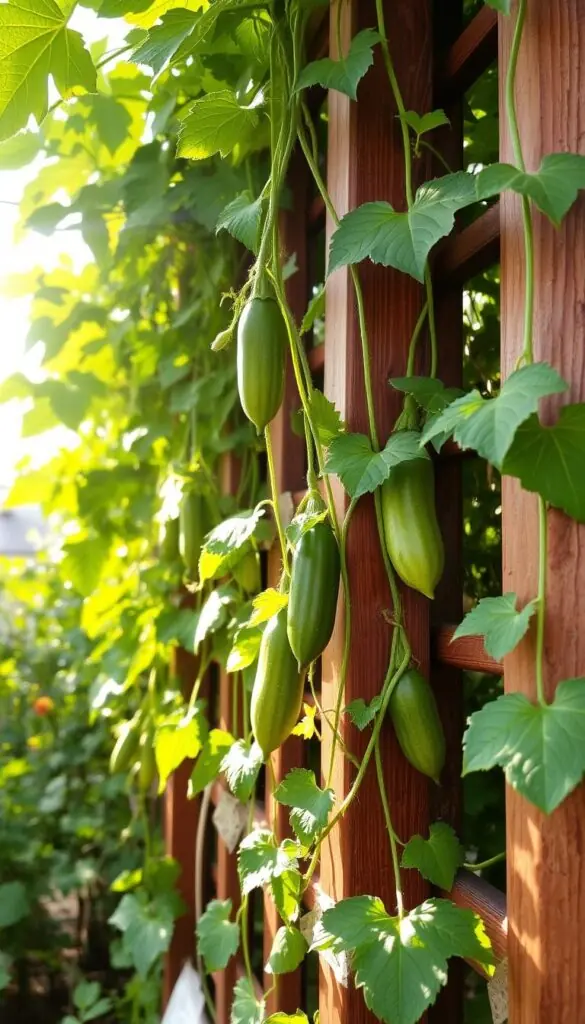
Weaving, ties, and morning checks
Weave lightly: guide stems toward the nearest opening; tendrils will take over so you don’t tie every inch.
- Add soft ties near the top where fruit adds weight; stretchy fabric or soft twine reduces rubbing.
- Check plants each few mornings and tuck any wayward growth back onto the support.
- Water at the base before you work so leaves stay dry and less prone to spotting.
"A gentle tuck and a soft tie now keeps a leafy wall that supports heavy fruit later."
| Step | When | Why |
|---|---|---|
| Start weaving | Stem ~1 foot | Encourages upward growth |
| Add soft ties | When weight increases | Prevents rubbing and breakage |
| Morning checks | Every 2–3 days | Keeps vines on track, avoids pathway tangles |
Watering and feeding for vigorous vines and steady fruit
Morning watering, light feeding, and a cushion of mulch set the quiet pace your plants prefer.
Run a soaker hose along the row and water in the morning until the top few inches of soil feel evenly moist but not soggy. This keeps leaves dry and lowers fungal risk.
Keep irrigation at the base. Aim for short, frequent sessions rather than long, deep drenchings. In hot spells, check plants every few days; if leaves flag at midday, water earlier the next morning.
Feed at first fruit set
When you spot the first baby fruits, feed lightly with a balanced fertilizer. This helps flowers keep forming and supports continuous production.
Avoid heavy nitrogen early on. Too much will push leaf growth and reduce blossoms and fruit.
"Mulch that smells like fresh wood chips or straw keeps roots cool and moisture steady."
- Mulch 2–3 inches deep with straw, shredded leaves, or chips to reduce weeds and lock in moisture.
- Use a simple hose timer if you need consistent sessions; adjust as weather changes.
- Skip irrigation when storms are forecast to avoid nutrient washout.
| Action | Timing | Why |
|---|---|---|
| Soaker hose at base | Each morning, short sessions | Even moisture, dry foliage, less disease |
| Light feeding | When small fruits appear | Maintains blooms and steady yield |
| Mulch refresh | Monthly or in hot spells | Cooler soil, fewer weeds, steady moisture |
Keep a small notebook with dates you watered and fed. Over time you’ll find the right rhythm for your kitchen garden and enjoy steady harvests of fresh cucumbers and other fruits.
Healthier plants: airflow, cleanliness, and fewer pests
Raising vines off the soil keeps fruits cleaner and helps your whole garden stay healthier. A tidy vertical habit gives leaves room to dry in a light breeze and makes problems easier to spot.
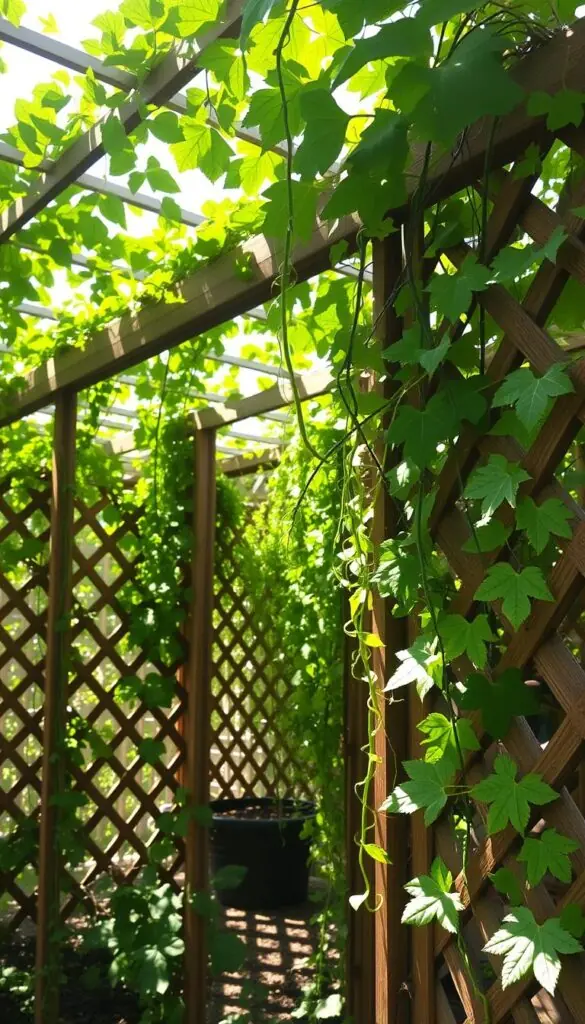
- Lifting vines onto trellises keeps foliage airy, so morning dew dries fast and leaf spots are less likely to take hold.
- Fruit hangs clean and gleaming instead of resting on damp ground, which means less rot and fewer slug bites.
- With fruit at eye level, you won’t miss cucumbers that would otherwise hide and grow past peak tenderness.
- Water at the stem to keep leaves dry; it’s a simple, effective way to lower fungal pressure without extra sprays.
Keep spacing open on the support and remove yellowed lower leaves as the season goes on. Check undersides of leaves while you harvest; catching pests early is the most effective defense.
"A tidy support is the best way to grow healthier plants with less fuss and more reliable fruits each week."
Harvesting cucumbers at the perfect time
Walk your bed in the cool of morning and you’ll know when to pick. A short daily check keeps harvests regular and plants happy.
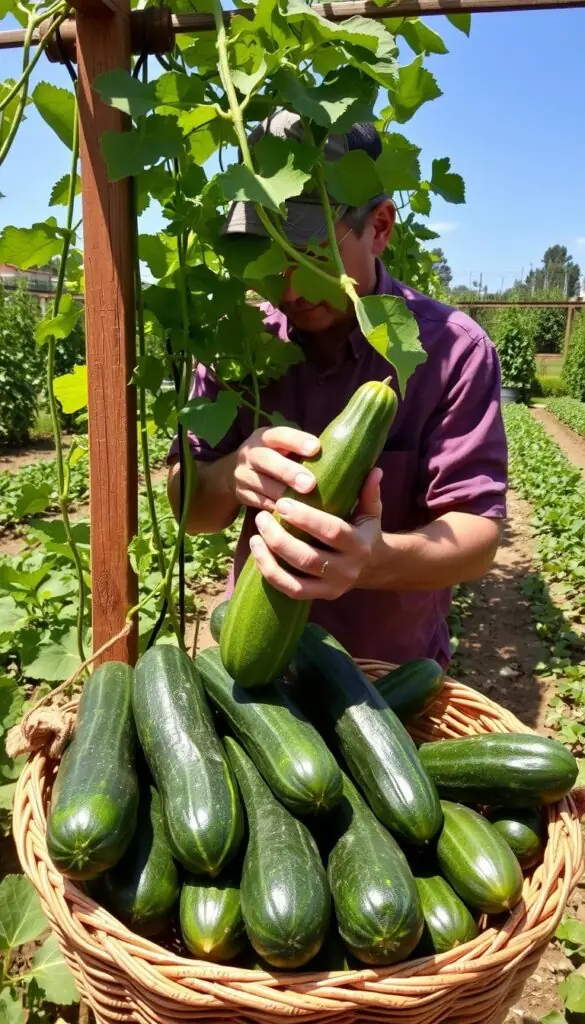
Pick at 6–8 inches for best texture and taste. When a fruit reaches about an inch thick and 6–8 inches long, it feels firm and bright. The stem should give a clean snap when you cut or pinch it free.
Pick often to keep vines producing
Check vines every day or two. Use pruners or pinch the stem cleanly to avoid tearing the plant. Morning picks taste extra cool and show a fresh, green scent.
Late-season tip: help fruit ripen before frost
Count back about 30 days from your average first frost day and start removing new flowers. That simple step directs energy to existing fruits so they finish well.
- Keep a small basket nearby and gather as you stroll.
- Sort by size; small ones are perfect for snacks, larger for slicing or pickles.
- If a cucumber grows oversized, remove it promptly to reset the plant’s rhythm.
"A steady, gentle harvest is the secret to steady summer fruits."
Troubleshooting and quick tips to avoid common mistakes
A few small signals usually point to an easy fix. Look for wilt at midday, pale new leaves, or soil that feels cool on your wrist. These tell you what the roots are missing.
Overcrowding, cold soil, and under-watering signs to watch
If plants look stalled, check the ground temperature. Soil under 60°F slows roots and can yellow fresh growth.
Wilting by midday that doesn’t recover in the evening often means uneven watering or crowded roots. Thin or improve irrigation.
Leaves speckled with white signal poor airflow. Remove a few side shoots and open the face of the panels. Bitterness usually traces to drought stress—add mulch and steady water.
End-of-season cleanup: clearing vines off panels and fences
At season’s end, snip stems at the base and roll vines off the panel from bottom to top. Compost healthy foliage and toss diseased bits.
- Brush soil from hardware, tighten any loose post brackets, and store lightweight frames away from winter winds.
- Replace worn string each year; cattle panels and metal parts can last for years with a quick scrub.
- If vines wander onto neighboring tomatoes, clip or reweave early before stems toughen.
"A tidy cleanup now saves you a lot of time and trouble next spring."
Keep a short log of what worked and what didn’t. Over the year, this becomes your best guide for more confident gardening and smarter use of space.
Conclusion
A simple frame, gentle routines, and warm soil are all it takes to make a small bed sing.
Choose a sturdy option — an A-frame or a cattle panel arch — and train vines softly as they climb. A well-set cucumber trellis saves space and keeps fruit clean.
With steady moisture, timely harvests at 6–8 inches, and a few morning checks, you’ll enjoy steady yields. Growing cucumbers vertically turns a narrow plot into a lively kitchen garden that hums with pollinators.
Share picks with your family, tuck notes in a notebook, and tidy the frame for next year. You’ve got this—start small, build what you can, and relish slow, green moments in your garden.
FAQ
How does growing vines vertically save space in a kitchen garden?
Training plants up a support frees ground area for other crops, increases light exposure, and lets you fit more productive rows in the same bed. Vertical growing also improves airflow, which helps reduce disease and keeps fruit cleaner and straighter for easier picking.
What should I look for when choosing a structure for climbing vines?
Pick a sturdy frame that suits your garden size and budget. Heavy-duty cattle panels and metal garden fences give long-lasting support for tall vines, while A-frames and simple wood-and-string frames are flexible and affordable. Choose materials that resist rot or can be stored between seasons.
When is the best time to set plants out or sow seeds for warm-season vines?
Wait until soil consistently reaches about 60°F and at least two weeks after the last frost. If starting indoors, transplant when seedlings have true leaves and the weather is steadier. Proper timing helps avoid cold stress that stunts growth.
How far apart should I plant seeds or seedlings when using a vertical support?
Space plants roughly 12 inches apart along the base of a vertical support to give each vine room to climb and produce. If you’re planting in-ground without a trellis, give wider spacing so runners don’t tangle and compete for light.
What type of varieties work best for growing up a support?
Choose vining or long-rolling types rather than compact bush varieties. Vining types have tendrils and growth habits suited to vertical training and will give higher yields in limited space.
How do I train young vines to climb without damaging them?
Gently weave new growth through wire or twine, and loosely tie long stems with soft garden twine or strips of cloth. Encourage tendrils to catch the support, but avoid tight knots that can girdle stems as they thicken.
What watering routine keeps climbing plants productive?
Keep soil evenly moist with deep, infrequent watering—soaker hoses work well. Water at the base to avoid wetting foliage, which reduces disease risk, and mulch to retain moisture and moderate soil temperature.
When should I feed plants to encourage steady fruiting?
Apply a balanced fertilizer at planting, then side-dress or feed again when the first fruits set. A light, regular feed during peak growth supports continuous production without excessive leafy growth at the expense of fruit.
How does vertical growing reduce common problems like rot or pest damage?
Elevating vines improves airflow and keeps fruit off damp soil, cutting down on rot and fungal spots. Fruits are easier to inspect and pick, so you’re less likely to miss overripe or infested specimens and can respond faster to pests.
What’s the best way to harvest for continued productivity?
Pick fruits at their recommended size—often around 6–8 inches for many varieties—and harvest frequently. Regular picking signals plants to produce more and prevents oversized fruits from draining plant energy.
How do I prepare supports and plants at season’s end?
Remove old vines and debris to reduce overwintering pests and disease. Clean and store reusable panels or supports, and compost healthy plant material. Replace any rotted or damaged elements before the next season.
Can I build an effective support on a tight budget?
Yes. Use bamboo poles, reclaimed wood, jute twine, or wire panels for a low-cost solution. Even simple frames over raised beds give good results; focus on stability so the structure holds wind and heavy fruit.
What signs show plants are stressed or overcrowded on a support?
Look for yellowing lower leaves, slow new growth, sparse flowering, or lots of small fruit drop. These can mean crowding, poor soil warmth, or inconsistent watering. Prune or thin vines and adjust care to restore vigor.