Imagine the warm scent of basil rising from a small pot on your sill as you chop dinner. Have you noticed how a few green leaves can lift the flavor of simple dishes and make a kitchen feel alive?
We’ll show you calm, simple steps to create a tiny herb garden in your home, whether you have a sunny window or a soft grow light. You only need a pot with a saucer, loose soil, and attention to good drainage.
Start small. Keep each plant in its own space so care stays easy and forgiving. Over a short time you’ll enjoy fresh herbs for cooking and food that tastes brighter.
Key Takeaways
- Set up a small herb garden with basic tools you already have.
- Place each plant by a window or use a clip-on light if light is limited.
- Use loose soil and make sure pots drain well to avoid soggy roots.
- Start with easy picks like basil for quick wins and bright flavor.
- Short, regular checks beat long, infrequent chores—your kitchen will stay fragrant and useful for cooking.
Your Indoor Herb Garden at a Glance: Simple, Beautiful, and Doable
Start with a simple snapshot: bright pots, fresh scent, and easy care.
Think of your small garden as a set of clear steps. Place containers where they get steady sun—ideally a south-facing window in winter or a bright window year-round. Rotate the pots every few days so growth stays even and bushy.
Use a lightweight soilless mix with perlite for air and good drainage. Choose containers with drainage holes so roots stay healthy. Keep each herb in its own pot unless needs match, which makes watering and airflow simpler.
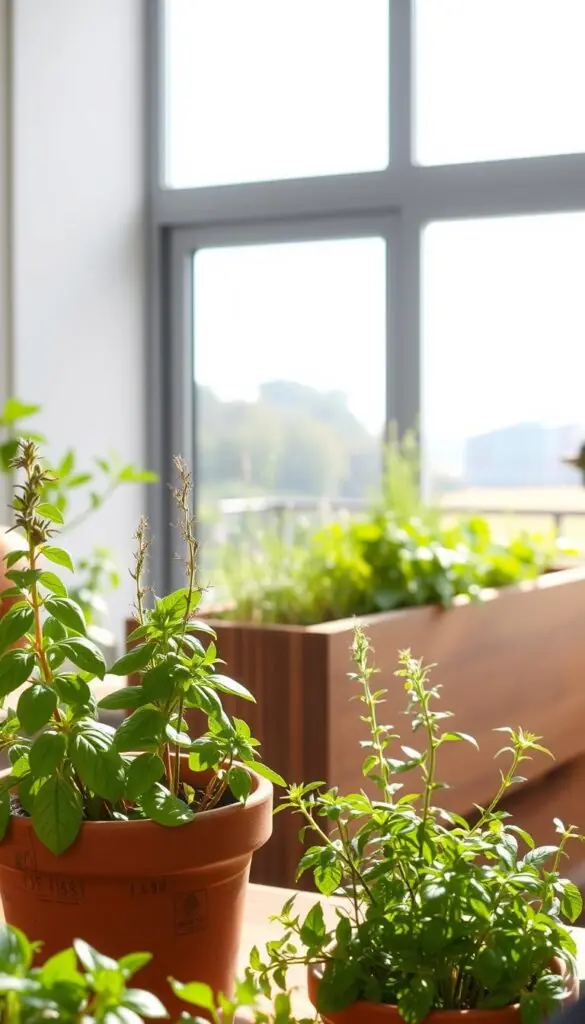
Water when the top inch of soil feels dry; let excess drip into a saucer and empty it. Feed lightly every 4–6 weeks at half strength. Prune a little each week—those small snips add bright flavor to your kitchen and encourage branching.
If natural light is limited, add a clip-on grow lamp and a timer. Check light, moisture, and airflow once a week and your plants will reward you with lush, fragrant leaves and easy joy.
Lighting That Works: Windows, Grow Lights, and “No-Sun” Solutions
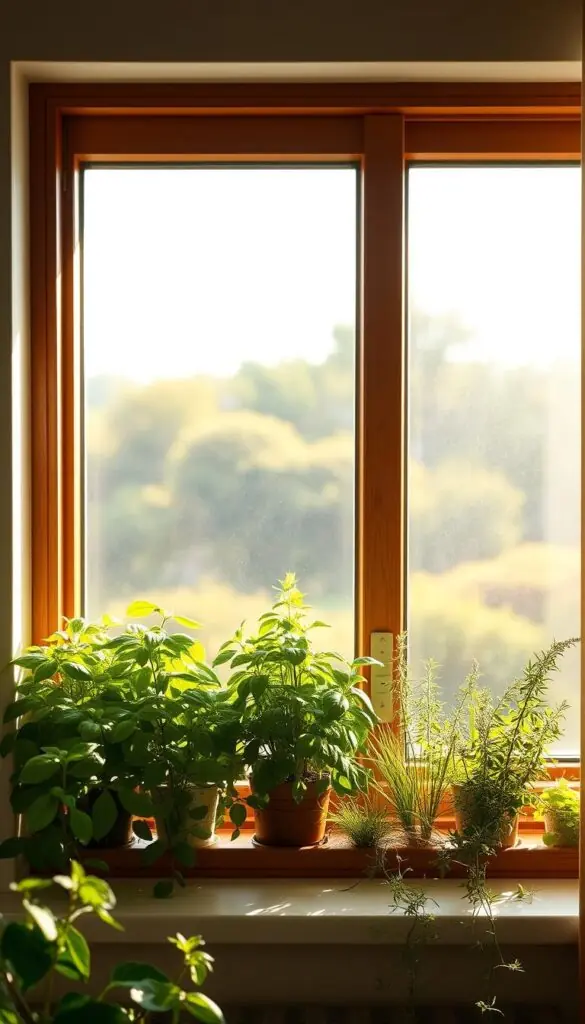
Bright placement and a simple lamp can turn a dim corner into a fragrant spot. Choose a good window first. A south-facing window gives the best winter sun for warm-loving basil. A west-facing window suits cooler-tolerant varieties.
Choose the right window
Aim for about six hours of direct sun when possible. Use a south-facing window for sun-loving plants in cold months. Move more tolerant types closer to a west-facing window.
Grow light basics
If sun is short, add a clip-on or under-cabinet fixture. Position bulbs 6–12 inches above the canopy. Run cool-white fluorescents or LED bars for 14–16 hours on a timer.
Quick checks and signs
Rotate pots a quarter turn every few days for even growth. Watch for smaller leaves, weak aroma, or leggy stems — these mean your plant wants more light.
- Tip: Start with moderate plants like thyme while you learn your light patterns.
- Tip: Keep glass clean and curtains open during peak hours to catch extra sun.
Containers and Drainage: Pots, Saucers, and Good Airflow
Choose the right home for each plant—your pots set the stage for healthy growth.
Pick the right size and holes
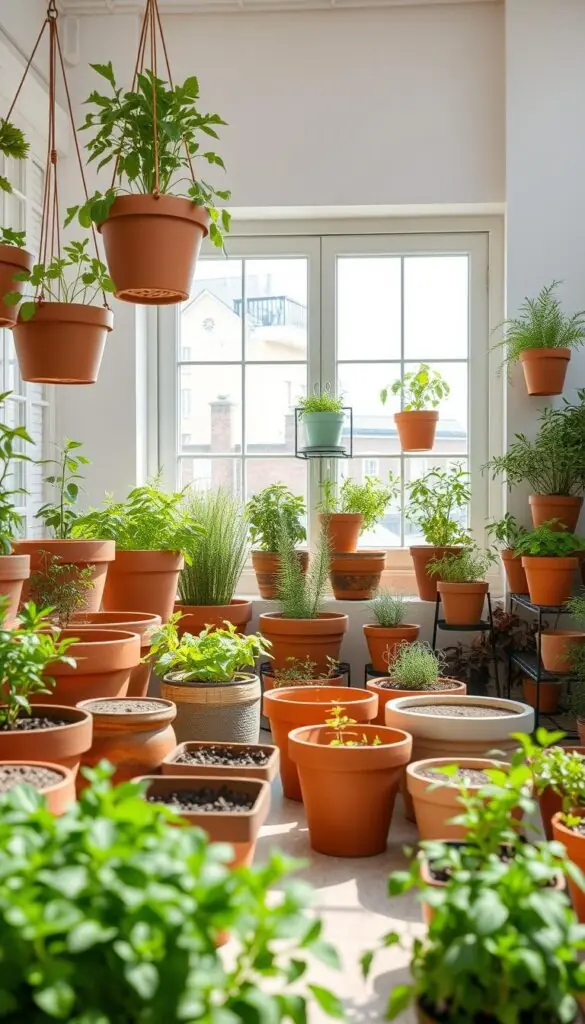
Always choose containers with drainage holes so excess water can escape. Most compact herbs do well in 6-inch pots; deep-rooted types need taller containers. Leave an inch or two around the root ball for steady growth.
Clay, plastic, or glazed?
Clay breathes and dries faster — helpful if you tend to overwater. Plastic and glazed pots hold moisture longer, which can be useful in warm rooms.
Remember: clay saucers can stain. Use a coaster or felt pad under heavier pots to protect surfaces and make rotating easy.
Group or separate?
Group only when needs match. Otherwise, separate pots improve airflow and make tailored watering easier.
- Add a thin mesh over drainage holes to keep mix from washing out while preserving good drainage.
- Check airflow by slipping your hand between pots; if it feels still, spread them apart or use a small fan on low.
Potting Mix and Watering: Keep Roots Happy, Not Soggy
Healthy roots start with the right mix and a gentle watering habit.
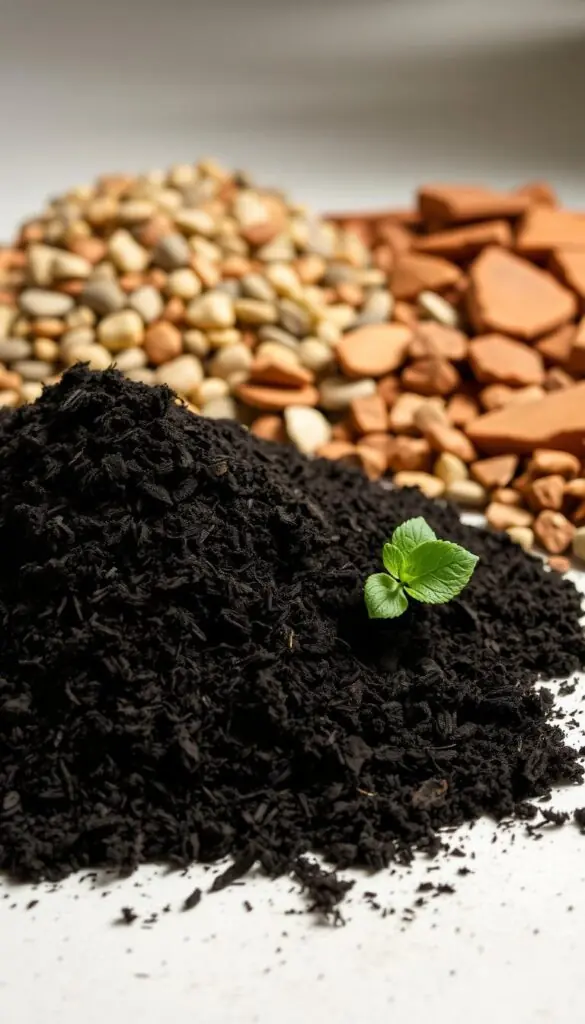
Use a loose, soilless potting mix and fold in perlite at about one part perlite to two parts mix. This gives air pockets, speeds drying, and creates good drainage so fine roots breathe. Skip heavy potting soil — it compacts and stays wet.
Before you water, press your finger an inch into the soil. If it feels cool and slightly moist, wait. If it’s dry, water slowly at the base until liquid runs from the holes. Then empty saucers so roots never sit in a puddle.
- Lift a pot after watering to learn the “heavy” weight; when it feels light, it’s time again.
- Expect rhythms: basil often needs more sips; oregano likes to dry a bit between drinks.
- If a leaf yellows or the plant wilts, check soil first — the finger test clears up guesswork.
In winter, with lower light near a window and drier air, water less often and lean on feel-over-schedule. These small steps keep roots healthy and your potted greens thriving.
Temperature, Humidity, and Air Circulation: Comfort for Steady Growth
Keep your plants comfortable and consistent, and they’ll reward you with steady growth and bright leaves.
Ideal temps: Aim for about 65–70°F by day and 55–60°F at night. Move pots if a window gets chilly after sunset. Avoid heat vents, fireplaces, and drafty spots that stress roots and make leaves dry.
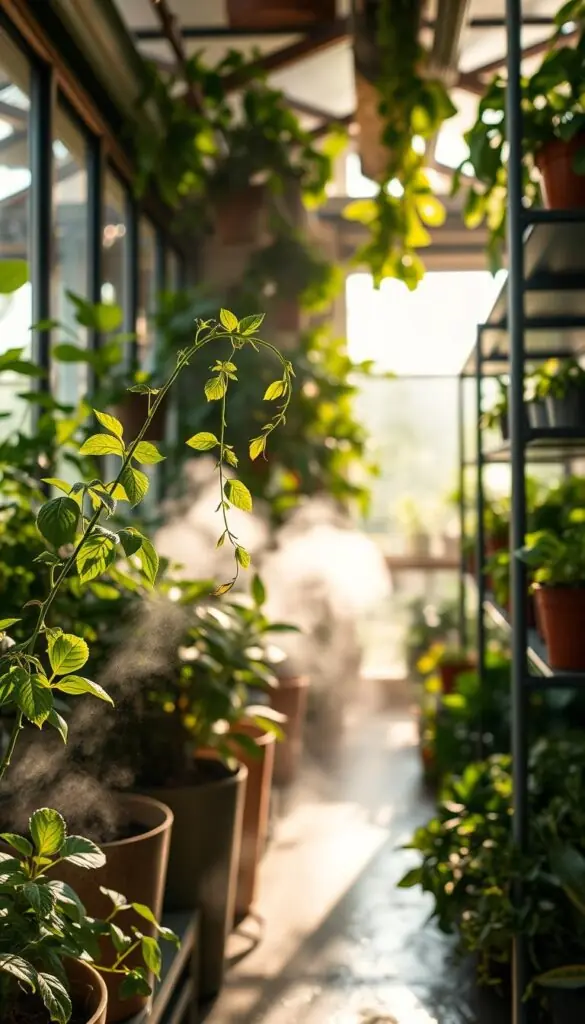
To raise humidity gently, set pots on pebble trays. Add water below the stone tops so the base stays dry while moisture rises. Mist lightly once or twice a week in winter — you’ll see a soft sheen on leaves after a fine spray.
Keep air moving
Group pots to boost humidity, but leave gaps for airflow. A small fan on low across the room creates a quiet breath of movement and prevents still, damp pockets.
Use your kitchen as a steady zone if it gets regular light and activity, but keep herbs away from stovetops and steam. If growth slows, check temperature, humidity, and airflow before changing water or feed — a small comfort shift often restores a thriving garden.
Planting Indoors: From Seeds, Cuttings, or Starter Plants
Start with what fits your time and patience. Choose sturdy starter plants for quick flavor or sow seeds and root cuttings if you enjoy the process.
Starter plants give harvestable leaves in days and help you learn your light and watering rhythm without long waits.
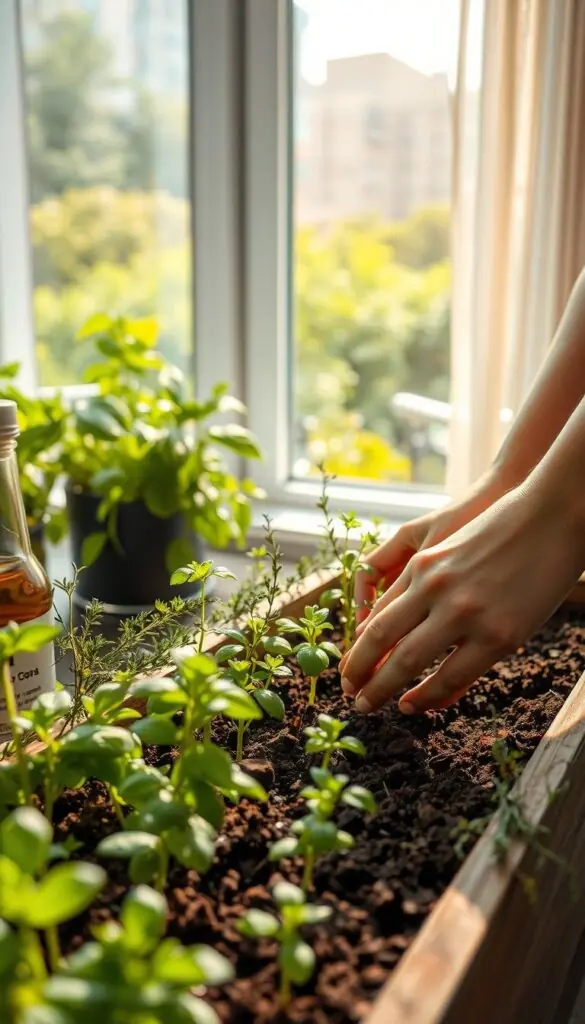
For seeds and cuttings, begin in early spring. Sow seeds at the depth on the packet — usually a fraction of an inch — and keep the surface evenly moist with a clear dome or plastic wrap to hold humidity.
Root cuttings in water, then tuck them into moist potting mix. Keep covers until you see two sets of true leaves; that signals it’s safe to remove the cover.
Simple steps and tools
- Transplant to a 4–6 inch pot when roots fill the starter cell.
- Use well-draining soil and a container with a drainage hole.
- Label each pot so you don’t mix seedlings later.
- Give new plants gentle light for a few days, then move to your sunniest spot or under grow lights.
| Start Method | Timing | Key Tool |
|---|---|---|
| Starter plant | Any time (fast results) | 4–6 inch pot, drainage hole |
| Seeds | Early spring | Shallow tray, clear humidity cover |
| Cuttings | Spring or summer | Glass of water, moist potting mix |
Best Indoor Herbs and How to Care for Them
Here's a friendly guide to the most reliable pot picks and how to keep them thriving.
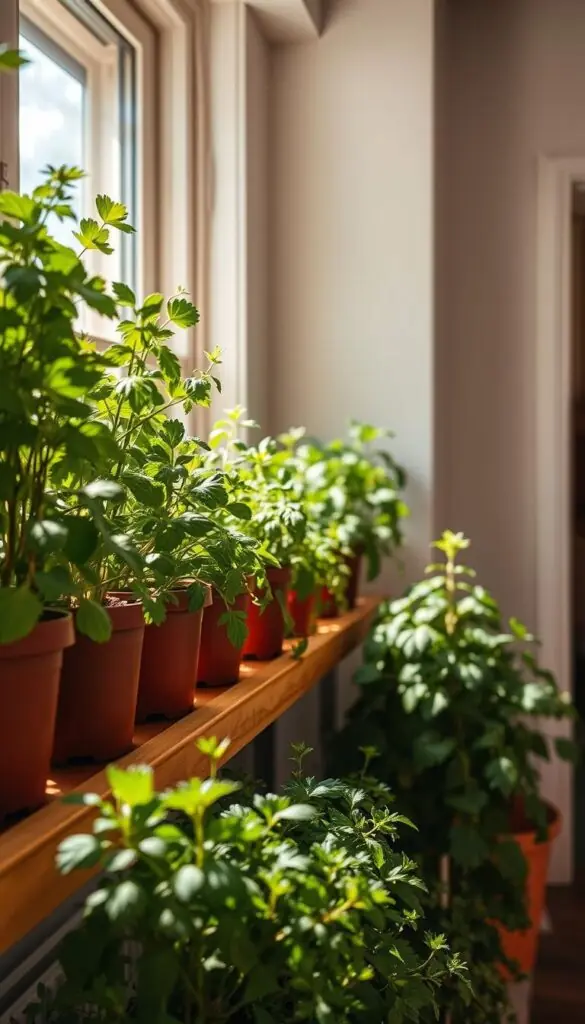
Basil
Bright, warm, and fragrant: give basil a south-facing window and steady warmth. Pinch the tender tops each week to keep the plant bushy and delay flowers that reduce flavor.
Keep the soil lightly moist with excellent drainage and feed at half strength every 4–6 weeks.
Mint
Mint is forgiving in medium light and likes even moisture. Harvest often to keep stems lush and the scent bright.
Chives
Chives do well on a windowsill with winter light. Water so the soil stays moist but not wet. Snip with scissors and leave about two inches so new shoots regrow quickly.
Parsley
Parsley wants 6–8 hours of sun or supplemental light and gentle humidity. Turn the pot every 3–4 days and harvest outer stalks at the base to encourage fullness.
Oregano
Oregano loves strong light; let the soil dry between waterings. Don’t let it flower—strip leaves from stems as you cook to release its oil and flavor.
Rosemary
Piney and sharp: rosemary prefers a cool, sunny spot with dry roots and humid air around the leaves. Use a pebble tray and light misting, and trim to keep a bushy shape.
Thyme
Thyme adores bright light and sparse watering. Slide your fingers down the wiry stems to strip leaves, and enjoy lemon, English, or French varieties for different notes in dishes.
"Harvest less than a third of the plant at a time to keep flavor high and growth steady."
- Do: tidy spent stems to encourage fresh leaves.
- Don't: overwater oregano and thyme — they prefer a dry spell between drinks.
- Harvest tip: pinch basil weekly, clip chives low, and pull parsley stems from the outside in.
Indoor Herbs: A Friendly Care Routine You Can Stick To
Set aside ten calm minutes each Sunday to tidy your windowsill and keep your little herb garden thriving.
Weekly rhythm
Once a week, rotate each pot a quarter turn so light reaches all sides and growth stays even.
Do a quick moisture check: press the top inch and only water the ones that need it. Feed lightly at half strength every 4–6 weeks to support steady growth without dulling aroma or flavor.
Pinch soft tips to encourage branching. A neat trim keeps each plant bushy and ready for small harvests.
Harvest smart
Clip less than one-third of a plant at a time. Those fresh leaves make a lovely garnish on eggs and bring a bright scent to your kitchen.
Keep kitchen shears clean and nearby so snipping becomes part of your meal prep. Wipe the window glass and dust leaves gently so light reaches the canopy.
- Quick reminders: rotate, check moisture, snip lightly.
- Sensory reward: the clean scent on your hands after pruning.
Seasonal Smarts: Growing Herbs Indoors Through Fall and Winter
As the days shorten, a few small shifts will keep your windowsill garden thriving through chillier months.
Bring pots inside before the first frost. Give each plant a gentle rinse and a quick pest check so you don't carry unwanted guests into the house. Move sun lovers to a south-facing window or add a timed lamp to extend light hours.

Water less in winter. Cooler temps and low light mean plants sip more slowly, so wait until the top inch is dry. Group containers loosely to raise humidity, but leave space for airflow to prevent mold.
- Protecting plants: rosemary and oregano often overwinter outdoors in mild zones; chives may die back and return in spring.
- Harvest tip: use small sprigs of parsley or oregano to finish warm dishes and boost flavor.
- When spring returns: increase water gradually and rotate pots more as growth resumes.
| Task | When | Why it helps |
|---|---|---|
| Bring pots inside | Before first frost | Prevents cold damage and allows pest check |
| Move to bright window / add light | Short days (late fall–winter) | Maintains growth and leaf strength |
| Reduce watering | All winter | Prevents root rot in low light |
Troubleshooting Common Mistakes With Indoor Herbs
A few clear signs — yellowing leaves, sticky residue, or spindly stems — tell you what to do next.
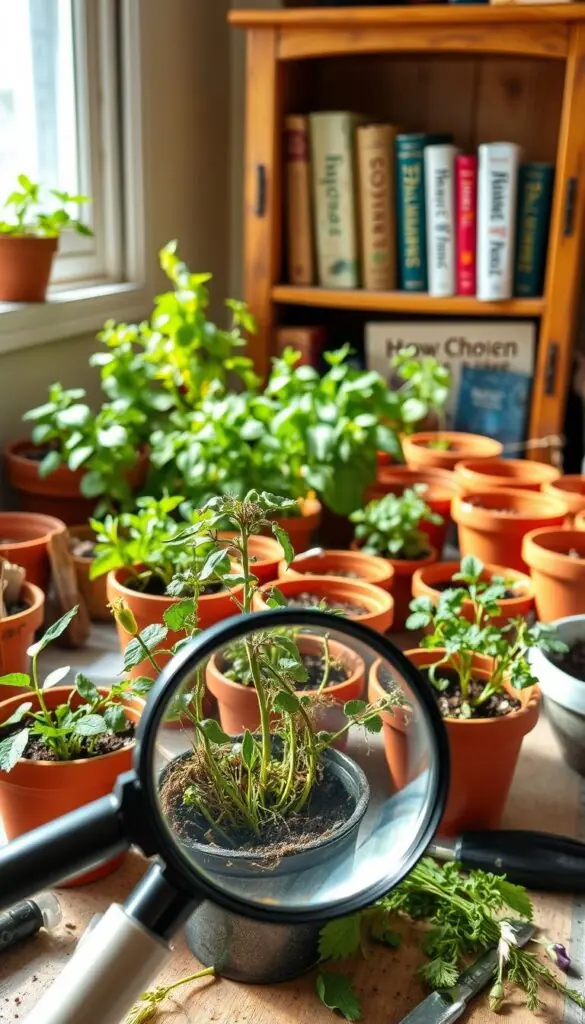
Overwatering vs. underwatering
If leaves yellow or stems go limp, test the soil with your finger first. Wet, heavy mix points to overwatering; bone-dry potting mix and crispy tips mean underwatering.
Let the top inch dry, empty saucers, and confirm good drainage. Remember: more plants die from too much water than too little.
Pests: aphids and spider mites
For sticky residue or tiny bugs, rinse foliage gently under warm water. Then spray weekly with a mild soap mix: 1–2 tablespoons dish soap per gallon of warm water until pests are gone.
Repeat rinsing and spraying once a week while you see pests. Keep sprays off flowers and rinse before eating leaves you’ll use.
Leggy growth
Spindly stems and weak aroma mean the plant needs more light. Move pots closer to the window, raise lamps a few inches above the canopy, and rotate regularly.
Trim back long stems. Oregano and thyme rebound fast with light pruning. Keep rosemary’s roots drier while raising humidity at the leaves. Watch basil and mint in warm kitchens for steady moisture without soggy feet.
"Small, steady tweaks bring plants back to healthy, fragrant growth."
Conclusion
Start with one plant and let small, steady steps build a thriving kitchen garden.
You now have a simple plan for growing herbs indoors: keep pots separate, give steady light (natural or lamp), and water by feel. These three habits make growing herbs easier across seasons.
Begin with one or two of the best herbs for your space. Rotate, snip for your dishes, and enjoy the scent while you cook. Your little herb garden will add fresh flavor to food and a calm green corner to your home.
When in doubt, simplify: more light, less water, and a little patience. Try one pot today and watch your garden grow.
FAQ
How much light do my plants need if I don’t have a south-facing window?
Most herbs prefer bright light but you can grow many successfully with a west-facing window or a good grow light. Aim for 10–14 hours of light using LED grow bulbs placed 6–12 inches above the foliage. Rotate pots every week so leaves get even exposure and avoid leggy growth.
What type of potting mix should I use for healthy roots?
Choose a soilless potting mix with added perlite or pumice for good drainage. These blends keep soil airy so roots can breathe and reduce the risk of root rot. Avoid garden soil, which compacts in containers and limits airflow.
How do I tell if I’m overwatering or underwatering?
Check the top inch of soil—if it’s dry, water. Yellowing leaves, limp stems, and a rotten smell usually mean overwatering. Crispy leaf edges and slow growth point to underwatering. Pots with drainage holes and a saucer help you avoid soggy roots.
Which herbs are easiest for a kitchen windowsill?
Start with basil, chives, parsley, and mint. Basil loves warm, sunny spots and frequent pinching for bushy growth. Chives tolerate moderate light and steady moisture. Parsley prefers bright light and consistent humidity. Mint is forgiving but best in its own pot to prevent it from taking over.
Can rosemary and thyme tolerate lower humidity inside a home?
Yes. Rosemary and thyme like bright light and drier soil. Rosemary benefits from cooler daytime temperatures and good air circulation, while thyme prefers sparse watering. Use pebble trays or a light mist only if the air is extremely dry.
Should I use clay, plastic, or glazed pots?
Clay pots dry out faster and help avoid overwatering, which suits herbs that prefer drier roots. Plastic and glazed pots retain moisture longer, useful for thirsty varieties like parsley. Match pot material to each plant’s water needs and always pick pots with drainage holes.
How often should I feed my potted herbs?
Light feedings every 4–6 weeks with a balanced liquid fertilizer work well for most container-grown plants. Use half-strength during active growth to encourage flavor and prevent leggy, over-fertilized growth.
Is it better to start from seeds, cuttings, or starter plants?
Starter plants give the quickest results and fast flavor for your kitchen. Seeds and cuttings are more economical and rewarding but take more time and care. For beginners, small starter plants are a great way to build confidence.
How do I harvest without harming the plant?
Clip stems just above a leaf node and never remove more than one-third of the plant at once. Regular light pruning encourages bushier growth and more flavorful leaves. Snip before herbs flower to keep leaves tender.
What should I do when frost approaches or in winter?
Bring pots indoors before frost hits and give them extra light hours with a grow lamp. Reduce watering frequency—roots need less water in cooler, lower-light months. Keep an eye out for pests that move indoors like spider mites.
How can I prevent pests like aphids and spider mites?
Inspect foliage regularly. For small infestations, rinse leaves with water or use a gentle soap spray. Increase humidity slightly for spider mites and improve air circulation. Isolate affected plants to stop spread.
Why are my plants getting leggy and weak?
Legginess is usually due to insufficient light. Move plants closer to a bright window or add a grow light, trim back long stems, and rotate pots frequently. Proper feeding and consistent pruning also help maintain compact, lush growth.