Picture sunlit, glossy green leaves brushing your fingertips and the warm, sweet scent lifting as you step outside. Have you ever wished your garden offered a steady stream of fresh herbs for weeknight dinners? This guide shows a calm, simple way to keep flavor high and plants looking lush all season.
Start seeds indoors 4–6 weeks before transplant, then harden off seedlings and wait until frost danger passes to set them outside. Give the herb full sun and steady water during the growing season so each plant stays sturdy and leafy rather than thin.
With a light, routine trim about every four weeks you’ll encourage strong regrowth and large volumes of leaves. Use sharp herb snips and a small harvest basket for neat work, and stop any flower buds early — letting blossoms form pulls energy and makes the taste bitter.
Key Takeaways
- Begin seeds indoors, then transplant after frost risk passes.
- Give full sun and consistent water through the season.
- Trim gently every ~4 weeks to keep flavor and leaf yield high.
- Use sharp herb snips and a clean harvest basket for best results.
- Avoid allowing flowers so the leaves stay sweet, great for pesto.
Why Pruning Basil Keeps Your Plant Lush, Fragrant, and Productive
With a small, clean snip above a leaf pair, you nudge the plant toward bushy, scented growth. That single cut redirects energy and changes how the stem grows. It’s simple to see and easy to learn by feel as you water.
The science of branching: When you cut just above a pair of opposite leaves, the stem makes two new branches from that node. Those new branches fill space faster than one tall stem would.
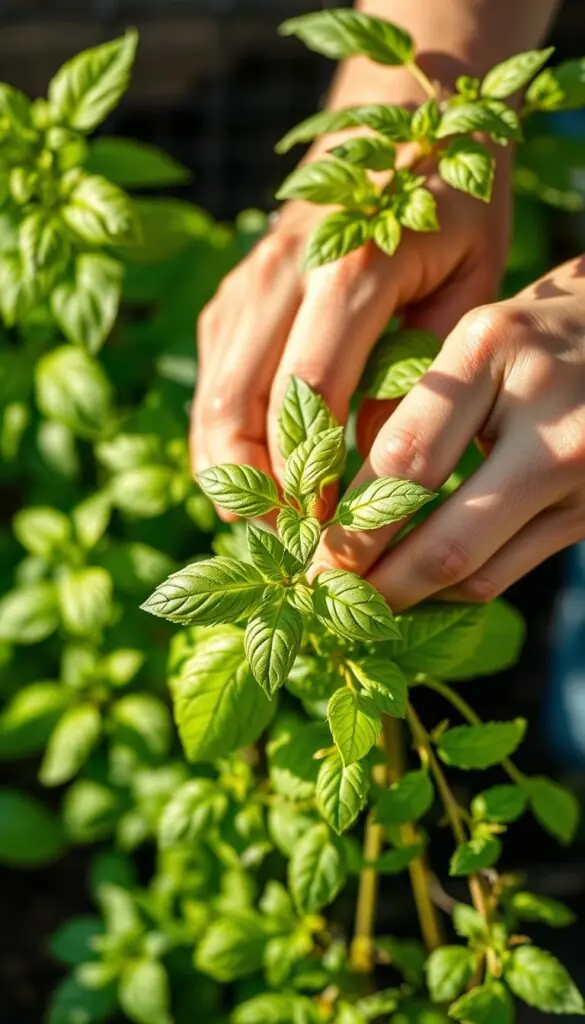
The science of branching: two new stems from every cut
Look for the tiny opposite leaf pairs at a node. Cut just above them and the plant sends growth into two directions.
Flavor matters: stopping flowers to prevent bitter leaves
If a flower starts forming, remove it before it opens. A single terminal flower pulls energy away from leaf growth and can make leaves taste sharp instead of sweet.
- Trim lightly and often to build a round, leafy shape that’s easier to harvest.
- Check for leaf pairs while you water—those are your cutting guides.
- Light snips improve airflow and boost the scent and flavor of healthy leaves.
When Your Basil Is Ready: Timing by Height, Leaves, and Season
Timing is simple when you use what the plant shows you. Wait until your seedlings are about 6–8 inches tall and you can clearly count three to four opposite sets of leaves. That first, light cut sends energy into new branches and helps stems fill out fast.
Seasonal markers to watch: In the U.S., hold off until after your last frost. Move starts outside when nights stay mild. During warm summer weeks, check plants every day or two — growth can surge in heat. Before autumn chill, do a final tidy when the first cool nights appear.
Begin seeds indoors 4–6 weeks before transplanting so your young plants are ready at the right time. Basil prefers warmth near 80°F and struggles below 45°F, so keep an eye on forecasts. Use height and leaf sets as your practical guide rather than a strict calendar.
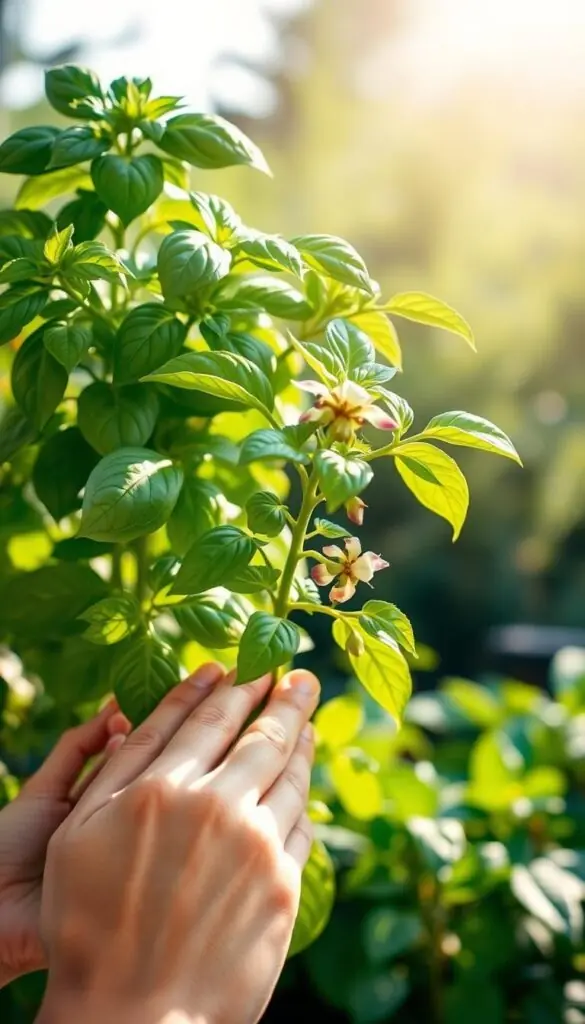
- Start the first small trim at 6–8 inches with 3–4 sets of leaves.
- Sow basil seedlings 4–6 weeks before last frost; transplant when nights are mild.
- Check daily in hot weather and prune lightly to encourage side stems over the next weeks.
Step-by-Step basil pruning for Bushier, Healthier Plants
A quick, confident cut at the right spot will turn a lanky herb into a full, fragrant mound. Follow these clear steps and you’ll guide growth without stress.
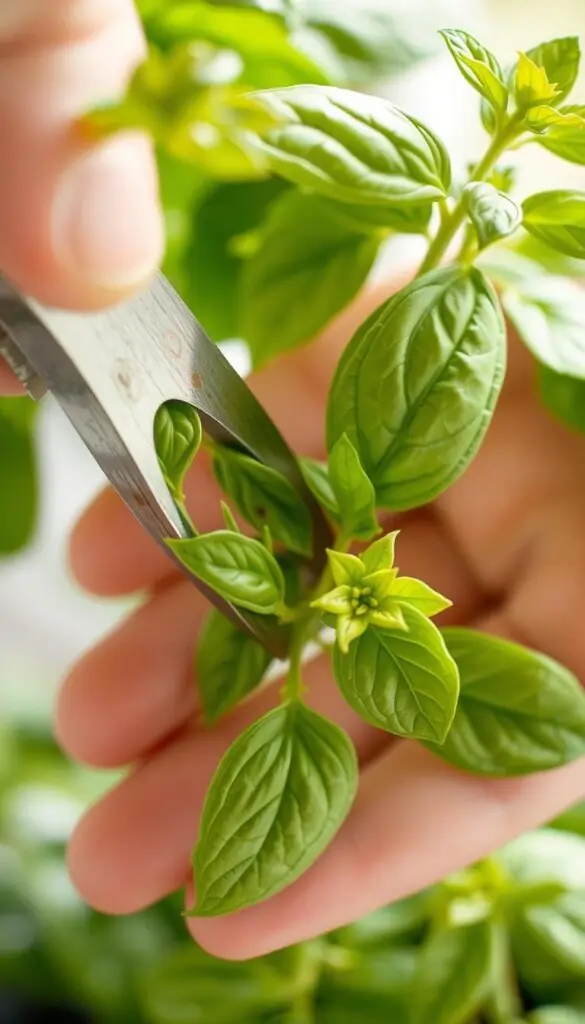
- Spot the node: Find a neat pair of opposite leaves. Cut or pinch about 1/4 inches above that set so the plant sends growth into new branches.
- Choose your tool: For tender seedlings and soft tips, use fingers. For thicker stems, use sharp, clean herb snips or shears so the cut is crisp and the plant heals fast.
- Top down shaping: Work from the top down. Remove no more than a third to half of any one stem on established plants. Always leave a leaf pair below your cut.
- Balance the mound: Turn the pot a quarter turn as you go. Trim tall shoots back to a lower set of leaves to keep a rounded, even form.
- Finish gently: Place clippings in a small basket to avoid bruising leaves. If soil feels dry, water lightly at soil level and avoid splashing fresh cuts.
Tools and touch
Sharp, clean snips make peak-season work quick. Dull or dirty shears can crush stems and spread disease, so wipe tools with a water-and-alcohol cloth between plants.
| Tool | Best use | Why it matters |
|---|---|---|
| Fingers | Soft tips, young seedlings | Gentle, immediate; perfect for quick pinches that feel the plant |
| Herb snips | Most stems in peak season | Clean cuts heal fast and encourage new branches |
| Shears | Thick, woody stems | Use only when needed; keep sharp and sanitized to prevent damage |
Result: Crisp snaps and bright green cuts mean the plant is redirecting energy into fuller stems and larger leaves. Repeat this routine every few weeks and you’ll see a lush, compact basil plant that keeps producing.
Ongoing Care Between Cuts: Sun, Water, and Flower Bud Patrol
Place your pots where morning light warms leaves and afternoons stay bright—this helps steady growth and flavor. Small daily checks keep things calm and simple. Warm, sunlit spots and steady care make your herb thrive through the season.
Sunlight and steady moisture for tender, sweet leaves
Give your basil plants a sunny spot where leaves glow bright green. In the morning, leaves should feel slightly cool while the soil is just warming.
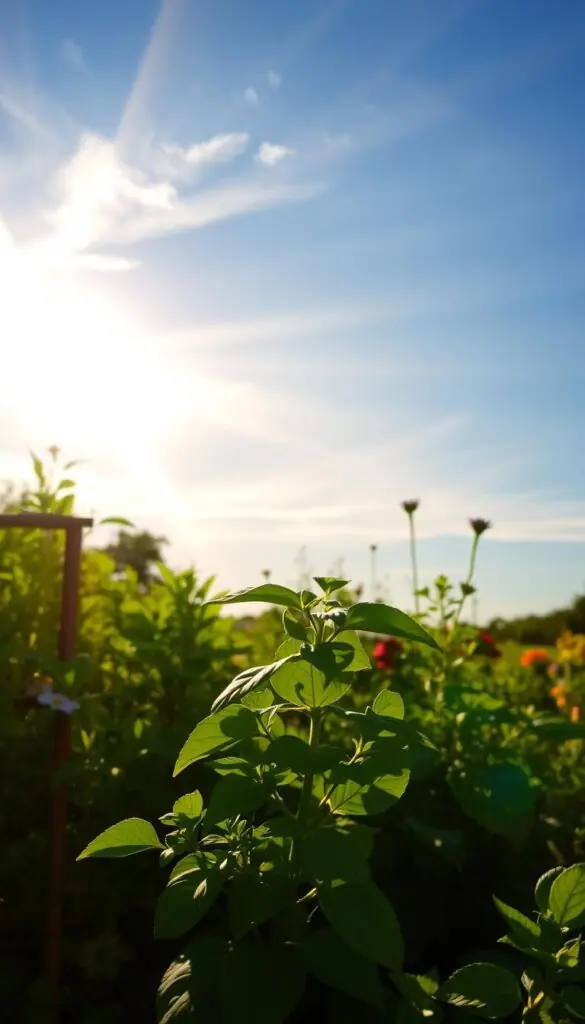
Check moisture: Feel the top inch of soil with a fingertip by midafternoon. Water when that inch is dry to keep leaves tender and sweet.
Daily check in summer heat: pinch flower buds at first sight
In hot summer weather near 80°F, peek at the tips daily. A tight little pyramid of stacked leaves is a forming bud.
"Remove the whole bud gently so stems keep making new shoots."
Pinch off the entire bud; this stops flowers from stealing energy and keeps new leaves coming every few weeks.
| Task | How often | Why it helps |
|---|---|---|
| Sun placement | Daily check | Ensures even light and steady growth |
| Watering | When top inch dries | Prevents swings from dry to soggy |
| Feeding | Every 2–3 weeks | Replenishes nutrients for container plants |
| Bud patrol | Daily in heat | Stops flowers and preserves flavor |
- Keep foliage dry—water at the base so sunlit leaves stay glossy.
- Rotate pots for even sunlight and move containers inside if nights fall below 45°F.
- Tidy crowded stems to improve airflow and reduce disease risk.
Harvesting for Peak Flavor and Plenty of Leaves
Pick leaves when they smell strongest and feel cool to the touch—this gives you the best flavor for the kitchen. Harvest in the morning after the dew dries or in early evening. At those times the essential oils are at their peak and the leaves taste brightest.
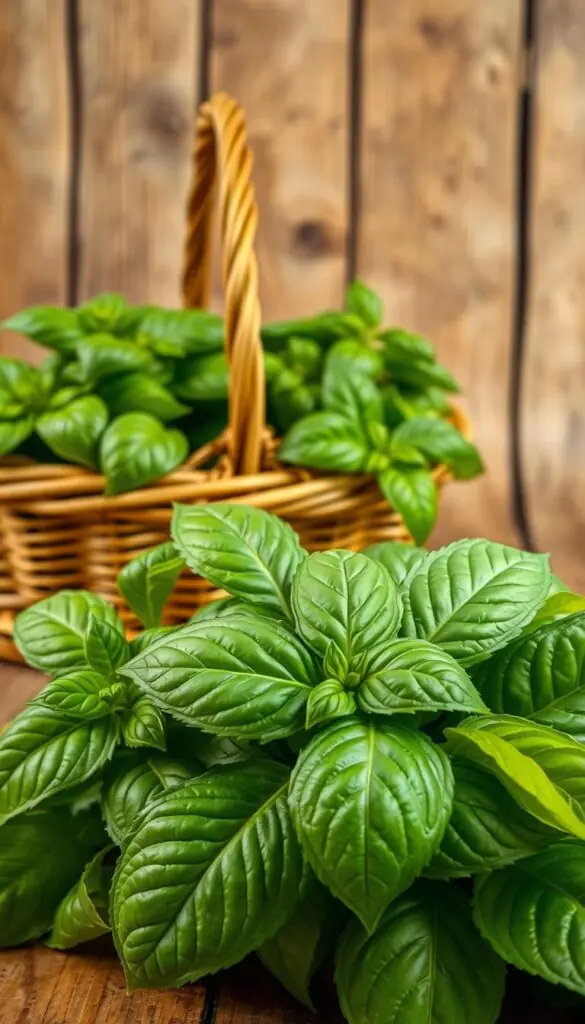
Best time of day
Timing cue: Wait until leaves are dry and cool. They will be plump and fragrant right after dew lifts or just before sunset.
Quick uses and storage
Use clean snips to cut leafy tips just above a node so stems stay healthy. If a plant has started to flower, cut back about half and set that lot aside to make pesto the same day.
- To make pesto fast: blitz leaves with olive oil, garlic, nuts, and cheese.
- Store extras by air-drying in shade or freezing whole or blended with oil.
- Label bags or jars so future you can grab what you need.
"A gentle, steady harvest encourages more branches and leaf growth, so your plants keep giving you plenty week after week."
Troubleshooting Common Pruning and Harvest Mistakes
When stems look thin or leaves taste sharp, there’s usually an easy fix nearby. This short guide pairs common problems with calm, practical fixes so your herb can rebound fast.
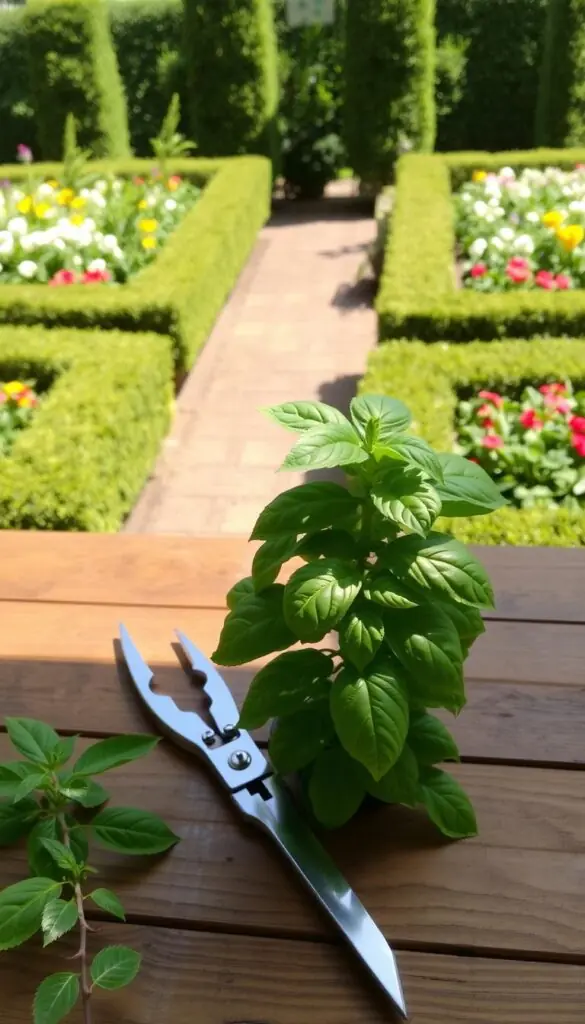
Common problems and quick fixes
- Leggy stems: If basil plants show long gaps between leaf pairs, move them to brighter light. Cut the top stem back to a node to restart compact growth and encourage side shoots.
- Bitter leaves: Bitter taste often means flowers slipped by. Remove open flowers and any forming flower buds, then give a light trim. New, milder leaves should appear in a few weeks.
- Cold damage: Black or water-soaked edges point to chill injury. In cool stretches, bring pots near a warm wall or harvest before a cold snap.
- Dull tools: Rough tears show when shears or snips are blunt. Use clean shears and wipe blades with alcohol between plants to protect stems and speed healing.
- Water and soil stress: If a plant wilts often, water deeply then let the top inch dry. Avoid harvesting wet leaves; wait until foliage is dry so cuts stay clean.
"When a lot of flowers appear, cut the plant back by a third to a half, compost spent blooms, and use the rest in the kitchen."
Tool note: If you shop online for gear, check return policies and product notes—some listings appear as affiliate picks. Choose trusted brands and keep a small, cared-for kit you like using.
Conclusion
A short, regular rhythm of trimming and checking will turn a single plant into a season-long supplier of fresh flavor.
With a few thoughtful snips and steady care, your garden will stay lush, fragrant, and full of leaves all season. Start when the stem reaches about 6–8 inches, cut above leaf pairs, and watch each basil plant respond with more side shoots and fuller growth.
Keep an easy eye on buds, give light water and sun, and harvest during cooler parts of the day. When your bowl is brimming, make pesto or share small bundles with friends—those simple acts spread the joy of homegrown herbs.
Pick trusted sources if you buy gear online; a sharp pair of snips and a clean basket make tending calm and easy. Most of all, enjoy the scent on your fingers and the bright green leaves on the counter—it’s a gentle reminder that your garden thrives because of your care.
FAQ
Why should you trim your herb regularly?
Regular trimming keeps your plant lush, increases branching, and boosts aroma. Each healthy cut encourages two new stems to form, creating a fuller, more productive mound of leaves rather than a tall, leggy plant.
How does removing flower buds affect flavor?
Pinching off flower buds prevents the plant from shifting energy into seeds, which can make leaves bitter. Stopping blooms preserves that sweet, tender flavor you want for cooking and making pesto.
When is the right time to start snipping young plants?
Start when seedlings reach about 6 to 8 inches and have three to four sets of true leaves. That early shaping teaches the plant to branch low and become bushier throughout the season.
How do seasonal changes affect your harvest schedule?
Begin after the last frost and be most active during warm spells. Reduce cutting as temperatures drop in autumn to let the plant harden off. Daily checks in summer help you catch flower buds and prevent stress from heat.
Where exactly should you make each cut?
Cut about a quarter inch above a pair of leaves or a node. That leaves the node intact so two new stems can sprout just below the cut, giving a neat, rounded shape and lots of new leaves.
What tools and techniques work best for clean cuts?
Use clean herb snips or sharp scissors for minimal damage. For very young growth, gentle pinching with your fingers works. Keep tools sterile to avoid transferring disease between plants.
How often should you repeat pruning to shape the plant?
Repeat every two to three weeks during active growth, or whenever stems start to get tall or sparse. Regular light trims are better than one heavy cut—think steady shaping into a rounded, leafy mound.
What care does the plant need between cuts?
Give steady moisture and plenty of sun—six hours or more of daylight keeps leaves tender and sweet. Check daily in hot weather and water at the soil level to avoid wet foliage that can invite disease.
How can you spot and remove flower buds early?
Look for small clusters at the tips of stems. Pinch them off as soon as you see them forming. Doing this daily in summer prevents the plant from setting seed and keeps leaves at peak flavor.
When is the best time of day to harvest for flavor?
Harvest in the morning after dew dries or in the early evening. Essential oils are most concentrated then, giving you the best aroma and taste for fresh use or making pesto.
What are quick ways to store extra leaves without waste?
Use leaves fresh for sauces, chop and freeze in oil or water ice cube trays, or dry them on a screen for later use. Freezing preserves flavor better than long drying when you want vibrant taste in winter.
Why do stems get leggy and what fixes that?
Stems become leggy when the plant is not trimmed, or when light is insufficient. Cut back to healthy nodes, move the pot or bed to a sunnier spot, and resume regular light trims to encourage lower branching.
What causes bitter leaves and how do you prevent it?
Bitterness often comes from flowering, heat stress, or inconsistent watering. Pinch flower buds promptly, keep soil evenly moist, and shade briefly during extreme heat to maintain sweet, tender leaves.
Can cold weather damage affect your pruning routine?
Yes. Frost and chilly temps slow growth and make leaves vulnerable. Stop heavy trimming before cold snaps and protect plants with covers; resume shaping once warm days return.
How do dull shears harm your plant, and how do you avoid it?
Dull blades crush stems instead of cutting cleanly, raising disease risk and slowing recovery. Sharpen or replace snips regularly and disinfect between plants to keep cuts clean and healing fast.