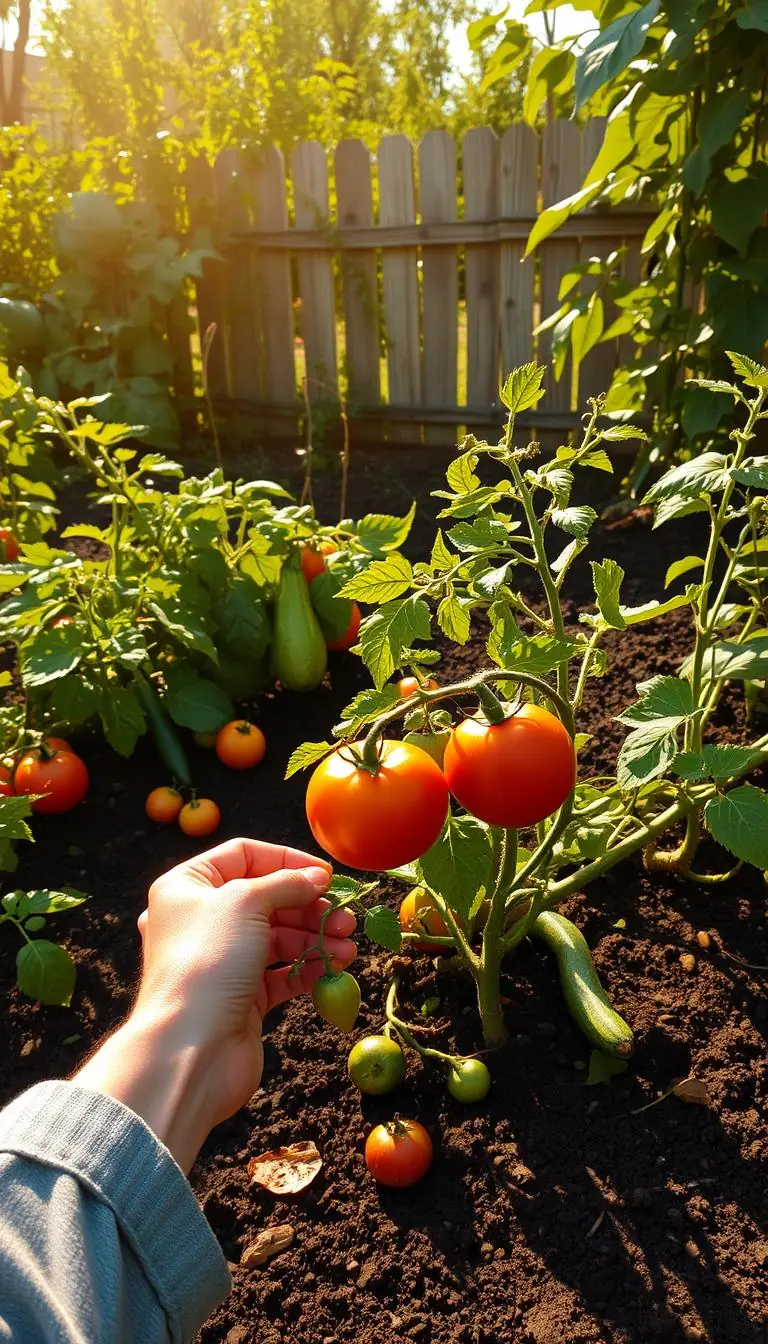
Imagine cool morning soil under your fingers and sunlit leaves blinking awake. You stand at the edge of your bed, coffee in hand, and wonder how much water your plants really need to taste their best.
We’ll show you a calm, simple rhythm for giving the right amount of water at the right time. You’ll learn easy steps and tools — soaker hoses, drip kits, a tuna-can test — that fit into your daily routine.
Expect clear rules: about 1 inch of water per week across the soil, best given early in the morning, and mulching 2–3 inches to keep moisture steady. You’ll see how wind, heat, and rain change the plan so you can adapt without worry.
By the end, you’ll feel confident checking pots and beds, caring for young plants to fruiting ones, and keeping leaves dry to avoid disease. This is gardening made peaceful, practical, and rewarding — with better flavor on your plate and less guesswork in your day.
Key Takeaways
- Give roughly 1 inch of water per week and favor early morning.
- Focus water at the root zone to protect leaves and reduce disease.
- Use mulch and simple tools like drip kits and soaker hoses.
- Adjust for heat, wind, and rain so your beds stay lush.
- Trust sensory cues—soil feel and leaf look—to guide your routine.
Start here: simple goals for healthier, tastier veggies
Start simple: pick one small goal that makes your beds healthier this week. A clear aim helps you learn fast and feel successful.
Quick rule: water early in the day for less evaporation and fewer leaf diseases. Add about 1/4 inch of compost each season to help the soil hold moisture and feed roots.
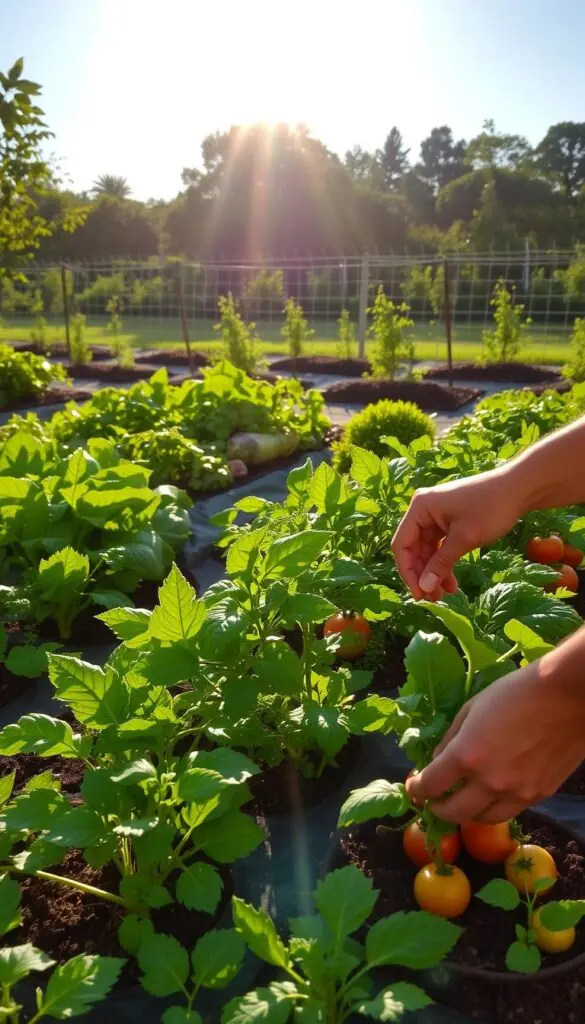
- Set one easy goal: soak slowly and deeply at morning so your plants build strong roots.
- Add a thin 1/4-inch layer of compost this season; it darkens soil and evens moisture between waterings.
- Keep leaves dry by directing water at the base; this small habit prevents many foliar problems.
- Pick one simple tool—hose timer or soaker hose—to make watering less hurried and more steady.
- Do a quick daily check: press your finger into the soil. Cool and slightly damp? Wait. Dusty and warm? Water today.
Group thirstier crops when garden planting so you can target water and save time. Keep a notepad at your potting bench and jot what you try. These small ideas build a routine you enjoy and trust.
How much water your garden really needs each week
Think of your garden's weekly needs in inches and gallons so you can plan with calm confidence. Start with one clear rule and adjust from there.
The baseline: aim for about one inch per week across in-ground beds. That inch equals roughly 0.62 gallons per square foot. For a 4x8 bed (32 sq ft) plan on about 20 gallons for one inch.
- Split that inch into two or three deep sessions instead of one single soak. Roots prefer steady, deep moisture.
- When heat rises, add about 1/2 inch per week for every 10°F the average temperature is above 60°F. (Average = day high + night low ÷ 2.)
- In arid or drought-prone areas many gardens need closer to two inches per week to stay healthy.
- Use a rain gauge or a tuna can to measure inches from rain or irrigation. When it reaches 1 inch you’ve met your weekly target.
Remember soil type matters: sandy soil dries fast; clay holds moisture. Watch your plants and let weather guide small tweaks to the plan.
Best time of day to water for less waste and healthier leaves
Morning is the garden's pause—use it to deliver gentle, deep moisture where roots need it most.
Early morning advantage: cool soil, quick-drying leaves
Water at sunrise when the air is quiet and cool. Moisture soaks into the soil while leaves catch the light and dry before nightfall.
Why this helps: plants lose less to evaporation and stress. You'll feel it underfoot—soil that is cool and lightly damp means you timed it right.
Evening as second-best: how to avoid wet foliage overnight
If you must water late, aim for late afternoon or early evening. Place water at the base of each plant so leaves stay dry.
If overhead sprinklers are the only option, give leaves an hour or two of sun to dry and watch for a calm, breezy evening. In still, humid nights avoid wet foliage to cut disease risk.
Why midday is the worst: evaporation and stress
Skip strong sun. Midday heat sends water into the air and can shock fragile leaves and roots.
On very hot days, try two short morning cycles spaced an hour apart to reduce runoff and boost absorption.
"Water early, keep leaves dry, and let the soil do the work—your garden will thank you."
- Use a drip line or watering wand to target the root zone and keep leaves dry.
- Watch the feeling underfoot: cool, not soggy, after a morning session.
- On humid evenings, postpone overhead wetting or move to base-only delivery.
| Time of Day | Benefits | Risk |
|---|---|---|
| Early morning | Best absorption; leaves dry quickly | None when done right |
| Late afternoon | Good if base-only; cooler than midday | Leaves may stay wet overnight if humid |
| Midday | None—quick but wasteful | High evaporation; plant stress |
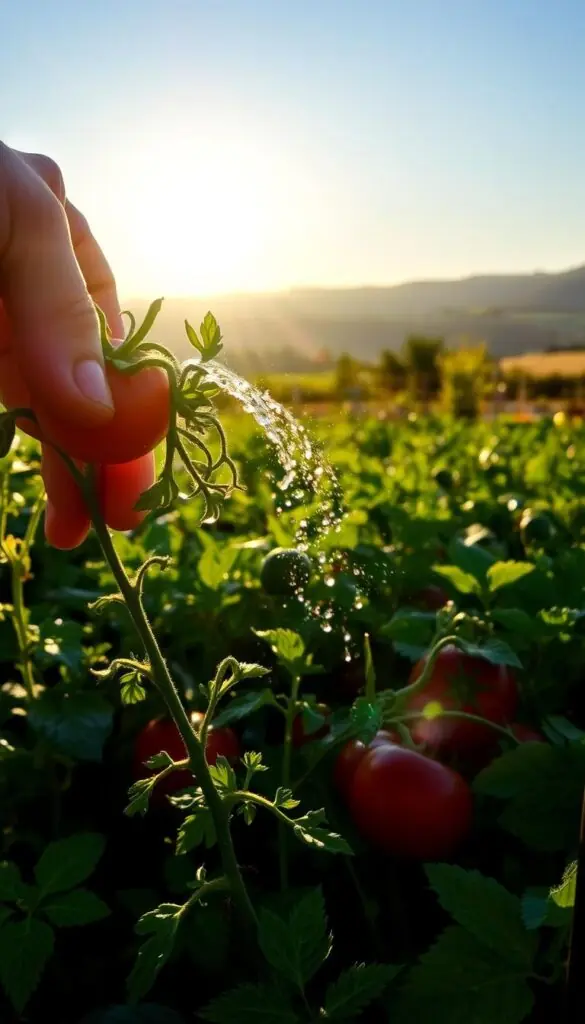
Soil first: build moisture-holding ground that loves rain
Good soil acts like a sponge; build that sponge and your garden will need less from you.
Amend with compost — add about a 1/4-inch layer each season. Dark, crumbly compost improves soil texture, feeds plants, and helps moisture stick around where roots can reach it.
Know your soil by feel. Sandy soils are gritty and drain fast. Clay feels smooth and slow to absorb. Loam crumbles and balances water and air. Silty ground holds water but erodes if you flood it.
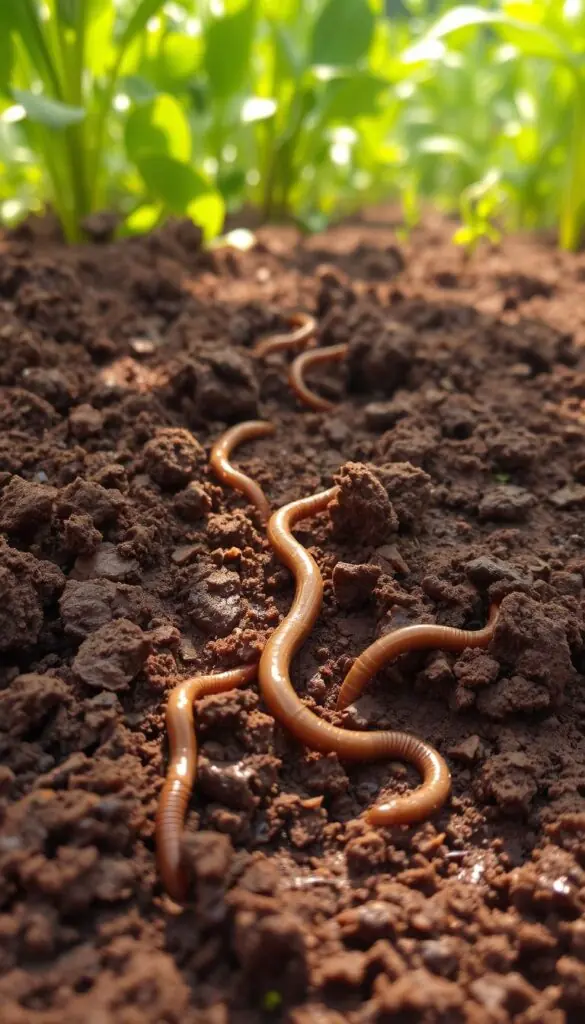
Mulch to lock in moisture
Lay 2–3 inches of straw, leaves, or wood chips on top. Mulch cools the ground, cushions raindrops, and halves evaporation.
Keep mulch on the surface — don’t mix it into beds during the season. Refresh as it breaks down so the layer stays effective.
- Feed soil modestly and regularly with compost to build sponge-like retention.
- Sandy beds need smaller, more frequent waterings; clay needs slow, deep soaks.
- Use gentle drip or light flows on silty ground to avoid washout.
- When the soil feels cool and crumbly under your hand, moisture is right where roots want it.
Watering vegetables the right way at the root zone
Place water where the roots live and your garden will reward you with less fuss and more flavor.
Deliver moisture to the soil and keep leaves dry. Drip lines and soaker hoses send small amounts of water straight to the root zone. That saves water and lowers disease risk for your plants.
Use a slow-flow watering wand to tuck water at the base of each plant. Move slowly and aim for damp soil, not puddles.
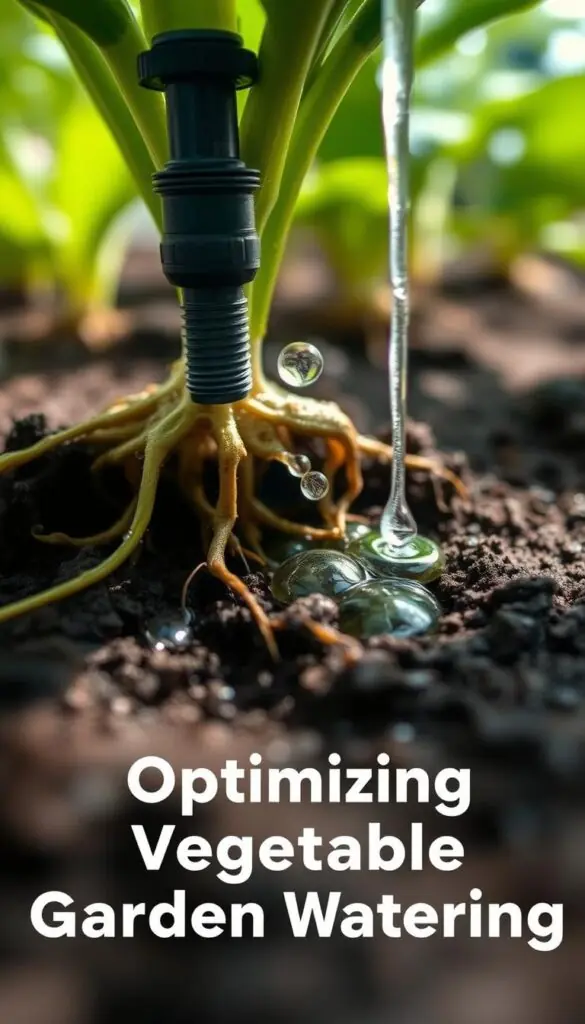
Soaker hoses, drip lines, and slow-flow wands
- Lay soaker hoses along the base of stems so water soaks into the roots.
- Choose drip for precise delivery; a steady trickle reduces runoff and keeps leaves clean.
- Use gentle wand settings to avoid splash and erosion near young plants.
Why overhead sprinklers are a last resort
Overhead systems wet foliage for long periods. Wet leaves invite fungal trouble and waste water to evaporation.
"Slow and steady at the root zone builds resilient plants that shrug off heat."
| Tool | Best for | Key tip |
|---|---|---|
| Soaker hose | Long rows, mixed beds | Lay at stem bases; check for even seepage |
| Drip line | Precise beds, containers | Place emitters near roots; use timer for consistency |
| Watering wand | Young plants, spot care | Gentle flow at soil level; use rock under flow to prevent wash |
| Overhead sprinkler | Temporary, emergency use | Use rarely; avoid evening runs to keep leaves dry |
Measure what matters: easy ways to track “an inch of water”
Small tests help you turn a rule of thumb into reliable care. Use a few simple tools and checks to see exactly how much water reaches your beds and containers. That way you give just enough and build confidence fast.
Rain gauge and tuna-can test
Set a rain gauge in an open spot in your garden and read it after storms to know how much rain fell. If you don’t have one, use a straight-sided can (tuna-can test) under your sprinkler or drip. When water reaches 1 inch in the can, you’ve hit your weekly target.
Soil checks: finger, trowel, and meters
Push a finger an inch or two into the soil. Cool and slightly sticky? Wait. Dry and warm? It’s time to act.
The trowel test gives depth: slice a small wedge and squeeze. If it clumps, moisture is adequate; if it crumbles, the soil is dry.
A basic moisture meter reads deeper than the surface and is handy under mulch where visual checks can mislead.
Flow meters and timers for steady delivery
Add a hose-end flow meter to track gallons. Remember: 1 inch per square foot equals about 0.62 gallons, a useful conversion when you time sessions.
Attach a simple mechanical or digital timer to your spigot. Timers make drip or soaker runs repeatable and keep your water per week consistent, even when you’re away.
| Tool | What it measures | Quick tip |
|---|---|---|
| Rain gauge / can | Inches of rain or irrigation | Place in open area; read after each event |
| Finger / trowel test | Soil moisture feel at root zone | Check at planting depth, not just surface |
| Moisture meter | Percent or scale at depth | Use beneath mulch for true read |
| Hose-end flow meter | Gallons delivered | Use with conversion to set session time |
| Timer | Run duration and schedule | Automate drip or soaker for steady delivery |
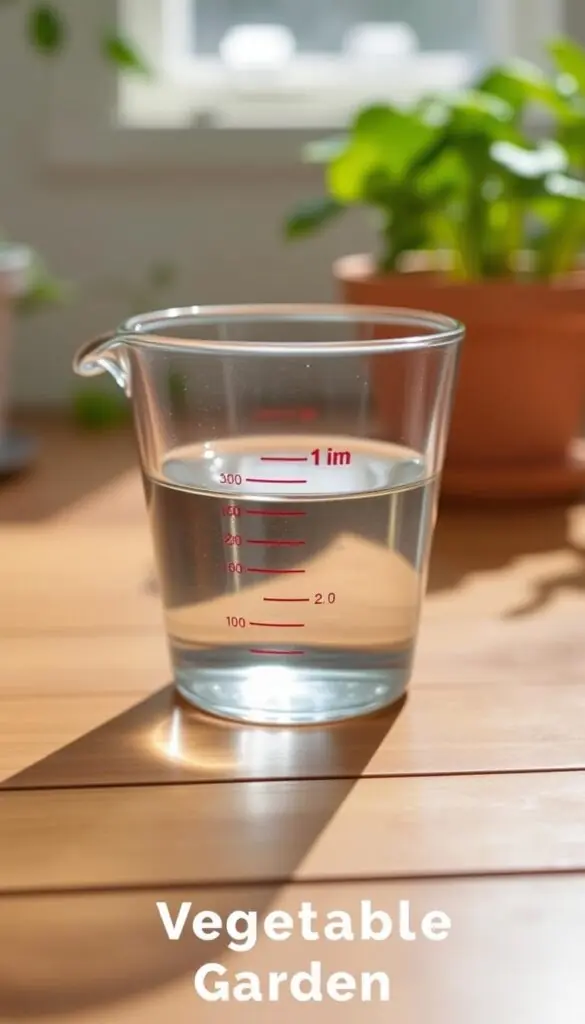
Adapt to weather, region, and season
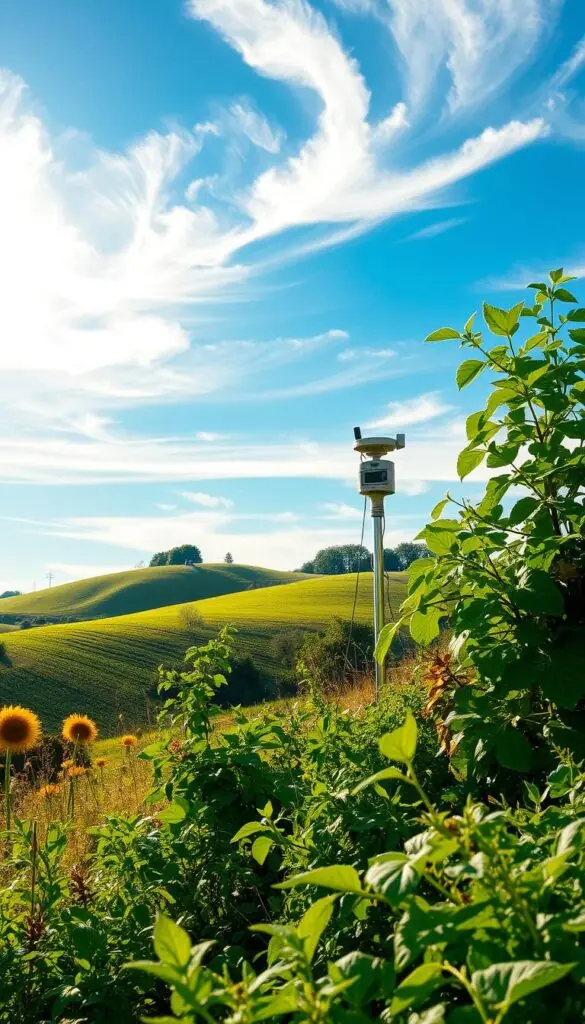
A few neighborhood signals tell you when to add a little more water or pause and let rain finish the job. Use local cues—temperature, wind, and humidity—to shape small, calm adjustments each week.
Temperature, humidity, and wind: how they change moisture needs
Hot, dry weather raises evaporation and dries the top soil fast. In those stretches, increase frequency slightly so plants don’t swing from wet to bone-dry.
Higher humidity slows drying. In humid zones you may need less frequent sessions than in arid, windy places where soil loses moisture quickly.
Tip: a sudden heat wave calls for adding extra inches gradually across the week, not one big flood.
USDA zones and local rainfall patterns: plan by your growing season
Your USDA zone and usual season length set expectations. Long, hot summers need steadier care; cool, short seasons need lighter delivery.
- Watch the rain gauge—if a storm gives ~1 inch, skip or shorten the next run.
- Use mulches or windbreaks to protect soil from drying winds during drought-prone spells.
- Keep a monthly note of weather and plant response; patterns make next year easier.
"Adjust kindly and calmly—your plants will tell you when you've found the right rhythm."
Watering by plant growth stage
A little care at each stage sets the scene for strong roots and better harvests. Follow these gentle steps so you give the right amount of water as plants move from tiny seeds to fruit-bearing vigor.
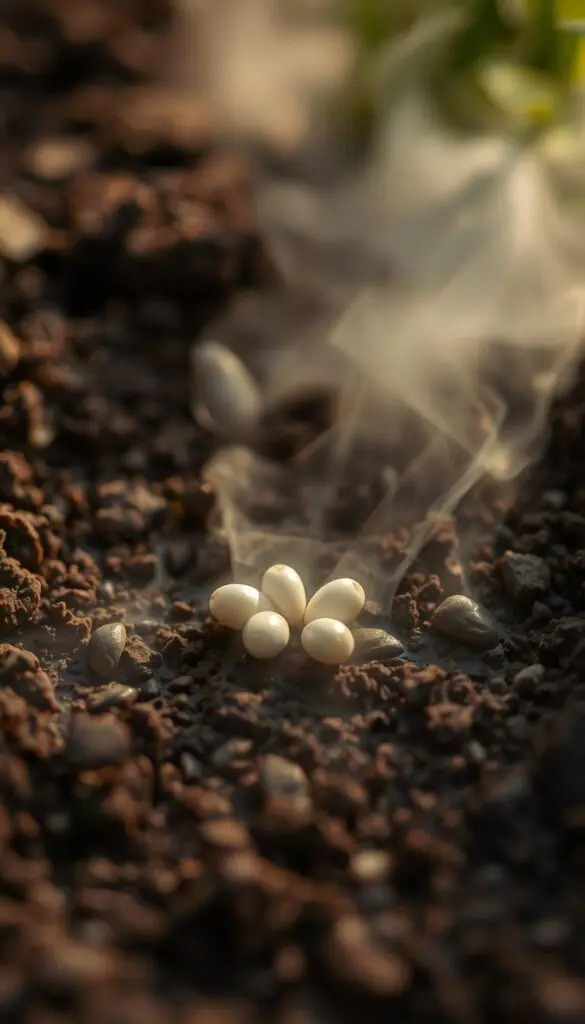
Seeds and sprouts: mist gently and keep the surface moist
Start by keeping the top inch of soil softly damp. Use a fine mist so you don’t dislodge seeds — think damp sponge, not soggy.
Daily checks: lift the tray or press the surface; if it feels dry, mist again until it feels cool and slightly tacky.
New seedlings: every other day, deeper to train roots
After sprouts appear, shift to slightly deeper sessions every other day. Encourage roots to grow downward by soaking a little more at the base.
Mulch lightly around small stems to keep crusting down and buffer surface drying.
Flowering and fruiting: steady moisture for full, flavorful harvests
When plants bloom and set fruit, hold moisture steady. Established plants often need one to three sessions per week, guided by soil checks and weather.
"Steady moisture during fruit set keeps sizing even and flavor rich."
- Use a gentle wand or drip to place water at the root zone and avoid splashing tender stems.
- Don’t rush to add more at midday wilting — check again in the evening before you act.
- Keep notes from planting to first flowers; it helps you predict when to increase care next week or season.
Watering by root depth
Think of root depth as your map for how long and how often to give plants moisture. Use depth as a simple rule so you can water with confidence instead of guessing.
Shallow-rooted crops: frequent, lighter sessions
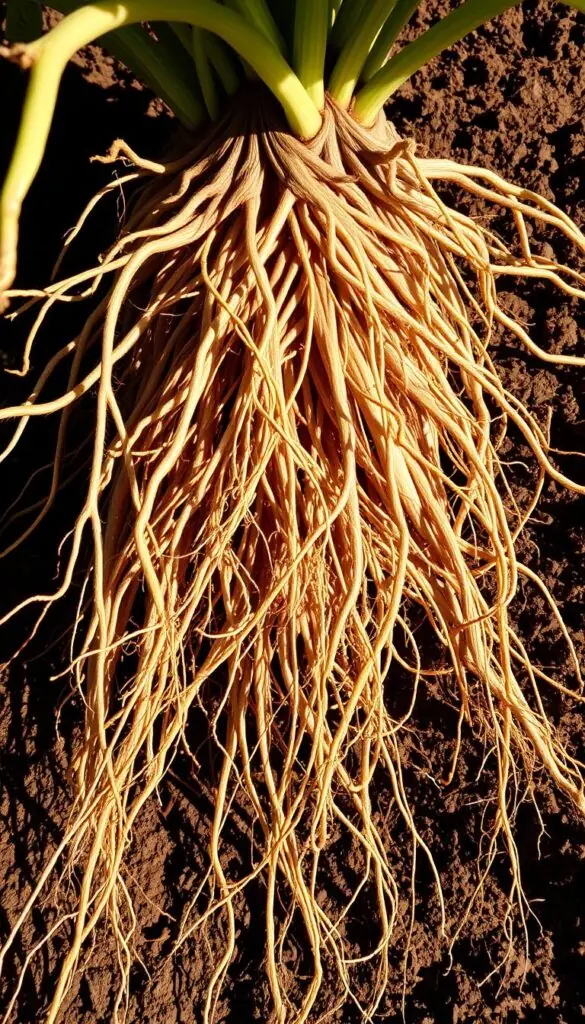
Shallow-rooted crops—cucumbers, onions, spinach, radishes, broccoli, celery, cabbage, and Brussels sprouts—dry out fastest. Give them shorter, more frequent sessions, especially in sandy soil or during hot spells.
Deep-rooted crops: slow, deep soaks less often
Deep-rooted types like tomatoes, pumpkins, and watermelons benefit from slow, deep soaks that reach several inches down. Run longer sessions, then let the soil breathe between runs so roots search deeper.
Medium-rooted veggies: adjust during heat and dry spells
Medium-rooted plants—eggplants, beans, kale, peas, peppers, and potatoes—sit in the middle. Keep a steady pace and add a little more time when temperature or wind raises evaporation.
- Tip: zone by depth—one soaker for shallow rows, one for deep-rooted plant beds.
- Use a trowel to check: roots should explore moist soil below the surface, not sit in soggy top layers.
- During fruit set on deep crops, deepen sessions slightly to support steady development.
"Depth tells you how long to run and how often to return."
In-ground beds, raised beds, and containers
Where your plants live — in the ground, in a raised box, or in a pot — shapes daily care. Each option has a simple routine you can follow so you give the right water and avoid fuss.
In-ground: steady and insulated
In-ground beds hold moisture well because the surrounding soil buffers heat and drying. Aim for about 1–2 inches per week and check with a finger or trowel before adding more.
Raised beds: quicker to dry, check daily in heat
Raised beds warm faster and lose moisture sooner. In warm, windy spells test the soil each morning and add shorter, more frequent sessions as needed.
Containers: water often, sometimes daily in summer
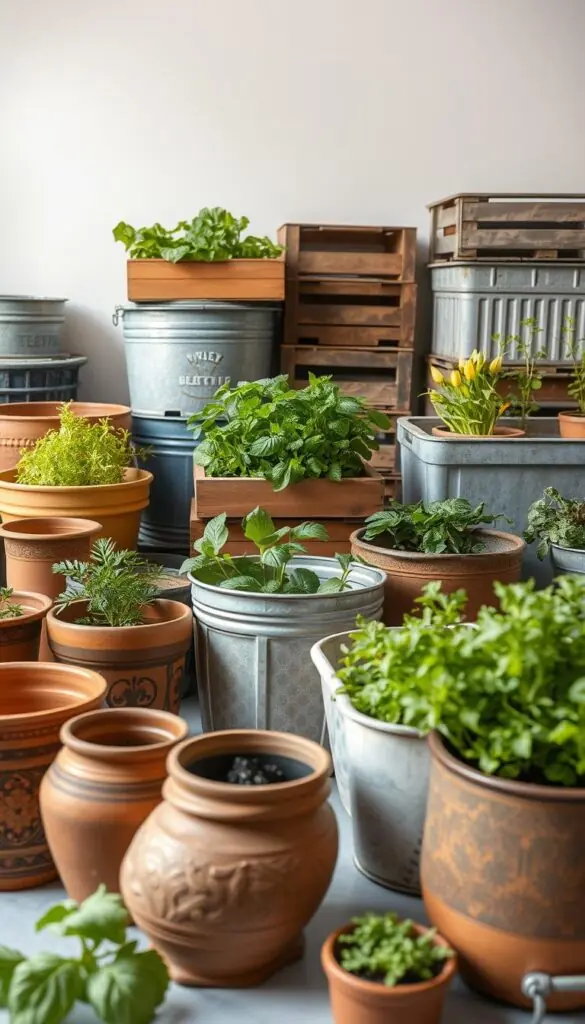
Containers heat on the sides and can feel light when dry. Small pots in full sun may need daily checks and water; larger pots hold moisture longer.
- Use bed-size-appropriate tools: soakers for long rows, drip for raised beds, and a gentle wand for pots.
- Group pots by sun and size so you can water similar containers together efficiently.
- Top beds and containers with 2–3 inches of mulch to slow evaporation and keep roots cool.
- Check drainage holes—soggy soil can harm roots as much as drought; if a pot runs very dry, try bottom-watering until the soil drinks deeply.
"Match the tool to the bed or container size and your plants will thank you."
Plant priorities: when specific veggies need the most water
Every crop has a moment when it matters most — knowing those moments saves time and stress. Use a simple plan so you focus on the right beds at the right time.
Tomatoes, peppers, eggplant
Steady moisture to protect flavor and size
Keep these fruiting crops evenly moist to avoid blossom-end rot and cracking. Sudden floods then droughts dilute flavor and stress roots.
As a guide, a 5-foot tomato row might take ~6 gallons per week in moderate weather; adjust by heat and soil type.
Cucumbers and squash
Priority care during fruit set
Give vines extra attention when fruit forms. In hot spells, add brief mid-day checks so fruit grows full without wilting.
Consistent moisture for tenderness
Leaf crops need steady damp soil to stay tender and sweet. Letting them dry makes bitterness and coarse texture.
Roots: carrots, beets, onions
Avoid the dry-then-flood cycle
Roots crack or split when soil alternates between bone-dry and saturated. Water before the bed gets too dry and ease back as bulbs near harvest. Onions want steady moisture early, then lighter amounts for better storage bulbs.
- Group similar types together in your garden planting to simplify runs.
- Use per week targets as guides, then fine-tune with a rain gauge and soil checks.
- When fruit is forming, prioritize those beds so fruit size and flavor stay strong.
"Focus on steady care at key stages—it's the small, regular efforts that protect flavor and size."
Smart techniques that save water and time
With a few DIY tricks you can cut waste, speed chores, and steady moisture where it counts. These ideas help you spend less time on routine care and give the soil what it needs at the root.
Drip kits, soaker layouts, and simple DIY bottle irrigators
Install a basic drip kit to send small, regular doses right to the root zone. Drip can save about 50% of water compared with overhead sprays because it wets the soil, not the air.
Run soaker hoses along straight rows for easy coverage of beds. They seep slowly and are ideal for carrots, onions, and leaf crops.
Try a DIY bottle irrigator: perforate a plastic bottle, bury it near the stem or seeds, and fill to let water release slowly into the root area. This is great for isolated plants and small container setups.
Trenching and slow soaking to prevent runoff in clay
In clay, move slowly. Soak until water just pools, then work down the row and return after the soil absorbs. This two-pass approach stops runoff and helps deep roots form.
- Use shallow trenches to hold water around larger plants on slopes.
- Raise a rain barrel for a quiet gravity-fed drip; ~2 psi is enough for steady flow.
- On hot days, set container saucers as short-term reservoirs, then empty after an hour to avoid soggy roots.
"Keep layouts simple—zone beds by line and use a timer that clicks on before breakfast."
These practical ideas make your routine kinder to time, to water, and to the plants you love. Try one change this week and see how quickly it frees your schedule and improves soil health.
Common watering mistakes and quick fixes
A few common habits quietly rob your garden of steady moisture and peace.
Mistake: watering at midday when sun is high. Switch to early morning or early evening sessions to cut evaporation and stress.
Mistake: soaking leaves with overhead sprinklers. Fix it by placing water at the ground level so foliage stays dry and disease risk drops.
Mistake: panicking at midday wilt. Check again at dusk—if plants perk up, they didn’t need extra water.
Mistake: rushing water onto clay and causing runoff. Try slow soaking in two passes or use drip so moisture sinks in without pooling.
Mistake: letting containers swing from wet to bone-dry. Check pots daily in heat and add a thin mulch to keep soil steady.
- Mistake: guessing amounts — fix: use a rain gauge, tuna can, or flow meter to track how much water you give.
- Mistake: mixed beds with uneven needs — fix: zone similar plants and use adjustable emitters.
- Mistake: ignoring windy, dry conditions — fix: add mulch and shorten intervals slightly during breezy stretches.
"Small tweaks—timing, delivery, and measurement—often save more water and grow healthier plants."
Drought-ready habits for tough stretches
Dry weeks ask for calm, steady choices that hold soil moisture and ease your chores.
Top your beds with 2–3 inches of mulch. Mulch cools the soil like a shade and cuts evaporation. It keeps precious moisture where roots can use it.
- Shift to drip or soaker lines to deliver water at the root zone and avoid wet leaves.
- In extended drought aim closer to two inches per week, split into deep, measured sessions.
- Water in the early morning to beat heat and wind so more water stays near roots.
- Prioritize sensitive crops: help cucumbers when they set fruit and steady tomatoes in mid-summer; ease back on hardy, mature beds.
- Use shade cloth on the hottest afternoons to shield tender plants and slow surface drying.
- Group pots in the least windy spot and mulch the surface of containers to cut daily losses.
Keep an eye on local weather and your zone. When a cool, humid stretch arrives, dial back runs so soil doesn’t stay soggy. These calm steps keep your garden resilient through drought conditions.
"Simple, steady habits protect roots and save time during dry spells."
Seasonal rhythm: spring through fall in the United States
From spring chill to fall sweetness, your routine shifts in small, sensible steps that plants notice fast. Follow simple cues and a light plan so you give the right amount of water and keep soil steady through each season.
Spring starts: gentle, frequent, and watch late cold snaps
Spring brings tender seedlings and brisk mornings. Water lightly and more often for new planting so roots stay moist without drowning.
Protect young plants from late cold snaps; cool air slows drying. Check soil before you add more and shelter beds if a late frost threatens.
Summer heat: deepen sessions, mulch, and shade where needed
When heat and sun shimmer, lengthen runs so moisture reaches deep roots. Refresh mulch to keep the surface cool and slow evaporation.
Use drip lines where you can to target roots and ease stress on fruiting crops like tomatoes. In drought-prone stretches, add a touch more water and watch containers closely.
Fall finish: steady moisture for quality and storage
As days shorten, steady soil helps crops finish with flavor and stores well. Keep moisture even for roots and brassicas so carrots and cabbage store better.
Shorten sessions as nights cool and rain returns. Note your zone and growing season length so next year’s plan feels familiar and easy.
"Small seasonal shifts protect flavor, save time, and keep beds calm through the year."
Quick checks to build confidence
A few quick checks each day build habit and calm—no gadget needed.
Simple, sensory cues let you tell when to add water. Use quick tools and your hands to learn the garden's rhythm.
- Glance at your rain gauge after storms to know if beds already got enough this week.
- Do a finger or trowel test: cool, clumpy soil? Wait. Warm and dusty? Water today.
- Use a moisture meter under mulch when your hand can’t reach the root zone.
- Check container weight — a light container usually means the pot needs a slow soak.
- Watch plant posture at dusk; perked tomatoes after heat mean moisture was enough.
- Try a hose-end flow meter for a week to learn how many gallons you use; then trust feel and numbers.
"Keep leaves mostly dry and the soil moist — that one-two combo builds resilience."
| Check | What to look for | Action |
|---|---|---|
| Rain gauge | Inches of rain | Skip or shorten runs when it reads ~1 inch |
| Finger/trowel | Surface and near-root feel | Wait or water based on cool vs. dry |
| Container weight | Light vs. heavy pot | Water slowly until pot feels evenly heavier |
Conclusion
A small, steady plan will keep soil lively and your garden calm through every season.
Start each morning with a quick check and aim water at the root zone. Use a rain gauge or tuna can to hit that inch-per-week target and adjust by your zone and heat.
Add a thin layer of compost and 2–3 inches of mulch so the soil holds moisture and feeds roots. Your plants will reward you with cleaner leaves, steadier fruit, and deeper flavor.
Containers, beds, and rows all respond to the same simple tips: steady moisture, dry foliage, and time to breathe between soaks. Keep your tools handy, trust the feel of the soil, and enjoy how your plant care becomes peaceful and sure.
FAQ
How much water does my garden need each week?
Aim for about one inch of water per week as a baseline. That roughly equals 0.62 gallons per square foot or about 600 gallons for a 1,000‑square‑foot bed. Increase by about ½ inch per week for every 10°F the average daytime temperature sits above 60°F, and plan for closer to two inches in very dry, arid regions or during drought.
When is the best time of day to water to reduce waste?
Early morning is best—cool soil and quick‑drying leaves cut disease risk and evaporation. Evening can work if you water early enough for foliage to dry before nightfall. Avoid midday; hot sun causes rapid evaporation and stresses plants.
How do I build soil that holds moisture and loves rain?
Add modest, regular amounts of compost to improve structure and moisture retention. Know your soil type—sandy soils drain fast, clays hold water but can compact, and loam is ideal. Apply 2–3 inches of organic mulch to cool the ground and reduce evaporation.
What’s the best way to deliver water to roots?
Focus on the root zone with soaker hoses, drip lines, or slow‑flow watering wands. These methods soak soil deeply with less waste. Use overhead sprinklers only when necessary; they wet leaves and increase disease and evaporation.
How can I measure an inch of water in my garden?
Use a rain gauge or the simple tuna‑can test—place a straight‑sided can under an irrigation emitter and time how long it takes to collect one inch. Pair that with soil checks: the finger test, a shallow trowel probe, or a moisture meter to confirm delivery.
How should I adapt watering for weather and my USDA zone?
Adjust by temperature, humidity, and wind—hot, dry, or windy conditions raise needs. Check local rainfall patterns and match your schedule to the growing season for your USDA zone. Monitor soil rather than calendar dates to decide when to water.
How often should I water seedlings and new transplants?
Keep the surface evenly moist for seeds and sprouts—light misting works. New seedlings benefit from shallower, more frequent waterings at first, then shift to deeper sessions every other day to encourage stronger root systems.
Do fruiting plants need different care than leafy crops?
Yes. During flowering and fruit set, tomatoes, peppers, cucumbers, and squash need steady moisture to develop full, flavorful fruit. Leafy greens and brassicas do best with consistent moisture for tenderness, while root crops require steady levels to prevent cracking.
How do root depth and crop type change my schedule?
Shallow‑rooted crops need lighter, more frequent waterings. Deep‑rooted plants do better with slower, deeper soaks less often. Medium‑rooted veggies fall between—adjust frequency during heat waves or dry spells based on soil checks.
What’s different about in‑ground beds, raised beds, and containers?
In‑ground beds tend to stay more insulated and retain moisture. Raised beds dry faster and need checking daily in heat. Containers require the most frequent attention—sometimes daily in summer—because they heat and lose moisture quickly.
Which common mistakes should I avoid?
Don’t water shallowly all the time—roots stay near the surface and plants weaken. Avoid overwatering, which causes root rot, and don’t water only the foliage. Skipping mulch and not adjusting for heat or rainfall are other frequent errors; fix them with deeper soaks, mulching, and routine checks.
What water‑saving techniques actually work?
Use drip kits or soaker layouts, install hose‑end timers, and try simple DIY bottle irrigators for small areas. In clay soils, trenching and slow soaking help prevent runoff. Group plants by water needs to avoid waste.
How should I change care through the seasons?
In spring, water gently and watch for late cold snaps. In summer, deepen sessions, mulch, and provide shade if needed. In fall, keep moisture steady to finish crops well and prepare roots for storage. Always base changes on soil moisture and weather.
How do I know if my schedule is working?
Do quick checks: press the soil a couple inches down—moist but not soggy is ideal. Look for healthy, vibrant leaves and steady growth. Use a moisture meter or the trowel test when in doubt to build confidence in your routine.