Some flowers announce themselves with color. Hyacinths do it with scent.
Before you register the blues, pinks, or soft purples, you notice the air has changed. There’s a sweetness to it — fresh, clean, unmistakably spring. Hyacinths don’t just bloom in the garden; they fill it.
They’re small compared to trees and shrubs, but their presence is surprisingly strong. A few hyacinths can transform an entire corner, pot, or pathway into something memorable.
Why Hyacinths Feel So Sensory
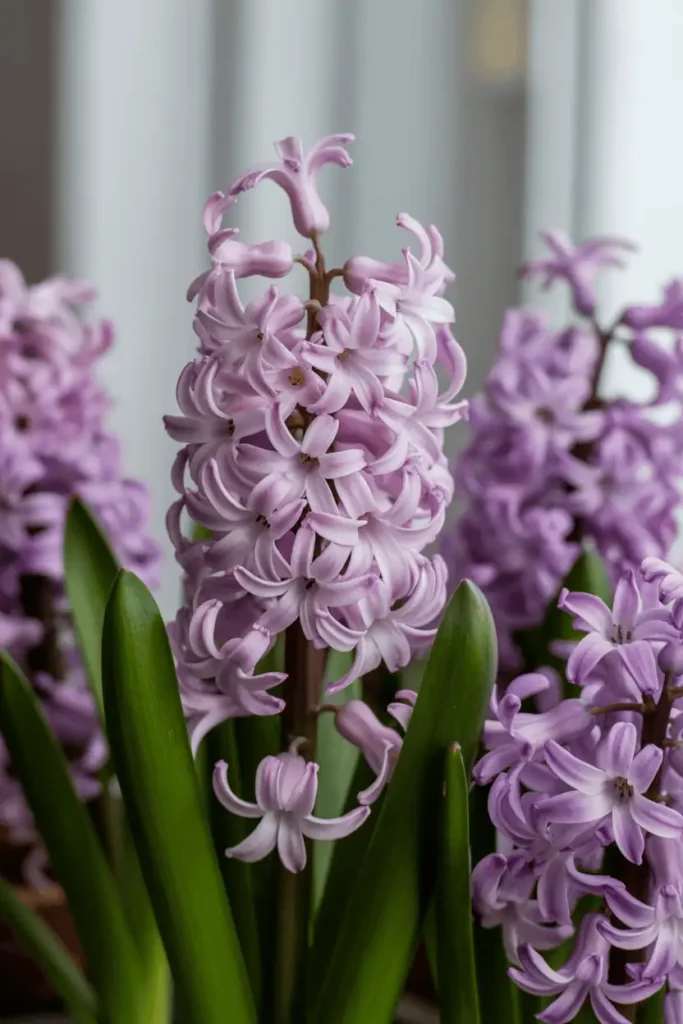
Hyacinths are one of the most fragrant spring flowers, and that’s what makes them special. Their scent carries — especially in cool spring air — and it lingers.
This makes hyacinths feel intimate. You plant them near places where you pass, pause, or open a window. They’re meant to be experienced up close.
On Pinterest, hyacinths perform well because they suggest something beyond the image: how it feels to be there. That sensory layer is powerful.
Understanding How Hyacinths Grow
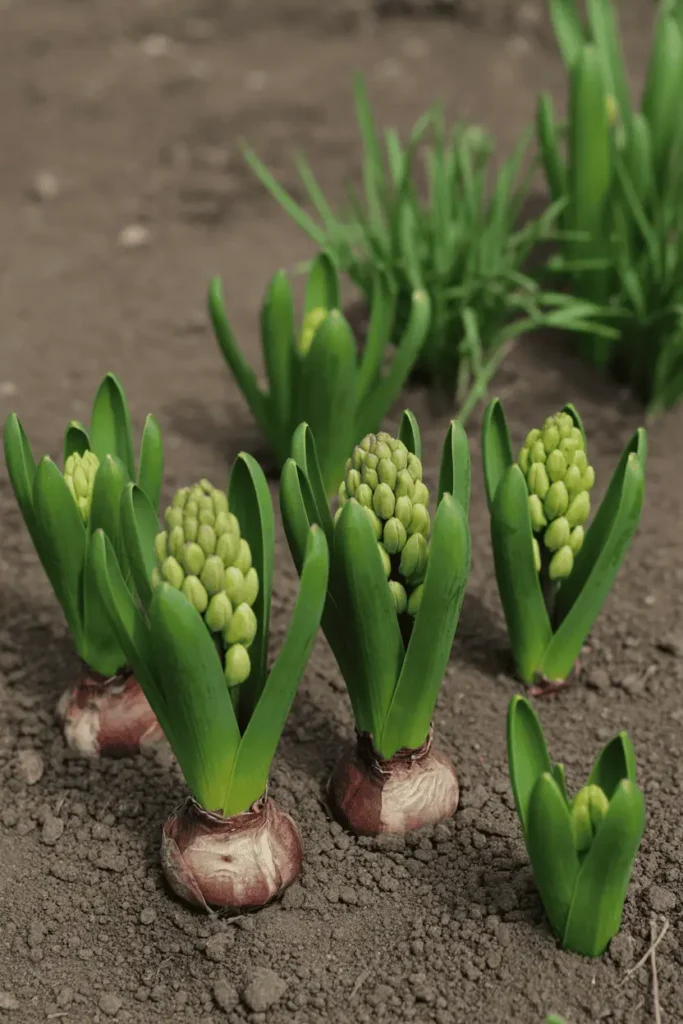
Hyacinths grow from bulbs planted in fall, quietly waiting through winter before emerging early in spring. They bloom reliably, often when the garden is still sparse.
Their structure is simple:
- One strong stem
- Densely packed, bell-shaped flowers
- Narrow green leaves at the base
Because of this form, hyacinths always look intentional. They don’t sprawl or wander. They stay exactly where you place them.
Hyacinth Colors and Their Mood
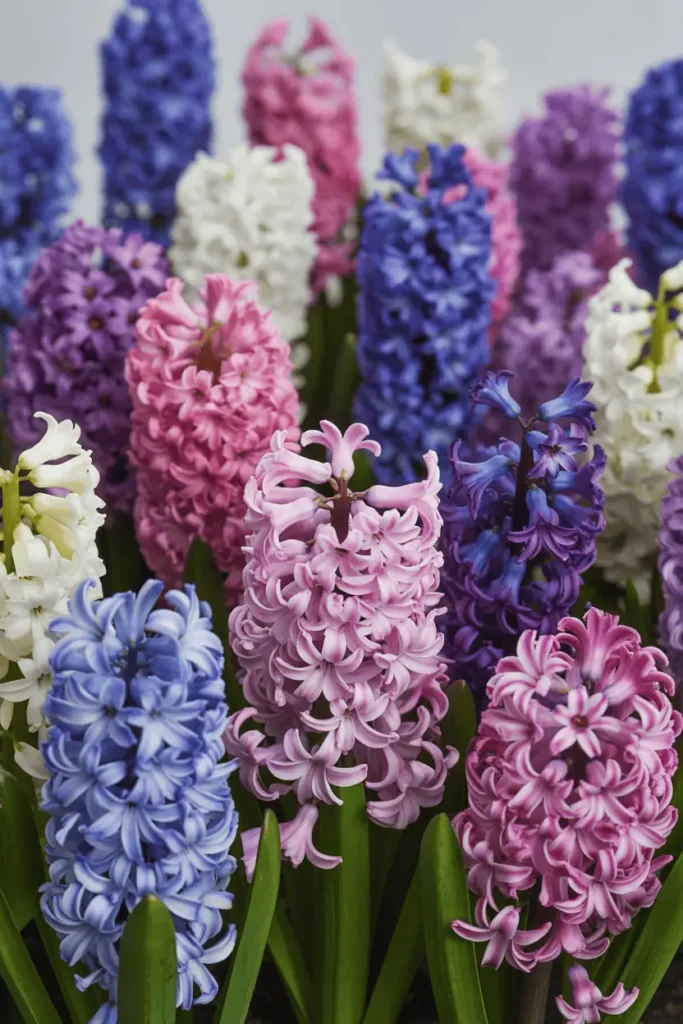
Hyacinths come in rich but controlled colors. Even their brightest shades feel grounded rather than loud.
Common tones include:
- Soft blue and lavender
- Pale pink and blush
- Creamy white
- Deep purple
Pinterest users are especially drawn to monochrome groupings — one color planted in multiples. This makes hyacinths look calm, styled, and very saveable.
Where Hyacinths Shine the Most
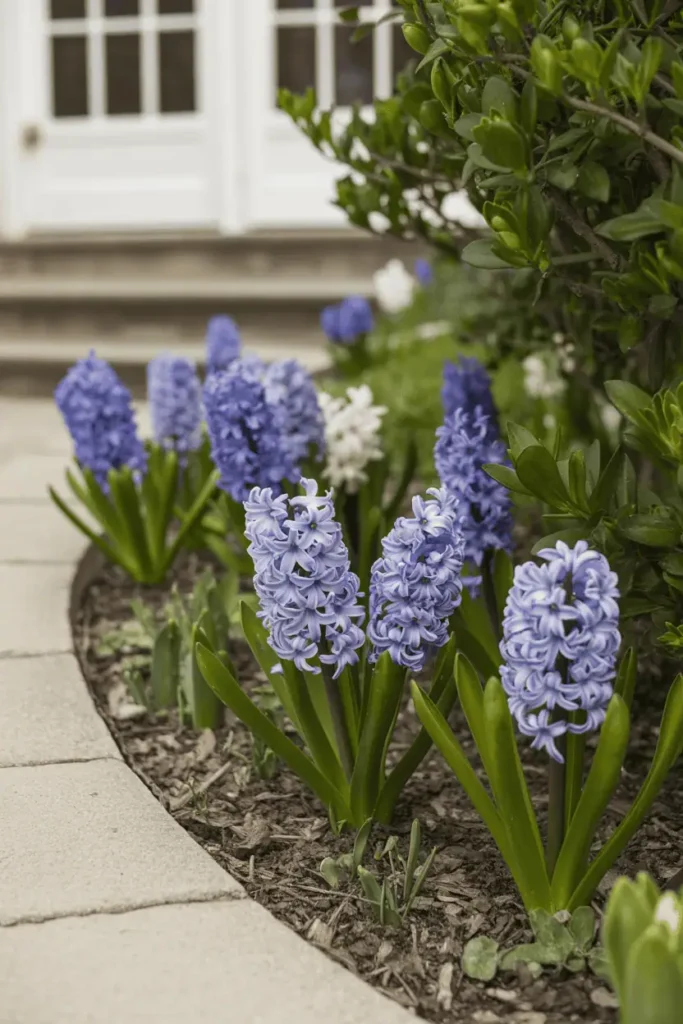
Hyacinths are not background flowers. They belong where their scent and color can be appreciated.
They work beautifully:
- Along paths and walkways
- Near doors, porches, and windows
- In containers on patios or balconies
- At the front edge of flower beds
Because they’re compact, they’re perfect for defining small spaces or creating moments rather than filling areas.
Hyacinths in Containers and Small Gardens
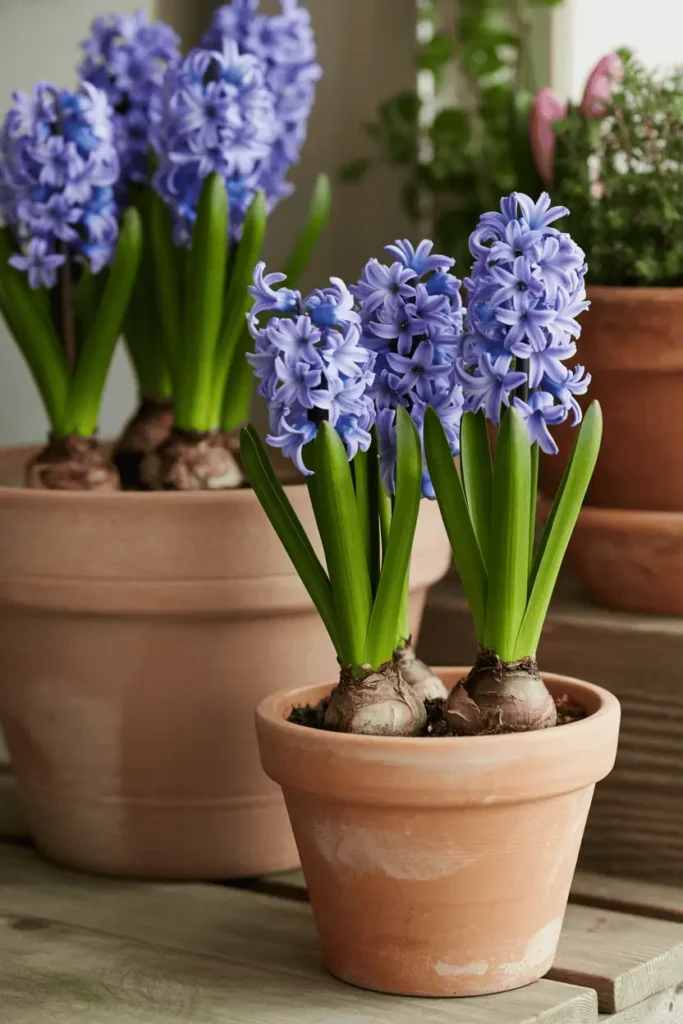
This is where hyacinths truly excel.
In containers, hyacinths feel almost designed — neat, upright, and balanced. A simple pot with a few bulbs can look complete on its own.
In small gardens, restraint matters. A cluster of hyacinths is often enough. Their scent does the rest of the work.
This makes them ideal for:
- Balconies
- Courtyards
- Entryways
- Rental-friendly gardens
Pairing Hyacinths With Other Spring Flowers
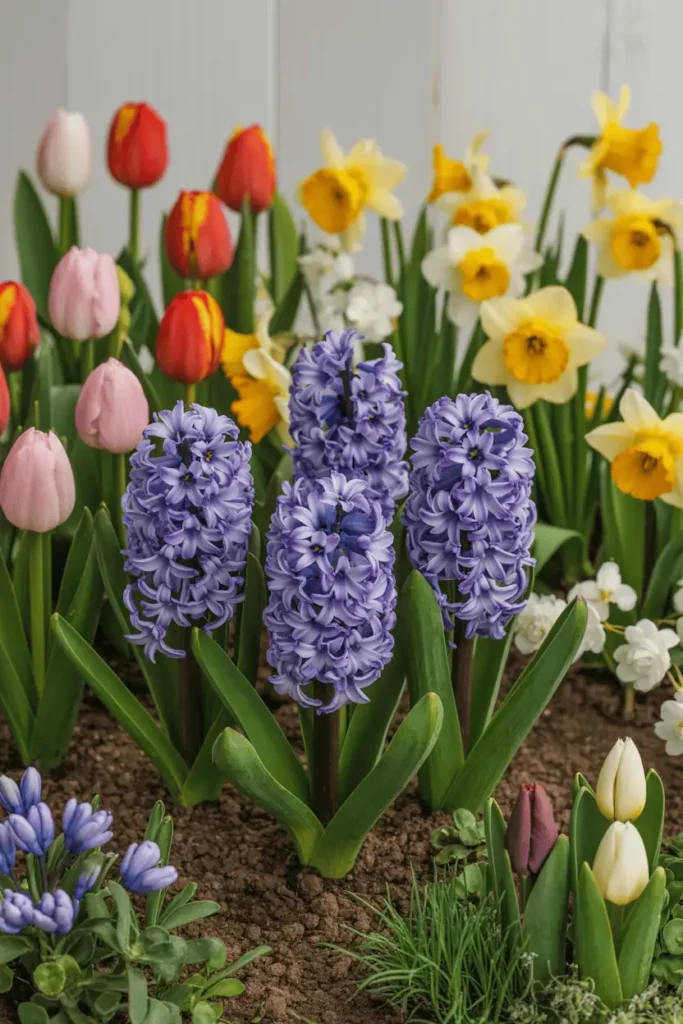
Hyacinths work best with flowers that don’t compete for attention.
They pair beautifully with:
- Tulips (contrast in shape)
- Daffodils (contrast in scale)
- Muscari (soft color harmony)
Let hyacinths stay slightly apart. Crowding them reduces their visual and sensory impact.
After the Bloom: What Happens Next
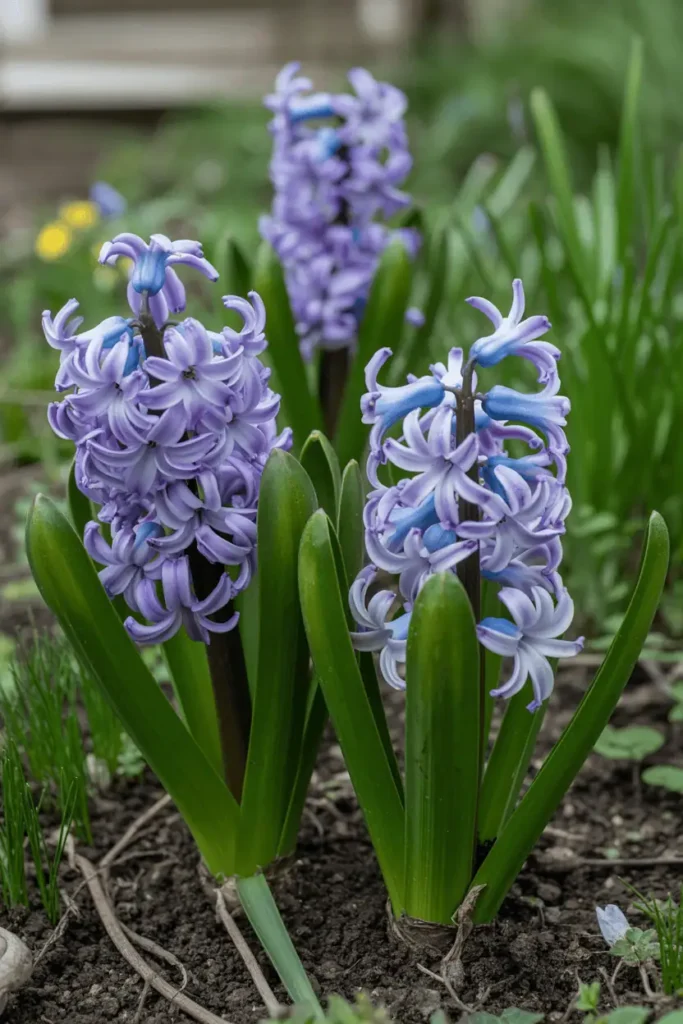
Once hyacinths finish flowering, their blooms fade quickly. This is normal — and expected.
The leaves remain for a while, gathering energy for the next year. Over time, bulbs may produce smaller flowers, but their early impact is always worth it.
Hyacinths are not about longevity. They’re about that moment when spring feels close enough to touch.
Why Hyacinths Belong in a Spring Garden Plan
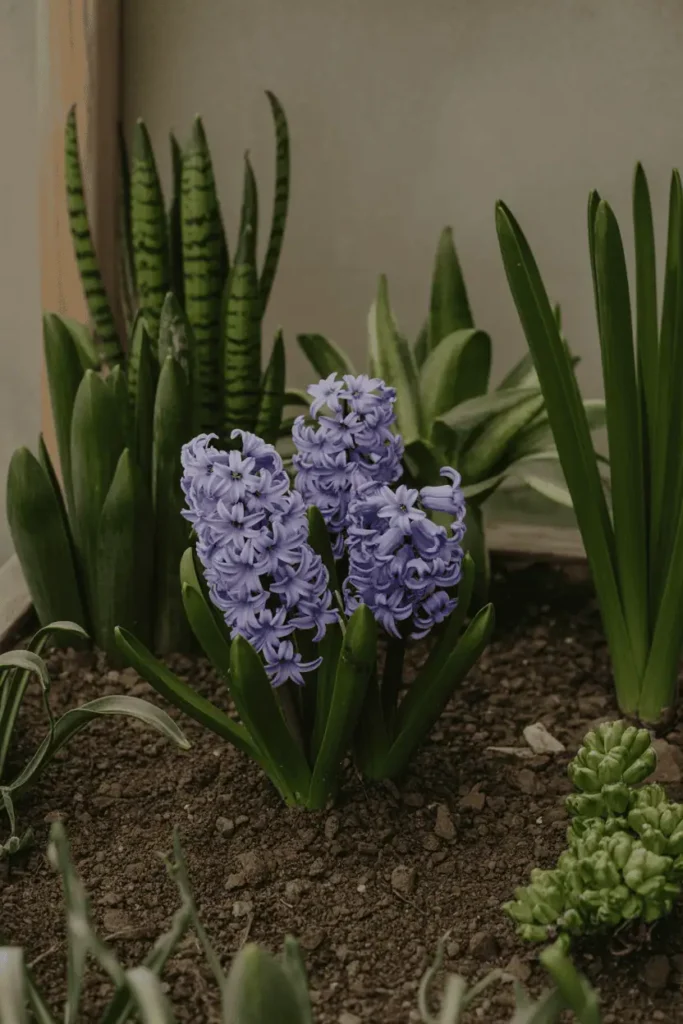
Hyacinths don’t just mark the season — they define its beginning.
They bring:
- Scent when little else does
- Color without chaos
- Structure without stiffness
If you want your spring garden to feel intentional, hyacinths are one of the easiest ways to achieve that.
Final Thought: A Small Flower With a Strong Presence
Hyacinths remind us that spring doesn’t need to be loud to be powerful.
Sometimes, all it takes is a small cluster of flowers and a change in the air to know the season has arrived 💜