Imagine stepping out to a sunlit patch that smells faintly of thyme and feels soft underfoot. Have you noticed tired grass or dry, high-work turf and wished for something easier to care for?
You can transform a thirsty space into a low-water, living carpet that still looks lush and welcoming. We’ll walk you through simple, step-by-step choices—from hand removal with a flat-edged shovel to renting a sod cutter (about $45/day) or smothering with cardboard plus three inches of compost or mulch.
Home gardeners report success with drought-tolerant mats like thyme and sedum, shade-loving options such as mazus and moss, and color-forward spreaders like golden creeping Jenny. These ground covers reduce mowing, fertilizer use, and watering while adding seasonal blooms that attract pollinators.
Along the way, you’ll use everyday tools—edging, hose guides, planters, solar lights, and a compost bin—and learn seasonal timing so plants take root quickly. Expect fewer chores and a yard that invites bare feet, quiet mornings, and more time to enjoy your garden.
Key Takeaways
- Swap thirsty turf for low-water ground covers to cut watering and routine maintenance.
- Try thyme, sedum, mazus, moss, or golden creeping Jenny for texture, scent, and color.
- Choose a conversion method that fits your timeline: hand removal, sod cutter, or smothering.
- Use simple tools—flat-edged shovel, edging, hose guides, compost—to finish the job well.
- Plant at the right season to speed root growth and quick coverage.
Why choose lawn alternatives for a beautiful, low-maintenance yard
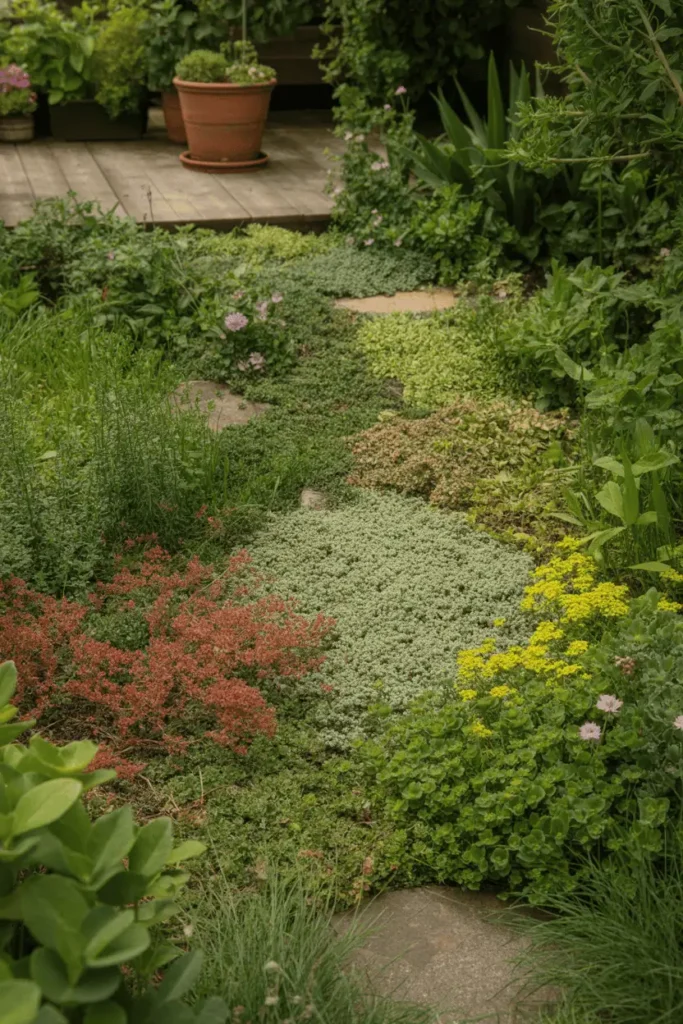
Start small and see immediate rewards. Replace a sunlit strip or the soggy edge by the driveway and you’ll cut watering and chores right away. This option pairs practicality with charm: less time mowing and more time enjoying scent, texture, and color.
Save water and cut chemicals. Swapping sections of grass for drought-tough plants or gravel gardens reduces irrigation and fertilizer needs. Native mixes, thyme, and sedum attract bees, butterflies, and birds while keeping maintenance low.
These plantings change through the year. Expect soft plumes in summer, herb scents on warm days, and foliage that warms to copper in fall. A monoculture grass lawn stays flat and uniform—mixes give movement and seasonal surprises.
- You save water immediately by converting small areas to drought-ready plantings or gravel beds.
- Mowing drops dramatically; many ground covers need only an annual tidy.
- Edge narrow paths with stepable plants to create durable, attractive routes without weekly care.
- Interplant natives to build habitat and steady food for pollinators and birds.
First step: Replace the sunniest 100–200 sq ft near a path to see quick wins and learn what thrives in your garden.
Plan first: site, zones, and foot traffic
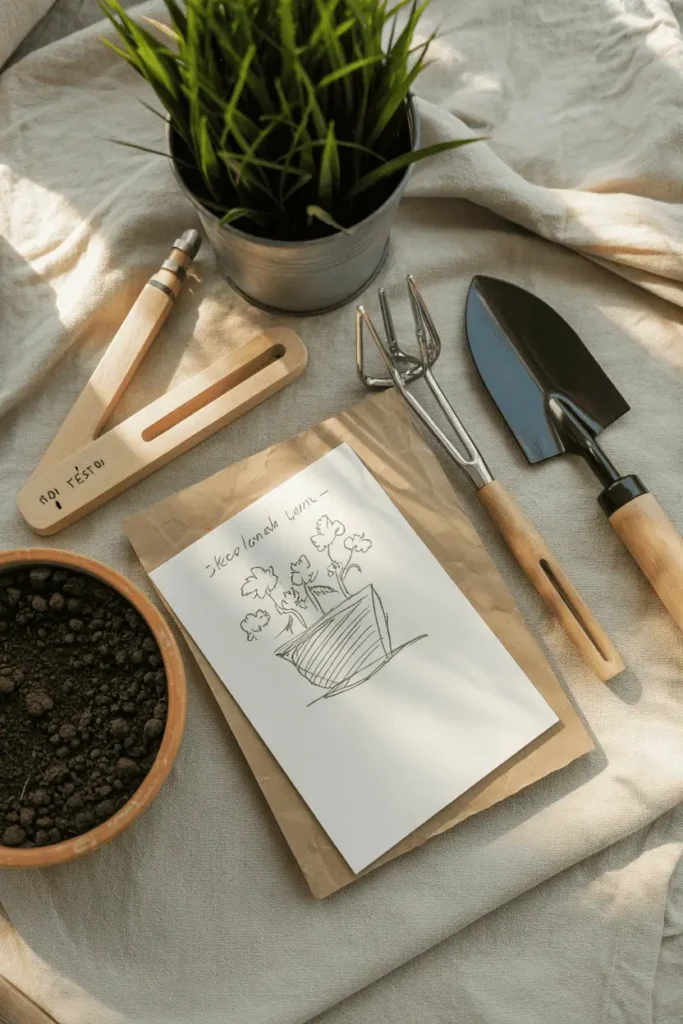
Begin with a short sketch and simple checks so your choices fit the place. A little time now saves work later and helps you pick plants that thrive in your yard.
Sun, shade, and soil: quick assessment checklist
- Track sun: 6+ hours = full sun; 3–5 = part sun; under 3 = shade. Walk the area at 9 a.m., noon, and 3 p.m.
- Drainage test: dig a 6-inch hole, fill with water. Drains 6 hours = poor drainage.
- Feel the soil: sandy crumbles or clay that smears? Add compost to improve structure and root health.
USDA zones and rainfall: matching plants to your climate
Match drought-tolerant choices to dry zones and moisture lovers to low spots or near downspouts. Sedums like thin, well-drained ground on slopes. Moss wants compacted, acidic, and consistently moist conditions.
Foot traffic realities: daily paths vs play areas
Map common routes and put stepable mats or thyme on paths. Reserve display blocks and edging for low-use beds. For heavy play, use stepping stones or tougher mixes to protect tender patches.
"Plan where people walk first — plants last."
Sun-loving, drought-tolerant ground covers that mimic a grass lawn
Bright, sun-soaked patches can become soft, drought-tolerant carpets that invite bare feet. Below are three dependable choices that give a grass-like look without heavy work. Each entry lists zones, spacing, soil needs, and what to expect through the first few years.
Creeping thyme
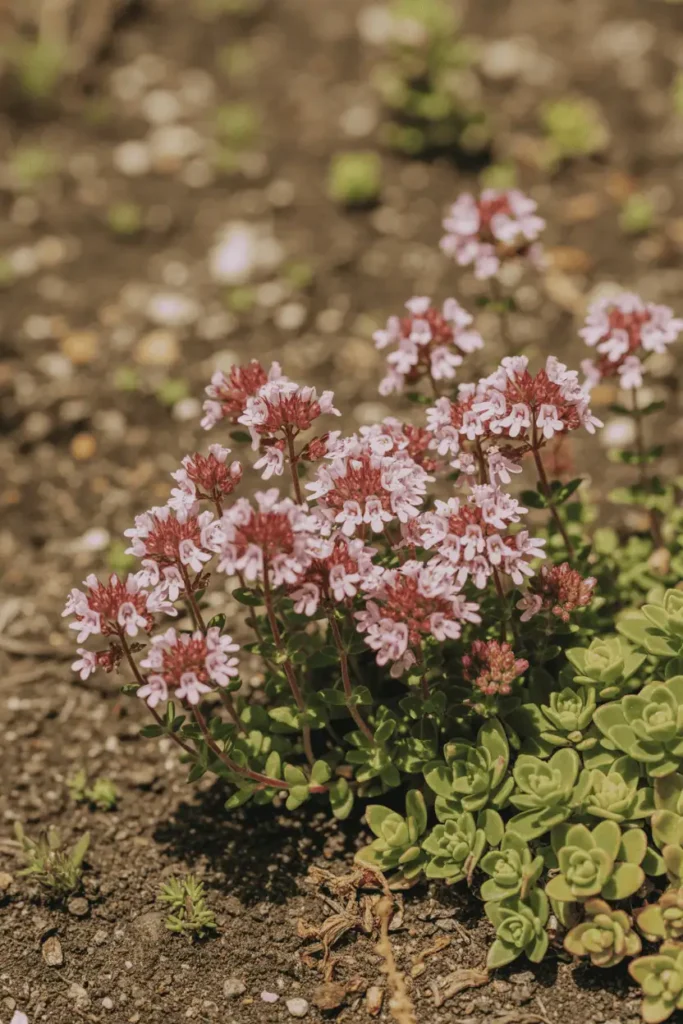
Zones: 4–9 (T. doerfleri ‘Bressingham’ zones 6–9; T. serpyllum ‘Albus’ zones 4–9).
Plant 8–12 inches apart in 6 inches of sharply draining soil. Top-dress with compost at planting.
- Year 1: expect regular weeding; plants spread ~6 inches per year.
- Year 2: thyme begins to outcompete most weeds and knit together.
- Year 3: near-solid cushion, fragrant when stepped on; pink or white flowers in late spring.
- Foot traffic: tolerates moderate daily use if soil drains well.
Sedums for heat and slopes
Zones: 3–9 (Sedum acre 3–8; S. spurium 4–9).
Space plants about 12 inches apart. Water to establish, then cut back to drought-only watering.
- Sedum acre fills in fast—often within two months—and blooms bright yellow in late spring.
- Creeping red sedum adds multicolored foliage for year-round interest.
- Use on hot, lean ground and slopes: shallow roots form a net that helps hold soil and reduce erosion.
- Foot traffic: light to occasional; best with stepping stones for heavy use.
Dwarf cinquefoil
Zones: 5–8. Forms 3–4 inch foliage and blooms butter-yellow April–June.
Plant in well-drained soil and avoid frequent transplanting once set. Step-tolerant and neat near edges or flagstone.
| Plant | Spread | Best use |
|---|---|---|
| Creeping thyme | 6" per year | Paths, moderate foot traffic |
| Sedum acre / S. spurium | Fast (2 months for cover) | Slopes, hot spots, pollinator patches |
| Dwarf cinquefoil | Compact 3–4" | Edging, stepping joints |
Quick tips: Keep first-year weeding consistent, ensure sharp drainage for thyme and cinquefoil, and water only during long dry spells after establishment. For a grass alternative look, plant large swaths of one species and trim edges once or twice a season.
Shade and moisture winners for tough areas under trees and along paths
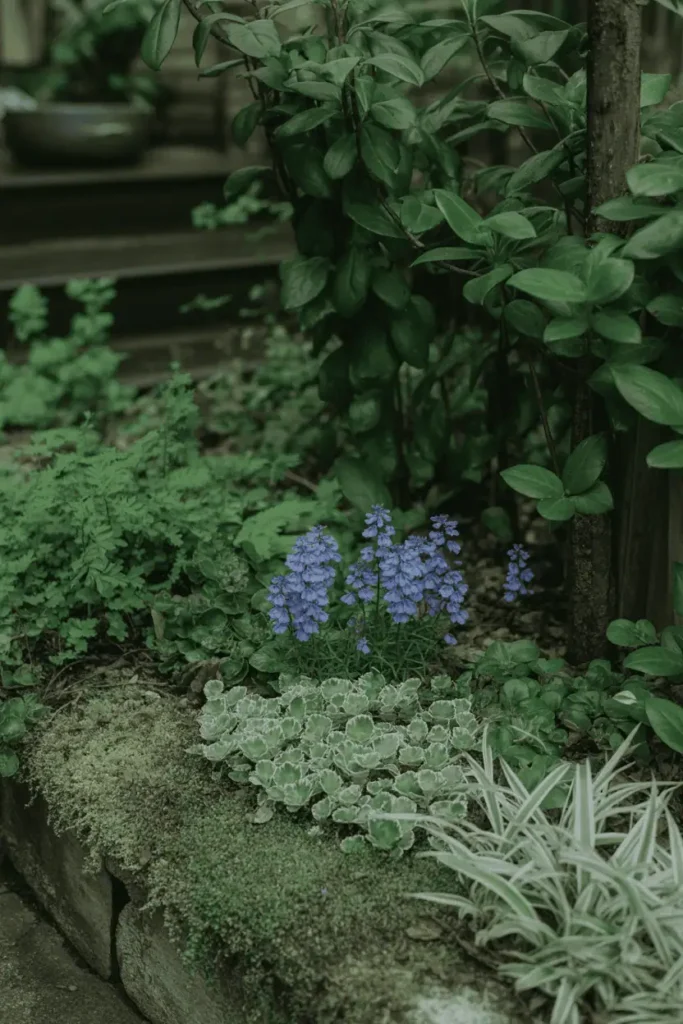
Deep shade and compact soil are ideal places to try moss, mazus, or ajuga instead of struggling grass.
Mazus (Zones 5–8) forms a flat, bright-green carpet about 2 inches high. It spreads by creeping stems and produces tiny lavender flowers from spring into summer. Plant in moist, well-prepared soil and keep newly planted spots damp during the first season. Once rooted, mazus tolerates light daily foot traffic along paths.
Moss lawns suit deep shade, compacted, acidic ground and thirsty roots under trees. Test soil pH (aim ~5.5), roughen the surface, lay moss pads, and mist daily for 2–3 weeks. Moss feels cool and soft underfoot and stays evergreen in many climates.
Ajuga (Bugleweed, Zones 3–10) fills dry shade with dense mats and purple flower spikes in spring. It handles moderate foot traffic and needs only an annual clip or light mowing for tidy edges. Check your state list: ajuga can spread aggressively in some regions. Contain vigorous spreaders with metal edging or plant in defined beds to protect nearby plantings.
| Species | Zones | Soil | Traffic |
|---|---|---|---|
| Mazus reptans | 5–8 | Moist, fertile | Light daily foot traffic |
| Moss | Wide (shade) | Acidic, compact (pH ~5.5) | Low; soft cushion |
| Ajuga (Bugleweed) | 3–10 | Dry to average shade soil | Moderate; check invasiveness |
- Add stepping stones to protect softer patches and guide foot traffic.
- Improve heavy soil slightly with compost, but keep moss spots lean.
- Water shade covers deeply but infrequently after they establish.
Color-forward spreaders: striking looks with smart containment
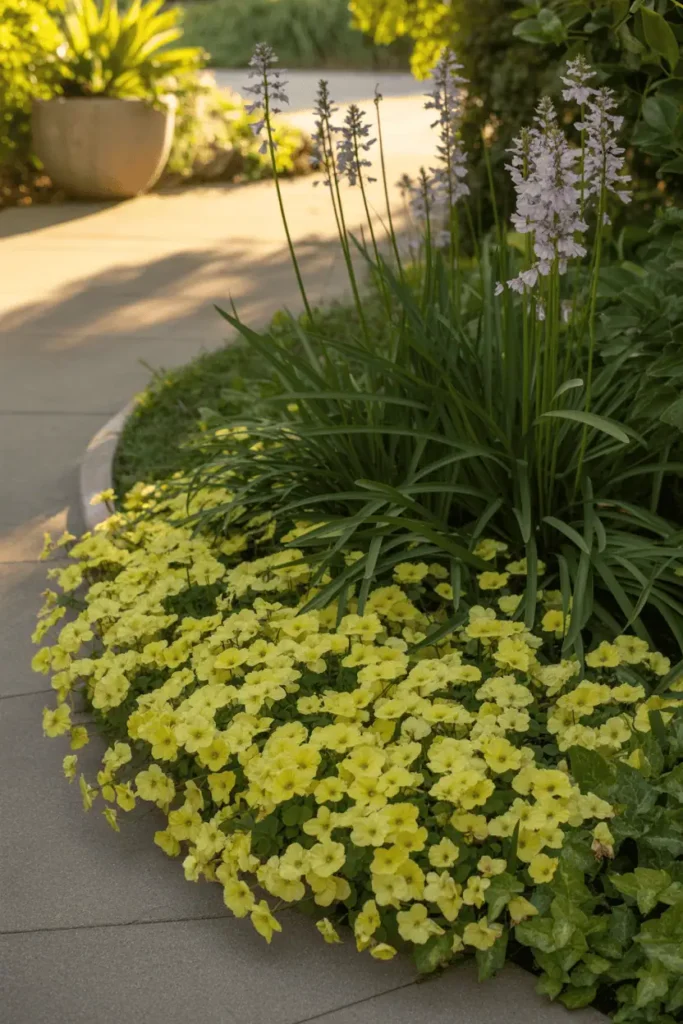
Color-forward spreaders bring instant personality to hard-to-mow spots and framed beds. These low mats and clumping grasses pair bold color with practical use. Think of them as living trim that reduces chores and adds curb appeal.
Golden creeping Jenny (Zones 4–8)
Lysimachia nummularia ‘Aurea’ stays under 3 inches and makes a vivid chartreuse carpet. It shifts to red-bronze in winter, giving off-season interest.
Because it spreads fast, contain it with steel or aluminum edging. Monthly edging keeps borders neat. It tolerates occasional steps; add stepping stones where traffic is frequent. Water in drought to keep the mat full.
Lilyturf and Liriope muscari (Zones 6–10)
Liriope spicata spreads well and suits hellstrips, slopes, and narrow banks. Liriope muscari clumps rather than runs, so choose it where spread is a concern.
Clip in late winter to remove ragged foliage. This quick trim refreshes the look and readies the plants for spring growth.
- Plant golden creeping jenny along borders, between boulders, or in a framed bed you can edge.
- Tuck lilyturf into areas where mowing is awkward; it mimics grasses without weekly trims.
- Pair a vivid spreader with compact covers like dwarf cinquefoil to balance color and control.
| Plant | Zones | Best placements | Traffic tolerance |
|---|---|---|---|
| Golden creeping jenny | 4–8 | Edges, framed beds, between rocks | Occasional; use stepping stones |
| Liriope spicata | 6–10 | Hellstrips, slopes, banks | Moderate; spreads |
| Liriope muscari | 6–10 | Narrow side yards, foundation beds | Good; clumping habit |
"Containment is kindness—to nearby plants and to your future self."
Clover lawn options for a soft, self-feeding green
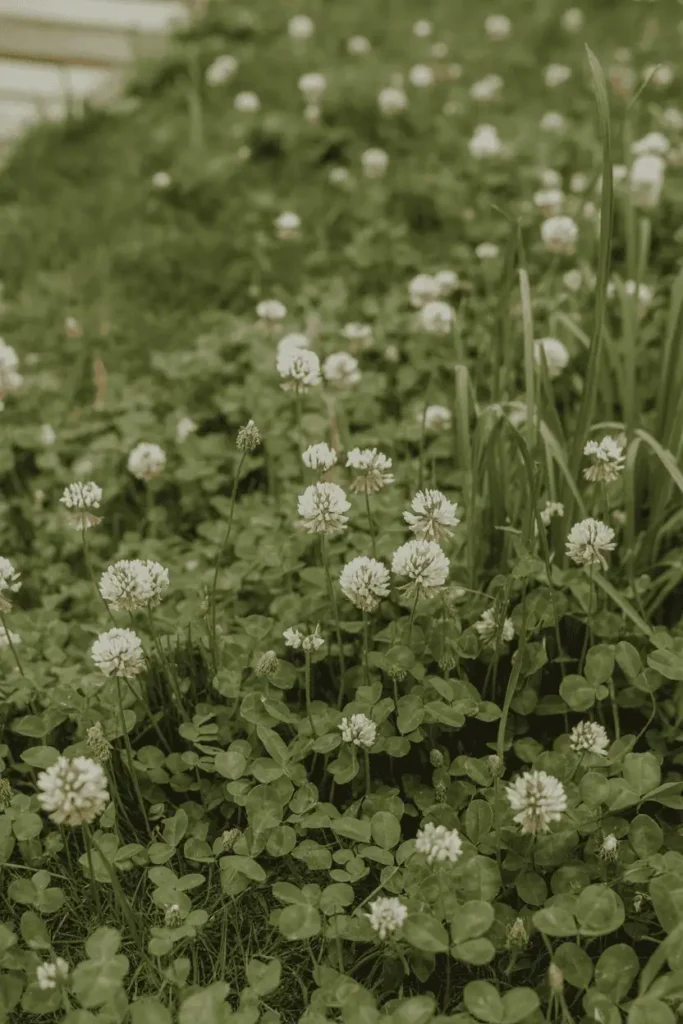
Clover gives you a living, low-care carpet that stays green with less water and fewer inputs than a typical grass lawn.
Dutch white clover (Trifolium repens, Zones 4–8) fixes nitrogen, tolerates some shade, and holds color in heat. Seed it for a barefoot-friendly surface that reduces routine feeding.
Microclover and pet-friendly choices
Microclover grows lower and blooms less, so play areas see fewer bees and fewer tall flowers. It also resists pet urine better than many turf mixes.
When to use pure clover vs mixes
Use nearly pure clover where you want a thick, self-feeding carpet. Avoid mixing clover with short sedums—clover’s creeping habit will overtop and shade them by year two.
- Sun: aim for 4–6 hours daily; in deep shade expect thinner cover.
- Mowing: cut occasionally to mimic turf or skip it and mow once midsummer to refresh blooms.
- Weeds fall away as clover thickens; spot-pull after rain.
- Rake to roughen surface.
- Broadcast seed (spring in coldest zones; early fall in most areas).
- Water lightly until sprouts set; overseed thin spots next spring.
| Type | Zones | Best use |
|---|---|---|
| Dutch white clover | 4–8 | Soft, feeding carpet |
| Microclover | 4–8 | Play areas, pet spots |
| Mixes (no short sedums) | Varies | Edge beds, sunlit strips |
"Mark daily routes with stepping stones to protect the carpet and keep paths neat."
Beyond plants: gravel gardens, rock gardens, xeriscaping
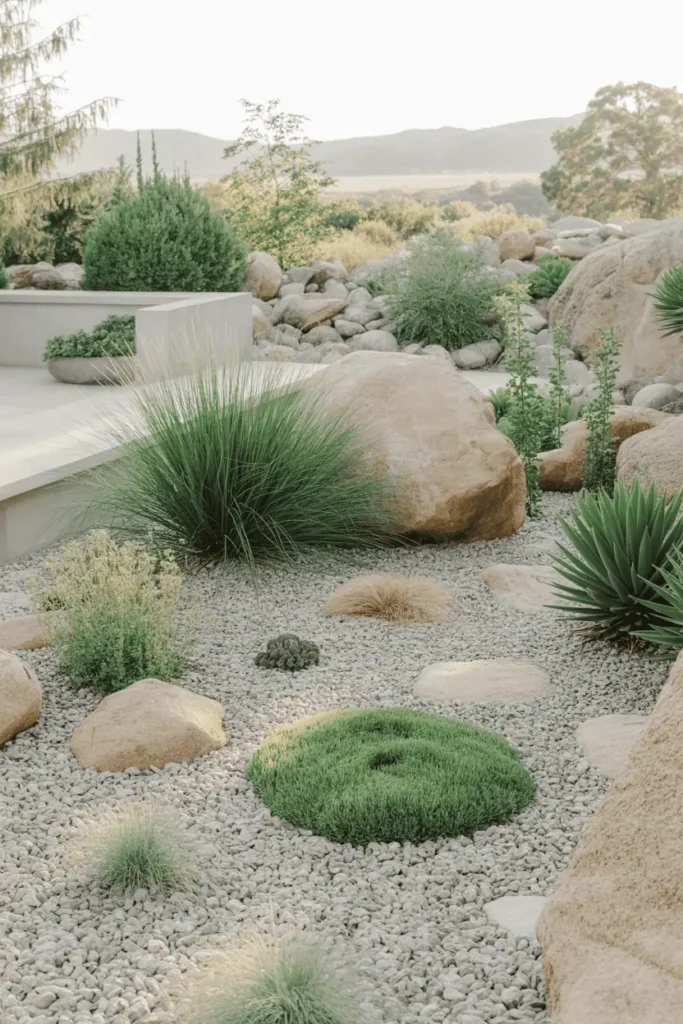
Choose gravel, rocks, and regionally adapted plants to shape a beautiful, low-water outdoor room. These approaches swap frequent mowing and splash irrigation for texture, year-round structure, and much less upkeep.
Gravel gardens
Material list: washed 3/8"–1/2" gravel, steel edging, decomposed granite for pads, a few boulders, and native cover plants.
Lay gravel directly on prepared soil (no permanent weed barrier). Rake monthly to refresh patterns and keep the surface tidy.
Xeriscaping by rainfall
Design with local precipitation in mind. Group species by water needs and exposure so each area thrives without added irrigation.
Use native grasses and drought-tough shrubs to build a resilient palette. This option saves water and fits diverse U.S. climates.
Rock gardens and texture
Mix stone sizes and nest boulders about one-third below grade for a natural look. Add mossy pockets in shady corners for cool contrast.
Uplight a focal rock or specimen tree with a solar spot for evening interest and safety. Place a bench on a decomposed granite pad to anchor the scene.
| Feature | Materials | Best use |
|---|---|---|
| Gravel surface | Washed 3/8"–1/2" gravel | Mulch-free beds, low maintenance |
| Edging | Steel or aluminum edging | Keep gravel crisp along walks |
| Boulders & rocks | River rock, feature boulders | Texture, height, erosion control |
| Seating pads | Decomposed granite | Firm, tidy seating/planter base |
- Choose native cover plants to root beneath gravel and cut irrigation needs.
- Combine fine grasses, spiky yucca, and cushiony thyme for year-round contrast.
- Design for sun and shade—moss between rocks in cool corners adds depth.
"Design with rainfall, not the sprinkler timer."
How to convert a grass lawn step-by-step
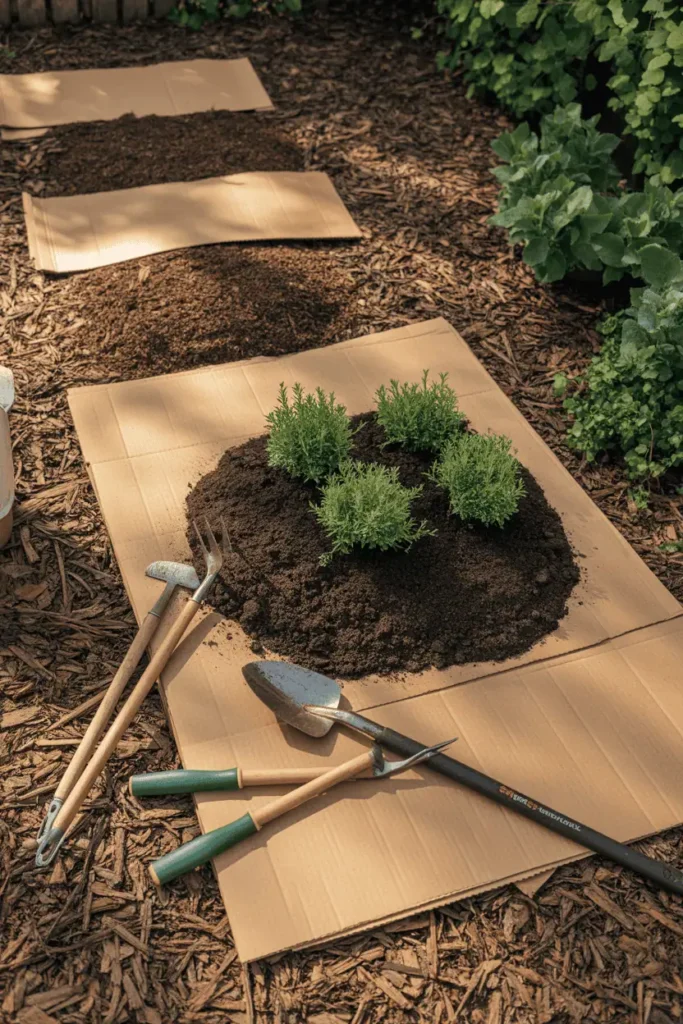
Swap tired turf for a low-water cover in clear, manageable stages. Start small, mark edges with a hose, and follow one of three removal routes that fit your budget and timeline.
Power tools: sod cutter or rototiller — pros and cons
Sod cutter: rent for about $45/day to slice and lift neat strips. It’s fast, clean, and reduces transplant shock.
Rototiller: turns soil quickly but brings weed seeds and roots to the surface. Expect more weeding the first year if you till.
Hand removal: flat-edged shovel technique and composting sod
Slide a flat-edged shovel under sections, lift, and stack. Plan on roughly 30 sq ft per hour for steady work.
Cold-compost stacked sod in a corner. In months it breaks down into rich soil you can use to top garden beds.
Smothering method: cardboard/newspaper “lawn lasagna” timeline
Overlap one layer of cardboard (or 8 layers of newspaper), wet thoroughly, then add about 3 inches of compost or mulch.
Keep moist; decomposition takes about 6–12 months. This is the lowest-cost, lowest-disturbance route.
Seeding and planting: compost topdress, spacing, and first-year weeding
Loosen the top 6 inches of soil, rake level, and add 1–2 inches of compost. Space plugs per species (sedum ~12" apart; thyme 8–12").
Water new plantings regularly for the first 4–6 weeks, then taper. Expect light weeding during year one while mats knit together.
Seasonal timing by region
Fall planting is ideal in most U.S. zones to let roots establish before winter. In the coldest climates, wait until spring to avoid frost heave.
Tools and materials checklist
- Edging (steel or aluminum), hose guides, spray chalk.
- Flat-edged shovel, sharp spade, hand cultivator.
- Sod cutter rental (~$45/day) or rototiller if you accept extra weeding.
- Compost, mulch, planters, solar path lights, compost bin.
| Method | Cost / Time | Best use |
|---|---|---|
| Sod cutter | ~$45/day; fast | Clean removal, reuse sod or compost |
| Rototiller | Rental varies; quick | Large areas, but more weeding |
| Hand removal | Low cost; ~30 sq ft/hr | Small patches, precise edges |
| Smothering | Low cost; 6–12 months | No-dig, best for slow projects |
"Mark edges first and work in stages — small wins build confidence and a thriving yard."
Common mistakes to avoid and easy maintenance wins
Small mistakes—wet soil, aggressive mixes, or unchecked runners—undo months of careful planting. Spotting problems early keeps your garden looking cared-for without extra work.
Planting pitfalls and quick fixes
Don’t plant thyme or sedum in soggy conditions. Both need about six inches of fast-draining soil. Raise beds slightly or add grit to protect roots.
Avoid mixing clover with short sedums. Clover’s vigor often shades out sedums by year two; grow clover as its own carpet.
Check local lists for spreaders like ajuga. If it’s allowed, contain runners with steel edging to protect nearby beds.
Simple upkeep that pays off
- Edge once or twice a season to keep a neat look and stop spreaders from marching into borders.
- Plan one light mowing or string-trim in late winter to refresh foliage on liriope and ajuga.
- Water deeply only during extended droughts—most carpets prefer drier conditions once set.
- Hand-pull weeds after rain; a 10-minute walk-and-pull weekly prevents big problems.
- Use stepping stones to protect thin patches from heavy foot traffic.
"Step back each season, note what thrived, and adjust in small patches—gardens evolve, and that’s part of the joy."
| Season | Key task | Impact |
|---|---|---|
| Spring | Spot-weeding, edge | Cleaner turf, fewer weeds |
| Late winter | One mow/trim | Fresh foliage, tidy look |
| Fall | Top-dress thin areas with ½" compost | Supports fill-in for next year |
Conclusion
Begin with a single border and you’ll quickly see how ground cover plants cut chores and add color.
You’re choosing a kinder way to care for your place: less water, less mowing, more life. Start with one bed or a pathway and learn which covers and plants suit your sun, shade, and soil.
Expect patience the first year; by the second year thyme, sedum, clover, and other ground covers usually fill in and make maintenance easy. Let the seasons guide you—plant in fall where possible and enjoy spring flowers, texture, and pollinator visits.
Take small steps, add a bench or path lights, and watch your garden settle into a calm, water-wise look that feels good underfoot. We’re cheering you on.
FAQ
What are the best ground covers if you want to save water and reduce mowing?
Choose drought-tolerant, low-growing plants like creeping thyme (Zones 4–9), sedums (Zones 3–9), and Dutch white clover (Zones 4–8). These covers need far less irrigation than turf, cut back on mowing and chemicals, and support pollinators. Match plant choice to sun exposure, soil, and foot traffic for long-term success.
How do I decide between sun-loving covers and shade-loving options?
First, do a quick site check: note hours of sun, soil moisture, and compacted areas. Use sun lovers—thyme, sedum, creeping jenny—on sunny, well-drained spots. For deep shade beneath trees or along paths, choose moss lawns, mazus, or bugleweed (ajuga). Also consider USDA zone and local rainfall when picking species.
Can creeping thyme handle light foot traffic and pets?
Yes. Creeping thyme tolerates moderate foot traffic and is fragrant when stepped on. It withstands light use on pathways and patio infill. For heavy, daily play areas, select step-tolerant plants or install stepping stones to protect the cover.
Is clover a good replacement for turf and will it attract bees?
Clover is an excellent, low-water choice that fixes nitrogen and stays green with little input. Dutch white clover and microclover are popular. Clover does bloom and attracts bees; if you want fewer flowers, use microclover or mow occasionally to reduce bloom height while keeping the benefits.
What about invasive risks—how do I avoid problem spreaders?
Some spreads like ajuga or aggressive sedums can dominate if unchecked. Contain them with edging, plant in defined beds, or use barriers. Research local invasive lists and choose region-appropriate cultivars. Regular early-season weeding also prevents unwanted spread.
How do I convert an existing grassy area to ground cover—what method works best?
Options include sod cutting or rototilling for quick removal, hand-shoveling for small spots, or smothering with cardboard/newspaper ("lawn lasagna") for a no-dig approach. After removal, topdress with compost, lay out plants or seed, and mulch where appropriate. Timing: fall is ideal in many regions; spring works in cold climates.
Which ground covers bloom and provide seasonal color?
Many spreaders give striking seasonal interest: creeping thyme blooms pink or white, golden creeping jenny adds chartreuse to red tones, sedums offer late-summer color, and mazus brings lavender blooms in spring. Mix textures and bloom times for a year-round look.
Can I mix clover with short sedums or other low growers?
Mixing clover with very low, mat-forming sedums can be tricky—clover’s growth habit and blooms may outcompete short sedums. Better mixes pair plants with compatible heights and water needs, such as thyme with dwarf sedums or clover with low grasses and annuals designed for blends.
Do ground covers need fertilizer or regular watering once established?
Most established covers need minimal fertilizer. Compost at planting and light topdressing yearly often suffices. Watering should be deep and infrequent to encourage roots; drought-tolerant species require only supplemental irrigation in prolonged dry spells.
How do I handle drainage and soil issues for plants like thyme and sedum?
Thyme and many sedums need well-drained soil. Improve drainage by adding coarse sand or grit to heavy clay, raising beds, or planting on slopes. Avoid soggy spots; poor drainage is the most common cause of decline for these species.
Are gravel or rock gardens a low-maintenance substitute for grassy areas?
Yes. Gravel and rock gardens with native, drought-tolerant plants reduce water use and mowing. Use washed gravel, choose regionally appropriate plants, and design with rainfall patterns in mind—xeriscaping principles work well across the U.S.
What maintenance is required after installing a ground cover area?
Simple upkeep includes occasional edging, seasonal light weeding the first year, one annual tidy (pruning or light mow where needed), and drought-only watering. Inspect for invasive spread and manage boundaries to keep your design neat and resilient.