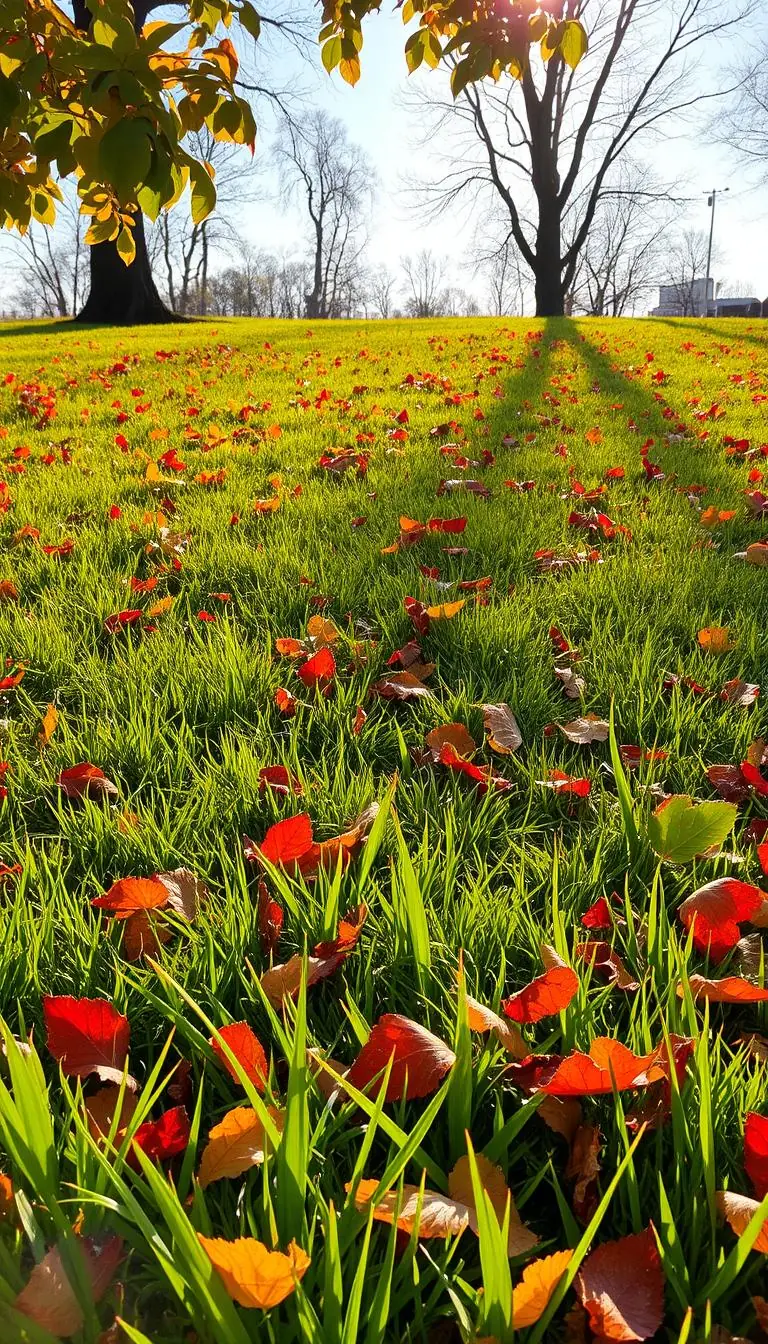
Imagine stepping out barefoot into soft, sunlit greens and a faint scent of thyme on warm air. Do you wish your yard felt easier to care for and more inviting? You can trade weekly chores for seasonal touch-ups and still keep a tidy, thriving space.
Many homeowners replace old grass because it demands constant watering and mowing. Here, we’ll show friendly, practical options—clover mixes, meadow-style plantings, ground covers, and gravel areas—that cut water use and boost biodiversity.
Think of this as a simple refresh, not a full overhaul. With a few basic tools—a spade, a rake, and a wheelbarrow—you’ll remove tired turf and plant resilient grasses or garden alternatives that fit sun and shade. We’ll offer seasonal tips so timing feels easy and avoid common missteps that slow establishment.
In short: expect a softer, more natural look that stays welcoming around patios and paths. You’ll save water, reduce inputs, and gain a peaceful outdoor space you’ll actually use.
Key Takeaways
- Set a clear goal: a lower-input, attractive yard you enjoy.
- Choose plants and grasses that match sun and soil for easier care.
- Use simple tools and seasonal timing to remove old turf safely.
- Explore alternatives like clover, meadow mixes, or gravel for variety.
- Small changes add up: less work, more beauty, and more biodiversity.
Start with a simple plan for a beautiful, low maintenance lawn
Begin by reading your yard like a map. Walk it at breakfast, noon, and late day to see where sun warms the grass and where shade keeps corners cool. Note hot patches and dappled spots.
Take a handful of soil. Does it clump (clay), sift (sand), or feel crumbly (loam)? A basic soil test kit clears up questions fast. Jot your USDA zones and typical rainfall to narrow plant choices.

Match plants to your conditions: sun, shade, soil, and USDA zones
Group by types that share needs. Place sun-loving plants where the sun is strongest. Put shade-tolerant varieties near trees. This way you water and feed less and see better results.
Decide where you’ll walk, play, and simply enjoy the view
- Map paths and sitting spots with twine or a hose.
- Mark a pilot area to try new grass or ground covers before the whole yard.
- Gather simple tools: hand trowel, rake, flags, and a soil test kit.
| Site cue | Quick test | Recommended option |
|---|---|---|
| Hot, sunny patch | Feels dry, gritty | Drought-tolerant grass or sun-loving plants |
| Cool, dappled shade | Soft, loamy soil | Shade-happy ground covers and fine grass mixes |
| High-traffic way | Compresses underfoot | Stepable ground covers or durable grass varieties |
Three neighbor-approved ways to remove existing grass (with realistic effort)
You can clear existing grass quickly, or let nature do the heavy lifting—each route has clear trade-offs.
Power it up: rent a sod cutter or rototiller
Sod cutter: Rent a gas model (~$45/day) to slice clean strips of turf. It’s fast and tidy but plan for a workout and a truck to haul sod away.
Rototiller: Also about $45/day. It churns soil and roots, speeding prep, but can leave seeds and bits that mean more weeds later. Use a smothering layer after tilling for best results.
Muscle it out: shovel technique and composting
Slide a flat-edged shovel beneath roots and lift sections. Expect roughly 30 sq ft per hour at a steady pace.
Stack removed sod in a shady corner to cold-compost. Over months it becomes dark, earthy compost you’ll love working into soil.
Smother it down: the “lawn lasagna” option
Overlap one layer of cardboard or eight sheets of newspaper, then add about 3 inches of weed-free mulch or compost. Water to settle and wait 6–12 months.
This method shines for large areas or stubborn turf. Keep irrigation handy to settle layers and to establish new plantings when ready.
- Work in mild weather—damp soil is kinder on your body and tools.
- Edge clean lines as you go so new plantings look neat from day one.
- Pick the option that fits your timeline: fast (sod cutter), budget-friendly (shovel), or slow-and-gentle (smother).
Sunny, dry areas: drought-smart lawn alternatives that glow in golds and greens
Sun-baked corners can become a tapestry of golds and sages instead of a thirsty stretch of grass. Pick plants that thrive in heat and poor soil and you’ll trade heavy watering for seasonal care.
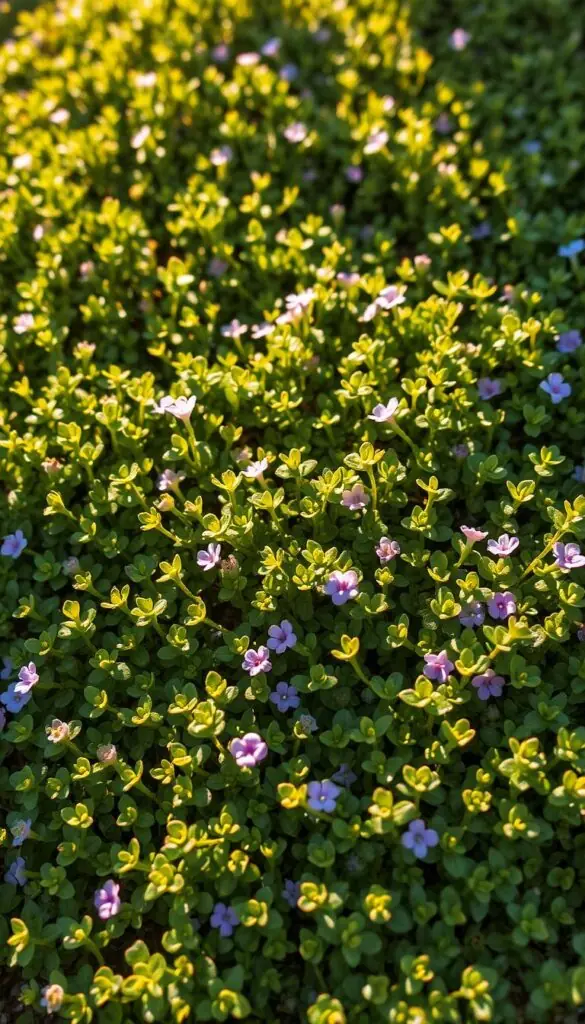
Creeping thyme for fragrance and color (Zones 4-9)
Planting steps: loosen 6 inches of fast-draining soil and mix in grit or composted bark if it feels heavy. Set plugs 6–12 inches apart; thyme spreads about 6 inches per year, so plant closer for quicker cover.
Weed frequently the first season. By year three it largely fills in. Walk over it to release a gentle herby scent and enjoy tiny pink or white flowers that attract bees.
Golden carpet and red sedums for slopes and dry spots
Use Sedum acre (golden) and Sedum spurium (red) on slopes. Space plugs about 12 inches apart so they knit quickly. They bloom in late spring and draw pollinators while holding soil with minimal water.
Fine fescue and Carex mixes for a turf-like look
Choose fine fescue or Carex blends for a soft, low-mow carpet. They need far less water than traditional grasses and give a lush, green feel without constant clipping.
- Water lightly and often for the first few weeks; then taper off.
- Mulch between new plugs with fine gravel or compost to cut weeding and retain moisture.
- Favor heat- and drought-tolerant varieties for full sun sites.
Shady, moist spots: mossy carpets and ground covers that stay lush
Where sun fades, you can craft a quiet, mossy floor that stays soft all year.
Moss loves compacted, slightly acidic soil. Aim for about pH 5.5; a quick test kit will tell you if adjustments help. To transplant, scratch and moisten the surface, press moss firmly in place, and mist daily until it knits for several weeks.
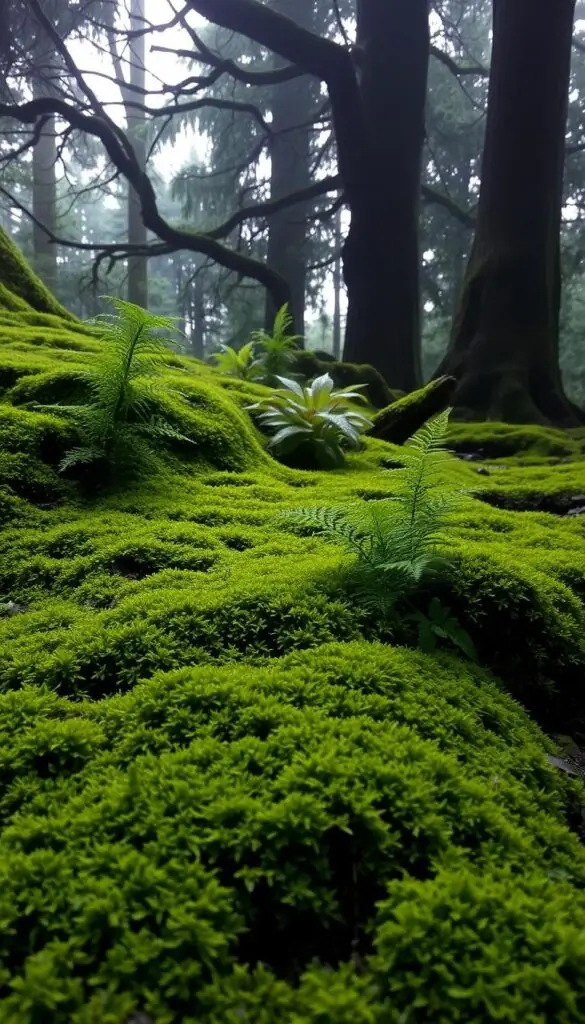
Mazus (Zones 5–8) hugs the ground and tolerates light foot traffic, adding tiny lavender blooms along paths in spring. Green-and-Gold (Zones 5–9) brings bright yellow color in partial shade for a soft, native look.
Be cautious with bold spreaders. Ajuga can move fast and is invasive in some regions—check local rules. Creeping Jenny ‘Aurea’ (Zones 3–9) lights dim areas with chartreuse foliage; use edging to contain its spread.
- Plant in fall or early spring so roots establish before heat.
- Water new plantings lightly and consistently, then taper once they settle into the soil.
- Layer textures—moss, mazus, and Green-and-Gold—for a cool, varied ground cover that’s easy to enjoy.
Choose stepable ground covers for foot traffic without constant mowing
Choose stepable ground covers that welcome bare feet and steady foot traffic along paths and between pavers. They give a soft, living route without the fuss of regular mowing. Pick the right type for the area: between stones, a light path, or a play spot.
Corsican mint (Zones 6–9) makes an evergreen, fragrant cushion. It releases a minty scent when crushed and stays pleasantly cool underfoot. Use it in part shade or sunny niches where scent adds charm.
Blue Star creeper (Zones 5–9) forms a tight, stepable mat with tiny pale blue flowers. It excels between pavers or where you want a neat, turf-like cover that tolerates light to moderate foot traffic.
Veronica ‘Waterperry Blue’ (Zones 5–8) spreads low and blooms lavender-blue in spring. Its foliage turns coppery in fall, giving seasonal color in part shade paths.
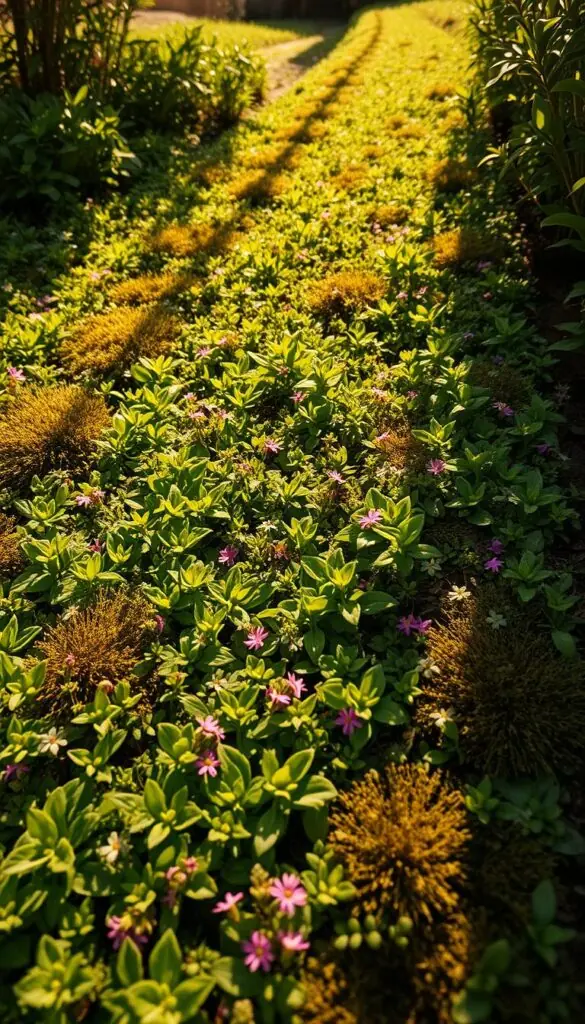
Microclover and classic clover are excellent options for uniform, bee-friendly surfaces. Microclover stays low and is ideal for high-use spots where you want a smooth surface. Classic clover self-fertilizes and keeps green with less water than traditional turf.
- Use stepping stones where traffic concentrates to protect delicate patches.
- Mow microclover occasionally to keep an even finish; clover can be mowed or left to bloom for pollinators.
- Blend a few types in small areas to stagger blooms and scents across the season.
Keep stepables for light to moderate foot traffic. For play spots, choose tougher grasses or reserve a small turf patch. With the right mix, you get a turf-like feel without constant clipping and a variety of blooms and scents to enjoy.
Season-by-season care that keeps your yard thriving with less work
A simple seasonal rhythm keeps your yard healthy while saving you time each year.
Use light tasks each season and the whole year stays manageable. Keep a rake, hand pruners, hose, and a mulch fork nearby for quick work.
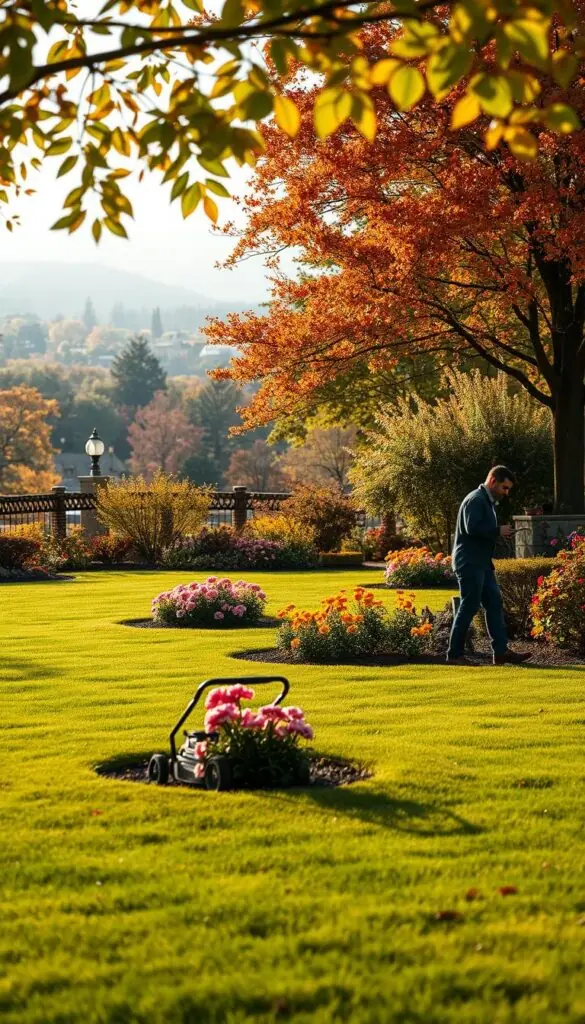
Spring: Top up mulch where soil shows. Spot-weed young interlopers. Check edging lines so beds look neat.
Early summer: Water new plants weekly until roots establish. Established sedums and clover need far less water once settled.
Midseason: Trim stepables that creep onto stones. Snip spent flowers to refresh the look and invite more blooms.
Late summer: Reduce irrigation as plants settle; many drought-smart selections prefer drier feet. For turf-like areas set mowing high and infrequent.
Fall: Plant plugs and divisions—cool weather and warm soil help roots grow with minimal fuss. Add a thin layer of compost to feed the soil, not the lawn.
Winter: Leave seedheads for birds and tidy only just before spring so the look you prefer stays intact.
"Two light passes with a mower a year often keeps turf-like sections neat while saving time."
- Group watering by need—dry-loving areas separately from moisture-lovers.
- Use a mulch fork to refresh top layers in bare spots; it helps soil and reduces weeding.
- For grass alternatives like fine fescue and Carex, plan for very low mowing or no mowing at all.
| Season | Key task | Tools | Why it helps |
|---|---|---|---|
| Spring | Top up mulch, edge beds | Mulch fork, rake | Reduces weeds and keeps soil moist |
| Early summer | Water new plugs weekly | Hose, watering wand | Encourages deep roots with minimal fuss |
| Fall | Plant plugs and add compost | Hand pruners, trowel | Warm soil and cool air speed root growth |
| Winter | Leave seedheads, light tidy | Rake, hand pruners | Supports wildlife and reduces spring work |
Quick tip: Feed the soil, not the lawn—thin compost in spring supports plants and cuts overall maintenance.
Common mistakes to avoid and quick fixes for a thriving low-water yard
A few simple missteps often explain why a planted patch struggles the first season. Catching problems early keeps your outdoor space healthy and saves time and water later.
Prep the soil right. For sun-loving thyme and similar choices, loosen at least 6 inches of fast-draining soil. Add grit or composted bark if it holds moisture.
Contain vigorous spreaders. Creeping Jenny and ajuga can run fast. Use metal or deep plastic edging to stop roots or pick better-behaved ground covers for tight beds.
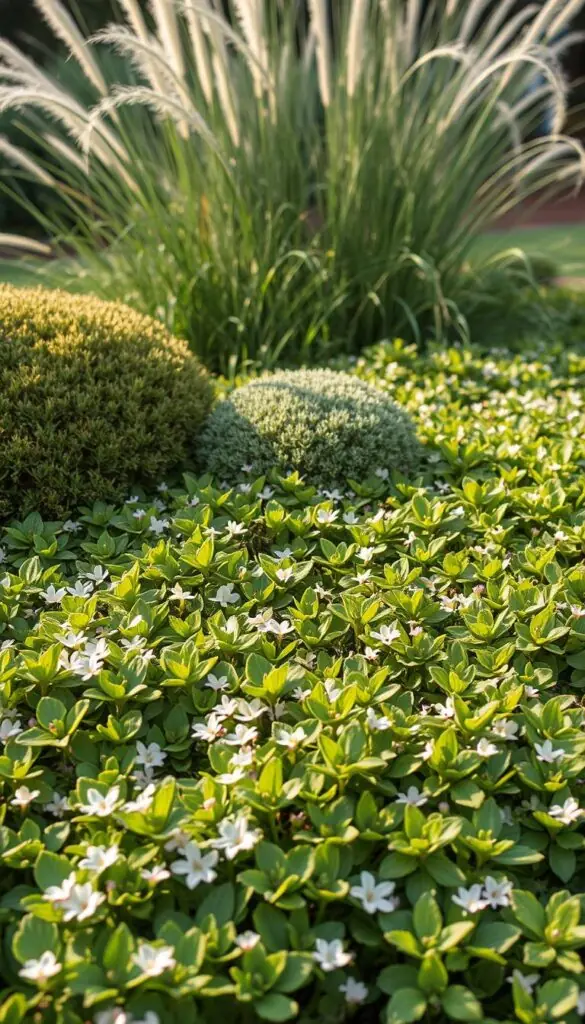
Quick diagnostics and fixes
- Yellowing or stunted plugs: check drainage; add grit and replant with a tougher grass or ground cover.
- Runaway runners: cut and edge, then remove stray pieces to prevent re-rooting.
- Weedy patches after planting: pull seedlings weekly; a short walk keeps small weeds from getting entrenched.
- Matted or shaded spots: move sun-loving varieties to brighter areas or swap in shade-tolerant types.
"Small corrections early save you time, water, and effort all season."
| Common problem | Likely cause | Easy fix | Why it works |
|---|---|---|---|
| Thyme failing in place | Poor drainage | Amend top 6 inches with grit; replant | Provides the fast-draining soil thyme needs |
| Sedum thinned out | Shading by clover | Plant sedum alone or separate areas | Prevents taller plants from shading tiny mats |
| Edges spilling over | Vigorous ground covers | Install deep edging or choose contained varieties | Stops spread and preserves clean texture and color |
| Patch stays soggy | Compacted soil | Improve drainage with compost and grit; regrade slightly | Allows roots of grasses and covers to breathe |
Final tips: plant perennials in fall for the best start, match choice of plants to your conditions, and keep edges and paths clear so the design reads intentional. A few checks now mean a happier, easier yard all season.
Conclusion
Your guide ends with one clear idea: start small and enjoy the change. Imagine a single sunny strip of creeping thyme, a cool moss patch in shade, or a tidy clover patch beside a path.
Plant in the right soil and spot, give a little water to help roots set, then let textures and flowers fill in. These ground covers ask for simple care, fewer passes with the mower, and welcoming scents that attract bees.
Over a year you’ll see how a grass lawn can become a thoughtful mix of covers and grasses that stand up to foot traffic where you need it. Choose types and varieties that match your zones and routine, and relish a yard that gives more than it asks.
FAQ
How do I match plants to my yard’s sun, shade, soil, and USDA zone?
Start by observing your space for a full day to note sunny and shady spots. Test your soil with a simple kit for pH and drainage. Then pick plants rated for your USDA zone and the specific conditions—full sun, part shade, or moist shade. For sandy, fast-draining soil choose sedums or thyme; for cool, shady spots consider moss, mazus, or carex mixes. Planning this way saves time and water later.
Which method is easiest for removing existing grass: sod cutter, digging, or smothering?
Each works. Rent a sod cutter or tiller for fast, clean removal on larger areas. Digging and composting sod fits small plots and gives you exercise, but it’s slower. Smothering with cardboard or newspaper plus mulch—often called lawn lasagna—is low-effort and good where you can wait a season for planting. Choose based on your timeline and physical limits.
Is creeping thyme a good choice for sunny, dry areas?
Yes. Creeping thyme thrives in sun and well-drained soil (Zones 4–9). Prepare soil by removing weeds and adding grit or sand for drainage if needed. Plant in spring or fall, space plugs or seed per package directions, and water moderately until established. It offers fragrance, tiny flowers that attract pollinators, and tolerates occasional foot traffic.
What are practical alternatives for slopes and areas that need low water?
Ground-hugging sedums—like golden carpet and red sedum—are excellent on slopes. They need minimal irrigation once established and resist erosion. Combine with drought-tolerant grasses such as fine fescue or Carex mixes for texture. Choose varieties rated for your climate and improve soil with a little compost for better root development.
Can I create a moss carpet in shady, moist spots? How do I keep it healthy?
Yes, moss is a lovely choice for shady, damp areas. Check soil pH—moss prefers slightly acidic soil—and clear competing plants. Transplant moss patches or use moss slurry (blended moss with buttermilk). Keep foot traffic light, prune overhanging branches to allow diffused light, and water only when truly dry. Moss provides soft texture and year-round green with minimal trimming.
Which ground covers tolerate foot traffic and still look good?
Stepable options include Corsican mint, Blue Star creeper, and Veronica ‘Waterperry Blue’. Microclover and clover mixes also tolerate light to moderate foot traffic and add nitrogen to the soil. For paths, choose sturdier varieties and install stepping stones to protect plants during heavy use.
Are clover lawns a good alternative to traditional grass?
Clover lawns are a solid option. They’re self-fertilizing, drought-tolerant, and bee-friendly. Microclover blends well with fine fescue for a turf-like look that needs less mowing. Expect some seasonal bloom and a different texture than grass; regular edging helps keep a tidy appearance.
How should I care for these alternatives through the seasons?
In spring, repair bare spots and refresh mulch. Summer needs focused watering only during dry spells—deep and infrequent. In fall, seed or plug new areas and top-dress soil where needed. Winter tasks are minimal: clear debris, limit foot traffic on frosty ground, and plan any spring planting. Seasonal checks reduce big chores later.
What common mistakes should I avoid when converting a yard to ground covers?
Avoid planting species without checking spread habits—ajuga and creeping jenny can overrun beds. Don’t skip soil prep; poor soil leads to weak plants. Plant in the appropriate season (fall is often best) and contain vigorous spreaders with edging. Finally, don’t overwater—most alternatives prefer well-drained conditions.
Will these plantings attract bees and other pollinators?
Yes. Creeping thyme, sedums, clover, and many ground covers bloom for pollinators. Plant a mix of species with staggered bloom times to provide nectar across seasons. This creates a thriving, beneficial habitat while adding color and scent to your yard.