Imagine the cool give of slightly damp soil under your shoes and the soft, sunlit sweep of a newly evened surface. Have you ever wondered if a lawn roller will make your yard look tidier, or if it might harm new grass?
We’ll walk you through calm, step-by-step advice so you know when use is helpful and when to stop. You’ll learn how a steady pass can press new sod or seed for better contact with soil and smooth out frost heaves or mole tunnels.
Expect simple cues—like how cool, pliable soil feels underfoot—and seasonal guidance for early spring or other times of year. We’ll describe common options, from tow-behind drums to lighter poly models, and share quick tips to avoid ruts or over-compression.
By the end, you’ll feel confident about the right moment to try a gentle pass and how to match tools to your project and preferences.
Key Takeaways
- You’ll know when rolling helps—smoothing frost heaves and improving contact for new sod.
- Choose slightly damp soil and gentle passes to avoid stressing grass.
- Light residential poly rollers and heavier steel models suit different yard projects.
- Spring is often a good time, once frost heaves settle and before growth surges.
- One steady pass can tidy low spots without leaving marks if done carefully.
Understanding a lawn roller: what it does, when it helps, and when it hurts
When done at the right moment, pressing turf helps seed and sod make better contact with soil.
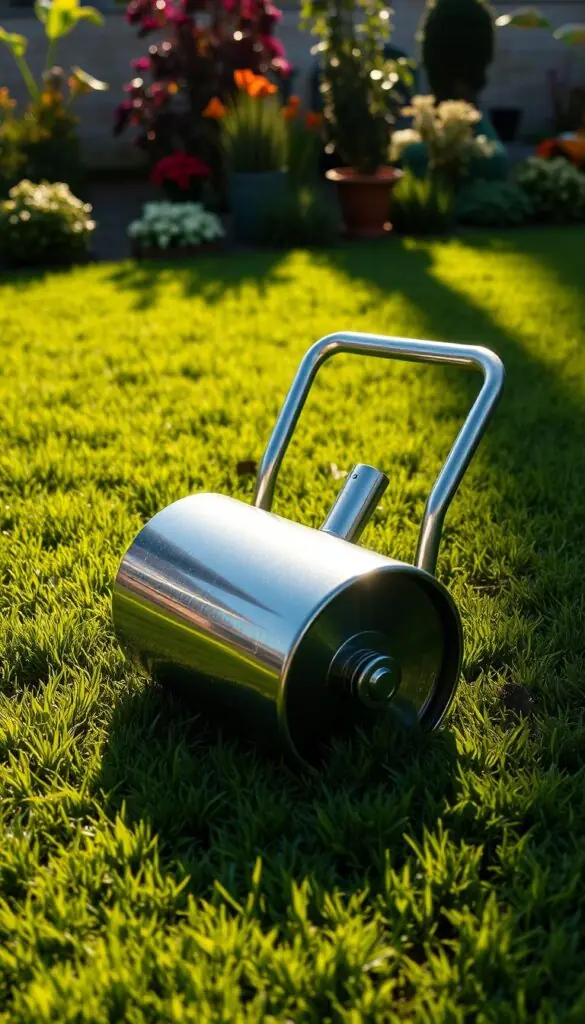
What it does: Picture a wide cylinder that gently presses the surface so new sod and grass seed sit snugly against soil. This improves soil contact and speeds root establishment after installation.
Where it helps: A single, careful pass firms a fresh seedbed, evens low spots, and settles frost heaves or mole tunnels without tearing the turf. In Zones 5–7, try this after a light rain when the soil feels cool and crumbly.
Where it hurts: Avoid rolling wet, waterlogged soil or making repeated passes. Over-compaction squeezes out air and stresses delicate spring roots. If the site is slick or muddy, wait until it firms up.
Quick comparison
| Type | Best for | Typical weight (empty) | Notes |
|---|---|---|---|
| Poly drum | Small yards, seedbeds | ~20–50 lbs | Fillable with water, light and easy to tow |
| Steel (TurfTime LR/AR) | Large sites, heavy compaction needs | 520 lbs empty to 5,000+ lbs full | Durable, uses drain plugs; choose by task and turf health |
Choosing the right lawn roller for your yard and project
Match the tool to the task and you save effort while protecting growing grass.
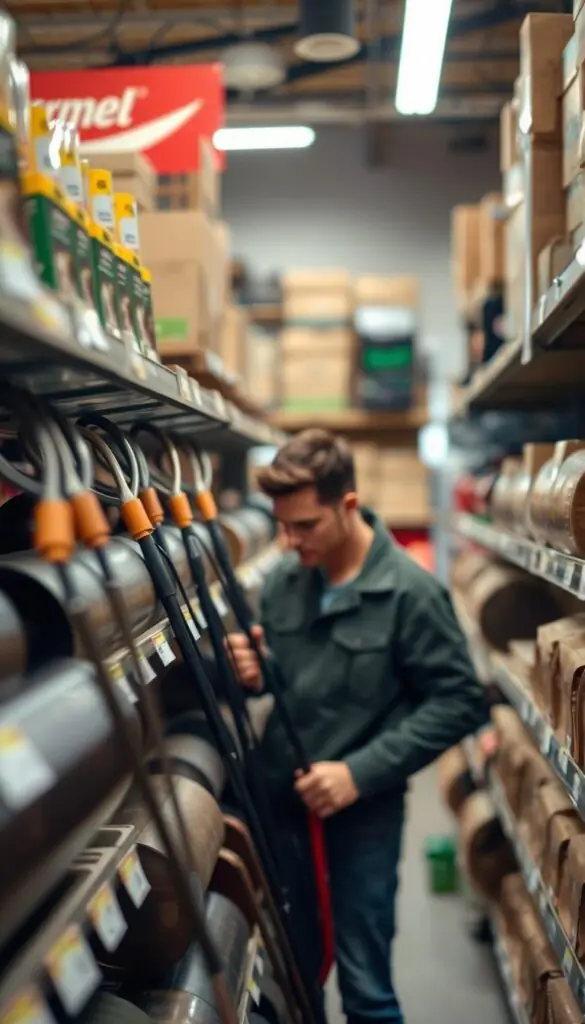
Push vs. tow-behind: fit the job to your space
If you garden by hand in tight beds, a push model is nimble and easy for a single user to handle.
Brinly-Hardy’s 28-gallon poly design converts from push to tow when you need more reach.
Weight and materials: poly, steel, and adjustable fill
Poly drums stay light when empty and fill with water or sand for the right weight. Round end caps help reduce edge ruts on turns, a handy feature for curved yards.
Steel drums suit large projects. TurfTime’s LR and AR series offer 24"–30" steel drums, grease-able bearings, and heavy frames for serious jobs.
- For mid-size yards, tow-behind models pair well with a riding mower or tractor for long, straight runs.
- Start with light fill to press new sod or settle seed, then add weight if needed.
- Look for drain plugs, sturdy hitches, and wheel kits — small technologies that extend service life.
- Consider storage: poly units drain and tuck into a corner; steel units need a shed bay or wheel kit to move easily.
"Choose tools that match your preferences and the scale of the project; the right weight and features make the work feel simple."
How to use a lawn roller step by step for smooth, healthy results
Pick a clear, mild day and treat the yard like a simple checklist: prep, press, and finish.
Prep the site
Work after a light rain or on a cool day when the soil feels slightly damp, not sticky. Rake away twigs, rocks, and clumps of dirt. Flag low spots with marking paint so you won’t miss them.
Rolling technique
Set the weight — add water or sand until the drum nudges soil contact without squashing young roots. For new sod, lay seams tight and make one slow pass. For grass seed, roll after seeding to press seed into the top quarter-inch.
Move in straight, patient lines with slight overlaps at the edges. Let the equipment do the work; avoid pushing hard by hand.
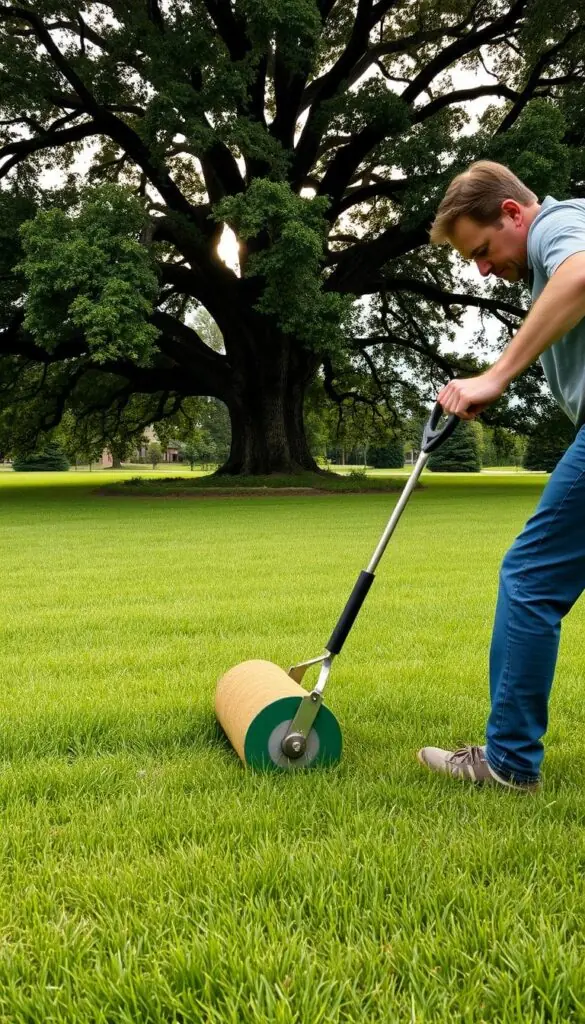
Hills and patterns
On slopes, go up and down rather than across to keep good footing. Take steady, short runs and avoid sudden turns that can scuff the turf.
To add subtle stripes, alternate north-south and east-west passes so the sun highlights blade direction.
Aftercare and storage
Open drain plugs on poly or water-fill drums and let them dry. Rinse grit away to protect bearings and paint. Store in a shaded, dry space or a small shed bay to save space.
"Drain water-filled drums before winter to prevent freeze damage and extend equipment life."
| Step | Tool or tip | Why it helps |
|---|---|---|
| Prep | Rake, marking paint, hose | Clears debris and flags low spots for even results |
| Set weight | Water or sand fill | Gentle contact for seed and new sod without compaction |
| Passes | Slow, overlapping lines | Even settling and minimal turf stress |
| Storage | Drain plugs, rinse, shaded space | Prevents freeze damage and reduces wear |
Seasonal timing, moisture, and quick tips to avoid common mistakes
Timing makes the biggest difference—knowing which season to roll helps you protect new growth and save effort.
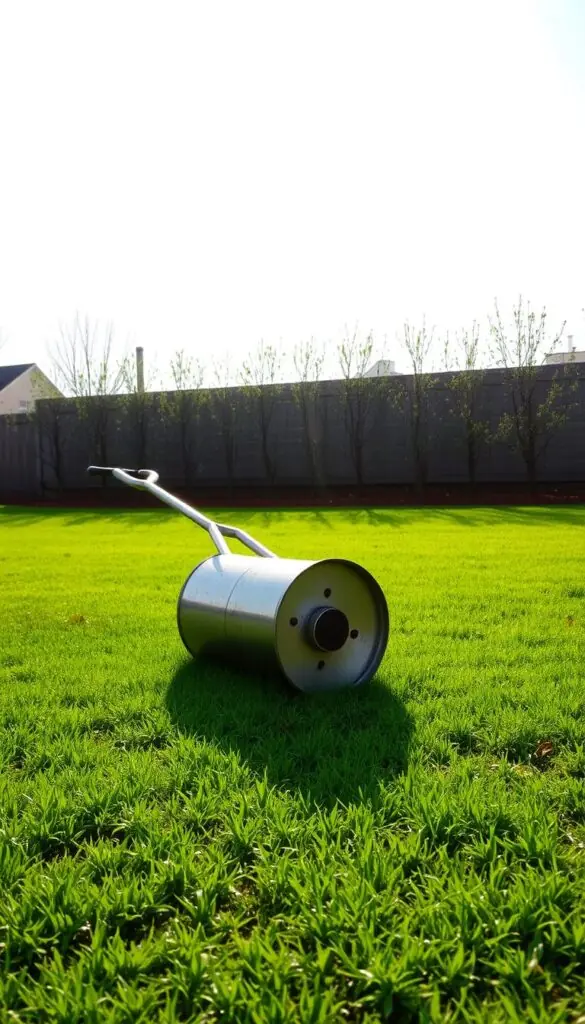
Spring, summer, fall, and winter: best times to roll and when to wait
Spring: Wait until the ground drains and firms. Do one light pass to tame frost heaves and prep seedbed areas. Avoid repeated passes that can crush tender roots.
Early summer: Use a nearly empty unit for stripes and small touch-ups after mowing. Pick a cool day or early morning to avoid heat stress on new grass.
Fall: Gently smooth scuffed spots before overseeding. Cooler soil and slower growth make this a forgiving time to improve contact for seed and sod.
Winter: Empty and dry equipment before storage. Poly models resist rust, but any drum with trapped water can freeze and split.
- For new sod, make one careful pass, then water lightly to settle roots.
- After seeding, roll once to press seed into the top quarter-inch without sealing the surface.
- Choose a day when soil is slightly damp—boots shouldn’t pick up mud—to avoid over-compaction.
- On hills, make short, straight runs for safer footing and gentler contact with the turf.
- If you tow with a mower or tractor, go slow and steady; features like drain plugs aid storage and user convenience.
"A single, gentle pass at the right time protects soil life and gives the yard a tidy, lasting finish."
Conclusion
A light, well-timed pass often gives sod and seed the secure start they need to thrive.
When you pick the right lawn tool for the job and roll only once or twice, the result is a tidy, even look that feels cared for. Use light weight, move slowly, and stop when the surface looks smooth.
Choose poly or steel models by space and scale. Drain water-filled units before storage, and value small technologies like rounded ends and drain plugs — they make the job easier for any user.
Step back, breathe the fresh, sunlit scent, and enjoy how your grass and yard settle. That simple win makes the whole space feel better.
FAQ
What does a lawn roller actually do on your turf surface?
A roller firms the soil surface so sod and seed make better contact with the ground. That reduces air pockets and helps roots establish faster. It also smooths minor bumps and presses seed into the soil for more even germination. Use light, controlled passes so you avoid squeezing the soil too tightly.
When is rolling helpful — and when can it harm your grass?
Rolling helps when you’re installing new sod, pressing fresh seed into the soil, or fixing frost heaves and mole tunnels. It harms when you roll wet soil, over-compact clay, or crush young spring roots. Wait until the soil is slightly damp, not soggy, and limit passes to avoid long-term compaction.
Which type of roller should I choose for my yard and project?
For small yards and spot jobs, a push or hand roller with a lightweight poly drum is easy to handle. Tow-behind models suit larger areas and ride-on mowers; steel drums add more weight for heavier compaction needs. Consider a fillable poly roller if you want adjustable weight using water or sand.
How much weight is safe when rolling new sod or seed?
Aim for gentle pressure — just enough to press sod roots and seed into the soil without crushing pore space. Fillable poly drums let you start light and add weight if needed. Avoid heavy steel drums on newly seeded beds or soft, wet ground to prevent compaction that stunts root growth.
What’s the step-by-step process for using a roller correctly?
Prep the site by clearing debris and lightly watering so the soil is slightly damp. Mark low spots and level any large bumps first. Roll slowly with overlapping passes, minimizing the number of trips. Finish with a light mower pass if needed, then water gently to settle seed and sod.
How do I roll slopes and create subtle striping safely?
On gentle slopes, roll up and down rather than across to avoid slipping; keep passes short and controlled. For faint stripes, follow parallel passes and vary edge overlap slightly. Never use heavy equipment on steep hills — choose hand tools or leave slopes alone to protect soil structure.
When is the best time of year to roll — spring, summer, fall, or winter?
Spring and early fall are the best windows: soils are workable and roots are actively growing. Avoid rolling during hot, dry summer spells or when the ground is frozen in winter. Also skip rolling after heavy rain until the soil firms up a bit to prevent compaction.
How do I prepare the soil before rolling for seed or sod?
Rake to remove rocks and debris, fill and smooth low spots with topsoil, and lightly firm the surface by hand or with a tamper if needed. Water until the soil is slightly damp — not saturated — so seed contacts the soil without being buried in mud.
How often should I roll an established lawn to fix low spots?
Limit rolling to once or twice a year for minor leveling. Repeated passes compact the root zone and reduce aeration. For larger depressions, topdress with a thin layer of soil or sand and let grass grow into it rather than relying on frequent rolling.
Are there alternatives to rolling for smoothing and leveling?
Yes. Topdressing with sand or screened topsoil followed by overseeding often yields better long-term results. Core aeration can relieve compaction, and targeted hand raking or a leveling rake helps address small dips without adding weight to the soil.
How should I care for and store a roller when not in use?
Drain fillable drums after use to prevent rust or bacterial growth. Rinse and let the unit dry before storing in a cool, dry spot. For steel drums, keep them painted and dry; for poly models, avoid prolonged sun exposure to extend life. Store vertically if space is tight.
Can I use a roller after aeration or core removal?
Avoid heavy rolling immediately after core aeration; the goal of aeration is to open the soil, not close it. If you need to press seed into aeration holes, use very light rolling or a lawn broom to help seed contact without undoing the benefits.
How do I avoid common mistakes like overcompaction and poor soil contact?
Work only on slightly damp soil, keep passes minimal, and choose the right weight for the job. Use fillable drums for adjustability, and pair rolling with aeration or topdressing when needed. Monitor results and stop if grass shows signs of stress or thinning.