Imagine warm light on a small patch of green near your kitchen door, the scent of herbs drifting in as you sip your morning coffee. Does that picture feel possible without endless work? You’re not alone.
You’ll get calm, encouraging guidance presented like a neighbor stopping by with a friendly plan. We focus on practical steps that respect your time and budget.
Perennials and sun-friendly plants give structure and return year after year, needing far less fuss than annuals. Full sun means about six hours a day for many choices, so you can match plants to light and save effort.
We’ll show a simple framework to shape your space: clear lines, repeated plantings, and one strong focal point. Small shifts—moving a seat to catch evening shade, choosing resilient herbs—make the area feel lush and easy to care for all season.
Key Takeaways
- Choose perennials and sun-tolerant plants to reduce upkeep.
- Plan around full sun and water patterns to save time.
- Simplify with repeated plantings and one focal point.
- Use containers and vertical elements for depth without clutter.
- Set weekend tasks: layout, plant choices, and watering routines.
Start with your climate and sun: the gentle shortcut to an easy summer garden
Begin by watching how light and heat move through your yard across a single day. A clear read of sun and breeze saves you work later. It helps you choose plants that truly belong where you put them.
Match plants to heat patterns, not just hardiness zones
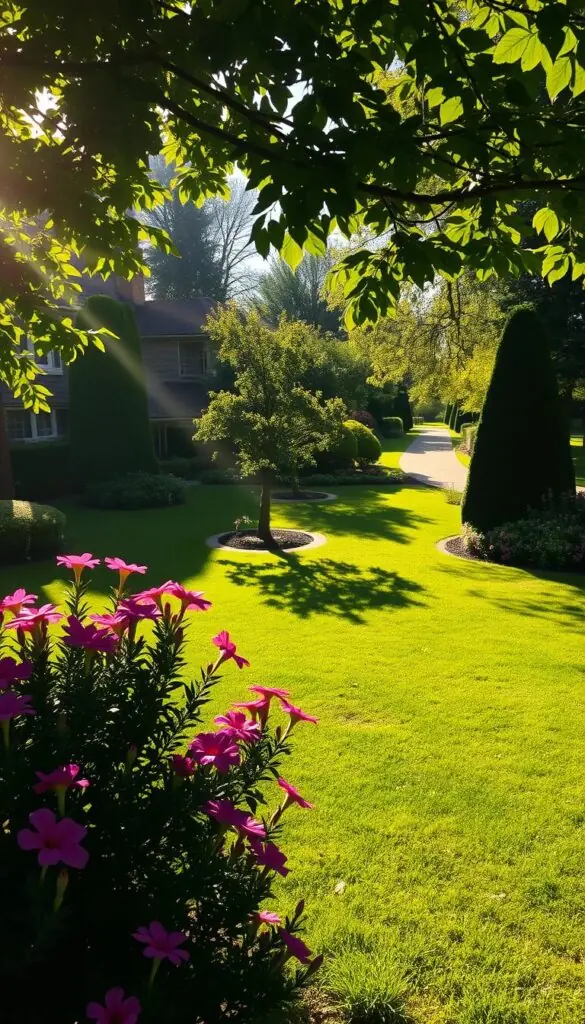
Full sun generally means six or more hours of direct light a day. But hot afternoons can burn tender varieties. A move from Virginia to Houston shows this: plants that once thrived stumbled in triple-digit heat despite daily hand watering.
Reading your light: full sun, dappled shade, and hot afternoon exposure
- Notice your local summer personality — dry heat, humid heat, coastal breezes — and pick plants that like that mood.
- Track lighting across the day: mark areas with 6+ hours, morning-only light, or dappled shade.
- Use a simple sun map: take photos at different times and note where shadows fall.
- Place drought-tolerant or heat-loving varieties in the sunniest spots; keep thirstier plants where you can reach them easily.
- In high heat, mulch and water in the morning to cool roots before the day warms up.
“If a plant sulks, move it to kinder light; small changes in exposure often bring quick turnarounds.”
Trust your observations. Small, patient moves—changing a bed, adding afternoon shade, or shifting a pot—bring big rewards by fall and into spring next year.
Summer garden design essentials: a simple plan you can trust
Imagine a layout where paths and plantings share the work, so upkeep feels lighter and the space stays welcoming.
Start with a clear ratio. Aim for about 50% planting and 50% paving or decking. This number helps the area feel open but thoughtfully planted.
The 50/50 balance: planting vs. paving for calm, uncluttered spaces
Use half your footprint for hard surfaces and half for green areas. That balance gives room for seating and movement while keeping plants close enough to enjoy.
- Group seating and storage to save space, then weave plants into the interior so you’re surrounded by life.
- Repeat a small palette—three matching shrubs or a row of identical grasses—to create rhythm and easy upkeep.
- Keep paths wide enough to pass comfortably; wider walkways make the whole area feel larger.
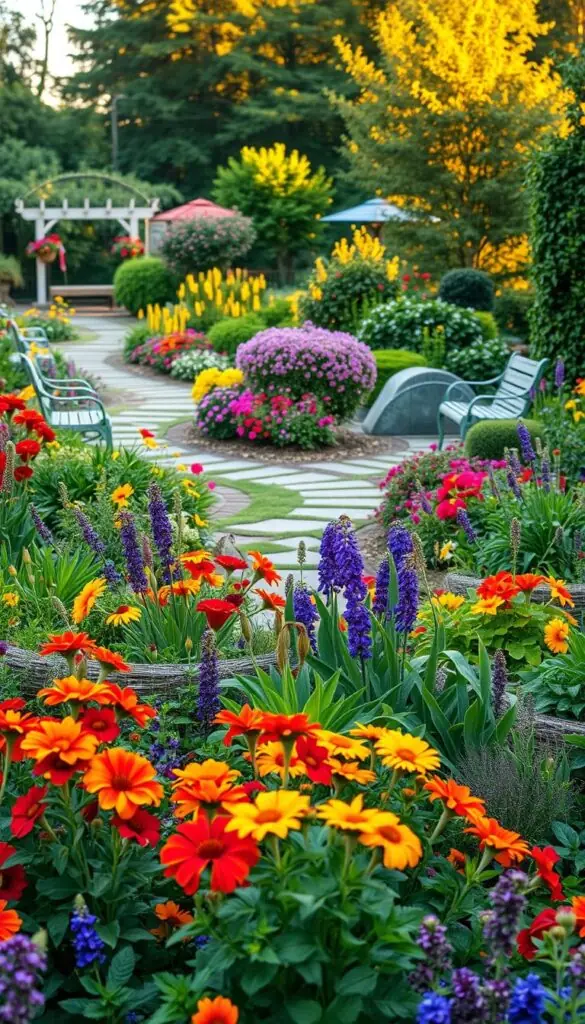
Right plant, right place: beds, borders, and containers that fit your site
Choose generous beds rather than thin strips. Wider beds let you layer tall, mid, and low plants so soil stays covered and weeds stay down.
Place containers where roots struggle or on hardscape. Keep thirsty plants near a hose for an easier way to water.
| Area | Suggested use | Plant approach | Maintenance tip |
|---|---|---|---|
| Patio / Deck | Seating and paths | Large pots, three repeated plants | Group for efficient watering |
| Beds | Layered planting | Tall, mid, low in generous beds | Mulch to cut maintenance |
| Borders | Edge definition | Rhythms of shrubs and grasses | Keep narrow edges for easy trimming |
| Utility zones | Storage and bins | Screen with tall planters | Hide tools for a peaceful view |
Sun-loving, low-maintenance perennials that thrive all season
Let hardy, sun-loving plants carry the season so you can enjoy color with minimal fuss.
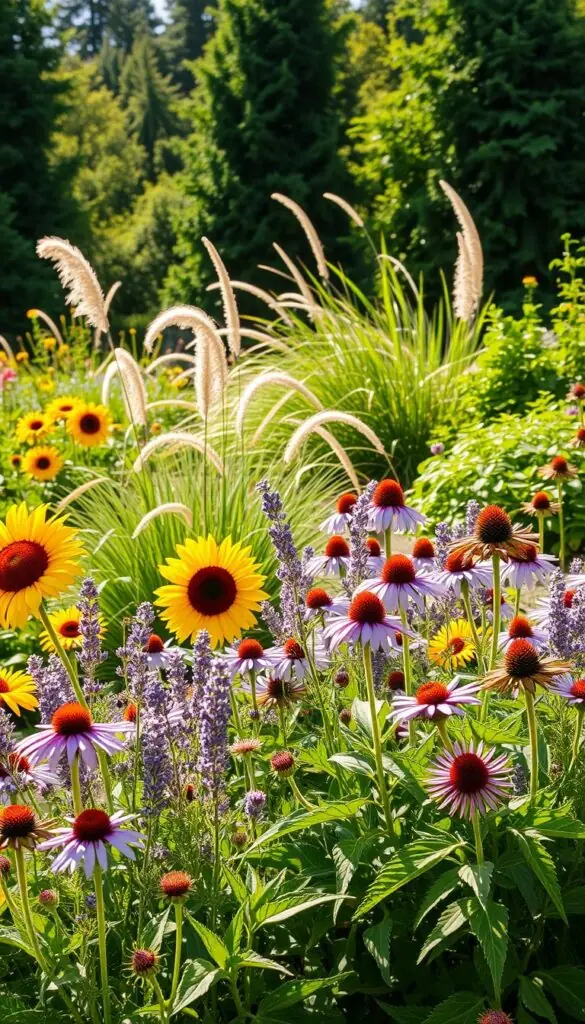
Drought-tolerant stars: Agastache, catmint, Russian sage, and sedum stand up to heat and poor soil. Their aromatic foliage and steady flowers keep borders alive from midseason into fall.
Drought-tolerant choices that need little fuss
Plant these sun-lovers in well-drained spots. Mulch new transplants and water in the morning for the first few weeks so roots settle.
Long bloomers for color all season
Mix daylily, salvia, coreopsis, and coneflower for repeating blooms from late spring through fall. Staggered bloom times mean something is always showing color.
Pollinator magnets and lasting structure
Milkweed, blazing star, and Shasta daisy feed bees, butterflies, and songbirds. Leave some seedheads for winter interest and wildlife.
Texture-forward picks
Use lavender, lamb’s ear, and bellflower to add soft foliage and movement. Group compact varieties if your space is small or windy.
- Tip: Group plants garden-style in threes for easy rhythm and lower maintenance.
- Choose varieties suited to your zone and avoid overwatering once established.
Containers, hanging baskets, and green walls for instant summer impact
A single, striking pot can calm a small patio and make care feel simple. Choose one bold container as your anchor instead of scattering many small pots. That one focal piece gives the space a clear center and saves you time.
Build a full look: use an upright “thriller,” a mid-height “filler,” and a trailing edge for color and foliage that stays lively all season. Repeat pot finishes or use three matching planters to keep the view serene.
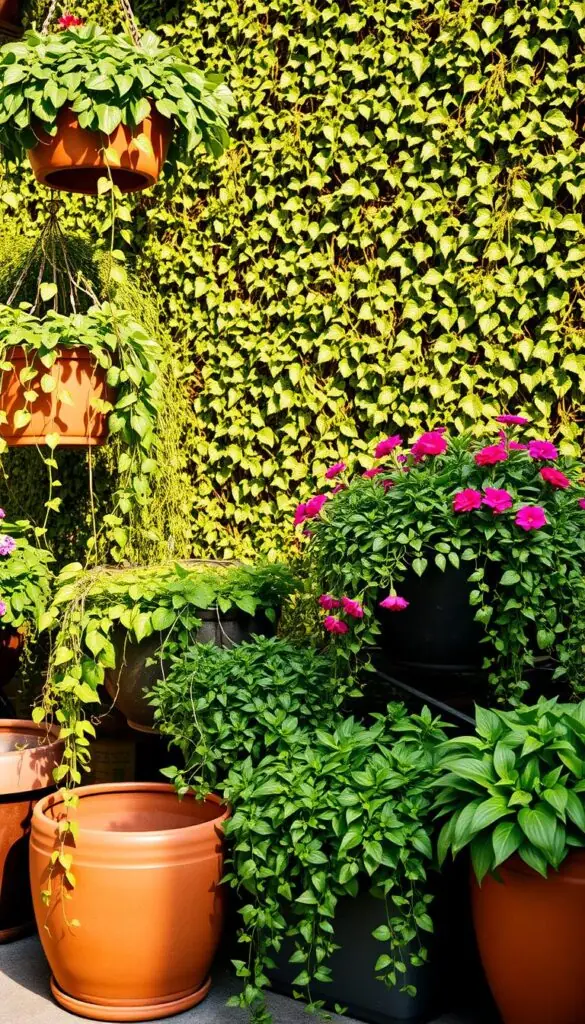
Hanging planters and vertical pockets for herbs, salads, and flowers
Add hanging planters by the kitchen door for quick snips of basil, thyme, and salad leaves. Modular pocket systems make a compact green wall that feeds you and brightens a fence.
- For partial shade, tuck ferns or trailing plants into vertical pockets to soften walls.
- Try a compact citrus or small fruiting shrub in a large pot for fragrance and pollinators.
- Use light-colored gravel or pavers beneath containers to bounce light and lift the whole area.
- Group pots within hose reach or fit a drip line on a timer to keep watering easy.
Quick care note: refresh topsoil each spring and feed lightly during the growing season so your container combinations thrive with minimal fuss.
Water-wise gardening made easy in the hottest months
Smart plant choices and a simple routine free up your afternoons and protect thirsty beds. Start by layering tough plants so soil stays shaded and evaporation drops before you ever reach for a hose.
Design in layers of tough plants to reduce daily watering
Choose drought-tolerant layers — tall, mid, and groundcover — to form a living mulch that cools roots. Plants like Russian sage, sedum, and agastache work well once established.
Morning routines and mulch: simple habits that save your afternoons
Water early so roots drink deeply and leaves dry before heat peaks. Apply 2–3 inches of organic mulch to keep soil cool and cut the need for frequent watering.
- Group plants by water needs to save time and avoid overwatering nearby beds.
- Improve heavy soils with compost and coarse grit for better drainage and healthier roots.
- Use drip lines or soaker hoses on a timer for steady, efficient care you don’t have to think about daily.
- Tuck thirsty containers near a hose; give the toughest plantings the sunniest, driest spots.
Quick care note: keep new transplants moist for a few weeks, then taper water to encourage deep roots. Add a soft screen or windbreak where drying winds steal moisture.
“Plant selection matters most; pre-dawn watering can’t save species that aren’t suited to extreme heat.”
| Focus | Action | Why it helps | Practical tip |
|---|---|---|---|
| Plant layers | Use tall, mid, groundcover | Shades soil and reduces evaporation | Repeat groups of three for rhythm |
| Mulch | 2–3 inches organic | Keeps roots cool, suppresses weeds | Renew each spring and after heavy rain |
| Watering system | Drip or soaker on timer | Efficient, consistent moisture | Run early morning, short cycles |
| Soil | Amend with compost & grit | Improves drainage and root health | Mix into beds before planting |
Color cues for cool-looking spaces on hot days
A limited palette of cool hues helps the eye relax and makes tight areas read as more open.
Use blues, purples, and silvery foliage to visually push plantings back and deepen a small area. These tones seem to recede, so the space feels larger and calmer on warm afternoons.
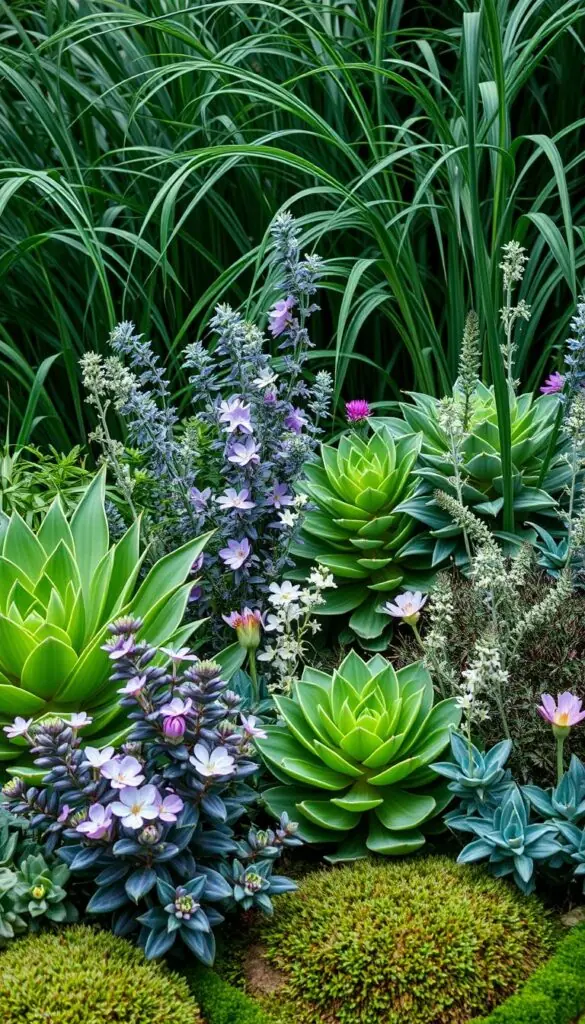
Practical color moves that change the mood
Plant lavender, Russian sage, catmint, and bellflower for cool flower spikes you can read from a distance. Pair them with airy grasses so movement adds lightness.
Light paving or pale gravel bounces light into shaded corners. Repeat the same palette in three or more spots so the eye travels smoothly across the space.
- Accent: a soft white or pale yellow sparingly lifts the scheme.
- Avoid many hot reds and oranges at eye level; save one accent pot if you want contrast.
- In deep shade, lean on texture and variegated leaves to echo a woodland calm.
| Element | Cool options | Why it helps | Quick tip |
|---|---|---|---|
| Flowers | Lavender, catmint, bellflower | Blue/purple spikes recede visually | Plant in threes for rhythm |
| Foliage | Silver sage, variegated leaves | Reflects light, cools mood | Use near seating |
| Hardscape | Light gravel, pale pavers | Bounces light into shade | Keep finishes consistent |
| Accent | Soft white or pale yellow | Lifts without heating the scene | Use sparingly for highlights |
Small-space wins: go vertical, divide gently, and repeat for rhythm
Think vertically and divide gently to turn a tight spot into a series of pleasant rooms.
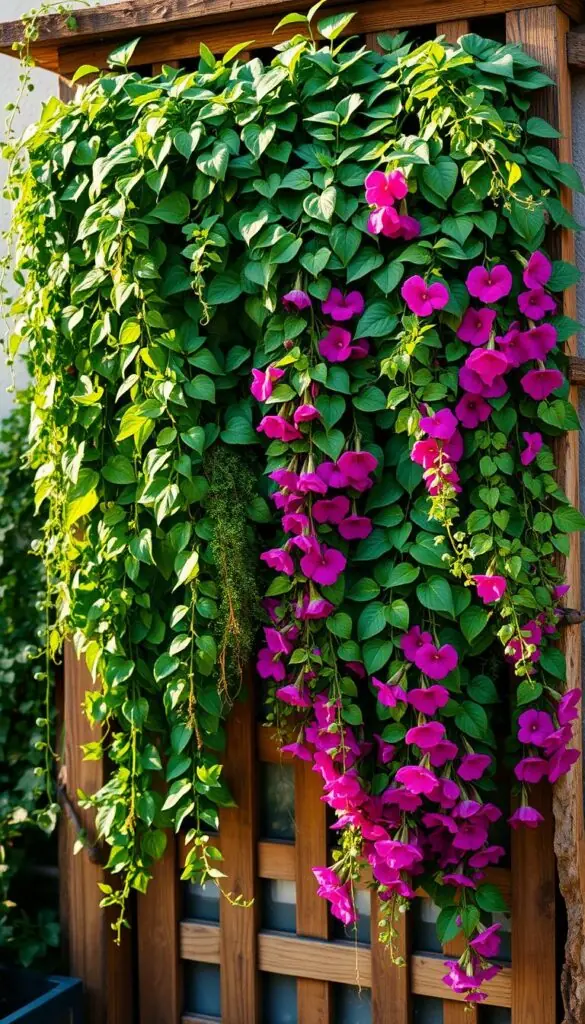
Grow up, not out. Add trellises, obelisks, or slim arches to lift flowers and fruit without losing floor space. Climbers frame seating and create cozy corners.
Climbers, trellises, and obelisks to lift color and crops
Train beans, roses, or clematis on vertical supports. For fruit, use espalier or cordon-trained trees along a fence for harvest and height in narrow places.
Soft screens and planting “rooms” that make a yard feel larger
Use tall grasses, open-lattice panels, or grouped planters as gentle dividers. These create depth and separate areas without heavy walls.
Repetition and light materials to keep the mood airy
Repeat a small set of plants in waves to build a calm rhythm. Choose pale gravel, soft-gray planters, and light fabrics to reflect light and enlarge the place visually.
“Position climbers to frame a view or seating nook — it creates a small destination and invites you to linger.”
| Vertical option | Best for | Space impact | Quick tip |
|---|---|---|---|
| Trellis | Climbers, vines, beans | Adds height, keeps floor clear | Place behind low beds for layered look |
| Obelisk / arch | Feature plants, annuals | Creates focal points and entrances | Use slim bases to save ground space |
| Espalier / cordon | Fruit trees | Produces fruit along fences | Train early and prune yearly |
| Tall planters / screens | Soft partitions | Defines rooms, adds depth | Group like finishes for cohesion |
Edible ease: compact vegetables and trained fruit for summer
A compact edible plot can be surprisingly abundant when you grow up instead of out. In a small area, vertical choices and smart timing deliver regular harvests with less work.
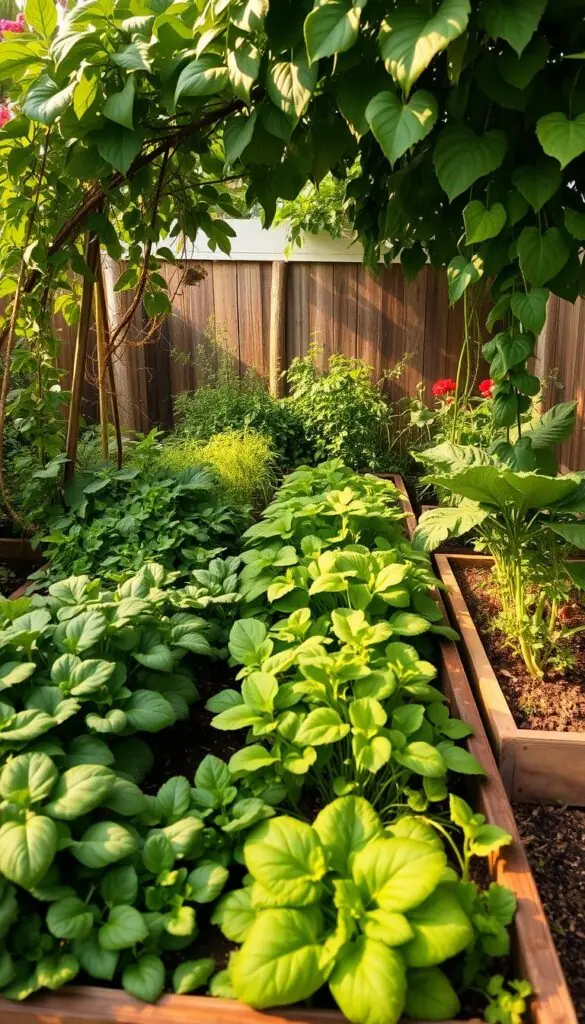
Grow up, not out: use trellises for climbing beans and 'Tromboncino' squash so your vegetable garden stays neat. Train vines on a sturdy frame to keep paths clear and fruit off the ground.
Grow up, not out: beans, ‘Tromboncino’ squash, and salad successions
Sow salads in staggered successions about two weeks apart to keep fresh leaves from spring into summer without fuss.
Plant quick wins like radishes and baby carrots in troughs while slower crops climb the trellis. This way you always have snacks close at hand.
Fruit in tight spots: espaliers, cordons, and container-friendly trees
Train apples or pears as espaliers or cordons along a fence to fit fruit into the slimmest area. For containers, try cherry ‘Stella’, apple ‘Fiesta’, or plum ‘Opal’. These varieties are compact and fit patios well.
Make sure your fruit picks are self-fertile or pollination-compatible for reliable harvests.
- Use trellises to keep the vegetable garden tidy and productive.
- Stagger salad sowings two weeks apart for steady picking.
- Choose compact fruit varieties and keep pots near a hose for easy care.
- Use lightweight potting mix and feed regularly so plants stay vigorous.
“Keep edibles close to the door—frequent harvesting saves waste and tastes better.”
Low-maintenance borders and beds that carry you from spring to fall
A well-planned bed can carry you from early bulbs to late blooms with minimal work.
Start with layers: place tall anchors at the back, mid-season perennials in the middle, and groundcovers up front to keep soil shaded and weeds down.
Choose perennials that bloom in succession so the season moves smoothly from spring into summer and on to fall. Mix evergreen structure—small trees or compact evergreens—with flowering layers to keep the area attractive between blooms.
Add a narrow obelisk or slim trellis to lift a vine and give height without stealing space. Repeat your best performers along the border to create rhythm and simplify pruning and feeding.
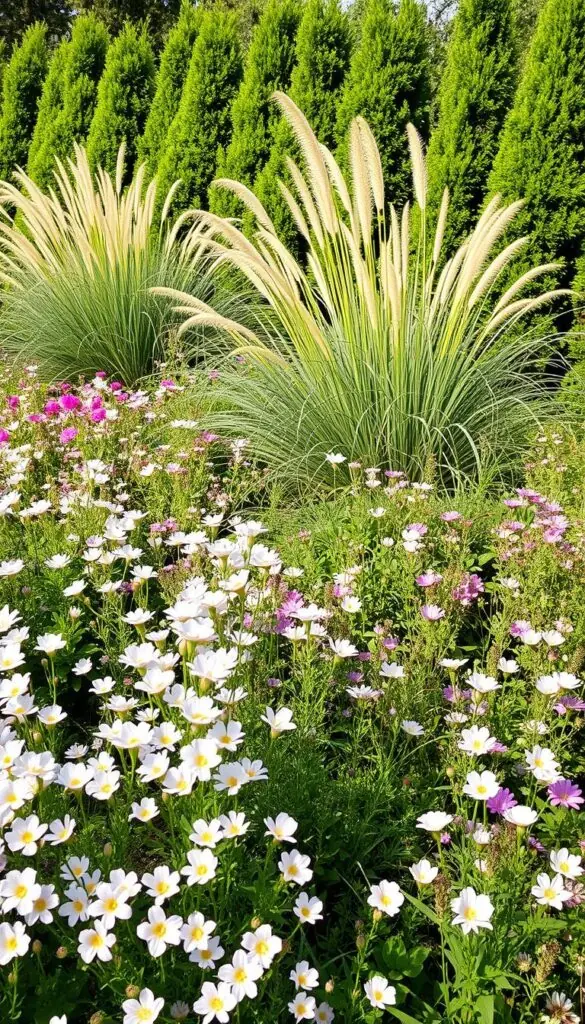
- Use generous beds instead of thin strips; extra depth lets plants fill in and cuts weeding time.
- Blend textures—fine grasses with broad-leaved perennials—for interest when flowers pause.
- Edge beds with tough groundcovers to keep a clean line and hold mulch in place.
- Lay irrigation or a soaker hose before planting; it saves you regular trips with a hose.
- Refresh mulch each spring to lock in moisture and brighten the whole area.
"A steady backbone of foliage keeps the border readable all year and makes seasonal blooms feel like highlights."
| Focus | Action | Benefit |
|---|---|---|
| Layering | Tall anchors, mids, groundcover | Shades soil, reduces weeds, eases maintenance |
| Structure | Evergreens or small trees | Year-round backbone and form |
| Depth | Generous beds (not narrow strips) | Plants fill in faster; fewer gaps to weed |
| Height | Obelisk/trellis | Adds vertical interest without losing area |
Quick design recipes: ready-to-plant combos for different areas
These easy combos let you picture the finished patch and plant with confidence today.
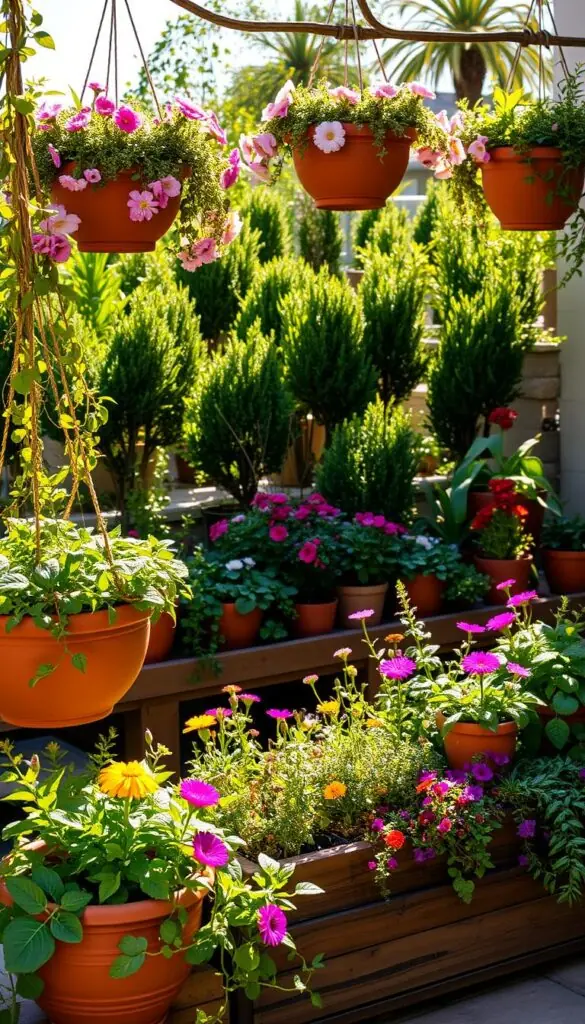
Full-sun border with bloom all season
Plants: catmint, salvia, coreopsis, coneflower, with Shasta daisy accents.
Add lamb’s ear at the front to soften the edge and reflect light with silvery foliage.
Heat-tolerant container with fragrance and pollinators
Use one large container as a focal point. Plant a compact lavender as the “thriller,” a dwarf agastache or mounding salvia as the “filler,” and trailing calibrachoa to spill over the rim.
Water in the morning on a warm day and feed lightly mid-season to keep flowers and pollinators happy.
Shady corner lift with texture-first plants
Pair hosta, ferns, and heuchera for layered foliage. Tuck in white flower accents to brighten without overpowering shade.
Use pale gravel or a light pot finish to increase perceived color and visibility in low light.
Small patio plan using the 50/50 balance and one focal pot
Keep half hard surface, half planting. Place one sculptural focal pot by seating and repeat two matching planters to frame the view.
Add a small herb bowl and a compact tomato or lettuce for a neat nod to a vegetable garden without clutter.
| Spot | Anchor plants | Accent | Quick tip |
|---|---|---|---|
| Full-sun border | Catmint, coneflower, salvia | Shasta daisy, lamb’s ear | Plant drifts; repeat 3x for rhythm |
| Container | Lavender, dwarf agastache | Calibrachoa trailing | One large pot reads calmer than many |
| Shady corner | Hosta, fern, heuchera | White flower accents | Use light finishes to lift color |
| Small patio | One focal pot, two matching planters | Herbs, compact tomato | Keep 50/50 balance; choose compact varieties |
Conclusion
A few thoughtful moves will turn a patch of plants into a peaceful place you use every day.
You now have a simple, trusted way to plan, plant, and enjoy your outdoor space through the warm months and the rest of the year.
Start where you are: observe light, choose resilient plants, and set one inviting destination such as a bold container or a trained fruit tree. Keep the 50/50 planting-to-paving balance and lift color with vertical elements to save space and time.
Make sure watering is easy, mulch yearly, and repeat favorite tones for rhythm. Trust small steps—one bed refreshed or one trellis added—and your garden will grow more beautiful and usable over the year.
FAQ
What makes a low-maintenance summer planting plan?
Choose drought-tolerant perennials and group them by water needs. Use mulch to retain moisture, pick native or well-adapted varieties, and limit high-maintenance turf. Aim for a 50/50 balance of planted areas and paved or mulched paths so upkeep feels manageable.
How do I match plants to my climate and daily sun exposure?
Observe your site for a few days to note full sun, dappled shade, and hot afternoon exposure. Then pick plants rated for those conditions rather than relying only on hardiness zones. For hot western or southern exposures, choose heat- and drought-tolerant species like lavender, agastache, and sedum.
What quick test tells me if a plant belongs in a bed, border, or container?
Consider mature size, root space, and drainage needs. Large, deep-rooted perennials suit beds; showy, contained varieties fit pots; and spillers or shorter plants work well at the front of borders. If you’re unsure, place a temporary pot on the spot for a season to assess scale and light.
Which low-water perennials give the most season-long color?
Look to daylilies, salvia, coreopsis, coneflower (Echinacea), and Russian sage for long bloom windows. Pair those with foliage stars like lamb’s ear or ornamental grasses to keep beds attractive between flushes of flowers.
How can I attract pollinators without extra work?
Plant a few pollinator magnets—milkweed, blazing star (Liatris), and Shasta daisy—and let some seedheads remain in fall. Choose single-form flowers (not double) for easy nectar access and cluster blooms so bees and butterflies find them quickly.
Should I use one large container or many small pots on a patio?
One bold container creates a calm focal point and reduces watering chores. Multiple small pots add variety but increase maintenance. If you want both, pick a main statement pot and a couple of matching smaller ones to keep the composition serene.
What are simple vertical solutions for small yards?
Use trellises, obelisks, or wall-mounted pockets to grow climbers and herbs. Espaliers and cordons work for fruit trees in tight spaces. Vertical features lift the view and free up ground for compact vegetables or seating.
How do I water efficiently during hot weeks?
Water deeply and infrequently in the morning so roots grow downward and evaporation is minimized. Add a 2–3 inch layer of organic mulch to conserve moisture, and group plants by irrigation need to avoid overwatering.
What color choices make a patio feel cooler on hot days?
Cooler hues—blues, purples, soft lavenders, and silvery foliage—visually open and cool a space. Combine them with light-colored hardscape and pale pots to enhance that effect without extra work.
Which compact vegetables are easiest for summer success in containers?
Try bush beans, compact tomatoes (such as 'Patio' types), baby salad greens, and Tromboncino or other vining squash trained upward. Succession sowing of salads keeps harvests steady without large beds.
How do I create low-maintenance borders that look good from spring through fall?
Blend early bulbs with long-blooming perennials and late-season seedheads for multi-season interest. Repeat plant groups for rhythm, include evergreen or structural foliage for winter shape, and keep planting densities that reduce weed pressure.
Can I get fragrance and pollinators in a heat-tolerant container?
Yes. Combine a fragrant centerpiece like lavender or rosemary with trailing calibrachoa or petunia and a pollinator-friendly salvia. Use well-draining mix and water at the pot’s soil line to keep roots healthy during hot spells.
What quick planting combos work for different areas?
For full sun borders: coneflower, salvia, and coreopsis. For a heat-tolerant container: lavender, agastache, and trailing bacopa. For shady corners: hosta, heuchera, and ferns for texture-first interest. For a small patio: one focal pot plus lower-repeat container plants to echo color.
How often should I deadhead or trim perennials to reduce maintenance?
Light deadheading every few weeks keeps most perennials blooming longer but isn’t essential. For very low-care beds, cut back spent flowers once a month or leave some seedheads through fall to support wildlife and reduce tasks.