Imagine morning light spilling over a tiny patio, the scent of lemon thyme brushing your fingers. You might notice a narrow strip of yard or a compact patio and wonder how to make it feel calm, useful, and beautiful.
We help you set a clear wish list so the space feels like your favorite room outdoors. Expect simple steps: prioritize needs, pick one strong focal point, and use the diagonal axis to make the area feel deeper.
Practical swaps deliver big results. Choose one tall rectangular planter on casters, a folding bistro set, and low-voltage lights to extend evenings. Try dwarf blueberries (Zones 4–8) and compact herbs by the kitchen door.
You’ll learn quick tools and timing—hand pruners, wheeled saucers, and when to plant—so your project fits weekend schedules and the rhythm of your house.
Key Takeaways
- Define how you want the area to feel before choosing elements.
- Use one focal moment and diagonal sightlines to add depth.
- Pick fewer, larger containers on casters to simplify care.
- Include practical tools: pruners, saucers with casters, low-voltage lights.
- Choose region-appropriate plants like dwarf blueberries and compact herbs.
- Small changes—lighting, a fountain, or a ladder trellis—extend use and charm.
A calm starting point: define how you want your small garden to feel and function
Picture the one experience you want most—then design the area around it.
Decide whether the primary goal is dining, a quiet reading nook, a kitchen patch for tomatoes, or a pollinator haven. Write your top three wishes. This makes every square inch count and keeps choices simple.
Prioritize your wish list: dining, reading nook, veggies, or pollinator haven
- List your top three uses so the design supports how you live.
- Measure the space and track sun for a week—note full sun (6+ hours) and partial shade zones.
- Use painter’s tape to mark a bistro table, bench, or chaise to feel the flow before you buy.
Right-size goals to space, time, and budget
Set a realistic timeline: Day 1 — clear and measure. Day 2 — mark layout and plant a starter bed. This keeps the project low-stress and doable.
Choose furniture that pulls double duty: folding chairs, an extending table, or a capped 17" raised bed that doubles as seating with cushions.
| Goal | Sun Needed | Tools to Plan | Quick Tip |
|---|---|---|---|
| Tiny dining spot | Partial to full sun | Measuring tape, painter’s tape | Keep pathways 30–36" wide |
| Reading nook | Morning shade or dappled light | Sun-tracking app, cushion | Tuck seat near cooling plants |
| Veggie patch | Full sun (6+ hours) | Raised bed kit, sun-tracker | One 4x4 bed beats many tiny pots |
Sense-check: imagine morning light on the pages of your book, basil scent by the door, and the soft scrape of gravel underfoot leading to your favorite outdoor room.
Small garden ideas that instantly add depth and flow
Turn your layout on the diagonal and watch the area open up visually.
Use the diagonal axis to lengthen a shallow yard. Tilt a patio or path about 45 degrees so sightlines run corner-to-corner. The change makes the space look longer right away.
Use stakes, string, and a tape to set diagonal sightlines
Step 1: Drive stakes at two opposite corners.
Step 2: Run string or a long tape between them to mark the 45° axis.
Step 3: Lay a hose over the string to test curves before you dig.
Curve beds and paths to hide edges and add intrigue
Sketch paths with the hose and step back from multiple angles. Gentle curves that partially obscure views make the garden feel larger.
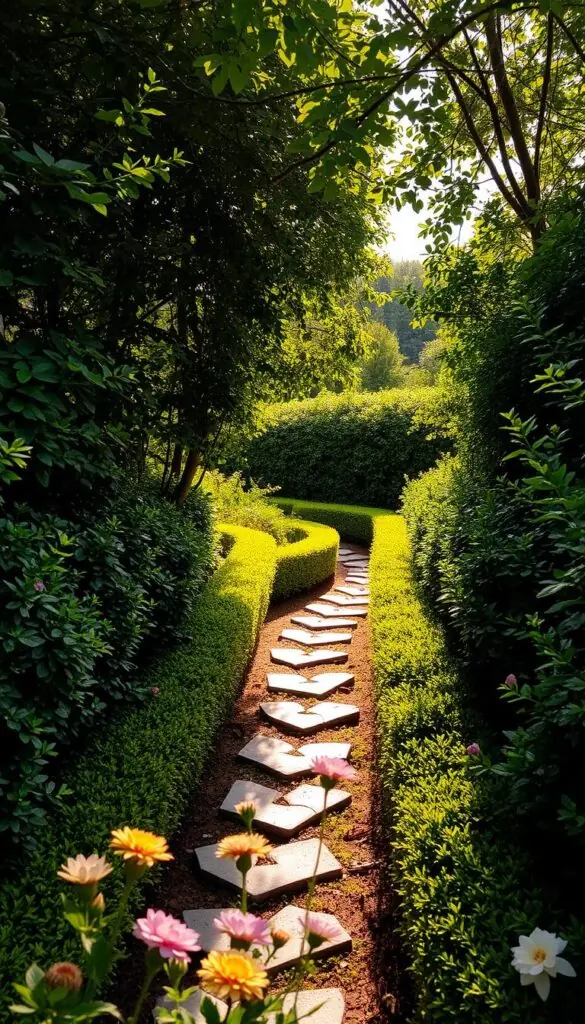
Create an island bed as a focal point in a lawn
Build an island bed with taller plants in the center (dwarf fountain grass or compact crape myrtle) and lower mounding plants at the edges. Repeat two to three plants for unity.
| Technique | Tools | Planting Example |
|---|---|---|
| Diagonal path | Stakes, string, long tape | Stepping pavers at 45° |
| Curving beds | Garden hose, marking paint, spade | Blue salvia at border ends |
| Island bed | Square spade, mulch, edging | Dwarf fountain grass center, low phlox edge |
Finish with a 24–30" mowing or gravel strip around the island. Add one small ornamental tree or narrow standard to frame views from the backyard. Refresh edges each spring and top-dress with 1–2" of fine mulch to keep the curves sharp and weeds down.
Vertical wins: trellises, living walls, and railing planters
Lift your planting up and watch the area feel taller and calmer.
Use vertical elements to free floor room and give your eyes a lush backdrop. Trellises and lattice panels are simple ways to lift vines off the ground and soften a bare wall.
Practical spacing and ties: place trellis panels 6–12 inches from the wall to allow airflow. Run horizontal wires every 12–18 inches for espalier training. Use hooks, galvanized wire, garden tape, or zip ties for gentle support.
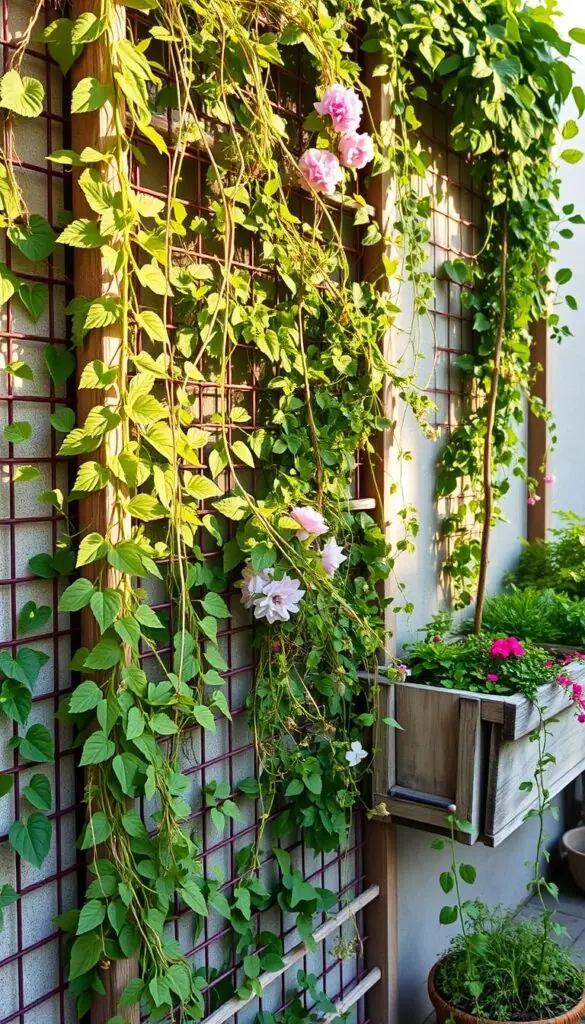
Train climbers and espalier fruit
Train star jasmine (Zones 8–10) or clematis on a sturdy frame and prune lightly after bloom. For espalier apples or pears, attach hooks and horizontal wires and expect results in a few years with yearly pruning.
Layer with arbors, ladder planters, and pergolas
Install an arbor at a threshold for height, then add a ladder planter for herbs and pots at eye level. Slim containers and ladder shelves keep pathways clear and add cascade color without using floor area.
| Element | Spacing/Tips | Good plants | Tools |
|---|---|---|---|
| Trellis/Lattice | 6–12" from wall; wires 12–18" apart | Clematis, climbing rose | Hooks, wire, zip ties |
| Espalier | Horizontal wires every 12–18"; annual pruning | Apple, pear | Hand pruner, wire, hooks |
| Railing boxes | Mount to rail; keep walkway clear | Herbs, petunias | Hanging brackets, small drill |
| Ladder planter | Place near seating; stagger pots | Thyme, dwarf shrubs | Containers, lightweight resin pots |
Sensory note: brush past thyme on a ladder step and catch a whisper of citrusy scent as vines sway near your favorite chair. These vertical moves give you harvest, fragrance, and privacy in tight spaces.
Container magic: fewer, larger planters for big impact
A single tall planter can anchor your outdoor room and cut down on care.
Choose tall, rectangular, or elliptical containers to tuck against railings and walls. One large piece reads like furniture and saves floor space on a patio. Avoid cluttering the ground with many pots; a big container gives stronger visual weight and easier irrigation.
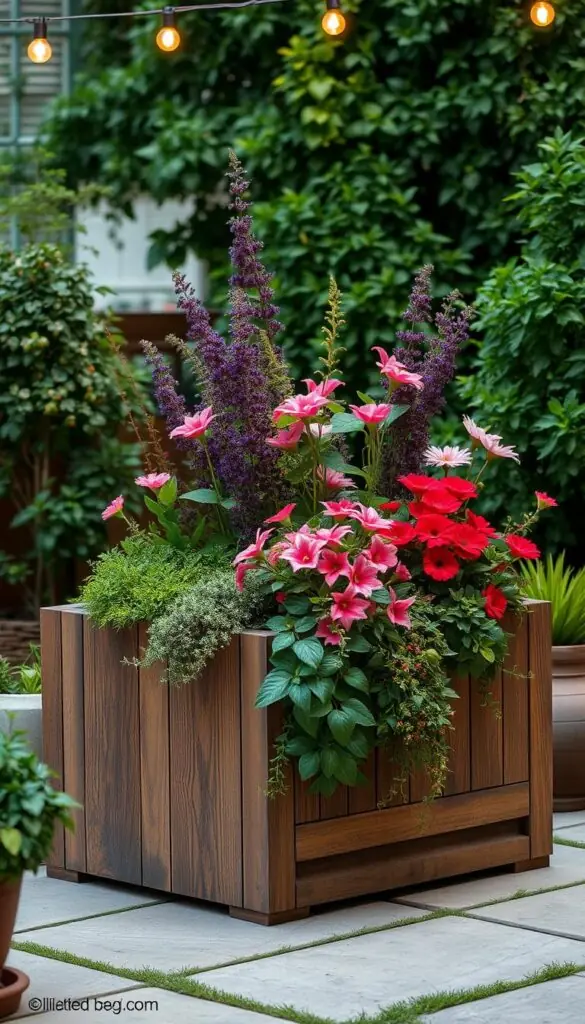
Practical pot sizes, soil, and watering rhythm
Pot size: aim for 18–24" diameter or a tall 24–30" rectangular box for lasting impact.
Soil mix: use high-quality potting mix amended with compost and a slow-release fertilizer. Top with fine bark to hold moisture and keep the surface tidy.
Watering: water deeply until it drains, then wait until the top inch dries. Use a small moisture meter to avoid overwatering.
Tools and placement tips
- Set containers on locking casters or wheeled saucers to chase sun or shape a reading nook.
- Use saucers with wheels, felt pads, and risers to protect decking and improve drainage.
- Keep at least 18–24" between container edges for comfortable movement.
| Feature | Recommendation | Why it helps |
|---|---|---|
| Container shape | Tall rectangular or elliptical | Fits close to walls; saves floor space |
| Soil mix | Potting mix + compost + slow-release feed | Holds moisture, feeds plants for weeks |
| Mobility | Locking casters / wheeled saucers | Allows movement to follow sun or create zones |
| Protect surfaces | Felt pads or risers | Prevents staining and lifts pot for drainage |
Sensory note: one weighted, upright planter gives a room-like presence. Choose textured foliage and a pop of flower color so your plants read as a single, calm focal point with real impact.
Grow what you’ll use: herbs, compact veggies, and dwarf fruit
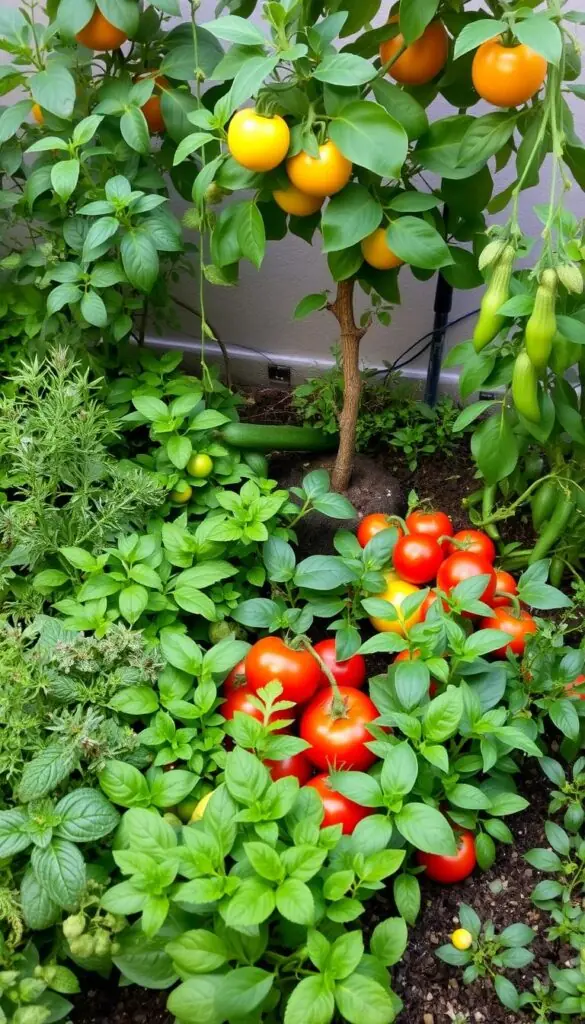
Start with a sunny spot that gets at least six hours a day. Raised beds and stock tanks give better drainage and less tilling. A single 4x4 bed or a galvanized tank fits a patio or the backyard and keeps care simple.
Sunny setups and a quick 4x4 bed build
- Cut untreated cedar or use a stock tank to form a 4x4 box, 10–12" deep.
- Fill with a mix of compost, topsoil, and quality potting mix.
- Install a basic drip kit and add plant markers for rows.
Stock tanks and tiered terra-cotta for tight spots
Stock tanks are budget-friendly; add a liner and drill drainage holes. Tiered terracotta planters save ground space and let you layer herbs by use.
| Zone | Planting time | Easy crops |
|---|---|---|
| 4–6 | Frost-free late spring | Salad greens, bush tomatoes |
| 7–8 | Early spring and fall | Peppers, basil, dwarf blueberries |
| 9–10 | Year-round mild planting | Alpine strawberries, herbs |
- Prioritize what you cook—lettuce, basil, cherry tomatoes, peppers.
- Use supports for vining crops to save floor room and boost airflow.
- Tools to keep handy: trowel, hand fork, plant markers, and a simple drip kit.
Sensory moment: rub basil between your fingers, feel warm sun on tomato leaves, and hear pollinators visit the blossoms. These choices make each season rewarding and practical.
Design with structure: shrubs, small trees, and foliage-first palettes
Begin with a backbone of foliage: one upright tree and a handful of compact shrubs will shape the space year-round.
Choose columnar forms to gain height without losing width. Try 'Sky Pencil' holly (Zones 5–9) or 'Crimson Pointe' plum (Zones 4–9) for narrow, upright impact.
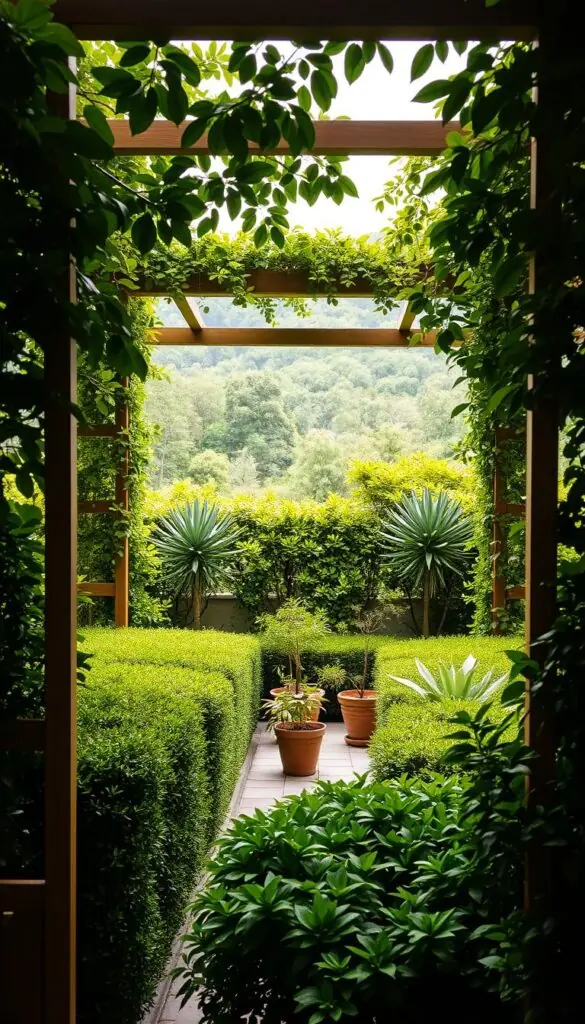
Compact, columnar, and multi-season choices for tight footprints
Pick multi-season performers like dwarf fothergilla for spring blooms and fiery fall color, or boxwood for evergreen structure and easy shaping.
Anchor the bed with foliage-first stars such as heuchera, blue fescue, or Japanese forest grass so the area looks composed even between blooms.
- Start with one tree and two to three compact shrubs for instant bones.
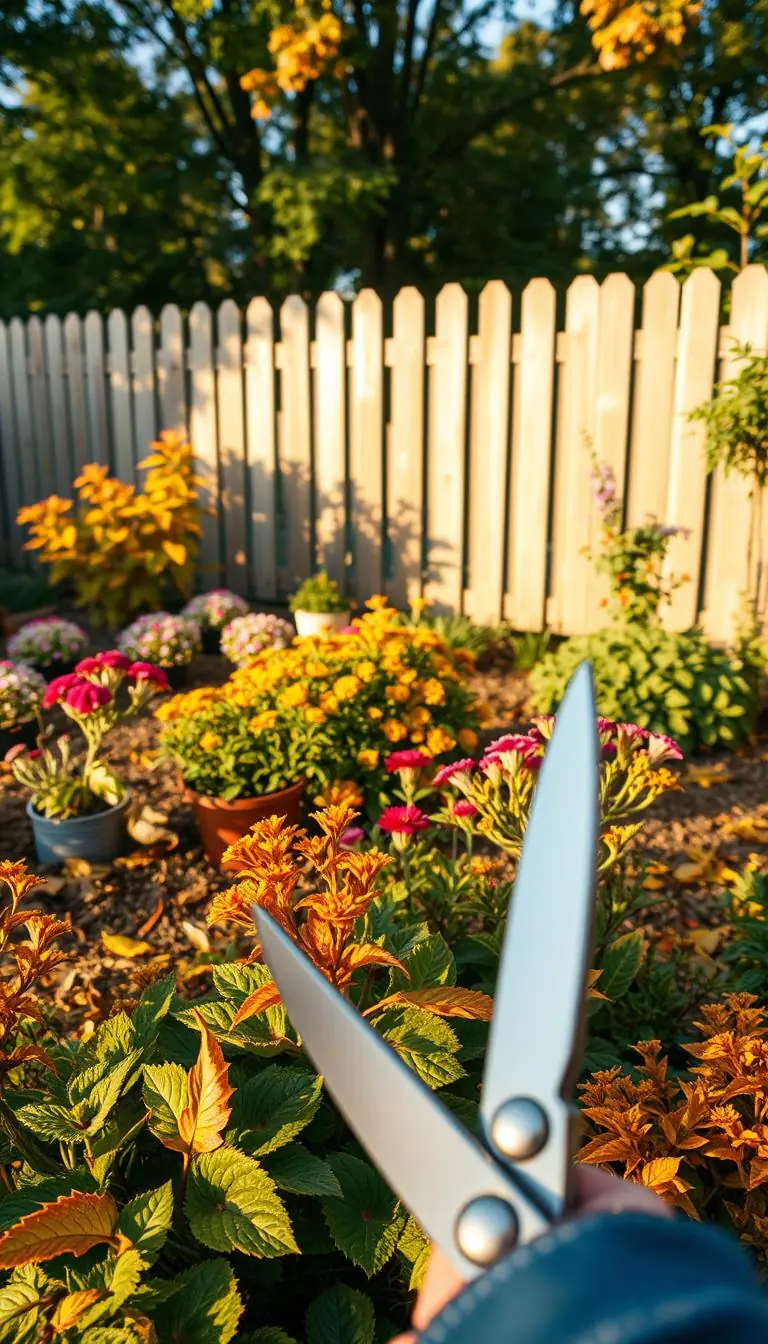
- Prune lightly after bloom or in late winter; use a sharp bypass pruner for clean cuts.
- Repeat the same shrub on both sides of a path to create rhythm and depth in limited size.
| Plant | Zones | Why it helps |
|---|---|---|
| 'Sky Pencil' holly | 5–9 | Upright column for height without spread |
| 'Crimson Pointe' plum | 4–9 | Vertical tree form with seasonal color |
| Dwarf fothergilla | 5–8 | Spring bloom, textured leaves, fall fire |
| Boxwood | 5–9 | Evergreen backbone; easy shaping |
Sensory moment: run your hand over smooth bark, listen to rustling narrow leaves, and enjoy afternoon light glossing evergreen texture.
Make room to live: smart seating, bistro corners, and multiuse pieces
Design seating to follow traffic and sightlines so the patio reads like an extra room of the house.
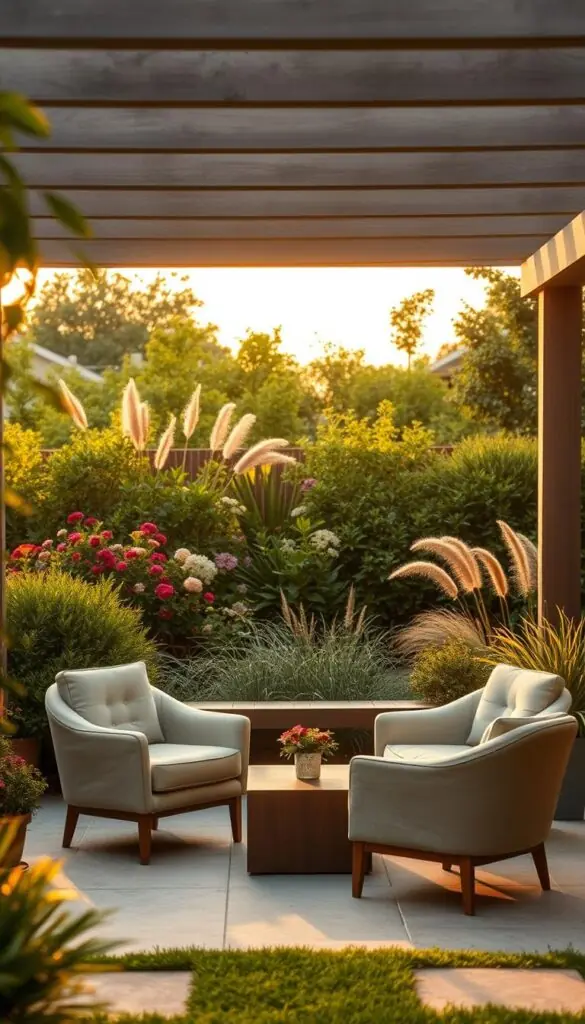
Benches, foldable chairs, and seat-height walls
Place a slim bistro or two in a bright corner and keep about 36 inches of clearance around chairs so people can move easily. A capped retaining wall or raised bed at roughly 17 inches doubles as seating when you add outdoor cushions.
Choose cushion fabrics like solution-dyed acrylic or outdoor polyester for quick drying and fade resistance. Pick sleeker frames rather than deep armchairs so the area stays open and you can fit more seating without crowding.
Gas fire tables that double as coffee tables and focal points
A gas fire table gives warmth with low smoke and a clean rim that works as a daytime coffee table. It becomes the focal point for evenings and keeps the room feeling calm and usable in spring and fall.
Create a simple layout recipe: one central fire table, two lounge seats or a bench at 17" height, plus a bistro tucked to the side. Add a tall planter to form a soft screen and a single lounge chair for a private reading nook.
- Tuck a slim bistro set into a corner and keep 36" of clearance for flow.
- Build a low wall at seat height (~17") and add cushions for instant bench seating.
- Use stools that shift between footrests and extra seats when guests arrive.
- Choose a gas fire table over a bulky wood pit for safety and day-use as a table.
Sensory moment: the soft thud of a cushion, a gentle flame flicker, and the clink of a glass on a sturdy table edge as evening air settles into your home space.
Light the evening: soft glows, path lights, and cozy moments
Soft, layered light helps pathways, highlights foliage, and invites relaxed evenings.
String lights, lanterns, and subtle low-voltage accents
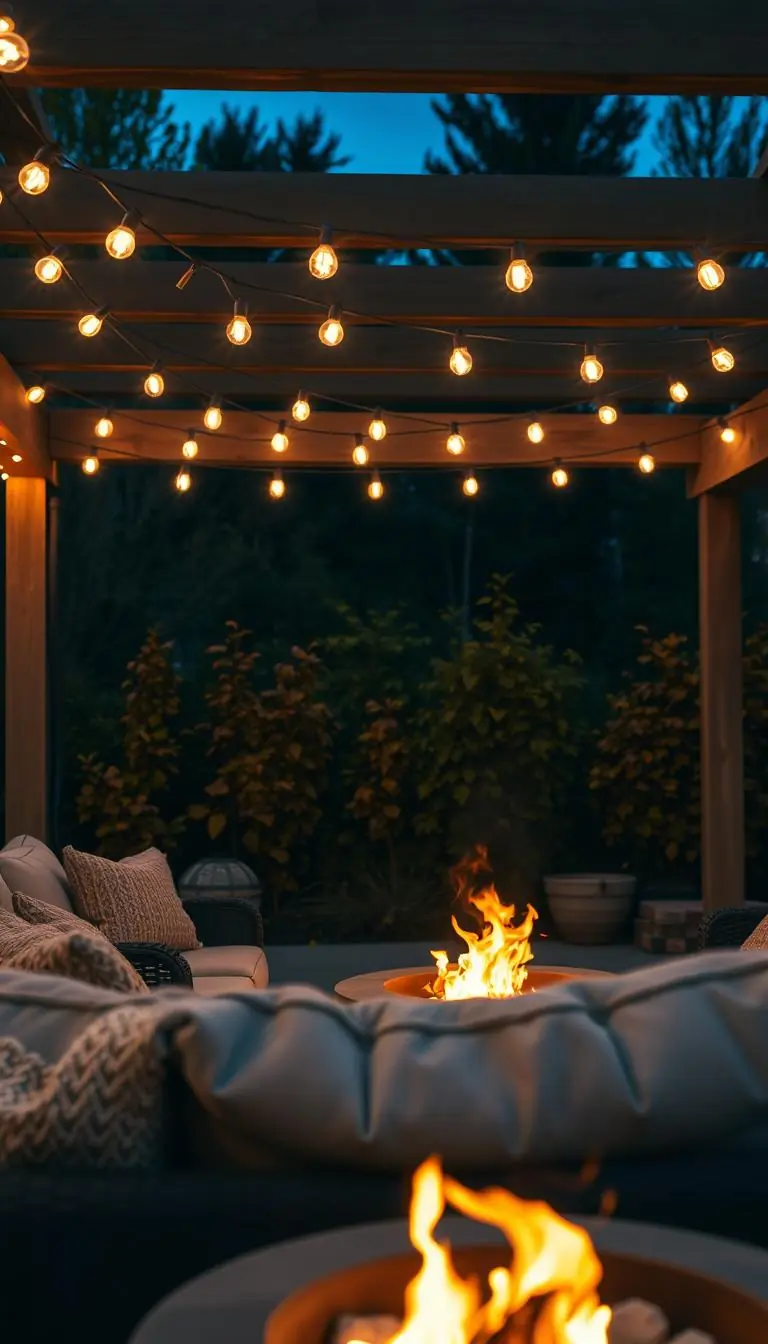
Start with an ambient layer: string lights overhead create a cozy canopy and instant charm in your outdoor space. Choose waterproof, outdoor-rated strings and anchor them with stainless hooks or cable so they stay steady in wind.
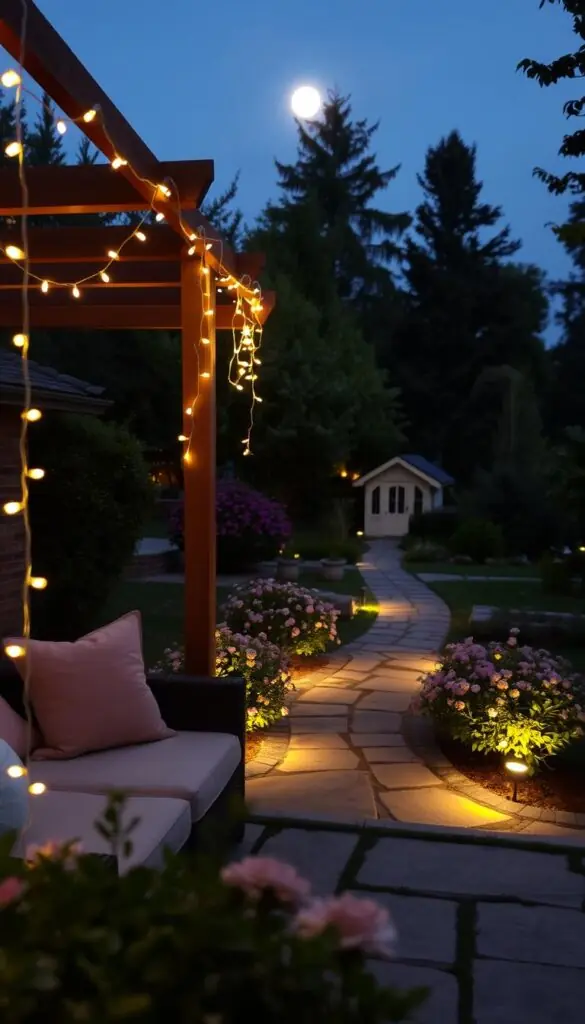
Add task lights for safety. Low-voltage path fixtures guide steps without glare. Aim for subtle fixtures that wash steps and edges, not lights that shine in your face.
Use accent uplights to graze textured plants and walls. Small spotlights cast appealing silhouettes and moving shadows as leaves shift. Pick warm-white bulbs (2700–3000K) to flatter skin tones and foliage.
- Layer ambient strings, task path lights, and spot uplights for depth.
- Install smart timers so lights come on at dusk and turn off at a set time, saving energy.
- Keep fixtures shielded to avoid glare and keep the focus on the plants and paths.
| Plan | Purpose | Product tips |
|---|---|---|
| Ambient | Create a warm canopy for dining and lounging | Waterproof string lights, suspension cable, stainless hooks |
| Task | Guide steps and entry points safely | Low-voltage path lights, low-glare shields, 12V kit |
| Accent | Highlight texture and focal plants | Small LED uplights, warm 2700–3000K, adjustable beam |
| Control | Manage run time and energy use | Smart timer or photo cell, programmable dusk-to-off settings |
Sensory note: listen to evening quiet as a soft sparkle frames leaves, watch plant silhouettes move, and enjoy how light gives your spaces a new look after dusk. With a simple plan you extend use, add drama, and make the season last longer.
Add gentle water for sound and calm
A compact water feature gives sound and coolness without taking over your outdoor room.
In tight settings, a recirculating wall fountain or a bubbling tabletop pot adds soothing sound with minimal footprint. A liner-and-pump micro-pond tucks beside paving and brings a reflective surface into the plan.
Place the feature where you’ll hear it from your favorite chair. Sound is often the true focal point in limited spaces. Seat a bench close by and surround the basin with hostas or ornamental grasses for a soft edge.
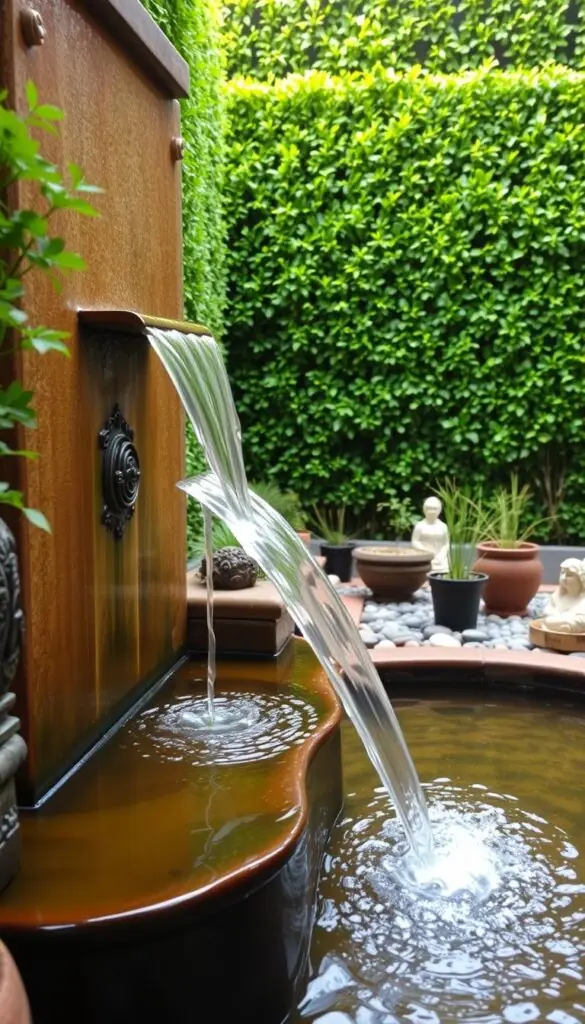
- Choose the smallest solution that fits: slim wall fountain, bubbling urn, or lined micro-pond.
- Use a GFCI outlet, a level base, and an appropriately sized pump; tabletop kits often include a pump.
- For fish, add a filter and check water quality; winterize pumps or move them indoors in cold climates.
| Feature | Footprint | Tools | Maintenance |
|---|---|---|---|
| Wall fountain | Vertical, narrow | Level, GFCI outlet, mounting hardware | Clean face monthly; check pump flow |
| Tabletop bubbler | Portable, light | Small pump, tray or urn | Top up water; clean pickup once a season |
| Micro-pond (liner) | Low, tucked by paving | Pond liner, pump, filter, flat stones | Trim plants; test water if keeping fish |
Sensory moment: a hush of trickling water, sunlight glinting on the surface, and a slight coolness in the air make your outdoor room feel complete.
Privacy without bulk: slim screens and green walls
A narrow screen can give you calm privacy without swallowing the yard. Think vertical solutions first: slim evergreens, trellises, and quick-install panels that create a soft edge while leaving floor space open.
When big trees won’t fit, choose columnar varieties for height without width. Plant them 3–4 feet apart for an instant screen. Mix in a few narrow deciduous trees to add seasonal light and color.
Install trellises where roots can’t spread. Train vines on frames to soften a wall or fence. Quick panels and lattice can be mounted the same day and planted with fast-climbing vines for fast cover.
- Line a boundary with columnar evergreens to gain privacy fast without losing yard width.
- Stagger plantings slightly to avoid a rigid row and create depth toward the interior.
- Use see-through fencing and frame a distant view with a simple gate to borrow space visually and make the backyard feel larger.
"Dappled shade and rustling leaves turn privacy into a gentle, living screen."
Maintenance is simple: prune yearly for shape, water young trees well, and check trellis ties each season. This approach keeps your house-facing side calm, green, and inviting.
Paths, paving, and materials that stretch space
A well-laid path can make a compact space feel like it stretches farther than it is. Think of paving as both a practical way to move and a subtle tool that leads the eye past beds and borders.
Brick, gravel, and stepping-stone patterns to guide the eye
Choose a primary path about 36 inches wide for ease of movement. Then use pattern to add depth: brick herringbone or running bond draws the eye forward and creates a charming look.
For gravel or decomposed granite, lay a compacted base and install stable edging. This keeps lines crisp and reduces future maintenance.
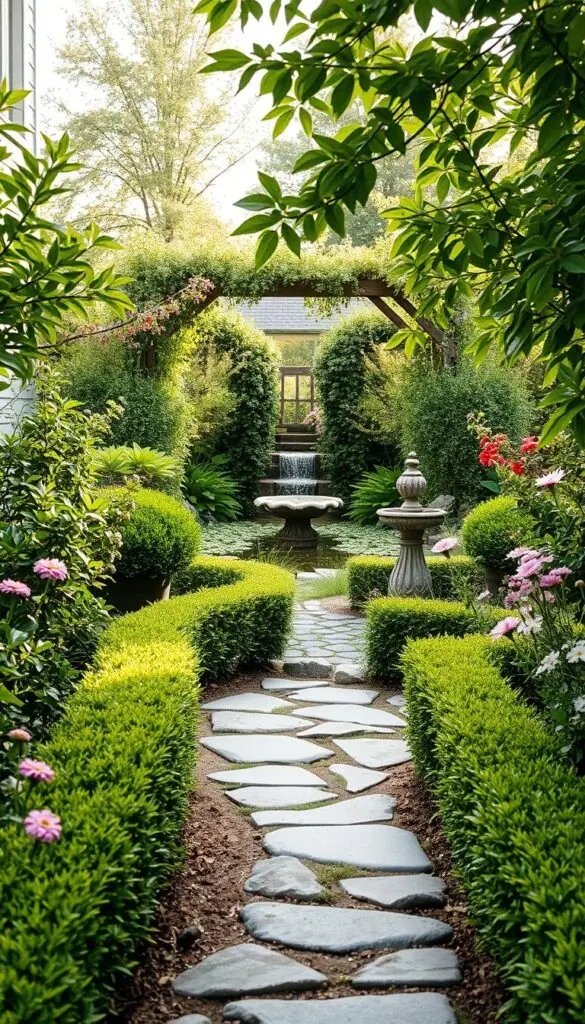
Set stepping stones in ground cover like thyme to soften the route in narrow spots. Add a gentle bend or two to slow your pace and reveal hidden views as you walk.
- Prep: compacted base, landscape fabric where needed, and a tamper.
- Edges: metal or stone edging to hold gravel and keep a neat ground line.
- Tools: tamper, edging tool, rubber mallet, level.
"The soft crunch of gravel and the warmth of sunlit pavers invite you to linger."
Coordinate materials with your home—brick warms plant color, while fine paving gravel gives a quieter, modern canvas that makes the whole yard feel larger.
No lawn? No problem: plant to the patio edge
Let your patio bleed into planting beds so the spot you use most feels lush and immediate.
If mowing isn't for you, skip turf and bring planting up to your living area. Extend beds right to the patio to gain real planting depth and a softer edge where you sit.
Swap thirsty lawn for permeable paths and layered plantings that invite butterflies and bees within arm’s reach. Use stepping stones set in low, step-friendly ground covers to keep a green route without constant mowing.
- Extend beds to the hardscape edge to make the area feel larger and cozier.
- Choose permeable pavers or gravel for paths so water returns to the soil.
- Mulch 2 inches deep to hold moisture and cut weeds—simple, effective, and low care.
Sensory moment: blossoms drifting over the patio edge and the gentle hum of pollinators close to your chair. Keep a clean edge where planting meets hardscape; it sharpens the look and makes upkeep easy in any backyard.
Year-round beauty: color palettes, bloom times, and fall fireworks
A limited palette of two or three hues plus green gives planting real staying power. Keep the scheme simple so the space reads calm and intentional through each season.
Keep the palette simple; repeat colors and textures
Pick two main flower colors and repeat them across beds and containers. Repeat foliage textures—fine, bold, glossy—so your eye flows from one bed to the next.
Fall stunners and timing: fothergilla, oakleaf hydrangea, spicebush, blueberries
- Stagger bloom times: spring bulbs and hellebores, summer salvias and coneflowers, then fall color from fothergilla and oakleaf hydrangea.
- Add highbush blueberries along paths for spring blooms, summer fruit, and brilliant fall leaves.
- Prune spring-flowering shrubs immediately after bloom; cut summer-blooming shrubs in late winter to protect flowers.
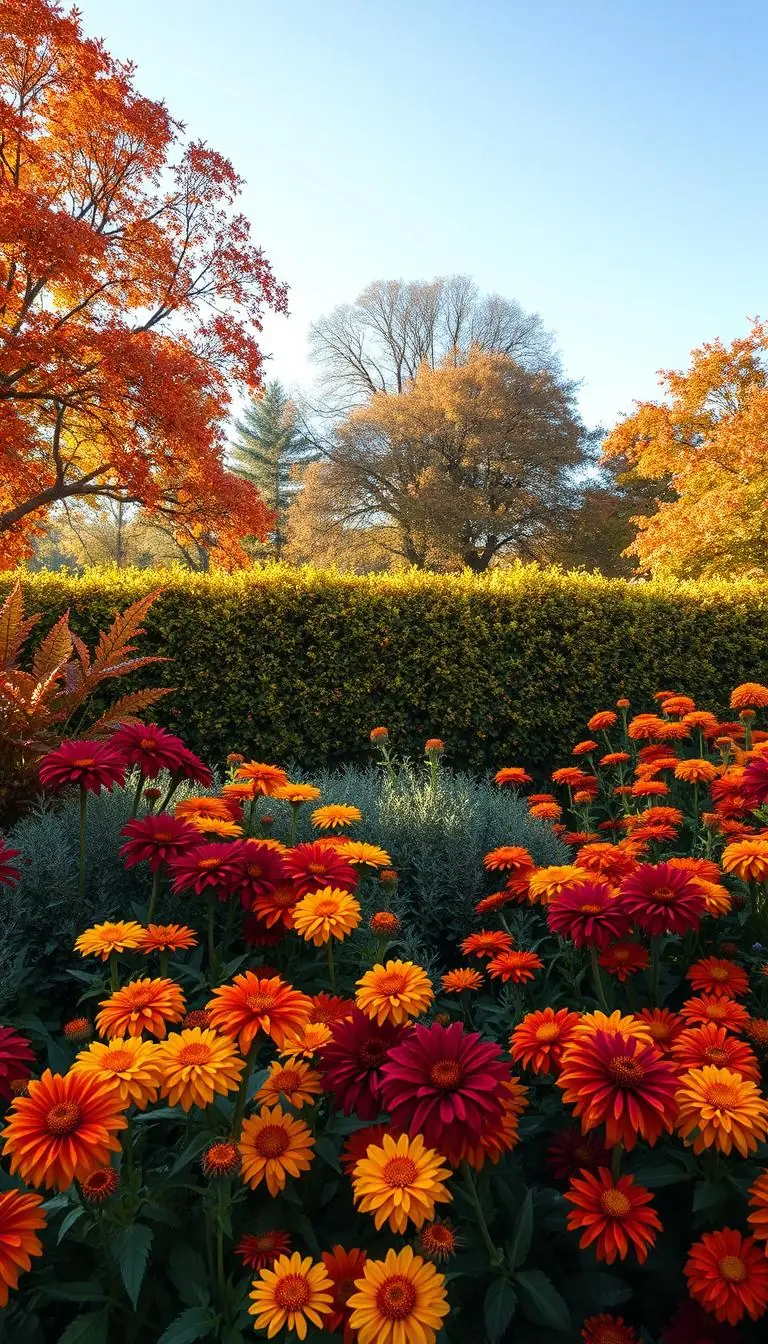
Sensory moment: sweet spring fragrance at the door, lush midsummer textures at arm’s reach, and crisp fall leaves glowing in low afternoon sun. These choices give real visual and seasonal impact with minimal fuss.
Invite life in: birds, butterflies, and fragrance
Invite wildlife close by with a few simple touches that reward you in song and motion.
Place a shallow bird bath where you can see it from your chair. Refresh the water often and scrub the basin weekly. Clean water draws more visitors and adds motion and color year after year.
Bird baths and feeders for movement and song
Add one feeder at varying heights to attract different species. Keep feeders a short flight from shrubs so birds have safe cover from predators.
Pollinator plants and night-scented blooms for evening enjoyment
Plant nectar-rich flowers such as bee balm, salvias, and butterfly bush to support pollinators from spring through fall. Tuck night-scented picks like nicotiana or moonflower near seating so fragrance greets you at dusk.
- Place a shallow bird bath within view and refresh the water weekly.
- Add a single feeder at varied heights to create gentle movement and song.
- Choose plants that bloom across seasons to feed bees and butterflies.
- Tuck night-scented blooms close to lights for evening perfume.
Sensory note: wings flash at the water’s rim, birdsong lifts quiet afternoons, and a soft perfume drifts in when the air cools. These simple moves bring nature into your space in a relaxed, sustaining way.
Small spaces, big joy: balcony, side yard, and courtyard ideas
Even the tightest courtyard can feel generous when you focus on vertical layers and a single strong focal container.
Balcony bistro with containers and vertical rail planters
Pair a foldable bistro table and two chairs to make the patio feel like another room. Add railing planters for herbs and color so you don't use precious floor area.
Choose lightweight materials — resin or fiberglass containers and a slim metal bistro set keep weight low. Make sure to check weight limits and use saucers under pots to protect the ground.
- Cluster one or two tall containers for height; keep one bold container as a visual anchor.
- Use vertical rail planters to free floor space and add seasonal color.
- Consider a potted dwarf citrus as a living sculpture you can move indoors in winter.
Side-yard path with shrubs and a tucked-away seating nook
Lay a straight or gently curving path and stagger compact shrubs along the fence to create rhythm and privacy. A narrow side yard becomes a sequence of moments rather than empty length.
Tuck a single chair and small table into a pocket at the path’s end for reading or a quiet cup of tea. Use stock tanks or a small raised bed to add depth without crowding the walkway.
- Pick narrow shrubs and columnar trees for screening without bulk.
- Choose wheeled saucers for containers so you can shift seating as sun changes.
- For courtyards, combine one bold container with a slim trellis to lift vines and make the space feel taller.
"Morning sun warms the rail, thyme scent brushes your fingers, and dappled light pools around your tucked chair."
Conclusion
Close with an easy move that turns a plan into lived comfort.
Choose one clear change and make it yours. With clear priorities, simple palettes, and a few structural moves — the diagonal axis, tall planters, and warm lighting — your space will feel larger and calmer fast.
Start this week: set a chair where the light is best, add a tall planter on casters, and string a few warm bulbs for evening calm. Then add vertical greens, a quiet water note, or a gentle path when you have time.
Trust the process of daily care and steady choices. May your mornings smell like basil, your evenings glow softly, and your garden become a small source of steady inspiration.
FAQ
How do I decide what my small outdoor space should feel like and do?
Start by imagining how you’ll use the area — dining, a reading nook, a place to grow herbs, or a pollinator patch. List priorities, then match them to your time, budget, and sun exposure. Keep goals realistic: pick one or two main functions and design around those so the space feels purposeful and calm.
What layout tricks make a shallow yard look longer?
Use a diagonal axis: angle a path or plant bed to draw the eye toward a far corner. Curved beds and stepping stones add depth, while an island bed or focal planting in the lawn gives a sense of scale and distance. These moves create flow without adding square footage.
How can I use vertical space without making things feel crowded?
Add layers up instead of out. Install trellises, lattices, or a living wall and train climbers like clematis or espaliered fruit. Railing boxes and hanging baskets bring color without taking floor space. Choose slim structures and repeat materials to keep the look light and cohesive.
Are containers a good option for tight patios?
Yes — fewer, larger planters make more impact than many small pots. Tall, rectangular, or elliptical containers save floor space and give height. Put pots on casters so you can chase sun, change the layout, or create temporary “rooms.”
What edible plants work best in limited areas?
Grow what you’ll use: herbs, compact vegetables, and dwarf fruit varieties. Use raised beds, sunny containers, or stock tanks to boost productivity. Tiered planters and vertical supports help you squeeze in more without crowding the patio.
Which structural plants suit small footprints?
Choose compact, columnar, or multi-season shrubs and small trees that give year-round shape. Evergreens, boxwoods, dwarf hollies, and small maples offer backbone without overwhelming the area. Focus on foliage-first palettes so the space reads full even when not in bloom.
How can I fit seating into a tiny yard without losing planting space?
Pick multiuse pieces: benches with storage, foldable bistro sets, or seat-height walls topped with cushions. A gas fire table can serve as a focal point and coffee table. Tuck seating into corners or alongside paths to keep central space free for plants.
What lighting works best for creating evening atmosphere?
Use layered, soft lighting: string lights for overhead warmth, lanterns for intimate corners, and low-voltage path lights for safety. Small LED uplights can highlight a specimen plant or wall fountain, adding depth without glare.
Is it possible to add water features in a compact area?
Absolutely. Choose scaled options like wall fountains, tabletop bubblers, or a micro-pond with a liner and small pump. These add soothing sound and movement while taking minimal space and maintenance time.
How do I create privacy without bulky screens?
Use slim vertical elements: columnar evergreens, deciduous screening plants, trellis-grown vines, or a narrow green wall. Furniture placement and taller container plantings can also make corners feel private without building fences.
Which paving patterns help make a yard feel larger?
Directional paving guides the eye: lay brick or stone in diagonal or running-bond patterns, use long rectangular pavers to elongate the view, or inset gravel strips between stepping stones. Keep materials consistent and use narrow joints for a seamless look.
What if I want no lawn — how do I soften the patio edge?
Plant right up to the paving with mixed-height beds or large containers. Use groundcovers, low shrubs, and grasses to blur hard edges. A narrow planting strip along the patio keeps the space lush while maximizing usable area.
How can I plan for year-round interest in a compact plot?
Keep the palette simple and repeat key colors and textures. Combine evergreen structure with seasonal bloomers and strong fall specimens like oakleaf hydrangea, fothergilla, or spicebush. Layer plants for staggered bloom and contrast across seasons.
What plants attract birds, butterflies, and fragrance to a small yard?
Include pollinator-friendly flowering perennials, native shrubs, and night-scented blooms like night-blooming jasmine. Add a bird bath or feeder for movement and song. Even a few well-placed plants will invite more wildlife and sensory pleasure.
How do I adapt ideas for balconies, side yards, or courtyards?
Choose site-appropriate solutions: a bistro set and vertical rail planters for balconies, a narrow path with shrubs and a tucked seat for side yards, and layered containers with a focal tree for courtyards. Think vertically, use modular furniture, and keep maintenance in mind.