
Can you picture the first warm morning after winter, the air soft and the grass waking up? You want a simple plan that helps your lawn and beds green up without fuss. This short introduction gives clear, friendly information so you can start with confidence.
Fertilizing in early spring helps your lawn recover from winter, thicken up, and show richer color. A timed pre-emergent for crabgrass, followed later by a weed-plus-nutrient mix, sets you up for steady growth. Use a broadcast spreader for even coverage and fill it on a hard surface while checking the bag’s spreader settings.
You’ll get practical steps for choosing the right product for your grass and soil, when to apply, and how to plan around light rain. Think of this as a calm, easy plan for the year: spring feed, a mid-season boost, and a fall winterizer to protect gains.
Key Takeaways
- Early applications help your lawn recover from winter and promote steady growth.
- Use a broadcast spreader and simple crisscross passes for even coverage.
- Combine a crabgrass preventer early, then a weed + feed later for broadleaf control.
- Follow product spreader settings and fill on a hard surface for safety and accuracy.
- Think seasonally: spring nutrition, mid-season touch-ups, and a fall winterizer.
Start the season gently: what your lawn and beds need as winter fades
As the last frost loosens its grip, take a slow walk across your yard to see what needs gentle attention.
Look for bare patches, matted blades, and spots where soil feels compacted or overly damp. These quiet checks help you plan early spring care without overdoing it.
Plan a light feeding in early spring so grass has nutrients ready as it wakes. If you had weed pressure last year, choose a product that includes a crabgrass preventer and apply just ahead of a forecast light rain to help it settle in.
Keep the first mow modest and the blade sharp. Remove only the top third of the blade to avoid stress. Use a broadcast spreader for even passes and fill it on the driveway to make cleanup easy.
Tidy edges and rake winter debris so granules reach the soil. For beds, gently loosen the top inch of soil once it dries a bit to help nutrients contact roots.
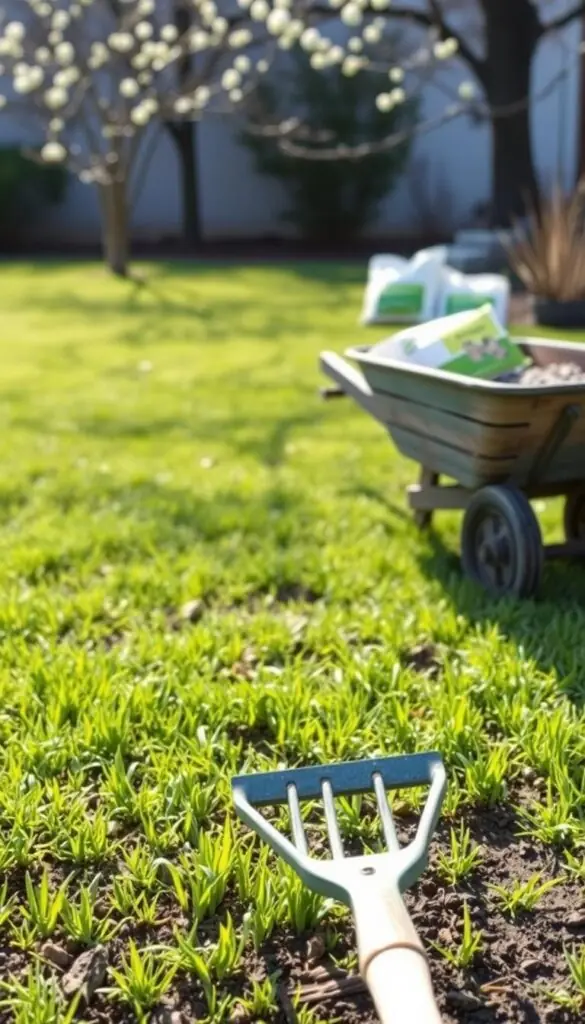
- Walk and inspect
- Light feeding timed before rain
- Even spreading and gentle mowing
| Task | Why it matters | Best timing |
|---|---|---|
| Inspect lawn and beds | Find damage, compaction, and bad drainage | Late winter to early spring |
| Apply light feed + pre-emergent | Supports recovery and prevents crabgrass | Before light rain in early spring |
| Tidy and loosen bed soil | Helps nutrients reach roots and reduces thatch | When soil is dry enough to work |
Why spring fertilization matters for healthy growth and lasting color
A timely early feeding helps your yard move from winter slow‑down to steady, even green.

Waking up roots and blades after winter dormancy
When soil warms and roots begin to stir, a balanced application gives them accessible nutrients. That early support encourages stronger root systems and quicker leaf growth so you see visible green‑up without forcing a sudden flush.
Thicker turf and fuller blooms that crowd out weeds
A dense stand of grass shades the soil and makes it harder for weeds to establish. Nitrogen drives blade growth and color, while phosphorus helps anchor roots. Together they build turf that fills thin spots and looks fuller.
Feeding now for resilience against summer heat and drought
Early attention means deeper roots and calmer mowing later. That resilience reduces stress during hot months and provides lasting lawn health benefits you can see in fewer bare patches and steadier results.
| Benefit | How it works | What you’ll notice | Timing |
|---|---|---|---|
| Stronger roots | Phosphorus and balanced nutrients | Deeper anchoring, less erosion | Early spring |
| Vigorous blade growth | Nitrogen fuels leaf development | Greener, fuller grass | First warm weeks |
| Weed suppression | Thicker turf shades soil | Fewer seedlings and patches | After initial green‑up |
Soil tests and pH: simple steps that make every application count
Start with a quick soil check to learn what your lawn and beds actually need.
Testing is straightforward and empowering. A DIY kit gives fast information, and a local university extension lab gives a full nutrient profile and exact pH numbers.
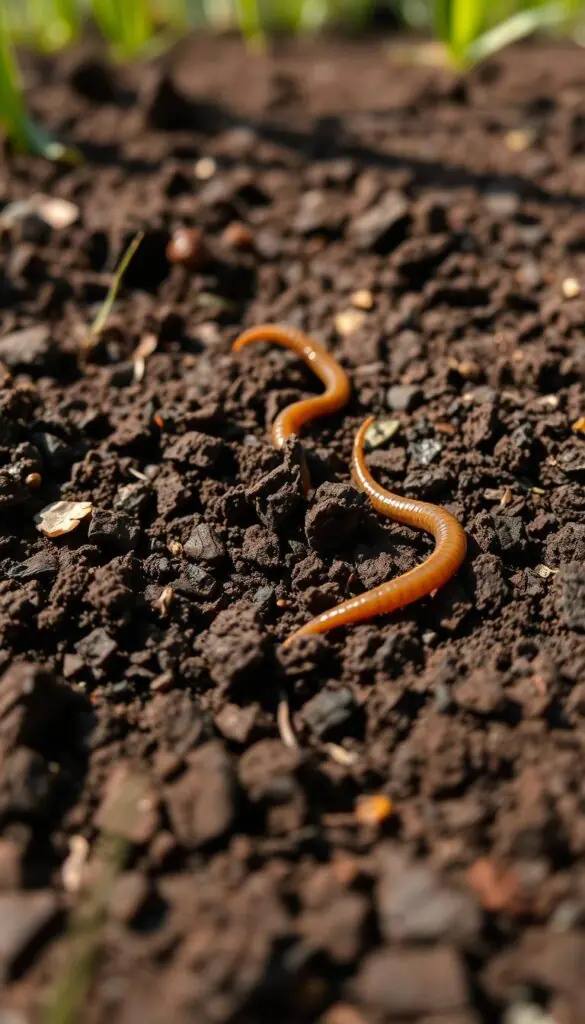
How to test your soil
Collect small samples from several areas and mix them in a clean bucket. Send a sample to the lab or use a kit for an instant snapshot.
Adjusting pH so nutrients work
Aim for pH near 6–7 for most lawns and gardens; acid lovers like blueberries prefer about pH 5. Lime raises pH gently; elemental sulfur lowers it. Always follow the lab’s suggested rate to avoid over‑correction.
- Nitrogen moves quickly and may need topping up during the season.
- Phosphorus stays put—test before adding it.
- Small pH changes can improve nutrient availability more than extra fertilizer.
| What to test | Why it matters | Action |
|---|---|---|
| pH level | Controls nutrient availability | Apply lime or sulfur per lab rate |
| N-P-K levels | Shows what nutrients are low | Choose fertilizer based on results |
| Multiple areas | Reveals patchy differences | Sample each area and adjust rate by zone |
Recheck topsoil every 2–3 years and after major changes. With test results in hand, you can tailor applications, protect fertility, and help roots and grass respond better in the months ahead.
Choosing the right fertilizer type for your yard and goals
Match the way you like to work — slow and steady or quick and visible — to the type of product you pick for your turf and beds.
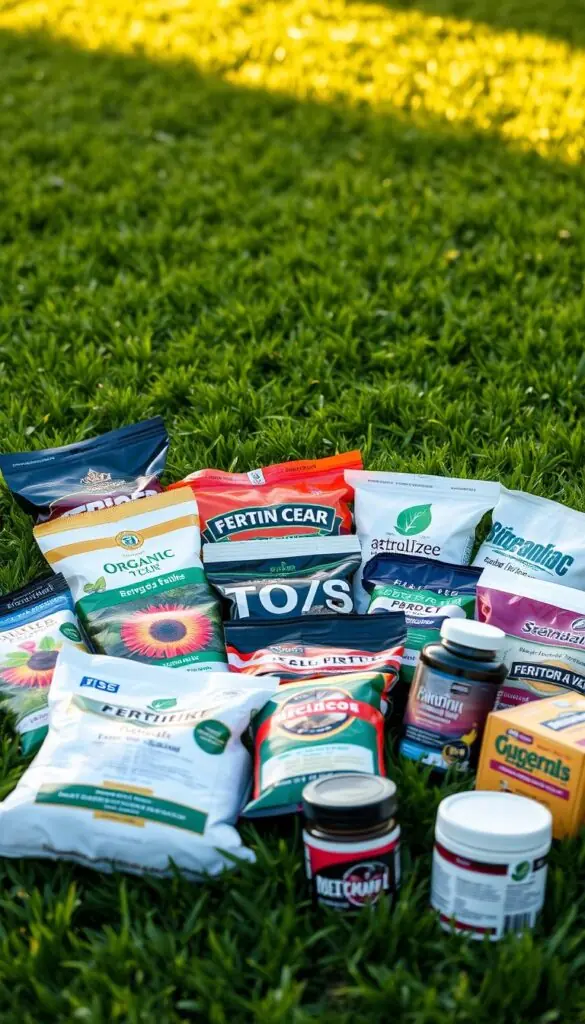
Granular options: slow‑release or quick‑release
Slow‑release granular feeds steadily and reduces how often you need to treat the lawn. It’s low fuss and great if you want fewer passes with a spreader.
Quick‑release granular gives a fast green‑up. Use it when you want visible results before an event, but follow rates to avoid burn.
Liquid feeding: fast uptake and spot fixes
Liquids absorb quickly and are handy for small lawns or problem areas. You can “paint” nutrients where grass needs them without treating the whole yard.
Organic vs. synthetic
Organics build soil life and release nutrients slowly. Synthetics act fast and are precise. Both have a place in sensible care; choose based on time, values, and soil test results.
Understanding N‑P‑K
Read the bag: nitrogen boosts leaf color and growth; phosphorus helps roots; potassium improves stress tolerance. For established grass, a product low in phosphorus is often fine if your soil test shows enough P.
- Low‑fuss? Pick slow‑release granular.
- Want fast color? Choose quick release or a liquid for spot work.
- Use soil tests to match N‑P‑K to real needs.
Spring Fertilizer Guide
Timing and weather cues make your applications work better.
When you time treatments with mild weather and active growth, you get better control and healthier grass without extra effort. Use a pre‑emergent that also supplies nutrients in early spring, then plan a late spring weed + feed for broadleaf weeds when the lawn is damp.
Early spring timing: pre‑emergent crabgrass control with nutrition
Apply a crabgrass preventer combined with slow‑release nutrients before a gentle rain. The light water helps granules settle into the topsoil and form a barrier that stops germination.
Late spring timing: weed + feed for broadleaf weeds on damp grass
Use a weed + feed on a dewy morning so granules stick to leaves. Wait about 48 hours before mowing to let the product move into broadleaf weeds for best control.
Cool‑season vs. warm‑season lawns: adjusting rates and schedules
Cool‑season lawns (fescue, Kentucky bluegrass) should get the first application in late March–early April, with a follow‑up later in spring.
Warm‑season grasses (Bermuda, zoysia, St. Augustine) begin feeding as soil temperatures rise. Match rates to the product label and the season.
- Plan around light rainfall, not heavy runoff.
- Space applications by the months on the label and follow product directions.
- Walk calmly and use slow, even spreader passes for uniform coverage.
| Timing | Target | Condition | Action |
|---|---|---|---|
| Early spring | Crabgrass prevention + nutrients | Before light rain; soil cooling to warming | Apply pre‑emergent + nutrition per label |
| Late spring | Broadleaf weeds | Dewy or damp grass; active weed growth | Apply weed + feed; wait ~48 hours to mow |
| Seasonal adjustment | Cool vs. warm lawns | Cool: late March–April; Warm: when soil warms | Adjust timing and rate to grass type and label |
Lawn‑first tactics: practical spring steps for greener grass
Take calm, small steps that give steady wins. Match what you apply to your grass type and your regional climate so nutrients arrive when the growing season begins. This makes each application more effective and reduces stress on turf.

Match product to grass type and climate
Choose a formula suited to cool‑ or warm‑season grass and adjust timing for your area. Read the label for recommended rate and behavior on seeded or repaired spots.
Apply before light rain and mind the mowing window
Plan application ahead of a gentle rain to help granules settle. After a weed + feed, wait about 48 hours before you mow so the treatment moves into broadleaf weeds.
Follow labeled rates and use the spreader correctly
Use the bag’s spreader setting and walk at a steady pace. Even, unhurried passes and slight overlap prevent skips and save product.
- Stick to label rates: more is not better; you’ll avoid burn and waste.
- Water thoughtfully: a light post‑application water helps release nutrients without causing runoff.
- Keep notes: record application date, rate, and weather so each season improves your results.
Flower beds and edible gardens: feeding blooms and annuals without fuss
A little pre-plant care makes blooms and edibles more reliable through the months ahead.
Before you set out annuals or vegetables, work a balanced pre-plant fertilizer into the top 4–6 inches of soil. As a starting point—if your test shows need—aim roughly at 4 lb nitrogen, 1 lb phosphate, and 2 lb potash per 1,000 sq ft.

Pre-plant nourishment for annual beds and vegetables
Broadcast evenly, then mix the nutrients into the rooting zone so young roots can find them quickly. Follow your soil test first; use the labeled rate when deficiencies appear.
Light sidedressing in spring for long-season growers
For tomatoes, peppers, and sweet corn, sidedress with nitrogen once or twice at monthly intervals after plants are established. Keep applications small and even—this helps steady growth without stress.
- Water after feeding to settle nutrients into the root zone.
- Use organic fertilizers for slow release or synthetics for a quicker response before a bloom wave.
- Keep granules inside bed edges when beds border the lawn or grass.
| Task | Timing | Notes |
|---|---|---|
| Pre-plant broadcast | Before planting | Mix into top 4–6 in. of soil |
| Sidedress nitrogen | Monthly after establishment | Light, even applications |
| pH check | Every few years | Adjust lime per test to protect fertility |
Application basics: spreaders, settings, coverage, and water
A few tidy habits make application faster and help nutrients reach the soil where they belong.

Broadcast vs. drop spreaders: where each shines
Choose a broadcast spreader for large spaces when you want fast, even coverage across most of the lawn.
Use a drop spreader for tight areas and clean edges along paths, beds, and sidewalks. It gives precision where you need it.
Dialing in spreader settings and using a crisscross pattern
Always fill your spreader on a hard surface so spills are easy to sweep up and won’t mark grass.
Set the spreader using the number on the bag and test a small patch. Walk at a steady pace and apply in a crisscross pattern: north–south, then east–west.
- Start with a perimeter pass to catch edges.
- Then fill the middle with calm, straight lines for tidy, consistent results.
- Adjust settings if flow changes; a quick recheck avoids uneven coverage.
Watering before and after for safe, effective nutrient uptake
If the label says to water in, give a light drink to carry granules into the soil without runoff.
For weed + feed products, apply to damp grass and avoid watering or heavy rain right after; follow the product timing for best weed control.
Sweep granules off driveways and patios immediately to keep nutrients in the areas you treated and to prevent stains.
A calm, year‑round plan for best results through the seasons
A simple four-step rhythm helps you manage applications without fuss.
This plan spaces treatments through the months so you get steady lawn health and color without extra work. Follow label rates and local weather, and aim for about 6–8 weeks between major steps unless the product says otherwise.
Four seasonal steps to follow
- Early pass (pre‑emergent + nutrition): Apply before a light rain to block crabgrass and give young roots a start.
- Late spring feed: Use a product that fights broadleaf weeds while building dense turf heading into warm months.
- Summer touch: Choose a treatment with iron to deepen color without driving too much top growth during heat.
- Fall winterizer: Apply before consistent cool, wet weather so roots store energy for a rich green next year.
Make small adjustments for cool‑ versus warm‑season grass: warm types focus more on summer steps; cool types gain more from spring and fall attention.

| Season | Main aim | Timing |
|---|---|---|
| Spring | Crabgrass prevention + baseline nutrients | Before light rain; early in the year |
| Late spring | Weed control + feed | When broadleaf weeds emerge |
| Summer | Color boost with iron | Mid‑season; avoid hottest days |
| Fall | Winterizer for root storage | Before steady cool, wet weather |
Jot down dates and weather notes as you work. This quiet rhythm through the year keeps your lawn care simple and delivers the best results with minimal stress.
Conclusion
A calm, seasonal plan helps you turn small steps into lasting lawn wins.
Follow the four-step rhythm: early pre‑emergent plus fertilizer, a late weed + feed, a summer color touch, and a fall winterizer. Test soil and adjust pH so nutrients work where they are needed most.
Stick to spreader settings, water lightly when labeled, and keep simple mowing windows. These small actions add up to steady growth and real benefits for your grass and gardens.
Be patient and enjoy the process. With quiet, consistent care through the year, you’ll get the best results: thicker turf, deeper color, fewer weeds, and an easier start next season.
FAQ
When should I start feeding my lawn and flower beds as winter ends?
Start gently once soil temperatures reach about 50°F and new growth appears. That timing lets roots take up nutrients without forcing weak, top‑heavy shoots. Use a light, slow‑release product for steady support and avoid heavy applications that encourage disease or extra mowing.
How does an early application help turf and blooms later in the season?
A timely application wakes roots and boosts blade and bloom development so plants establish stronger before heat and drought. It also helps create denser turf and fuller flower beds that naturally suppress weeds and reduce long‑term maintenance.
Do I need a soil test, and how do I do one?
Yes — testing tells you nutrient levels and pH so you apply only what’s needed. Use an at‑home kit for a basic read or send samples to your county extension for detailed results. Follow the lab’s recommendations for nutrient amounts and any lime or sulfur adjustments.
What if my soil pH is off? How do I fix it?
If pH is low (acidic), add lime; if it’s high (alkaline), add sulfur. Adjustments take weeks to months, so correct pH before heavy feeding. Your soil test report will recommend rates based on current pH and your grass or garden plant preferences.
Should I use granular or liquid products for my yard?
Use slow‑release granular for steady, low‑risk feeding across lawns. Choose liquid for fast green‑up, spot treatments, or container and edible beds. Combine approaches if you need both rapid response and long‑term nutrition, but follow label rates carefully.
What’s the difference between organic and synthetic options?
Organic materials feed soil microbes and improve structure over time but release nutrients slowly. Synthetic products act quickly and give predictable results. If you want quick color and growth, use a synthetic or mixed product; for soil health, favor organics and supplement seasonally.
How do I read N‑P‑K numbers and pick the right mix?
N‑P‑K shows percentages of nitrogen, phosphorus, and potassium. For green growth, choose higher nitrogen; use phosphorus for root development when planting; potassium improves stress tolerance. Match the ratio to your lawn type and the soil test recommendations.
Do I need pre‑emergent treatment and nutrition at the same time?
You can apply a pre‑emergent with starter nutrients early in the season to prevent crabgrass while feeding young plants. Make sure products are compatible and follow label timing so weed control and feeding don’t interfere with each other.
When is it best to use a weed‑and‑feed product?
Use weed‑and‑feed in late spring when broadleaf weeds are actively growing and grass is slightly damp for better uptake. Avoid using that approach during extreme heat or on newly seeded areas; targeted spot treatment is safer in those cases.
How should I change rates for cool‑season versus warm‑season turf?
Cool‑season grasses need more nitrogen in early to mid‑spring and again in fall, while warm‑season grasses get their main feed in late spring through summer. Follow species‑specific rate charts and your soil test to avoid overapplication and burning.
How do I match product choice to my regional climate and grass type?
Consider your hardiness zone and whether you have Kentucky bluegrass, fescue, Bermuda, or zoysia. Cool climates and cool‑season grasses favor early spring feeds; warm climates and warm‑season types wait until soil warms. Local extension services and product labels offer tailored schedules.
When should I apply in relation to rain and mowing?
Apply before a light, expected rain or water lightly after spreading to move nutrients into the root zone. Mow a day or two before application and avoid mowing for 48 hours after to let granules settle and liquids absorb.
How do I set my spreader and ensure even coverage?
Check the product label for the recommended spreader setting and do a test run on a driveway. Walk at a steady pace and use a crisscross pattern for even distribution. Calibrate periodically and clean your spreader after use to avoid corrosion and uneven flow.
Should I water before or after applying products?
Lightly water after application to activate most products and prevent granules from sitting on blades. Pre‑watering can help with dry, compacted soil, but avoid heavy irrigation that causes runoff or moves nutrients away from targeted areas.
How can I protect flower beds and vegetable gardens while feeding nearby turf?
Use targeted applications and barriers to prevent drift. Choose products labeled for edible beds when treating vegetables. For beds, sidedressing with compost or a balanced organic option gives steady nutrition without risking crop safety.
How often should I feed throughout the year for best results?
Follow a simple four‑season plan: an early pre‑emergent and starter feed, a late spring maintenance application, a summer treatment for iron or slow nutrition if needed, and a fall winterizer for root health. Adjust frequency by product type and your soil test results.