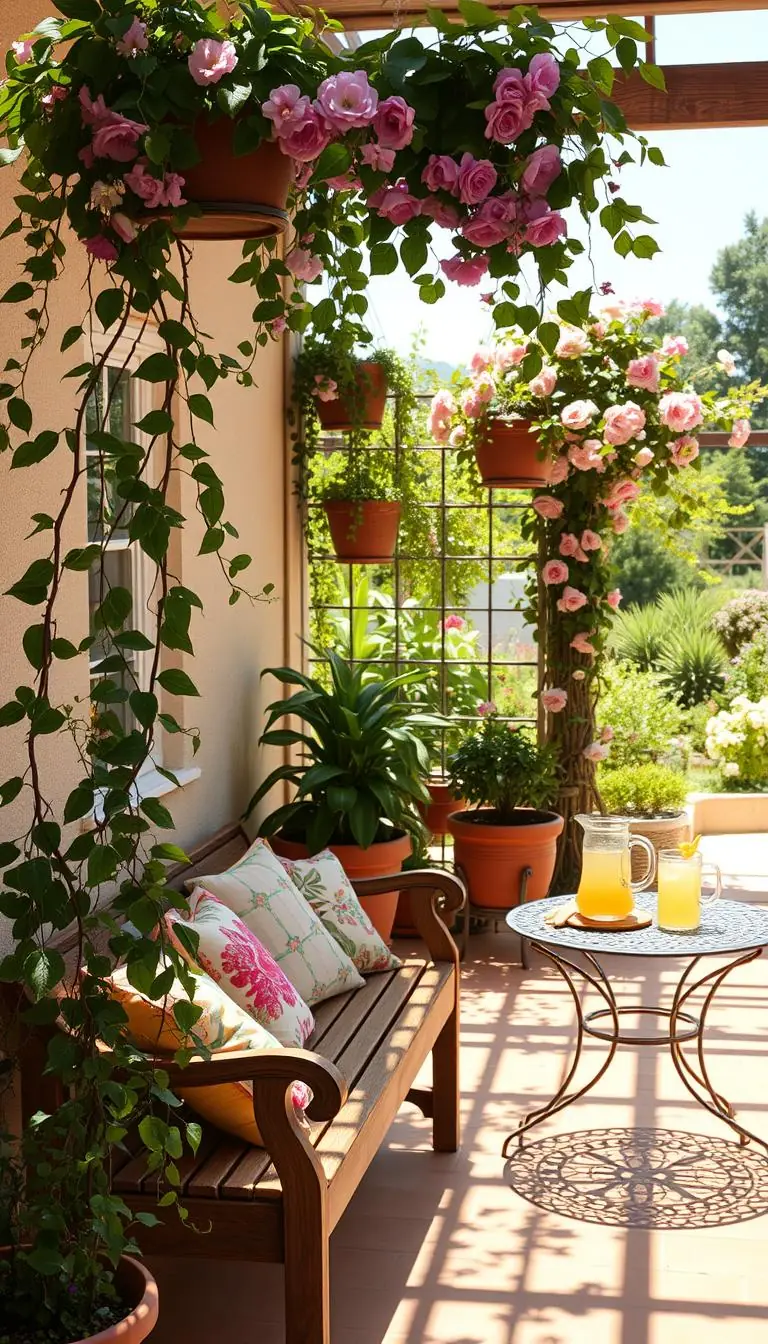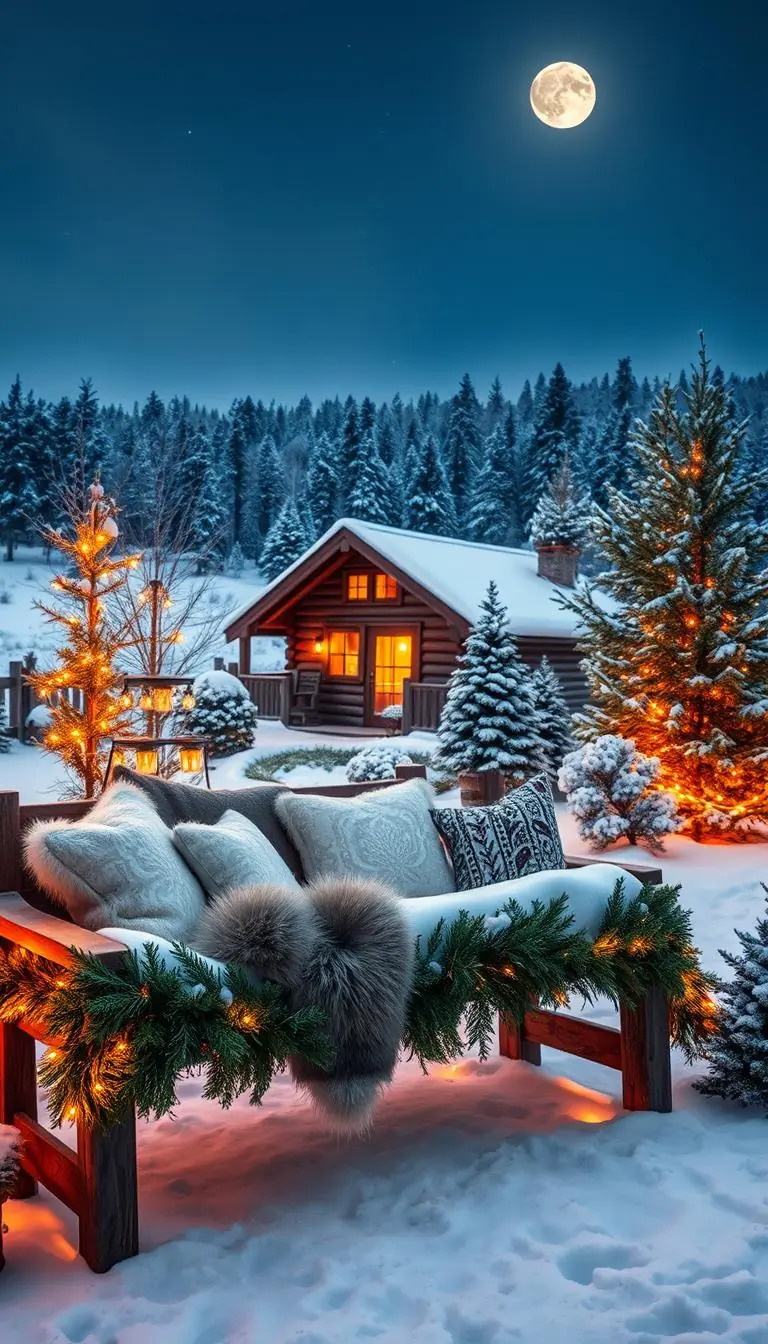
Picture soft rugs underfoot, a small herb pot warmed by afternoon sun, and warm lights blinking on as dusk settles. Do you dream of an easy outdoor space that feels like an extension of your home?
We’ll walk you through clear, neighborly steps to turn a tiny balcony into a calm retreat. You’ll get practical ideas—from measuring and noting sun and wind to choosing thin aluminum railings that keep views open.
Expect renter-friendly tips like sheer drapery for privacy, faux turf for softness, and bold paint choices (hello, Benjamin Moore Naples Blue) that make a statement. We’ll also show how a wheeled bar cart, layered plants, and statement lights create evenings you’ll want to linger in.
Simple tools, timing tips, and seasonal care are included so you can plan one weekend projects and avoid common mistakes like using indoor tile outdoors. By the end, you’ll feel confident using smart upgrades that respect budget and building rules while making a cozy, personal space with tasteful decor.
Key Takeaways
- Start by measuring and noting sun and wind to guide your design.
- Use thin railings and sheer drapery to preserve views and privacy.
- Choose renter-friendly flooring and compact seating that fits your space.
- Layer plants and add lighting to create atmosphere and year-round interest.
- Simple tools and a weekend timeline make this project doable and low-stress.
Start with a Vision: Measure, Sun-Map, and Set Your Balcony Goals
Measure first, imagine second. Take a tape and note length x width so you know the true square footage you can use. Include door swing, threshold clearance, and any obstructions that affect traffic flow.
Quick practical checks:
- Measure square footage, then sketch the footprint and mark the path you need to walk without bumping furniture.
- Check railing height and thickness for clamp-on planters or a ledge bar.
- Stand at the threshold and chart traffic flow to keep an uncluttered walkway to seating or a table.
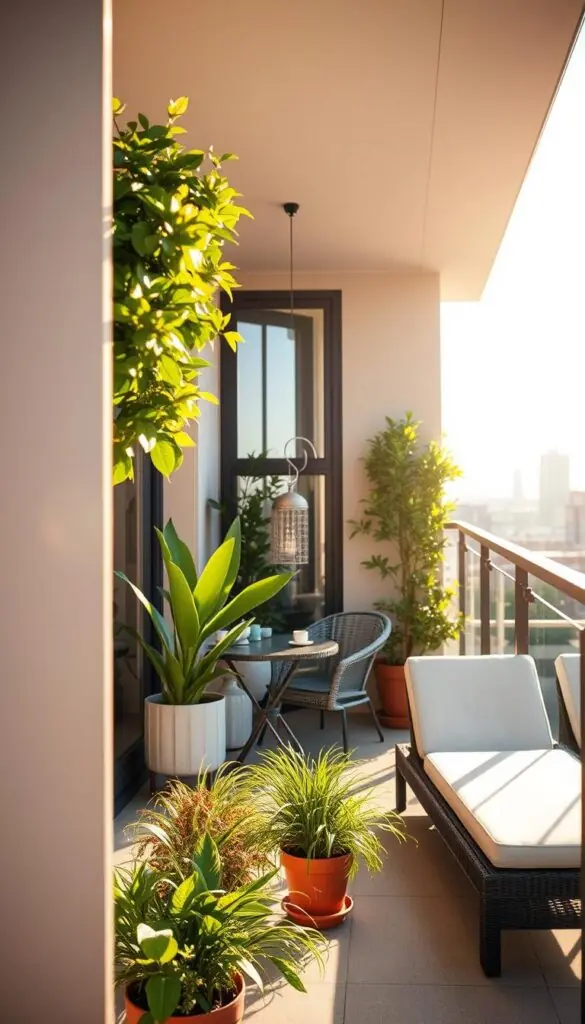
Sun, Wind, and Neighbors
Make a simple sun-and-wind map over several days. Jot when the area gets morning, noon, or late-day sun and note gusty periods. This helps with plant choices and shade solutions.
"If your view is the focal point, choose thin railings or visually light solutions to keep sightlines open."
Decide two core goals — reading nook, weeknight dining, or a plant haven. Peek at neighbors' sightlines; plan sheer drapery for privacy without losing light, or a bamboo half-screen when wind and eyes need blocking.
Finish with a short checklist: power outlet, hose access, storage, and a simple budget. Snap photos and sketch the layout — it makes shopping and designing easier and focused.
Go Big with Greenery: Layer Plants for Color, Texture, and Privacy
Start by weaving greenery vertically so your small outdoor space feels like a layered garden. Use height to free the floor and give a sense of depth.
Plant pairings by sun make choices easy: in full sun, tuck thyme, rosemary, and basil into railing boxes. For part shade, choose ivy, clematis, or climbing hydrangea to soften walls and add movement.
Tools and setup: mount a slim lattice or trellis behind seating, clip railing flower boxes to railings, and add a tiered plant stand to stack pots without crowding the floor.

- Mix pot sizes: 10–14" for anchors, 6–8" for bright accents; use lightweight potting mix for drainage.
- Water deeply in the morning and use the finger test—containers dry faster in sun and wind.
- Keep a small kit: watering can, pruning snips, saucers for runoff, and rotate pots weekly for even light.
"Leaves brushing the rail and a citrusy sprig of thyme at hand make the space feel alive."
Style tip: layer glossy foliage, feathery herbs, and a few bloomers like clematis to keep the look lively through the season.
Upgrade the Floor: Interlocking Deck Tiles, Outdoor Tile, or Faux Turf
A fresh floor can instantly lift a tiny outdoor area and make it feel like new.
Quick wins first: interlocking deck tiles snap together over concrete for a renter-friendly refresh. They’re removable, lightweight, and come in wood-look or composite finishes that read like real boards.
Install steps at a glance:
- Measure and dry-fit tiles to map cuts and patterns.
- Snap tiles together, trimming edges with a jigsaw or handsaw to fit tight corners.
- Keep drainage channels clear so rainwater flows freely under the tiles.
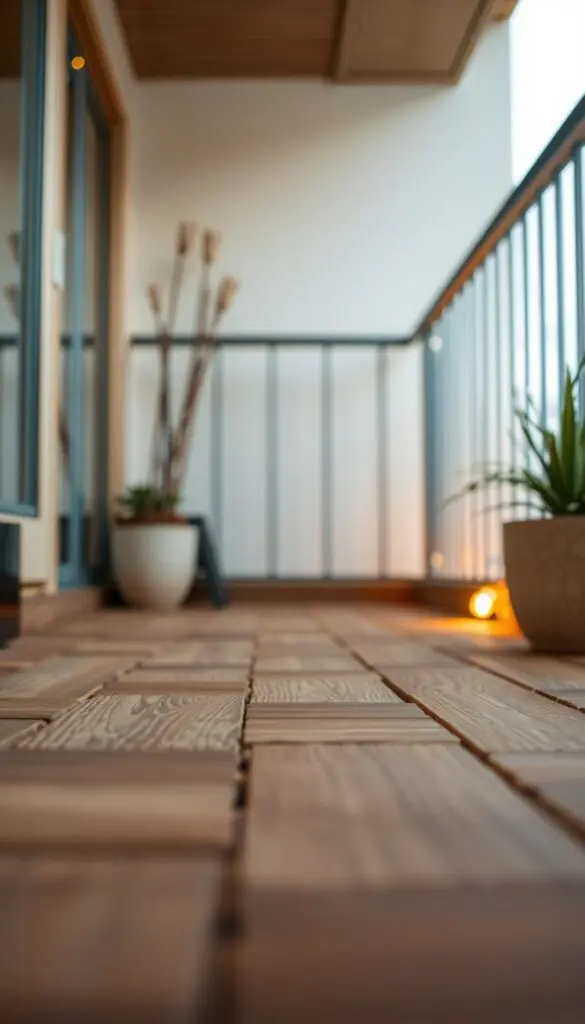
For a longer-term surface, choose frost-rated, slip-resistant porcelain outdoor tile. Porcelain resists stains, freeze-thaw damage, and heavy use—so it lasts where indoor tile would fail.
UV-stable faux turf is another low-maintenance pick. It is easy to cut around posts and stairs, soft underfoot, and won’t fade quickly in sun.
Caution: always pick frost-rated, slip-resistant outdoor tile and confirm weight and waterproofing rules for your apartment balcony before installing.
- Mix materials—try alternating deck tiles or a small turf “rug” to define zones.
- Lift pots on risers to prevent staining and trapped moisture.
- Finish edges with transition strips for a clean threshold and safe step.
Choose Smart Seating: Folding Chairs, Settees, or a Compact Daybed
Pick seating that bends to your needs so small outdoor areas feel roomy and useful. A few smart choices let you change the layout in seconds and keep the area tidy.
Space-savvy picks:
- Folding chairs that store flat make morning coffee or evening lounging simple and clutter-free.
- Garden stools double as side tables or extra seats; ceramic or metal tops mean you can skip coasters.
- Build a low pallet base and top it with outdoor cushions for modular, custom furniture that fits your exact footprint.
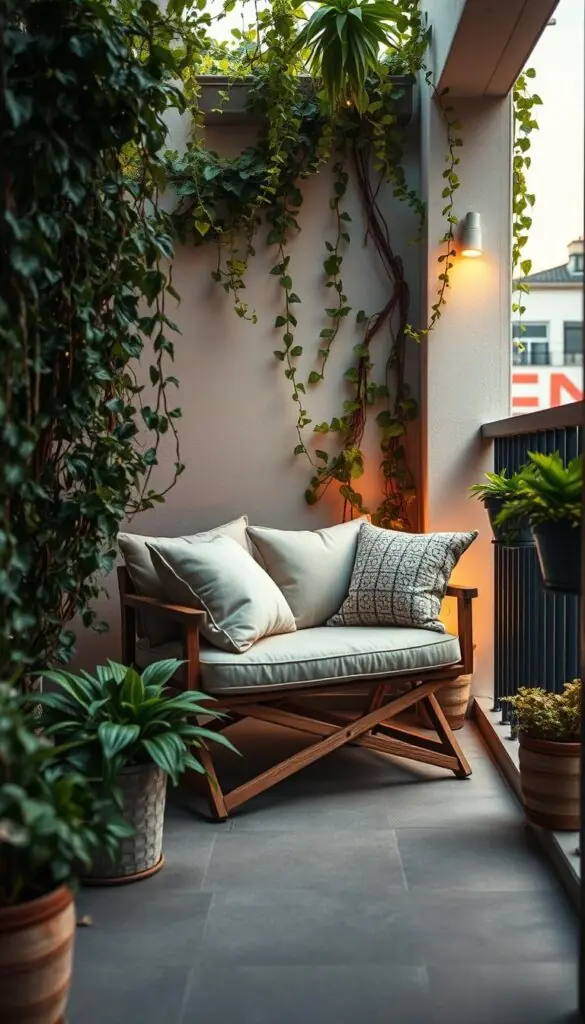
Cozy reading nook idea
Place a petite settee against a wall, add a slim side table, and drape a soft throw for cool nights. Choose armless silhouettes to open tight corners and keep sightlines clear.
| Option | Best for | Quick tip |
|---|---|---|
| Folding Chairs | Flexible seating | Store flat between uses |
| Garden Stools | Extra seat or table | No coaster needed on metal/glazed tops |
| Petite Settee / Daybed | Reading + lounging | Keep a basket underneath for throws |
| Pallet Seating | Custom footprint | Use performance cushions that dry fast |
Measure before you buy: allow 24–30 inches for walkways and confirm door clearance so arms don’t block the swing. Face seating toward your favorite view or plant wall to make the most of every minute outside.
Bring Indoor Comforts Out: Treat Your Balcony Like a Living Room
Turn your compact outdoor nook into a true extension of the spaces you love inside. Think of it as a tiny living room where comfort and flow matter as much as views.
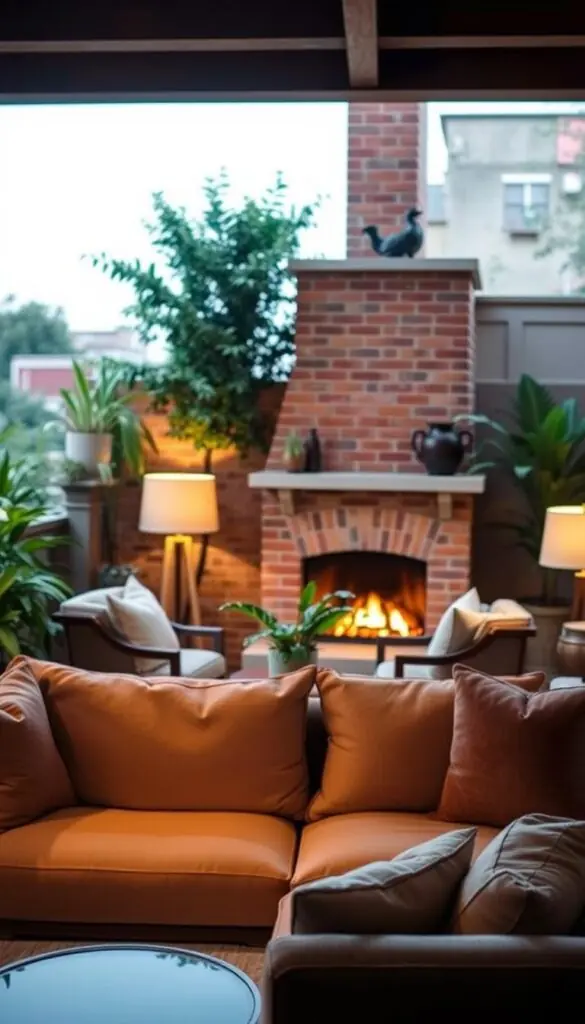
Match your interior colors and materials. Repeat the same woods, woven textures, and metals you use indoors so the space feels connected to your home.
For very small footprints, choose a two-chair bistro set. It gives you a place to sip coffee without crowding the floor.
Smart built-ins for more room
Consider a DIY wall-hugging banquette with storage beneath the seat. It adds extra seating and hides cushions when storms roll in.
- Carry your living room palette outside—repeat wood tones and simple silhouettes.
- Pick furniture lines that mirror your interior for a cohesive look and easy visual flow.
- Anchor the area with a small outdoor rug that echoes sofa or curtain colors.
Add a tray with a candle and a small plant to keep styling simple. Keep a couple of indoor-outdoor throws nearby so the space stays inviting after sunset.
"Treat the area as an extension of your home — the result is a cozy extra room you'll reach for every day."
Add Soft Layers: Outdoor Rugs, Cushions, and Performance Fabrics
Layered rugs and cushions bring warmth and texture to even the tiniest outdoor nook. Start with a low-profile rug to soften concrete and define your seating area.
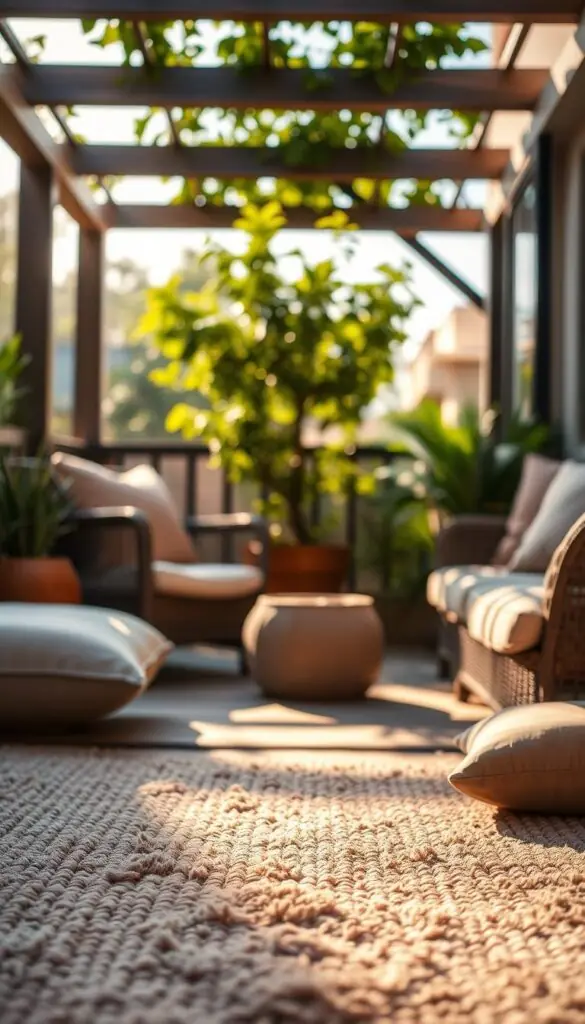
What to choose: pick a polypropylene or polyester rug—these fibers resist mold, mildew, and fading. For cushions, look for solution-dyed acrylics such as Sunbrella; they feel like indoor fabric but stand up to sun and rain.
Use breathable cushion inserts so pillows dry quickly after summer showers. Layer two pillow sizes for comfort and visual depth, and add a lightweight throw for cool evenings.
- Choose a polypropylene or polyester rug to soften concrete and endure daily use.
- Pick solution-dyed acrylics like Sunbrella for cushions—fade and stain resistant.
- Shake out rugs weekly and spot-clean spills promptly to prevent mildew.
- Roll rugs or use covers during winter storms to extend life.
"A simple, UV-friendly rug makes the first step outside feel warm and welcoming."
Keep a simple palette that ties back to your interior so textiles feel calm, not cluttered. Add a small floor cushion for guests so you can avoid bulky furniture and still seat company comfortably.
Shape the Light: Drapery, Awnings, and Statement Fixtures
Light sculpts how your small outdoor room feels at every hour. Start with a plan that matches sun orientation and use. East-facing spots glow in the morning; west-facing areas heat up late and need stronger UV protection.
Soft panels and practical shade
Hang sheer panels to frame the view and give privacy while keeping air flowing. Sheers soften glare at sunset and add a warm glow for evening time.
If your balcony bakes in late sun, install an awning to add shade for heat and light rain. Awnings create an outdoor room feeling and still allow breezes through.
Layered lighting and safety
Use warm-white LEDs for a cozy vibe. Combine a statement sconce with string lights and a small task lamp by your reading chair. Add a dimmer or smart plug so you can switch from bright breakfast to soft nightlight.
Secure cords along rails and choose outdoor-rated fixtures. If covered, a low-profile ceiling fan helps on humid days. These simple steps make small spaces safer and more inviting for evening outdoor living.
Create Privacy the Pretty Way: Screens, Trellises, and Plants
Privacy can feel elegant—choose light solutions that soften sightlines without closing in the space. Small changes make your outdoor area feel private and airy. Pick options that keep sun and breeze moving while shielding unwanted views.
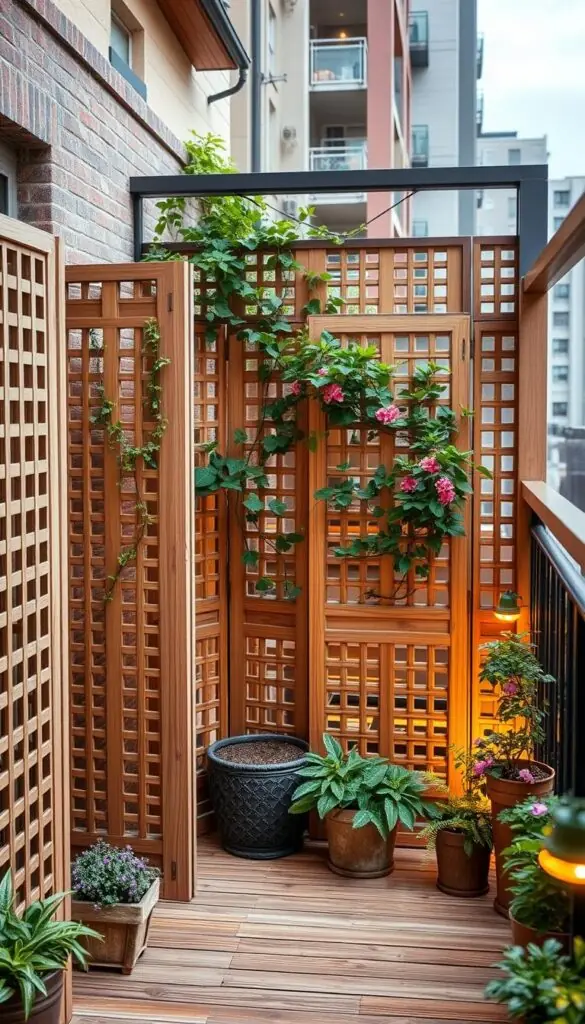
Try a bamboo half-screen to blur sightlines and tame wind. It lets you keep a slice of view while blocking prying eyes. Sheer fabric panels do the same, but with softer light and easy storage—slide them open when you want full sun.
Add a slim trellis and train climbing vines for a living wall that grows fuller each season. Fast growers in railing boxes fill gaps quickly and look lush, not heavy. For instant seating and function, a clamp-on balcony bar mounts to the rail and becomes a slim dining ledge or laptop perch.
- Mount safely: use non-damaging clamps, zip ties, or rail-friendly brackets and check your building rules before attaching anything to the frame of your apartment.
- Angle screens slightly to keep airflow; this blocks sightlines without trapping heat.
- Match finishes to your rail color for a tidy look that neighbors will appreciate.
"A gentle, living screen can offer both calm and company—your small outdoor space becomes private, not private-looking."
Keep upkeep simple: secure panels per guidelines, trim vines in season, and tuck a small lantern on the bar for cozy evenings. These light, neighbor-friendly fixes protect privacy while keeping your space bright and welcoming.
Color Confidence: Let Your Interior Palette Flow Outdoors
A confident color choice can tie your tiny outdoor spot to the rest of your home. Pick two to three hues from your interior and repeat them on pillows, pots, and a small rug. This creates a calm, intentional feel without fuss.
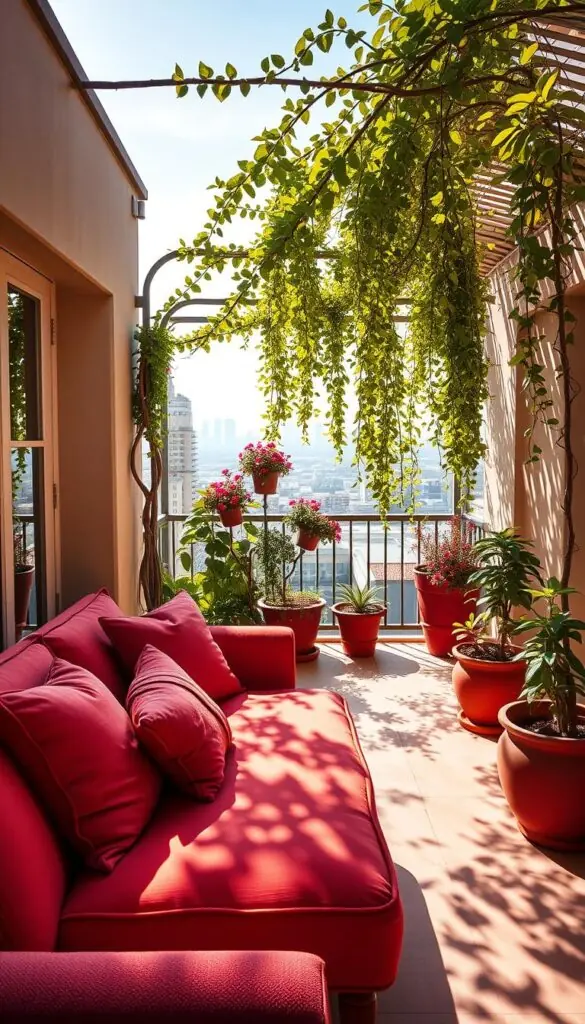
Ideas to try
Try Naples Blue for a seaside pop on railings or planter rims. Use Palm Springs brights in a drapery or cushion if you love energy. Or keep things soft with sand, clay, and charcoal to let plants and sky shine.
- Repeat two to three colors across textiles and pots.
- Match metal finishes to your interior hardware for a unified look.
- Paint a few small accessories first to test a hue before larger changes.
"Painting a railing Naples Blue made a bold statement in a Florida home."
| Palette | Best for | Quick tip |
|---|---|---|
| Naples Blue Accent | Seaside, bold pops | Use on railings or planters |
| Palm Springs Brights | Playful, lively spaces | Keep large pieces neutral |
| Soft Neutrals | Calm, plant-forward looks | Let greenery be the star |
Design simply: repeat a color at the threshold to blur inside and out. Balance warm and cool tones so mornings and evenings both feel inviting. The right palette pulls your space together with very little effort.
Heat, Breeze, and Year-Round Use: Fire Pits and Ceiling Fans
Smart heating and airflow choices let your tiny outdoor spot feel useful year‑round. A compact fire feature adds warmth for cool evenings, and a low‑profile fan keeps things pleasant in heat.
Cozy option: choose a compact propane fire pit that meets building rules and fits your measurements. Look for a model with a seasonal tabletop cover so it converts to a coffee table in summer.
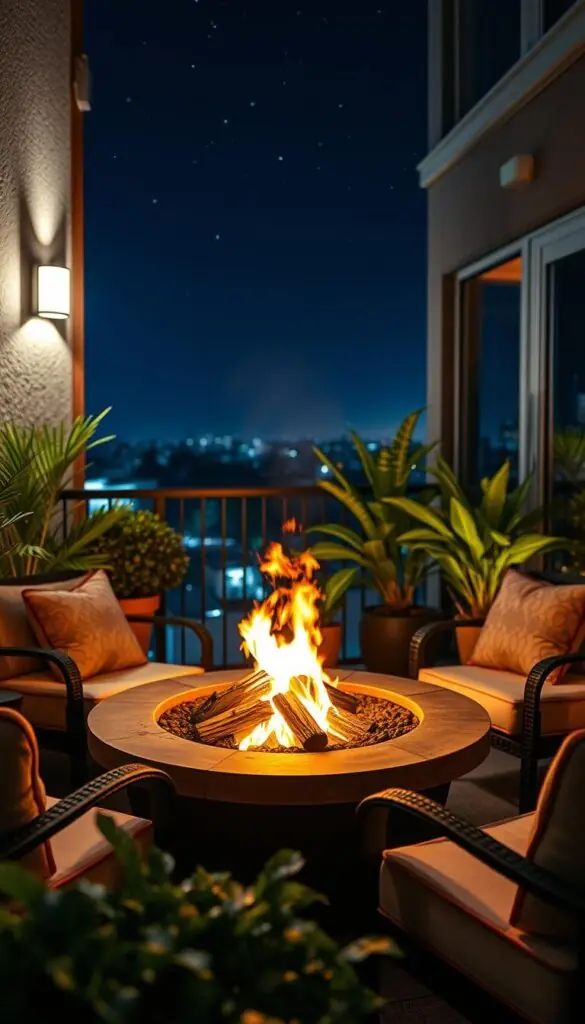
Hot‑climate comfort
On covered areas, install a modern, low‑profile ceiling fan to move air and cut humidity. Fans help you use the space day and night without overcooling the house.
Safety first
- Verify local codes, HOA rules, and manufacturer clearances before buying or installing.
- Place a fire pit on a level, fireproof surface with safe clearance from walls, railings, and fabrics.
- Store propane upright and shaded; check connections for leaks often.
- Consider wind direction and choose shielded corners so flames stay steady.
"With the right heat and airflow, your small outdoor area becomes an all‑season comfort zone."
| Feature | Why it helps | Quick tip |
|---|---|---|
| Propane fire pit | Extends use into cool months | Buy a tabletop cover for summer use |
| Ceiling fan | Improves comfort in hot weather | Choose outdoor‑rated, low‑profile model |
| Placement & clearances | Ensures safety and code compliance | Follow manufacturer and local rules |
Arrange seating in a semi‑circle so everyone enjoys warmth without crowding the flame. In warm months, pop on the table top and style with a tray and plant. Little changes like these make your balcony a reliable spot for evening chats, quiet reading, or small gatherings.
Details That Delight: Railing Color, Wall Decor, and Vertical Moments
Tiny, thoughtful updates—painted metal, weather-safe art, and layered lanterns—make the whole space feel finished. Start with one bold move and then add small supporting pieces so the look stays curated, not cluttered.
Painted rails, art, and lanterns for personality
Paint or accent your railing to add personality while keeping its profile slim. Thin aluminum rod railings keep the view open and feel light.
Hang weather-safe art or a small mirror to bounce light and spark conversation. Cluster two or three hanging lanterns at staggered heights for a warm evening glow.
Add a narrow shelf for small pots or candles to create vertical interest without stealing floor space.
Balance, hardware, and seasonal tweaks
Keep the styling balanced: one statement and a couple of quiet supports feel curated. Use removable hooks and outdoor-rated hardware to protect walls and finishes.
- Tie colors back to your rug or cushions for a polished look.
- Rotate small accents seasonally for freshness without a full redo.
- Choose weather-safe pieces—metal, treated wood, or sealed art—so they last outside.
"A single painted rail and a few well-chosen accents make the balcony feel loved and lived-in every day."
Host with Ease: Bar Carts, Buffet Tables, and Multipurpose Tables
Small outdoor gatherings work best when every item earns its keep—think wheels, lift tops, and hidden storage.
Roll-out solutions make hosting breezy. A wheeled bar cart carries glasses, a pitcher, and a small ice bucket from kitchen to railing in one trip. It keeps serving tidy and makes cleanup faster.
Choose flexible furniture. An adjustable-height table converts from a low coffee table to a dining surface in moments. Storage benches hide cushions, blankets, and citronella while offering extra seating.
- Keep a tray ready indoors so you can load snacks and move out in one trip.
- Nesting side tables slide beside chairs and pull out for plates.
- For tiny footprints, a rail-mounted bar plus two stools creates a charming dining spot.
"Hosting outside feels easy when every piece earns its keep and moves where you need it."
Quick guest checklist:
- Bar cart with glasses, ice bucket, and pitcher
- Adjustable table set to dining height if you plan a meal
- Storage bench stocked with throws and extra cushions
- Shatterproof plates and cups for stress-free cleanup
- Small Bluetooth speaker for soft background music
| Item | Why it helps | Quick tip |
|---|---|---|
| Wheeled Bar Cart | Makes serving and clearing simple | Stock with essentials and a small ice bucket |
| Adjustable Table | Shifts from coffee to dining height | Choose lightweight, stable bases for safety |
| Storage Bench | Protects cushions and adds seating | Use water-resistant liners for long life |
| Nesting Side Tables | Extra surfaces without permanent footprint | Slide under seating when not in use |
Materials That Last Outside: Teak, Wrought Iron, Metal, and Synthetic Wicker
Start with strong bones: choose frames that resist sun and rain so your small outdoor spot feels cared for all season.
Teak, powder-coated aluminum or steel, and quality synthetic wicker are designer favorites for their durability. Pair those frames with UV-stable textiles like Sunbrella and quick-dry foam to keep cushions looking fresh.
Weather-ready checklist
- Choose teak, powder-coated metal, or synthetic wicker for long-lasting frames.
- Use UV-stable fabrics and quick-dry inserts so cushions resist fading and mildew.
- Add water‑repellent covers and tie-downs to protect pieces during storms and winter.
- Avoid ultra-light items in windy areas; sturdier furniture stays put and feels safer.
"Good construction—solid welds and tight joinery—outlasts bargain buys every time."
Check legs for adjustable levelers, refresh teak yearly with a gentle sealer, and strap cushions during gusts. Thoughtful choices save money and make your balcony a reliable, comfortable place to relax.
Small-Space Strategy: Balcony Ideas to Stretch Every Inch
Think vertical and flexible to unlock usable square footage on a tiny outdoor spot.
Start by building up, not out. Slim wall planters and narrow shelves lift plants and candles off the floor. A vertical planter wall gives lush impact without stealing walking room.
Use hooks for tools and gear. Hang a watering can, hand trowel, and a lantern so essentials stay handy and tidy. This keeps surfaces clear and makes maintenance easier.
Flexible pieces that vanish when you don’t need them
Foldable tables and lightweight stools free floor space after dinner. Nesting side tables tuck together and expand only when guests arrive.
Keep two oversized floor pillows for extra seating. Stack them in a corner when not in use to keep the area calm and open.
"One bold feature—like a plant wall—beats many small items and gives your space breathing room."
- Build up with wall planters and a narrow shelf for candles and cups.
- Use hooks to hang tools, lights, and small pots.
- Choose a foldable table that disappears after meals.
- Pick nesting tables and multi-use stools to cut clutter.
- Store oversized floor pillows in a corner for quick extra seats.
| Move | Benefit | Quick tip |
|---|---|---|
| Vertical planters | Maximizes green impact without losing floor space | Mount at eye level for easy watering |
| Foldable table | Dining when needed, hidden when not | Choose a lightweight, weather-rated model |
| Nesting side tables | Extra surfaces without permanent footprint | Slide under seating to store |
| Hooks & shelves | Organize tools and small items | Use rust-resistant hardware |
Edit ruthlessly: keep one strong focal piece and leave a clear path from the door. When every inch works, even a tiny apartment balcony feels generous and welcoming.
balcony decor Through the Seasons: Planting, Shade, Storage, and Care
A few simple seasonal habits keep your outdoor spot thriving without big effort. Small rituals make upkeep painless and extend the months you can comfortably use the space.
Spring & Summer
Refresh potting mix and add a slow‑release fertilizer to encourage steady growth. Plant hardy perennials and position them where morning sun reaches them first.
Install light shade—sheer panels or a small awning—before heat spikes. Water deeply in the morning so roots stay cool and moist through the day.
Fall & Winter
Wash and dry textiles, then cover cushions or bring delicate pieces inside your apartment balcony storage. Move tender plants to a protected window and taper watering as temperatures drop.
Roll up rugs, secure fasteners after storms, and enjoy a propane fire pit on clear evenings to extend chilly‑season use safely.
- Mid‑season: deadhead spent blooms and rotate pots for even light.
- Keep a caddy with gloves, snips, and plant food so care takes minutes, not hours.
- Wipe lights, rails, and tables monthly to prevent grime and pests; use screens to keep critters out while preserving airflow.
- Quick wins: faux turf and interlocking tiles handle seasons well; covers protect furniture year‑round.
"Small, steady habits keep your plants healthy and your outdoor space ready for everyday use."
Conclusion
Small, steady changes can turn a tight outdoor spot into a daily refuge you actually use.
Start with one small upgrade: a soft rug, a couple of planters, and warm lights make a huge difference. Add thin railings or sheer drapery to keep views and privacy in balance.
Pick folding seating and a pop of color that echoes your interior so the transition to your new outdoor space feels effortless and calm.
Choose durable fabrics and simple care routines so upkeep stays easy. Notice scents, textures, and light—those small moments are what make living outside feel special.
Measure, set a goal, add one thing this week, and enjoy the slow, lovely change. Here’s to more sunlit mornings and cozy evenings on your balcony.
FAQ
How do I make a small outdoor space feel larger?
Start with a clear vision: measure your square footage, note traffic flow, and map sun exposure. Use light-reflecting colors, slimline furniture, and vertical solutions such as wall planters or tiered plant stands to draw the eye upward. A narrow rug or runner and furniture with exposed legs create a sense of openness, while multiuse pieces (folding chairs, nesting tables, or storage benches) keep clutter down and function high.
What are the easiest plants for a small terrace that thrive by zone?
Choose low-maintenance winners suited to your USDA zone: ivy or climbing hydrangea for cool, shady spots; clematis and vining roses for sunnier sites; herbs like thyme, rosemary, and basil for scent and kitchen use. Use railing flower boxes, compact pots, and a trellis for vertical growth so you get color, texture, and privacy without taking up floor area.
What's the quickest renter-friendly way to upgrade the floor?
Snap-together interlocking deck tiles are a fast, temporary fix over concrete or tile. They install without adhesives, lift with no damage, and offer warmth underfoot. For a longer-term option, consider UV-stable faux turf or frost-rated outdoor tiles—avoid indoor tile outdoors unless it’s rated for exterior use.
How can I create a comfortable seating area in a compact spot?
Pick space-savvy pieces like folding chairs, a small settee, or a compact daybed. A DIY banquette against the wall with storage below maximizes seating. Add a slim side table or a clamp-on ledge for drinks and books. Choose modular or lightweight furniture so you can reconfigure for dining, reading, or hosting.
Can I treat my outdoor spot like an extension of my living room?
Absolutely—match key silhouettes, woods, metals, and your interior palette to create cohesion. Bring outdoor textiles—solution-dyed acrylics such as Sunbrella—and a weather-ready rug to blur the line between inside and out. Keep fabrics and cushions in covers during wet or cold months for longevity.
What outdoor fabrics and rugs last best in sun and rain?
Look for polypropylene rugs and solution-dyed acrylic cushions (Sunbrella is a trusted brand). These materials resist fading, dry quickly, and stand up to mildew. Pair them with UV-stable throws and quick-dry fills so your seating stays soft and inviting season after season.
How do I add privacy without blocking light or the view?
Use half-screens of bamboo, sheer fabric panels, or climbing vines on a trellis to filter sightlines while keeping light. Choose thin, visually light railings or a lattice painted in a soft color to frame the view. A clamp-on bar can double as a slim dining ledge so you keep openness while gaining privacy.
What lighting options create a cozy evening atmosphere?
Layer lighting: string lights for a warm glow, statement wall sconces for focused light, and a few solar or battery lanterns for mobility. Use warm bulbs (2700–3000K) for a relaxing tone. Consider plug-in or battery-powered fixtures if you lack outdoor wiring.
Is it safe to use a fire pit or propane heater on a small balcony?
Check local codes and your building’s rules first. Choose compact, covered propane fire pits made for patios and keep them on a non-combustible surface with proper clearance from fabrics and railings. Always have a fire extinguisher nearby and never leave a flame unattended.
Which materials hold up best for outdoor furniture?
Opt for teak, wrought iron, powder-coated aluminum, or UV-resistant synthetic wicker for durability. Look for furniture with sturdy frames, corrosion-resistant hardware, and washable, solution-dyed fabrics. Avoid ultra-light pieces that can tip or blow away in gusts.
How can I use color outside without overwhelming the space?
Echo your interior palette for cohesion—use one or two accent hues (a Naples Blue or soft neutral) and repeat them in cushions, pots, and a rug. Keep larger pieces neutral and add pops of Palm Springs brights through accessories so the space feels curated, not cluttered.
How do I make the area useful year-round in changing seasons?
Plan seasonally: plant perennials and add shade for spring and summer; use a compact fire pit or warm blankets for fall and winter. Store cushions or cover them with breathable covers, bring in tender plants during freezes, and use wind-resistant lighting and furniture to extend comfort across seasons.
What are smart storage and hosting ideas for small outdoor rooms?
Use multipurpose furniture—storage benches, nesting tables, and roll-out bar carts—to keep serving essentials handy. A slim buffet or folding table provides prep space when guests arrive and tucks away afterward. Hooks, shelves, and wall planters free floor space while keeping essentials accessible.
Any common mistakes to avoid when designing an outdoor nook?
Don’t overload with oversized furniture, use indoor-only materials, or ignore sun and wind patterns. Avoid heavy fabrics that trap moisture and lightweight pieces that blow away. Instead, choose weather-ready materials, measure for scale, and plan circulation so the area feels open and functional.