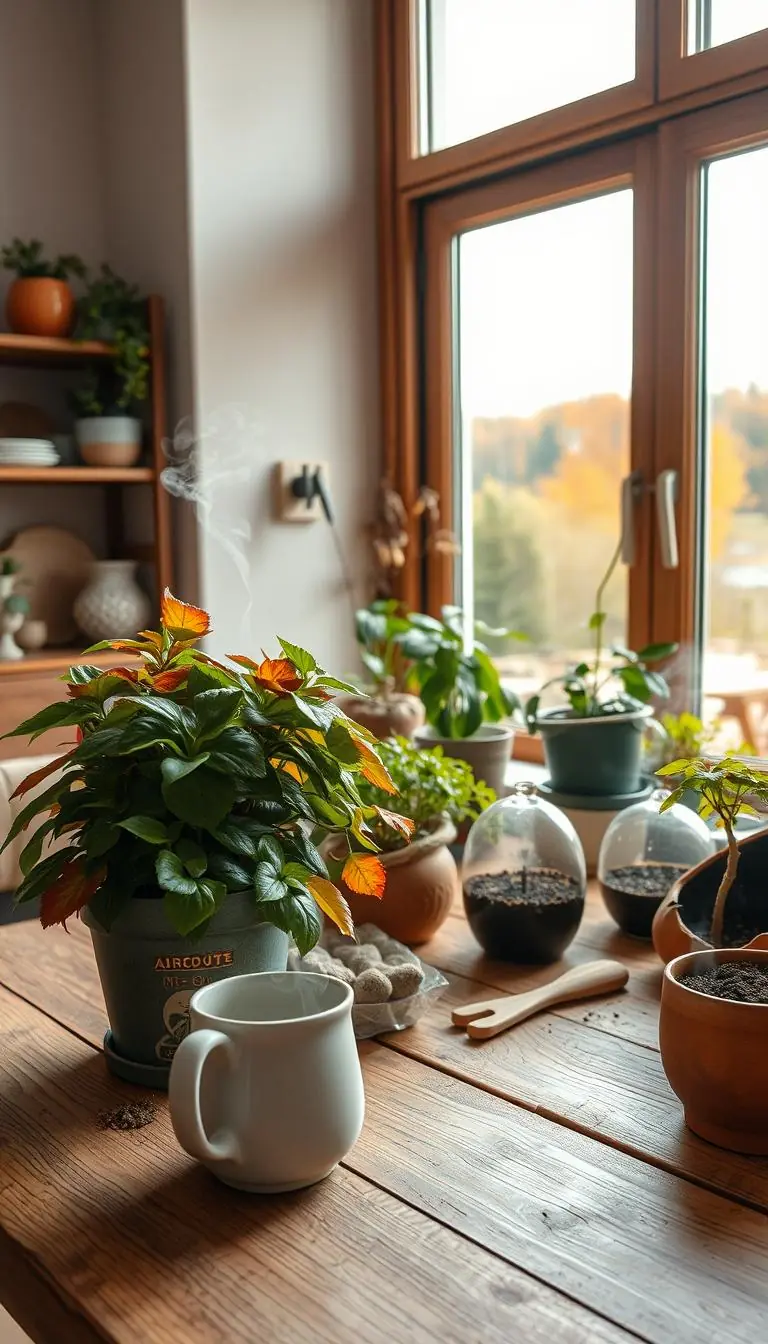
Morning light warms a pot by your window and the soil smells earthy—simple comforts that make a room feel alive.
Have you ever felt unsure when a leaf droops or the soil looks dry? You’re not alone. We’ll help you spot early issues fast using senses like touch, scent, and sight.
This short guide promises step-by-step help, real examples, and easy routines that fit your everyday life. Expect clear tips on watering, light, repotting, and seasonal feeding.
Tools such as a moisture meter, a gentle grow light, or a self-watering planter make care easier. Simple acts—weekly leaf dusting, bottom watering, and checking soil—support steady growth.
You’ll learn practical fixes for common problems with snake plants, ferns, monsteras, ZZ, and peace lilies. By the end, you’ll have calm, confident routines that keep your plants thriving and your home feeling lush.
Key Takeaways
- Check soil, not a strict schedule, to avoid overwatering.
- Use small tools—moisture meter and self-watering planters—to reduce guesswork.
- Adjust feeding in fall and winter and rotate sensitive plants away from direct southern sun.
- Repot into slightly larger pots with fresh soil for recovery.
- Weekly leaf dusting and sensory checks (leaf feel, soil smell) improve plant health.
Before You Begin: What Healthy Indoor Plants Look, Feel, and Smell Like
Before you water or move a pot, learn how healthy foliage and soil should look and feel. These quick checks take seconds and keep small problems from growing.
Quick visual cues: leaf color, turgor, and new growth
Look for firm, springy leaves that hold their shape. New tips often show a brighter lime-green compared to older foliage.
Scan for balanced shape—if stems lean toward a window, rotate the pot every few weeks so growth stays even.
Sensory check: earthy soil scent vs. sour rot odors
Do a moisture check: press your finger into the soil to your first knuckle. If your finger comes out clean and dry, the plant needs water.
Trust your nose. Healthy soil smells earthy like a forest floor. Sour, swampy, or “funky” smells are early signs of overwatering or rot.
- Keep a soft microfiber cloth handy for a weekly wipe — clean leaves photosynthesize better.
- Use a moisture meter for precise reads on sensitive species like ferns and succulents.
- Look under leaves for tiny webs or cottony tufts to catch pests early.
Watering Woes: Overwatering, Underwatering, and How to Get It Right
Most issues start at the pot: too much or too little water affects roots fast. Learn a short routine you can repeat each week to keep soil balanced and plants thriving.
Step-by-step basics:
Quick checks and tools
Test the top 1 inch of soil with your finger — press to the first knuckle. If it feels dry, water; if cool and slightly moist, wait a day or two.
Use a moisture meter for deep pots and aim for a mid-range reading before you water most tropicals. These small checks beat a calendar every time.
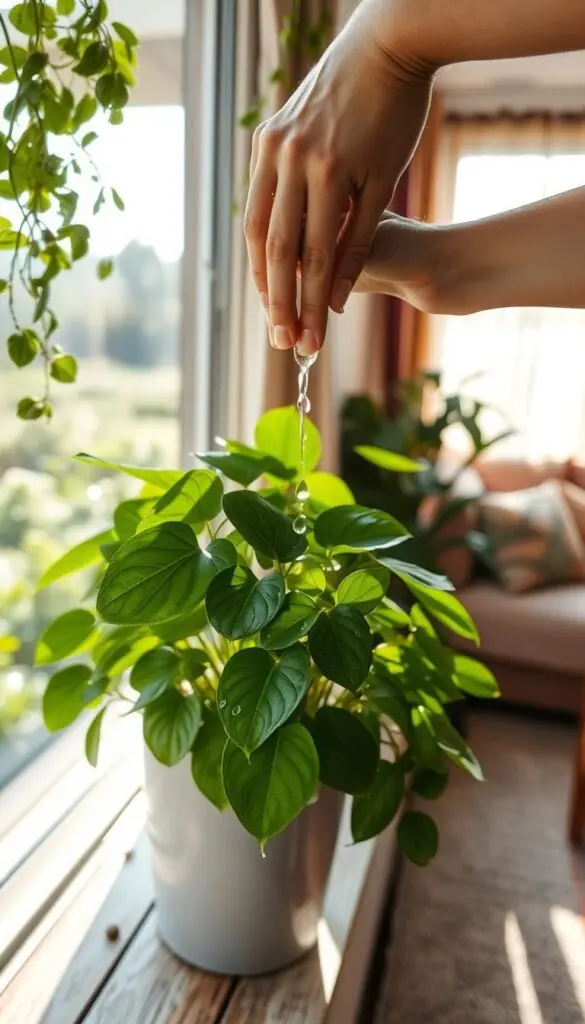
Practical techniques
- Bottom watering: Set the nursery pot in a bowl of water for 10–20 minutes, then lift and drain.
- Saucers: Empty any saucer within an hour — make sure standing water doesn’t sit under the pot.
- Tap water temp: Use room-temp tap water in the morning so roots aren’t shocked and foliage dries quickly.
Adjust by plant
Succulents want soil to dry fully between drinks; ferns prefer evenly moist but not soggy soil. Track days between waterings to learn what each plant needs.
"Yellowing leaves or a sour soil smell usually mean too much water; crisp, wilted edges point to underwatering."
Prevent root rot: Choose well-draining potting mix and pots with drainage holes. Water deeply, then wait — consistency matters more than frequency.
houseplant mistakes with Light: Too Much Sun or Not Enough
How your windows hit a pot through the day decides if a plant will thrive or struggle.
Read the room before you pick a spot. South-facing windows give the strongest sun and can scorch sensitive foliage like ferns, calatheas, and peace lily leaves.
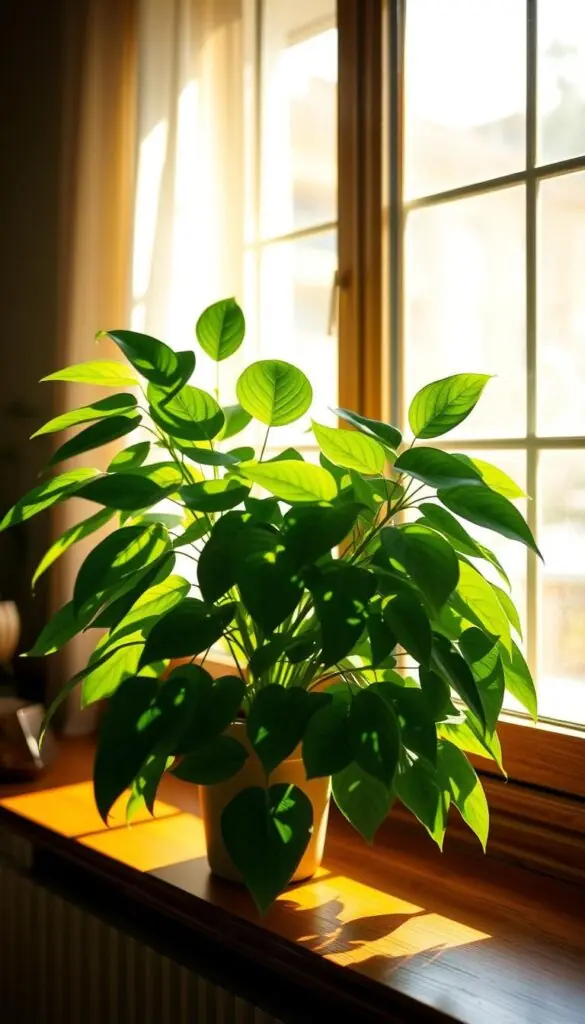
Signs to watch for are clear. Thin, stretched stems and smaller leaves mean not enough light. Bleached or crispy patches mean too much direct sun.
- Window orientation: south = intense sun; east = gentle morning light; west = hot late-day rays; north = soft, low light.
- Quick fixes: move the pot 2–5 feet back, add a sheer curtain, or angle it away from direct beams.
- Routine: rotate a quarter turn weekly so your plant grows evenly and won’t lean toward the window.
| Window | Typical light levels | Good plant examples | Quick fix |
|---|---|---|---|
| South | Strong, direct midday sun | Succulents, cacti | Move back 2–5 ft or use sheer curtain |
| East | Bright, soft morning light | Monstera, peace lily | Place near sill; rotate weekly |
| West | Warm late-afternoon sun | ZZ, snake plant (with protection) | Shield from afternoon sun; use curtain |
| North | Low light | Snake plant, ZZ | Use grow light 12–14 hrs if needed |
Touch-test leaves: heat-stressed foliage feels hot and papery; underlit leaves feel cool and often flop or thin out.
Pair light with watering: lower light slows evaporation, so water less often. Keep a weekly light routine—rotate, reassess distance to the window, and watch for early signs.
Soil, Pots, and Repotting: The Foundation Your Roots Need
A plant's health often starts below the rim—where soil, pot size, and drainage meet.
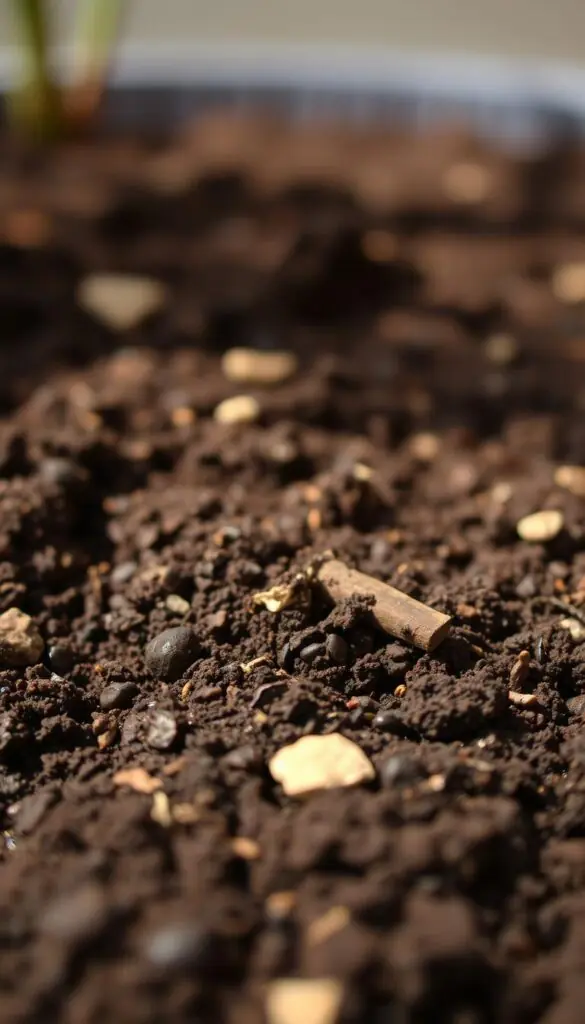
Choose the right mix for the species you keep. Cactus and succulent blends drain fast and suit arid-loving plants. Tropical or airy mixes use perlite, bark, and coco coir so roots get oxygen and steady moisture.
Planters that work
Pick containers with drainage holes. Slip a nursery pot into a cachepot for looks without losing function. Avoid oversized pots—too much extra soil holds water and invites rot, a common mistakes.
Exact pot sizing and timing
When repotting, choose a pot 1–2 inches wider in diameter than the current one. That small jump gives roots room without letting soil stay soggy.
Repot in spring or early summer, the best time for quick recovery and new root growth. Look for roots circling the bottom, soil that dries within a day, or stalled growth as cues to act.
- Gently tease roots free and trim any dead or mushy bits.
- Set the root ball so the top sits just below the rim.
- Make sure to water thoroughly after repotting, then let the soil settle before topping off.
- Use a saucer to protect surfaces but empty it within an hour — do not let water sit under the pot.
Refresh the top inch of soil between repots to add nutrients and improve texture. Keep the first week bright but not harsh to reduce transplant stress, and your plants will thank you with steady new growth.
Feeding, Temperature, and Humidity: Subtle Factors That Make or Break Growth
A subtle change in warmth or humidity often explains slow growth more than watering does. These three elements work together. Tweak one and you can see noticeable improvement.
Simple feeding plan:
- Feed lightly every 10–14 days in spring and summer with a balanced liquid fertilizer at half strength to support steady growth.
- Reduce to once a month in fall and winter—plants need fewer nutrients when light and active growth drop.
- Skip fertilizer for stressed plants (sunburn or recent repotting); focus on water and steady light first.
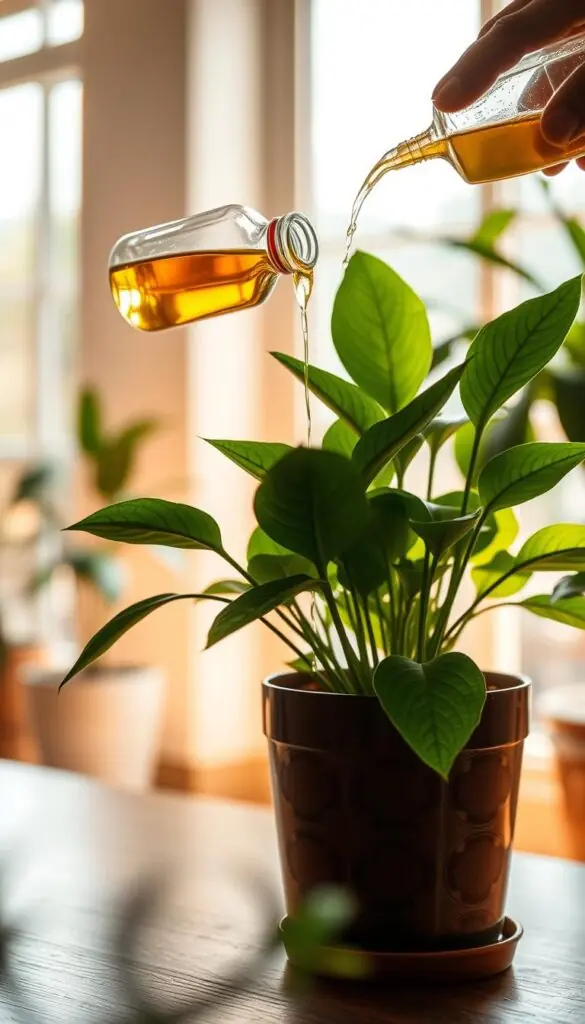
Temperature and draft tips
Keep temperature steady between 65–75°F for most indoor species. Avoid cold drafts from doors and windows or direct blasts from AC and heat vents.
Place your plant where light and temperature levels are stable. Sudden swings can scorch leaves or slow root activity.
Humidity boosts that actually work
Aim for gentle humidity. Group plants to create a microclimate, set pots on pebble trays with water below the pot base, or run a small-room humidifier.
"Water before you fertilize — moist roots take up nutrients more safely than dry roots."
| Factor | Practical tip | Why it helps |
|---|---|---|
| Fertilizer cadence | Every 10–14 days (spring/summer); monthly (fall/winter) | Matches the plant's active growth cycles and light levels |
| Temperature | 65–75°F, avoid vents and doorways | Prevents shock and supports steady metabolic rates |
| Humidity | Group plants, pebble trays, small humidifier | Reduces leaf stress and encourages new growth |
Quick care notes: always water before feeding, log feedings by months, and use a simple all-purpose fertilizer at half strength. These small routines keep your plants healthy and growing.
Pests, Dust, and Hygiene: Early Detection and Simple Prevention
A quick weekly check lets you catch tiny invaders before they become a big problem. Keep the routine short and calm: a gentle wipe, a close look under leaves, and a note in your care log. These small acts protect light capture and long-term health.
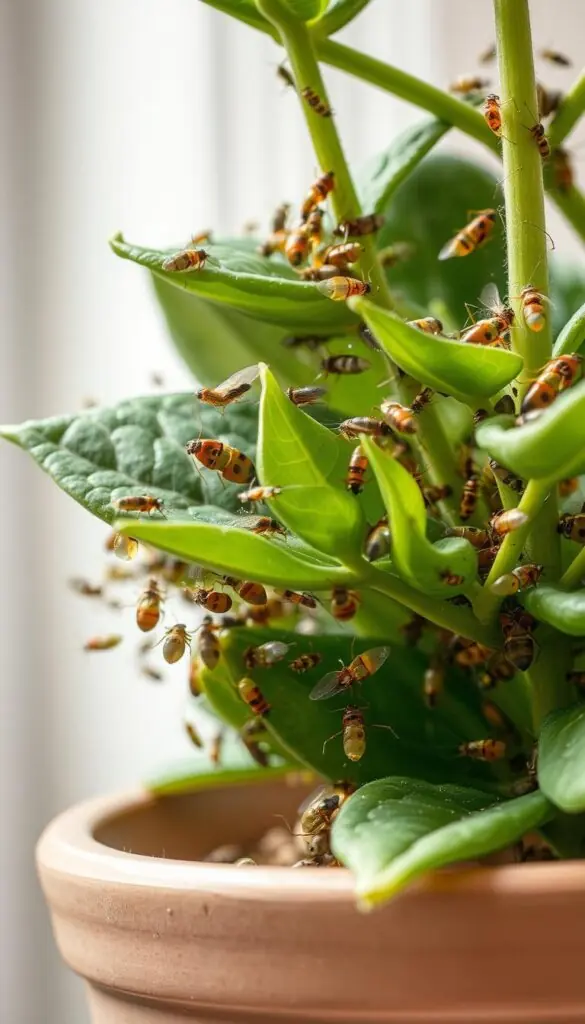
Weekly leaf care
Wipe leaves weekly with a soft, damp cloth to clear dust. Clean foliage photosynthesizes better and looks instantly fresher.
Spotting common culprits
Check undersides and leaf axils. Aphids cluster on new growth. Spider mites leave fine webs and speckled leaves. Mealybugs look like white cotton. Whiteflies fly up when disturbed.
Simple, natural treatments
- Spray neem oil or insecticidal soap every 7–10 days until movement stops.
- Use diatomaceous earth on the soil surface for crawling pests.
- Rinse shower-safe plants to knock back populations before treatment.
Quarantine and fungus gnat control
Isolate any infested plant away from the rest and give it bright, indirect light and airflow. For fungus gnats, let the top inch of soil dry and place yellow sticky traps to catch adults.
| Issue | Early sign | Quick action |
|---|---|---|
| Aphids | Clusters on new shoots | Blot with soapy water, repeat neem oil |
| Spider mites | Tiny webs, stippled leaves | Rinse leaves, apply insecticidal soap |
| Mealybugs | White cottony masses in axils | Pick off, use neem or alcohol swab |
| Fungus gnats | Small flying adults near soil | Dry topsoil, yellow sticky traps |
Small routines win: tidy up fallen leaves, empty wet saucers, and recheck weekly for a month after treatment. As a plant parent, log what worked—your growing knowledge makes future problems easier to solve.
Tools, Routines, and Seasonal Flow: Make Care Easy—and Enjoyable
A few smart tools and steady habits make gardening feel easy, not like another chore. Start with a light, sustainable kit and a tiny weekly rhythm. That keeps your plants happier and frees up your time.
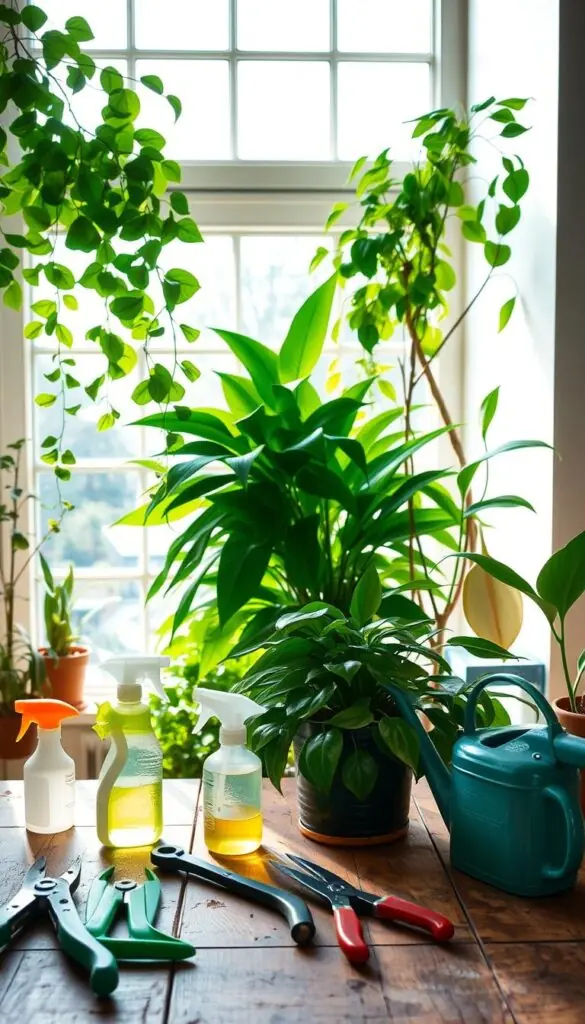
Build a simple toolkit
Pack the basics: a full-spectrum grow light on a timer, a moisture meter, a narrow-spout watering can, pruning snips, self-watering planters, and a soft cloth. These items save time and reduce guesswork for busy parents and anyone with a full schedule.
Weekly, monthly, and seasonal rhythm
Quick weekly: dust leaves, check soil, and note any pests.
Monthly: deeper inspection, rotate pots, and feed if needed. Set reminders by months as light shifts.
Seasonal: repot in spring or early summer into pots 1–2 inches larger with fresh soil.
- Use self-watering pots to buffer dry spells and steady moisture.
- Group houseplants with similar needs so your green thumb builds consistency.
- Compost trimmings and old mix in a compost bin; refresh topsoil with finished compost for a sustainable loop at home.
"Jot a three-line plant log: last water, last feed, last rotate."
Keep a tray of matching pots ready and enjoy the ritual—this small care practice turns chores into calm, rewarding time with your plant.
Conclusion
A few calm checks each week prevent most common problems with indoor plants.
Check soil moisture before you water and use room-temp tap water. Keep temperature steady and pull pots back from hot south sun or filter strong sunlight at south-facing windows.
Use airy soil with good drainage and pots with holes so roots avoid rot. Rotate plants for even light and wipe leaves weekly to stop pests early.
Repot in spring, just 1–2 inches larger, and feed lightly when growth picks up. If something slips—underwatering, sun scorch, or a bug—act early and you'll usually fix it fast.
These small routines build your knowledge and calm confidence. Enjoy the ritual; your houseplant, your space, and your care will grow together.
FAQ
How can I tell if a plant is healthy before I buy or bring it home?
Look for even leaf color, firm stems, and steady new growth. Healthy soil smells earthy, not sour. Avoid plants with yellowing leaves, black spots, sticky residue, or a mildew smell—these often signal pests, disease, or root issues.
What’s the simplest way to check watering needs?
Use the finger test: push your finger 1–2 inches into the mix. If it feels dry, water; if it’s cool and damp, wait. A moisture meter helps for dense pots or when you’re unsure. Bottom watering can help avoid overwatering leaves.
How do I prevent root rot?
Ensure pots have drainage holes and use a fast-draining mix suitable for the plant type. Empty saucers after 30 minutes and avoid letting plants sit in standing water. Repot into fresh, airy soil if roots smell foul or are brown and mushy.
My plant’s leaves are browning at the edges. Is it overwatering or underwatering?
Browning leaf edges can come from both. Crispy, dry brown edges usually mean underwatering or low humidity. Soft, yellowing leaves with brown patches and a soggy base suggest overwatering or root rot. Check soil moisture and roots to decide.
How much light does my plant really need based on window direction?
South-facing windows give the most bright light; east and west provide moderate light; north windows are low light. Match the plant: sun-loving types near bright windows, low-light survivors like snake plant or ZZ in quieter spots.
Why are my stems leggy and how do I fix it?
Leggy growth means your plant is stretching for light. Move it to brighter, indirect light or add a grow light. Regular rotation and occasional pruning encourage bushier, more even growth.
When should I repot and how much bigger should the new pot be?
Repot in spring or early summer when roots crowd the pot or growth slows. Choose a pot 1–2 inches larger in diameter for most indoor plants. Use fresh mix to replenish nutrients and improve drainage.
How often should I fertilize indoor plants?
Feed lightly during active growth—typically spring and summer—using a balanced, diluted fertilizer every 4–6 weeks. Cut back in fall and winter when growth slows. Overfertilizing can burn roots and harm leaves.
My home has low humidity. What can I do for tropical plants?
Increase humidity by grouping plants, using pebble trays with water, running a humidifier, or misting occasionally. Choose humidity-loving mixes that retain some moisture but still drain well to avoid rot.
What are the easiest ways to spot and treat common pests?
Check undersides of leaves and new growth weekly. Look for webbing, sticky residue, tiny white cottony spots, or moving specks. Isolate affected plants, wipe leaves with a soft cloth, and treat with insecticidal soap or neem oil. Repeat treatments and use sticky traps for fungus gnats.
Can tap water harm my plants?
Most tap water is fine for many plants but very hard, chlorinated, or overly cold water can stress sensitive species. Let tap water sit to reach room temperature and allow chlorine to dissipate, or use filtered or rainwater for sensitive tropicals and young cuttings.
How do I choose the right potting mix for succulents versus tropicals?
Succulents need fast-draining cactus/succulent mixes with grit or perlite. Tropical plants prefer airy mixes rich in organic matter that retain some moisture but still allow air to roots. Match the mix to the plant’s natural habitat for best results.
What routine should I adopt to keep plants thriving year-round?
Create a simple care schedule: weekly quick checks for moisture and pests, monthly light dusting of leaves, seasonal repotting or fertilizing in spring, and adjust watering with temperature and daylight changes. Small, steady habits prevent most problems.