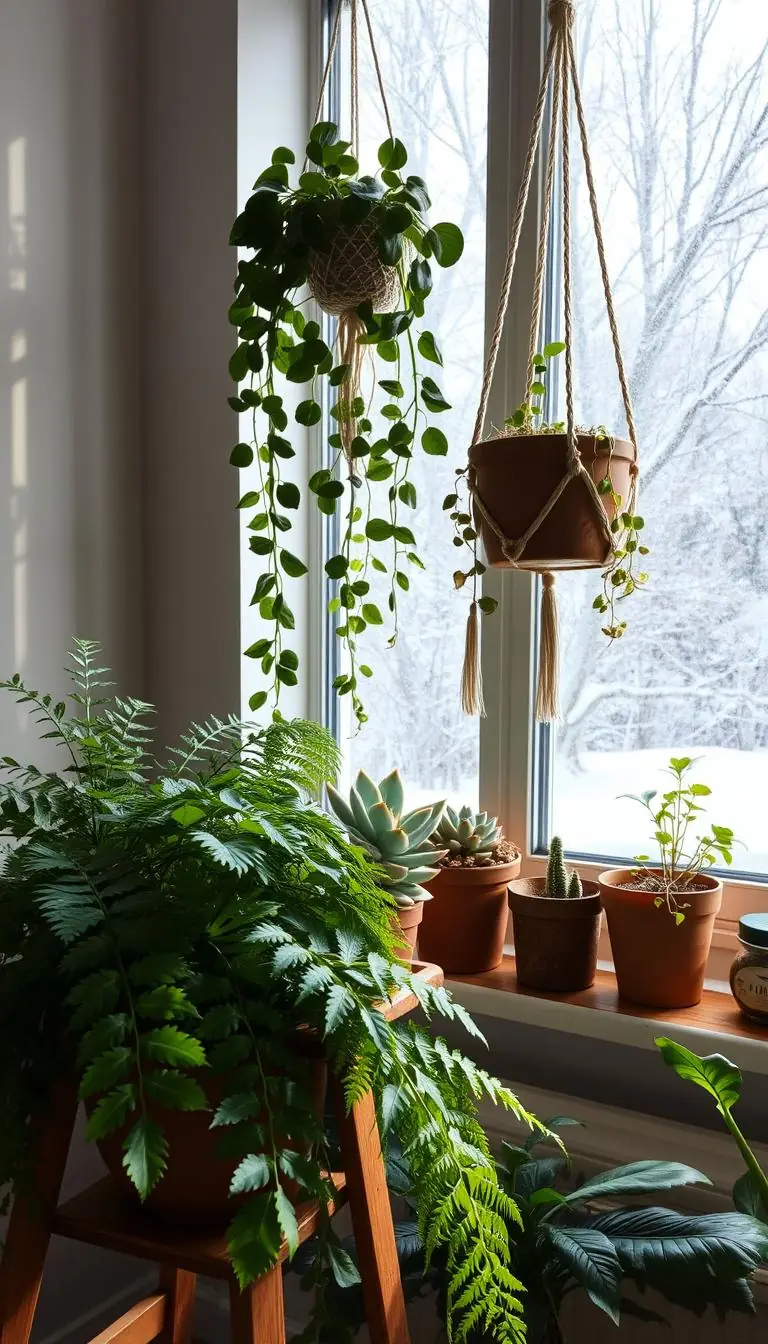
You notice the air getting crisper and the light leaning low across your windowsill. Does your mind wander to the deep green leaves and earthy soil of the pots you’ll bring inside? This is the gentle season to shift routines so your plants arrive at winter calm and healthy.
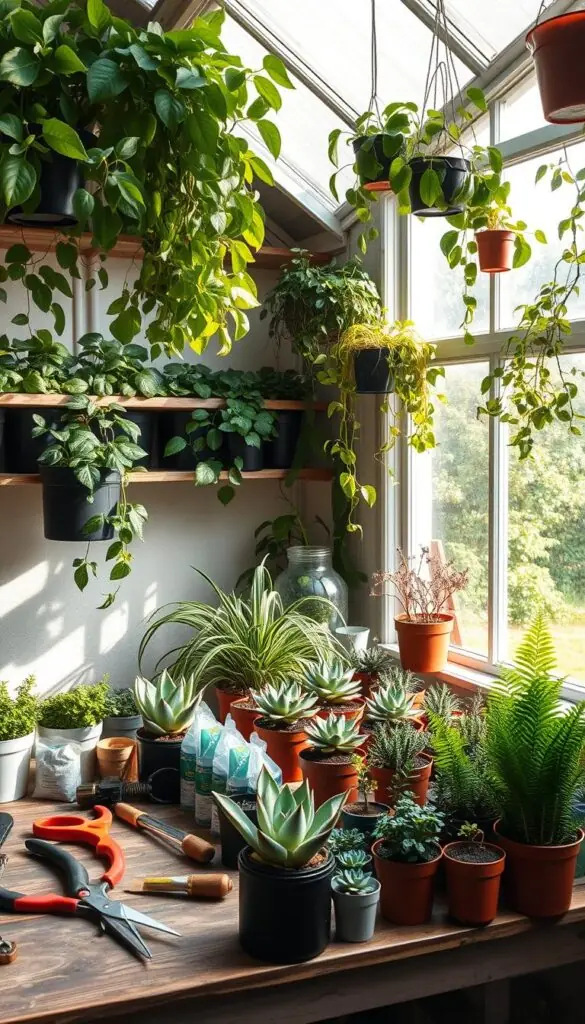
Start with a simple plan: pause most fertilizer, scan for pests like fungus gnats, and choose spots that give good daytime light while avoiding cold night drafts. Gather basic tools — trays and planters, a moisture meter, LED grow lights, a soft leaf cloth, a fine mister, a small humidifier, and fresh potting mix — to make the move smooth.
Watch for common mistakes: overwatering, leaving pots sitting in runoff, and repotting up more than one pot size. With a few steady minutes each week, you’ll notice slower growth, deeper green foliage, and the warm, earthy scent of healthy soil. Treat these steps as friendly advice from a caring neighbor, and your garden will feel at home for the season.
Key Takeaways
- Shift to calmer routines: less fertilizer, deeper occasional watering.
- Use simple tools: trays, moisture meter, LED grow lights, mister, humidifier.
- Check plants weekly for pests and soil moisture to catch issues early.
- Avoid common errors like constant wet soil and oversized repotting.
- Choose daytime light and move pots off cold windows at night.
Start Smart: Timing, Tools, and a Quick Fall Houseplant Prep Checklist
Bring plants in a little early, not at the last minute. Check your local first frost date and aim to move pots 7–14 days before that night. In Zones 5–8, frost often follows a warm spell, so this buffer prevents leaf scorch and root shock.
Tools to have ready:
- Trays to catch runoff and planters with drainage holes.
- Moisture meter or use the finger test (insert 1–2 inches).
- Smart LED grow lights on a timer, bulbs 12–18 inches above foliage.
- Soft leaf cloth, mister, small-room humidifier, and fresh potting mix.
Do a quick sensory scan before entry: look for color shifts on leaves, feel for crisp or mushy spots, and sniff for musty soil. These signs tell you if a plant needs cleaning, treatment for pests, or altered watering.
"Bring plants in early and set a calm landing zone; it saves you from late-night moves and stressed pots."
- Check frost date → move 1–2 weeks early.
- Stage a bright indoor landing space and clear a table or shelf.
- Clean, inspect for pests, set trays, and test moisture.
- Set grow lights for 10–12 hours on darkest days; pause fertilizer by October.
| Item | Why | Example |
|---|---|---|
| Moisture meter | Prevents over- and under-watering | Reads top 2 inches; use with finger test |
| Trays & drainage | Keeps roots from sitting in water | Plastic tray under each pot |
| Grow lights | Replaces lost daylight | LED, 12–18" above plants, 10–12 hr timer |
Common mistakes to avoid: moving pots into cold night drafts, repotting up more than one size, and keeping pots constantly wet. Take your time—this is careful preparing houseplants, not a rush.
Light, Temperature, and Placement: Set the Stage for Low-Light Days
Simple moves—cleaning glass, moving pots at night, and adding a smart bulb—change how much usable light your plants get. Wipe windows inside and out so more daylight reaches foliage. Rotate pots a quarter turn each week to keep stems straight and leaves evenly colored.
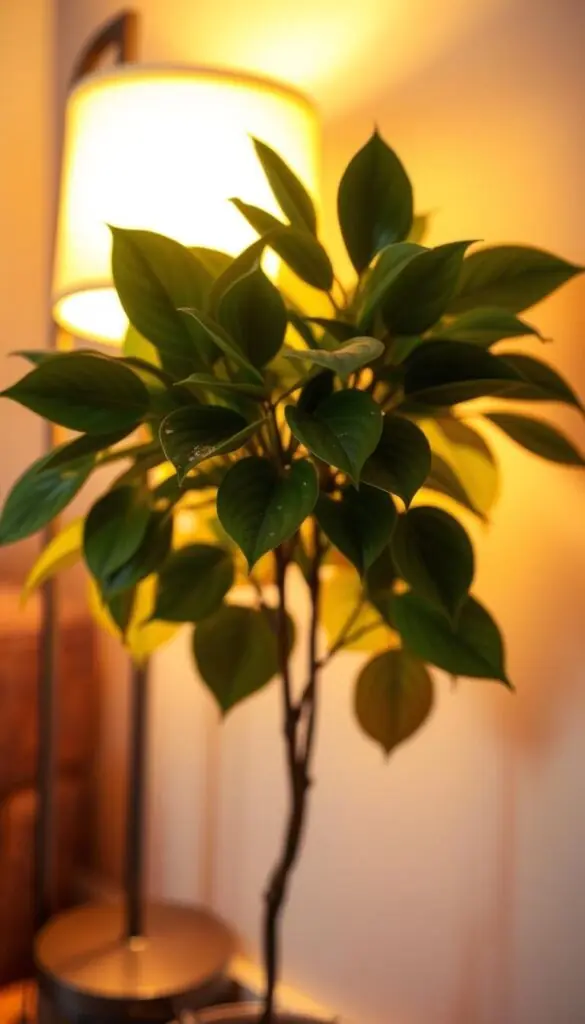
Maximizing brightness
Swap a lamp bulb for a smart LED grow lights bulb. Keep it 12–18 inches from leaves and run it on a timer for gray days. Grouping pots on a table with one lamp lifts overall brightness without cluttering your home.
Windowsill watch-outs
Glass can heat by day and chill fast after sunset. Slide a plant a foot back at night and return it by day to avoid cold drafts or hot glass burn. Check for hot vents and move pots if you feel a warm blast on your wrist.
Room-by-room tips
Bright east and west windows suit monsteras and pothos. Filtered light works best for calatheas—place them behind sheer curtains. Expect slower growth in winter; fewer new leaves and deeper greens are normal.
| Room | Good for | Quick tip |
|---|---|---|
| East/West | Monsteras, pothos | Rotate weekly |
| Filtered window | Calatheas, tropical plants | Use sheer curtain |
| Sunroom | Multiple plants | Move pots for all-side light |
- Clean windows.
- Rotate weekly.
- Add smart LED if you need extra light.
"Bright but gentle light by day and stable temperature by night matters more than chasing pure brightness."
Watering, Feeding, and Humidity: Adjust Routines for Cooler Months
A simple soil check replaces a calendar when you decide whether to water this week. Use the finger test to the first knuckle or a moisture meter to read the top inch of soil. If soil sticks lightly to your skin, wait; if it comes up clean, give a deep drink.
Deep, infrequent watering beats tiny sips in cool weather. Soak until a little water drains, then empty the tray so roots get oxygen. Check for yellowing leaves or mushy stems — those signs mean ease up. Crispy edges or droop mean the plant needs water.
Pause fertilizer from October through early spring for most houseplants. Exceptions include poinsettia and Christmas cactus. Restart gently in spring at half strength for the first two feedings to support steady growth.
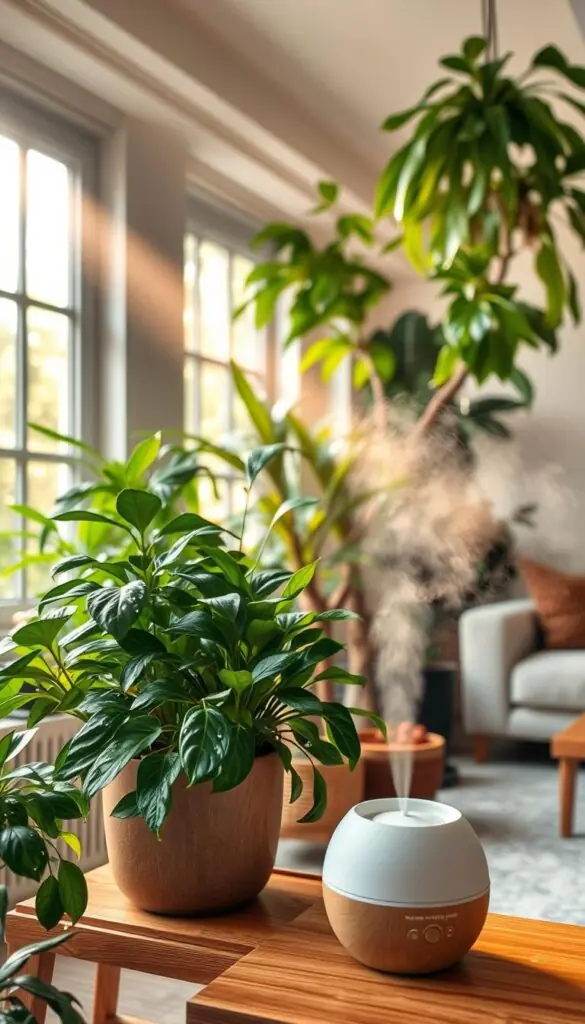
Humidify without overwatering
Dry indoor air can trick you into overwatering. Instead, raise humidity for tropical plants with pebble trays, grouping pots, light morning mists, or a small-room humidifier. Move plants away from direct heat sources and vents to stabilize temperature and air around leaves.
Quick species guide
| Plants | Watering note | Humidity tip |
|---|---|---|
| Succulents & cacti | Cut back dramatically; wait until bone dry | Low humidity fine |
| Peace lily | Use rainwater warmed to room temp | Prefers higher humidity |
| Tropical plants like philodendron | Deep soak when top inch is dry | Group or use humidifier |
"Make water decisions from the soil, not the calendar."
- Check soil (finger or meter).
- Water deeply, drain trays, then empty.
- Pause fertilizer Oct–Apr; restart gently in spring.
Clean, Inspect, Repot: Preparing Houseplants for Fall Indoors
Give your plants a gentle once-over so they come indoors clean and strong.
Leaf cleaning: Wipe dusty leaves with a soft, damp cloth until they shine. For big-leaf plants, a mild hose-off on a warm, mild day removes sticky residue and dust. Clean leaves drink in more light and recover faster.
Quick pest patrol
Check undersides, stems, and the soil surface for pests. Tilt leaves to catch the light; trace stems with your fingertips. If you find anything, isolate and treat the plant so the rest of your space stays healthy.
Soil fixes for gnats
Let the top inch of soil dry. Top with a thin layer of sand or fine gravel and consider a natural spray to stop adults and larvae. These steps cut the gnat life cycle without harsh chemicals.
Right-size repotting
Signs a pot is root-bound: slow growth despite good care, roots circling the surface, or pushing through drainage holes. Move up only one pot size into fresh mix, water once to settle, and avoid oversized pots that stay wet in cooler months.
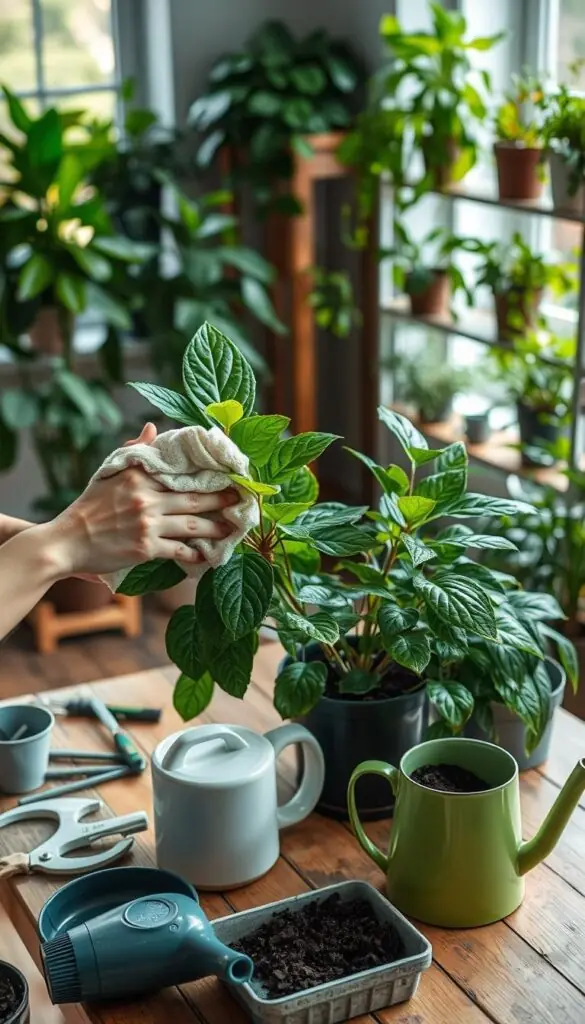
| Task | Tool | What to watch for |
|---|---|---|
| Leaf cleaning | Soft cloth, mild spray | Dusty sheen, sticky residue |
| Pest check | Magnifier, light | Underside spots, webbing, larvae |
| Gnat control | Sand/gravel, natural spray | Dry top inch, fewer adult gnats |
| Repotting | Fresh potting mix, slightly larger pot | Roots circling or exiting holes |
Quick reminder: wipe nearby windows and lights so clean leaves meet clean light. These few things done well make preparing houseplants feel simple and kind to your plants.
Conclusion
A few simple habits now set the stage for quiet growth and easy care all winter long.
You set a calm rhythm: clean leaves, steady light, and deep, infrequent water when soil tells you to. These small moves help your houseplants slow down without stress and keep steady health through shorter days.
Make sure each plant has a bright spot by the window by day, a step back at night, and gentle supplemental grow lights on the grayest afternoons. Pause feeding until spring, keep air slightly humid, and trust your eye and touch for quick checks.
, You’ve done the thoughtful work; now enjoy how green life softens your home all season. Your plants will reward you with steady, peaceful growth when warmer days return.
FAQ
When should I bring outdoor plants inside where I live?
Aim to move tender plants indoors before the first hard frost in your area. For Zones 5–8, that usually means bringing them in when nighttime temps start dipping near freezing. Check local first-frost dates, watch overnight forecasts, and act a few days ahead so plants can acclimate gradually.
What basic tools and supplies should I have ready for the seasonal transition?
Prepare trays, clean planters, fresh potting mix, a moisture meter, LED grow lights, a soft leaf cloth, a mister, and a small humidifier. These items help you monitor soil, clean leaves for better light capture, and keep humidity steady for tropical plants.
How can I tell if a plant is stressed by the change in season?
Do a quick sensory scan: look for pale or yellowing leaves, dry or crumbly leaf texture, or a musty smell from the soil. Drooping or leaf drop also signals stress. Use these signs to adjust light, water, or humidity right away.
How do I maximize light once plants are indoors? Do I need grow lights?
Clean windows, rotate pots regularly, and place light-loving plants near bright east or west windows. For lower natural light, use smart LED grow lights positioned a foot or two above the canopy. Grow lights are especially helpful on short, cloudy days and in rooms with limited sun.
Any tips about windowsills and temperature swings?
Watch for cold drafts at night and hot glare in the middle of the day. Move plants away from chilly panes after sunset and return them during daylight if they tolerate it. Avoid placing sensitive tropicals directly against cold glass or right next to heating vents.
Which rooms work best for different plants? Where should I put monsteras or calatheas?
Bright rooms with east or west-facing windows suit monsteras and pothos. Calatheas and other sensitive foliage plants prefer bright, filtered light—think a few feet back from the window or behind sheer curtains. Match placement to each species’ light needs.
Should I expect plants to stop growing in cooler months?
Yes. Many plants enter a dormancy period with slower growth and fewer new leaves. You’ll often see deeper green, sturdier foliage rather than active stretching. Adjust expectations and care accordingly rather than over-correcting with extra water or fertilizer.
How do I know when to water after moving plants indoors?
Use the finger test or a moisture meter to check soil. Insert your finger an inch or two into the soil—if it’s dry at that depth, water. Moisture meters remove guesswork, helping prevent overwatering and root rot during cooler, lower-light months.
Is deep, infrequent watering better than small daily sips now?
Yes. Deep watering that reaches the root zone encourages stronger root systems and reduces frequent surface wetness that invites fungus gnats. Let the top soil dry between thorough waterings, especially for most tropicals and containers.
Do I need to keep fertilizing through fall and winter?
Generally pause regular feeding from about October through April when growth slows. Resume light feeding in spring when new growth appears. Some fast-growing indoor plants may need occasional, very dilute feeds—check species needs before continuing.
How do I raise humidity for tropical plants indoors?
Increase humidity with pebble trays, grouping plants together, daily misting, or a small-room humidifier. These methods help calatheas, peace lilies, and other tropicals avoid dry, crispy leaf edges during heating season.
What water do peace lilies prefer in cooler months?
Peace lilies like rainwater or room-temperature tap water. Avoid cold water straight from the tap. Keep soil slightly moist but not waterlogged, and reduce watering frequency as growth slows.
How should I adjust care for succulents and cacti before bringing them in?
Cut back watering significantly. Succulents and cacti need much less moisture indoors and prefer a very well-draining mix. Water only when the soil is thoroughly dry several inches down to prevent rot in cool, low-light conditions.
How do I clean leaves to improve photosynthesis after moving plants inside?
Wipe leaves gently with a soft, damp cloth or give sturdy plants a mild hose-off on a warm day before bringing them in. Clean leaves allow more light to reach the leaf surface and reduce dust-related stress.
What should I check for during a pest patrol before bringing plants indoors?
Inspect undersides of leaves, stem joints, and the soil surface for fungus gnats, spider mites, mealybugs, and scale. Isolate any suspect plants, treat infestations with insecticidal soap, neem oil, or appropriate biological controls, then only bring them inside when clear.
How can I discourage fungus gnats on soil surfaces?
Let the top inch of soil dry between waterings, add a layer of sand or decorative gravel to the surface, and consider natural sprays or sticky traps. These steps reduce breeding grounds and help keep gnat populations down.
When should I repot before bringing plants indoors, and how big should the new pot be?
Repot only if the plant is root-bound or the soil is depleted. Move up one pot size at a time and use fresh, well-draining potting mix. Signs you need to repot include roots circling the surface, roots growing from drainage holes, or very rapid drying of soil.