Morning light spills across velvety leaves and you notice a soft tilt toward the window. Have you ever paused to read what your plant is saying?
In this season, your indoor garden slows down and asks for gentle attention. We help you shift from busy care to quiet observation so your plants rest well and rebound in spring.
This short guide gives clear steps you can use today: where to place pots, how to check soil weight instead of following the calendar, and simple humidity fixes that don’t clutter your room.
We’ll point out common mistakes—drafty spots, cold wet soil, and overwatering—and offer easy tools like full-spectrum bulbs, self-watering planters, and pebble trays to make daily care simpler.
Key Takeaways
- Shift to observation: watch leaves and soil weight rather than rigid schedules.
- Map actual light in your home; a sunny window now outperforms summer spots.
- Protect roots from cold and keep pots away from icy panes and radiators.
- Raise humidity with pebble trays or a quiet cool-mist humidifier.
- Hold off on repotting and fertilizer until the growing season returns.
Quick winter houseplants checklist for the season
Set aside one afternoon to map light, check soil, and tidy leaves. This short checklist helps you act fast and keep plants steady when growth slows.
Assess light
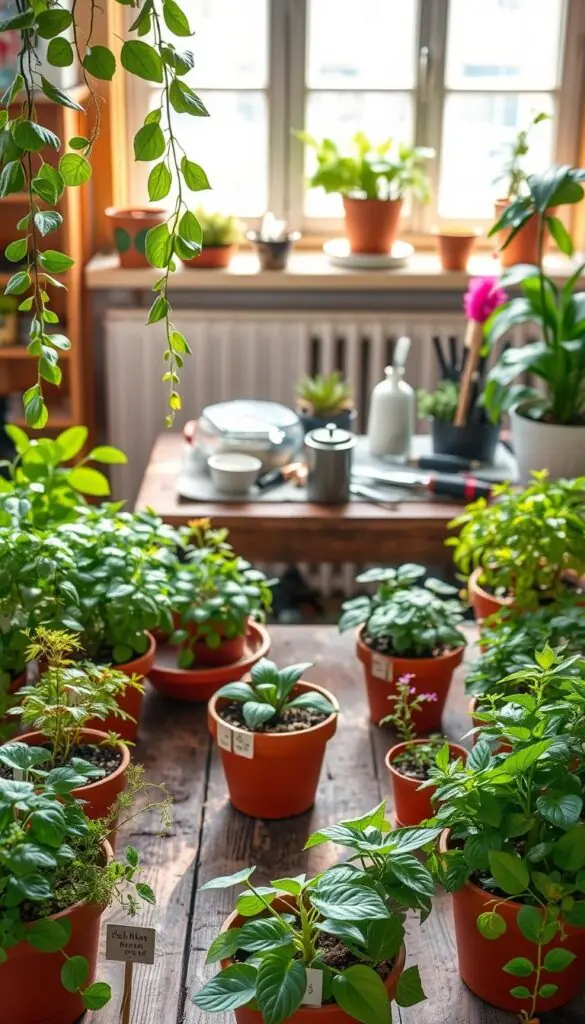
Spend one day noting where sun lands for 2–4 hours. Stand in each room at 9 a.m., noon, and 3 p.m. Move a plant to a brighter spot or add a grow light bulb (Philips full-spectrum) to a lamp if a corner stays dim.
Dial back water
Press your finger 1 inch into the soil and lift the pot to feel weight. Only water when the top is dry and the pot feels noticeably lighter. Avoid watering on a fixed day of the week.
Stabilize temperatures
Slide pots 6–12 inches from cold glass and radiators. Aim for steady temperatures and no big nightly swings.
Boost humidity
Group plants shoulder-to-shoulder to form a “cuddle puddle.” Use pebble trays under thirsty pots or run a cool-mist humidifier (Honeywell) on low nearby.
Pause repotting and feeding
- Hold off on fertilizer and repotting until spring.
- Dust leaves with a soft, damp cloth so limited light can be used well.
- Do a quick weekly lap: check moisture, watch for crispy leaves, rotate pots ¼ turn.
Light that plants can actually use during short winter days
A few warm sun patches on the floor point to the best spots in your rooms. Start by standing near each window at midmorning and midafternoon. Note where the soft morning glow falls and where sun fades quickly.
Step-by-step window selection:
- Pick the brightest draft-free window—south or west if you have it; east for gentle morning sun.
- Do a draft check: hold your hand by the frame. If you feel a chill, move the plant back or add clear insulating film.
- Measure light hours: count hours of bright, indirect sun and add a timer-controlled grow light to reach 12–16 hours.
Place foliage 12–24 inches from a full-spectrum bulb like the Philips LED Plant Grow Light Bulb. If you prefer decor-friendly options, hang a slim pendant such as the Rousseau Plant Care light over a console.
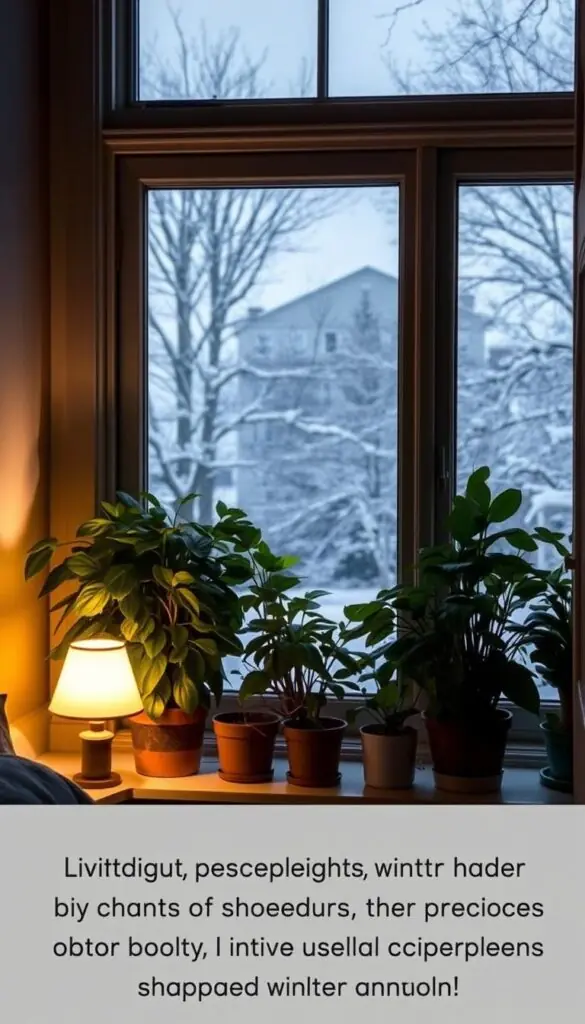
| Window | Best use | Draft tip | Recommended hours |
|---|---|---|---|
| South/West | Bright indirect sun for many plants | Keep 6–12 in. from cold glass | 12–16 hours (add grow light if needed) |
| East | Gentle morning sun for thin leaves | Sheer curtain for midday protection | 10–14 hours |
| Dim room | Create a plant zone with two lamps | Use reflective surface behind pots | 12–16 hours with grow light |
Keep a steady on/off schedule each day. If new leaves stretch pale, increase light hours. If foliage bleaches, move the light a few inches back.
Water and soil: simple methods that protect roots in winter
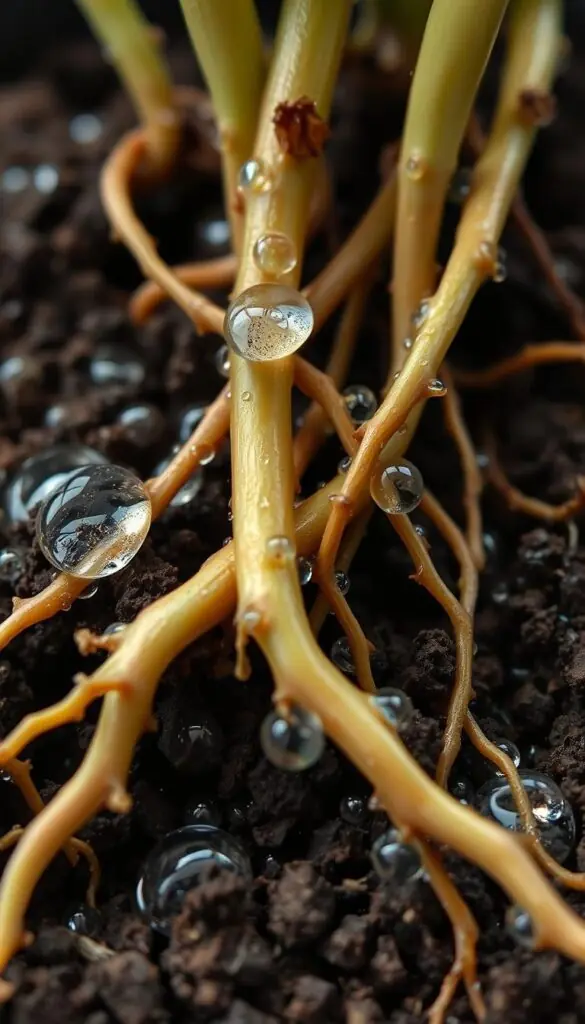
Let the weight of the pot and the feel of the soil guide each watering. This keeps care simple and helps you avoid soggy, cold roots that slow growth.
Measurable cues:
- Moisture check: press your finger 1 inch into the soil. If it’s dry and the pot feels light, water; if cool and damp, wait.
- Thorough but careful: water slowly around the surface until a little drains out, then empty the saucer so roots don’t sit in water.
- Leaf clues: soft, drooping leaves often mean overwatering; crisp leaves or soil pulling away usually mean thirst.
Mix and tools for success:
- Fast-draining mix: try 2 parts all-purpose potting mix, 1 part perlite, 1 part orchid bark for an airy winter mix.
- Match the plant: succulents and snake plants like extra perlite; tropicals do well with more bark for oxygen.
- Self-watering planters (Lechuza) let plants sip from a reservoir, reducing overwatering on busy weeks.
- Use a moisture meter to confirm the finger test and check a few spots before watering.
Water in the morning so the water top and leaves dry by night. Avoid heavy soil and saucer puddles—cold, soggy soil damages roots and invites rot.
Temperature and placement: where your houseplants feel “just right”
Small shifts in degrees can change how your plants hold their leaves and blooms. Knowing which spots stay steady helps you keep foliage healthy through the colder months.
Degrees that matter:
- Most tropicals prefer 65–75°F; they thrive in warmer, steady temperatures.
- Cool bloomers like cyclamen do best at 55–65°F and will yellow if your home runs too warm.
Placement tips and simple buffers
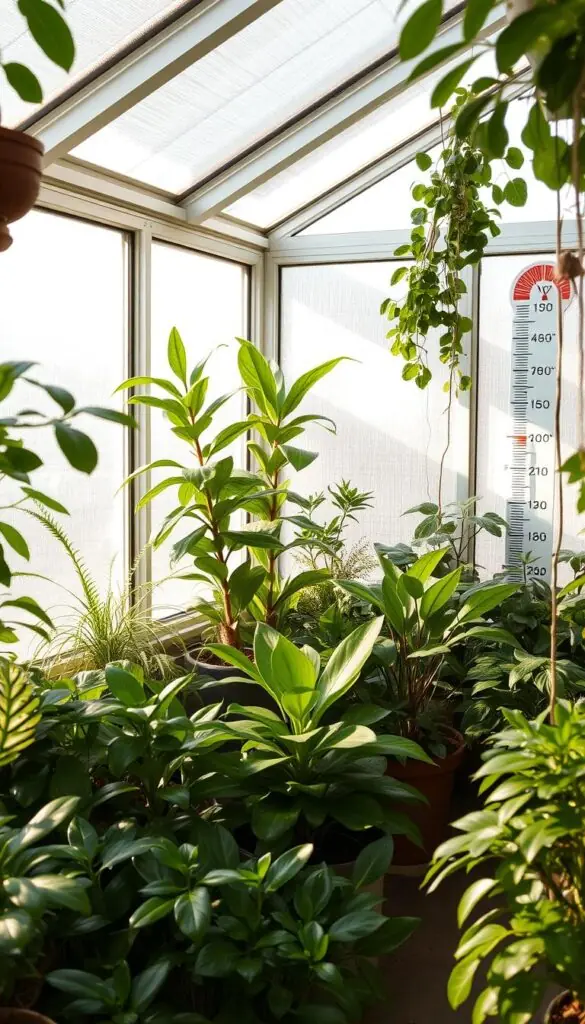
Keep pots a hand’s width from cold glass and add a cork mat on stone sills to buffer chill.
Avoid placing plants directly on radiators. Hot, dry blasts scorch foliage and curl leaves.
Quick checks and small fixes
- If you feel a draft at the window, move the pot 6–12 inches inward or hang a sheer curtain.
- Cluster plants to create a slightly warmer microclimate and shared humidity in one room.
- Turn your plant ¼ turn weekly so all sides see even light and steady air.
Leaf signals to watch: limp, translucent leaves point to cold damage; crispy edges usually mean hot, dry air.
Humidity made simple: from pebble trays to reliable humidifiers
Small steps—like a tray of stones or a quiet humidifier—create a gentler air for plants. These easy fixes protect leaves and keep pots happy without fuss.
Pebble tray setup (step-by-step):
- Pick a shallow tray and fill it with smooth pebbles.
- Pour water until it sits just below the pebble tops so the water top stays hidden.
- Set the pot on the stones so the pot base stays above water to protect roots.
- Refill when stones look dry and clean the tray weekly to avoid buildup.
Room solutions and humidifier tips
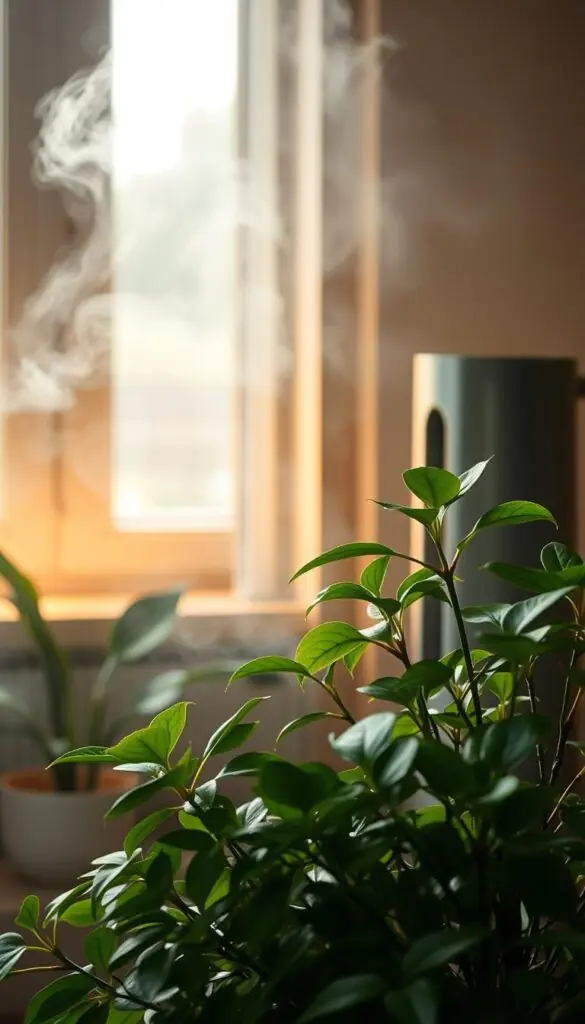
Group your indoor plants to form a small, shared pocket of moisture. A cool-mist humidifier like the Honeywell HUL430 or an AirExpect model runs quietly and gives a soft mist that feels pleasant in the room.
Choose unit size to match your space: small for a bedroom, medium for a living room. Run it on low during light hours and clean the tank weekly for healthy air.
Which plants go where
- Low humidity champs: snake plant, ZZ, haworthia—place in drier corners.
- High humidity lovers: ferns, anthurium, African violet—keep near the tray or humidifier for success.
Watch for brown, crispy tips (low humidity) or soft, mushy leaves (too much moisture). Aim mist into open air, not directly on foliage, for even humidity and steady results.
Winter-blooming color and tough indoor plants to anchor your collection
A few well-chosen bloomers and tough foliage plants keep color and calm through the colder months. Pick one or two flowering varieties and pair them with durable greens to create a lively, low-effort display.
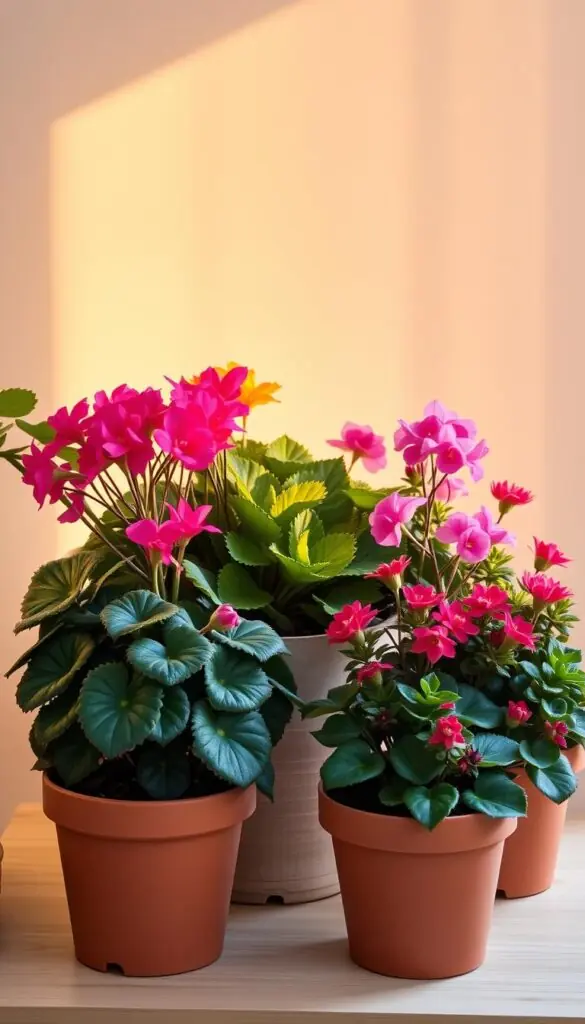
Flower power now: African violet offers jewel-tone flowers and velvety leaves—give 14–16 hours of light and 40–60% humidity for steady blooms. Amaryllis sends dramatic trumpet flowers; place in bright, indirect light and water when the top inch is dry. Cyclamen prefers 55–65°F and high humidity; its butterfly-like flowers float above marbled foliage. Anthurium brings long-lasting glossy spathes that love moist air, while kalanchoe rewards short nights with tight clusters of vivid flowers. Clivia needs a cool, dry rest to set late-season blooms.
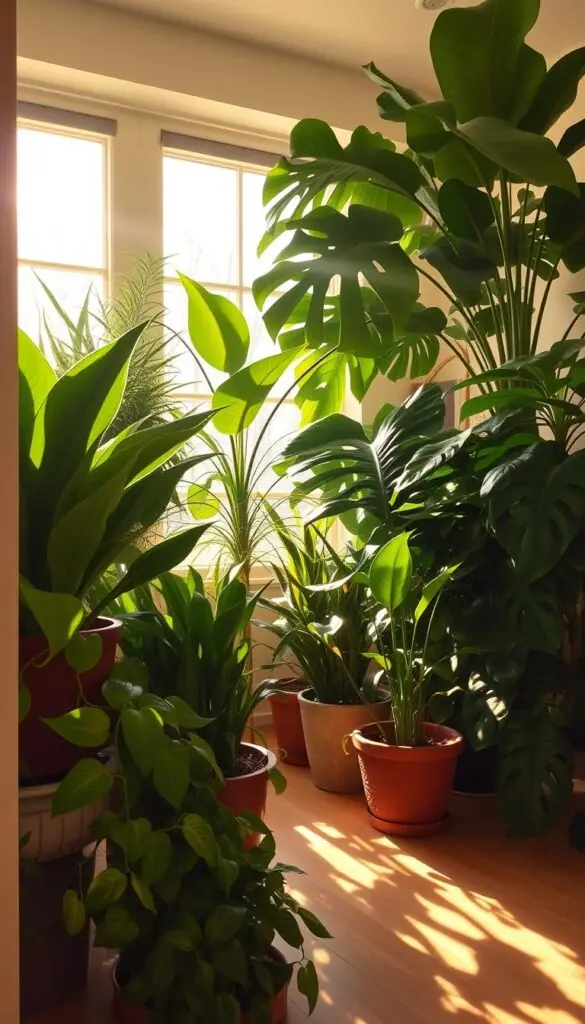
Low-fuss heroes: Snake plant, ZZ plant, pothos, cast-iron (Aspidistra), dracaena, and haworthia tolerate lower light and drier air. These varieties keep your collection green with minimal fuss and protect leafy texture when florals rest.
- Christmas cactus forms jewel-like buds and opens showy flowers in the winter months; bright, indirect light and even moisture help bud set.
- Mix textures—pair ruffled begonias or orchid spikes in orchid bark mix with upright amaryllis for layered color that lasts into spring.
Quick care notes: use a grow bulb for short days, choose orchid bark or sphagnum for epiphytes, and cluster plants to share humidity. These small moves give you lasting flowers, richer colors, and healthy leaves without fuss.
Overwintering wins and pitfalls: what to bring in, stash, or skip
A few careful moves now will protect roots and give many plants a strong start in spring. Start with a quick triage: bring tender pots indoors, move hardy tubers to cool storage, and leave adaptable shrubs where they are if temperatures stay mild.
Do bring in and support
- Citrus: Rinse foliage outdoors, inspect for pests, then isolate for a week. Set under an LED grow light for 12–14 hours/day. Rotate weekly and place the pot on a tray to catch drips.
Garage and basement sleepers
- Fig: After a couple frosts and leaf drop, move the pot to an unheated garage or basement. Elevate the pot off the cold floor and water lightly about once a month.
- Dahlia tubers: After frost, cut stems to 6 inches. Pack tubers in vermiculite or peat and store in a ventilated box where air stays cool but above freezing. Check monthly and mist if too dry.
- Canna rhizomes: Lift after frost, trim to 6 inches, tuck into paper bags, and stash in a dark, cool spot until spring.
Surprisingly adaptable
- Rosemary: Keep in a sunny east or west window and water when the soil surface feels dry. It can also rest in an unheated garage or covered porch.
- Bird of paradise: Place near a bright window. Water roughly every 10 days when the top few inches of soil are dry.
Think twice
- Skip bringing in Boston fern, gardenia, non-hardy lavender, mandevilla, and tropical hibiscus. They often shed leaves, invite pests, or suffer in dry indoor air.
Spring reset: In spring, resume regular water and light, divide stored rhizomes or tubers, prune figs hard, and ease plants into full sun to avoid shock.
Conclusion
A few small habits can keep your indoor greens steady and cheerful all season.
Embrace consistency over perfection. With better light, smarter water, and steady placement, your winter houseplants will stay healthy and calm.
Enjoy tiny rituals—dusting a leaf, turning a pot toward sun, topping up a tray. These slow acts help each houseplant quietly grow and build your confidence.
Your collection can be beautiful and easy to live with. Choose tools and a routine that match your life, and your garden will thank you.
When spring comes, new leaves and blooms will reward this gentle care. You’ve got this—keep it simple and watch your success grow year after year.
FAQ
How much light do my indoor plants need during the short days?
Aim for 12–16 hours of bright, indirect light for most foliage and flowering varieties. Use south-, east-, or west-facing windows that stay draft-free. If natural hours fall short, add a full-spectrum LED grow light on a timer to top up the day.
How can I tell when to water instead of following a calendar?
Check the top 1 inch of soil and lift the pot to judge weight. Water only when the surface feels dry and the pot is noticeably lighter. For small or shallow-rooted pots, poke a finger in. This prevents soggy roots and reduces rot risk.
What temperature range should I keep rooms where plants sit?
Keep tropical varieties around 65–75°F and cool-loving bloomers between 55–65°F. Avoid windows with cold drafts and move plants away from hot radiators or vents to prevent stress from sudden swings.
What's the easiest way to raise humidity without a humidifier?
Group plants together and use pebble trays: set pots on pebbles above water so the soil stays dry but humidity rises around foliage. This helps without wetting leaves and reduces pest risks.
Should I repot or fertilize plants now?
Hold off on repotting and heavy feeding until the active growth of spring. Roots move slower and nutrients aren’t used as quickly, so a pause prevents shock and salt buildup in soil.
Which soil mixes help prevent overwatering problems indoors?
Use well-draining mixes with perlite, pumice, or coarse sand, and consider self-watering planters for consistent moisture. These blends let excess water escape and keep roots healthier through the cooler months.
How do I care for blooming plants like African violets and amaryllis now?
Place them in bright, indirect light and keep temperatures steady. Water from the bottom for African violets to avoid crown rot; allow amaryllis soil to dry slightly between waterings and remove spent blooms to direct energy to the bulb.
Which low-maintenance varieties are best for low light and low humidity?
Choose durable options like snake plant, ZZ plant, pothos, dracaena, and haworthia. They tolerate lower light and drier air, making them reliable anchors for a mixed collection.
Can I overwinter citrus or tender tropicals indoors?
Yes—bring citrus inside and give it 12–14 hours of LED light, consistent moisture, and good air circulation. Place tender tropicals near the brightest windows and avoid crowded, dark corners to reduce pest outbreaks.
What should I avoid bringing indoors from the garden?
Skip plants that need strict dormancy or high light you can’t provide, such as some lavenders, mandevilla, and tropical hibiscus, unless you can mimic their summer conditions under lights and humidity controls.
How do I prevent pests when moving plants inside for the season?
Inspect and quarantine new arrivals, wipe leaves, and treat visible pests before grouping with others. Keep humidity balanced and avoid overwatering—many pests thrive in stagnant, damp conditions.
Is it okay to run a humidifier all night for my plants?
Running a cool-mist humidifier on a timer or with a hygrometer to keep relative humidity steady is fine. Aim for moderate increases—many plants thrive at 40–60%—and avoid saturating surfaces to prevent mold.