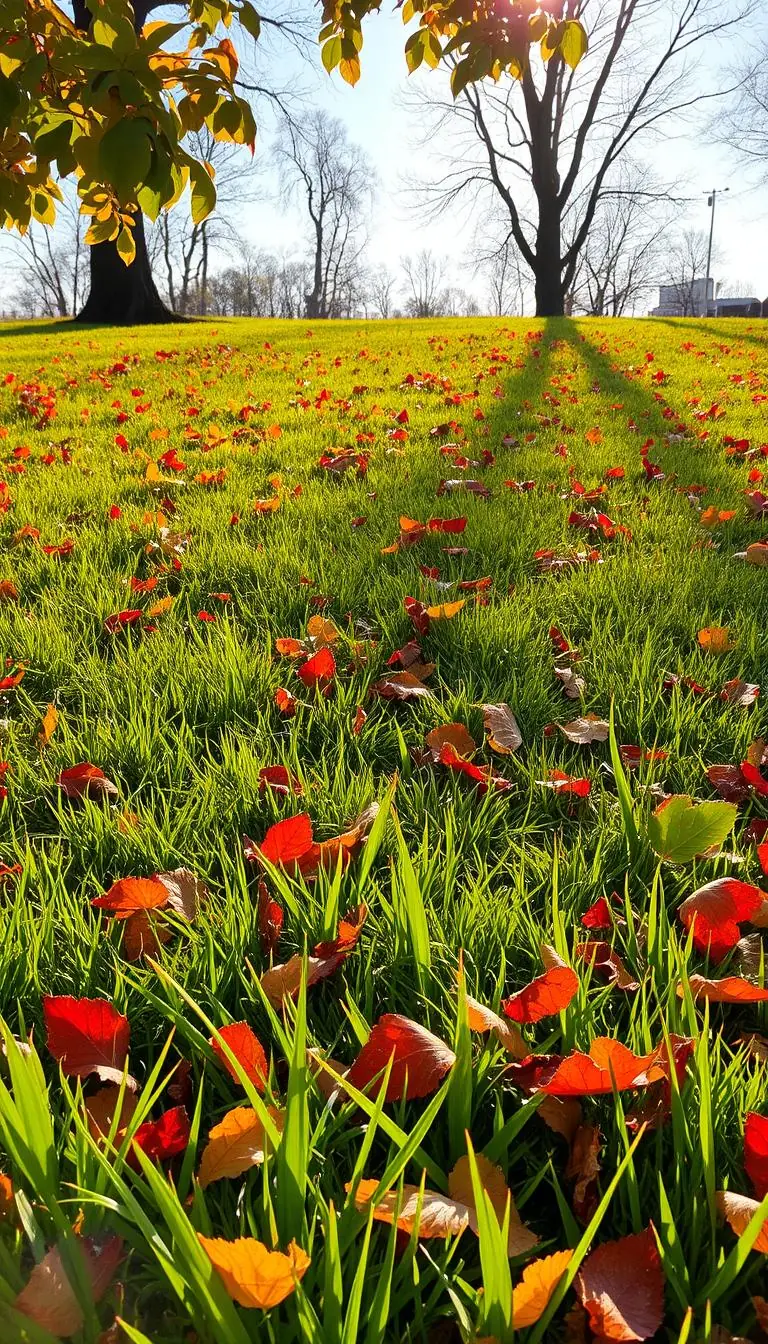
You kneel on sun-warmed soil and feel the turf give like a soft carpet. Maybe you have a spongy spot that lifts, or a patch that browned overnight. It can feel worrying, but a few simple checks often tell the whole story.
We’ll walk you through calm, friendly steps you can do today. You’ll learn to part the blades, check grass roots, and use a hand trowel and bucket to confirm if grubs or other pests are present. White grubs are C-shaped larvae of scarab beetles that feed near the surface in spring, summer, and fall.
Some problems mimic drought—chinch bug sap damage can make grass wilt then brown from June to September. Night-feeding species like sod webworms and armyworms leave telltale brown patches or silken trails.
Our approach helps you spot real issues before spending money. You’ll protect helpful life in the soil and choose gentle actions first, so your plants and nearby yards can thrive.
Key Takeaways
- Start with simple inspection: part the blades and feel the soil.
- Look for C-shaped grubs feeding on grass roots in spring to fall.
- Note timing—many pests are easiest to manage during specific life stages.
- Use gentle, low-impact actions first to protect beneficials.
- Short checks with a trowel and bucket can save time and money.
Start Here: Spotting Damage vs. Drought before You Treat
Simple senses — sight, touch, and a small tool — will usually show whether the damage is drought or something else. Take a calm, short inspection in the cool morning light before you act.
Quick field checks: color, texture, and “spongy” turf feel
Walk the lawn slowly and note blade color. Uniform straw tones often mean drought. Irregular purple-to-brown patches point to pest or sap damage.
Kneel and press the turf. A spongy bounce suggests grubs under the surface. Crisp, dry blades that stay anchored usually signal heat stress.
Slide a long screwdriver into the soil. If it goes in easily yet grass still wilts, suspect root-feeding bugs rather than simple dryness.
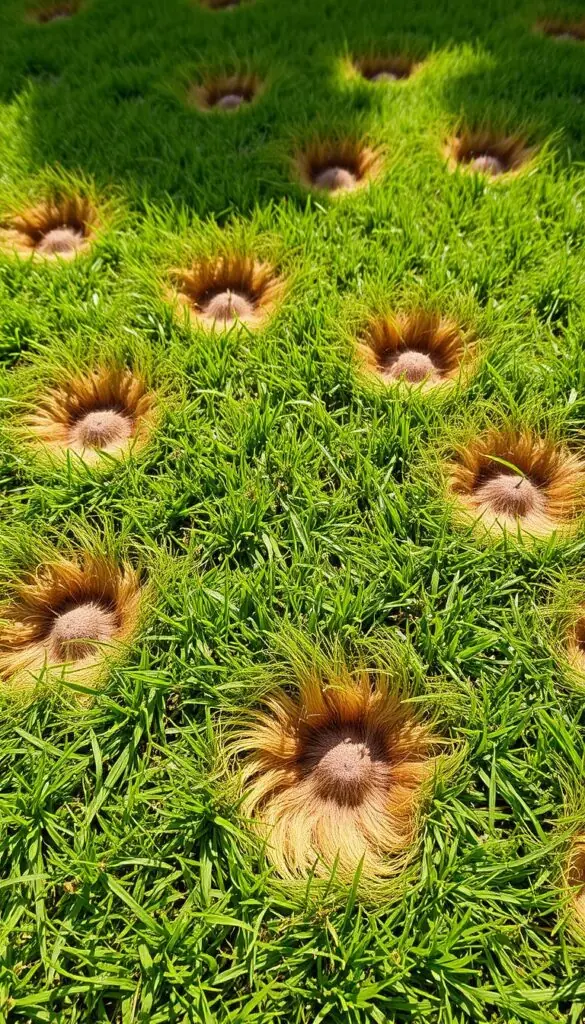
What brown patches, wilt, and “pulled-up like carpet” really mean
Gently tug at a brown edge. If the sod lifts like carpet and white grubs appear, counts above ten to fifteen per square foot need attention. One to five grubs rarely show visible damage.
Look for sharp transition zones and scattered spots, and check for bird or skunk foraging. These are helpful clues that point toward grub activity rather than broad drought damage.
Know Your Enemies: Common Lawn Insects and Their Life Cycles
Seeing where damage starts — at the blade, crown, or roots — points to the right fix. Below are the common pests you’ll meet and a simple way to tell them apart.
Grubs and Japanese beetles
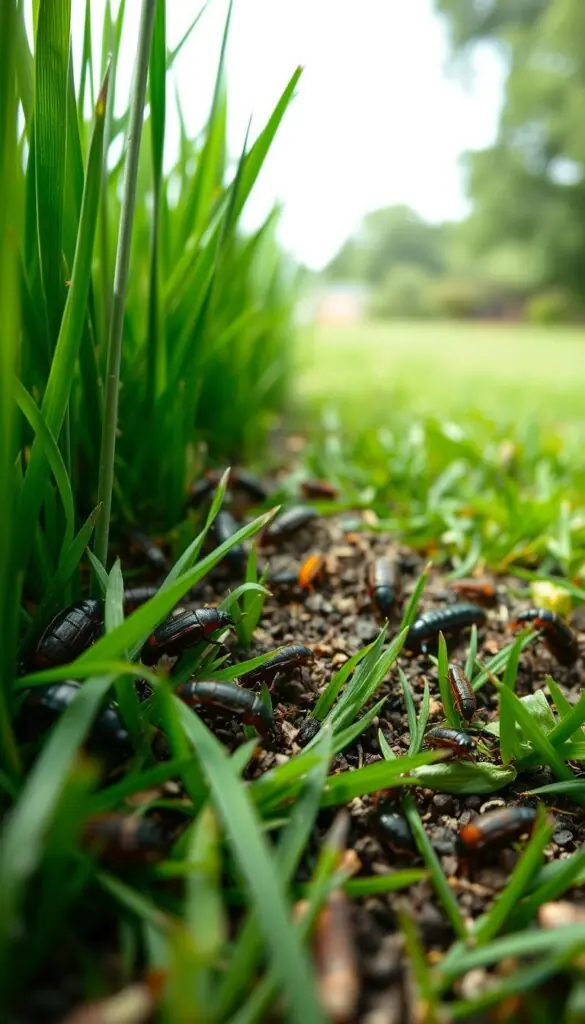
What they look like: White, C-shaped larvae about a half to one inch long with a tan to brown head and three small legs.
They live in the soil and feed on grass roots near the thatch. Adults — including Japanese beetles — lay eggs in midsummer. Eggs hatch in about two weeks and the larvae feed through fall, then burrow deeper to overwinter.
Chinch bugs
What they do: Tiny sap-suckers that inject toxins and make healthy grass turn purple, then yellow and brown.
They prefer hot, sunny spots. Multiple generations run from spring into fall, so damage is often seen from June to September.
Sod webworms, cutworms, and armyworms
Sod webworm caterpillars hide in silken tubes at the turf base and feed on blades at night. Cutworms shelter in small burrows and sever grass stems during evening hours.
Armyworms move fast in groups, grazing from dusk to dawn. Heavy outbreaks can make the surface seem to ripple as the caterpillars cross the grass.
| Pest | Stage to watch | Size (inches) | Where it feeds |
|---|---|---|---|
| White grubs | Larvae (spring–fall) | 0.5–1 | Grass roots, near thatch |
| Japanese beetles (adult) | Adult laying eggs (midsummer) | 0.5–0.75 | Leaves and flowers; larvae in soil |
| Chinch bugs | All active generations (summer) | 0.125–0.25 | Grass blades and crowns (sap) |
| Sod webworms / cutworms | Larvae (night feeders) | ~1 | Blades, crowns, base of sod |
| Armyworms | Larvae (outbreaks in summer/fall) | 0.75–1.5 | Leaves and stems at surface |
Simple, Natural Monitoring Methods You Can Do Today
You can learn a lot in ten minutes by using simple tools and paying attention to soil and surface signs. Gather a bucket, mild dish soap, a hand trowel, a 1‑gallon cylinder, and a flashlight. Work in the cool morning or at dusk when movements show best.
Soapy water flush for evening surface feeders
How to: Mix 1–2 tablespoons of dish detergent per gallon of water. Pour over a 3–4 sq ft test area and watch for wriggling larvae within minutes.
- Use at dusk to find sod webworms and cutworms.
- Count and note numbers, then gently rinse the area.
Square-foot peel-and-count for white grubs
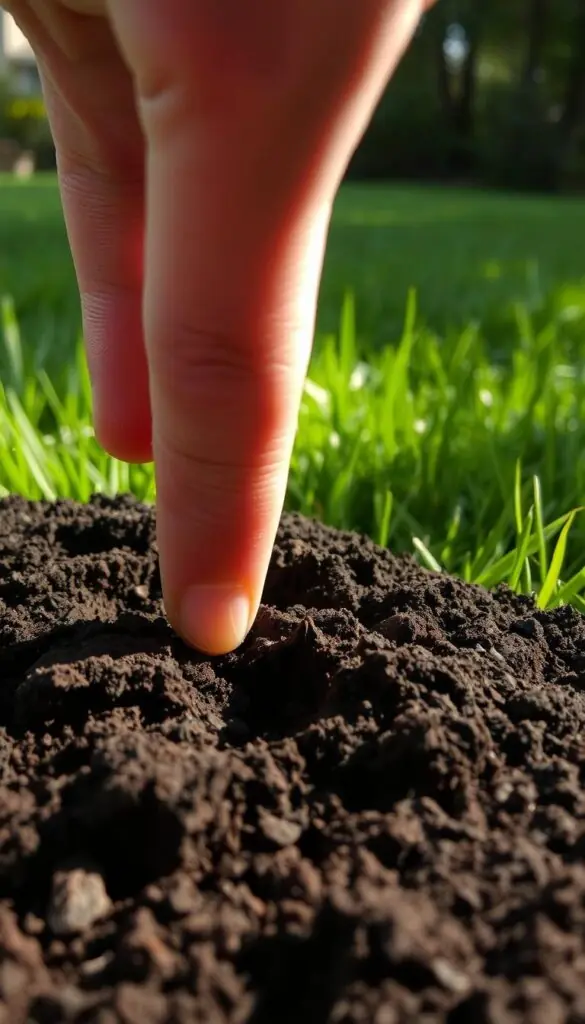
Cut three sides of a 12" square with your trowel, lift the flap, and search the crumbly soil layer for grubs.
"One to five white grubs per square foot rarely causes visible damage; 10–15 is a threshold to consider action."
Flotation checks, light, and pheromone timing
Press a bottomless 1‑gallon can to soil level in hot spots, fill with water, and count tiny bugs that float up for chinch bugs.
Set a simple light trap or use pheromone lures to time moth and beetle flights and egg-laying. Keep notes: date, weather, and counts help you act at the right moment.
Step-by-Step IPM: Gentle Controls That Protect Your Lawn and Helpful Bugs
Small daily habits often stop problems before they begin and keep your grass resilient. Start with care that builds strong roots and a dense stand. These habits lower pest pressure and help your yard recover from small damage.
Cultural basics:
- Mow at about 3–4 inches. A mulching mower recycles clippings and shades the soil.
- Water deeply but infrequently — aim for roughly 1 inch per week, including rain. Use a rain gauge to track totals.
- Feed grass lightly with slow-release fertilizer in spring and early fall. Avoid heavy summer feedings.
- Overseed thin spots in early fall to thicken the turf and reduce sites where pests can establish.
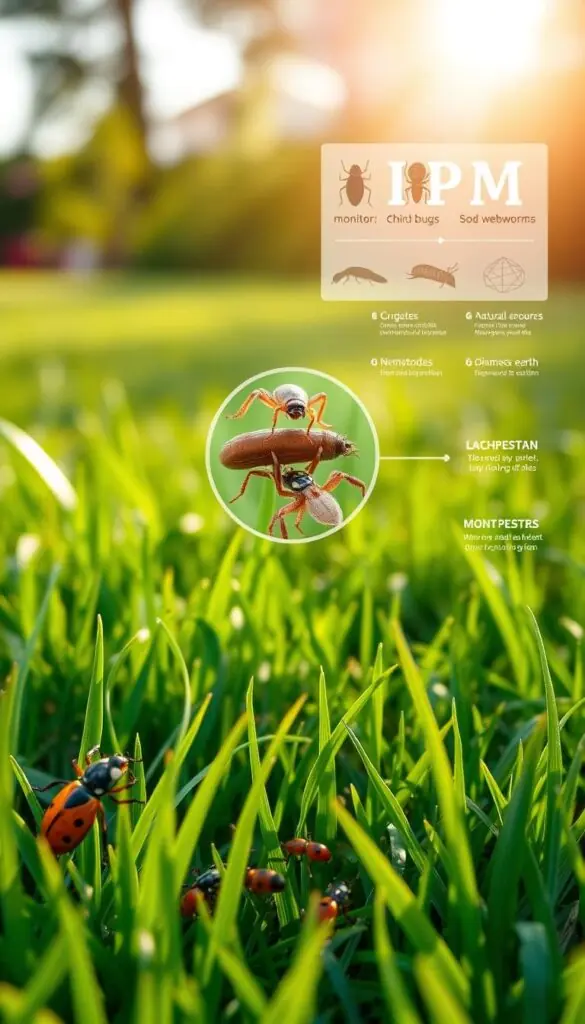
Targeted actions and timing
When monitoring shows a problem, match methods to the species and life stage. Small larvae are often easier to control than adults.
Spot-treat hot spots rather than spraying everywhere. Consider beneficial nematodes for certain grubs or raking thatch to expose webworm tubes. Then recount to see if the action worked.
Protect helpful species
Avoid broad-spectrum sprays unless thresholds are met and alternatives fail. Those sprays kill predators and pollinators that naturally hold pest numbers down.
| Action | Why it helps | Tool |
|---|---|---|
| Raise mowing height to 3–4" | Shades soil and promotes deep roots | Mulching mower |
| Deep, infrequent watering | Encourages roots to grow downward away from surface larvae | Rain gauge, soaker hose |
| Spot-treat confirmed areas | Preserves beneficial predators and limits chemical use | Hand sprayer, targeted granules |
| Use beneficial nematodes / cultural exposure | Targets grubs and webworms with low non-target risk | Commercial nematode mix, rake |
Keep a simple log of checks, counts, and treatments. Walk your yard weekly for ten minutes. Small, timely steps protect plants, pollinators, and the balance of life beneath your feet.
Treat by Pest: What to Do for Grubs, Webworms, Cutworms, Armyworms, and Chinch Bugs
Identify the feeder, check counts, and pick the gentlest method that will stop further damage. Work in the cool evening or early morning when many pests are active. Confirm problems before you treat.
Grubs and beetle larvae: Use a square-foot peel to count grubs. If counts near 10–15 per square foot, act when small larvae are close to the surface. Apply beneficial nematodes to moist soil at dusk and water lightly for two weeks to help roots recover.
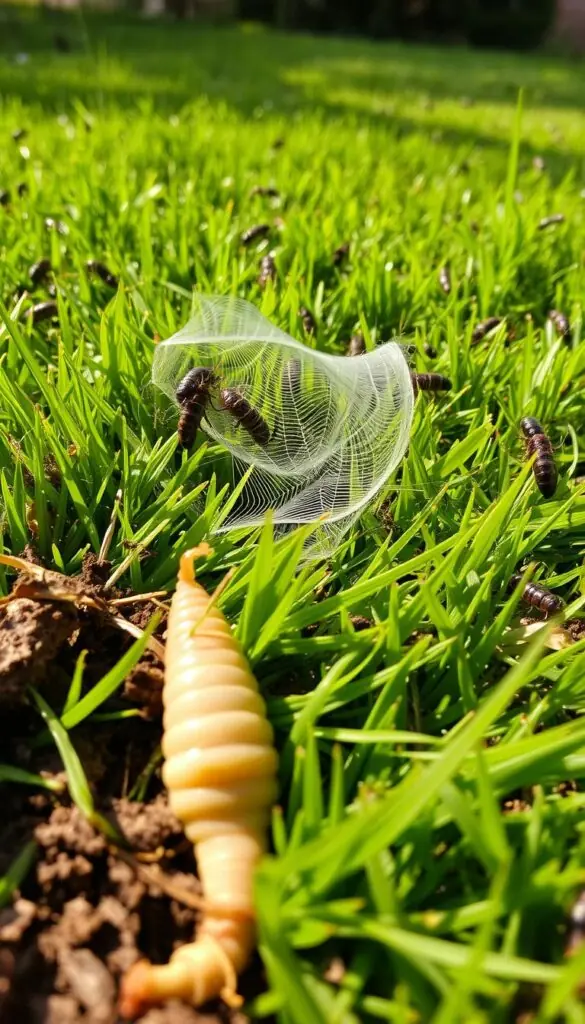
Sod webworms and cutworms: Watch for silken tubes, greenish frass, and clipped grass stems at night. Do a soapy flush near dusk. Dethatch small hot spots, rake debris, and hand-pick with a flashlight when you see activity.
Armyworms: Patrol at sunset and first light. If you find marching clusters or rapid chewing on leaves, treat quickly and focus on affected patches. Spot-treat and overseed damaged areas after control.
Chinch bugs: Check sunny, heat-prone spots with a flotation or knee-level inspection. Confirm sap damage, then spot-treat only those zones. Water to relieve stress and help grass outgrow injury.
| Pest | Key sign | Natural-first action |
|---|---|---|
| Grubs / beetle larvae | C-shaped larvae in soil; spongy turf | Square-foot check; nematodes at dusk; deep watering & topdressing |
| Sod webworms / cutworms | Silken tubes, frass, clipped stems at night | Soapy flush at dusk; dethatch; hand-pick with flashlight |
| Armyworms | Rapid defoliation; clusters feeding at night | Evening/early-morning checks; spot-treat and repair quickly |
| Chinch bugs | Patchy brown spots in hot, sunny areas | Flotation or knee check; spot-treat and water to help recovery |
Your Seasonal Game Plan in the United States
Plan a seasonal checklist so small tasks each month prevent surprises and keep your turf resilient. A little timing goes a long way: inspect early, watch mid-summer, and repair in fall.

Spring
As soil warms, lift a few 12-inch squares in sunny and shaded areas to check for small larvae and early grubs. If you find only a couple, focus on repair rather than treatment.
Rake winter debris, patch thin patches with seed, and water in gently. These actions strengthen roots and help grass bounce into summer.
Summer
Note porch-light moth nights and jot dates; moth flights often mean adults will soon lay eggs. That timing narrows when to watch for webworms, cutworms, and armyworms.
Scout hot, sunny spots for chinch bugs and purple-tinged drought lookalikes. Do a quick flotation check in suspect areas before deciding to treat.
Fall
Walk at dusk to find any lingering armyworms or webworms if you saw summer moth activity. Treat small spots quickly to protect new seedlings.
Early fall is ideal for overseeding and light feeding. Keep mowing a bit taller and water deeply to set roots before frost. Late fall, reduce thatch and tidy edges so the turf goes into winter calm and strong.
Conclusion
Conclusion
Spend ten minutes each week walking your yard at dusk and you’ll spot problems early.
Natural, stepwise IPM—monitor, confirm, then act—keeps damage in check while protecting helpful life beneath the soil. Small checks and simple notes guide kinder choices that work over time.
You’ve got this: with a few checks and timely steps, you can keep pests in balance and your lawn calm, green, and resilient.
Start small—look, feel, and let the clues lead you. Protect pollinators, birds, and soil helpers so good habits become lasting health for grass and garden beds.
Keep a short log, trust your eyes, and enjoy a slow evening stroll. A few mindful minutes each week pay off in a season of soft, sunlit turf you love to walk on.
FAQ
How can I tell if brown spots are caused by pests or by drought?
Check color, texture, and how the turf feels underfoot. Pest damage often leaves irregular patches you can pull up like carpet, or shows chewed stems and roots. Drought causes uniform browning, brittle blades, and a spongy, dry soil. Do a quick peel test: if grass lifts easily with roots intact, grub or beetle larvae such as white grubs or Japanese beetle larvae may be feeding on roots.
What do C-shaped grubs look like and where do they feed?
C-shaped grubs are the white larvae of beetles, including Japanese beetles and June bugs. They live in the soil and chew on grass roots, causing thin, brown areas that can be lifted like a rug. Check a few square feet by digging down 2–4 inches; counts above threshold levels mean treatment or biological controls are needed.
How do chinch bugs damage turf and how can I confirm them?
Chinch bugs are tiny sap-suckers that make grass look like it’s drought-stressed—yellowing then browning from the crown outward. Inspect sunny, dry patches and use a flotation check with a shallow tray of soapy water; chinch bugs float out and are easy to count to decide on spot treatment.
What are sod webworms and cutworms, and when are they active?
Sod webworms and cutworms are caterpillar-stage pests that feed at night, clipping grass stems and leaving small brown patches during summer. Look for silk tubes, greenish to tan larvae a half-inch to an inch long, and increased bird activity. Light and pheromone traps help time controls for the adult moth stage.
How fast do armyworms spread and what should I do when I find them?
Armyworms travel in groups and can make areas seem to move as they chew quickly through blades and stems. They appear suddenly in summer and fall. Inspect in the evening, remove affected grass clippings, and treat promptly with targeted controls or biological sprays to stop spread.
What simple monitoring methods can I use today?
Use soapy water flushes to bring cutworms and webworms to the surface, a square-foot peel-and-count to estimate white grub numbers, flotation checks for chinch bugs, and light or pheromone traps to monitor moth and beetle flights. Regular checks at dusk or dawn catch many pests when they’re active.
When is the best time to treat grubs?
Treat when larvae are small and actively feeding near the surface—typically late summer into early fall for many species. Timing depends on the beetle life cycle; biological options like nematodes work well on young grubs, while chemical options are most effective when larvae are shallow.
How can I protect beneficial insects while controlling pests?
Favor cultural practices—proper mowing height, consistent watering schedules, and balanced feeding—to keep turf resilient. Use targeted, spot treatments rather than broad-spectrum sprays, and choose selective products or biologicals that spare predators and pollinators.
What cultural fixes reduce pest pressure long term?
Raise mowing height, water deeply but infrequently, overseed thin areas, and feed based on soil tests to strengthen roots. Healthy, dense turf resists grub damage, chinch bug outbreaks, and moth infestations more effectively than weak, stressed grass.
How do I decide between natural and chemical controls?
Start with monitoring and non-chemical steps. If counts exceed action thresholds or damage expands rapidly (as with heavy grub or armyworm infestations), use targeted treatments tuned to the pest’s life stage. Biologicals like entomopathogenic nematodes or Bt can be very effective against specific caterpillars and grubs without harming beneficials.
Which seasonal checks should I add to my routine in the U.S.?
Spring: inspect at the soil line, look for early grub signs, and repair thin areas. Summer: watch for moth flights, chinch bug hotspots, and drought lookalikes. Fall: follow up with grub monitoring, patch repair, and root-strengthening care to prepare for next year.
What are clear signs I need to call a pro?
Call a trusted local specialist if damage spreads rapidly across large areas, monitoring shows high grub or chinch bug counts, or you’re unsure which pest is responsible. A pro can confirm species, recommend precise timing, and choose controls that protect beneficial insects and turf roots.