
Morning dew cools your bare patches and you imagine a soft, sunlit green outside the kitchen window. You can revive that tired yard without tearing everything up.
This friendly, step-by-step guide walks you from the first glance to the first mow. You’ll clear failing grass, level the soil, spread seed with a spreader, add a starter fertilizer, and water each day for several weeks until new blades reach about two inches.
Think of the feel of crumbly soil in your hand, the fresh-cut scent after a light trim, and the springy surface underfoot as your goal. Keep a metal rake, a spreader, a hose with a fine mist nozzle, and an optional core aerator on hand.
Avoid common mistakes: don’t use weed-and-feed at seeding time and don’t let seed rest on a thatch layer where it can’t root. With small, steady steps you’ll see clear results by the end of the season and set up a healthy year ahead for your grass.
Key Takeaways
- Follow a simple process to refresh your lawn without starting over.
- Prep soil, spread seed at the right rate, fertilize, and water daily for a few weeks.
- Use a rake, spreader, hose with fine spray, and optionally a core aerator.
- Know when to choose reseeding vs overseeding to save time and get better results.
- Avoid weed-and-feed and seeding onto dense thatch.
Start smart: understand your lawn and your goal
Before you buy seed, take a calm walk and learn what your yard really needs.
Look for thin areas, bare spots, and patches where weeds dominate. Note where the mower scalps or where people walk most. These observations help you choose a clear, realistic goal.
Reseeding vs. overseeding: which path fits?
Reseed when the yard needs a fresh start
If weeds or bare ground outnumber healthy turf, starting over on those zones saves effort. Reseed larger patches so new roots can grow into clean soil without being crowded out.
Overseed to thicken an existing lawn
Overseeding spreads seed into an existing lawn to fix thin turf, color, and density. It works best when about half or more of your lawn is healthy. Use the 50% rule: if at least half the turf is green, overseeding can succeed.
Know your grass type and the right timing
Cool-season grasses (Kentucky bluegrass, tall fescue, perennial ryegrass) do best with fall seeding. Warm-season grasses prefer summer growth and often benefit more from aeration than overseeding for long-term strength.
One yard can have multiple conditions. You might overseed quiet backyard corners while reseeding a front strip that stays bare. Jot down sun patterns and traffic to match seed blends to each type grass.
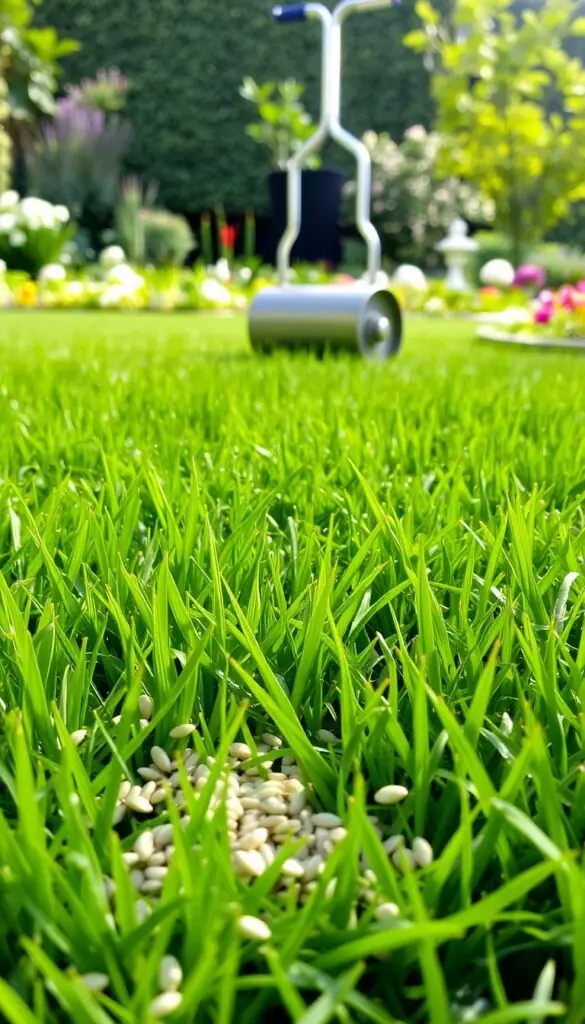
Plan the best time and choose the right grass seed
Timing and seed selection set the stage for a lush lawn, so plan them carefully.
Regional timing at a glance:
| Region | Best time | Common seed choices |
|---|---|---|
| Upper Midwest / Northeast | Late summer to early fall (seed ~45 days before first frost) | Kentucky bluegrass, tall fescue blends |
| Gulf Coast / Deep South | Late spring–summer work; optional fall rye for winter color | Bermudagrass, zoysia; winter rye as temporary cover |
| Transition zones | Early fall for cool-season mixes; spring aeration for warm varieties | Perennial ryegrass mixes, turf-type tall fescue |
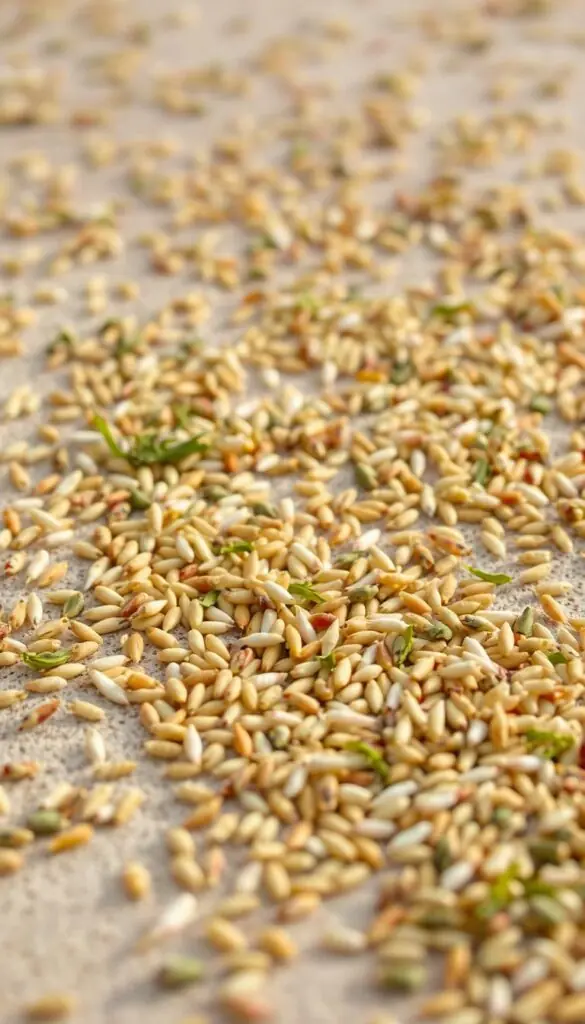
Match seed to sun, traffic, and climate. Kentucky bluegrass feels fine and lush underfoot in sunny areas.
Tall fescue is sturdier and holds up to play. Perennial ryegrass germinates fast and gives quick cover for thin spots.
Choose improved cultivars for better drought and disease resistance. Quality seed and correct soil contact make spreader use more effective and improve overall results.
Prep like a pro: mow low, clear debris, and fix soil contact
Start your project by priming the soil so new grass can find a friendly home. This quiet step makes all the difference for even germination and thicker turf.
Mow and clear: Set mowing a bit lower than usual — about 1.5 to 2 inches for cool-season overseeding. Bag or rake up clippings, leaves, and twigs so seed meets soil, not a spongy mat of debris.
Dethatch when needed: If the yard feels springy underfoot, pull thatch free with a dethatching rake or power tool. You want an open, crumbly surface where moisture and sun reach the seed easily.

Mend compaction and improve contact
For compacted areas, run a core aerator to lift plugs and make channels. Those lifted plugs let air and moisture move down and give seed a place to root.
Where soil is very tight or clay-heavy, consider slit seeding. The machine cuts narrow grooves and drops seed into contact with fresh soil so roots can grab quickly.
Simple soil checks and final smoothing
Do a quick soil test to check pH and nutrients. Most lawns do best between 6 and 7; lime raises pH and sulfur lowers it when needed.
- Note mow height in inches for later cuts.
- Rake smooth after aeration so seed won’t pile.
- Work in early sun or late afternoon to keep the surface from drying too fast.
Quick tool checklist: mower (bagging), rake, dethatcher, core aerator or slit seeder, and a simple soil test kit. Feel for coarse, crumbly soil and pulled-up plugs — these are signs you’ve prepped the right way.
Seed, feed, and protect: the step-by-step process
Ready your gear and calm the day — the way you place seed makes all the difference.
Load a spreader and apply seed at the right rate.
Fill your calibrated spreader with grass seed and set the dial to the label rate. Make one pass north–south, then a second east–west for even coverage. For tight corners use a handheld unit; for larger lawns use a broadcast spreader so the flow stays steady.
Starter fertilizer choices and what to avoid.
Apply a starter fertilizer after spreading to give young roots a burst of nutrients. Look for a balanced mix labeled for new planting and follow bag directions. Skip any weed-and-feed or pre-emergent products now — they can block germination and harm growth.
Gentle safeguards to protect new seedlings.
Choose a calm day so spreading grass won’t drift into beds or sidewalks. You’ll hear a soft patter as seeds land and a gentle fan from a broadcast pass. Lightly rake or roll so seeds kiss the soil without burying them too deep.
Mark edges with flags, twine, or small stakes to keep foot traffic off the lawn for a couple of weeks. Water the same day with a fine mist until the top half-inch stays evenly damp. Note your planting new date to track germination and the first signs of green.
| Action | Why it matters | Quick note |
|---|---|---|
| Calibrate spreader | Ensures correct seed rate for even cover | Check label, test a small pass |
| Starter fertilizer | Supplies nutrients for early root growth | Use a product for new lawns; follow directions |
| Protect edges | Prevents trampling of delicate seedlings | Flags or twine work well |
| Water daily | Keeps surface moist for germination | Fine mist until seedlings ~2 inches |

reseeding tips for watering, mowing, and early lawn care
A simple daily rhythm keeps seedlings alive and your patience rewarded. Follow a steady plan for water, mowing, and gentle care so new grass can root without stress.
Watering rhythm
For the first 7–10 days mist the top inch of soil two to three times each day. Light, frequent spray mimics morning dew and prevents the seed from washing away.
After germination, taper to deeper sessions over the next 3–4 weeks. This trains roots to grow down toward moisture instead of staying shallow near the surface.

First mow and ongoing care
Aim to mow when seedlings reach about 2 inches. Set a sharp blade high and remove only the top third of the blade to avoid stressing tender shoots.
Keep mower wheels raised and move slowly; the clean hum of a sharp blade and the fresh scent are small rewards that show healthy growth.
- If the surface looks dusty, add a light watering; if glossy-wet, wait—seedlings need oxygen as much as moisture.
- In cool fall planting, water in the morning; in warm spells, check midday to keep young turf from drying.
- Keep feet, bikes, and pets off new areas for several weeks so roots can knit into the soil.
| Stage | Action | When |
|---|---|---|
| Germination | Light misting 2–3x daily | First 7–10 days |
| Establishing | Fewer, deeper waterings to train roots | Weeks 2–4 |
| First mow | Mow at ~2 inches; cut top third | After seedlings reach ~2 inches |
| Ongoing care | Deeper, less frequent watering; regular lawn care | By end of first month and beyond |
Conclusion
Finish with a quiet promise: small, steady care turns grass seed into a soft, lasting lawn you’ll enjoy all year.
Notice the simple changes: a darker green each week, the feel of thicker turf underfoot, and a tidier yard that welcomes bare feet.
You matched timing to your climate—fall for cool-season grasses or summer care and aeration for warm-season grasses—so new seed met warm soil at the best time.
Keep tending soil contact, even moisture, and gentle mowing. Resist weed-and-feed during seeding and address weeds after the new grass establishes.
With this step-by-step process you’ve set your existing lawn up for steady growth. Stay patient, enjoy the view, and keep small, regular care as your guide.
FAQ
How do I decide between overseeding and reseeding my lawn?
Look at your lawn's condition. If you have thin patches but mostly healthy turf, overseeding fills gaps without removing existing grass. If large bare areas, persistent weeds, or damaged turf exist, a full reseed (starting fresh in those spots) may work better. Consider soil health, shade, and how much time you can give new grass to establish before heavy use.
When is the best time to plant cool-season and warm-season grass seed?
For cool-season grasses like Kentucky bluegrass, tall fescue, and perennial ryegrass, early fall is ideal — cooler nights and warm soil help seedlings root. For warm-season grasses, late spring to early summer after soils warm up gives the best results. Adjust timing for your region and local weather patterns.
How do I match seed to my yard’s sun, traffic, and climate?
Choose a cultivar suited to light levels and use. Kentucky bluegrass makes a dense, lush lawn in full sun. Tall fescue tolerates heat and foot traffic and works well in mixed sun. Perennial ryegrass establishes quickly and is good for blends. Read product labels for shade tolerance, drought resistance, and suitable zones.
Should I use improved cultivars or standard seed blends?
Improved cultivars often bring better drought resistance, disease tolerance, and finer appearance. They can cost more but reduce long-term maintenance. For high-traffic or problem areas, an improved blend is worth the investment. For large budget projects, consider a mix of improved seed and more economical varieties.
What prep steps help seed make good soil contact?
Mow low and remove clippings or thatch so seed reaches soil. Rake or use a power dethatcher for heavy thatch. For compacted lawns, core aeration or slit seeding improves seed-to-soil contact and root penetration. Lightly rake seed into the soil or use a roller to press seed down gently.
When should I aerate or slit seed?
Aerate before seeding when soils are compacted or thatch is thicker than 1/2 inch. Core aeration in fall for cool-season lawns or late spring for warm-season types helps roots access air and water. Slit seeders are great for targeted areas and reduce soil disturbance while placing seed directly where it can germinate.
Do I need a soil test before planting new seed?
A simple soil test tells you pH and nutrient levels. Lime or sulfur adjustments and basic phosphorus or potassium can improve root development. Starter fertilizer designed for new lawns helps seedlings, but avoid “weed & feed” products until the new grass is established to prevent harming seedlings.
How much seed should I apply and how do I spread it?
Follow the seed bag’s recommended rate — it varies by grass type. Use a broadcast or drop spreader for even coverage. For blends, spread half the seed north-south and half east-west to avoid streaks. Lightly rake or roll afterward to ensure good contact without burying seed too deep.
What starter fertilizer is best, and when should I apply it?
Choose a starter fertilizer higher in phosphorus to boost root growth, unless your soil test shows adequate phosphorus. Apply at planting and avoid long-lasting weed-and-feed products until the grass is established. Water the fertilizer in lightly to move nutrients to the seed zone.
How should I water new seed and young seedlings?
Begin with light, frequent watering several times a day to keep the topsoil moist but not waterlogged. As seedlings reach about 1–2 inches, transition to deeper, less frequent watering to encourage roots to grow downward. Aim for about 1 inch of water per week after establishment, adjusted for rain and temperature.
When can I mow after seeding and what height should I use?
Wait until seedlings are about 3–3.5 inches tall before the first mow. Set the mower to remove no more than one-third of the blade length. Use a sharp blade to avoid tearing young grass and gradually lower to your target height over several mows.
How can I protect seeded areas from foot traffic and wind?
Mark the area with string, stakes, or temporary fencing to reduce foot traffic. For windy or sloped spots, use a light straw mulch or seed blanket to hold seed in place and conserve moisture. Avoid heavy foot traffic until roots are well established.
How long does it take to see results and a fuller lawn?
Germination varies: perennial ryegrass in 5–10 days, tall fescue in 7–14 days, Kentucky bluegrass can take 14–30 days. Expect several months to a full growing season for a thick, blended lawn. Be patient and continue consistent watering and care.
Can I apply herbicides or weed preventers after seeding?
Most pre-emergent herbicides prevent grass seed from sprouting, so avoid them when seeding. Post-emergent weed control is possible once new grass is mowed 3–4 times and is well rooted—usually 6–8 weeks. Read labels carefully and choose products labeled safe for new lawns.
How often should I overseed established lawns for long-term health?
Overseed thin areas annually or every 2–3 years to maintain density and crowd out weeds. Cool-season lawns benefit from fall overseeding. Regular overseeding, plus aeration and proper fertility, keeps turf vigorous and better able to withstand stress.