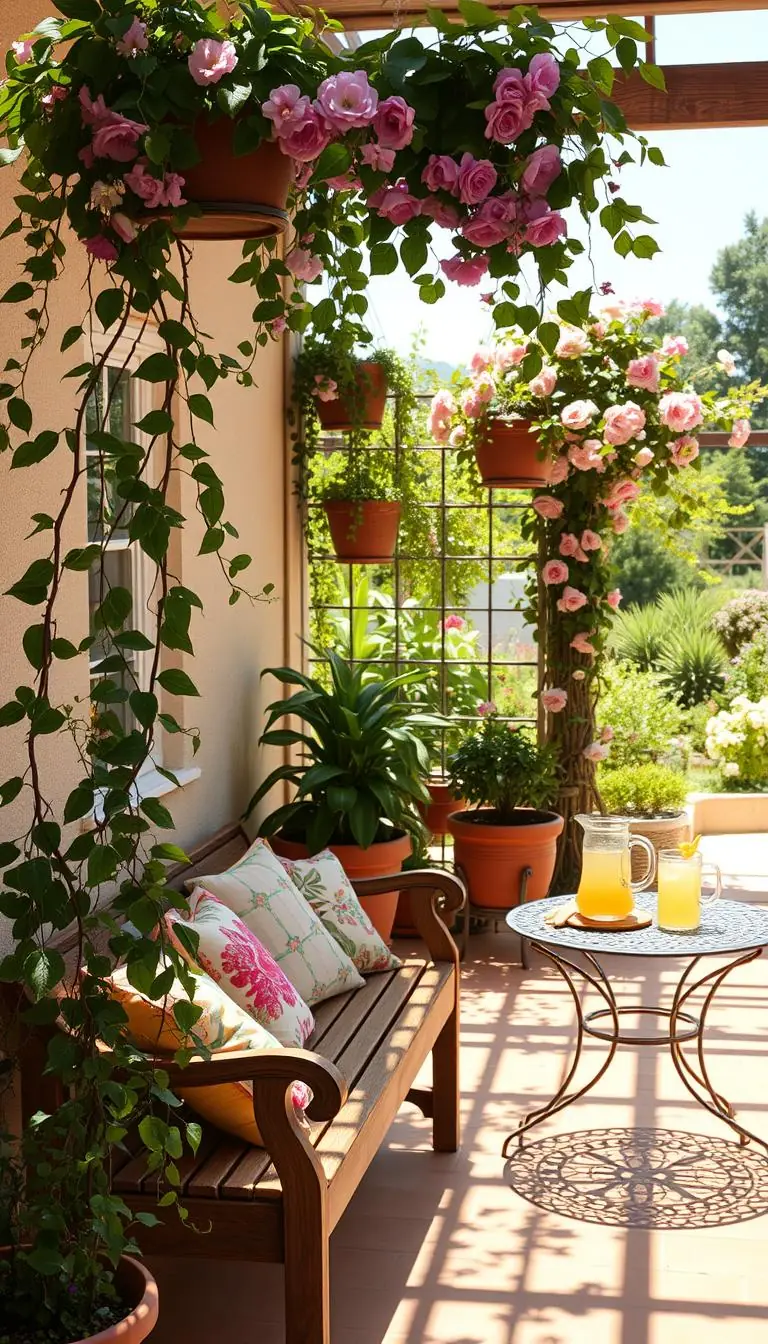
Imagine the late-afternoon sun warming a teak arm, the clean scent of rosemary nearby, and a soft breeze that makes you slow down. Do you dream of a small, inviting outdoor space that feels like a living room under the sky? We’ll help you get there with calm, practical steps and friendly tips.
Start with a simple plan: measure clear walkways and chair footprints, set a price range, and pick two materials that suit your climate. Think in layers: a primary seat for daily use, a small table for drinks, and one flexible piece that moves when guests arrive.
We’ll cover styles like Adirondack, rocking chairs, chaise loungers, loveseats, and compact camping options. Expect guidance on shade, quick care—mild soap and a soft brush—and seasonal storage so your patio furniture lasts longer at any price point.
Key Takeaways
- Measure your space and test layouts with painter’s tape.
- Set a price range first to narrow choices.
- Pick materials for your climate and simple care routines.
- Start cozy: two seats and a table often work best.
- Add one accent color to tie the look together.
Start Here: How to Choose Patio Chairs You’ll Love Year-Round
Choose seats that feel right the moment you sit down — then build the rest around that comfort.
Simple steps first: measure your space and leave 24–30 inches for walkways so movement feels easy. Test-sit when you can: check seat height, arm reach, and lumbar support.
Plan for weather. Match materials to climate — aluminum and resin wicker for coastal dampness, teak for long-term strength, and powder-coated steel for bold color and sturdiness.
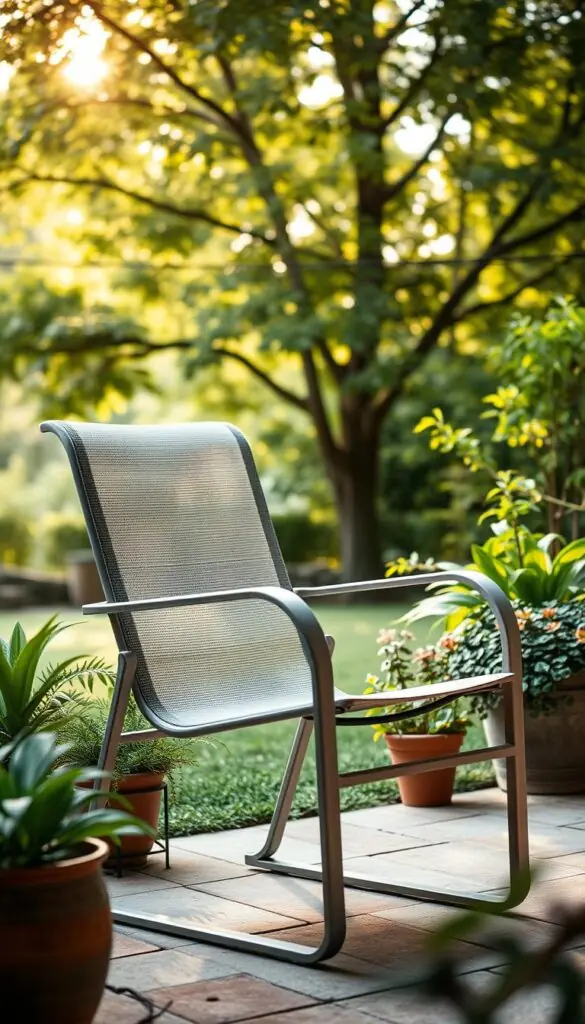
- Pick quick-drying cushions and breathable weaves; use a deck box before storms or frost.
- Try one hero piece — a smooth-armed seat or a gentle rocking chair — then add supporting options.
- For small porches, choose stackable or folding styles to save space.
"Comfort plus low maintenance gives you more days outside and fewer chores."
| Material | Best for | Care | Look |
|---|---|---|---|
| Aluminum | Coastal, wet climates | Wipe with mild soap | Light, modern |
| Teak | Year-round strength | Oil or let gray naturally | Warm, classic |
| Resin wicker | Moisture-prone areas | Rinse and brush | Textured, casual |
| Powder-coated steel | Bold color, sturdy use | Touch-up paint if chipped | Polished, modern |
Quick Picks by Budget: From Thrifty Finds to Luxe Lounge-Worthy Furniture
You don’t need a big spend to get a cozy corner; smart choices at each price point make the difference.
Under $100 — Great for pop-up seating and tight budgets. Look for foldable camping options and simple resin lookalikes that store easily. These pieces stretch your space and keep everyday usefulness high.
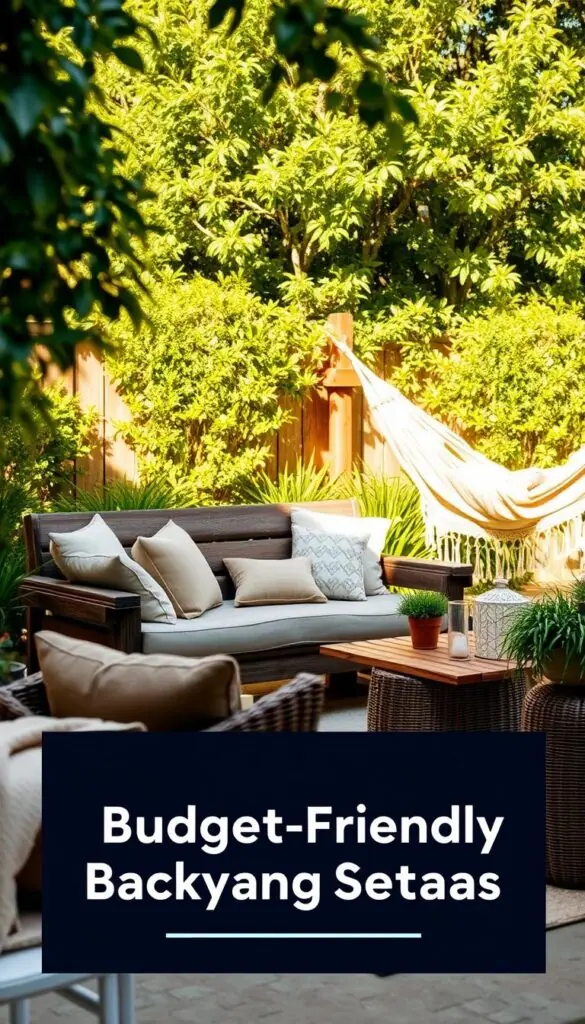
$100–$300
Choose stackable dining styles or resin-wicker with cushions. A small set plus a side table makes a tidy breakfast nook. Buy off-season or during spring sales to get more for your price.
$300–$700
Invest in thicker cushions, heavier frames, and richer finishes. You’ll notice deeper seats and sturdier arms that make evenings more comfortable.
$700 and up
Consider heirloom-grade teak and designer lounge pieces. Higher price often brings refined joinery and chaise sets that invite all-day lounging.
- Maximize space by pairing one compact chair set with a folding piece you can tuck away.
- For small patio areas, favor armless silhouettes and lighter frames to keep the area feeling open.
- Prioritize comfort upgrades first — seat height, back angle, and cushion density matter most.
"Shop end-of-summer clearances and early-spring promotions to stretch your budget."
Best Patio Chairs Under $100: Smart, Small, and Surprisingly Stylish
Small, budget-friendly seating can transform a sunny corner into a go-to spot for morning coffee. Start with a clear idea of how you’ll use the spot and the max price you want to spend.
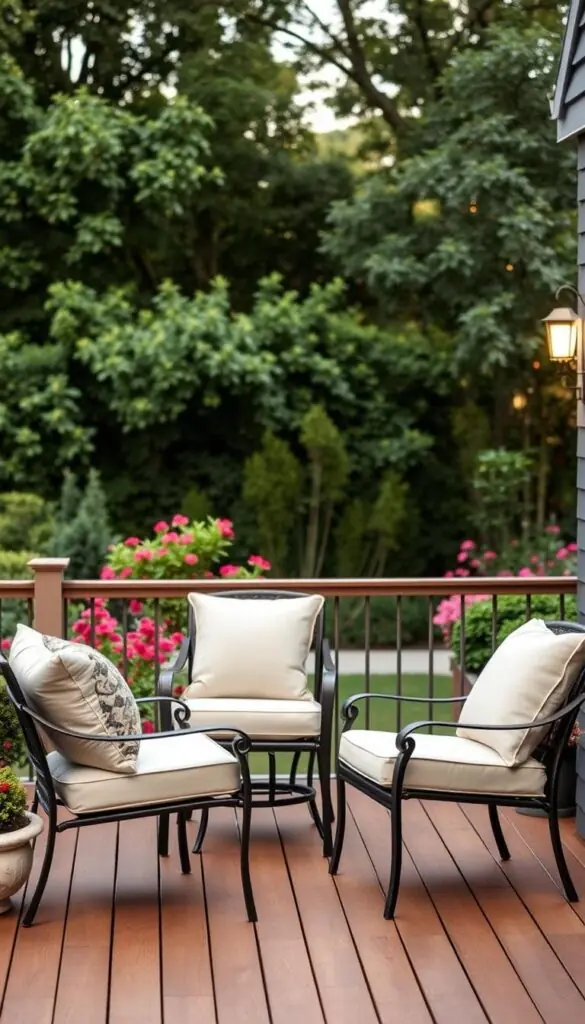
- Check weight limits — aim for a 250–300 lb rating for everyday confidence.
- Test hinges and cross-bracing on folding models; they should open smoothly and lock tight.
- Choose breathable fabrics and a seat sling that dries fast after a rain or beach day.
Portable camping and folding chairs for pop-up seating
Camping options are light, easy to carry, and fold flat for storage. Keep a pair near the back door so you can pop up extra seating when neighbors drop by.
Resin Adirondack lookalikes in sunny colors
Resin adirondack chair styles resist weather and come in coral, sky blue, and matte finishes that hide pollen and fingerprints.
- Add a small stool as a side table for drinks and books.
- Clip folding pieces to garage wall hooks to protect hinges and free floor space.
- After sandy outings, shake off grit, brush frames with a soft-bristle brush, then hose and dry in shade.
- Use rubber feet on uneven pavers to stop rocking and protect surfaces.
"A couple of well-chosen, portable seats give you instant hospitality with very little fuss."
$100-$300: Everyday-Comfort Picks That Upgrade Your Outdoor Living
For $100–$300 you can upgrade daily comfort while keeping storage and maintenance simple.
Stackable dining chairs are a small-space hero. They seat six for a dinner and tuck four away the rest of the week. Look for lightweight frames with sturdy stacking points and rubber feet to protect decking.
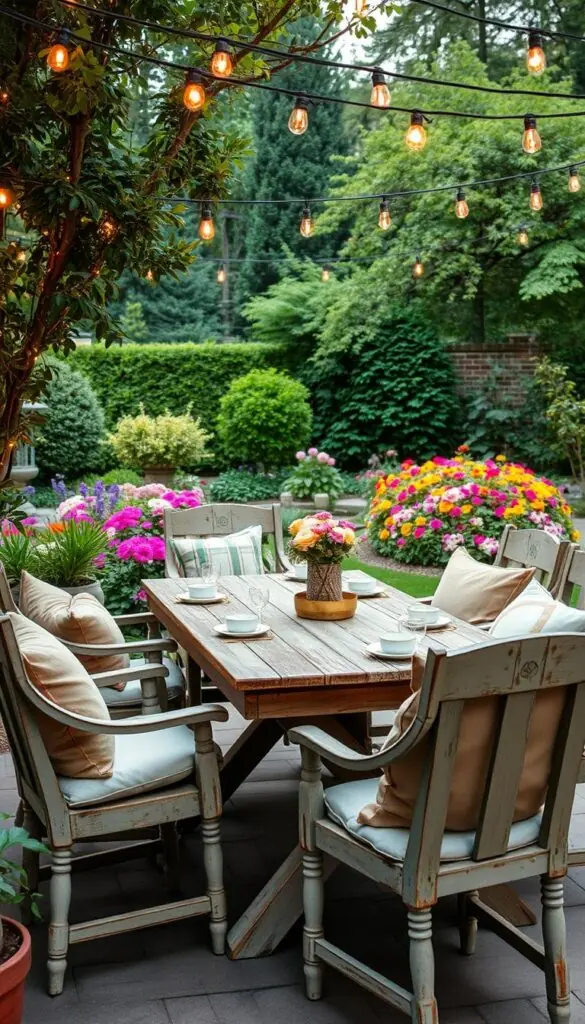
Wicker-look resin armchairs with weather-ready cushions
Choose smooth, snag-free weaves and zip-off cushion covers that dry fast. Add a throw pillow in your color to boost comfort without cluttering the visual set.
- Buy a matching set plus two singles to scale seating easily.
- Add felt pads or furniture glides to keep moves quiet and protect floors.
- Store textiles in a deck box before storms or overnight dew to extend life.
- Aim for seat heights near 17–18 inches and depth of 18–20 inches for lasting comfort.
| Option | Best for | Care | Key benefit |
|---|---|---|---|
| Stackable dining chairs | Small yards, frequent guests | Wipe frames, dry cushions | Space-saving, flexible |
| Wicker-look resin armchairs | All-weather lounging | Rinse weave, zip-off cushions | Comfy, low maintenance |
| Armless bistro set | Tight nooks | Store cushions, use glides | Slides under table, keeps walkways clear |
$300-$700: Balance of Comfort, Materials, and Design
This mid-range band delivers a tactile upgrade: firmer cushions, smooth wood grain, and frames that feel solid when you sit.
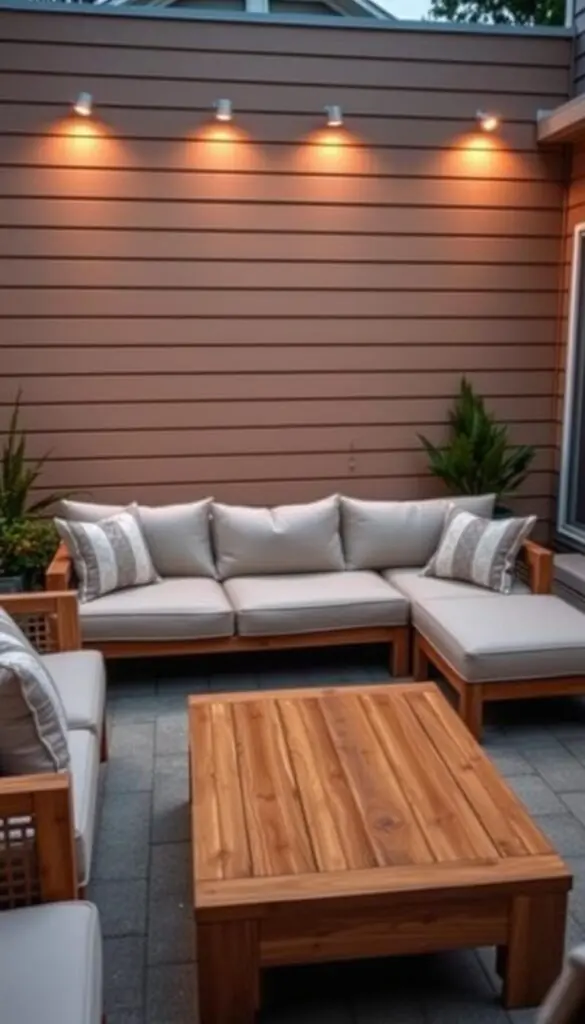
What to expect: higher-quality materials like teak and acacia, aluminum frames, and tightly woven resin wicker. Quick-drying cushions get thicker here, so daily use feels plush without long dry times.
Look closely at hardware. Stainless fasteners and solid welds beat thin screws. That small difference keeps pieces steady season after season.
- Heavier pieces with tighter joinery and smooth finishes give a noticeable comfort lift.
- Choose UV-stable, quick-drying seat pads to resist fading and hold color steady.
- Pick designs with a 100–110° back angle for relaxed, upright support.
If you favor wood warmth, seek FSC-certified teak or acacia and refresh with protective oil once or twice a season. For easy upkeep, aluminum arms stay cool and make moving furniture simpler when you sweep.
"A pair-and-table combo in this range looks polished without feeling formal."
Keep a tidy look: pick one cohesive style—slatted wood or slim metal—and leave about 24 inches between seats. Add a narrow bench on one side for extra guests and a gentle visual break.
Splurge-Worthy Seating: Lounge Chairs and Chaise Lounges That Feel Like Vacation
Picture an afternoon where shade flutters, ice clinks, and a bowl of mint leaves sends a cool scent when you pass by. Splurging wisely gives you a daily escape without leaving home. A few thoughtful choices turn an outdoor spot into a true lounge.

Start with feel: test each lounge chair recline notch. You want a smooth glide and a headrest position that suits reading and napping.
For poolside sets, check wheel quality and frame balance so rolling across stone or composite decking is effortless. Look for fade-resistant, solution-dyed fabrics to keep color true under bright sun.
- Deep-seating loveseats make a cozy fireside nook; add two ottomans and a slim table for cocoa and a soft lantern glow.
- Add a small herb planter with mint or lemon balm near your lounger for a fresh scent on the breeze.
- Use clip-on straps when it’s breezy and keep sturdy covers on hand for storms.
- Splurge where you lounge every day, then pair a modest side table to balance price and bliss.
"Comfort that invites you back every evening is worth a bit more upfront."
Final tip: store spare pillows in a deck box so setup stays quick and your space remains uncluttered.
Types of Outdoor Chairs: Find the Right Style for Your Space
Choosing the right seat is about posture, footprint, and the small comforts that make you linger.
Match seat shape to how you use the area. Upright backs suit meals. Reclined pieces invite naps. Cocooned seats create quiet nooks.
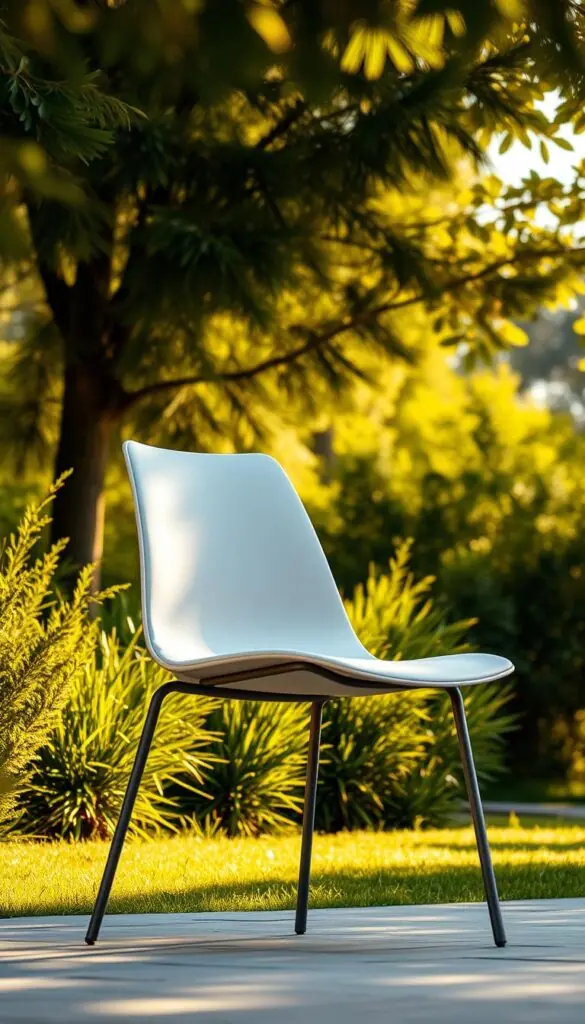
Quick visual cues
- Adirondack chair — wide arms hold a mug or book; bright colors lift gray days. (adirondack chair)
- Rocking chair — choose an arc that clears rugs and thresholds. (rocking chair)
- Lounge chair / chaise — adjustable back for sun to shade comfort. (lounge chair)
- Egg chair — woven wicker cocoon; add a lumbar pillow for reading. (wicker)
- Dining chairs — stackable designs protect decking and save room. (dining chairs)
- Folding & camping — lightweight extras kept by the back door for guests.
| Type | Footprint | Best for | Quick tip |
|---|---|---|---|
| Adirondack | Wide arms, low seat | Fire pit, garden | Pick weatherproof material; vibrant hues hide dirt |
| Rocking | Long arc needs clearance | Front porch, calm corners | Test the rocker for smooth motion |
| Chaise / Lounge | Long, reclined | Poolside, sunbathing | Adjustable back keeps multiple uses |
| Egg / Cocoon | Compact but deep | Reading nooks | Add a small pillow and filtered light |
Small-space note: choose armless silhouettes and slim legs to keep a balcony or narrow patio feeling open. Match the style to daily life—if you gather for meals, favor stackable seating; if you unwind alone, pick a cozy lounger.
Materials That Matter: Teak, Aluminum, Resin Wicker, and Powder-Coated Steel
Pick materials that fit your life: some need little fuss, others invite seasonal care.
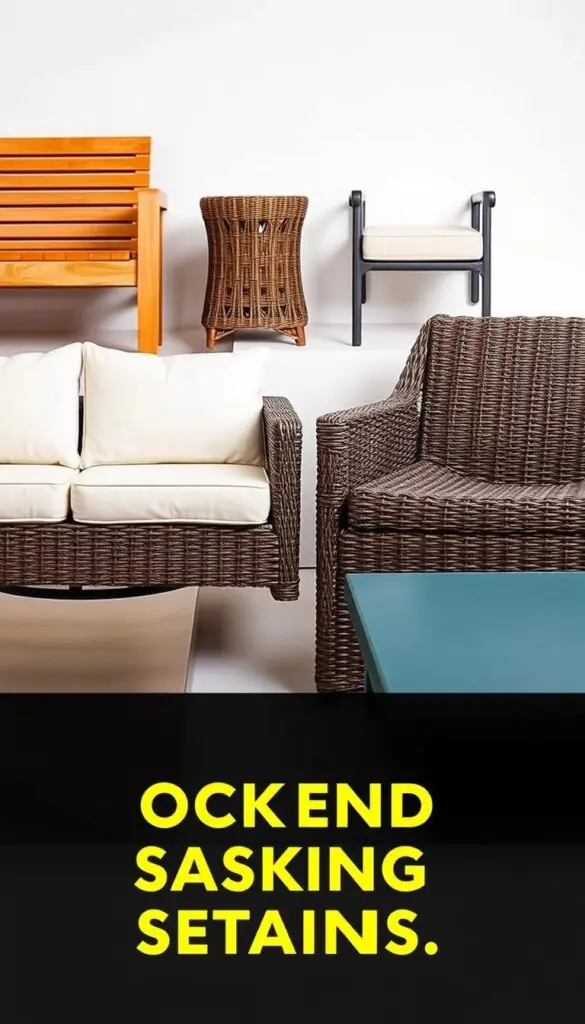
Knowing the basics helps you buy with confidence. Teak and acacia give warm grain and a smooth hand feel. Oil or seal once or twice a season to slow graying and repel moisture.
Teak and acacia wood
These woods age gracefully and last for years. Annual oiling keeps the color rich and limits cracks.
Aluminum and wrought iron
Aluminum resists rust and is easy to move when you sweep or hose the deck. Wrought iron is strong but heavier; check for even finishes.
Resin and resin wicker
Resin offers woven texture with minimal upkeep. Rinse pollen away and spot clean with mild soap and a soft brush.
Powder-coated steel
Steel brings crisp, modern lines and a durable finish. Inspect for capped legs and smooth welds to keep moisture out.
- Run your hand along armrests—quality finishes feel smooth without rough edges.
- If you live by the coast, favor aluminum and good wicker to resist corrosion.
- For busy households, pick materials you can clean in under ten minutes.
- Keep spare glides and touch-up paint handy for quick fixes after large gatherings.
Quick care tip: A bucket of mild soap, a soft brush, and routine covers go a long way toward longer life for your outdoor furniture.
Match Chairs to Climate: Weather-Savvy Choices by Region
Match what you buy to the climate where you live, and you’ll spend less time fixing and more time relaxing.
Hot, dry zones
Choose synthetic resin and teak for heat resistance. Add a shade sail so metal arms stay cool at noon. Use rubber feet on stone to prevent scuffs and sticking from temperature swings.
Wet coastal areas
Favor rust-resisting aluminum frames and resin wicker. Ask for welded joints to resist salty air and moving elements. Keep labeled covers near the door for quick protection after storms.
Mild climates
You can mix materials freely here. Pick quick-drying cushions and breathable fabrics for surprise showers. A small storage bench keeps textiles dry and handy.
Cold, snowy regions
Pick powder-coated aluminum or treated teak and tilt seating to shed snow. Store cushions indoors, use discreet tie-downs in wind, and watch seasonal price dips to buy off-season.
- Quick tools: covers labeled by piece, rubber feet, and a compact storage box.
- If wind is common, choose heavier frames or secure tie-downs for stability.
Comfort First: Cushions, Ergonomics, and Little Luxuries
A soft cushion and the right back angle turn a seat into a spot you want to linger. Start with fabric and fill that breathe. Many outdoor pads are water-resistant, not fully waterproof. Quick-drying fills and solution-dyed covers cut drying time and stop mildew.
How to pick density and fabric: aim for medium-firm fill so you feel supported during an hour-long chat without bottoming out. Choose breathable weaves for airflow and solution-dyed fabric to resist fading.
Anchors and placement: check for ties or Velcro so cushions stay put in wind. Add a compact ottoman to change posture quickly; elevating feet eases lower-back strain. Layer a lumbar pillow at the small of your back for extra ease.
- Choose quick-drying fill and solution-dyed covers for fast recovery after rain.
- Use non-slip pads under seat pads if surfaces are slick.
- For deep seats, test with a pillow behind you—your knees should bend comfortably.
Simple care and storage: keep a gentle fabric cleaner and soft brush for monthly touch-ups. Store cushions overnight before heavy dew, and tuck them into a dry box during long storms to keep them welcoming.
Tip: a lounge throw and a small side table finish the setup and make every hour outside feel intentional.
Sets vs. Singles: When a Chair Set Makes Sense
Deciding between a matching set or a mix of singles shapes both the look and function of your outdoor space.
How to choose: measure the seating zone first. Mark a 24–30 inch walkway and the footprint of each seat. That helps you see flow before buying.
If you host often, a chair set can save time and often lowers the overall price per seat. Sets simplify color, finish, and delivery choices. Many stores offer fast pickup or home delivery for whole groupings.
Singles give flexibility. Two favorite pieces and a tiny table feel curated. Mix materials if you match cushions or finishes to tie them together.
- Measure storage: sets may stack or nest for winter.
- Start with two core seats, then add an accent for personality.
- Factor assembly and delivery fees when comparing options.
| Benefit | Best for | Storage | Typical advantage |
|---|---|---|---|
| Matching look | Formal porches and dining | Often stackable | Streamlines styling |
| Flexibility | Small nooks and eclectic yards | Mix-and-match easy to move | Custom personality |
| Value per seat | Frequent entertaining | Bulk delivery saves trips | Lower cost per unit |
"Try a set-plus-one plan: buy a set, then add one standout piece for personality."
Plan by Space: Front Porch, Poolside, Garden, and Outdoor Gatherings
Arrange each spot with a clear purpose so your outdoor life flows from morning coffee to evening gatherings.
Front porch: Two classic rocking chair pieces and a slim table fit narrow footprints. Add a 2x5-foot runner to ground the scene. That runner keeps shoes tidy and leads guests to the door.
Poolside: Place a chaise lounge at each end of a small side table. Keep breathable slings that dry between dips. Cold glasses on a low table feel indulgent after a swim.
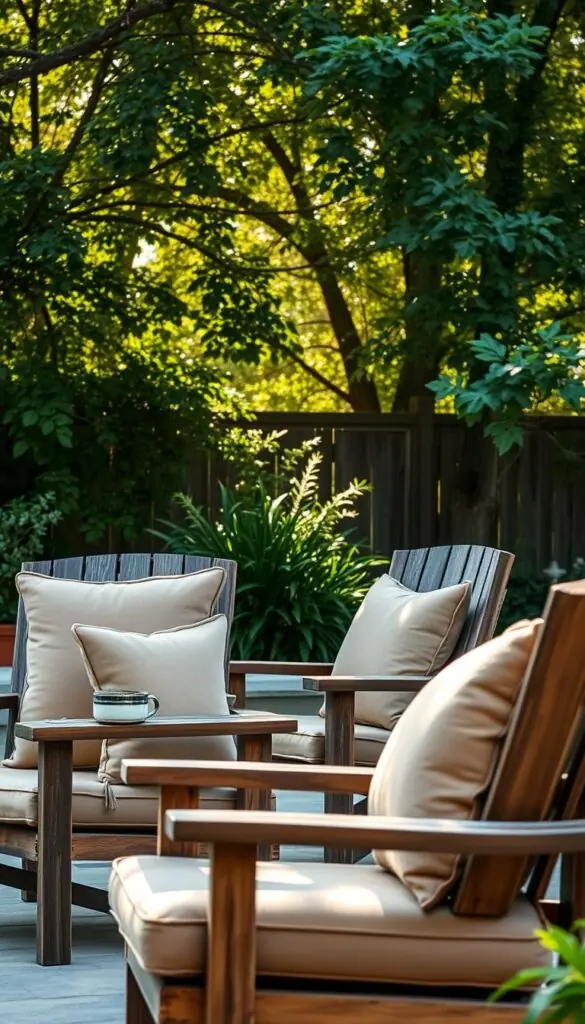
Garden corner: Tuck an adirondack chair beneath dappled leaves. Planters of lavender and mint add scent and help keep bugs away. A small lantern softens the space at twilight.
Backyard gatherings & outdoor dining: Pair a loveseat with deep seating and a low table for conversation. For meals, leave elbow room and clear paths to the grill. Stash extra singles on wall hooks so surprises are easy to handle.
- Use a small rug to define zones; secure corners with rug pads.
- Place side tables within reach for sunscreen, iced tea, or a book.
- Keep a planter of citronella and rosemary on the table for scent and calm company.
"Design each small space to serve one clear purpose — comfort follows."
Style Your Seating: Colors, Textures, and Scents That Set the Mood
When you focus on texture and scent, your seating becomes a scene that invites lingering, not just a place to sit.
Keep styling simple: choose one primary color and a single accent. Repeat those hues in pillows and planters for a calm, cohesive look.
Wicker textures, teak warmth, and steel accents
Woven all-weather resin wicker adds friendly texture. Teak brings warm grain and a timeless feel.
Add a hint of steel with a slim table or lantern to introduce clean lines. Repeat that metal in two places so the scene reads as intentional.
Herb planters and citronella to scent and fend off bugs
Place low herb planters near seating so rosemary or lemon thyme brushes your hand. They scent the air and help deter pests.
- Swap pillow covers by season for a fresh look without new pieces.
- Layer a small outdoor rug under two seats to anchor the vignette.
- Set a lantern on each side table and use warm bulbs to flatter wood tones.
Tip: a few quality pieces and a clear color story make small outdoor space feel curated and easy to care for.
Care and Maintenance: Simple Routines for Long-Lasting Outdoor Furniture
A few clear habits each season keep your pieces ready for use and looking cared-for. Start with gentle cleaning, protect wood and metal, and store soft items before bad weather.
Soap-and-water cleaning, protective finishes, and seasonal covers
Spring deep-clean: mix mild soap and warm water, brush gently, and rinse with a garden hose. Tip each seat to drain after heavy rains and dry with a microfiber towel.
Midseason refresh: wipe frames, tighten fasteners, and touch up paint on any chips to block rust. Refresh protective oil or sealant on wood once or twice a season to slow graying.
Use breathable covers to shield from UV and dust without trapping moisture. Many cushions are water-resistant, not waterproof—store them when heavy rain or overnight dew is expected.
Off-season storage tips for frames and cushions
- Before winter, clean and dry pieces, then elevate off concrete on wood blocks and move to a garage or under covers.
- Add silica gel packs in storage bins to keep fabric fresh through humid spells.
- Keep a simple care caddy—mild soap, soft brush, cloth, and gloves—so routine upkeep takes 15 minutes on a weekend.
Quick tip: small, regular steps protect your materials and make outdoor living easier all year.
Weather-Ready Checklist: Shade, Covers, and Smart Placement
Small habits make a big difference when you protect your seating from sun, wind, and rain.
Quick checklist for a weather-wise outdoor patio:
- Add shade with a canopy, umbrella, or pergola so seats stay cool and colors last.
- Position chairs where wind is blocked by a fence or hedge; heavy pots can anchor light pieces.
- Use cover straps or clips so gusts don’t lift fabrics; label covers for fast on-and-off.
- Lift legs onto rubber pads to prevent slipping and protect decking or stone surfaces.
- Place side tables within arm’s reach to reduce spills and scuffs from stretching.
- Keep a bin for cover storage right by the door so you’ll actually use them.
- Angle lounge seating to catch morning sun and avoid harsh late-day glare.
- In storm season, fold or stack lighter pieces and move them against a wall.
- Sweep leaves often; dry debris holds moisture against frames and shortens life.
- Walk the space weekly and tighten anything that wobbles; two minutes prevents big repairs.
"A little attention each week keeps your outdoor lounge looking cared-for and ready when you are."
| Action | Why it helps | When to do it | Quick tip |
|---|---|---|---|
| Add shade | Reduces heat absorption and UV fading | Install before summer | Canopies cool metal arms by several degrees |
| Secure covers | Stops wind damage and keeps rain off cushions | After use or before forecasted storms | Use labeled straps for fast removal |
| Anchor light pieces | Prevents tipping and movement in gusts | Always in windy spots | Heavy pots or sandbags work well |
| Weekly check | Find loose screws and trapped debris early | Pick a weekday chore time | Two minutes saves hours later |
Where to Shop and What to Compare Before You Buy
Start shopping with a clear checklist so you compare real build quality, not just photos. Bring a tape measure and your plan so you know what will fit through doors and into your space.
Compare materials, welds, and cushion construction. Scan welds and joints for smooth, even beads and tight corners. Squeeze cushions: dense fill, vented seams, and zippers mean easier washing and longer comfort.
Look for pickup, delivery, and trusted brands
Check delivery windows and free in-store pickup options. Fast pickup helps when a surprise warm weekend arrives. Favor reputable names like Living Accents and Hanover and read recent reviews for real-world comfort notes.
- Compare price by material and warranty length; longer coverage often signals stronger build.
- Read return policies and possible restocking fees, especially for a full set or outdoor dining orders.
- Ask if replacement cushion covers are available — that future-proofs your buy.
- Track seasonal sales and sign up for alerts to catch the size and color you want at the right price.
"A quick inspection at the store saves time and grief later — measure, check welds, and confirm delivery."
patio chairs
Good seating anchors an outdoor room—pick pieces that invite you to stay a while.
Patio chairs anchor a welcoming lounge, from simple resin models to cushioned loungers. Choose durable frames, quick-drying fabrics, and covers so your spots stay ready after a shower.
Shop options with in-store pickup or fast delivery to enjoy your new setup sooner. If you want a reclining break, add one chaise lounge to a quiet corner for true relaxation.
- Start with two patio chairs you love, then add a small table or an extra chair to finish the scene.
- Plan shade if sun is strong so each seat feels cool during midday relaxation.
- Compare frame finishes and fabric claims—quick-dry cushions mean you can sit after a sprinkle.
- Keep a short care kit: mild soap, soft brush, and a microfiber cloth.
- For tight footprints, pick armless silhouettes and lighter frames that tuck in neatly.
- Place a mint or citronella planter near seating for fresh scent and fewer bugs.
- Check price across retailers and delivery choices so your furniture arrives by the weekend.
"A few good pieces and light care make a small outdoor patio feel like a true retreat."
Conclusion
A simple sweep, a measured corner, or a potted herb can make your yard feel like a retreat.
Outdoor living begins when you make one small choice. Pick a favorite seat—an adirondack chair beneath a maple or two rocking chairs on the porch—and let the rest follow.
Durable materials and weather-wise care keep seating useful through seasons. If you love to recline, add a chaise or a lounge chair where dappled light falls. Plant rosemary or lavender nearby; the scent slows you down.
Measure one space today and set a simple price range. Start small, sit often, and enjoy slow, steady outdoor living—your garden will reward the care.
FAQ
What should I consider first when choosing backyard seating for my budget?
Start by measuring your space and deciding how you’ll use it — dining, lounging, or casual conversation. Match that use to durable materials like teak, powder-coated steel, or resin wicker for your climate. Think about cushions, storage, and whether you want a coordinated set or mix-and-match pieces to stretch your budget.
How do I pick seating that looks good year-round?
Choose neutral frames and add seasonal color with cushions and pillows. Materials such as aluminum, teak, and resin maintain their look across seasons. Opt for quick-drying cushion fabrics and removable covers so you can swap styles without replacing the whole chair.
What’s the best seating option under 0?
Look for foldable or resin pieces — they’re lightweight, affordable, and easy to store. Portable camping and folding chairs work great for extra guests, while budget resin Adirondack-style chairs give the relaxed look without the cost of solid wood.
Which chairs offer the best value in the 0–0 range?
Stackable dining chairs and resin wicker armchairs with weather-ready cushions hit the sweet spot. They balance comfort, style, and durability while keeping price reasonable for everyday outdoor dining and lounging.
What do you get in the 0–0 range?
Expect stronger frames, better cushions, and more refined designs. This range often includes aluminum or higher-grade resin pieces and mixed-material sets that look designer but still perform well in weather.
When is it worth spending 0 or more?
Splurge for teak or heirloom-grade lounge sets when you want long-term investment pieces. Designer outdoor sofas, deep-seating loveseats, and adjustable chaise lounges give a vacation-like feel and can last decades with proper care.
How do I choose the right style: Adirondack, rocking, or chaise lounge?
Match style to function. Adirondacks are great for laid-back conversation; rocking chairs suit porches and gentle relaxation; chaise lounges and reclined lounge chairs work best for sunbathing and poolside comfort. Consider scale and how each piece fits your view and traffic flow.
Which materials hold up best in coastal or wet climates?
Rust-resistant aluminum, resin wicker, and well-sealed teak perform best near salt air and moisture. Avoid untreated steel; choose welded joints and marine-grade hardware when possible.
What cushion features should I prioritize for comfort and durability?
Pick quick-drying foam and breathable, UV-resistant fabrics. Removable covers make washing easy. Look for compression-resilient fills and think about adding ottomans or lumbar pillows for extra support.
Are chair sets better than buying singles?
Sets simplify styling and sizing for dining or lounge zones, while singles let you tailor seating to nooks and mix materials for personality. Choose a set when you want cohesion; buy singles to create layered, flexible seating.
How should I plan seating for different outdoor zones like poolside, porch, and garden?
Define each zone’s purpose. Poolside needs adjustable chaise lounges and side tables. Narrow porches benefit from rocking chairs or bistro sets. Gardens welcome statement pieces like egg chairs or Adirondacks for reading and quiet time.
What simple maintenance keeps outdoor furniture looking fresh?
Regular soap-and-water wipes, treating teak annually, and using protective covers in bad weather extend life. Store cushions in a dry place each season and inspect frames for loose hardware or rust so small fixes don’t become big repairs.
How do I match chairs to my local climate?
In hot, dry zones choose synthetic resin, teak, or aluminum and add shade to soften hot surfaces. In cold regions pick powder-coated aluminum or treated teak and plan indoor storage for cushions. Mild climates allow more material flexibility but still choose quick-dry fabrics.
What should I compare before buying — online or in-store?
Compare materials, welds, cushion construction, and warranty details. Check delivery and pickup options, return policies, and reviews from reliable outdoor brands. Seeing furniture in person helps but measure carefully if ordering online.
Can I mix materials and styles without making the space look chaotic?
Yes — anchor the space with a consistent color palette or matching cushions, then mix textures like wicker, teak, and steel. Repeating a single accent color ties different styles together for a cohesive, inviting look.