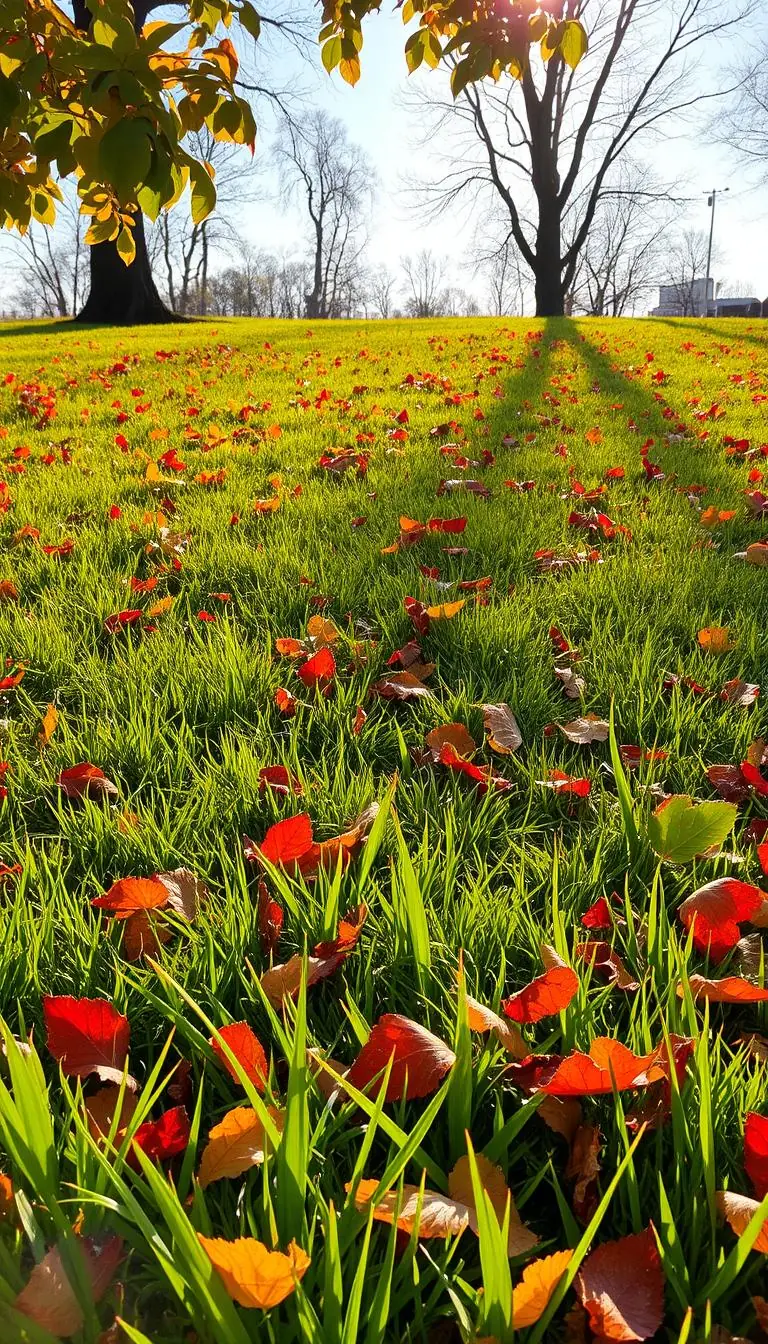
Imagine the blue‑green glow of spring under your feet and the warm scent of sun‑warmed turf. Do you wonder which lawn will feel soft and thrive where you live? This guide helps you choose with confidence.
We explain how climate sets the stage and give a short list of familiar examples: Kentucky bluegrass, tall fescue, perennial ryegrass for cool climates; Bermuda, Zoysia, and St. Augustine for warm zones.
Start simple: test your soil, note sun and shade, then match a variety that suits your yard—not just the seed bag photo. Plant cool-season in spring or fall and warm-season in late spring to early summer.
Small tools make a big difference: a $15 soil test kit, a steel rake, a hand spreader, and a hose‑end sprinkler with a timer will keep things easy.
Avoid common pitfalls like planting at the wrong season, mowing too low, or overwatering. With a few steady steps, you can create a thriving, low‑stress lawn that feels like home.
Key Takeaways
- Match cool vs. warm season choices to your local climate for reliable results.
- Use simple tools: soil test kit, rake, spreader, and a timer sprinkler.
- Plant at the right season: spring/fall for cool, late spring for warm.
- Common mistakes—wrong timing, low mowing, overwatering—are easy to fix.
- Choose a variety that thrives where you live for beauty with less work.
Cool-Season vs. Warm-Season Grass: How Climate Drives Your Choice
Where you live—how cold your winters and how hot your summers—decides which lawn will thrive.
Cool-season varieties show up with a blue‑green flush in spring and again in fall. They feel soft and stay lively when nights are cool.
Warm-season varieties wake into a dense, summer emerald when days heat up. They stand up to full sun and high heat.
Quick climate checks:
- If winters are long and cold and summers are mild, lean toward cool-season choices.
- If summers are hot and long with brief frost, lean toward warm-season choices.
Their repair ability differs. Tall fescue grows in clumps and roots deep. Kentucky blue spreads with rhizomes. Bermuda recovers fast with stolons and rhizomes.
Match your yard areas: shaded northern corners usually favor fine fescues, while sunny southern spots near driveways often suit Bermuda or Zoysia. Let climate lead, then fit light, soil, and traffic needs.
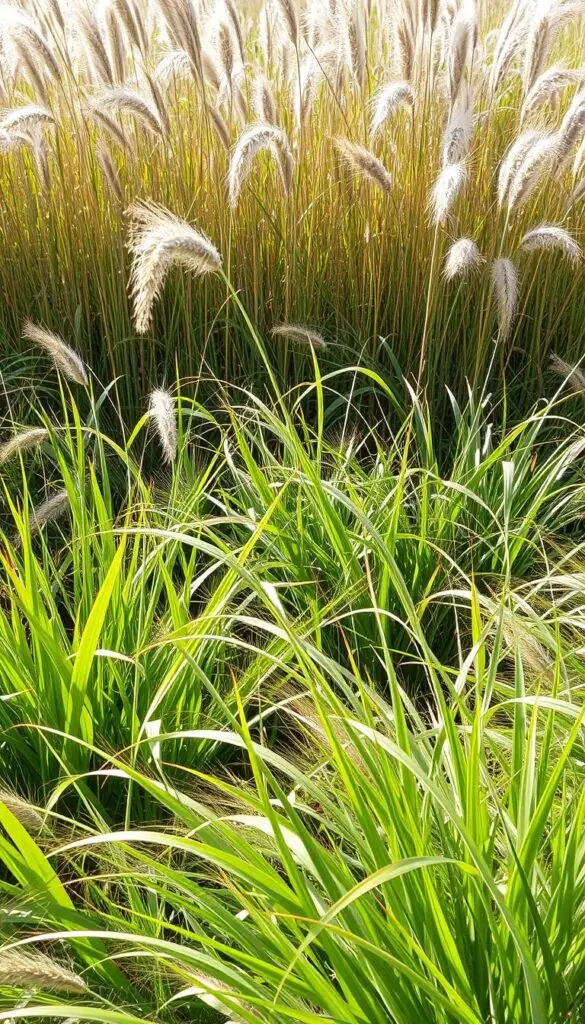
| Feature | Cool-Season Examples | Warm-Season Examples |
|---|---|---|
| Color & Feel | Blue‑green, soft in spring/fall | Deep emerald, dense in summer |
| Heat/Frost Response | Fades in peak heat, recovers in cool nights | Goes tan with frost, greens quickly when soil warms |
| Repair Ability | Clumping or rhizome spread (fescue, bluegrass) | Stolons/rhizomes for fast recovery (Bermuda, Zoysia) |
Best grass type by U.S. region and zones
Start with your zip code and elevation—those clues point to what will grow well. Pick a region, then match a few proven varieties to your yard’s light and water.
Northern and higher‑elevation areas
In snowy, cold winters and short springs, favor cool‑season choices that green up fast and survive freezes.
- Kentucky bluegrass spreads to fill thin spots and gives that classic lawn look in USDA zones 3–6.
- Tall fescue handles drought and heat spikes; good where soils dry in summer.
- Perennial ryegrass works well for quick overseeding to refresh lawns after snowpack.
- Higher elevations often do best with fine fescue mixes for shade and low inputs.
Transition Zone realities
The Transition Zone swings between hot summers and cold snaps. You’ll blend strategies here.
- Turf‑type tall fescue gives steady color across seasons in many yards (KS to VA line).
- Zoysia or Bermuda can work where summers are long and irrigation is reliable.
- Where winters bite or shade is heavy, favor fescue blends over warm‑season choices.
Southern and coastal heat areas
Long summers and mild winters suit warm‑season champions. Coastal salt and sandy soils change the game.
- Bermuda tolerates heavy traffic and recovers fast in full sun.
- Zoysia makes a dense, carpet‑like lawn with moderate maintenance.
- St. Augustine tolerates coastal humidity and some shade; Centipede fits low‑care yards.
- On sandy coasts, tune irrigation to deep, infrequent cycles to match fast drainage.

How to pick the best grass type for your yard’s conditions
Start by reading your yard like a neighbor: note sun hours, worn paths, and shady pockets before you pick a seed. This little habit gives you a clear, practical starting point and saves time later.
Sun, shade, and mixed light: For a week, use your phone to mark areas as full sun (6+ hours), partial sun (3–6), or shade (<3). Choose tall fescue or fine fescues for shade; Kentucky bluegrass or Bermuda for sunny spots; and St. Augustine or Zoysia for mixed light in warm regions.
Soil test first: Use a soil test kit to check pH and nutrients. Most plants prefer pH 6.0–7.0—add lime or sulfur per results. If soil is sandy or clay, add compost to improve texture.
Drainage check: Do the screwdriver test after watering. If a screwdriver slides in six inches easily, drainage is good. If not, topdress with compost and plan core aeration before seeding.
Foot traffic and pets: For heavy use pick durable options that recover fast. Kentucky bluegrass and Bermuda repair quickly in sun. Turf‑type tall fescue handles mixed light and wear. Avoid fragile fine fescues in active play areas.
Beauty and maintenance: If you want a velvety feel, aim for fine fescues or Zoysia. For a cushioned, barefoot lawn, tall fescue or St. Augustine work well. Choose a slower‑growing variety if you want fewer mowings, and a drought‑tough option to cut summer watering.

- Map light patterns for a week with your phone notes.
- Use a soil test kit and adjust pH to 6.0–7.0.
- Run the screwdriver drainage test and aerate if needed.
- Match durability to play and pet needs; prioritize recovery speed.
- Balance texture and maintenance to fit your lifestyle.
Planting windows and methods that set you up for success
Timing your planting to the calendar and soil warmth sets you up for fast, healthy establishment. Follow seasonal windows first, then pick a method that fits your budget and schedule.
When to plant now:
- Plant cool-season seed in early fall for the easiest start — warm soil and cool nights help seedlings thrive.
- If you missed fall, sow in early spring. For warm-season varieties, plant seed or lay sod in late spring to early summer as soil heats up.
Seed, sod, or plugs — quick comparison
| Method | Cost & speed | When to use |
|---|---|---|
| Seed | Lower cost; widest selection and starter mixes | Large areas, budget projects, fall or spring for cool-season |
| Sod | Higher cost; instant cover and erosion control | Slopes, quick landscapes, any season with proper watering |
| Plugs | Moderate cost; steady fill-in for warm-season lawns | Warm-season sites like Zoysia or St. Augustine when access to varieties is limited |
Prep and tools: Rake out debris, loosen the top 1–2 inches, blend in compost, and level low spots. Use a calibrated broadcast spreader, lawn roller, hose/sprinkler, and straw mulch on slopes.
Step-by-step seeding
- Prepare soil: remove weeds and loosen surface.
- Spread seed with a spreader, cross-hatching for even coverage.
- Lightly rake to cover seeds about 1/8 inch, then roll or tamp for contact.
- Keep the surface evenly moist: gentle, frequent watering until germination.
- After roots form, water deeper and less often to build strength.
You can access region-tested blends at local garden centers; they often carry starter mixes suited to nearby conditions. Follow label rates and give new seedlings extra attention in the first few weeks — that time pays off all season.

Care basics that keep grass types thriving through the seasons
Simple, steady care is what turns a good lawn into a resilient, year‑round carpet. Small habits cut problems before they start and save work later.

Mowing: heights and blade care
Cool‑season lawns do best at about 3–4 inches to shade soil and suppress weeds. For warm‑season varieties, cut Bermuda at 1–2 inches and Zoysia or St. Augustine at 2–3 inches.
Keep blades sharp. Dull blades tear leaves and invite disease. Sharpen each season and after impacts with sticks or stones.
Watering and root training
Water in the early morning. Aim for about 1 inch per week during active growth. Use a rain gauge or a tuna can to measure.
Train deeper roots by watering less often but longer once established. Let the top inch dry between cycles to build drought ability.
Feeding and gentle soil boosts
Feed cool‑season lawns lightly in early spring and more in early fall. Feed warm‑season lawns from late spring through midsummer when growth is strongest.
Topdress with compost in spring or fall to improve soil structure, water‑holding, and microbes. This adds slow, organic nutrition without overfertilizing.
Preventive habits and quick fixes
"Walk the lawn weekly to catch stress or insect damage early."
- Don’t overwater; mow high; clear clippings from walkways.
- Spot‑treat weeds early and use targeted fixes for pests or disease.
- Keep a sharp mower blade, a hose timer, and a rain gauge on hand for simple, effective maintenance.
Quick “starter team” of reliable grass types by need
Here’s a short, friendly list to help you match care and use. Think of this as a starter team you can pick from rather than a long shopping list. Use one variety where you need low work and a tougher player where kids or pets run.
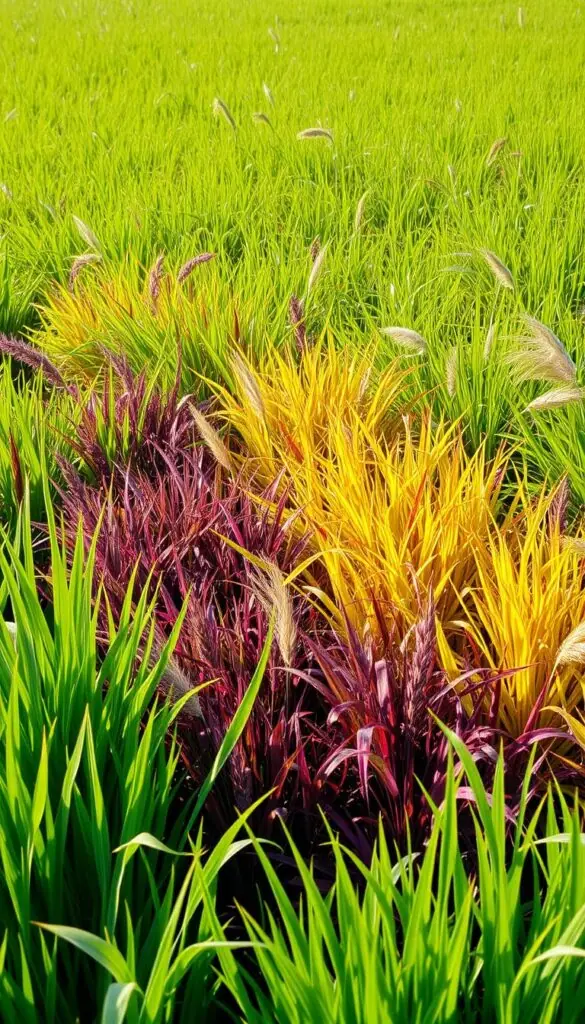
Low‑maintenance choices for busy weeks
Turf‑type tall fescue blends work well in cooler yards. They send deep roots, need less watering, and feel soft underfoot.
Centipede fits warm climates where you want fewer mowings. It grows slowly and asks for light feeding.
Fine fescues (creeping red, hard) suit partial shade in northern spots. They make a wispy, muted green carpet and take modest care.
High‑traffic picks for play areas and pets
Bermuda recovers fast in full sun and makes a tight, sporty surface for games.
Zoysia creates a dense, carpet‑like lawn with a plush feel that tolerates steady use.
St. Augustine thrives in humid, coastal yards with broad blades and a cushioned texture.
Kentucky bluegrass blends are a classic in cool regions—rhizomes repair thin spots and keep a blue‑green look where children play.
If you’re undecided: mix by area. Put a durable sun patch where play happens and a low‑input corner in shade. That way your care matches each space and the whole yard stays calm and lovely.
Common mistakes and how to avoid them
A few common missteps steal time and color from new seed—here’s how to avoid them.
Quick fixes first: follow soil temperature cues and mower settings. A simple thermometer or an online soil map helps you pick the right moment to seed.

- Seed timing: wait for cooler soil for cool-season and reliably warm soil for warm-season seed.
- Mower settings: never remove more than one-third of blade height; raise the deck to the highest recommended setting to prevent scalping.
- Watering: water deeply and less often; run sprinklers at dawn to cut fungus risk.
"Small, steady actions prevent big damage later."
| Mistake | Quick check | Immediate fix |
|---|---|---|
| Seeding at wrong time | Soil thermometer reading | Delay until soil is in recommended range |
| Scalping | Mower deck setting | Raise deck; mow less often |
| Overwatering | Topsoil moisture test | Extend watering interval; soak deeper |
| Skipping soil test | pH and nutrient kit | Follow kit recommendations before seeding |
| Heavy traffic on new seed | Visible seedlings less than 2 inches | Block area for a few weeks |
Follow label rates for seed and fertilizer to avoid product damage. This small care saves you time and keeps your lawn calm and thriving.
Budget, maintenance level, and time: choosing the right path
Deciding between seed, sod, or plugs comes down to budget, time, and how much daily care you want. Make a clear, practical choice that fits your schedule and yard needs.

Seed for savings
Cost: lowest up front. Speed: slower to fill in. Care: needs regular, gentle watering early to build roots.
Seed stretches your budget and gives the widest selection of region-ready varieties. If you can watch watering for a few weeks, seed rewards you with deep roots and lower long-term inputs.
Sod for instant color
Cost: higher. Speed: instant cover. Care: heavy watering first two weeks, then standard lawn care.
Sod is ideal when you need erosion control or a finished look fast. It saves time but costs more and needs immediate, steady water to set in.
Plugs for warm-season patchwork
Cost: moderate. Speed: gradual spread over a season. Care: steady watering and light feeding to encourage spread.
Plugs give good access to varieties like Zoysia or St. Augustine when full sod is pricey. They fill in with predictable, patient care.
| Method | Typical Cost | When to Use |
|---|---|---|
| Seed | Low | Big areas, tight budget, spring/fall for cool-season |
| Sod | High | Fast results, slopes, instant erosion control |
| Plugs | Medium | Warm-season yards, gradual upgrades, summer planting |
Rule of thumb: seed to learn what thrives, sod where you need durability now, and plugs to expand warm-season patches. If you travel often, pick a low-input grass and set a hose timer for steady care. Your best grass type will balance budget, beauty, and realistic maintenance so you enjoy the yard every week.
Sensory wins: color, texture, and scent that make you love your lawn
Your yard is a daily stage—simple sensory choices shape how it feels to live there. Notice how blade width, morning color, and fresh soil scent change your mood.

Fine vs. coarse textures you can feel underfoot
Fine‑bladed lawns like fine fescues and some Zoysias feel silky and cool. They work well in quiet corners and make evening walks feel gentle.
Coarser blades such as tall fescue or St. Augustine give a cushioned step and bold texture. They read well next to patios and flower beds and invite play.
Blue‑green spring flush vs. deep summer emerald
Cool mixes show a blue‑green flush in spring and fall. After a light morning mow, the air often smells fresh and earthy.
Warm varieties turn deep emerald in summer and make a dense, springy carpet for barefoot evenings.
- Fine, silky look: choose a soft variety for calm, elegant corners.
- Cushioned, bold feel: pick coarser blades for active spots and contrast.
- Follow what makes you smile: there is no one best feeling—pick the plants and visuals that suit your home.
Conclusion
Your lawn rewards steady, simple choices. Pick the one plan that fits your yard and keep the work small and regular. A clear step today makes big gains across the season.
Use this short list of actions: test soil, map sun, choose a starter mix that suits local light, and set a watering rhythm. Treat different areas like a team—durable patches where play is heavy, softer corners for quiet spots.
With a soil test, a sharp mower blade, and steady watering you give your lawn the ability to thrive and avoid avoidable damage. There isn’t one best grass type for every home—there’s the right fit for yours. Step outside, enjoy the space, and take the next small step today; we’re cheering you on.
FAQ
How do cool-season and warm-season grasses differ in look and care?
Cool-season grasses show blue‑green blades and peak in spring and fall, needing more attention in summer heat. Warm-season varieties green up in hot months, recover quickly from wear, and require later spring planting. Match mowing height, watering, and feeding to the season for best results.
Which regions of the U.S. suit cool‑season versus warm‑season varieties?
Northern and high‑elevation areas favor cool‑season lawns for cold tolerance and spring vigor. The South and coastal zones do better with warm‑season selections that thrive in long, hot summers. In the transition zone, choose varieties carefully—some cool‑season cultivars tolerate brief heat, and some warm‑season types handle occasional cold.
How should I choose a variety based on sun, shade, and soil?
Start with a soil test for pH and drainage. For full sun, select sun‑loving cultivars; in shade, pick shade‑tolerant options with finer leaves. Mixed light areas often benefit from blends designed for variable exposure. Good drainage and balanced pH help any selection establish faster.
When is the best time to plant seed, sod, or plugs?
Plant cool‑season seed in early fall or spring; warm‑season seed, sod, or plugs in late spring to early summer when soil warms. Sod gives instant cover, seed is budget‑friendly, and plugs work well for warm‑season patching. Timing matters most for root establishment.
Seed, sod, or plugs — which is right for me?
Choose seed to save money and cover large areas slowly. Pick sod for immediate results and erosion control. Use plugs when you need targeted repair or are establishing warm‑season varieties in small plots. Consider cost, time, and access to the specific cultivar you want.
What mowing heights and schedules work for different seasons?
Keep cool‑season grasses a bit shorter in late spring and taller through summer to reduce stress. Warm‑season lawns tolerate lower cuts during active growth but raise blades in drought or early spring. Regular, frequent cuts that never remove more than one‑third of the blade keep lawns healthy.
How should I water to encourage deep roots and drought resilience?
Water deeply and infrequently in the morning to promote deep roots and reduce disease. Adjust frequency by season—less in cooler months, more when heat hits. Aim for soaking the root zone rather than daily shallow sprays.
What feeding routine helps lawns look lush without overdoing it?
Feed according to season and soil needs: light, balanced applications for cool‑season lawns in spring and fall; focused feeding for warm‑season lawns during summer growth. Gentle organic boosters can improve soil life and steady color without chemical overload.
Which varieties are low‑maintenance or best for heavy foot traffic?
Low‑maintenance choices include drought‑tolerant cultivars with slower growth that need less mowing. For play areas and pets, choose dense, quick‑recovering varieties with strong wear tolerance. Look for cultivars noted for recovery rate and durable leaf structure.
What common mistakes should I avoid when establishing or maintaining a lawn?
Avoid overseeding at the wrong time and scalping with overly low mower settings. Don’t overwater shallowly or skip soil testing. Those errors stress grass, invite weeds, and slow recovery. A little preparation and timing go a long way.
How do budget and maintenance preferences affect my choice?
If you want low cost, seed stretches your dollars but takes longer. Sod costs more up front for instant results. Plugs sit between both for moderate budgets focused on warm‑season lawns. Consider how much time you’ll spend mowing, watering, and feeding when picking a route.
How do blade texture and color influence the sensory experience of a lawn?
Fine textures feel softer underfoot and create a lush look; coarser blades are more tolerant of wear. Cool‑season grasses often give a blue‑green spring flush, while warm‑season lawns offer deep summer emerald tones. Choose what you’ll enjoy seeing and walking on most.