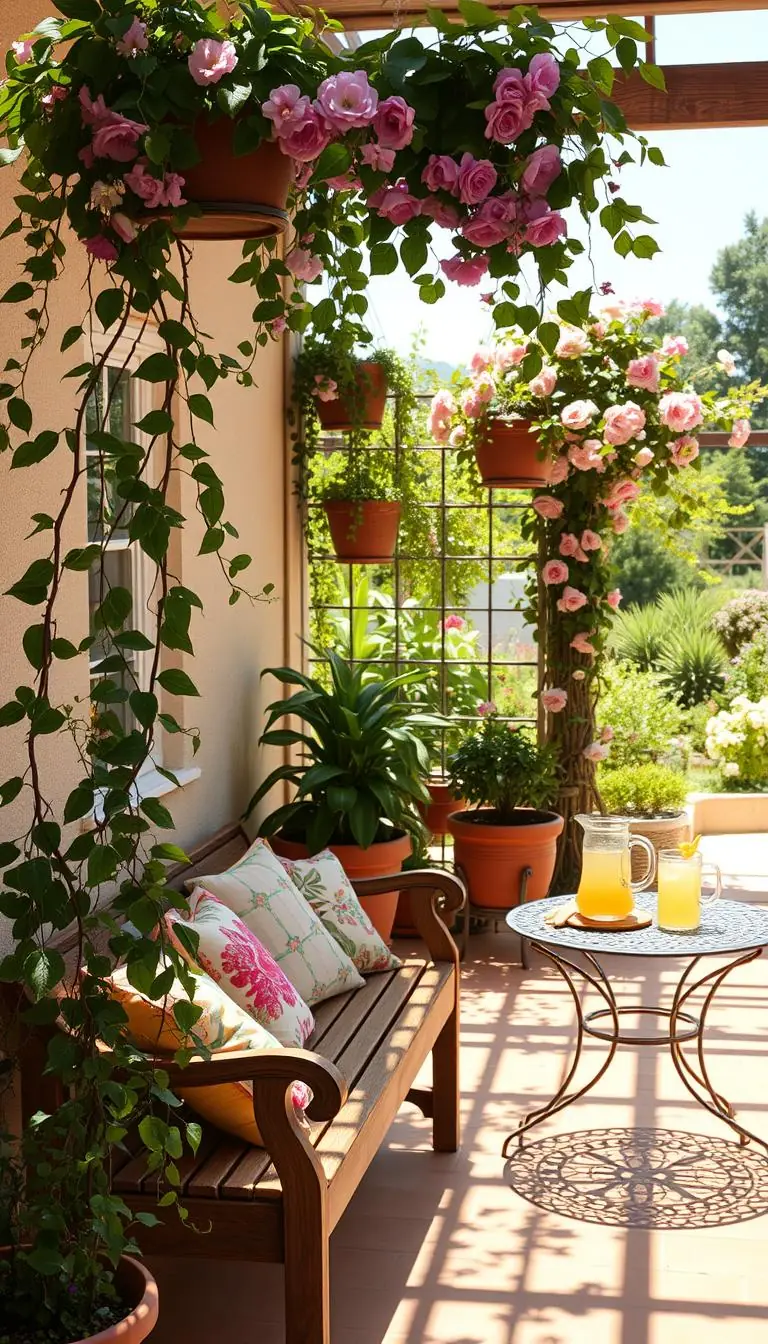
You step outside and smell lavender as a light breeze moves through tall grasses. That small, sunlit spot near your house can become a quiet place to read, sip coffee, or watch birds. We’ll help make it feel effortless and welcoming.
Start small: measure the space, note sun and shade, and pick one calming goal—like a herb wall, a reading nook, or a tiny wildlife refuge. Use simple hardscape fixes such as mulch, brick edging, or a compact bench to anchor the design.
You’ll get step-by-step guidance, seasonal timing for U.S. zones, and tool tips—from a trowel and pruners to a hose splitter. Expect quick wins: mulch for tidy edges, a single statement tree for structure, and drip irrigation to save time.
With a mix of resilient plants and small water or light features, this point in your yard becomes a calm, living room outdoors. Gentle cautions will help you avoid crowding and overwatering so your spot stays easy to enjoy.
Key Takeaways
- Begin small: measure, observe light, and choose one calming goal.
- Blend hardscape and plants for balance: bench, gravel, and a pocket of green.
- Use simple tools and low-maintenance methods like soaker hoses and mulch.
- Pick resilient plants by light and USDA zone for lasting success.
- Add sensory touches—fragrant flowers, soft cushions, and a gentle water sound.
Start Here: A simple plan to turn any corner into your peaceful spot
A quick sketch and a tape measure turn an awkward spot into a calm, usable place. Take twenty minutes on a dry day to note walls, fence lines, and the sun pattern. This small habit saves time and prevents costly mistakes.
Quick checklist: measure, sunlight, water access, budget, and time
- Measure width and depth so furniture and beds fit the space beside your house or fence.
- Track sunlight in two-hour blocks; full sun suits herbs and veggies, part shade fits ferns and hostas.
- Check water access and slope; plan a soaker or drip line to cut daily watering chores.
- Set a simple budget and a one‑weekend time window for mulch, a bench, and a few containers.
- Sketch a layout: seating to one side, a narrow bed along the wall, and one focal plant at the point.
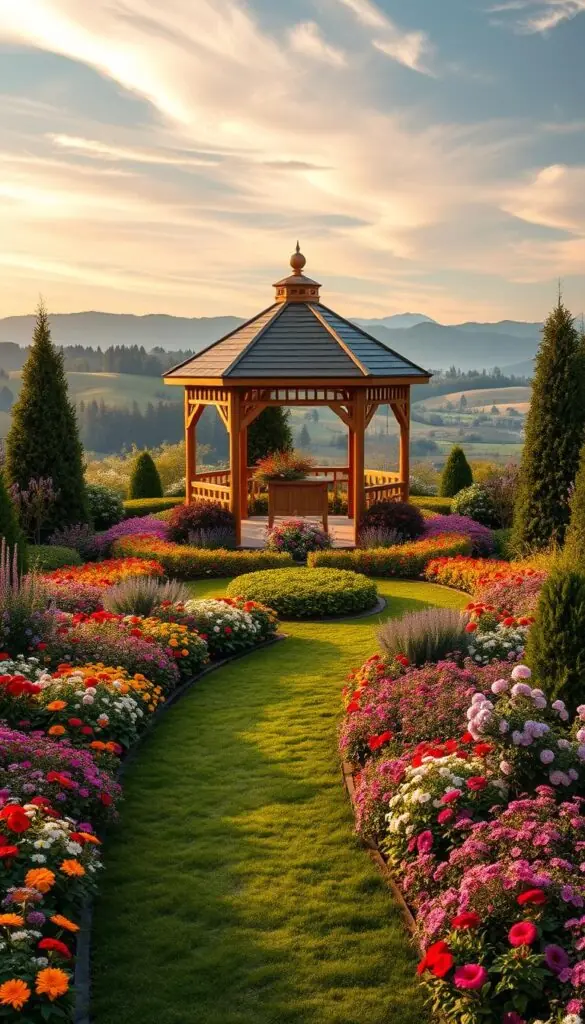
Seasonal timing in the United States: when to plant, prune, and place hardscape
Plant cool‑season perennials in early spring or fall. Wait until after your last frost for warm‑season annuals and herbs.
Place pavers or gravel when the ground is dry and workable. Prune summer‑flowering shrubs in late winter or early spring. Trim spring bloomers right after they finish so you don't remove next year’s buds.
Quick tip: Order gravel, mulch, and a weed barrier ahead of time. Test the layout with painter’s tape or cardboard so you can adjust the plan before you dig.
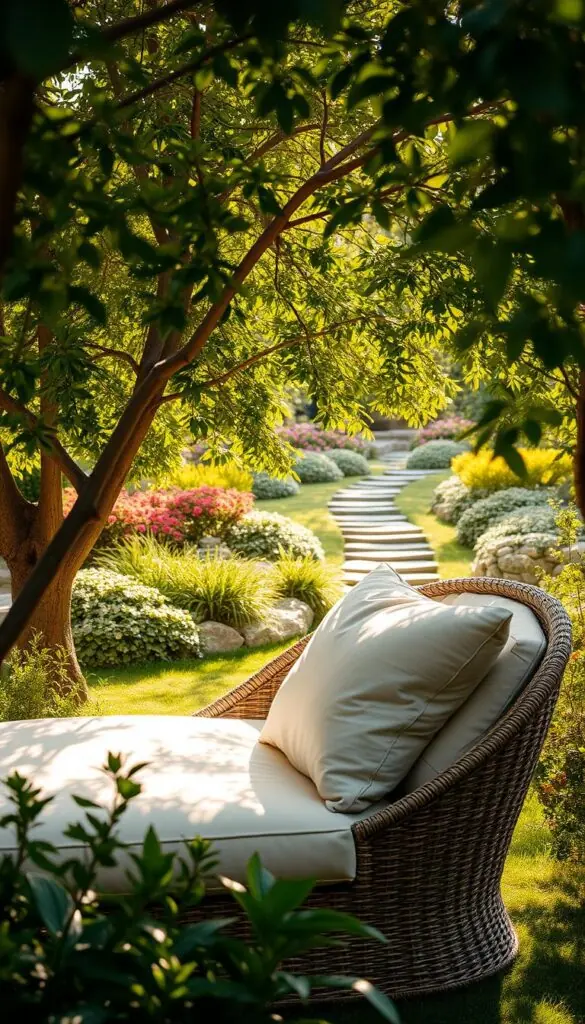
Cozy lounge nook: benches, chairs, and small sofas that invite you to linger
A compact seating group turns a tight space into a place you actually want to linger. Choose an L‑shaped or small sofa to tuck beside raised planters or a gravel pad. This keeps the footprint tidy and welcoming.
Materials that last outdoors: teak ages to a soft silver, powder‑coated aluminum resists rust, and all‑weather wicker stays light yet sturdy. Add UV‑resistant cushions in sage, sand, or soft gray and one bright throw for a cheerful touch.
Set furniture on pea gravel, pavers, or a small deck platform so legs stay level and mud stays away. Tuck low planters behind the seat and place a small tree or two for dappled shade and leafy privacy.
Small practical tips:
- Pick a compact loveseat, two chairs and a slim bench, not oversized pieces that crowd the path.
- Use a narrow side table for tea and a book; add furniture glides for easy seasonal moves.
- Create a simple path with three pallet steppers or wide pavers from the yard gate to this living spot.
Vertical garden and trellis walls for herbs, flowers, and vines
Turn a plain fence into a living tapestry of herbs, flowers, and vines for a small, soothing retreat.
Vertical planting saves space and adds instant privacy. A privacy fence can double as a trellis wall and hold a pallet plant wall or hanging baskets. Keep things light and simple so the structure and the plants both thrive.
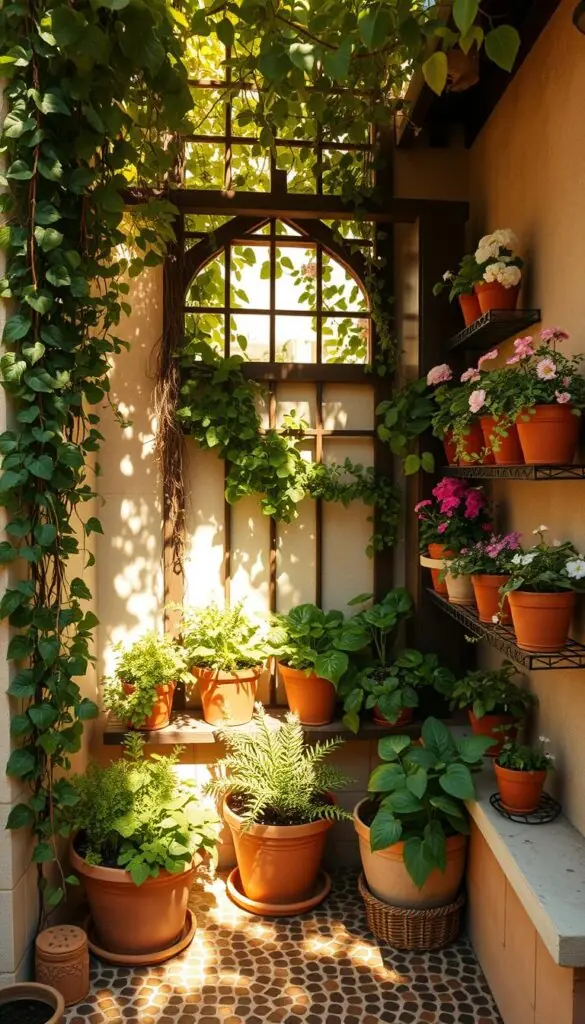
DIY ideas: pallet walls, hanging baskets, and rope systems
- Build a pallet plant wall: sand edges, staple landscape fabric to the pocket backs, and secure to studs or a sturdy fence.
- Hanging baskets and rope: hang them on a trellis or use a rope system; space baskets so air and light reach each tier.
- Tuck shelves: add a narrow shelf for potted plants like mint, chives, and parsley for easy snips at dinner.
Best plants by light and simple irrigation
For sun: choose basil, thyme, oregano, and trailing rosemary if your corner garden gets 6+ hours of sun. For shade: use ferns, ivy, and heuchera for cool texture.
Water smart: install a basic soaker or drip line at the base and set a timer for 20–30 minutes in the early morning. Use lightweight potting mix so mounts and hardware won’t bear extra weight.
"Line hanging baskets with a thin coconut coir layer to hold moisture without waterlogging."
Quick tips: refresh potting mix each spring, trim herbs to keep them bushy, and avoid crowding vines — give clematis or jasmine a clear span so they don’t smother neighbors.
Raised beds and tidy edging to grow veggies and blooms
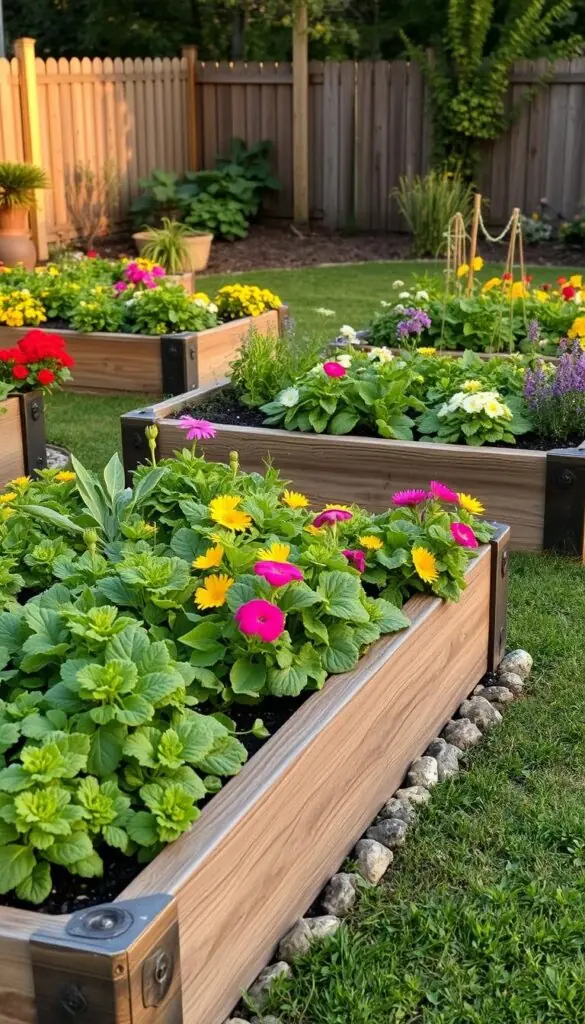
An L-shaped bed and neat stone borders turn a small patch of ground into a productive garden.
Start by sketching the bed that hugs your wall. Map one loop for easy watering and a paver landing at each end so you can place pots or step without compacting soil.
Shape your space: L-beds, tiers, and borders
Build beds 10–18 inches high with rot-resistant lumber or concrete block. Keep widths to 3–4 feet so you can reach the middle from the edge.
Use terraced tiers on a slope. Add brick, stone, or steel edging to hold mulch in place and keep weeds back.
Soil mix and tools you’ll need
Mix 40% topsoil, 40% compost, and 20% coarse material such as perlite or pine fines for drainage and a lively, earthy feel. Leave 1–2 inches below the rim for mulch and watering.
- Tools: wheelbarrow, shovel, trowel, rake, 5‑gallon bucket.
- Water: run a drip line under mulch and add a simple timer for deep, consistent moisture.
- Planting: anchor with a dwarf fruit tree or small serviceberry and underplant with herbs and low shrubs.
"Crushed gravel underfoot and the warm scent of tomato stems are small rewards that make work feel like pleasure."
| Bed Type | Height | Best For | Edge Material |
|---|---|---|---|
| L-shaped raised bed | 10–18 in | Veggies + mixed plants | Brick or stone |
| Terraced tiers | 8–14 in per tier | Slopes, layered plantings | Block or stacked stone |
| Container planters | Varies | Pots for limited ground access | Raised pots on pavers |
| Low bed with mulch | 6–10 in | Herb pockets, annuals | Steel or edging strip |
Quick mistakes to avoid: do not overfill beds to the brim; leave room for mulch and watering. Don’t crowd plants—give shrubs and small trees room to grow.
Potted plants and planters to frame a corner when ground planting isn’t possible
When soil is off‑limits, grouped containers can still give you a lush, framed retreat. Use height and rhythm to suggest walls and privacy without digging into the ground.
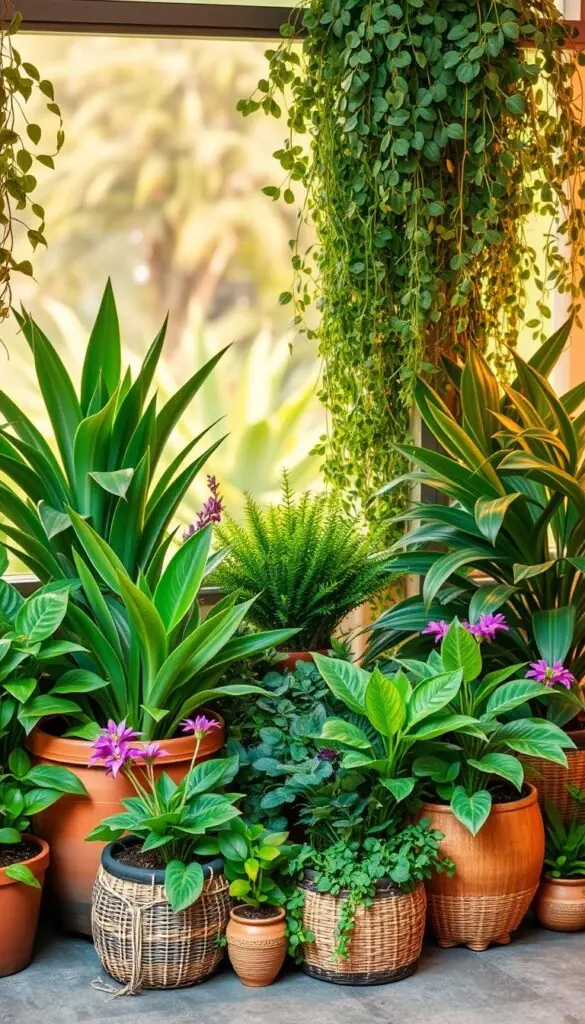
- Place a slim tree in a tall planter, medium pots for shrubs, and low bowls of flowers at the front.
- Group containers in odd numbers to create a natural flow that frames your corner.
Simple container recipes and care
Sun mix: dwarf olive or bay, compact boxwood, trailing million bells. Shade mix: dwarf conifer, ferns, impatiens.
Use high‑quality potting mix—not garden soil—for lighter, healthier roots. Water slowly until it trickles from the base. In heat waves, check moisture two inches down with your finger daily.
| Planter Type | Best Use | Drainage Tip |
|---|---|---|
| Tall lightweight planter | Small tree or topiary | Use pot risers and coarse gravel at base |
| Medium ceramic pot | Shrub or mixed plants | Ensure holes; add saucer near door only |
| Low bowl | Seasonal flowers and groundcover | Shallow mix for quick draining |
"Add one fragrant plant—lavender or lemon thyme—for a soothing touch."
Quick mistakes to avoid: don’t use tiny pots in windy spots; size up so trees and shrubs stay upright. Swap seasonal plants—pansies in spring, heat lovers in summer, ornamental kale in fall—for an easy, thriving small corner garden.
Water feature magic: fountains, birdbaths, and a gentle trickle for calm
A quiet pool of moving water can turn a small point of the garden into a gentle refuge. The soft splash and the glint on the surface invite you to pause and listen.
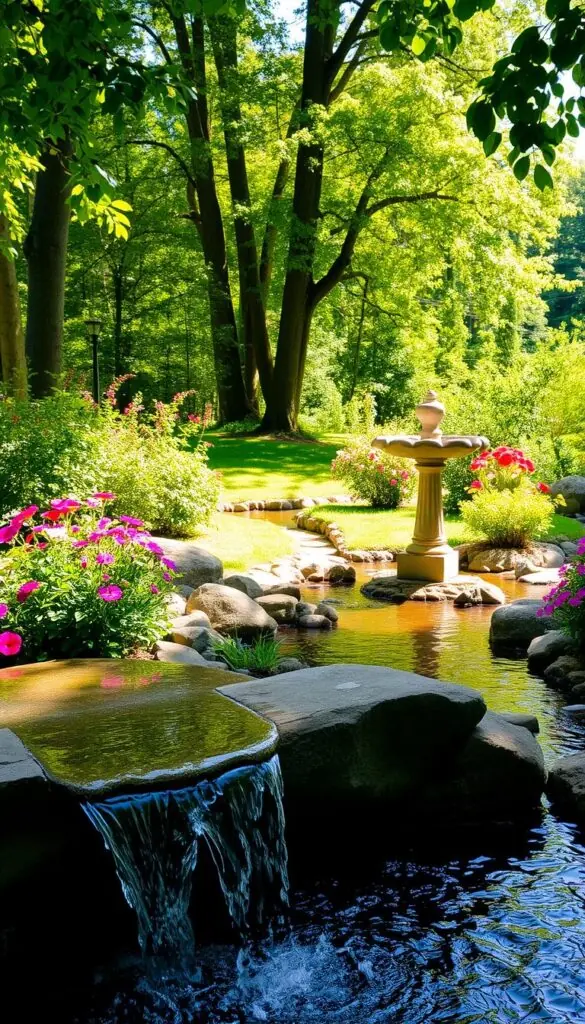
Choosing the right feature
Pick what fits your space: a compact solar fountain, a shallow birdbath, or a pebble run with a hidden basin all work well. Solar garden fountains and small basins are easy to set and avoid messy cords.
Placement and sound
Place the feature at the visual point so the shimmer catches your eye from seating but avoid splashes near cushions. Aim for a quiet burble you can hear over conversation, not a loud splash that soaks surfaces.
"Choose a low-voltage pump and set the basin on a level stone pad for steady, safe operation."
| Feature | Best for | Maintenance |
|---|---|---|
| Solar fountain | Tight spaces, easy install | Rinse weekly; charge panels |
| Shallow birdbath | Wildlife focal point | Refill often; scrub algae |
| Pebble run | Natural look, hidden basin | Clear debris; winter drain |
Quick tips: use smooth stone that glistens when wet, add a pump prefilter, and plant whispering grasses or hostas nearby for a calming frame. In fall, drain and store small fountains to prevent freeze damage.
Wildlife-friendly touches: birdbath, native flowers, and a perch
A few native blooms and a low birdbath will quickly bring life and sound to your garden.
Start simple: place a shallow birdbath on a sturdy base and keep water 1–2 inches deep for safety. Refresh water every few days in summer and clean the bowl weekly to prevent algae.
Plant native flowers and grasses for nectar and seed. Try coneflower, black-eyed Susan, and little bluestem for seasonal interest and pollinators.
Layering helps: add shrubs like viburnum and serviceberry with small trees for shelter and food. Keep greenery dense at the back and airy in front so you can sit and watch visitors without disturbing them.
- Leave a quiet perch—a twig teepee or a decorative hook—for resting and preening.
- Mulch with leaf mold or shredded hardwood to hold moisture and feed soil life.
- Add a discreet path so you can refill water and deadhead flower beds without trampling plants.
"Enjoy the soft flutter and gentle chirps that make your corner feel alive."
Quick caution: avoid pesticides near a wildlife area; hand-remove pests instead. These small touches make the space feel warm and welcoming, and they give local birds and pollinators a safe, lovely spot to visit.
Soft lighting that makes plants shine after sunset
Soft illumination shows textures and paths so your outdoor space feels safe and cozy after sunset.
Start with a simple plan: guide movement, highlight a living focal point, and add warm ambient glow near seating. Layered lighting creates depth and keeps the scene calm and inviting.
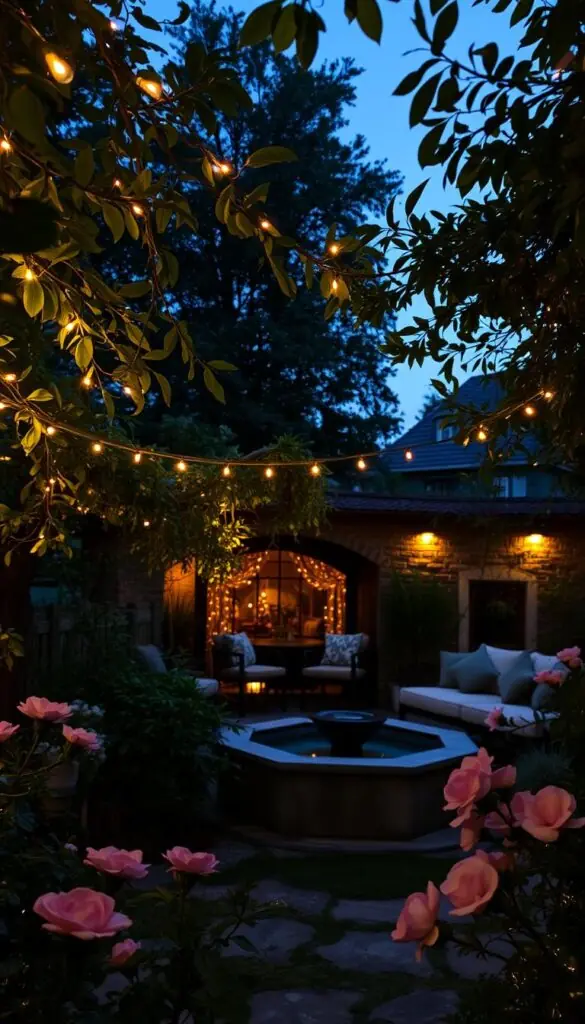
Layered light: path stakes, spotlights on trees, and string lights under a pergola
Path stakes mark routes at shin height so guests move easily. Add one soft spotlight on a sculptural tree or potted plant to create a gentle focus.
String lights draped under a pergola or along a wall make a cozy living spot. Use LED strands for low heat and long life. Pergolas with integrated LEDs define evening walls and extend hours outdoors.
Safety first: low‑voltage or solar options near water
Near water, pick low‑voltage or solar fixtures and route cords away from footpaths. Weather‑rated plugs and raised housings reduce corrosion and keep connections dry.
- Place path lights at shin height and aim spotlights slightly upward into foliage for depth.
- Choose warm tones (2700–3000K) to flatter plants and seating.
- Add a dimmer or smart plug so you can set timed scenes for the way you use the space.
- Test at dusk before final install; small moves change shadows and highlights.
- Avoid pointing lights into eyes or a neighbor’s window—angle down or toward foliage.
| Fixture | Best use | Power & safety |
|---|---|---|
| Path stake | Guide pavers and steps | Low‑voltage or solar; place off walking line |
| Spotlight | Highlight tree or wall texture | Low‑voltage LED; angle into plant canopy |
| String LED | Under pergola or along wall | 12V LED strands; weather‑rated sockets |
| Solar lantern | Accent seating and water edges | Solar; move for max sun; avoid shaded spots |
"Small shifts in placement at dusk often make the biggest visual difference."
Privacy solutions with fences, hedges, and screens
Quick panels and slow‑growing hedges work together so you get cover now and a lasting barrier later. For instant privacy, mount a lattice on an existing fence or freestanding post and train fast climbers such as star jasmine or clematis.
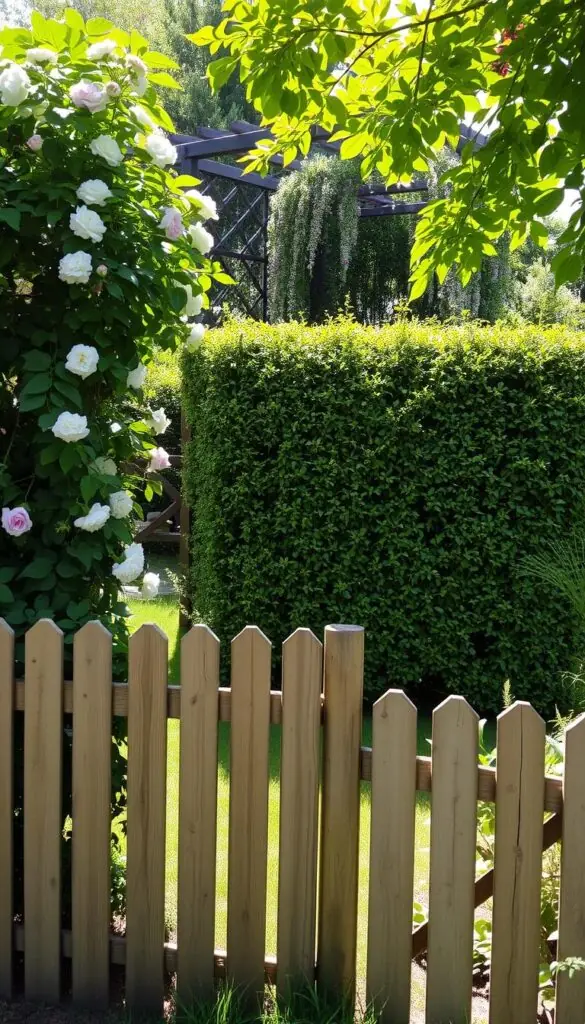
Fast vs. lasting: lattice and vine now, evergreen shrubs for the long run
Use lattice panels (4–6 ft high) to gain a foot or more quickly. Plant climbers at the base and prune as they fill in.
For permanence, stagger evergreen shrubs 3–6 feet apart depending on mature width. Leave a 12–18 inch service gap between the fence or wall and the plants for pruning access and airflow.
Space‑saving screens for a tiny side yard or narrow spot
Choose narrow, modular screens or a wall‑mounted pergola to define a small side space without crowding it. Mix one or two slender trees for height—something under 15 ft mature—so they don’t swallow the area.
- Instant: lattice + fast climbers.
- Lasting: evergreen hedges spaced by mature width.
- Tip: add a fence topper to gain privacy while keeping sightlines tidy.
"Leave room to prune and keep mulch consistent to tie the garden edge together."
Mistake to avoid: don’t plant large hedges too close; always check mature width on tags. When screening softens, add a small bench and a light so the space becomes a quiet, green hideaway.
Shade structures: pergolas, parasols, and wall‑mounted options
Add a pergola or parasol and suddenly that bright side of your house feels like an outdoor room. A clear shade choice makes this garden point useful from morning coffee to evening meals.
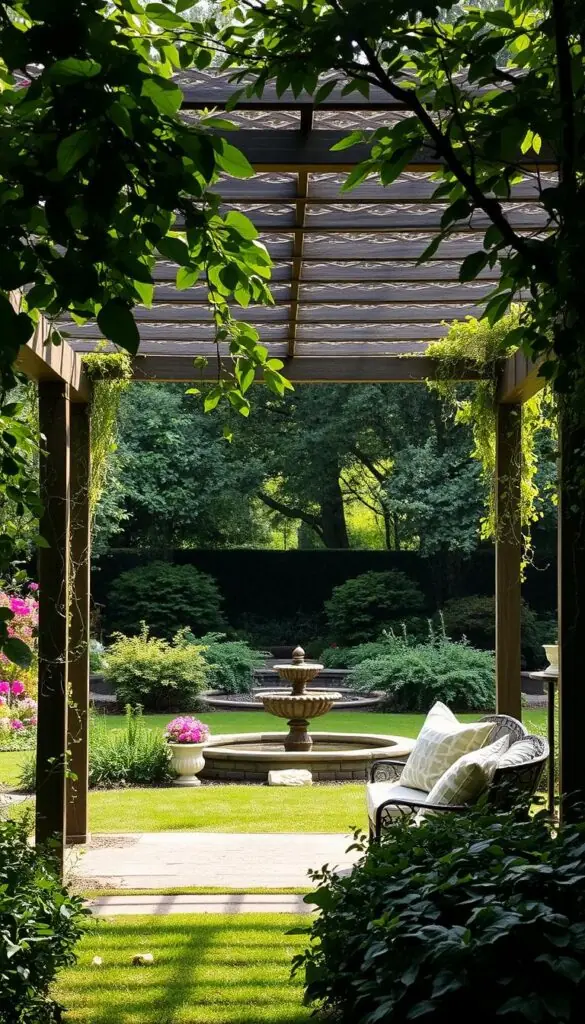
Create a defined outdoor space: louvered roofs and drop shades
Choose a freestanding pergola for flexible placement or a wall-mounted frame to anchor a compact corner. Wall-mounted pergolas with adjustable louvered roofs let you dial shade and airflow while adding LED lights for evening living.
Drop-shades tame late-afternoon glare on the sunny side, and a quality parasol is an easy, quick win. Position the parasol pole at the point where shade will cover seating and a table.
- Install tips: set footings below local frost depth and anchor posts firmly for safety at your home.
- Materials: aluminum frames resist rot; cedar or teak add warmth. Pair a light roof color with dark furniture for a cool, airy feel.
- Quick tip: orient slats east–west to control midday sun more effectively and test shadow patterns at different times of day.
Mistake to avoid: don’t oversize structures in a tiny side space. Keep posts close to boundaries and use climbing vines sparingly so hardware stays serviceable.
"Small moves to slat angle and beam lighting often change comfort far more than a bigger structure."
Dining and fire features to make a corner the heart of gatherings
A glowing flame and a neat dining set can transform a modest space into the heart of your garden. Soft light and a low crackle invite conversation and slow meals.
Layout and safety first. Fit a compact dining set or banquette so chairs face each other and pathways to the kitchen remain clear. Use breathable seats and leave elbow room—don’t crowd the spot.
Rising fire pit tables and clearances
A rising fire pit table warms the group and doubles as a coffee table when the flame is off. Keep heat-safe clearances per the manufacturer's guide and add a few extra inches from fences and walls.
- Place nonflammable pads under metal bases and use a fire extinguisher or bucket of sand nearby.
- Position seating upwind so smoke stays away from plates and faces.
- Poolside setups work well with shade and water-resistant fabrics for comfort.
Small sensory touch: add a tray of rosemary, thyme, and basil for fresh snips while you cook and for a warm, herbal scent as the fire warms the air.
"Layer lanterns and string lights so evenings feel welcoming and calm; savor the gentle crackle and golden glow that make this place a favorite gathering spot."
Style your corner garden: tropical, cottage, or modern minimal
Choose a mood for your small garden and build layers that support it. A clear style keeps the space calm and neighborly. Below are three approachable ways to style your spot by light and zone.
Tropical oasis
Plants & materials: palms, ferns, rattan seating, warm string lights. In hot, sunny sites pick heat‑tolerant palms and clustered containers for lush greenery.
Cottage charm
Plants & materials: roses, lavender, a weathered bench, mixed flower beds. In part‑sun zones tuck a slim bench on gravel so scents gather in the evening air.
Modern minimal
Plants & materials: ornamental grasses, clipped shrubs, succulents in raised pots, and gravel paths. Use clean lines and one sculptural plant — an agave or small tree — as a focal point.
"Use greenery as the constant, then swap cushions or pots seasonally for a fresh look."
| Style | Best light | Key focal plant |
|---|---|---|
| Tropical oasis | Full sun to part shade | Palms or large fern |
| Cottage charm | Part sun | Roses or lavender |
| Modern minimal | Full sun, well‑drained | Agave or topiary |
Peaceful Japanese‑inspired corner with pebbles, stone, and a bamboo fountain
A hush settles as pale gravel and a single tree shape the space into a small, meditative refuge. Keep the plan simple so each element has room to breathe.
Simple palette: moss, evergreens, and one sculptural tree
Start with texture: rake pale gravel into gentle ripples and place a few larger stone groupings for balance and flow.
Sound and motion: install a small bamboo fountain with a quiet trickle. The soft water sound is meditative and masks street noise.
- Keep mossy patches and low evergreens around the edges so the center stays open and calm.
- Use flat stepping stones to invite a slow, mindful walk through your oasis.
- Tuck a few drought‑tolerant succulents where contrast feels right, but avoid clutter.
"Let negative space do the heavy lifting; the hush of water and stone will feel intentional."
| Element | Role | Tip |
|---|---|---|
| Gravel & stones | Grounding texture | Rake ripples; group larger stones |
| Bamboo fountain | Sound focus | Hide pump basin under pebbles; use access panel |
| Moss & evergreens | Soft edge | Keep low, prune lightly |
Lighting: add a modest wall lantern or low spotlight to graze textures at dusk. A stone lantern or quiet spotlight finishes the scene.
Family‑friendly ideas: a kid’s playhouse, pathways, and sturdy planters
Fit play and quiet moments into one playful, practical garden area that works for kids and adults. Keep layouts simple so you can see the play space from the house and still enjoy a calm patch of your home.
Practical, safe choices: tuck a compact playhouse into the corner and frame it with soft foliage. Lay sturdy pavers or pallet steppers so kids and adults have a dry route through the yard after rain.
Pick heavy planters and larger pots that resist tipping. Round edges reduce bumps for little explorers. Add mulch under swings and slide exits and refresh it each year for a safer landing.
- Create one quiet spot with a small bench where you can watch play or sip morning coffee.
- Store toys in a weatherproof bin behind planters to keep the area tidy.
- Install a chalkboard panel on a fence and a stepping‑stone trail for imaginative games.
"Let kids help plant herbs and strawberries — they learn fast and love tasting what they grow."
Quick tip: avoid thorny or toxic plants near play and repeat two colors across planters and play accents to keep the look cohesive in your small corner.
Backyard corner ideas that fit small spaces and side yards
Even the slimmest strip beside your house can become a useful, calm spot. Use vertical plans, foldable seating, and narrow planters to save floor room and add charm.
Go vertical, use folding chairs, and choose narrow planters
Stack up with a slim trellis, pallet wall, or tiered plant stand to increase planting without losing walking space.
Keep seating flexible: folding chairs or a slim bench tuck away when you need room for play or guests.
Line the edge with narrow planters and use compact plants like dwarf grasses, herbs, and trailing flowers for a tidy look.
Quick wins: stepping stones, mulch, and a single statement tree
- Lay three to five stepping stones through fresh mulch to define a clean path in a side yard.
- Pick one statement tree—dwarf Japanese maple or columnar holly—to anchor the small corner garden visually.
- Use a pair of matching planters or mirror the layout on both sides to make the space feel intentional and calm.
- Add a foldable bench or sling chairs you can store easily when guests arrive.
- Soft lighting and a single lantern make the outdoor space feel cozy without clutter.
"Even three planters and fresh mulch can refresh the whole backyard corner."
Conclusion
Even a lone planter or a tiny fountain can shift how you feel about time spent outside. Start with one small project—a vertical planter, a birdbath, or a compact lounge set—and build from there.
You’ve got everything you need to shape a calm garden spot: simple DIY fixes like a pallet path, a privacy screen, or a solar fountain are quick wins. Mix easy herbs, succulents, and a few flowers with stone edging or a shallow water feature for instant charm.
Keep maintenance light with mulch, drip lines, and right-size pots. In tight yards, go vertical and keep pathways clear. Listen for a soft burble, watch birds land, and enjoy the small, steady joys this space brings you.
FAQ
How do I start planning a relaxing garden corner?
Begin with a simple plan: measure the space, note how much sunlight it gets through the day, check water access, set a budget, and decide how much time you’ll spend maintaining it. Sketch a rough layout that places seating, plants, and any features like a fountain so they work together. Start small and build over time.
When is the best time to plant and add hardscape in the United States?
Spring and fall are ideal for most planting because temperatures are mild and roots establish well. Install hardscape—paths, raised beds, benches—any time the ground isn’t frozen. In hot climates, plant in late winter to early spring or autumn to avoid summer heat stress.
What seating materials last outdoors?
Choose durable materials like teak, powder‑coated aluminum, and all‑weather wicker. Look for cushions made with Sunbrella or other outdoor fabrics and store them or use waterproof covers during heavy rain to extend life.
What are easy DIY vertical garden options?
Try a pallet plant wall, hanging baskets on a trellis, or a simple rope‑and‑shelf system. Use lightweight pots and a liner to protect the wall. These let you grow herbs, flowers, and trailing vines without taking up ground space.
Which plants work best by light levels?
For sun: basil, thyme, lavender, salvias, and many ornamental grasses. For shade or part‑shade: ferns, ivy, hostas, and astilbe. Mix performers suited to your corner’s light for low maintenance and continuous color.
How can I keep irrigation simple in a small garden spot?
Use soaker hoses or a basic drip irrigation kit on a timer. Group plants with similar water needs together to avoid overwatering. Mulch heavily to retain moisture and reduce watering frequency.
What raised bed shapes work well in tight spaces?
L‑shaped beds that follow house lines, terraced tiers on a slope, or narrow rectangular beds along a fence are efficient. Brick, stone, or timber edging helps define the space and keeps soil tidy.
What soil mix and tools should I have for raised beds?
A blend of quality topsoil, compost, and a light amendment like perlite or coarse sand works well. Keep a trowel, hand fork, wheelbarrow, mulch, and a drip line or soaker hose on hand.
How do I make potted plants look balanced in a small spot?
Mix heights: place a small tree or tall grass in a large planter, medium shrubs in mid‑height pots, and flowers or herbs in low containers. Group pots in odd numbers and vary textures and colors for a cohesive look.
Which small water feature is best for a quiet garden nook?
Solar fountains, small basins, or a pebble run create gentle sound without heavy maintenance. Choose a recirculating pump sized for the basin and site the feature so the sound is soft, not splashing everywhere.
How do I attract birds and wildlife without creating extra work?
Add a shallow birdbath, plant native flowers and shrubs for nectar and seeds, and include a perch or small brush pile. Native plants require less care and provide better food sources for local birds and pollinators.
What lighting works best to highlight plants after sunset?
Layered lighting is effective: low path stakes for safe walking, spotlights to accent trees or specimens, and string lights under a pergola for ambiance. Choose low‑voltage or solar fixtures near water for safety.
How can I add privacy in a small side yard?
Use lattice with climbing vines for quick coverage and evergreen shrubs like boxwood or arborvitae for long‑term screening. Space‑saving folding screens and narrow planters with tall grasses also work well.
What shade structures suit a small outdoor room?
Consider a compact pergola, a large parasol, or wall‑mounted drop shades. Louvered roofs or retractable canopies give flexibility so you can adjust sun and rain protection as needed.
Are fire features safe near fences and walls?
Yes, if you follow clearances and use heat‑safe options. Choose a rising fire pit table or a propane fire bowl with proper distance from combustible surfaces. Keep a fire extinguisher or hose nearby and check local codes.
How do I choose a style for my garden nook?
Match the mood you want: tropical with palms, ferns, and rattan for a lush feel; cottage with roses, lavender, and a weathered bench for charm; modern minimal with grasses, topiary, and gravel for clean lines. Use plants, materials, and a small palette to tie it together.
What makes a Japanese‑inspired peaceful corner?
Use a simple palette: pebbles, moss, evergreens, a single sculptural tree, and a bamboo water feature for a gentle sound. Keep plantings minimal and focus on texture and placement for calm simplicity.
How can I make the space kid‑friendly without sacrificing style?
Include sturdy planters, soft pathways like mulch or pea gravel, and a small play nook or low bench. Choose non‑toxic plants and keep sharp tools and chemicals locked away.
What quick wins improve tiny side yards fast?
Go vertical with trellises or hanging pots, use folding chairs, pick narrow planters, add stepping stones, and mulch to tidy the ground. A single statement tree or large potted plant can anchor the space immediately.