Imagine the hush of soft sand under a fingertip and the cool weight of a smooth stone in your palm. Have you wished for a tiny spot of calm on your desk or coffee table? This short guide helps you build a compact, soothing tray that fits busy life.
You’ll get step-by-step guidance with real measurements (tray sizes 10–14 inches; sand depth 0.5–1 inch), simple plant options, and a list of practical tools like mini rakes and LED tea lights. The approach ties to traditional Japanese garden ideas while staying modern and easy to maintain.
We’ll describe textures—silky sand, warm wood, and smooth pebbles—and gentle scents like cedar or lavender. You’ll learn where to place the tray for best viewing, how raking becomes a mindful moment, and simple seasonal care tips that take only minutes each week.
Key Takeaways
- Start small: a 10–14 inch tray with 0.5–1 inch of sand works well.
- Use odd-numbered stones for natural balance and simple plant accents like air plants.
- Raking doubles as upkeep and a short meditation for the mind.
- Choose muted tones and soft textures to reduce visual noise and support serenity.
- Weekly 5-minute refreshes keep the setup low-maintenance and lovely.
Start with the spirit: what a mini Zen garden brings into your home
A compact dry landscape offers a gentle way to slow your breath and steady the mind.
Guiding principles from tradition
Simplicity, asymmetry, and stillness shape the look and the feel. Traditional zen practice and japanese garden design favor few, well-chosen pieces so your eye can rest.
Meaning in the elements
Stones act as mountains or islands. Raked sand suggests flowing water and quiet movement.
Place larger rocks first to set structure. Use an odd number of stones so the composition feels natural.
- Keep open space to let your mind pause.
- Try two minutes of mindful raking as a short meditation—inhale while smoothing, exhale while drawing lines.
- Soft morning or evening light reveals the texture of raked sand patterns.
A small tray honors traditional zen garden intent without fuss. Intention matters more than perfection; patterns can be remade anytime.
Materials and tools checklist for your indoor Japanese-inspired space
Start by choosing a stable container and the right substrate to match your style and upkeep needs.
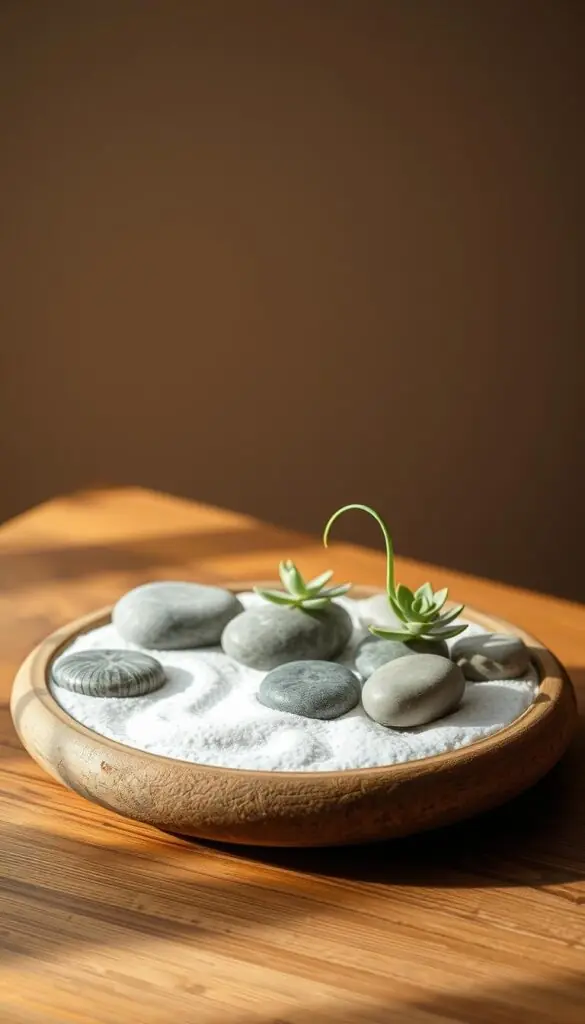
Container basics: Pick a 10–14 inch tray. Wood trays feel warm, ceramic bowls are durable, and shallow glass shows layers well. Add felt pads under the tray to protect furniture.
Substrate options: Use 0.5–1 in of fine sand for crisp lines or 0.25–0.5 in of pea gravel for a textured look. You can layer 0.25 in of sand over a gravel base for contrast.

Natural pieces and tools
- Collect 3–5 stones and a few smooth pebbles; include one palm-sized rock and a patch of sheet moss.
- Mini rakes, bamboo skewers, or a fine-toothed comb make varied patterns.
- Keep tweezers for precise placement and a soft brush to dust rocks.
"A single, well-placed accent goes farther than many small objects."
Optional accents and sensory add-ons
One small lantern, a tiny statue, or a driftwood piece provides a focal point without clutter. For gentle scent, add 1–2 drops of lavender or cedar essential oil to the substrate.
| Item | Recommended Size/Type | Why it helps |
|---|---|---|
| Tray | 10–14 in (wood/ceramic/glass) | Stable base and visual scale |
| Substrate | Fine sand 0.5–1 in or pea gravel 0.25–0.5 in | Crisp raking or textured look |
| Tools | Mini rake, tweezers, soft brush | Precise patterns and clean surfaces |
| Extras | LED tea lights, small pump (optional) | Soft light and gentle water sound |
Quick shopping list: tray, liner (parchment/landscape fabric), sand or gravel, felt pads, mini rake or skewers, tweezers, brush, LED tea lights, and a tiny pump if you add water features.
Plan your garden space: scale, balance, and focal points
Pick a spot that invites you to pause—your desk, a quiet sideboard, or a sunny window ledge. Good placement makes the tray feel like part of the room, not an afterthought.
Finding the right spot
Choose a stable area where you naturally stop for a moment. A 12-inch tray fits a narrow apartment window ledge well; a 14-inch shallow box works on a home office desk.
Keep it at eye level when seated so the patterns read without bending forward. In shared rooms, place the tray at least 6 inches from edges to avoid bumps.
Scale and focal rules
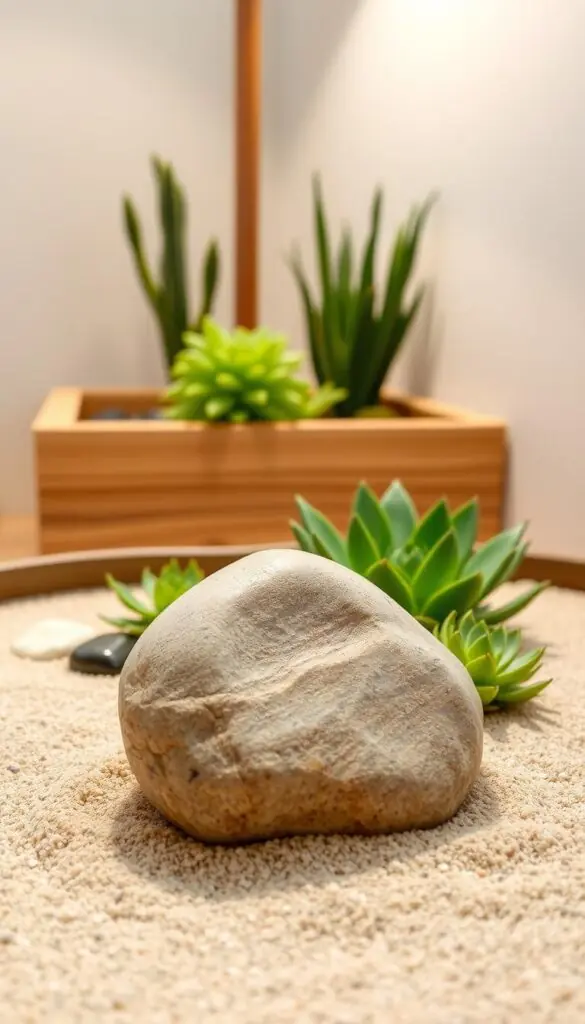
Start by placing larger rocks first; these become your primary focal point. Support that stone with two smaller stones in a loose triangle to keep the composition relaxed.
Use odd-number groupings (3 or 5) for a natural feel. Leave 3–4 inches of open substrate near the edges so raking is easy and serene.
Practical tips for light and layout
Low, soft light at morning or evening angles will highlight raked lines and texture. Position near a low-glare lamp for gentle shadow play.
"Glance at the composition from across the room; if the focal point quietly draws your eye, you’re on the right path."
- Choose a stable spot: desk corner, coffee table center, or window ledge with soft daylight.
- Keep viewing angle: near eye level when seated for easy appreciation.
- Size to the area: 12 in for ledges, 14 in for broader tables.
- Start with one focal point: big stone or small lantern, then add supporting stones.
Step-by-step: build your mini zen garden from base to patterns
Follow a few clear steps and you’ll turn an empty tray into a calm, living vignette.
Prepare the container
Start clean and level. Add felt pads under the tray to protect wood surfaces. Line the tray with parchment or landscape fabric so cleanup stays simple.
Add sand or gravel
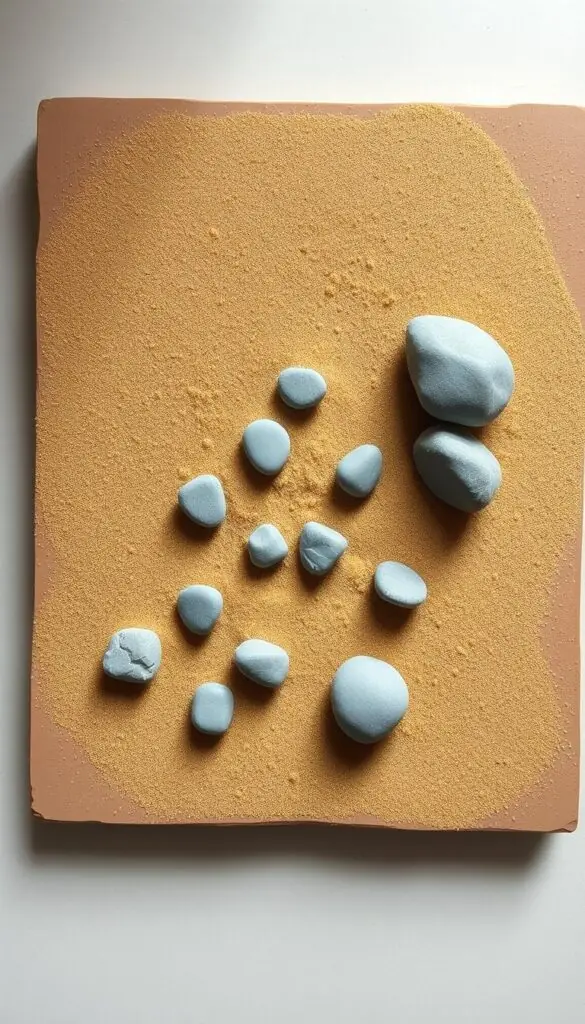
Pour 0.5–1 inch of sand for crisp lines, or up to 0.75 inch of fine gravel for a textured look. Smooth with a straight edge, then tap the tray to settle the layer evenly.
Place stones and living accents
Set your largest rock first as the focal point, then add two supporting stones at different distances to suggest depth.
Add living touches sparingly: one Tillandsia (air plant), a tiny Haworthia, or a Crassula ovata ‘Gollum’. Tuck a small patch of sheet moss to soften a corner.
Rake patterns and finish
- Make sure you leave open "water" zones for raking.
- Use a fine-toothed rake to smooth, then a wider mini rake for grooves and ripple rings around stones.
- Use a skewer for delicate lines near moss and rocks. Brush stray grains off edges to finish.
"Sit back for a moment and enjoy the balanced scene."
Design ideas to personalize your traditional zen garden
Select muted materials and one strong accent to shape a calm, cohesive scene.
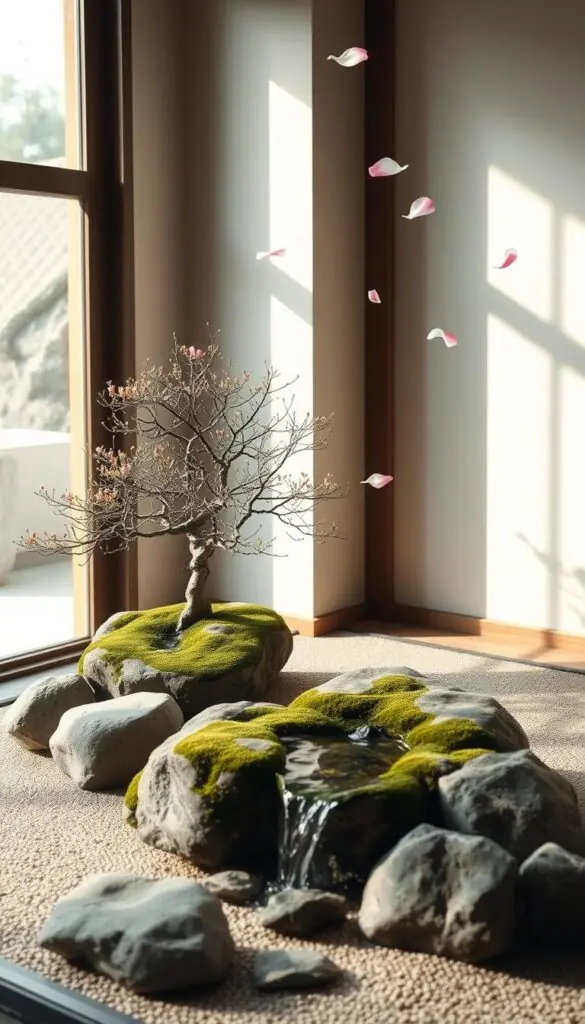
Muted tones and textures help the eye rest. Choose gray gravel, ivory sand, pale wood, and soft green moss for a unified palette.
Introduce subtle texture changes: a band of finer sand near a focal point makes crisp rings. Use coarser gravel at the edges for contrast.
Theme inspirations
Coastal: add a few cleaned seashells as islands. Rake gentle wavelets between them to suggest motion.
Mountain: place one darker boulder as the peak and two lighter stones as foothills. Leave open space to evoke distance.
Tea-garden calm: set a small pagoda lantern off-center as your focal point. Pair it with a single air plant to suggest quiet movement.
Lighting and shadow play
Use LED tea lights or a dimmable desk lamp to create long, soft shadows in the evening. Low-glare LEDs highlight raked patterns without harsh glare.
"One well-placed object keeps the eye from jumping around the space."
- Keep accents minimal—one special piece is enough.
- Mix elements and plants sparingly to avoid clutter.
- Refresh seasonally: swap a lantern for driftwood in summer or simplify to rocks-only in winter.
Placement, lighting, and daily use for serenity and function
Find a calm spot for your tray so it becomes a small invitation to pause each day. A thoughtful location keeps your piece steady and easy to enjoy.
Avoid traffic; aim for eye-level viewing
Choose a spot away from door swings and elbow zones so the setup won’t be jostled. Aim for seated eye level—sideboards, desks, or low shelves work well.
If you have pets, place the tray higher or behind glass to protect the landscape.
Simple morning and evening rituals
Set aside 2–5 minutes in the morning to smooth the surface and 2–5 minutes in the evening to draw two or three simple patterns. These micro routines act as a short meditation and bookend your day.
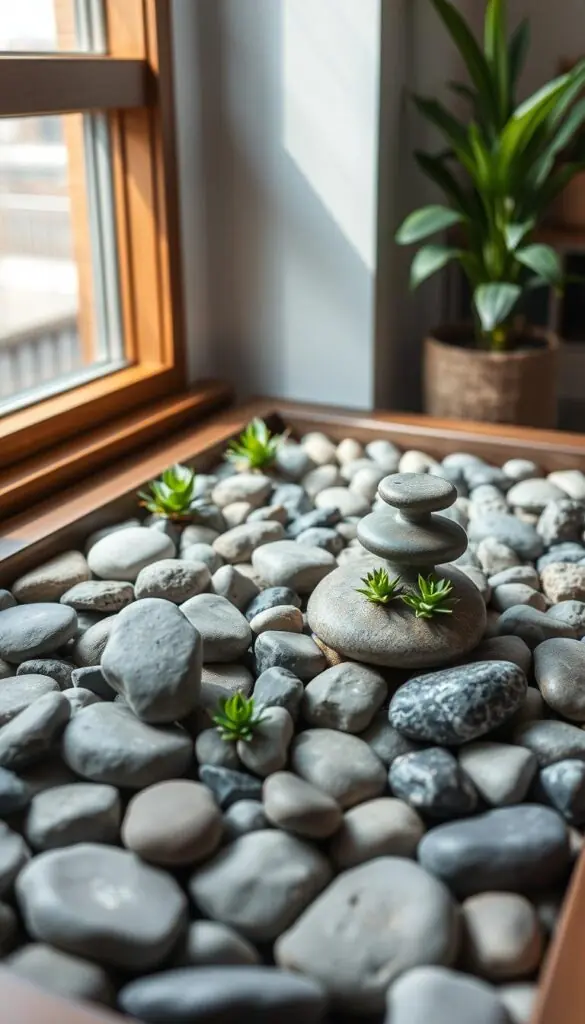
- Make sure lighting is soft and directional; a warm, dimmable lamp at the side highlights raked lines.
- Route cords for any water features behind furniture to keep the area tidy and safe.
- Dust weekly and rotate the tray 90° monthly to refresh your view and discover new raking paths.
"Use the tray as a gentle cue to pause; a single ring around a stone can reset your focus."
Care and maintenance: keep your zen garden peaceful year-round
Treat maintenance as a brief ritual that restores order and soothes the mind. A few minutes each week keeps the scene tidy and inviting.
Weekly — once a week, smooth the surface with your fine tool and redraw simple lines to reset the scene. Use a soft brush to lift dust from stones and lanterns. Tweezers help remove tiny bits between elements.
Monthly — top up sand or gravel if levels settle. Sift out discolored grains and replace them. Remove fallen leaves from nearby houseplants promptly so the substrate stays clean.
Quarterly — do a deeper refresh: lift accents, rinse stones, and prune any small roots or branches that interrupt lines. If you added a tiny pump, rinse it every 2–4 weeks and change the water to avoid films and algae.
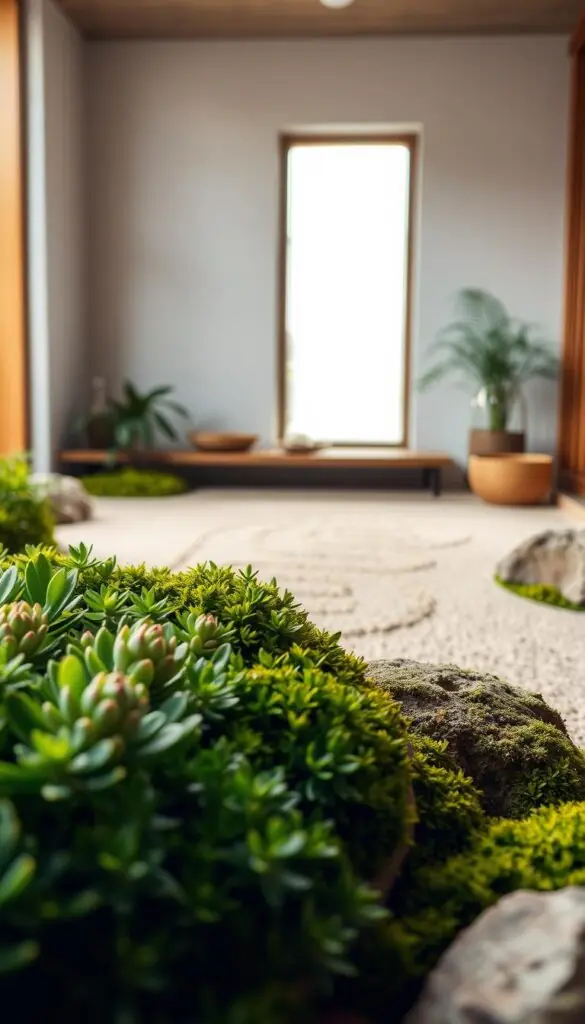
- Keep plants minimal: bright, indirect light; mist air plants weekly; water succulents sparingly.
- Moss likes mist in dry winter air; in summer, shield the area from strong AC drafts that blow sand.
- Dedicate a small spot beside the tray for tools so upkeep feels easy and part of your ritual.
"Regular raking keeps patterns crisp and the tray ready to calm your eye."
Common mistakes to avoid and pro tips
You can keep your small landscape peaceful by avoiding simple setup errors. Below are practical fixes and quick tips to help your tray stay calm and lovely.
Overwatering and drainage
Avoid overwatering live plants. Use a separate soil cup for any plant and water with a dropper so surrounding sand gravel stays dry. This keeps roots healthy and prevents soggy substrate.
Visual clutter and color
Make sure your palette stays muted. Too many bright colors or loud LEDs steal focus. Stick to one or two accents and a neutral family—cool grays or warm beiges—so the area reads as calm.
Media and pattern problems
Skip coarse gravel that won't hold lines. Test a sample plate before filling the tray to see if it will rake. If patterns collapse, tamp the surface with a flat tool to firm it up.
- Measure rock footprint—if a rock fills more than a third of the space, choose a smaller piece.
- To deepen contrast, rub a tiny drop of jojoba oil into a small sand area for a “wet edge.”
- Raise a focal rock slightly on a hidden washer for subtle lift if the scene feels flat.
"When in doubt, remove one item; subtraction often restores balance faster than adding more."

Conclusion
A small tray can become a daily invitation to slow down and notice details. Keep the setup simple: one focal stone, a little moss or a single plant, and a shallow bed of sand or gravel. These choices honor the spirit of a traditional zen garden without fuss.
Make maintenance a short ritual. Spend a few minutes raking patterns, wiping dust, and adjusting a rock. Over time the act of tending turns into the real reward.
Try a tiny water feature if you like soft sound. Lean on neutral tones and natural elements so your eye rests easily. Enjoy the space you create—it's a steady spot of serenity you can return to any day, and your simple, personal touches will inspire others.
.
FAQ
What does a mini indoor traditional zen garden bring into my home?
A small contemplative space brings calm, focus, and a sense of order. It uses natural elements like stones, sand, and moss to suggest landscapes and water. Placed on a desk or windowsill, it offers a peaceful spot for short meditative moments and helps reduce visual clutter.
What guiding principles should I follow when creating a traditional design?
Keep it simple, use asymmetry, and create stillness. Aim for pared-back elements, odd-number groupings for natural balance, and clear focal points. Let empty space be part of the composition to invite quiet reflection.
Which materials and tools do I need for an indoor Japanese-inspired space?
Gather a shallow container (wood tray, ceramic bowl, or shallow glass), fine sand or pea gravel, a few stones or pebbles, moss or small succulents if desired, and a mini rake or DIY comb made from skewers. Optional accents include a small lantern, driftwood, or soft LED lighting.
How do I choose between fine sand and pea gravel?
Choose fine sand when you want crisp raked patterns that hold shape. Pick pea gravel for a textured look that’s lower maintenance and hides small debris. Consider color and how each substrate complements stones and plants in your tray.
Where is the best spot to place a mini indoor arrangement?
Aim for a stable, low-traffic surface at eye level or slightly below — a desk, coffee table, bedside table, or meditation corner. Avoid direct hot sunlight if you include live plants, and keep it away from spots that are bumped often.
What are simple steps to build the arrangement from base to finishing patterns?
Prepare the container with a level base and liner if needed. Add your sand or gravel to a few inches depth and smooth it. Place stones first to form a focal group, then add moss or air plants sparingly. Finish by raking gentle patterns around stones to suggest flowing water or ripples.
Can I include living plants in a small tray without creating extra work?
Yes—choose low-water, low-light plants like air plants, small succulents, or sheet moss. Use minimal soil pockets or attach plants atop stones. Water sparingly and ensure airflow; avoid overwatering and provide a small drainage solution or absorbent layer if possible.
How often should I refresh patterns and clean the area?
Lightly rake patterns weekly or whenever you need a mindful pause. Remove dust and fallen leaves every few days and do a deeper clean monthly: smooth the substrate, reposition stones as needed, and trim or replace any plant material.
What common mistakes should I avoid?
Avoid overcrowding with too many colors or accents, using oversized rocks that overwhelm the tray, and choosing coarse media that won’t hold raked lines. Also don’t overwater live plants or place bright, flashy lighting that breaks the calming mood.
How can I personalise the space while keeping a traditional feel?
Stick to muted tones—grey gravel, soft green moss, pale wood—and add one thematic accent like a small shell, a tea-garden stone, or gentle LED tea lights. Keep elements few and meaningful to maintain serenity and balance.